Custom Streetwear, Casualwear & Denim Manufacturer•MOQ 50 pcs•Denim MOQ 100 pcs•7-Day Sample Available

Inline Inspection vs Final Inspection in Apparel Production
Use this factory-side guide to compare inline inspection vs final inspection in apparel production more clearly across supplier fit, quote scope, approvals, and.

A broken needle fragment and a twisted side seam can both stop an apparel order, but they should not trigger the same response. One may create a safety hazard; the other may make a garment commercially unacceptable. Buyers comparing inline inspection vs final inspection in apparel production need to decide how these different findings affect containment, correction and shipment release.
Inline checks examine work while production is moving, when an operator can still correct a repeating fault. Final inspection assesses the finished lot against agreed acceptance criteria. Neither stage replaces the other. The useful distinction is whether a defect requires an immediate safety hold or a controlled repair and verification process—and whether the evidence supports releasing the affected goods.
Classify the consequence before counting the defects
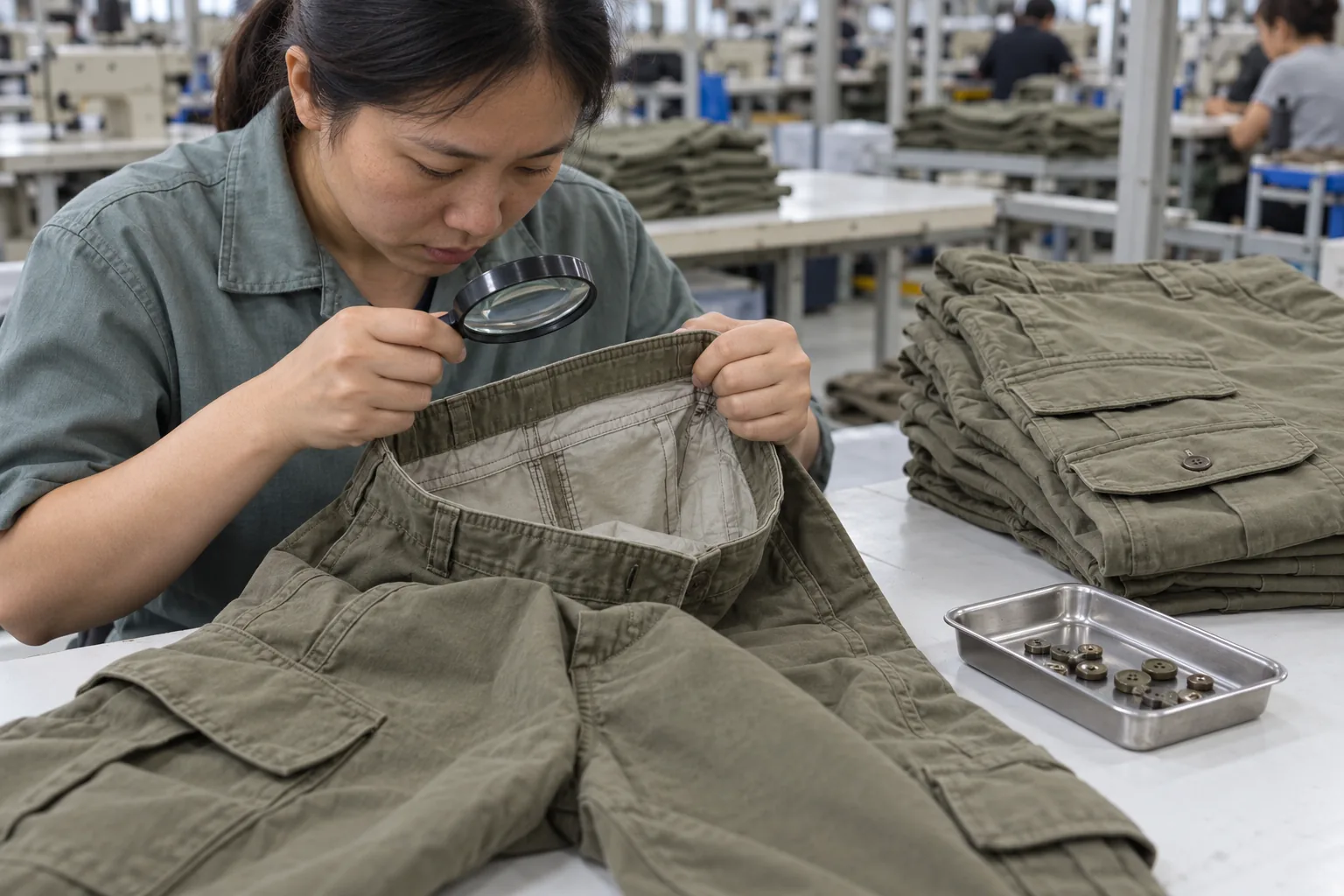
A critical defect is generally a condition that could cause harm or breach a mandatory safety requirement. A sharp metal fragment left inside a garment is a clear example. A major defect usually affects intended use, fit, durability or saleability enough to make the product unacceptable. An open seat seam on cargo trousers is normally major; a small removable thread tail may be minor.
These categories are not universal labels attached to every operation. A loose trim can be a major durability issue on an adult overshirt, while an accessible detachable component on a young child’s garment may present a safety hazard. Product type, wearer age, destination requirements and actual construction determine the classification.
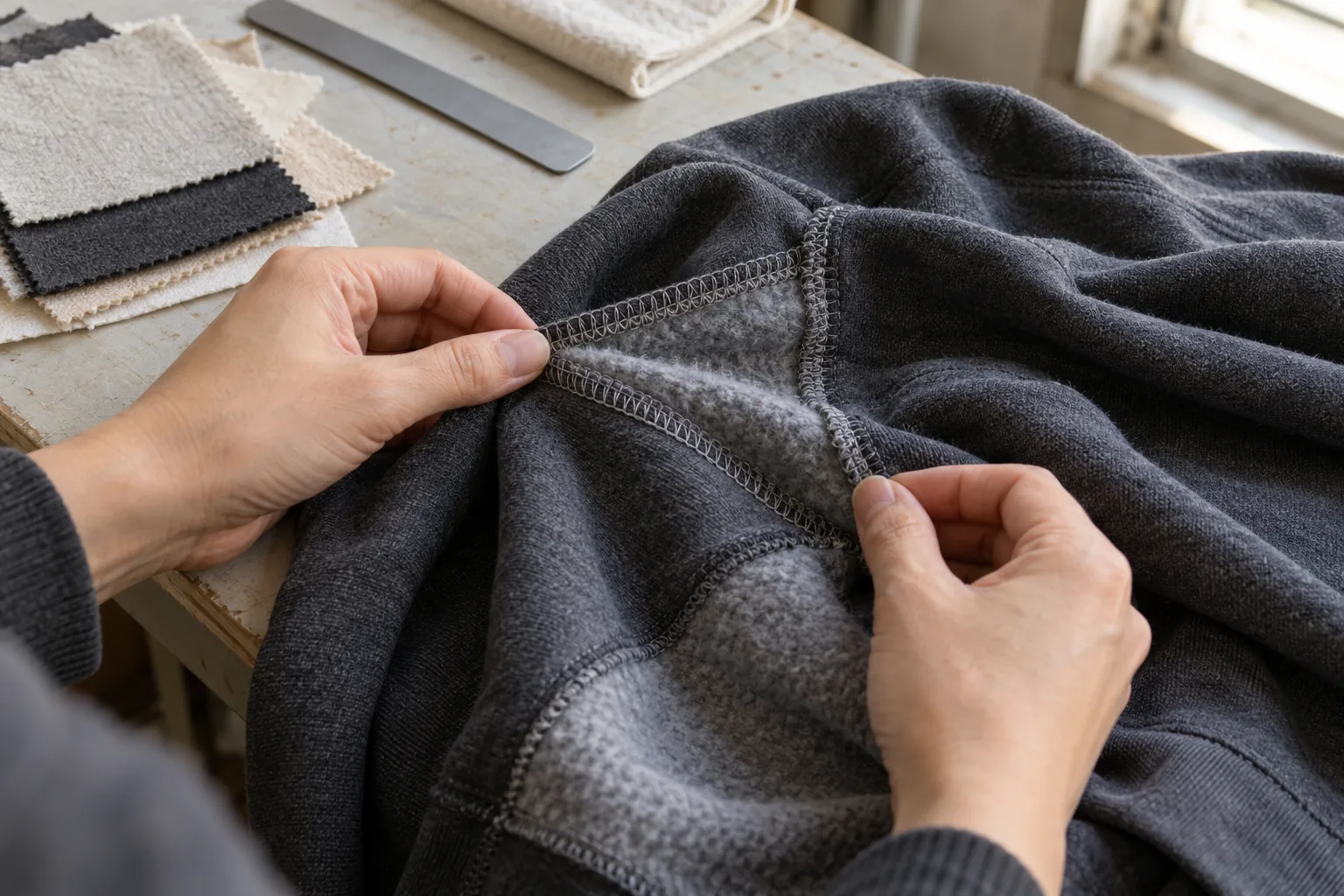
Before bulk starts, create a defect reference with photographs, severity, affected location and required response. Separate defects from their causes: “open underarm seam” describes the finding; insufficient seam allowance may explain it. A classification sheet that only says “bad sewing” gives inspectors little basis for consistent decisions.
Use inline checks to interrupt the cause, not just record it
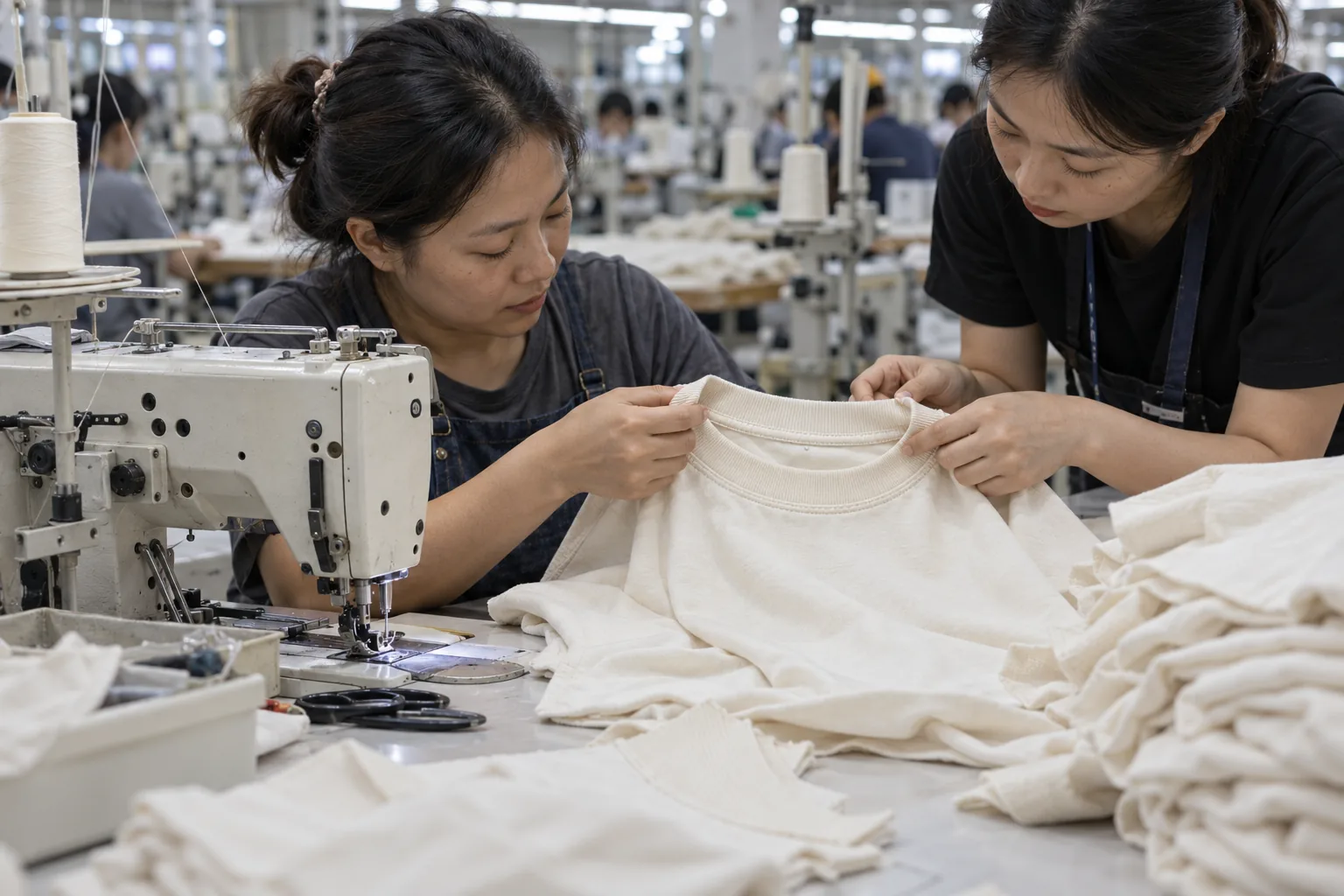
Position inline checks after operations that create difficult-to-reverse problems. On a heavyweight jersey tee, inspect shoulder stabilization and neck rib attachment before the line accumulates finished bodies. On denim, check pocket placement before additional panels restrict access. These checkpoints should follow construction risk rather than a generic visit schedule.
Suppose a tee specification calls for a finished neck opening of 18 cm, measured flat under an agreed method, with an illustrative tolerance of ±0.5 cm. Repeated readings of 19 cm deserve investigation even if the seam looks tidy. Check rib cutting, attachment tension and measurement conditions. Confirm tolerances for the actual style; this example is not an industry-wide standard.
For a major recurring defect, identify the operation, isolate output since the last verified acceptable check and correct the cause. Review garments already transferred downstream as well as work beside the machine. Verify corrected output before allowing normal production to resume, with closer checks until the process appears stable.
A critical finding calls for immediate containment of potentially affected work and a defined investigation. Do not treat a hazardous fragment as a routine repair ticket that closes when one piece is removed. The response must address where the fragment came from and which other garments could be affected.
Make the final decision about the lot you will actually ship
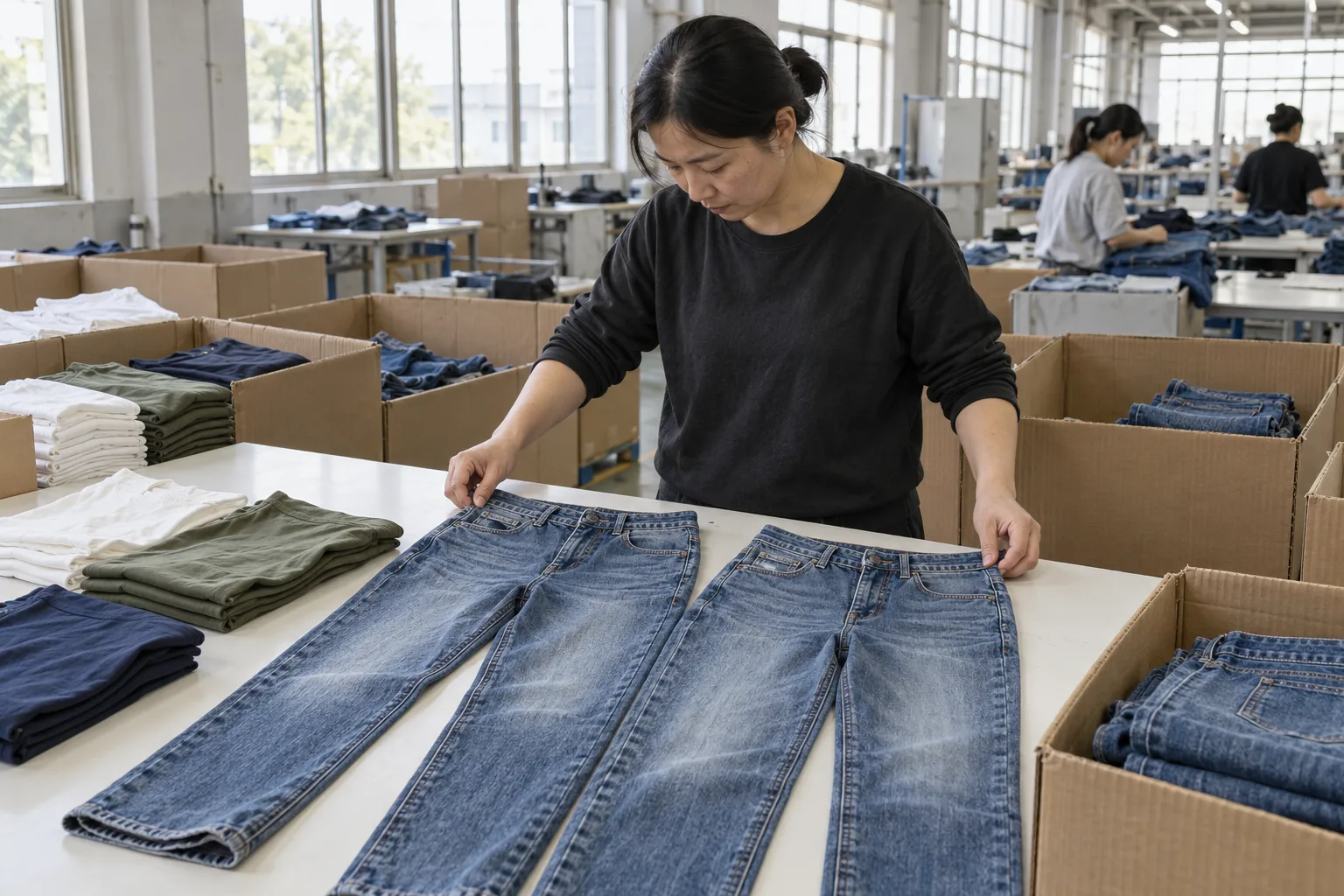
Final inspection answers a different question: does the completed shipment meet the agreed release conditions? Define the required production and packing status before booking it. Inspectors need access to the identified lot, including its size and color assortment, rather than a convenient stack of garments prepared beside the checking table.
Finishing can introduce faults that did not exist during sewing. Washing may change dimensions; pressing may leave shine; packing may mix size labels or place the wrong garment in a bag. For washed denim, inspect the finished wash appearance and post-wash measurements against approved references. An acceptable pre-wash panel does not establish finished-garment conformity.
If using an acceptance sampling plan, agree the lot definition, inspection level, sample size and acceptance/rejection numbers before inspection. AQL is a sampling-plan parameter, not permission to ship a known percentage of defective garments. Sample acceptance also does not prove that every uninspected unit is safe.
Buyers commonly specify zero acceptance for critical findings in the inspected sample. That rule should be paired with preventive controls and an escalation procedure; a sample cannot guarantee a hazard-free lot. When the lot fails, document the hold, corrective action and reinspection scope before discussing release.
Give critical and major findings different escalation routes
The same inspection report can contain both classes, but a single “repair all” instruction is inadequate. The examples below are proposed response patterns for buyer agreement, not claims about a particular factory’s procedures.
| Finding | Likely classification | Required decision |
|---|---|---|
| Sharp fragment inside a waistband | Critical safety hazard | Hold potentially affected goods; investigate the source and define validated clearance controls. |
| Seat seam opens during an agreed construction check | Major functional defect | Contain affected output, correct construction and verify repaired units. |
| Wrong size label on an otherwise conforming tee | Major identification defect | Check garment measurements and assortment before relabeling and repacking. |
| Isolated loose thread without seam damage | Usually minor | Trim and review against the agreed workmanship standard. |
Record who can authorize each next step. A production supervisor may approve restarting a corrected sewing operation, while shipment release remains with a named buyer representative or other agreed authority. Restarting production and releasing packed goods are separate decisions.
Do not downgrade a defect simply because the delivery date is close. A buyer may consider a documented commercial concession for some non-safety deviations, subject to applicable requirements. That concession should identify the exact deviation and quantity; it should not erase the original inspection finding or bypass a safety obligation.
Build a release checklist that survives repairs and repacking
Rework creates another opportunity for mix-ups. A corrected zipper does not help if the repaired jacket returns to the wrong size carton. Keep the affected stock identifiable until verification is complete, and connect each repair record to the original finding.
- Reference: Confirm the approved sample revision, measurement method, tolerance sheet and defect photographs used for judgment.
- Scope: Identify style, color, size, production batch and carton references, with quantities held and quantities examined.
- Cause: Record the responsible operation or material issue and how potentially affected output was traced.
- Correction: Specify the repair method and check whether it causes secondary damage, such as needle holes after pocket repositioning.
- Verification: Record results after repair, including relevant functional and measurement checks, and any required fresh lot inspection.
- Release: Reconcile repaired, rejected and packed quantities; capture the authorized release decision and its supporting evidence.
For a seam repair, visual closure alone may be insufficient. Check stitch formation, seam allowance and any agreed strength or stretch requirement. For relabeling, compare the label with the measured garment and packing record. Verification must test the original failure mechanism, not merely confirm that someone handled the item.
Questions buyers should settle before the first inspection
Can a major defect become critical because it appears often?
Frequency alone does not change severity. Many misaligned pockets can cause lot rejection while remaining major defects. A single sharp fragment may be critical. Track severity and frequency separately so a widespread cosmetic problem does not obscure a rare safety issue.
Does finding one critical defect mean scrapping the whole order?
It means holding potentially affected goods and investigating, not automatically scrapping everything. Disposition depends on the hazard, traceability and whether effective clearance is possible. If the affected scope cannot be established reliably, containment may need to include the entire lot.
Can passed inline checks justify skipping final inspection?
They provide evidence about process control, but they do not verify later washing, finishing or packing. Any reduced inspection arrangement needs an explicit agreement based on product risk and performance history. Successful sewing checks alone cannot confirm the shipment assortment or finished measurements.
What should a small first order specify?
Keep the document short but explicit: critical and major examples, measurement points, tolerances, lot boundaries, inspection method and release authority. StitchQuote’s MOQ for most categories starts from 50 pieces per style; denim starts from 100. Smaller quantities still need clear acceptance criteria.
Put severity rules into the production brief
Send the defect reference alongside the technical pack, approved sample comments and packing requirements. Ask for inspection records that distinguish critical findings, major defects, corrective actions and open holds. StitchQuote provides cut-and-sew, private label, sampling, fabric and trim sourcing, branding, and QC before packing. Confirm the inspection scope and reporting requirements for your project before production starts.
Related reading and project support:
- Prepare a technical pack with measurable requirements
- Review sampling and minimum order planning
- Explore apparel quality control
- Discuss your inspection brief with StitchQuote
Request a manufacturing quote
Share your product type, quantity range, and destination. We usually reply within one business day.