Custom Streetwear, Casualwear & Denim Manufacturer•MOQ 50 pcs•Denim MOQ 100 pcs•7-Day Sample Available

What Packaging Level Fits a Premium Basics Launch Best
Use packaging level premium basics launch to compare private label decisions more clearly, protect brand consistency, and keep product, trims, and commercial scope.

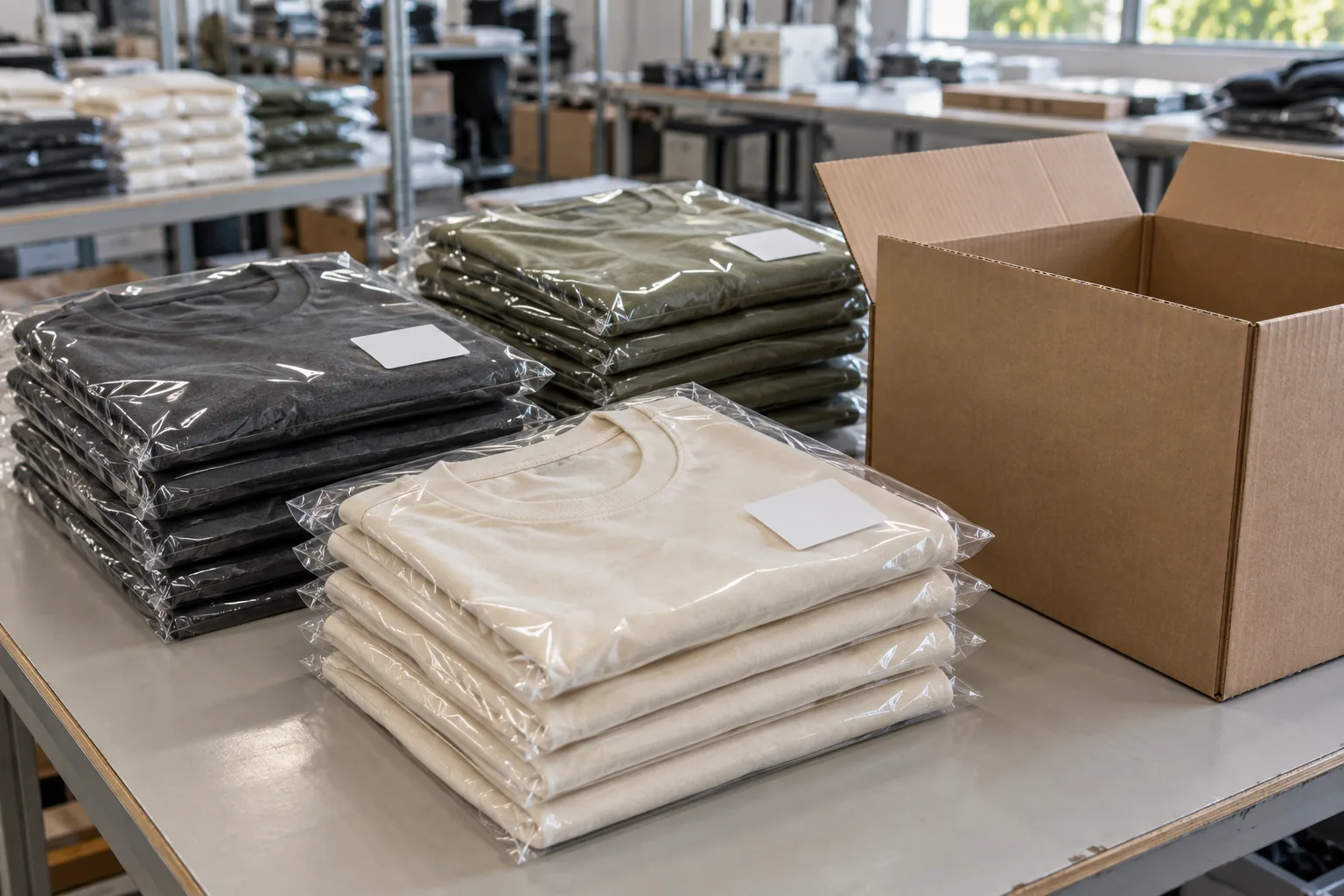
For a premium basics launch, the best packaging level is usually the lightest system that protects the garment, presents it neatly, and preserves its identity through receiving, storage, and sale. A substantial cotton tee does not automatically need a rigid box. It does need the correct size and product information to remain readable when the garment is folded, covered, and placed beside similar stock.
Choose packaging by working through the label sequence: permanent garment labels, removable retail identification, individual wrapping, then shipping identification. Each layer should carry information that the next person needs without creating competing versions. This approach helps a launch team decide where extra presentation earns its place and where it simply adds another approval, attachment operation, or opportunity for a size mismatch.
Start with the last label your customer will keep
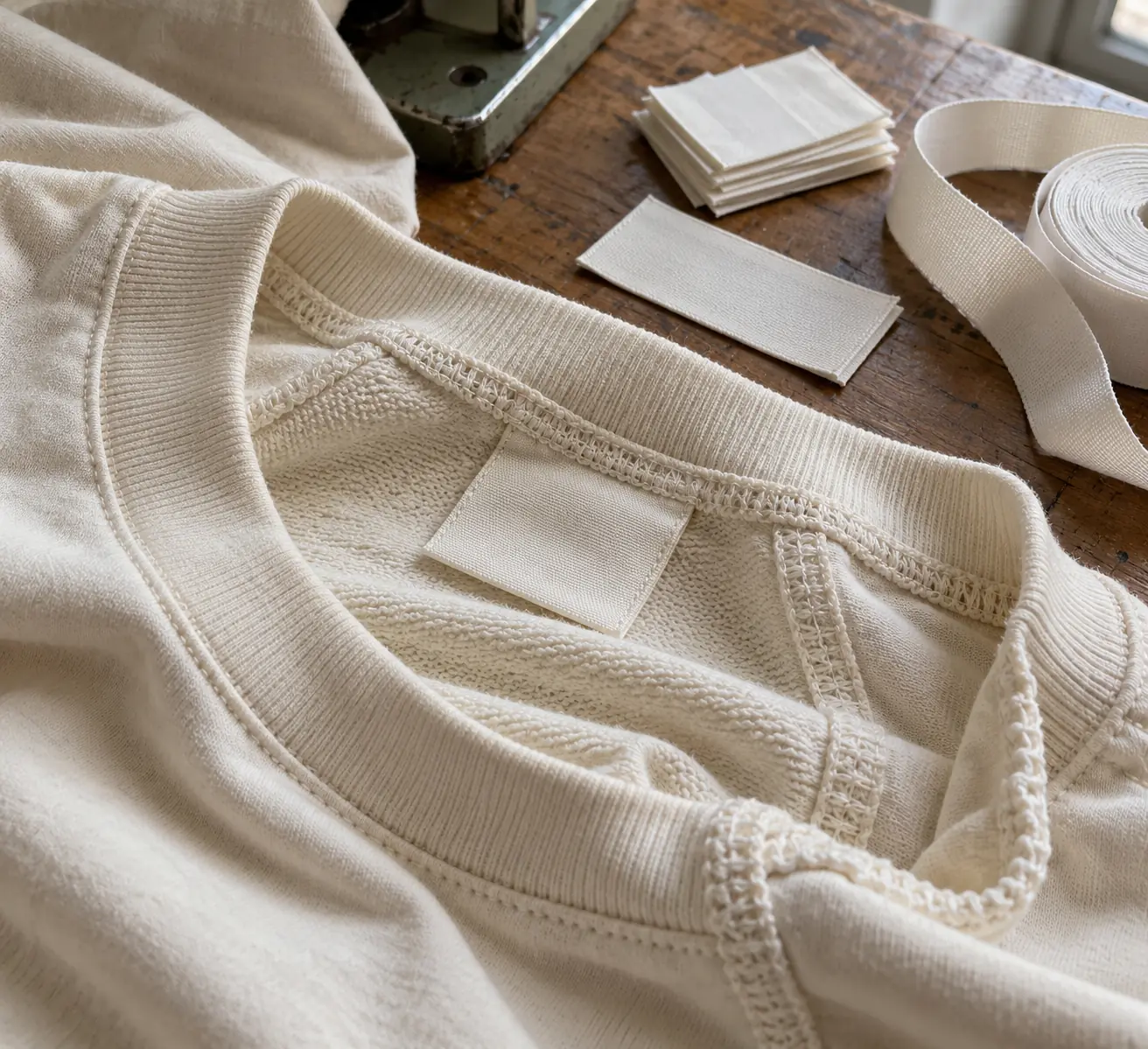
Permanent garment identification comes first because it must work after the packaging disappears. Decide which information belongs at the back neck, inside a side seam, or in another approved location. Brand, size, fiber composition, care information, and origin requirements need a deliberate layout; confirm the required content for each destination market before releasing artwork.
For a heavyweight crewneck tee, a large folded neck label may interrupt an otherwise soft interior. Compare its edge, fold, and attachment against a smaller label arrangement using a physical sample. For a sweatshirt, check that a side-seam care label does not protrude below the rib or sit where it rubs during wear. Packaging cannot correct an uncomfortable permanent label.
Create a label register with a separate reference for each component. Record artwork revision, finished dimensions, material, fold type, attachment position, and approved wording. Identify the source of truth for size names: if the garment says “XL,” avoid letting a bag sticker quietly become “Extra Large” unless that mapping is intentional and documented.
Build the removable label around the folded garment
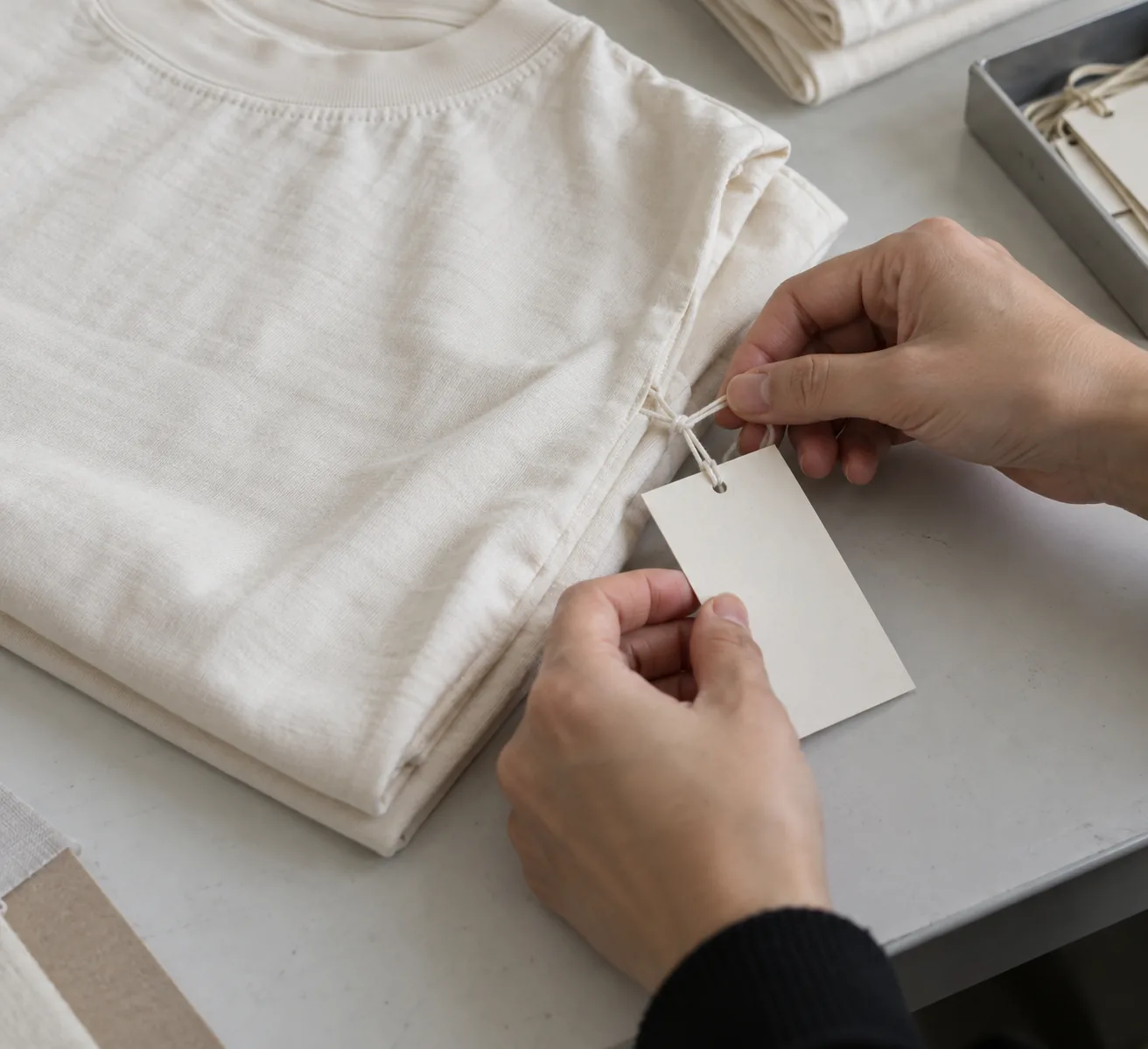
Next, decide whether a swing tag, belly band, or external sticker performs the retail identification job. A swing tag can carry presentation and sales information, while an external sticker makes stock identifiable without opening the pack. Using both can be justified, but copying every detail onto both increases the number of components that must stay synchronized.
Consider a launch with two tee fits, three colors, and four sizes. That creates 24 stock variants even before any bundles are introduced. A label that shows only color and size cannot distinguish the fits. Give each variant an unambiguous SKU, then map any barcode to that SKU in the buyer’s stock system. Scan the physical printed proof; approving a screen image does not demonstrate readability.
Trial the attachment and fold together. Keep tag fasteners away from exposed front panels, and approve an attachment point that does not damage the knit. Avoid placing adhesive directly on fabric unless residue and removal have been evaluated. Set an external label position that stays visible after sealing, with the barcode clear of creases, seams, and glossy wrinkles.
Choose the presentation level by its information handoff
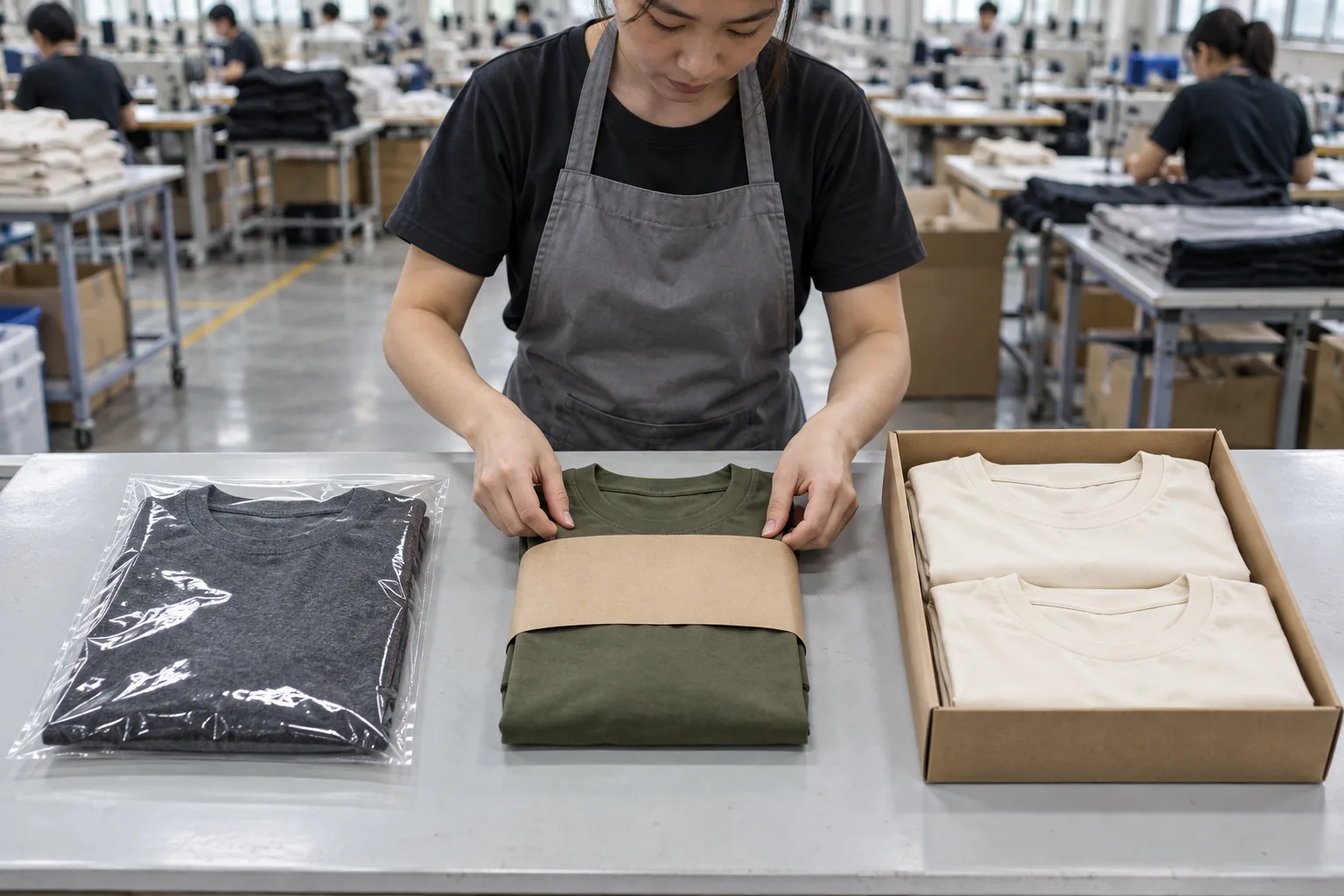
Once the label sequence works, compare packaging levels. The following options are planning examples, not fixed StitchQuote packages. Confirm materials, dimensions, assembly operations, and sourcing availability for the project. A retail sleeve, for example, still needs an agreed protection method during transport; presentation packaging is not automatically shipping protection.
| Level | Suitable launch use | Label sequence to resolve |
|---|---|---|
| Essential individual pack | Warehouse fulfillment of single basics | Permanent size label, optional tag, visible external SKU label |
| Presentation sleeve or band | Store display or a controlled unboxing experience | Tag and sleeve must not hide the stock identifier or crush the fold |
| Boxed set | A defined gift set sold as one unit | Component identities must reconcile with a separate set identifier |
For an initial online tee release, an accurately sized individual pack and clean fold may deliver the strongest result. A sleeve becomes useful when it organizes presentation without forcing staff to unwrap every unit. A box earns its place when it protects a specific shape or presents a set; otherwise, its storage volume and extra assembly need a clear commercial justification.
Test removal as well as opening. If warehouse staff must strip off the branded sleeve to scan the SKU, the presentation layer is obstructing the handoff. Move the identifier or change the sleeve window before ordering packaging stock.
Approve a packing sequence that survives a size change
Write the packing instruction as a sequence of identity checks, not simply “fold and bag.” Confirm the sewn-in size, compare the removable tag to the SKU, fold to the approved sample, insert into the specified pack, then verify the external label before sealing. Carton assignment comes after the individual unit is correct.
Specify folded width and length, front-facing orientation, tag position, closure direction, and label location from a defined edge. An illustrative target might be a folded tee measuring 260 by 320 mm with a ±10 mm tolerance, subject to approval on the actual fabric and size range. This is a proposed project specification, not a universal standard. Larger sizes may require a different fold or pack size.
Use one approved packed sample for the smallest size and one for the largest to expose pressure points. Check whether the closure pulls tight, whether the neckline distorts, and whether a tag corner leaves an impression after stacked storage. Add a mid-size sample if the folding method changes within the range.
Keep packaging approval distinct from garment sample approval. StitchQuote offers a 7-day sample for standard styles with confirmed specs and available materials; complex styles, custom washes, and custom-developed fabric take longer. Do not assume that this also establishes the availability or approval timing of custom packaging.
Check label agreement before the carton closes
A premium presentation fails quickly when a correctly made garment arrives under the wrong identity. Build a packing QC checklist around agreement between layers, then inspect appearance. Define inspection coverage and acceptance criteria with the supplier before production; a small launch still needs a documented response when a mismatch appears.
- Garment identity: Compare style, color, and sewn-in size against the packing order. Closely related shades need an approved reference under consistent lighting.
- Removable components: Verify the tag revision, attachment point, and SKU. Remove obsolete labels from the work area when changing variants.
- Scan result: Confirm that the external barcode resolves to the expected variant in the receiving system, not merely that the scanner beeps.
- Pack condition: Check seal integrity, garment compression, visible creasing, and adhesive contact. Confirm that opening does not tear or snag the garment.
- Carton reconciliation: Match actual contents to carton identification and the packing list, including any approved mixed-size assortment.
For a size mismatch, isolate the affected packing batch and establish how far the error extends before release. Replacing one visible sticker may leave the same wrong tag inside other packs. Record the correction and repeat the relevant identity check. StitchQuote’s services include QC before packing; agree separately on the required checks for completed packs and carton identification.
Resolve these label decisions before buying launch packaging
Can one outer pack work across every size?
Sometimes, but test the extremes rather than approving from a medium alone. An oversized pack can let a small garment shift, while a tight pack can distort a larger fold. Use one format only if its closure, label position, and presentation remain acceptable across the intended range.
Should a two-tee bundle carry one barcode or two?
That depends on how the bundle is sold and received. If it is a single sellable unit, establish a set SKU and decide how component barcodes are handled so staff cannot scan the wrong identity. Keep component size and color information available for checking the set contents.
Can packaging quantities follow the garment MOQ?
Confirm this separately. StitchQuote’s MOQ for most garment categories starts from 50 pieces per style; denim starts from 100 pieces per style. Those figures do not establish minimums for printed sleeves, tags, or boxes. Request component quantities and any surplus arrangement before approving artwork.
What should the buyer send for a packaging discussion?
Send the variant list, sales channel, destination market, label register, fold reference, and desired presentation level. Include receiving-system requirements and identify who approves barcode data. StitchQuote provides cut-and-sew, private label, sampling, fabric/trim sourcing, and branding including woven labels, prints, and embroidery. Use the brief to confirm which packaging details can be supported for the specific launch.
Related reading
- Prepare a tech pack with clear label placement instructions
- Review sampling and garment minimums
- Explore private-label clothing services
- Discuss your launch specifications with StitchQuote
Request a manufacturing quote
Share your product type, quantity range, and destination. We usually reply within one business day.