Custom Streetwear, Casualwear & Denim Manufacturer•MOQ 50 pcs•Denim MOQ 100 pcs•7-Day Sample Available

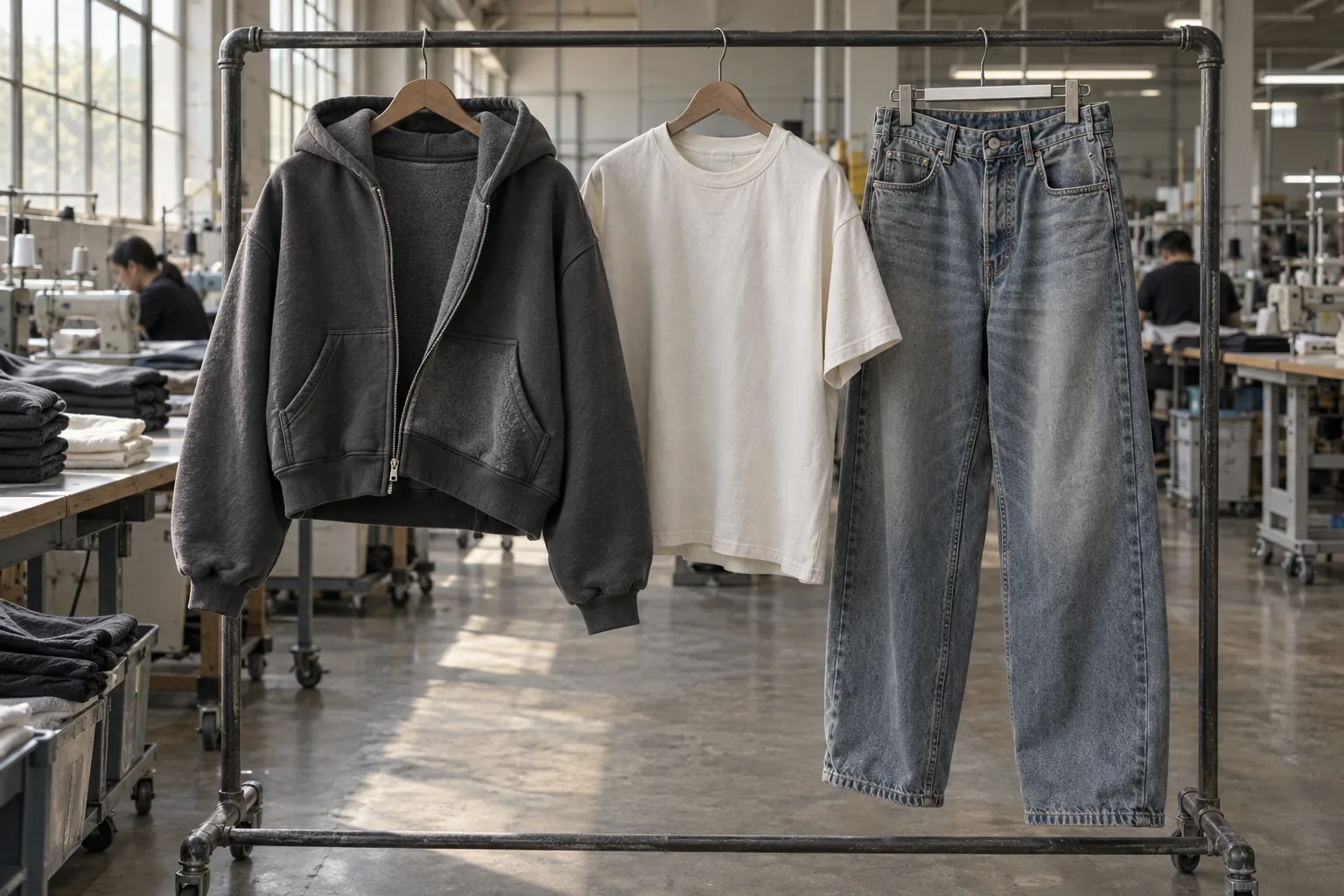
Streetwear Manufacturer vs General Garment Supplier
Understand streetwear manufacturer vs general garment supplier through fit, fabric, decoration, and production logic so streetwear and premium basics buyers can make.

Choosing between a streetwear manufacturer and a general garment supplier should begin before you commission a complete technical pack. At this stage, you need to establish whether a candidate understands the production problems your collection is likely to create. Sending detailed artwork and graded measurements to every supplier on a long list creates work without necessarily producing a better shortlist.
The useful distinction is evidence of relevant execution. A broad apparel supplier may be well suited to a straightforward jersey program; a business advertising streetwear expertise may still struggle with your particular wash or construction. Screen candidates with a compact product outline, a few diagnostic questions, and a clear threshold for progressing to a paid sample.
Start with a screening card, not a finished specification
A screening card gives a supplier enough information to assess fit without pretending that development is complete. Keep it to one page. Identify the garment family, intended silhouette, approximate fabric weight, decoration method, likely order quantity, size range, and target delivery window. Label unresolved choices as provisional so nobody treats them as approved specifications.
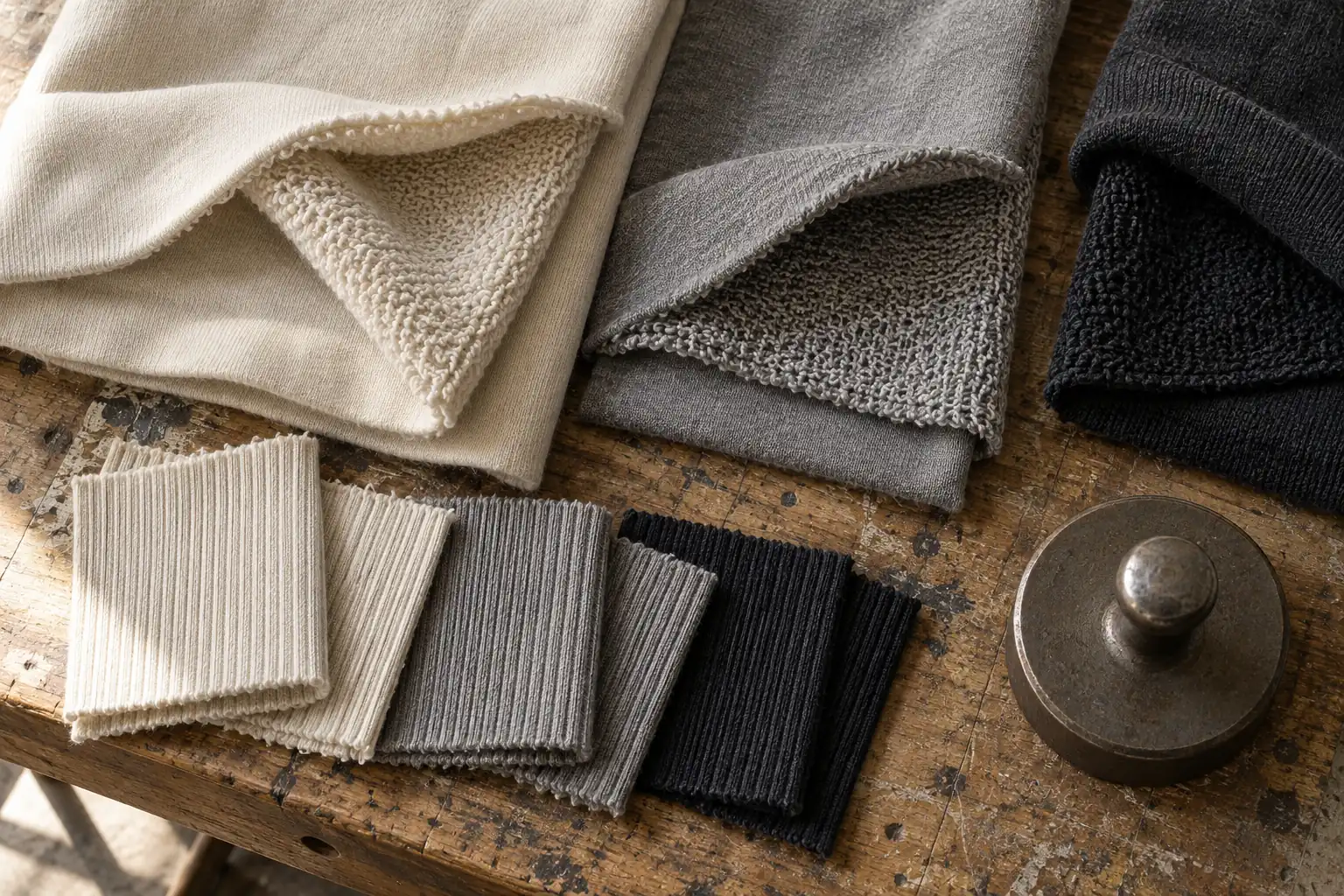
For example, describe a cropped zip hoodie in approximately 420 gsm loopback cotton, with a dropped shoulder, two-way zipper, and embroidery near the pocket. Ask whether the candidate has handled that combination. The useful response addresses zipper behavior after washing, embroidery access, and the relationship between body weight and rib recovery. A generic assurance that all hoodies are possible tells you little.
Provide an approximate size split if available. An order spread across seven sizes creates different planning demands from the same quantity across three. You do not need every graded measurement yet, but you should disclose unusual requirements such as an extended sleeve or exceptionally short body.
Make each candidate explain one comparable garment
Ask to review one relevant garment or anonymized development example rather than a large gallery of polished product photographs. A comparable piece need not share your aesthetic. Its value comes from similar fabric behavior, seam construction, decoration placement, or finishing sequence. An ordinary sweatshirt with documented shrinkage can be more informative than an elaborate jacket shown only from the front.
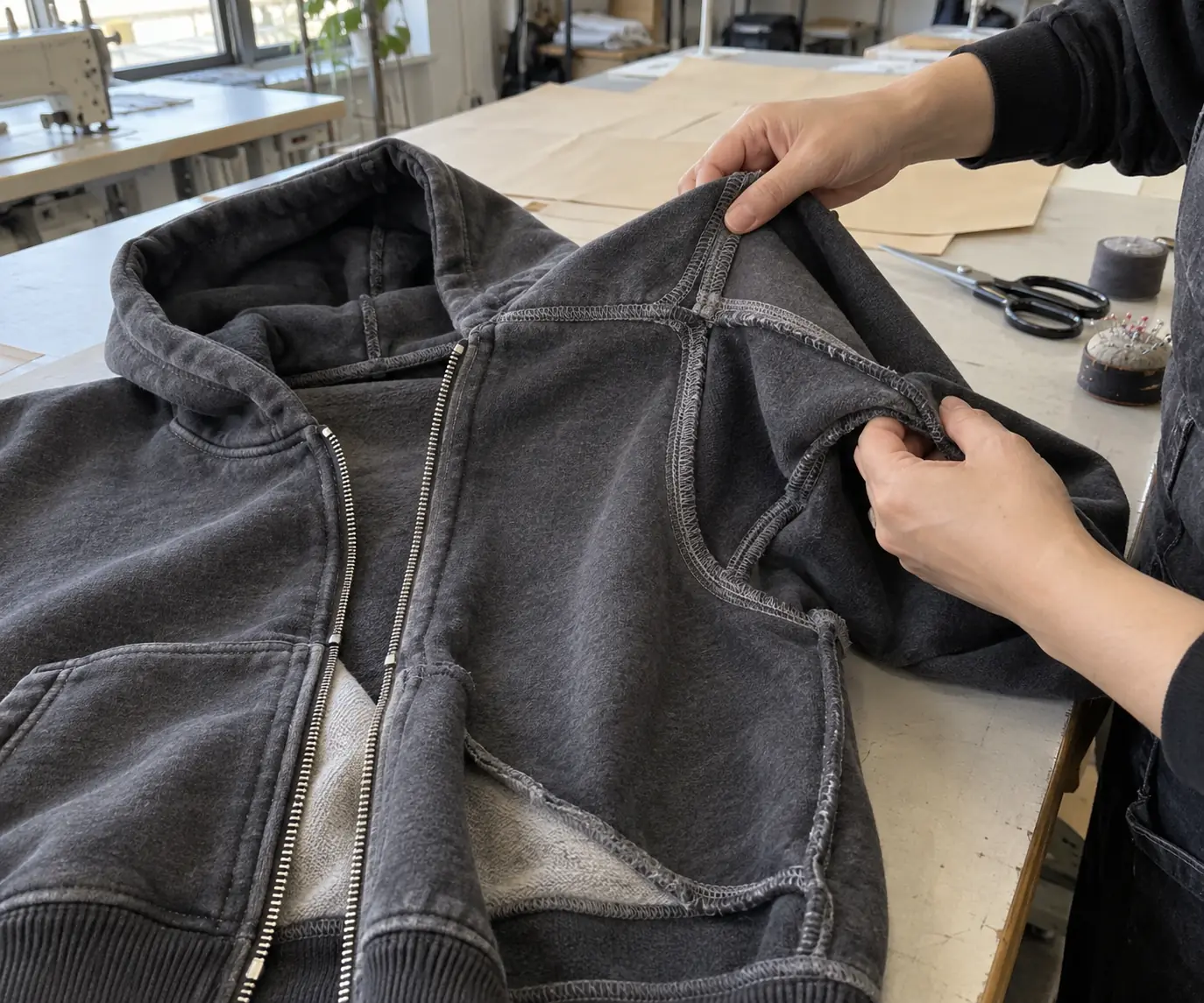
Have the supplier explain what changed between the first sample and the approved version. Useful answers might describe a revised armhole curve, a stabilized shoulder seam, or a pocket position adjusted to clear embroidery. Ask what caused the change and how the approved result was recorded. Respect confidentiality: another buyer’s patterns, artwork, and commercial details are unnecessary.
Then ask where the example differs from your proposed product. Someone who identifies the limits of the comparison demonstrates useful judgment. If the reference uses compact jersey but your concept requires loosely knitted fabric and a distressed wash, the candidate should flag that the previous result does not establish wash stability for your project.
Locate the operations that could break the concept
Supplier labels are broad; production responsibilities are specific. Establish who controls pattern development, cutting, sewing, decoration, washing, and final inspection. Outside processing is not automatically a problem. The screening issue is whether one accountable party coordinates approvals and can explain what happens when an external operation changes the garment.
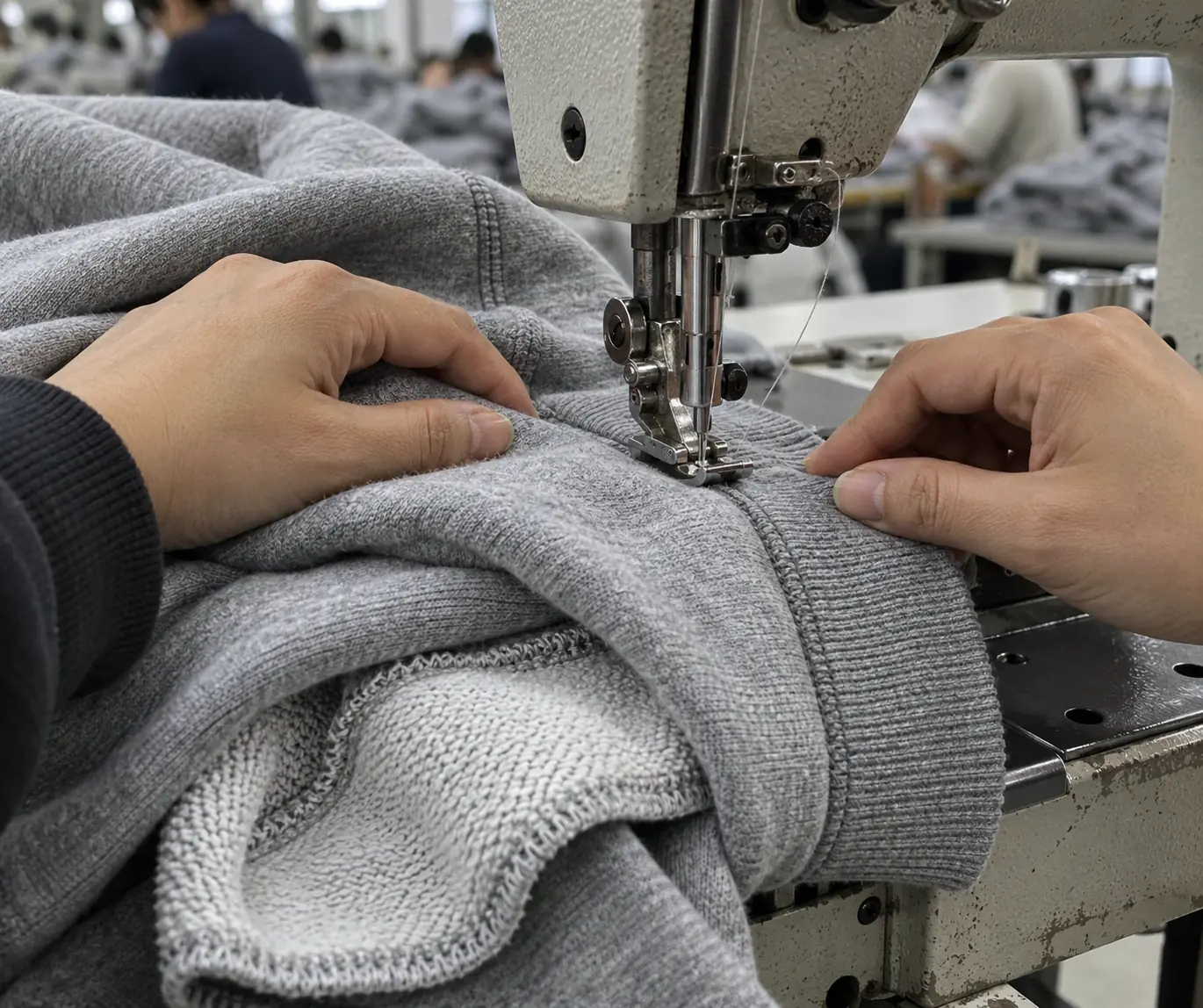
For a panelled track top, the difficult point might be keeping intersecting seams aligned across sizes. For washed denim, it might be controlling the relationship between shrinkage and the finished leg opening. For an embroidered tee, it might be preventing puckering on a light base fabric. Choose one challenge and request a proposed development sequence, including the approval needed before the next operation.
| Concept signal | Screening question | Evidence to request |
|---|---|---|
| Heavy fabric with narrow rib | How will you assess seam bulk and recovery? | Inside view of a comparable seam and a proposed trial |
| Print crossing a seam | At what stage would printing happen? | Explanation of registration limits and assembly order |
| Garment wash with metal trims | Which trims enter the wash? | Trim compatibility trial and approval sequence |
A credible answer can include uncertainty. “We need to trial that seam before confirming it” is actionable when the supplier specifies the trial. “No problem” without an operation sequence leaves the main risk unresolved.
Test the commercial fit before buying development
Minimum quantities should be discussed alongside the proposed fabric and finishing route. Ask whether the stated minimum applies per style, per color, or to a shared material purchase. A garment order may satisfy a sewing minimum while falling below a fabric mill’s or trim supplier’s workable quantity. Request the available alternatives rather than assuming the headline minimum covers every customization.
Ask candidates to separate sample scope from bulk scope. Does the development proposal cover pattern creation, a fit sample, decoration trials, and a revised sample, or only one sewn prototype? Clarify who pays for additional trials and how changes affect timing. These questions make the next commitment reviewable without demanding an exact bulk quotation from incomplete information.
At StitchQuote, MOQ for most categories starts from 50 pieces per style; denim starts from 100 pieces per style. A seven-day sample is available for standard styles with confirmed specifications and available materials. Complex styles, custom washes, and custom-developed fabric take longer. Those conditions matter during screening: a provisional concept alone does not establish eligibility for that sample timeline.
Also distinguish sample completion from arrival at your office. Agree when the clock starts, what approvals must already exist, and whether transport is included in the stated window. A launch plan should account for review and revision time as well as sewing time.
Use a small QC challenge to assess working discipline
Before issuing the full brief, ask how the candidate would inspect one representative feature. This is a screening exercise, not a substitute for a production inspection plan. You are checking whether both parties can define a measurable requirement and agree on evidence when the result is disputed.
Suppose your concept depends on a wide, short silhouette. Ask the supplier to demonstrate how it would measure chest width and body length on a relaxed garment. If two people start from different points or stretch the fabric differently, their numbers cannot support a reliable approval.
- Measurement setup: Confirm the garment state, laying method, measurement points, and whether measurements occur before or after the specified wash.
- Tolerance proposal: Request feature-specific limits. For discussion, a buyer might propose ±1 cm for half-chest and ±0.5 cm for pocket placement; these are illustrative targets to confirm for the construction, not universal standards.
- Wash assessment: Ask for before-and-after measurements under an agreed wash and dry method, plus observations on twisting, puckering, and color change.
- Visual reference: Establish how shade, print position, and embroidery appearance would be approved and compared with later units.
- Failure handling: Ask who records a failed check, who approves the correction, and what gets rechecked before packing.
Favor clear methods over impressive terminology. A photograph of the tape placement, paired with a recorded result, can reveal more about inspection discipline than a broad promise of premium quality.
Release the full brief when the evidence supports it
Move a candidate forward when it can explain the relevant construction, identify unresolved trials, clarify quantity conditions, and propose a workable approval sequence. Keep unanswered points in a short decision log. Separate a manageable development question from a fundamental mismatch, such as a required process the supplier cannot coordinate.
The next handoff should turn your provisional screening card into controlled instructions: approved design direction, points of measurement, material specifications, artwork placement, trim details, and sample objectives. Date the version and identify the person authorized to approve changes. This prevents a screening conversation from becoming an accidental production instruction.
StitchQuote offers cut-and-sew, private label, sampling, fabric and trim sourcing, branding through woven labels, prints, and embroidery, and QC before packing. Assess those services against your specific garment and the evidence requested above. The reason to commission a sample is that the proposed development path makes sense for your product.
Questions buyers ask while building a shortlist
Can a general apparel supplier be the stronger choice?
Yes. If its relevant construction experience, material options, and approval process suit your program, a broad category focus need not be a disadvantage. Compare the difficult features of your garment with demonstrated work, rather than scoring the supplier’s marketing vocabulary.
How much artwork should an initial inquiry include?
Share enough to explain technique, approximate dimensions, placement, and coverage. A simplified placement sketch may be sufficient for screening. Release production-ready artwork when the candidate is selected for development and the required file format and intended use are clear.
What if the supplier has no exact reference sample?
Ask it to separate proven operations from new ones. A targeted seam, print, or wash trial may resolve the gap before a complete garment is developed. If it cannot explain how to validate the unfamiliar feature, keep that uncertainty visible in your selection decision.
Should the fastest reply win a place on the shortlist?
Speed helps only when the response advances the decision. Look for answers tied to your product, stated assumptions, and specific follow-up questions. A slightly slower reply that identifies a material constraint can prevent wasted sampling work.
Related reading and next steps:
- Explore the wider cut-and-sew supplier search
- Prepare the technical pack after screening
- Review sampling and MOQ considerations
- Discuss your product outline with StitchQuote
Request a manufacturing quote
Share your product type, quantity range, and destination. We usually reply within one business day.