Custom Streetwear, Casualwear & Denim Manufacturer•MOQ 50 pcs•Denim MOQ 100 pcs•7-Day Sample Available

What USTR’s Forced-Labor Investigations Mean for Apparel Buyers
See what USTR's March 2026 forced-labor investigations mean for apparel buyers reviewing sourcing risk, documentation, and factory diversification plans.

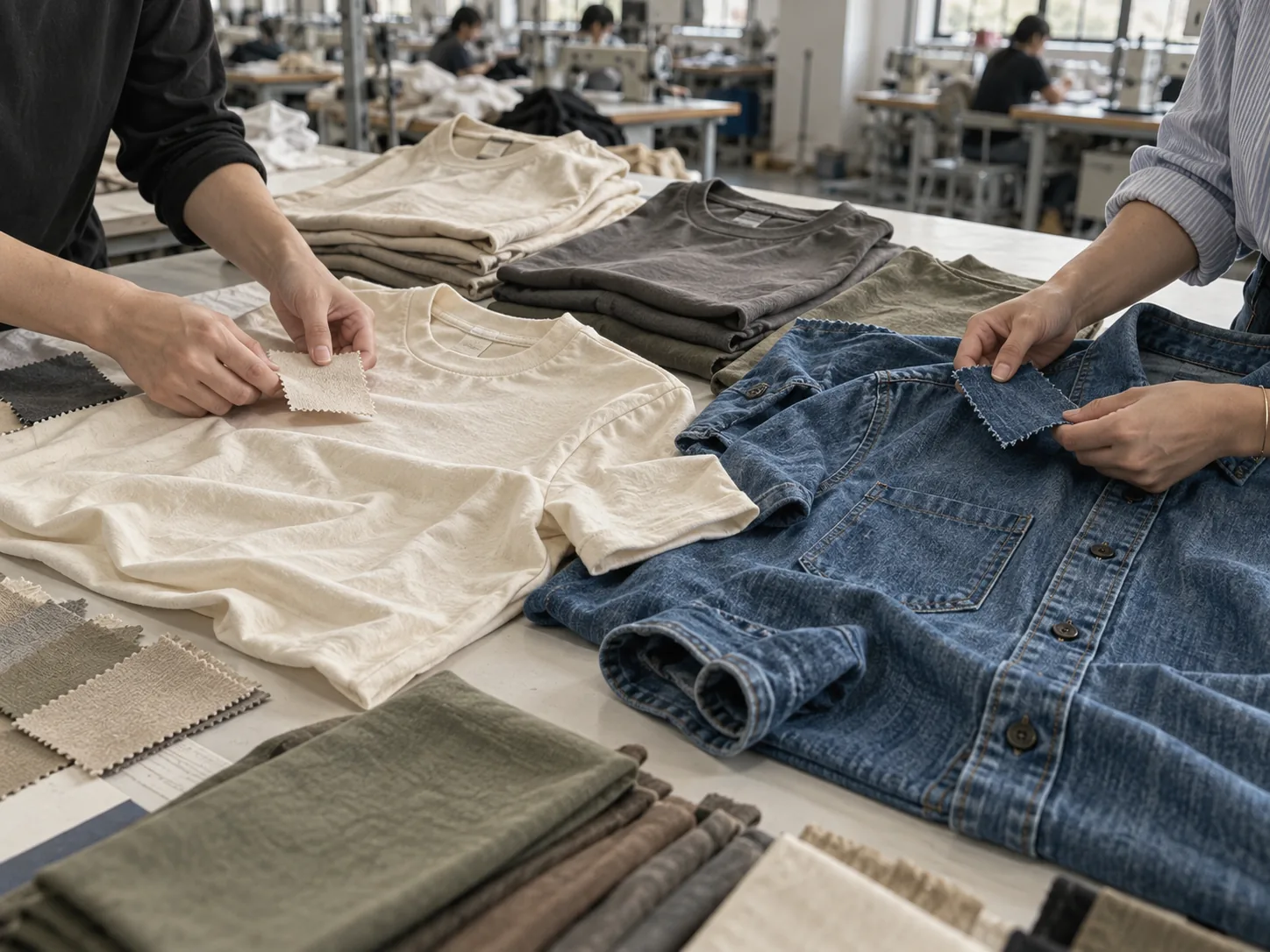
USTR’s forced-labor investigations give apparel buyers a reason to change when they approve sourcing decisions. A finished sample may satisfy the designer while the purchasing team still cannot identify the fabric mill, explain an outsourced wash, or connect a material invoice to the proposed bulk order. Approving appearance and approving a supply chain are separate decisions.
This article treats the issue as an approval-gate problem: what must be established before a buyer authorizes sampling, material commitment, cutting, and shipment. It is a purchasing workflow, not a claim that an investigation automatically creates a tariff or makes an individual shipment inadmissible. Confirm current measures and shipment-specific requirements with the importer’s trade adviser before relying on a sourcing decision.
Make the first approval about exposure, not garment appearance
Section 301 investigations concern trade practices and can lead to trade action through a separate process. They should not be confused with shipment-level forced-labor import enforcement, including obligations under applicable U.S. law. A country appearing in an investigation does not by itself establish that a particular garment used forced labor; absence from an investigation is not proof of a clean supply chain.
Before requesting a development sample, identify the intended destination, importer of record, proposed production locations, and the person responsible for reviewing trade restrictions. Record the date and source of that review. Recheck before a major financial commitment if the sourcing route or applicable measures change. A purchase order approved months earlier is not a substitute for a current review.
Give commercial and compliance decisions different signatories. A buyer can approve an indicative production schedule while holding authorization to purchase fabric. Likewise, a designer can accept the neckline without clearing the material source. Use explicit statuses such as “development only,” “material purchase authorized,” and “bulk cutting authorized” so an enthusiastic sample comment cannot be mistaken for permission to proceed.
Require a material route before committing to yardage
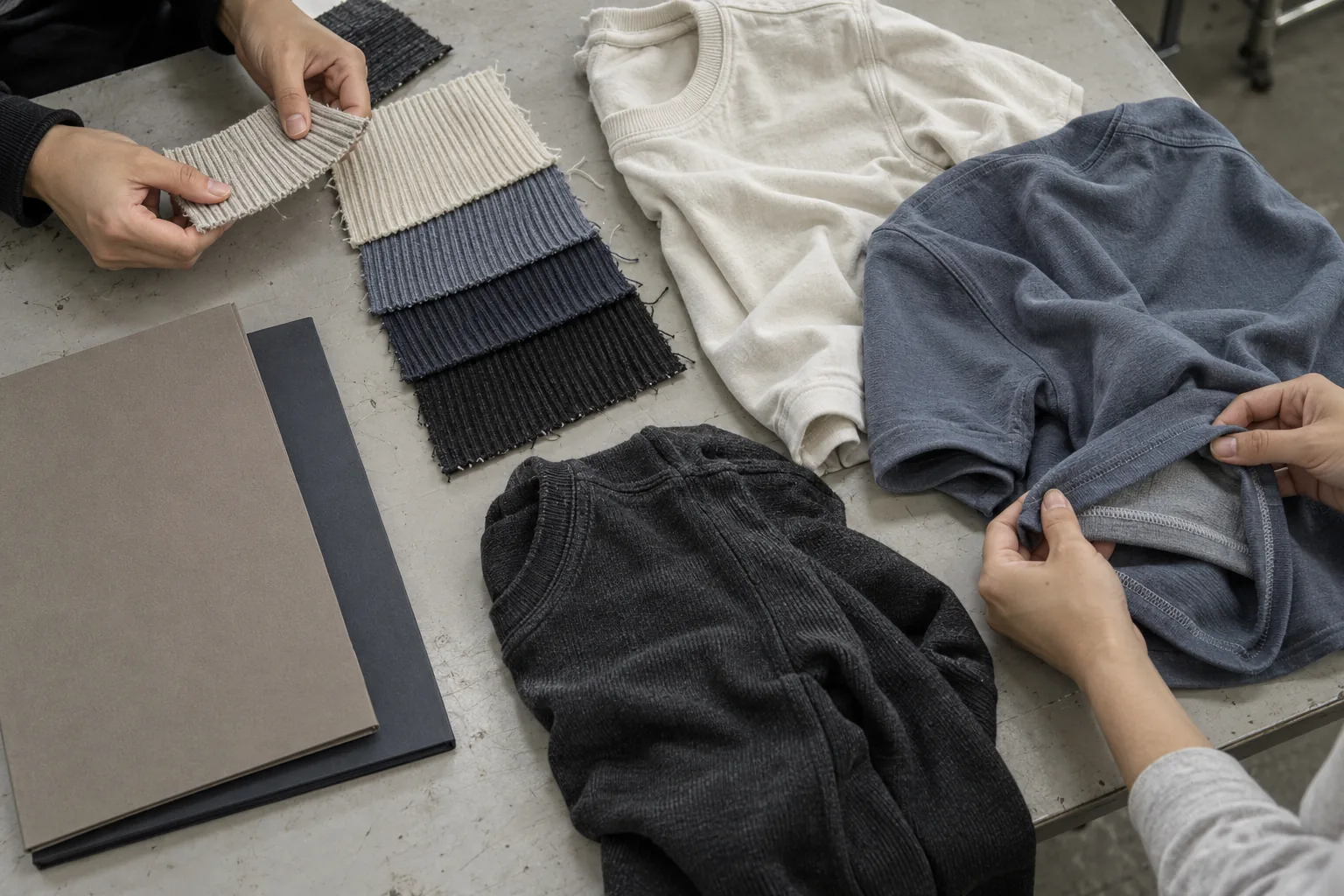
The next gate asks whether the proposed supply route can be described and supported. Start with the actual garment rather than a general supplier presentation. For a cotton jersey long-sleeve top, identify the body fabric, rib, sewing thread, labels, and any printed or embroidered components. Set evidence priorities according to material and sourcing risk, with specialist guidance where needed.
Ask who supplies each major material, where it is produced, and which operations are performed by other facilities. For cotton fabric, this may mean tracing beyond the fabric seller to knitting, spinning, and upstream cotton sources. The required depth depends on the applicable rules and identified risks; a tier-one factory address alone does not resolve those questions.
Request records that connect the route: purchase references, invoices, delivery records, lot identifiers, and relevant production records. Check whether names, dates, quantities, and locations agree. A polished declaration with no connection to the purchased material is weaker than a coherent transaction trail, but transaction records alone still do not prove the absence of forced labor.
If confidentiality prevents direct disclosure, agree on an appropriate controlled review with a qualified adviser. Do not replace an unanswered question with “supplier confidential” and mark it complete. Keep the gate on hold when the evidence needed for the decision remains unavailable.
Bind sample approval to a defined bulk specification
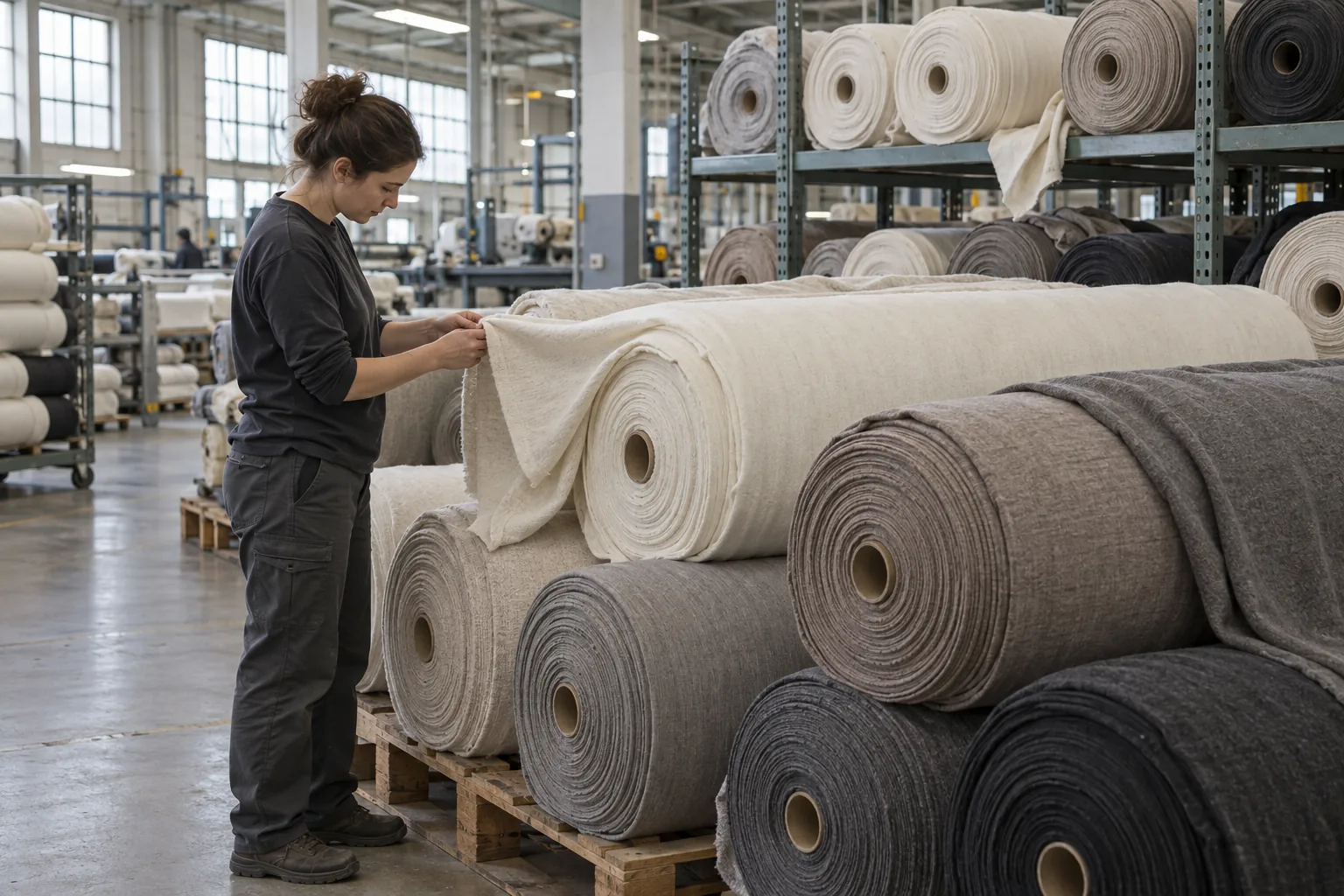
A sample proves little about bulk sourcing if its fabric came from an unrelated stock roll. Label the development material as provisional when necessary. Before approval for production, record the chosen material reference, composition, construction, weight, finish, color standard, and intended source alongside the sample version. Identify any differences that still require approval.
For example, a buyer might specify 240 gsm cotton jersey with an agreed weight tolerance of ±5%, measured using an agreed method. That is an illustrative product requirement, not a legal threshold or a StitchQuote default. If the proposed bulk fabric changes, review both performance and source documentation; matching the weight does not make two fabrics interchangeable.
StitchQuote offers sampling, fabric and trim sourcing, and cut-and-sew services. A 7-day sample is available for standard styles with confirmed specifications and available materials; complex styles, custom washes, and custom-developed fabric take longer. Treat that timing as a development option, not as a promise that sourcing evidence or an importer’s review can be completed in seven days.
Control substitutions before the cutting room receives a release
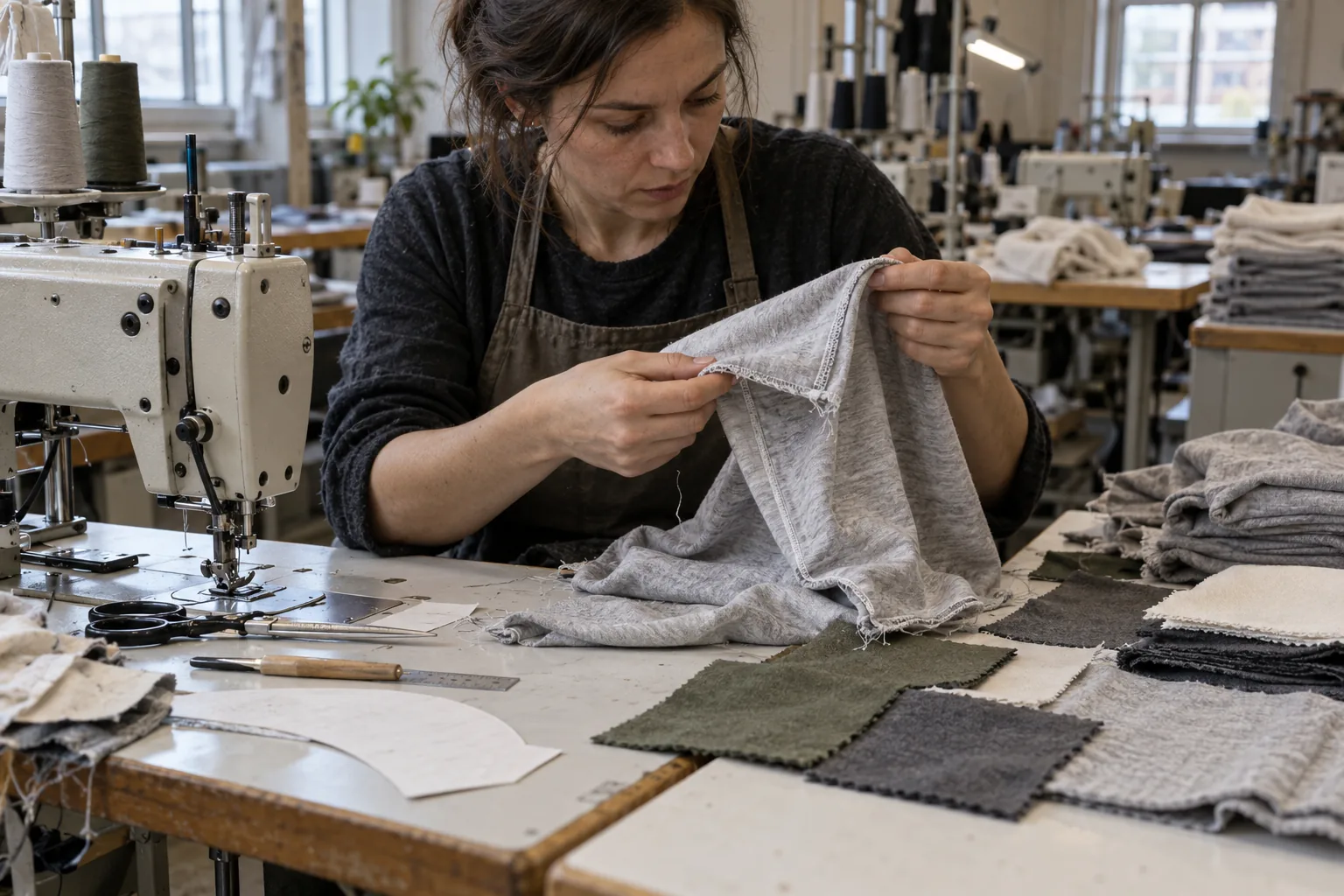
Material shortages and capacity changes are common points where an approved route becomes inaccurate. Establish a written change rule before placing the order: no unapproved fabric substitution, processing-site change, or subcontracting change. The rule should identify who can request a change, what supporting information is required, and who can release the affected work.
Consider a denim overshirt whose wash must move to another facility. The buyer needs the replacement facility’s identity and role, revised movement records, and a review of the sourcing implications. Product approval may also need a new wash sample for shade, shrinkage, and hand feel. A successful wash trial answers the product question, not the labor-risk question.
| Release point | Evidence to review | Reason to hold |
|---|---|---|
| Material purchase | Approved specification and supported material route | Seller identified but production source unresolved |
| Bulk cutting | Received lot linked to approved material records | Delivered lot differs without approved change |
| Shipment | Final quantities, facilities, and shipment records reconciled | Unexplained processing location or document conflict |
StitchQuote’s MOQ for most categories starts from 50 pieces per style; denim starts from 100 pieces per style. Smaller orders reduce inventory commitment, but they do not remove the need for a supported sourcing decision. Keep the same gate logic while scaling the paperwork to the order and applicable requirements.
Use pre-packing QC to catch mismatches, then escalate them
QC before packing is an opportunity to compare the physical order with the approved records. It cannot establish labor conditions through visual inspection. StitchQuote includes QC before packing among its services; buyers should separately define their documentary review and importer responsibilities instead of assuming garment inspection covers them.
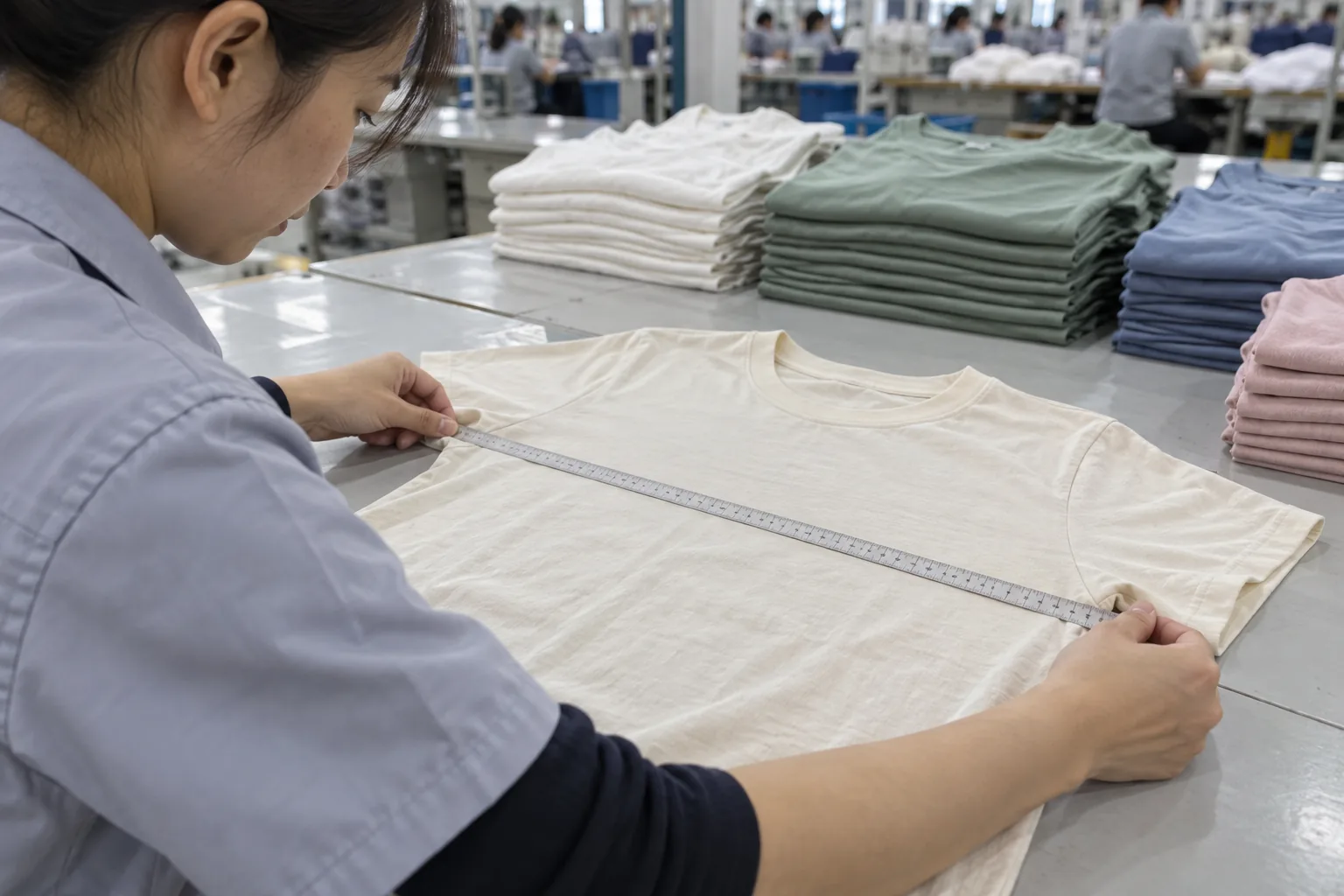
- Material identity: Compare the bulk fabric reference and receiving lot with the approved bill of materials. Investigate differences rather than accepting a similar hand feel.
- Product measurements: Check agreed points of measure and tolerances. For example, a buyer may set a ±1 cm chest-width tolerance for a particular knit style; confirm suitability per project.
- Processing history: Reconcile cutting, sewing, washing, printing, and embroidery locations against the approved route, including authorized changes.
- Quantity continuity: Compare material receipts, recorded consumption, production output, rejects, and packed quantities. Allow documented cutting waste and process loss; investigate unexplained gaps.
- Shipment consistency: Check style references, quantities, and relevant origin information across final records. Refer legal origin determinations to the responsible specialist.
Assign each discrepancy an owner and a resolution record. A measurement defect may require rework; an unexplained fabric source may require holding the affected goods while the importer reviews evidence. Do not close both issues with a generic “QC passed” stamp.
Keep a release record that survives a repeat order
Create one order-level file containing the approved specification revision, material references, supplier and processing map, evidence index, change approvals, and shipment reconciliation. Record who released each gate, when, and on what basis. Retain records according to applicable legal requirements and the buyer’s retention policy, with access controls for sensitive supplier information.
For reorders, carry forward the specification but reconfirm the actual supply route. A repeat style number does not guarantee the same yarn source or processing location. Ask the supplier to identify changes explicitly and reopen the affected gate. This also prevents a previous shipment’s documentation from being casually attached to a new lot.
Questions buyers ask when a gate stays on hold
Can development continue while upstream records are being reviewed?
Often, yes, if the buyer clearly authorizes development only and accepts its cost. Separate sample work from bulk material purchase and cutting. Development progress should not create an implied commitment to approve an unresolved supply route.
Does a signed supplier declaration unlock the material gate?
Not automatically. Review its scope, date, named entities, and relationship to the actual materials. A declaration may support the file, but unresolved inconsistencies or missing upstream evidence still require assessment by the responsible reviewer.
What if only one color uses an unapproved fabric lot?
Identify and segregate the affected lot and garments, then establish whether the remaining goods are independently traceable. Release unaffected units only after the responsible reviewer confirms that separation is supported. Do not assume different colors prove separate sourcing.
Who decides whether an investigation changes shipment approval?
The importer should assign that decision to its responsible trade or compliance reviewer, supported by counsel or a broker as appropriate. The production team supplies accurate order records. Check the current legal position rather than inferring shipment consequences from a headline.
Related reading and project planning:
- Prepare a tech pack with clear approval references
- Review sampling and MOQ requirements
- Discuss your specifications and approval gates with StitchQuote
Request a manufacturing quote
Share your product type, quantity range, and destination. We usually reply within one business day.