Custom Streetwear, Casualwear & Denim Manufacturer•MOQ 50 pcs•Denim MOQ 100 pcs•7-Day Sample Available

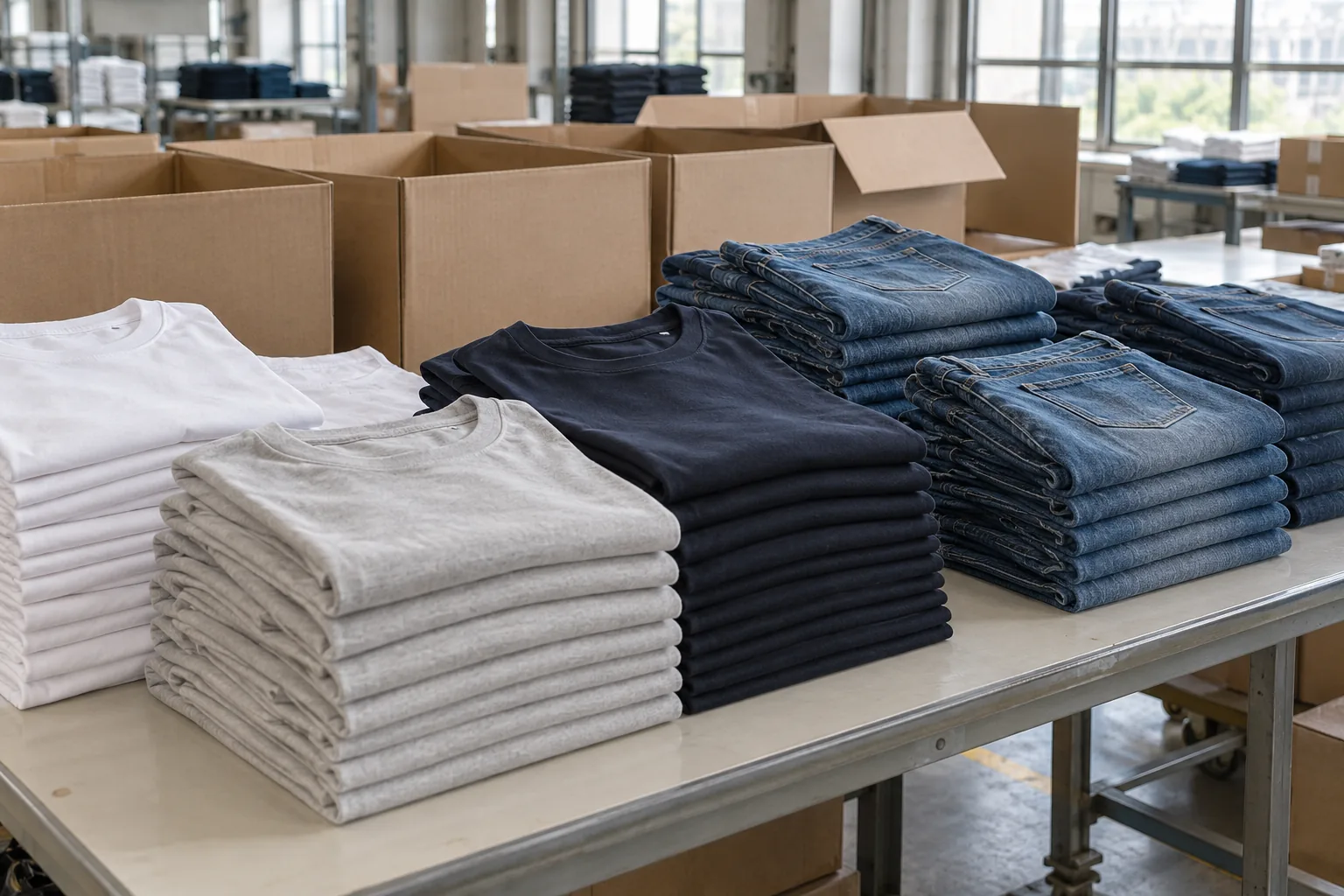
Why USTR’s Excess-Capacity Probe Matters for Apparel Sourcing
Learn why USTR's March 2026 excess-capacity probe matters for apparel sourcing across Asia, especially for buyers comparing future diversification routes.

USTR’s excess-capacity probe gives apparel buyers a reason to revisit purchase approvals, especially for goods entering the United States. The useful question is whether each proposed order has enough product, origin, and commercial detail to survive a change in trade assumptions. A low factory quote cannot answer that question on its own.
Use the checklist below before paying a bulk deposit or moving a repeat style to another supplier. It treats policy uncertainty as an order-control problem: identify what you are buying, establish which assumptions need professional verification, and decide who can approve changes. An investigation is not itself a new duty on your garments; any applicable measure requires checking its scope and effective rules separately.
Build a decision file for each style before comparing countries
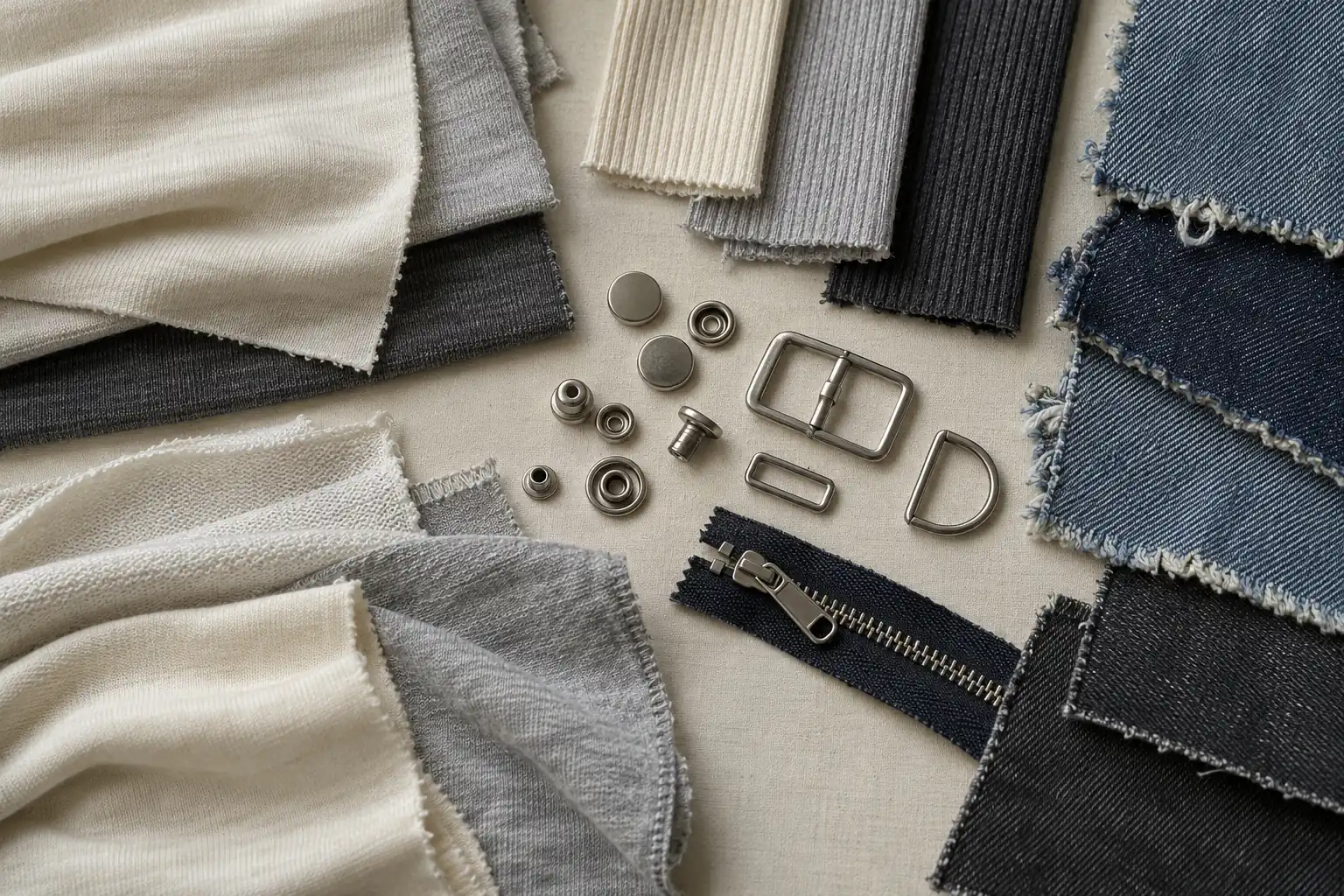
Start with the product that will actually ship. For a heavyweight jersey T-shirt, record fiber composition, knit construction, target fabric weight, fit, decoration method, and intended customer category. For denim, add stretch content, wash reference, hardware, and finished measurements. These details support supplier comparison and give your customs adviser a usable starting point for classification.
A description such as “premium cotton top” leaves too much open. A more useful specification might say “100% cotton single jersey, target 240 gsm, short sleeves, rib neck, screen-printed chest artwork.” That example is a development brief, not a tariff classification. Have the importer or its customs broker confirm the classification using the complete garment information.
Keep one dated revision of this file with each quotation. If one factory quotes a lighter fabric or substitutes a cotton-polyester blend, mark it as a different proposal. Otherwise, a sourcing review may attribute the saving to geography when the real change is in the product.
Separate policy headlines from facts that can change your order
Before acting on news about the investigation, have your trade adviser check official USTR notices and relevant customs implementation guidance. Record the publication date and distinguish an investigation announcement, a proposed action, and an effective measure. Do not put a hypothetical tariff into the purchase order as though it were already payable.
Your review should identify the destination market, proposed classification, declared origin, and expected import timing. Ask which event controls applicability under any relevant measure. Shipment departure, customs entry, and warehouse receipt are different events; your production calendar should not silently treat them as interchangeable.
| Approval item | Evidence to retain | Person to confirm |
|---|---|---|
| Product classification | Garment specification and classification rationale | Importer or customs broker |
| Origin basis | Production locations and process records | Supplier and trade adviser |
| Applicable charges | Dated calculation with stated assumptions | Broker and finance lead |
| Release timing | Material commitments and production milestones | Buyer and supplier |
Assign a review trigger as well as a review date. A revised official notice, a changed production location, or a delayed shipment should reopen the relevant approval. This keeps policy monitoring tied to decisions your team can actually make.
Trace production steps before accepting a new origin claim
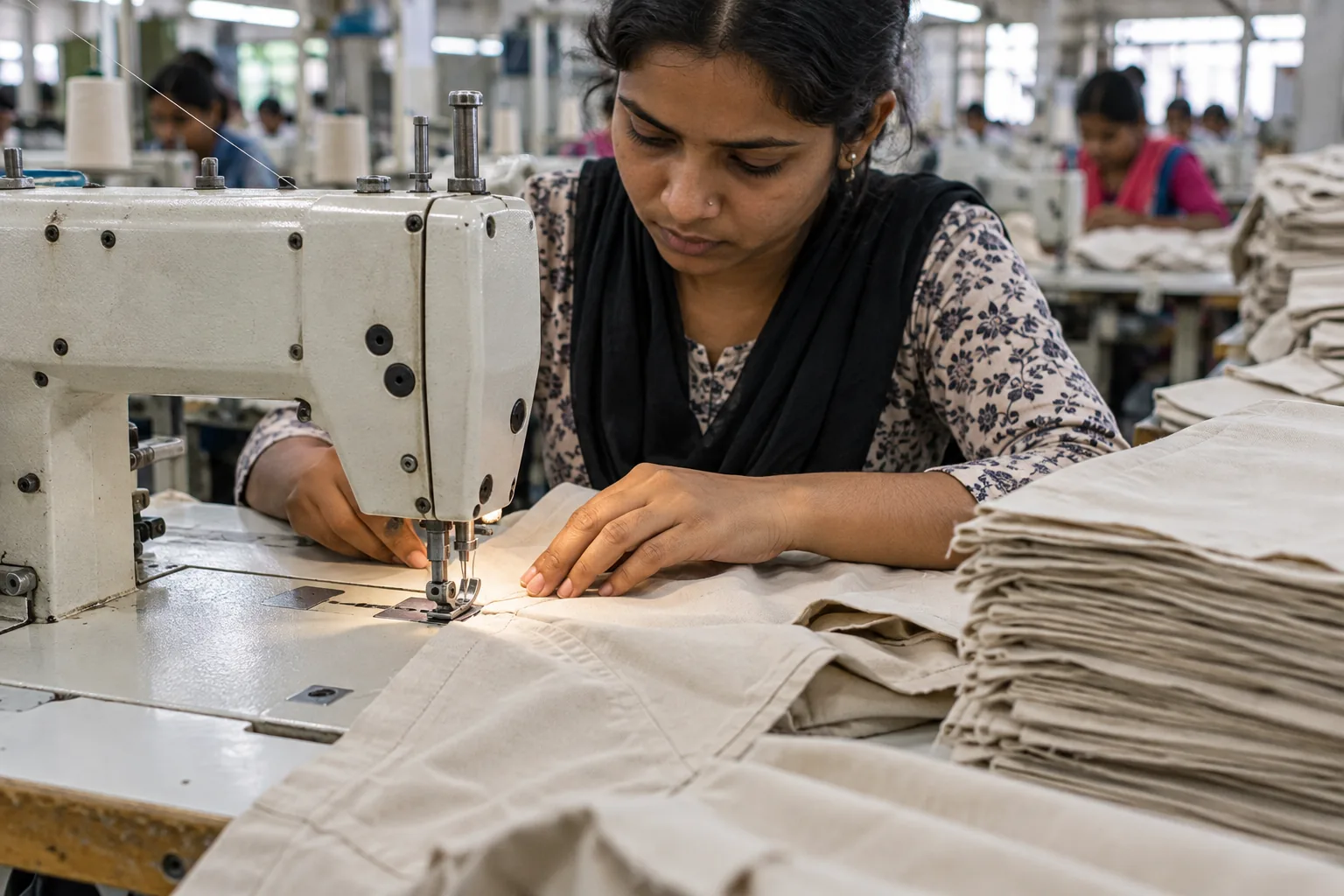
Ask the supplier to map fabric sourcing, cutting, sewing, washing, decoration, and packing. Identify which steps occur at the quoted facility and which involve outside processors. The purpose is to understand the actual supply chain and obtain records that support professional review of the finished garment’s origin.
For example, moving a sweatshirt’s embroidery or final packing to another country does not automatically establish a new origin. Textile and apparel origin rules can depend on product construction and the jurisdictions involved. A shipping route, invoice address, or forwarding warehouse is not sufficient evidence by itself.
Request the legal seller’s identity, production addresses, and a written obligation to disclose changes in manufacturing location. If the supplier proposes a different sewing site after sample approval, pause the affected release until quality, timing, and origin assumptions have been checked. Keep legitimate supporting records together rather than relying on scattered chat messages.
Stress-test the purchase commitment, not just the unit quote
Compare suppliers using the same garment specification, quantity, delivery basis, and payment assumptions. Separate the factory price from freight, insurance where relevant, brokerage, duties, and destination handling. Have finance check for double counting when a quoted delivery term already includes a particular cost.
Run a base case using verified current assumptions, then a sensitivity case using a clearly labeled hypothetical increase in import costs. Choose the increase with your finance team; it is a planning input, not a prediction about the probe. Show the resulting margin and cash requirement for each proposed order.
Next, identify when money becomes committed. A small garment order may still require nonreturnable custom fabric, dyed rib, or branded hardware. Ask what can be reduced before fabric booking, before cutting, and after sewing starts. Record cancellation charges and whether reserved materials could serve a later order.
StitchQuote’s MOQ for most categories starts from 50 pieces per style; denim starts from 100 pieces per style. These starting points can inform an initial order discussion, but confirm fabric, color, trim, and wash requirements for the specific project. A smaller order only improves flexibility when its underlying material commitments are also understood.
Make the sample prove that a backup source is usable
A second quotation is not yet a production alternative. Before assigning a supplier a backup role, check whether it can reproduce the fit, fabric behavior, construction, and branding that your customers expect. Develop against the same specification and approved reference used for the primary source.
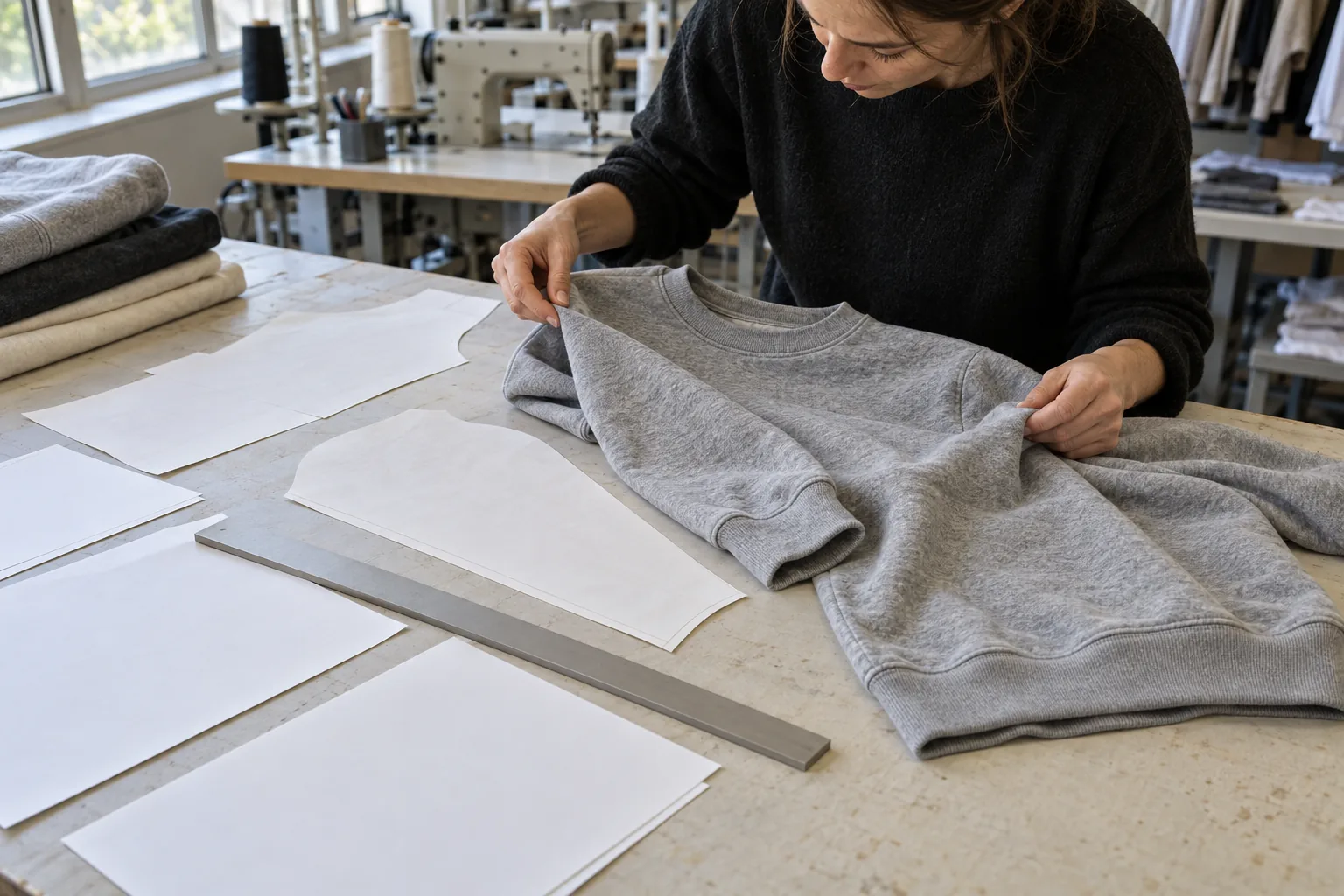
Consider a relaxed sweatshirt with a wide rib waistband. Two samples can match chest width while behaving differently after washing because their rib recovery and body shrinkage differ. Compare the samples after the same agreed care procedure, and measure from identical points with the garments laid flat and relaxed.
Record sample differences as measurable corrections. “Improve the neckline” is ambiguous; “reduce finished neck opening width by 1 cm while retaining the approved rib height” is actionable, subject to confirming the pattern and measurement method. Freeze the corrected reference before authorizing bulk cutting.
StitchQuote offers sampling, fabric and trim sourcing, cut-and-sew, private label, and branding through woven labels, prints, and embroidery. A 7-day sample is available for standard styles with confirmed specifications and available materials. Complex styles, custom washes, and custom-developed fabric take longer. Treat sample completion, sample approval, and bulk readiness as separate calendar milestones.
Use a release checklist that protects quality under time pressure
Policy uncertainty can tempt buyers to accelerate shipment before an assumed deadline. Keep the release criteria explicit so urgency does not conceal unresolved defects. StitchQuote includes QC before packing; buyers should still agree the inspection scope, defect handling, and evidence required for their own order.
- Measurement agreement: list points of measure, size specifications, and tolerances. An illustrative chest-width tolerance of ±1 cm may suit some relaxed garments, but confirm suitability by style; smaller details may need tighter limits.
- Fabric and wash checks: agree how to assess weight, shade, shrinkage, and twisting. Define the care procedure and acceptance criteria before testing rather than selecting a threshold after seeing results.
- Decoration checks: measure artwork position from a fixed seam or garment point. Confirm print appearance after the agreed wash test and inspect embroidery for puckering or loose threads.
- Construction checks: inspect stress points, seam security, skipped stitches, and hardware function. For washed denim, compare shade and abrasion against an approved range rather than one photograph.
- Packing and records: reconcile size counts, labels, carton quantities, invoice descriptions, and the approved production information. Resolve discrepancies before shipment release.
Specify who can accept a deviation and what requires rework or reinspection. A shipment deadline should never become an undocumented substitute for the agreed acceptance criteria.
Questions buyers ask before releasing a policy-sensitive order
Should we stop an approved order because an investigation is in the news?
The headline alone does not establish a reason to stop. Review applicable rules with your broker, quantify the order’s exposure, and compare that exposure with cancellation obligations and inventory needs. Document the decision using current evidence and identify what new information would change it.
Can we approve a backup factory without repeating sample checks?
A previous supplier’s approval does not validate another factory’s output. Use your existing specifications to shorten development, then verify the new sample’s fit, materials, wash behavior, and construction. Decide which checks can rely on existing evidence and which require fresh results.
Does splitting deliveries remove uncertainty about import costs?
Splitting deliveries may help inventory planning, but it does not guarantee different duty treatment. Ask your broker how applicable rules treat each entry, and compare added freight and handling against the flexibility gained. Confirm whether the supplier can hold finished goods and on what terms.
What should we send with a sourcing inquiry?
Send the garment specification, destination market, quantity by style and color, target delivery window, and known material requirements. Flag unresolved classification or origin questions for the appropriate adviser. This lets the manufacturing discussion focus on achievable construction, sampling, and production commitments.
Related reading and project preparation:
- Prepare a tech pack for comparable supplier proposals
- Review sampling and minimum order planning
- Contact StitchQuote with your garment brief
Request a manufacturing quote
Share your product type, quantity range, and destination. We usually reply within one business day.