Custom Streetwear, Casualwear & Denim Manufacturer•MOQ 50 pcs•Denim MOQ 100 pcs•7-Day Sample Available

How March 2026 Middle East Shipping Disruptions Are Changing Apparel Lead-Time Planning
Learn how March 2026 Middle East shipping disruptions are changing apparel lead-time planning, freight costs, and booking decisions for importers and growing brands.

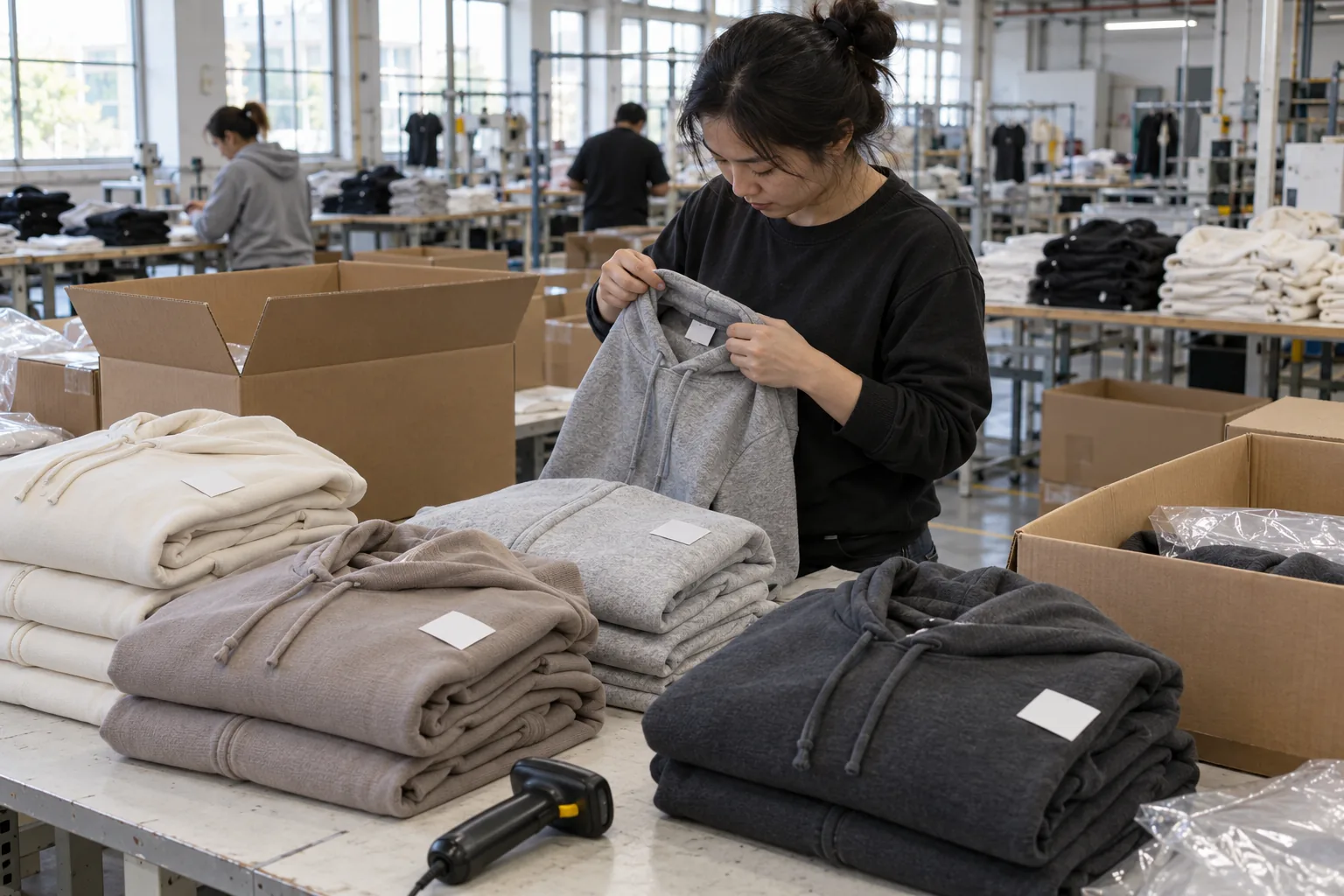
For apparel buyers reassessing schedules after the March 2026 Middle East shipping disruptions, packaging deserves a place on the critical path. A garment can pass its sewing inspection yet remain unready for dispatch because its care label, hangtag, bag sticker or carton identification is still awaiting approval. When a freight option changes, those unresolved details can turn a manageable booking adjustment into another production delay.
The useful planning question is which labels must be fixed before sewing, which can wait until packing, and which depend on the final shipment allocation. This article uses label sequence to connect garment completion with warehouse acceptance. It does not assume a particular route is operating or predict transit times; buyers should obtain current routing, cutoff and documentation requirements from their forwarder for each shipment.
Build the delivery calendar around label dependencies
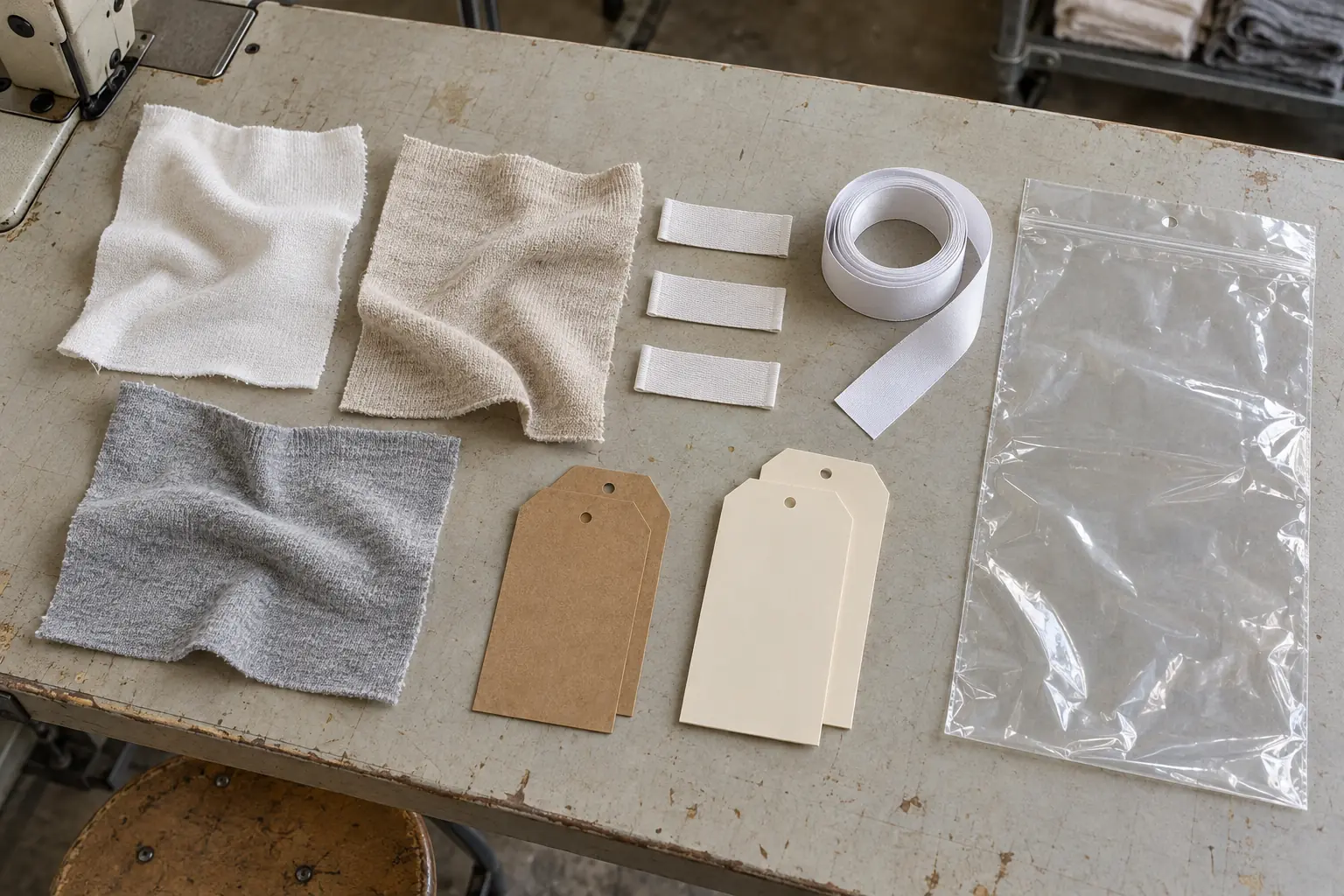
Start with the date stock must be available for sale, then work backward through warehouse receiving, customs clearance, transport, cargo handover, packing and garment completion. Put label approvals against the operation that consumes them. A sewn-in size label belongs ahead of the sewing operation; a carton routing label may belong much later. Calling both items “branding approval” conceals their different deadlines.
Give every label family an owner, an approved revision and a release condition. The brand should confirm product identity and destination requirements, the manufacturer should confirm physical construction and placement, and the receiving warehouse should confirm its identification rules. Where legal labeling is involved, the buyer needs appropriate market-specific review before release.
For example, a sweatshirt order may retain the same sewn-in labels while its finished units are divided between two warehouses. If warehouse identity is embedded in every hangtag, that allocation becomes an early production constraint. If the receiver permits destination information on a separate outer sticker, the allocation can remain open longer.
Freeze the information that will be sewn into the garment
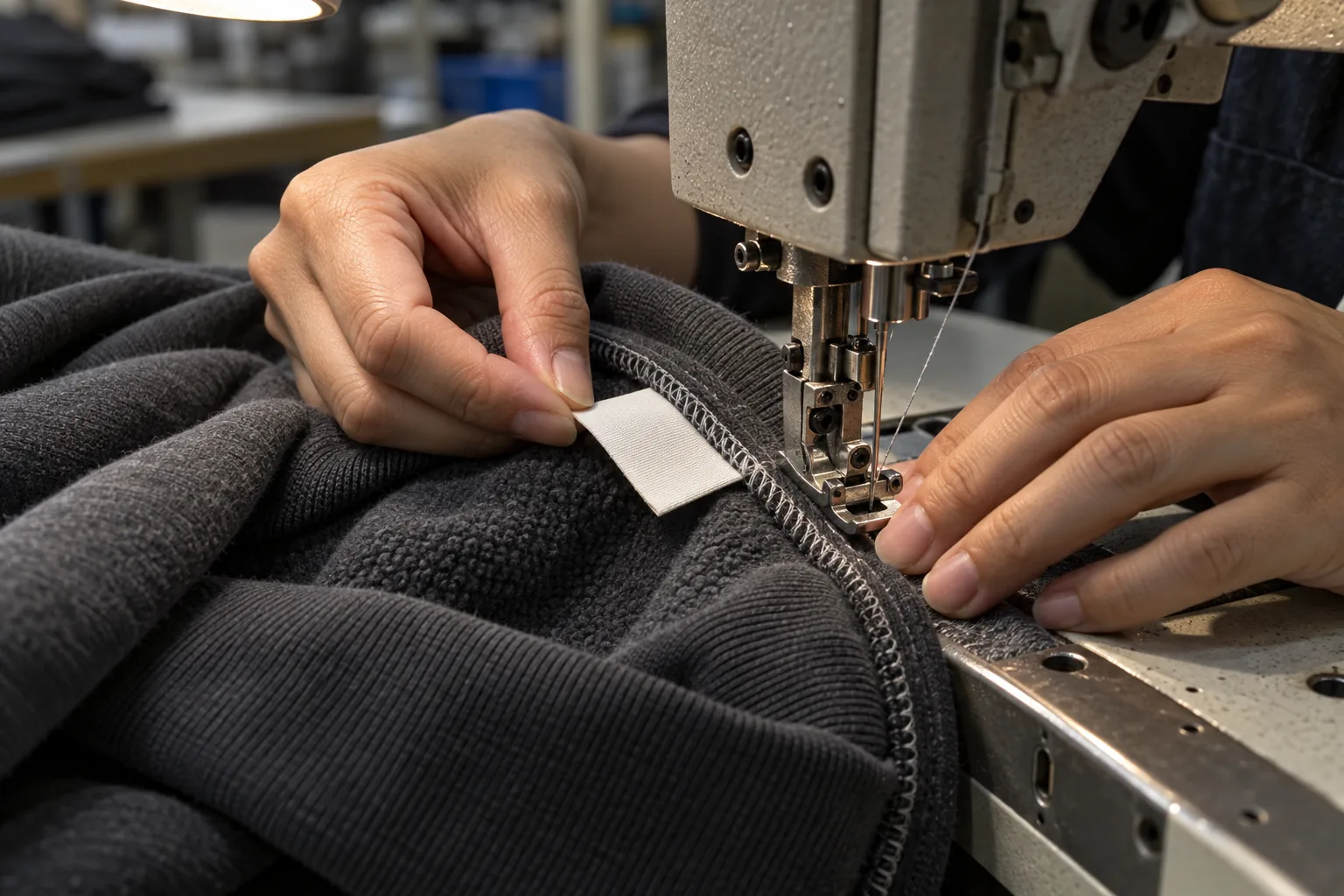
Permanent labels deserve the earliest decision gate because replacement can require opening seams. Confirm the brand label, size designation, fiber composition, care information and any required origin or responsible-party information for the intended selling market. A transit routing change does not itself change garment origin. A change in selling market, however, may require a fresh review of wording, language and required information.
Define the physical specification as carefully as the artwork. Record finished dimensions, fold type, material, edge treatment, attachment method and position from a named seam. For a side-seam care label, specify whether the placement measurement refers to its top edge or attachment point. “Near the hem” gives neither a sewing operator nor an inspector a reproducible reference.
A buyer might propose a placement tolerance of ±5 mm for an internal label, subject to sample approval and factory agreement. That is an example acceptance criterion, not a universal standard. Check the label on the actual fabric: a stiff edge that feels acceptable against denim may irritate skin inside a lightweight jersey tee.
Approve a complete label set on the sample table
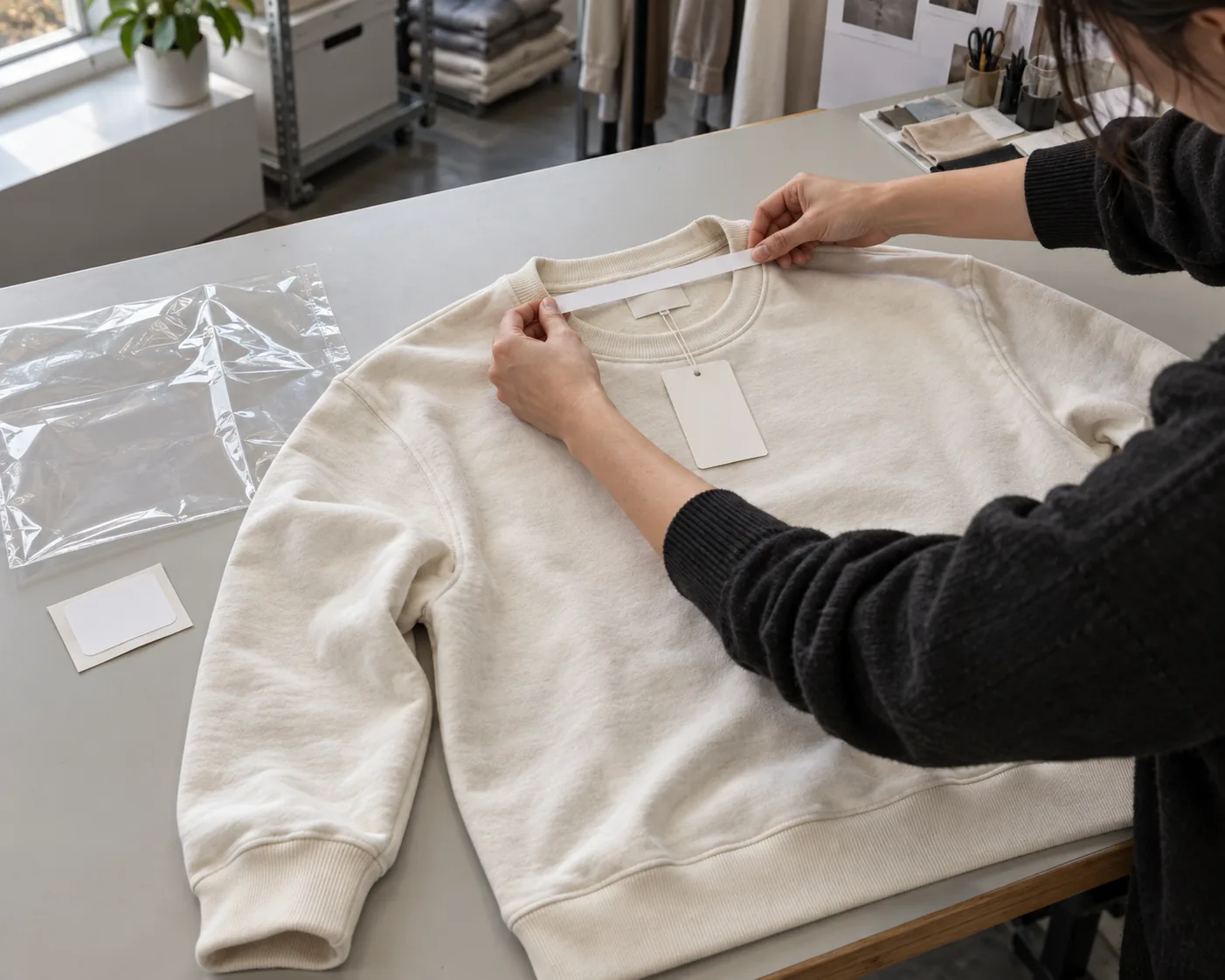
Do not approve label artwork in isolation and assume the packed product will work. Assemble a reference set containing the garment, permanent labels, hangtag attachment, proposed bag and unit sticker. Compare size and color names across every component. A garment described as “washed charcoal” in the purchase order should not become “black” on its barcode sticker unless that mapping is intentional and documented.
Use a revision identifier on the approval record and preserve the approved files with the purchase order. When a care instruction changes, identify which components it affects and withdraw superseded files. Otherwise, sourcing can order one version while packing prints another. Keep an approved physical reference where texture, folded dimensions or attachment cannot be judged reliably from a screen.
StitchQuote offers a 7-day sample for standard styles with confirmed specifications and available materials. Complex styles, custom washes and custom-developed fabrics take longer. Confirm whether the proposed sample includes final branding and packaging components; garment sample availability should not be interpreted as approval or availability of every label in the shipment.
Reserve the final packing decisions for confirmed allocations
Late decisions should be deliberate, with materials and printing capacity prepared in advance. The table below shows an example sequence to adapt with the manufacturer and receiver. It is not permission to postpone required product information until dispatch.
| Label layer | Release gate | Effect of a late change |
|---|---|---|
| Sewn-in identity and care | Before the relevant sewing operation | Seam opening, replacement and reinspection |
| Hangtag and unit barcode | After SKU mapping and attachment approval | Retagging or replacing unit stickers |
| Bag identification | After unit pack format is confirmed | Opening or replacing packaging |
| Carton destination and sequence | After carton contents and allocation are fixed | Relabeling and document reconciliation |
Keep the product barcode separate from a temporary shipment identifier when the receiving system allows it. The first identifies what the item is; the second supports movement of a particular shipment. Combining them unnecessarily can make a destination change affect every individually packed unit.
Specify barcode symbology, data source, print size, contrast and required clear space with the receiver. Test a printed label on the intended surface, using the actual scanning workflow where possible. A correct digital file can still fail after printing onto a reflective bag or wrapping across a carton corner.
Set a relabeling deadline before cargo handover
Transport uncertainty makes a defined change window more useful than a general instruction to “stay flexible.” Ask the forwarder for the applicable cargo acceptance deadline, then reserve time before it for final packing checks and document reconciliation. Confirm that window with the factory against the actual unit count, packing method and available capacity.
Consider a hypothetical order of 300 hoodies initially assigned to one warehouse. The buyer later redirects 80 units to another receiver. Before approving that change, check whether the affected cartons contain exactly those units, whether mixed-size ratios must be rebuilt, and whether the second receiver requires different unit identification. Changing four carton labels is a different operation from opening and retagging 80 bags.
Record the change request with affected SKUs, quantities, carton identifiers, replacement artwork and the person authorizing release. Reconcile the packing list after the physical work. If the request arrives after the agreed deadline, obtain a revised ready date and booking assessment before promising the change internally. Avoid relying on an assumed fixed buffer for all shipments.
Check the identification chain before sealing cartons
Packaging QC should follow a unit from its sewn-in size through its outer carton record. Inspecting each label separately can miss a correct label attached to the wrong product. Agree the inspection scope and any sampling plan before packing, and include every SKU and destination group in the verification plan.
- Garment match: compare actual style, color and size with permanent labels, hangtag and unit barcode data.
- Attachment and placement: check agreed reference points, secure stitching, label orientation and tag attachment that avoids garment damage.
- Scan result: scan the packed unit and verify the returned SKU, rather than accepting a successful beep alone.
- Carton contents: reconcile physical quantities and size ratios with the carton record and packing list.
- Revision control: remove obsolete stickers and confirm that replacement identification does not leave two conflicting readable codes.
- Release evidence: retain representative photographs, scan results and the final approved packing record with the shipment file.
StitchQuote provides QC before packing. For a project requiring verification after stickers are applied or cartons are assembled, agree that additional scope explicitly. Keep suspect units separate while a mismatch is investigated, then verify the corrected group before releasing it into the shipment.
Questions buyers ask when the shipment plan changes
Should we print the launch month on hangtags?
Only if it serves a clear merchandising purpose. Date-specific packaging may become obsolete when arrival moves. Keeping durable product information on the tag and campaign timing in a separate marketing asset can reduce rework, provided this suits the brand and retail requirements.
Can one label set cover two selling markets?
Possibly, but shared artwork needs review against both markets’ requirements and receiver rules. Confirm languages, composition wording, care information and required business identification before production. Do not assume a destination sticker resolves differences in mandatory garment labeling.
Does a small order make late label changes easier?
Fewer units can reduce handling, but trim sourcing and artwork approvals still take time. StitchQuote’s MOQ for most categories starts from 50 pieces per style; denim starts from 100. Confirm label purchasing quantities and replacement availability separately from garment MOQ.
What should we submit to plan the label sequence?
Send the tech pack, SKU matrix, label artwork, intended selling markets, receiver packing instructions and target cargo handover date. Identify unresolved allocations. StitchQuote’s cut-and-sew, private-label, sampling, fabric and trim sourcing, and branding services can then be discussed against specific release gates.
Related reading and project planning:
- Prepare the specifications and label placement references
- Review sampling and minimum order planning
- Explore private-label production services
- Discuss your label sequence and packing requirements
Request a manufacturing quote
Share your product type, quantity range, and destination. We usually reply within one business day.