Custom Streetwear, Casualwear & Denim Manufacturer•MOQ 50 pcs•Denim MOQ 100 pcs•7-Day Sample Available

Custom Manufacturing vs Ready-Made Blanks for Startup Brands
Use this factory-side guide to compare custom manufacturing vs ready-made blanks for startup brands more clearly across supplier fit, quote scope, approvals, and.

A startup can lose money on an ordinary blank that nobody wants, or on an original garment whose development consumed the launch budget. The useful choice is the route that tests your most important product promise while leaving you room to change direction. An unusual silhouette may justify a new pattern; a graphic concept may need only a dependable garment to carry it.
Before choosing, name what customers must experience for the product to succeed. Then separate that requirement from features you would merely enjoy adding. This approach makes the decision between custom manufacturing and ready-made blanks a question of controlled exposure: how much inventory, development work, and uncertainty must you accept to learn whether your offer works?
Put one customer promise at risk, not the whole collection
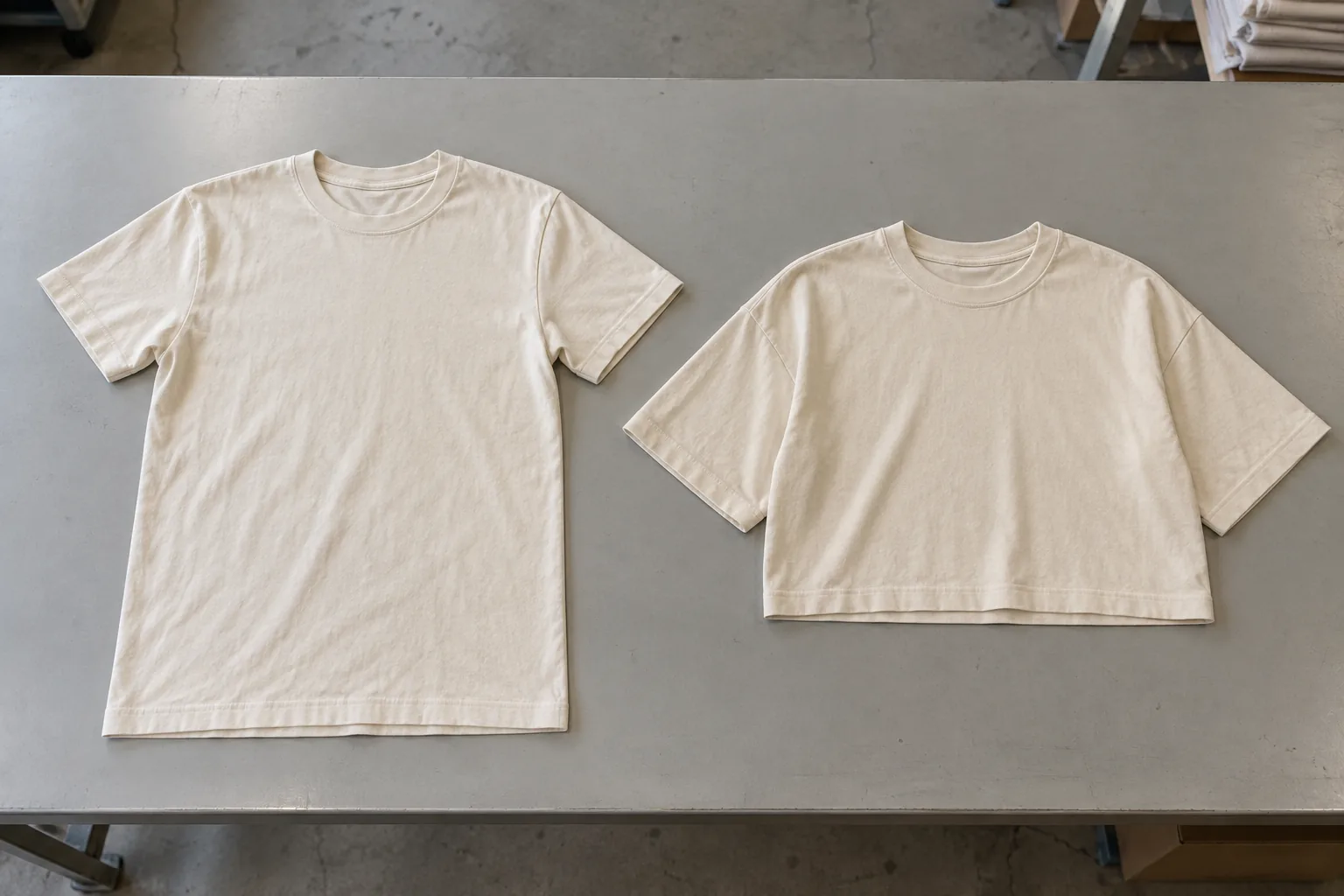
Write a sentence that could be disproved by a wear test. “Our tee stays comfortably tucked during movement” is testable. “Our tee feels premium” needs definition. For the first promise, body length, hem sweep, and fabric recovery matter. For the second, specify the attributes you mean: opacity, surface smoothness, collar recovery, or seam comfort.
If an available blank delivers those attributes, changing its pattern adds development exposure without necessarily improving the offer. If every available option rides up because the proportions are wrong, printing a better graphic will not solve the product problem. That is a credible reason to develop the garment itself.
For a first release, choose one silhouette and one main reason to buy it. A five-piece capsule with different fabrics, trims, and fits creates five learning problems at once. You may struggle to tell whether weak sales reflect the concept, fit, presentation, or size availability.
Spend development effort only where a blank fails
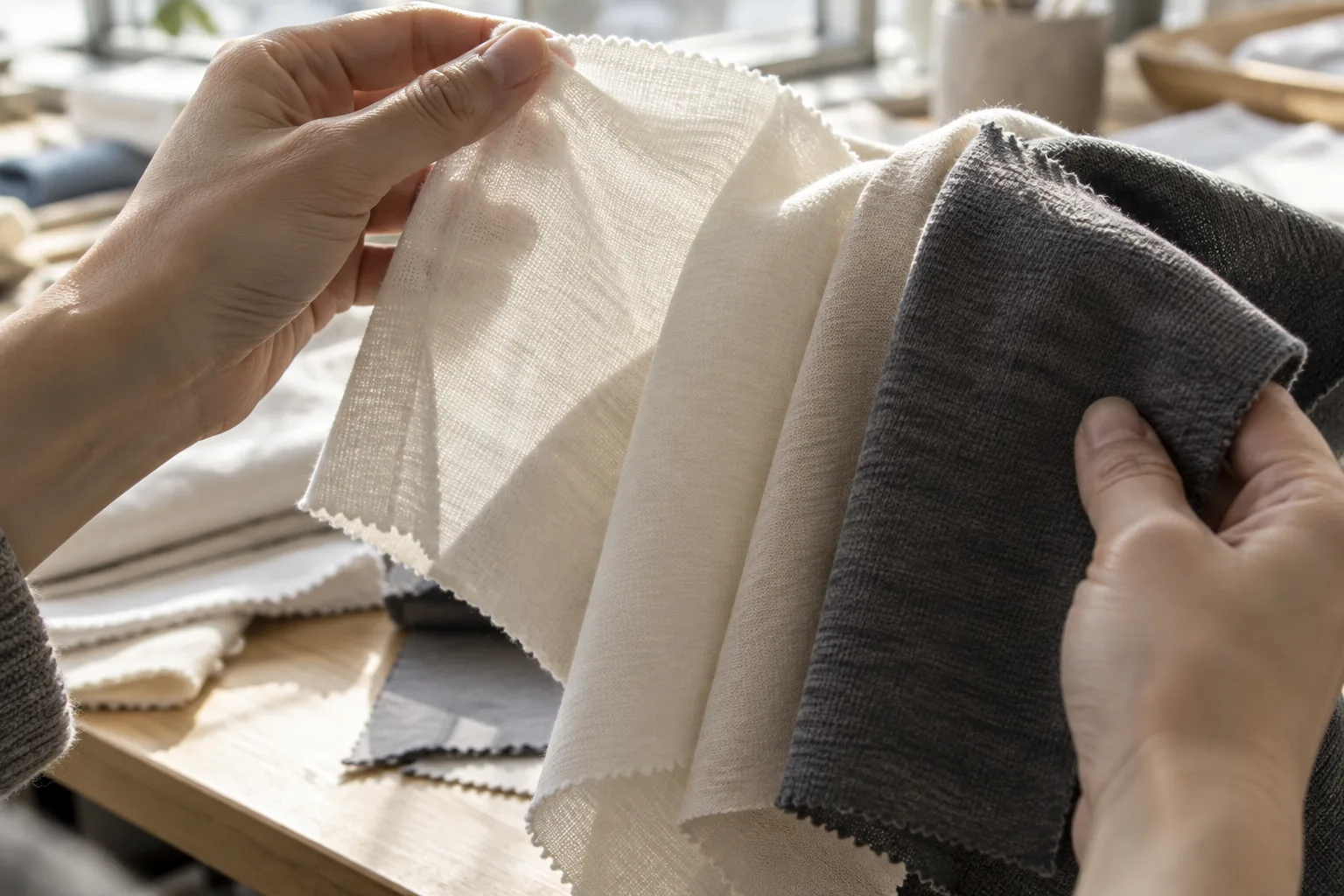
Start with two or three plausible blanks and assess them undecorated. Record composition, declared fabric weight, measurements, construction, and available colors. A heavier fabric is not automatically the better choice: it may make a tucked tee bulky or reduce comfort in warm weather. Assess the intended use before adding specifications.
Where the blank fails, identify the smallest change that fixes the failure. A shorter sleeve may require a pattern adjustment; it does not automatically require custom-developed jersey, a special dye, and an exclusive neck rib. Each addition can introduce another sourcing decision, sample round, or minimum purchase.
| Launch hypothesis | Lowest useful test | Reason to develop further |
|---|---|---|
| Buyers want the artwork | Decorate a suitable stock tee | Available surfaces cannot reproduce the artwork acceptably |
| A cropped proportion drives demand | Fit an original pattern in available fabric | Stock lengths and sleeve proportions miss the intended fit |
| A pocket improves daily use | Test pocket access and loading on a sample | Existing placement interferes with movement or contents |
Specify the result you need before prescribing a complicated construction. For example, require a pocket to hold a phone securely while sitting, then test opening width, depth, and position. An extra zipper is only useful if it solves a demonstrated problem.
Limit the commitments that survive a failed launch
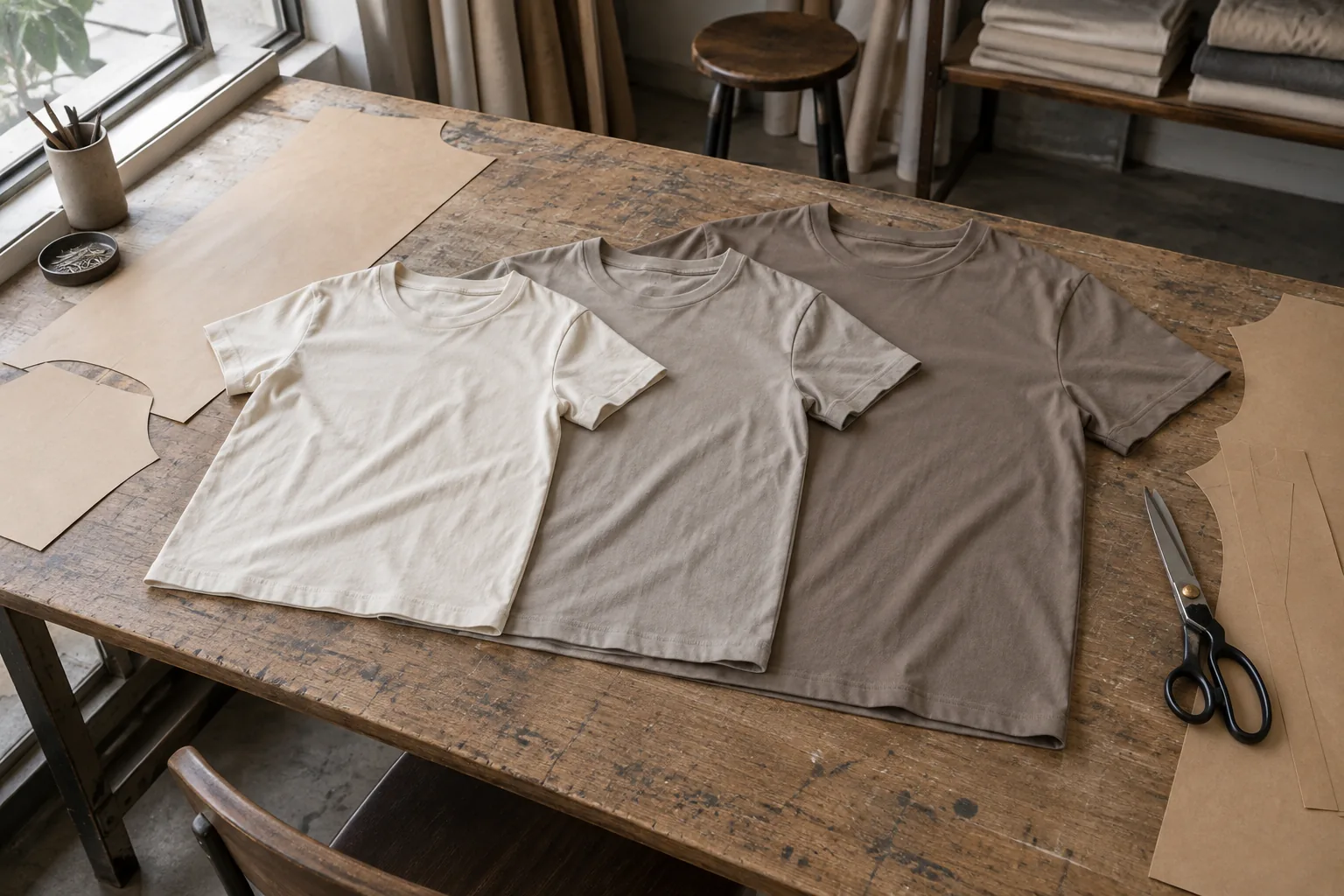
Minimum order quantity is only part of your exposure. Ask what happens to unused labels, surplus fabric, paid patterns, and unfinished goods if you cancel or revise the project. Confirm who owns development files and whether you can obtain them. These are commercial terms to agree, not assumptions attached to either sourcing route.
StitchQuote’s MOQ for most categories starts from 50 pieces per style; denim starts from 100 pieces per style. Confirm how the proposed size and color split applies to your project. A style minimum does not establish that every color, material, or decoration can be ordered in any quantity.
For illustration, splitting 60 garments equally across three colors and five sizes leaves four pieces per size-color combination. That arithmetic is not a recommended size curve. It shows how quickly an apparently adequate order becomes fragmented, with popular combinations selling out while others remain.
Compare total cash committed through saleable stock, including sampling, decoration setup, trims, transport, and any agreed testing. For blanks, verify actual stock availability and reorder continuity. For original production, confirm material availability and approval dependencies. Neither route protects you from demand risk; a narrower assortment limits how much that uncertainty costs.
Use a sample to close a decision, not open ten more
Give each sample round a written purpose. An early fit sample can answer whether the body and sleeve proportions work. A decorated sample can answer whether the selected surface supports the intended print. Combining every unfinished decision into one sample makes comments harder to interpret and revisions harder to control.
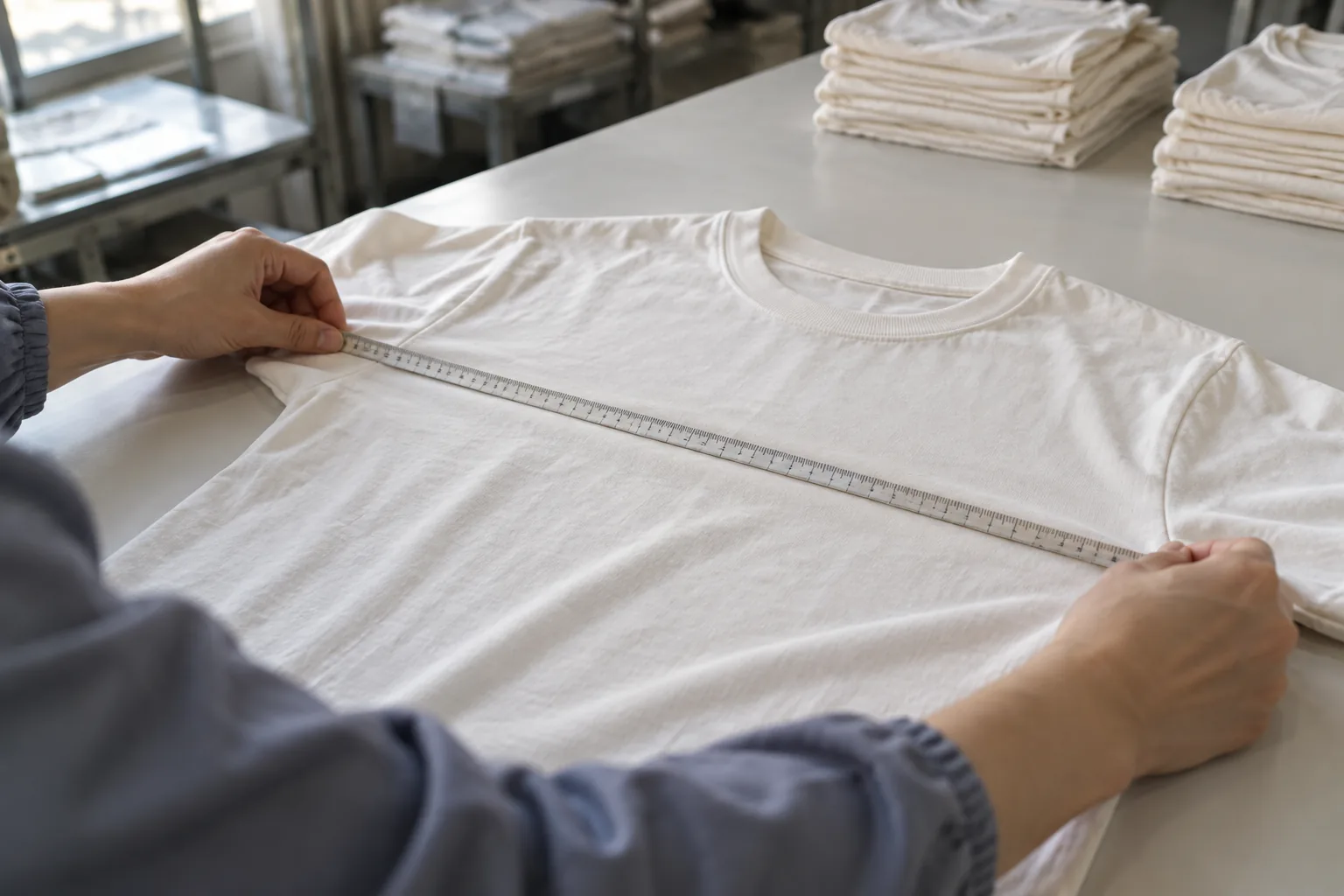
Record measurements with an agreed method: for example, chest width measured flat at a specified distance below the armhole, and body length measured from the high shoulder point. “Make it a little boxier” is insufficient. State whether that means increasing width, reducing length, lowering the shoulder, or some combination.
Separate launch blockers from optional improvements. A neck opening that catches uncomfortably during dressing is a blocker. A preference for a slightly different inside label color may be deferrable. After approval, freeze the specification revision and retain an identified reference sample so later changes remain visible.
A 7-day sample is available from StitchQuote for standard styles with confirmed specifications and available materials. Complex styles, custom washes, and custom-developed fabric take longer. Treat this as a conditional sample option, not a delivery promise for the entire launch. Allow time for shipping, evaluation, revisions, and bulk production when building your calendar.
Check the failure points before multiplying the order
Inspect the actual decorated or finished garment, because blank quality alone does not establish finished-product performance. Embroidery can pucker a lightweight panel, and print curing can affect appearance or dimensions. An original garment also needs checking after its intended wash or finishing process.
- Fit and dimensions: List critical points of measure and agreed tolerances. As an illustrative starting proposal, a relaxed tee might allow ±1 cm at half-chest, but the factory must confirm feasibility and suitability. Set tighter or different limits where function requires them.
- Wash response: Measure before and after an agreed care cycle, noting temperature, drying method, and number of cycles. If a 70 cm body becomes 68 cm, shrinkage is approximately 2.9%. Judge that result against your approved requirement and intended fit.
- Decoration: Define placement from fixed garment landmarks. Check alignment, puckering, edge lifting, and cracking after the agreed laundering assessment. Compare appearance with the approved decorated sample.
- Construction: Examine skipped stitches, open seams, seam twisting, and neck recovery. Load functional pockets with their intended contents and check access during movement.
- Assortment and identification: Verify size labels against measurements, color consistency within the lot, quantities, and packing instructions. Check representative sizes rather than relying solely on the development size.
Agree inspection coverage, defect categories, and remedies before production. StitchQuote provides QC before packing; the project still needs explicit acceptance criteria. Inspection can find deviations from an approved standard, but it cannot decide whether customers want the design.
Let the first release earn the next layer of complexity
Set your next decision before launch. Track returns by reason, fit comments by size, decoration complaints, and requests for unavailable variants. Sales alone can mislead when a promotion drives demand or a limited size selection prevents purchase. Use the evidence to identify one justified improvement.
A successful graphic tee on blanks may justify replenishment without any construction change. Repeated feedback that the sleeve opening is restrictive may justify an original pattern. Keep price, artwork, and product changes visible in your records so you can interpret what buyers actually responded to.
StitchQuote’s services include cut-and-sew, private label, sampling, fabric and trim sourcing, and branding through woven labels, prints, and embroidery. Select the services needed for the current product promise. You can build a coherent range through consistent proportions and presentation without commissioning every component from scratch.
Questions before committing to a first run
Can a blank validate an eventual original silhouette?
It can test artwork, messaging, and some buying behavior, but only partially tests a different silhouette. Tell wear testers which attributes are provisional. Do not treat approval of a standard tee as proof that customers will accept a dramatically cropped version.
Should every size receive a development sample?
Base coverage on fit risk. Review the grading rules and assess sizes where proportions may break down, particularly at the ends of the range. One approved middle size cannot establish that neck openings, sleeve widths, or pocket positions work across the assortment.
What if a preferred blank disappears after launch?
Keep its measured specification and a retained garment. Assess replacements against those records, including decorated wash performance. A similar catalog photograph does not establish equivalent fit or fabric behavior. Communicate material product changes when replenishing.
When is postponing production the better decision?
Pause when the core promise still fails testing, the required assortment exceeds your inventory capacity, or approval dates leave no realistic correction time. Removing an optional detail may rescue the plan; accepting an unresolved fit problem merely transfers it to customers.
Related reading
- Prepare a tech pack with measurable requirements
- Review sampling and minimum order considerations
- Discuss your first production brief with StitchQuote
Request a manufacturing quote
Share your product type, quantity range, and destination. We usually reply within one business day.