Custom Streetwear, Casualwear & Denim Manufacturer•MOQ 50 pcs•Denim MOQ 100 pcs•7-Day Sample Available

Custom Boxes vs Standard Cartons for Emerging Apparel Brands
Use this factory-side guide to compare custom boxes vs standard cartons for emerging apparel brands more clearly across supplier fit, quote scope, approvals, and.

A custom presentation box can make a first apparel drop feel considered, but it also creates another surface where the wrong size, barcode or product description can travel with the right garment. For an emerging brand, the packaging decision should begin with label sequence: which information becomes permanent first, which information changes later, and who checks that the two still agree.
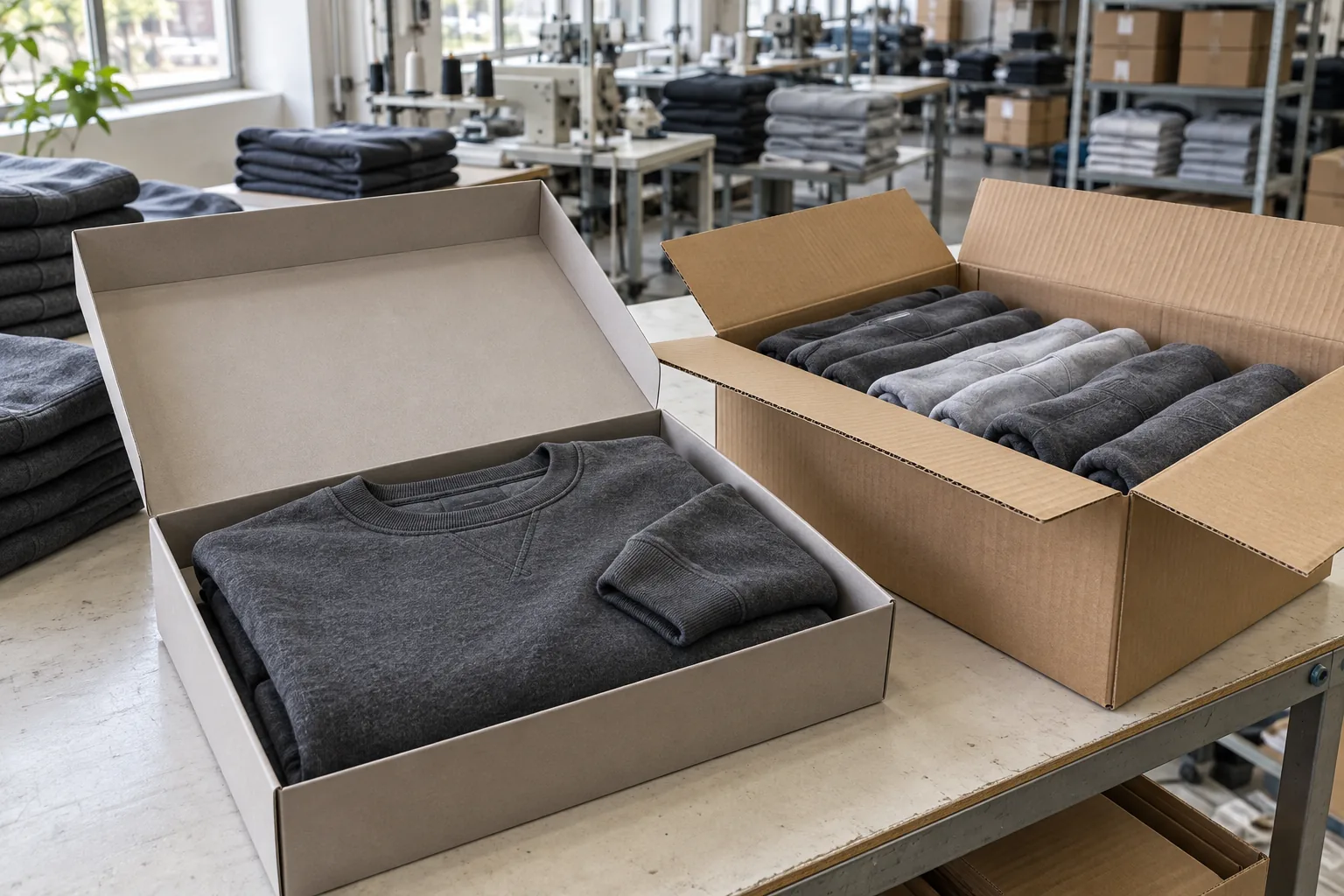
Compare custom boxes and standard cartons only after separating the retail pack from the shipping container. A printed box might hold one sweatshirt; a plain corrugated carton might protect twenty individually packed sweatshirts. They can belong to the same shipment. The useful question is where each layer belongs in your identification workflow, especially when your size allocation or sales channel is still changing.
Map the identity chain before choosing the box
Start at the garment and work outward. The sewn-in brand label identifies the brand; the size and care labels carry product information; a hangtag or unit sticker connects the garment to an inventory record. An optional retail box repeats selected information. The master carton identifies its contents and destination. These layers serve different readers, so copying every field onto every surface usually adds maintenance rather than clarity.
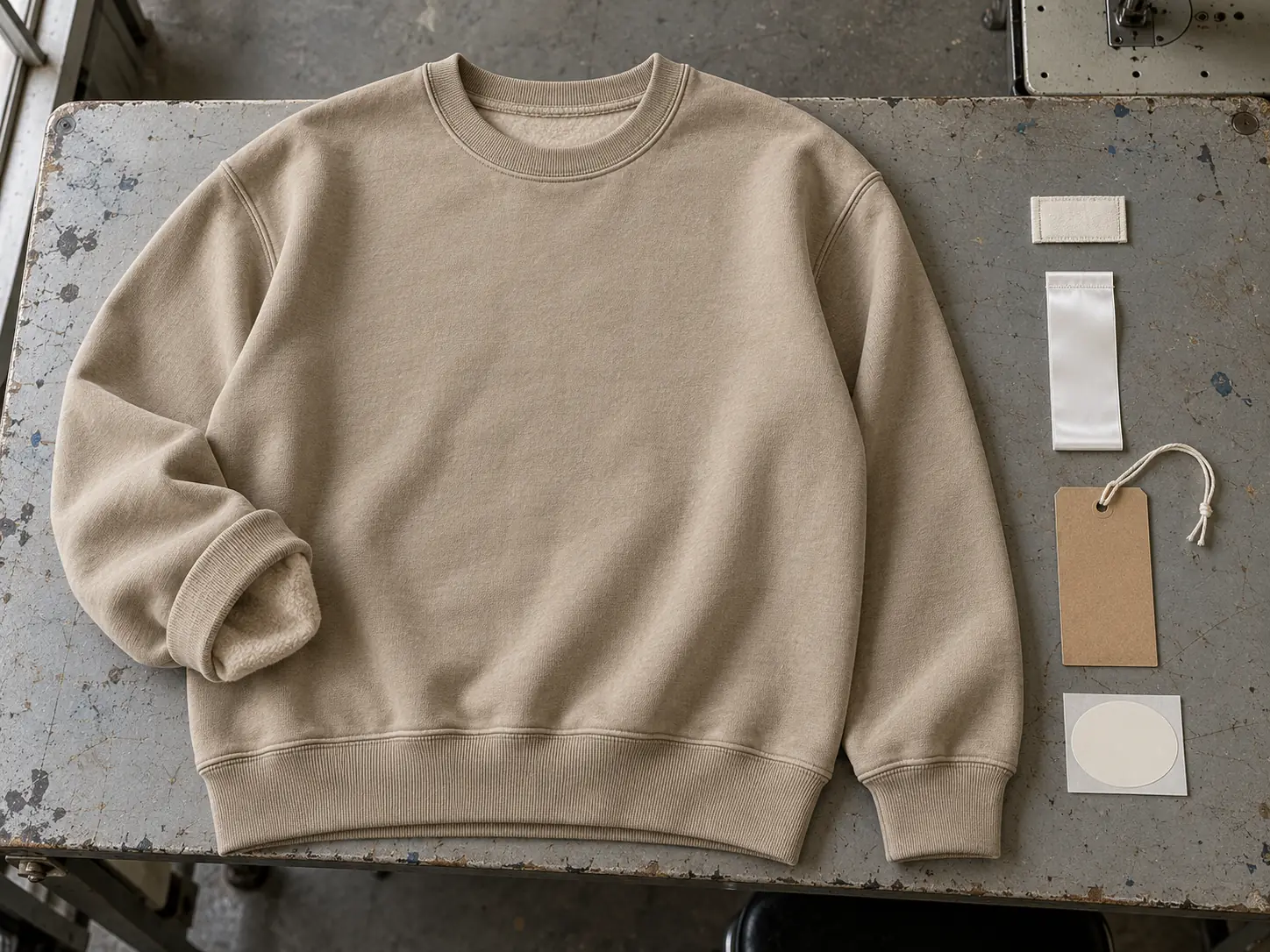
For a heavyweight sweatshirt offered in two colors and four sizes, create eight distinct SKU records before approving variable labels. Keep the style name consistent, but distinguish color and size explicitly. If a warehouse scans only the unit pack, hiding the sole barcode inside a closed presentation box creates an avoidable unpacking step. Confirm the receiving location’s scanning requirements before deciding where that code belongs.
Give one person ownership of the master SKU file and its revision number. Packaging artwork, barcode exports and packing instructions should all refer to that release. A visually approved box is not approval of its variable product data.
Freeze permanent labels first and carton counts last
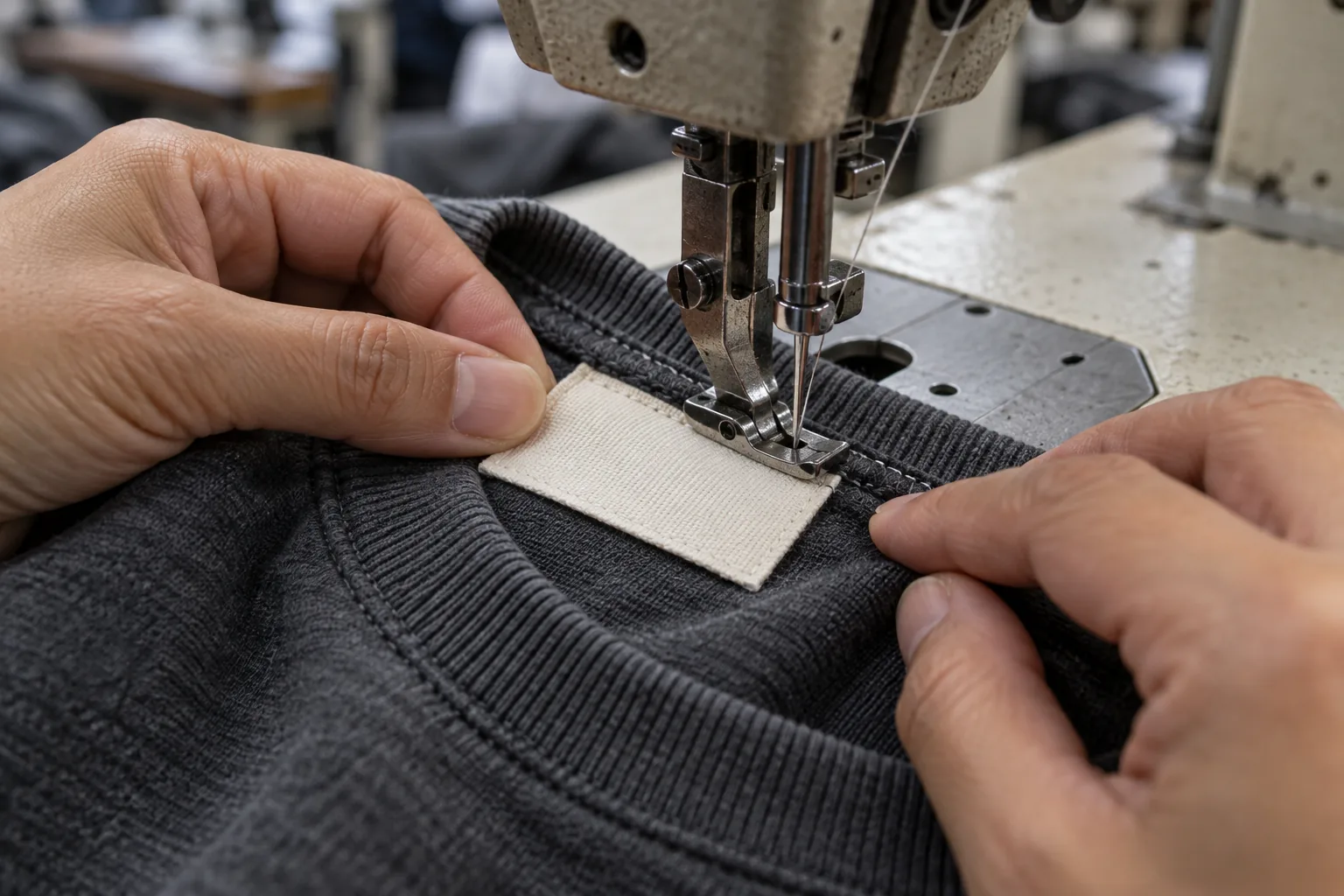
Label sequence is also an approval sequence. Sewn labels may become difficult to replace once seams are closed, while an external carton label can remain variable until the pack count is verified. Approving both on the same date can lock uncertain information too early or delay stable components unnecessarily.
| Layer | Information to confirm | Release point |
|---|---|---|
| Sewn labels | Approved identity, size system, care content and placement | Before the relevant sewing operation |
| Unit sticker or hangtag | SKU, color, size and barcode mapping | After product data approval, before attachment |
| Retail box | Fixed artwork, label panel and packed dimensions | After a physical pack trial |
| Master carton label | Actual assortment, quantity and destination reference | After contents are counted, before dispatch |
Confirm destination-specific garment labeling requirements separately; a decorative box does not replace required product labels. For packaging, distinguish permanent brand graphics from variable fulfillment data. A useful first-drop arrangement is fixed artwork on the lid with a reserved, unprinted panel on the base for the unit identifier. The panel must remain accessible when boxes are stacked in the intended receiving orientation.
Use variable stickers to keep uncertain assortments flexible
A custom box becomes less forgiving when each size or color has its own printed version. Suppose your launch includes sand and charcoal tees, but the size split is not final. Printing the size directly onto each box creates separate packaging inventories. A surplus of small boxes cannot serve a replenishment of large tees without a correction, even if the garments fit the same physical box.
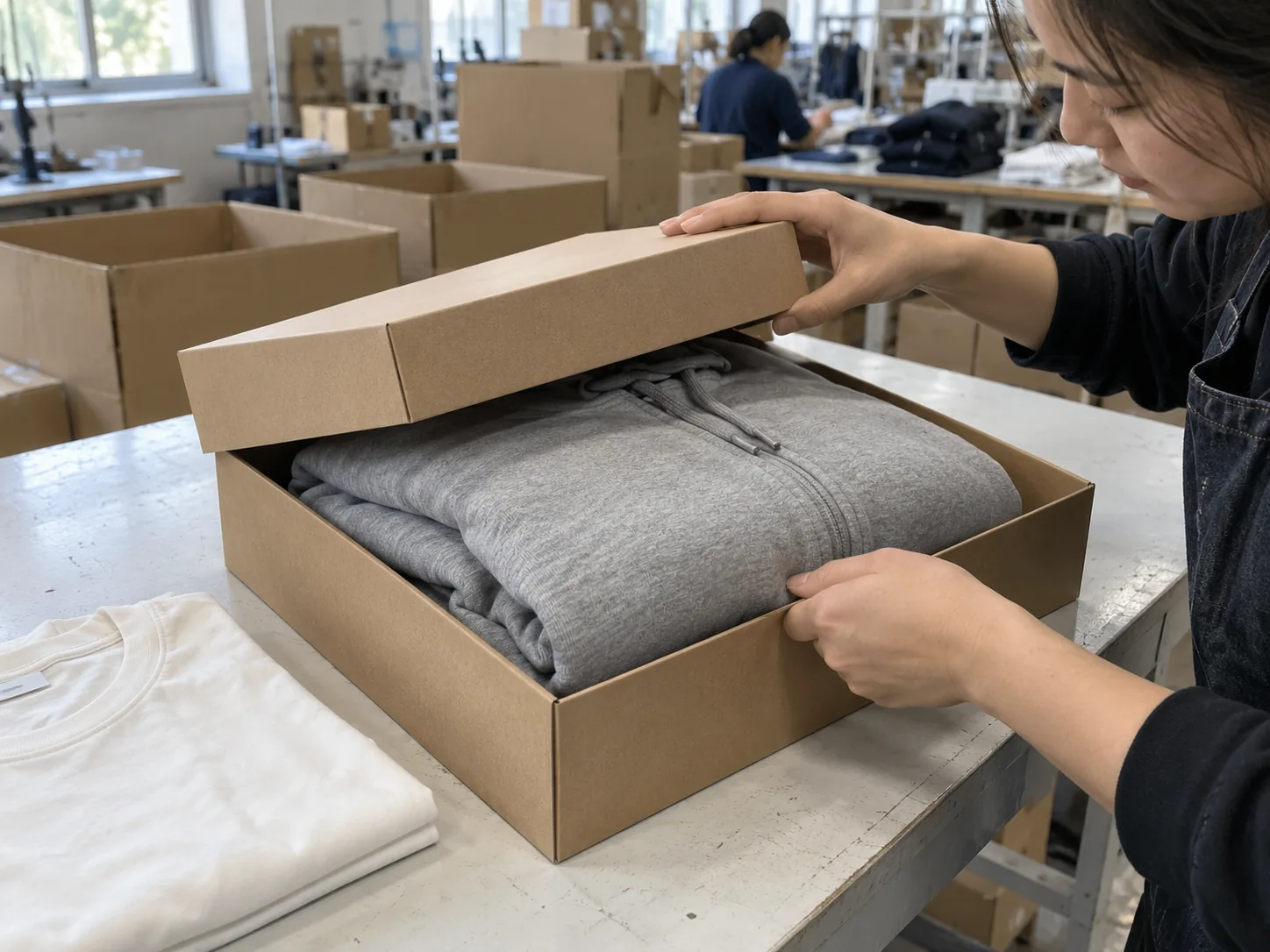
A shared custom shell with a variable sticker reduces that dependency. A standard carton with variable shipping labels offers similar flexibility at the outer shipping layer. Neither choice eliminates errors: a correct sticker applied to the wrong unit is still a mispack. Build the sequence around selecting the garment, checking its sewn size label, applying the matching identifier and moving the completed unit out of the unverified area.
Ask packaging suppliers to quote fixed artwork separately from variable labeling and assembly. Confirm minimum orders, unused packaging ownership, storage arrangements and replacement quantities per project. Apparel minimums do not establish packaging minimums. StitchQuote’s MOQ for most apparel categories starts from 50 pieces per style, while denim starts from 100 pieces per style; a separate packaging supplier may use a different ordering basis.
Prove the fold and label location with a packed sample
Use a finished garment for the pack trial. A flat fabric swatch cannot show how a hood, zipper or folded waistband changes pack thickness. Test the bulkiest size alongside a smaller size, then record the folding method and internal usable dimensions. Distinguish internal dimensions from external dimensions in the request, because board thickness and closure geometry affect the space available.
For example, a sweatshirt hood can push against a shallow lid even when the body fits neatly. Increasing the box depth may solve pressure on the garment but change the number of retail boxes fitting into a master carton. Check the complete nesting arrangement before releasing artwork tied to a particular die line.
Specify the sticker position from two physical edges. An illustrative approval might place it 15 mm from the base’s left and lower edges with an agreed placement tolerance of ±3 mm, provided the barcode clear area remains unobstructed. Those figures are a proposed working specification, not a universal requirement. Keep codes away from folds, seams, tape and curved edges; verify readability on the actual printed stock.
StitchQuote offers a 7-day sample for standard styles with confirmed specifications and available materials. Complex styles, custom washes and custom-developed fabrics take longer. Confirm packaging sample availability and approval timing separately rather than assuming the apparel sample schedule includes a finished custom box.
Make identity matching a packing QC gate
Packaging QC should detect identity errors before the carton is sealed. A clean printed box and an accurate garment measurement do not prove that the unit has the right inventory code. Use an approved packed reference, a current SKU list and a defined hold area for discrepancies. StitchQuote’s services include QC before packing; agree separately on any requested barcode checks, packing records or packaging acceptance criteria.
- Check the first unit after every changeover. Match the physical garment, sewn size label, hangtag, unit sticker and retail-box identifier against the approved SKU record.
- Control label rolls and loose stacks. Remove the previous SKU’s labels before starting the next one. Keep rejected and superseded labels out of the active packing area.
- Test the scan result. A successful beep is insufficient if the code opens the wrong inventory record. Verify the decoded value and its product mapping using the receiving system’s agreed method.
- Inspect the attachment. Check lifting corners, wrinkling and smudging on actual box stock. Where finish or adhesive is uncertain, agree on a handling trial before bulk use.
- Reconcile the outer label. Count units and verify the size assortment before printing or approving the master-carton contents label. Record carton numbering against the packing list.
Set the inspection frequency and acceptance rules before packing starts. If a mismatch appears, hold the affected group and investigate back to the last verified changeover. Relabeling one visible error without checking its neighbors can leave the original mix-up unresolved.
Questions buyers ask when packaging data is still changing
Can we approve box artwork before the size breakdown is final?
Yes, if fixed artwork is independent of size and the box has passed a fit trial for the intended range. Reserve variable fields for later labels. Do not release size-specific print quantities until the assortment is confirmed, and document which parts of the approval remain open.
Does a presentation box remove the need for a shipping carton?
Not automatically. Assess whether the presentation box is intended for direct shipping or for protection inside an outer carton. Surface scuffing, closures and transit handling need separate consideration. Test the proposed shipping configuration rather than assuming an attractive retail pack is transport-ready.
What happens when an order changes after unit labels are attached?
First distinguish a destination change from a product change. A new destination may require only revised outer labels. A changed SKU assignment requires checking affected unit identifiers and records. Use a controlled rework instruction, remove obsolete readable codes and recheck the finished units before releasing them.
Which option suits a small first drop with uncertain demand?
Start by minimizing irreversible data. Standard outer cartons and shared unit packaging with variable labels usually preserve assortment flexibility. Choose custom retail boxes when the presentation benefit justifies separate sampling, storage and assembly requirements. Request both configurations against the same garment quantity and packing method for a meaningful comparison.
Send one label map with the packaging request
Your request should show each packaging layer, its identifier, the data owner and the approval stage. Include a packed reference, barcode requirements, carton assortment rules and responsibility for supplying packaging. StitchQuote provides cut-and-sew, private label, sampling, fabric and trim sourcing, and branding through woven labels, prints and embroidery. Confirm the packaging scope for your project alongside those apparel services.
Related reading and project planning:
- Prepare a tech pack with clear placement references
- Review sampling and apparel MOQ planning
- Explore private-label apparel production
- Discuss your garment and packaging brief
Request a manufacturing quote
Share your product type, quantity range, and destination. We usually reply within one business day.