Custom Streetwear, Casualwear & Denim Manufacturer•MOQ 50 pcs•Denim MOQ 100 pcs•7-Day Sample Available

What Makes a Clothing Manufacturer Page Feel More Trustworthy to Buyers
Use this factory-side guide to compare a clothing manufacturer page feel more trustworthy to buyers more clearly across supplier fit, quote scope, approvals, and.

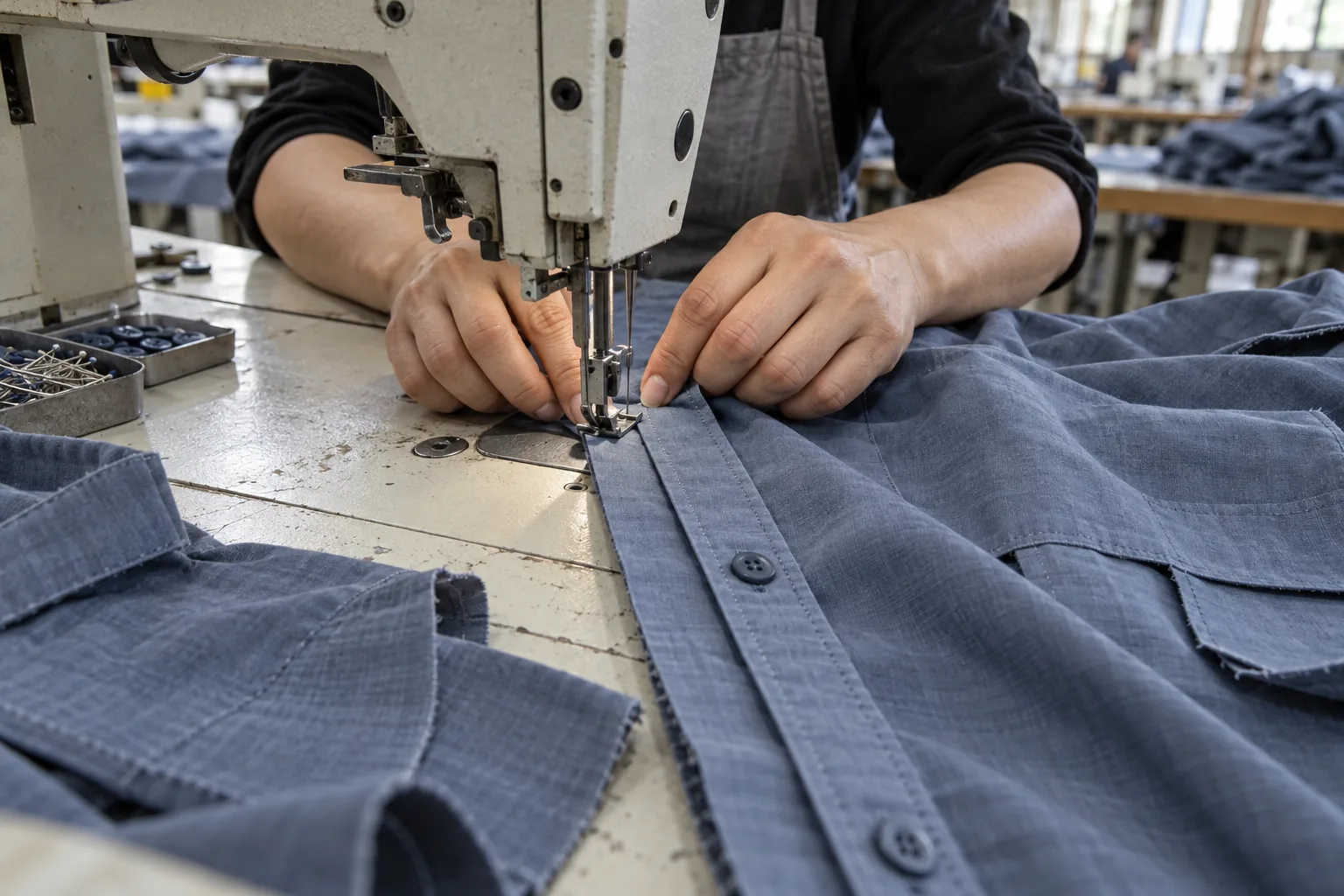
A clothing manufacturer page earns a buyer’s attention when it helps answer a practical question: is this supplier worth sending a brief to? Attractive garment photos can start that conversation, but they cannot establish whether the supplier fits your product, order size, or development needs. Before sharing artwork, measurements, and a launch plan, look for information that lets you eliminate obvious mismatches.
This first screen should be deliberately narrow. You are deciding whether to open a technical conversation, not approving a production partner. A useful page makes its claims specific enough to test and leaves you with a short list of questions. The following approach focuses on what to inspect before preparing a detailed enquiry, using the page as an entry point to verification.
Start with the product the page can actually explain
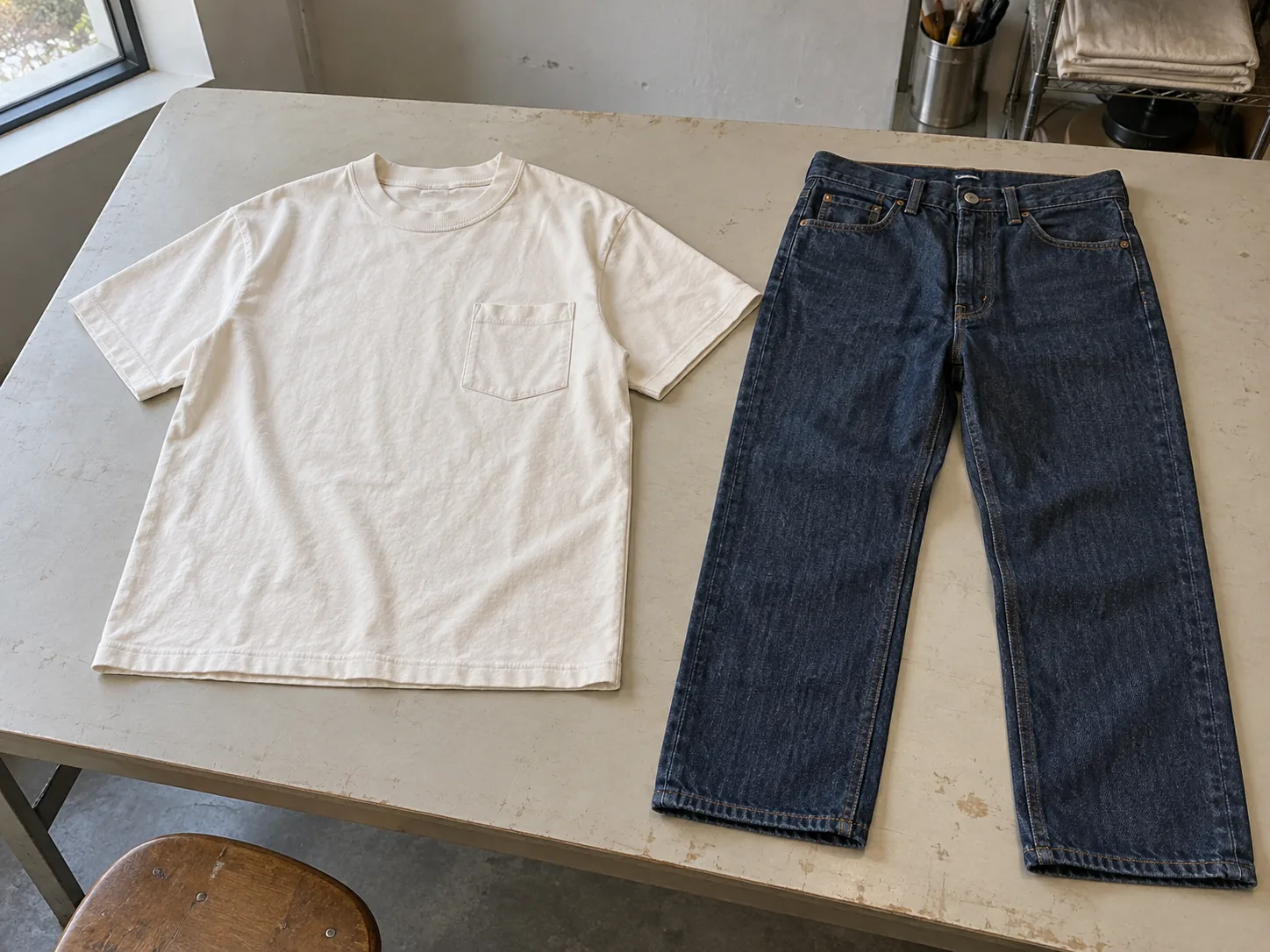
Look past category names and examine whether the examples resemble the work your product requires. A plain jersey tee and a lined overshirt may both be casualwear, but they involve different cutting, assembly, and finishing decisions. Relevant detail matters more than a long menu of garment types.
For example, a buyer developing a heavyweight pocket tee could look for clear views of the neck rib, shoulder seam, pocket corners, and bottom hem. A denim buyer might need to see waistband construction, fly assembly, and how the wash affects seams. These images do not prove repeatability, but they give the first conversation a concrete starting point.
Separate visible evidence from inference. A flat photograph can show pocket placement; it cannot confirm fabric weight, shrinkage, or seam strength. If a page describes those properties, note whether it explains how they are specified or checked. If it does not, keep them on the enquiry list rather than filling in the gaps yourself.
Check whether the order conditions fit your launch
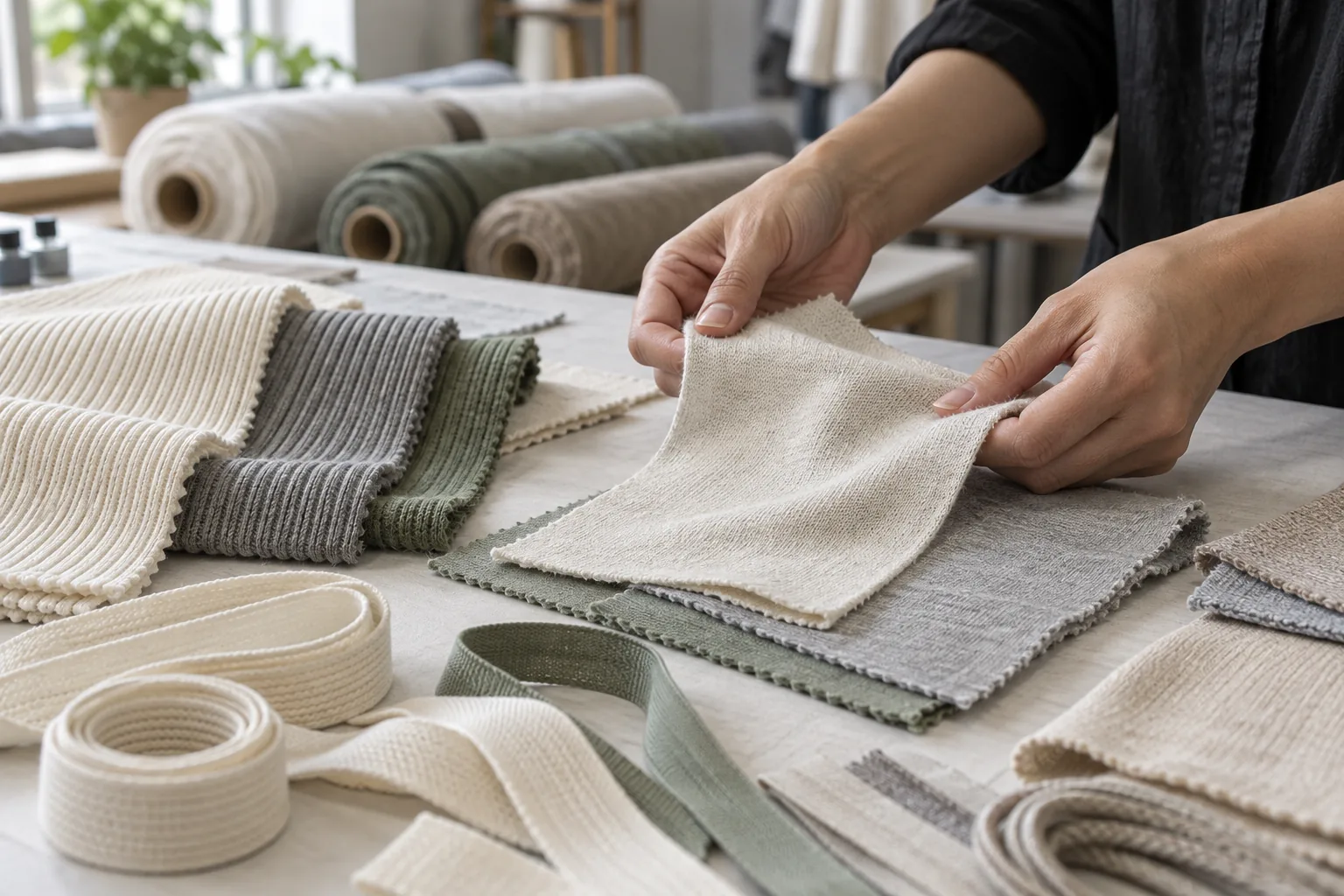
The most useful commercial information helps you rule a supplier in or out early. A minimum order should have a stated unit: per style, per color, or another defined grouping. An isolated number leaves too much room for misunderstanding. Two colors of one design may not have the same material implications as one color, even when the total quantity is identical.
StitchQuote’s MOQ for most categories starts from 50 pieces per style; denim starts from 100 pieces per style. Those starting points support an initial feasibility check. They do not establish a permitted size breakdown, color split, or minimum for a specially developed fabric. Ask about those variables against your proposed order.
Timing deserves the same scrutiny. StitchQuote offers a 7-day sample for standard styles with confirmed specifications and available materials. Complex styles, custom washes, and custom-developed fabrics take longer. A condition attached to a time claim makes it more useful: you can identify what must be ready before the schedule can apply.
Consider a 60-piece tee launch with a custom-dyed fabric. The garment quantity may meet a starting MOQ while the fabric request still needs separate sourcing confirmation. A trustworthy page gives you enough context to recognize that distinction before treating the project as ready to quote.
Convert attractive claims into one verification request each
A first screen works best when you translate promotional language into a small, answerable request. You do not need a full factory audit to find out whether a supplier understands your concern. Ask for an explanation or relevant example, then assess how directly the response addresses the product.
| Page claim | Useful first request | What the answer can establish |
|---|---|---|
| Custom construction | Ask how a lined patch pocket would be developed. | Whether the supplier can discuss your assembly requirement. |
| Fabric sourcing | Ask what information is needed to source a compact cotton jersey. | Whether composition, weight, finish, and availability enter the discussion. |
| Quality control | Ask how a pocket placement deviation would be recorded. | Whether inspection refers to an agreed specification. |
| Fast sampling | Ask which approvals and materials must be ready first. | Whether the timing has a defined starting condition. |
A detailed answer is still a claim until checked through development or inspection. Its value at this stage is narrower: it shows whether another conversation is worthwhile. Conversely, a short website need not disqualify a supplier if the enquiry produces clear, relevant answers.
Look for a clear handoff between services
Service lists become more credible when buyers can understand what happens between them. Fabric sourcing, sampling, branding, and inspection are connected tasks, but listing all four does not explain who approves a substitution or which sample defines the production standard.
StitchQuote’s services include cut-and-sew, private label, sampling, fabric and trim sourcing, branding through woven labels, prints and embroidery, and QC before packing. For your first enquiry, select the services your project needs and ask where your approvals enter the sequence. Do not assume every service is automatically included in a proposed scope.
For an embroidered sweatshirt, the initial questions might cover who supplies the artwork, whether an embroidery trial is needed, and when placement is approved. For a private-label woven shirt, they might cover label dimensions, attachment position, and whether a proposed fabric replacement needs approval before cutting.
You are looking for an understandable route from request to approval. A page that explains this route reduces ambiguity, but project-specific responsibilities should still be confirmed in writing before development proceeds.
Use a QC screen that a real garment could pass or fail
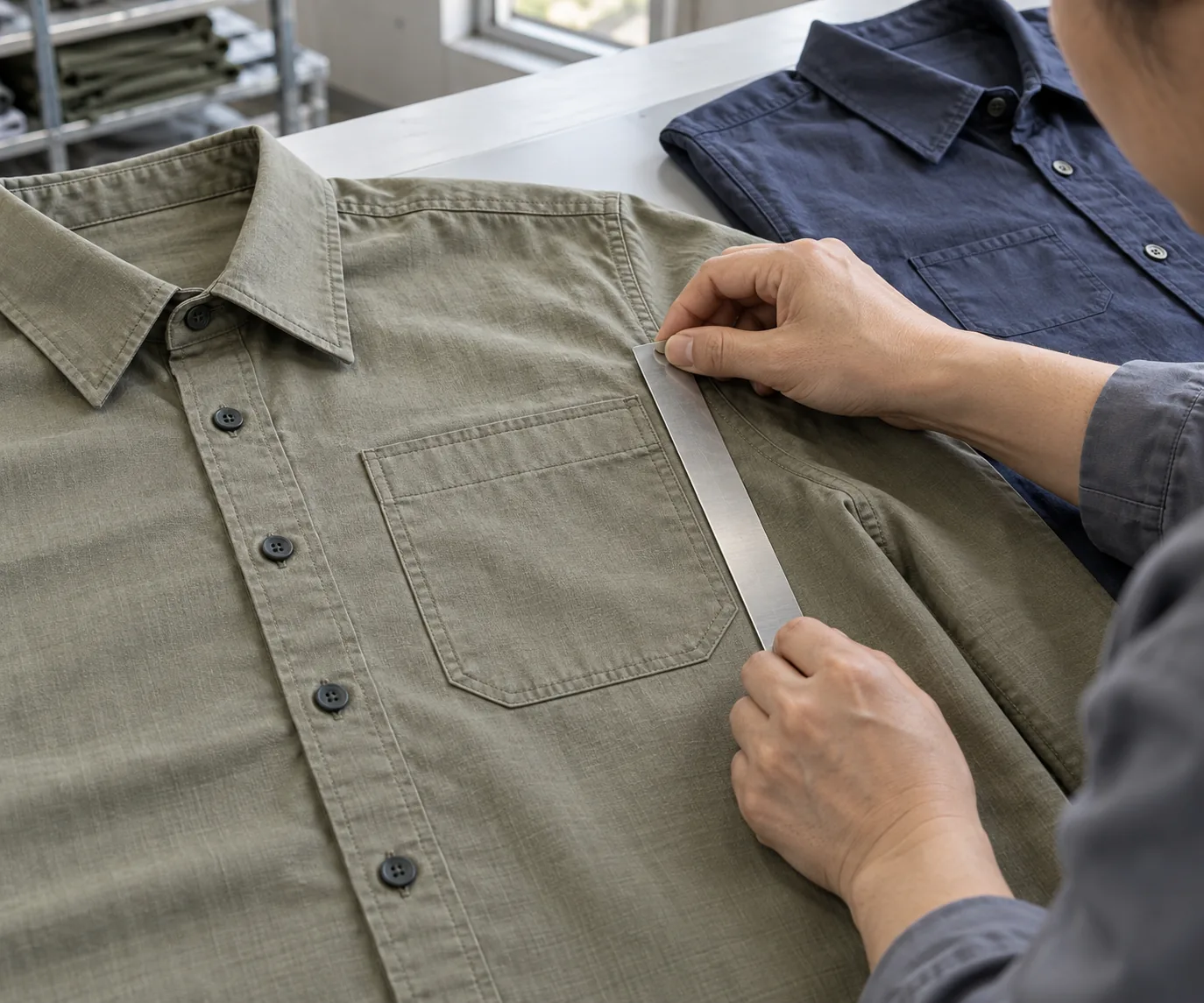
“Strict quality” is difficult to evaluate without a reference. Before sending a full brief, inspect whether the page connects quality to measurements, workmanship, appearance, or approved samples. StitchQuote includes QC before packing; the inspection scope and acceptance criteria for an individual order still need agreement.
Use this short checklist to prepare targeted questions rather than requesting a generic assurance:
- Measurement method: Can the supplier work from defined points of measure? Half-chest measured flat below the armhole needs a specified location and garment condition.
- Tolerance: Can deviations be assessed against agreed limits? A proposed half-chest tolerance of ±1 cm is an illustrative discussion point, not a universal allowance for every style.
- Appearance reference: Will an approved sample or swatch guide color, print placement, and finishing checks? Screen images alone are a weak color reference.
- Workmanship: How would an open seam, skipped stitch, or distorted pocket opening be identified and handled?
- Disposition: If a defect is found, who receives the report, and what requires correction or buyer approval before packing?
For washed garments, also ask whether dimensional checks refer to the garment before or after the agreed wash. A measurement without its condition can produce conflicting results. At this stage, the objective is to confirm that the supplier can discuss measurable criteria; detailed limits belong in the eventual product specification.
Send a compact fit enquiry before the full brief
Once the page passes your initial screen, send enough information to test feasibility. Include the garment type, approximate quantity per style, expected colors, fabric direction, essential construction feature, and intended delivery window. Identify which details are fixed and which remain open to suggestions.
For example: “We are assessing a 120-piece woven overshirt in two colors, with a concealed placket and reinforced side vents. Fabric selection is open. Can you confirm likely sourcing constraints and the information needed to assess sampling?” This gives the supplier a usable problem without requiring a completed technical pack.
Judge the reply by its relevance. A helpful response identifies missing inputs, explains dependencies, and distinguishes confirmed points from items needing review. Response speed alone cannot tell you whether the supplier has understood the product.
Move to a full brief when category fit, quantity assumptions, development needs, and the next approval step are sufficiently clear. Keep unresolved points in a written list so they survive the transition from introductory messages to sampling.
Questions buyers ask during the first screen
Should I reject a supplier whose page has few garment close-ups?
Not automatically. Request a relevant construction example or discuss the feature that concerns you. Sparse photography limits what you can assess online; the response may still provide a sound reason to continue.
Does an MOQ statement settle my color and size split?
No. Confirm how your proposed allocation works with fabric and trim sourcing. A per-style starting quantity does not independently establish minimums for every color or custom component.
How much design information belongs in the first message?
Share the information necessary to test fit: category, quantity, material direction, and critical features. More detailed measurements and artwork become useful once the supplier has clarified what it needs to assess the project.
Can a strong website replace sample evaluation?
No. A page supports shortlisting. A sample lets you assess fit, construction, material behavior, and finishing against your requirements. Keep those decisions separate so a convincing presentation does not become an untested production approval.
Related reading and next steps
- Compare streetwear manufacturer fit
- Review sampling and MOQ considerations
- Prepare the technical pack after screening
- Send StitchQuote an initial project enquiry
Request a manufacturing quote
Share your product type, quantity range, and destination. We usually reply within one business day.