Custom Streetwear, Casualwear & Denim Manufacturer•MOQ 50 pcs•Denim MOQ 100 pcs•7-Day Sample Available

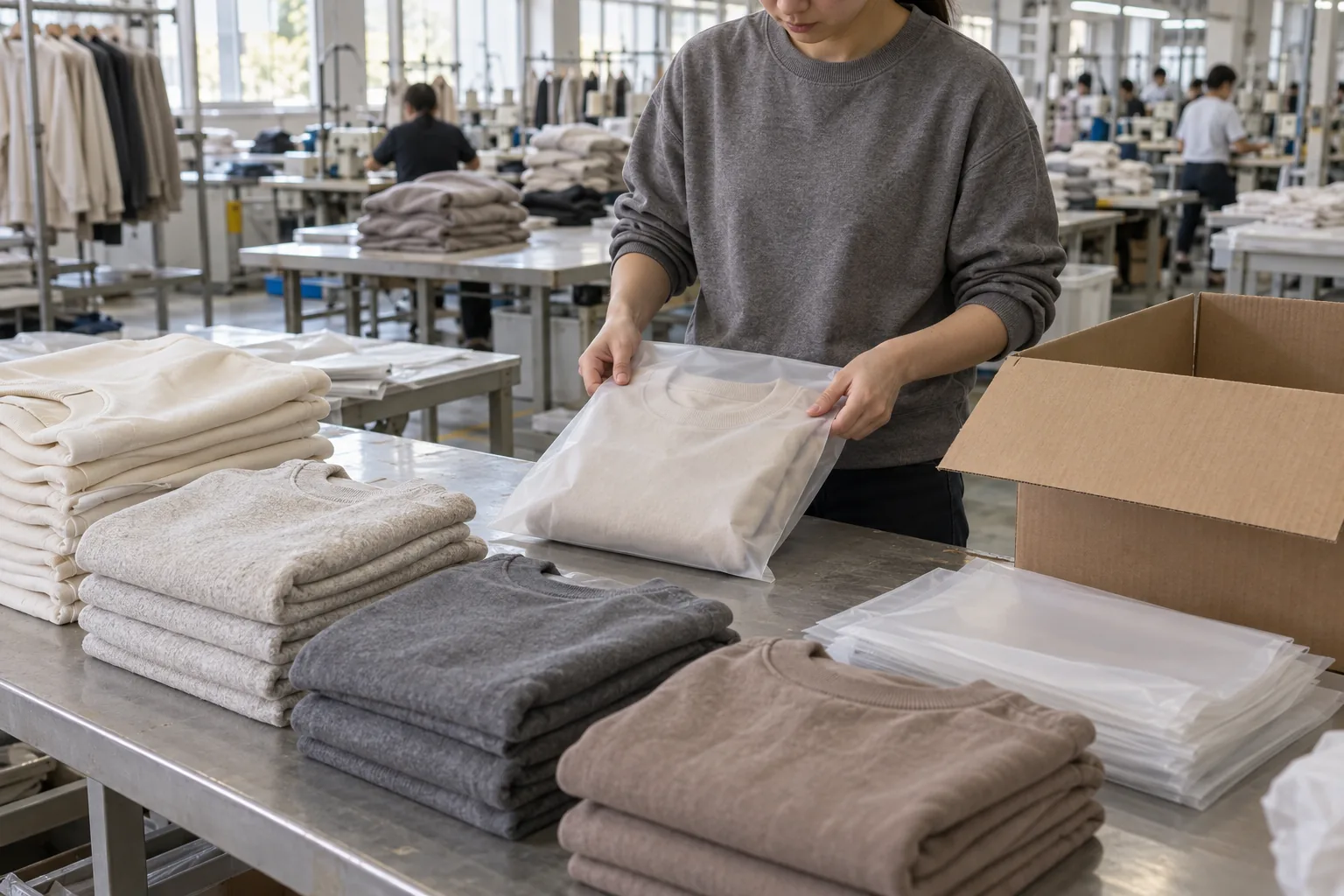
How to Sequence Labels, Packaging, and Product Approval in the Right Order
Use labels packaging product approval order to compare private label decisions more clearly, protect brand consistency, and keep product, trims, and commercial scope.

A garment can look finished while still being too unstable to package. A revised hoodie hood changes folded thickness; a different denim wash changes shade transfer risk; a corrected size split changes every size sticker count. Buying presentation materials before these decisions settle turns ordinary product development into discarded bags, mismatched labels, and packing delays.
The useful dividing line is between preparing packaging and releasing it for manufacture. You can explore materials and obtain estimates early, but final dimensions, artwork, and quantities should follow an approved product. For brand buyers approaching bulk production, the goal is a clear release sequence that allows necessary sewn-in branding to develop with the garment while keeping dependent packaging decisions open.
Define what “stable product” means before releasing packaging
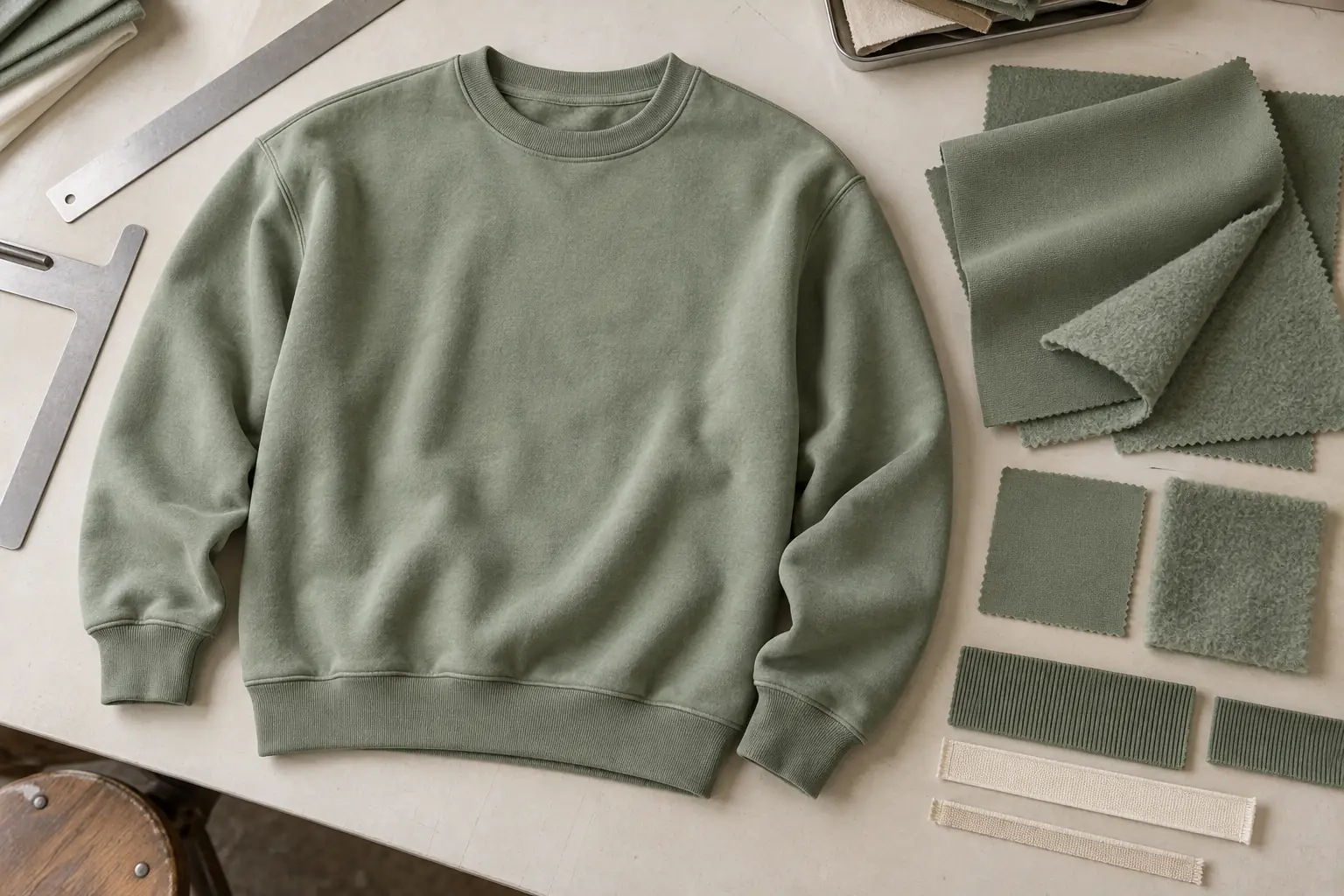
Stability means more than approving the appearance of one sample. Record the fabric reference, weight, construction, finished measurements, wash or finishing route, decoration, and intended size range. A brushed fleece crewneck and an unbrushed version may share a silhouette but compress differently. A revised chest print may also require a different folding position to avoid a hard crease across the graphic.
Keep separate approval statuses for fit, workmanship, color, and decoration. If fit is approved but the fleece is still being replaced, the product is not ready for a final bag-size decision. Mark the outstanding dependency explicitly rather than circulating a sample photograph labeled simply “approved.”
The stable reference should identify the physical sample and document revision together. For example, record sample S3 against specification revision 06, with the approved fabric swatch attached. Any later change to those inputs should trigger a review of the affected labels and packing components.
Develop sewn-in labels early, but separate their release decisions
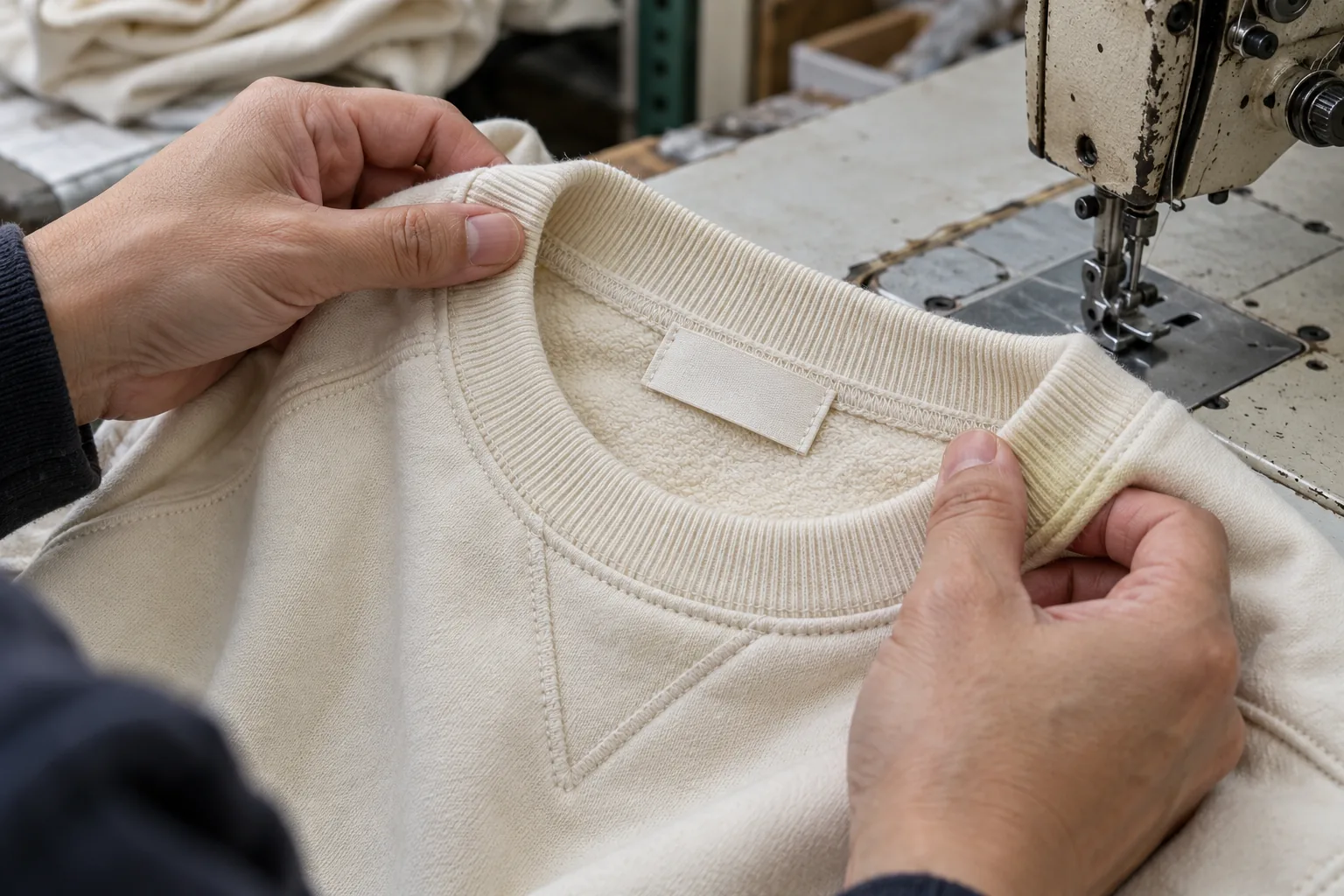
A neck label is part of garment construction. Its width, folded ends, edge feel, and seam position can affect comfort and appearance, so test its physical specification during sampling. State whether dimensions refer to the cut label or the visible area after folding. A nominal 40 mm label is ambiguous if nobody has defined its end allowances.
Separate physical approval from content approval. A soft blank label can help assess placement while final wording is under review. Before ordering production labels, confirm the brand artwork, size mapping, and any required product information. Care and composition information must reflect the actual fabric, finish, and intended market requirements; do not copy it from an earlier style with a similar appearance.
Check the attachment sequence too. A label caught into a collar seam needs to be available when that seam is sewn. A hangtag attached after finishing has a later dependency. Treating both as “branding due before shipping” hides a production constraint that an attractive packaging mockup cannot resolve.
Use the finished garment to choose the fold and enclosure
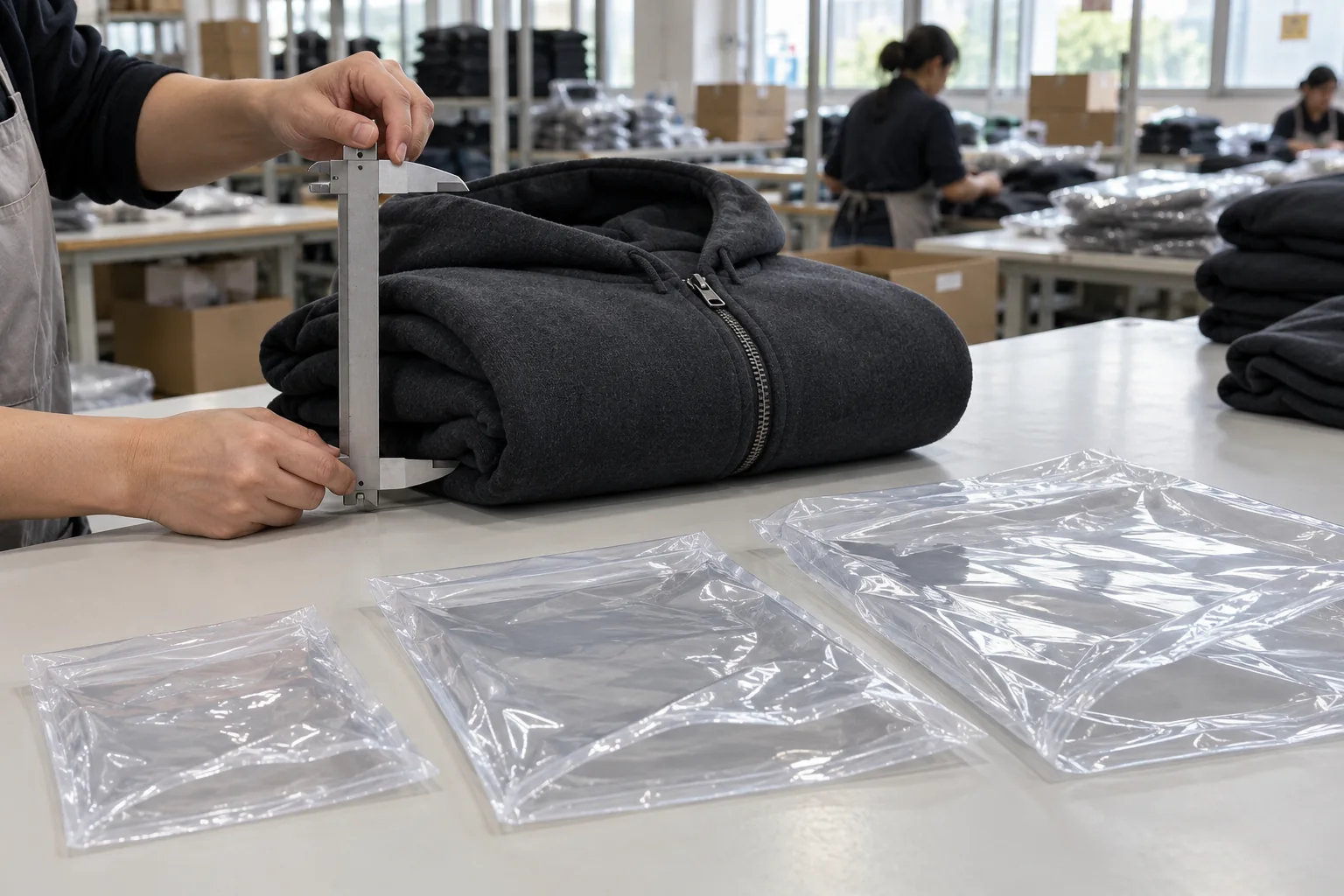
Measure the packed shape after the approved finishing process. Test the smallest and largest sizes, plus any variant with extra bulk. For a heavyweight zip hoodie, align the zipper, place the sleeves consistently, and specify whether the hood sits flat behind the body or folds inside. Photograph the agreed fold from above and from the side.
For illustration, a trial garment might fold to 300 × 360 mm with a 55 mm stack height. Those are trial observations, not a bag specification: a flat bag needs room to wrap around the thickness, and its closure uses additional space. Obtain a physical enclosure sample and test insertion, closure, and removal before fixing dimensions.
Evaluate contact with the garment as well as appearance. Dark washed denim may need a color-transfer assessment against tissue or adjacent light materials. A raised print should not be crushed under an unnecessarily tight closure. Select barriers, tissue, or supports only where the trial shows a practical need, and confirm that garments are fully dry before packing.
Release purchasing through four evidence-based checkpoints
Use a short release register instead of one broad approval email. The following sequence keeps early development moving while postponing irreversible purchasing decisions until the relevant evidence exists.
| Checkpoint | Evidence to retain | Release scope |
|---|---|---|
| Construction settled | Approved label attachment and garment specification | Sewn-in labels after content sign-off |
| Finished sample stable | Finish approval and documented fold trial | Packaging prototypes and dimension confirmation |
| Assortment confirmed | Final style, color, size, and SKU allocation | Printed packaging, stickers, and hangtags |
| Packing trial accepted | Checked packed unit and carton arrangement | Bulk packing against the approved reference |
For each release, name the approver, revision, quantity, and unresolved exceptions. A packaging supplier should receive one current artwork file with dimensions and orientation, rather than several versions buried in a message thread. Keep the approved proof with the order record so receiving inspection has a usable comparison.
StitchQuote’s MOQ for most categories starts from 50 pieces per style; denim starts from 100 pieces per style. Confirm packaging component minimums separately. A garment minimum does not establish a custom bag or printed insert minimum. For a small launch, an unprinted enclosure with a controlled sticker may reduce leftover stock when future assortments change.
Make packing QC verify identity as well as presentation
The packing reference should show a complete unit: garment, attached labels, hangtag, enclosure, and any sticker or insert. Agree measurable acceptance limits per project. For example, a sticker placement tolerance of ±5 mm from a defined corner might suit a simple bag, but this is a proposed working limit, not a universal factory standard.
- Identity match: Compare the garment’s sewn size label, hangtag, bag sticker, and carton allocation. Check color and style codes against the approved assortment.
- Readable identification: Where barcodes are used, scan actual printed samples with the intended receiving equipment. Confirm the encoded value against the SKU record.
- Garment condition: Inspect for loose threads, stains, trapped moisture, and pressure marks before the enclosure hides them.
- Fold consistency: Compare the packed outline and graphic position with the approved photograph. Confirm closures do not catch fabric.
- Enclosure performance: Check seams, flap adhesion, opening clearance, and whether handling causes tearing or garment distortion.
- Carton reconciliation: Compare the physical contents with the carton marking and packing list before sealing.
Include mixed-size cartons in the trial if that is the shipping arrangement. A correctly packed medium does not prove that an extra-large garment fits the same enclosure. Agree inspection coverage and defect handling before bulk packing, including how affected units will be segregated, corrected, and rechecked.
Handle late changes by tracing their physical consequences
Suppose a brand switches a sweatshirt from lightweight jersey to heavier fleece after seeing the first sample. Reopen folded volume, bag fit, and carton capacity. If fiber composition changes, review the care label as well. The logo artwork may remain usable, but that does not make every previously approved component usable.
Record whether purchased materials can be retained, relabeled, or must be replaced, and confirm the schedule effect before accepting the change. Avoid solving a fit problem by forcing garments into undersized bags: the immediate packing shortcut can create crushed decoration and poor presentation on arrival.
StitchQuote offers cut-and-sew, private label, sampling, fabric and trim sourcing, woven labels, prints, embroidery, and QC before packing. A 7-day sample is available for standard styles with confirmed specifications and available materials; complex styles, custom washes, and custom-developed fabrics take longer. Plan packaging approval around the actual finished sample rather than assuming every development route fits that window.
Questions buyers ask before committing to packaging stock
Can we reserve packaging capacity before final approval?
Ask whether the supplier can provisionally schedule work while dimensions or artwork remain open. Specify what the reservation covers and whether it authorizes material purchasing. A calendar reservation and approval to print should be separate written decisions.
Should every garment size use the same bag?
Only if the trial supports it. Test both size extremes for presentation, insertion, and closure. Two enclosure sizes may work better for a wide size range, but their allocation must be explicit so packing workers can select the correct one.
What if launch photography needs packaging before the garment is approved?
Use a clearly identified photography prototype and keep it outside the production approval record. The shoot can establish visual direction, but final stock should follow the finished garment trial. Record any differences so the photographed pack does not become an accidental manufacturing instruction.
What should accompany a request for a packing review?
Send the current garment specification, sample status, assortment quantities, proposed fold, packaging artwork, and destination requirements. Identify which items are approved and which need testing. This gives the review a concrete decision to resolve before purchasing begins.
Related reading
- Prepare the garment specification for approval
- Review sampling and order minimums
- Explore private-label manufacturing support
- Contact StitchQuote about your product and packing brief
Request a manufacturing quote
Share your product type, quantity range, and destination. We usually reply within one business day.