Custom Streetwear, Casualwear & Denim Manufacturer•MOQ 50 pcs•Denim MOQ 100 pcs•7-Day Sample Available

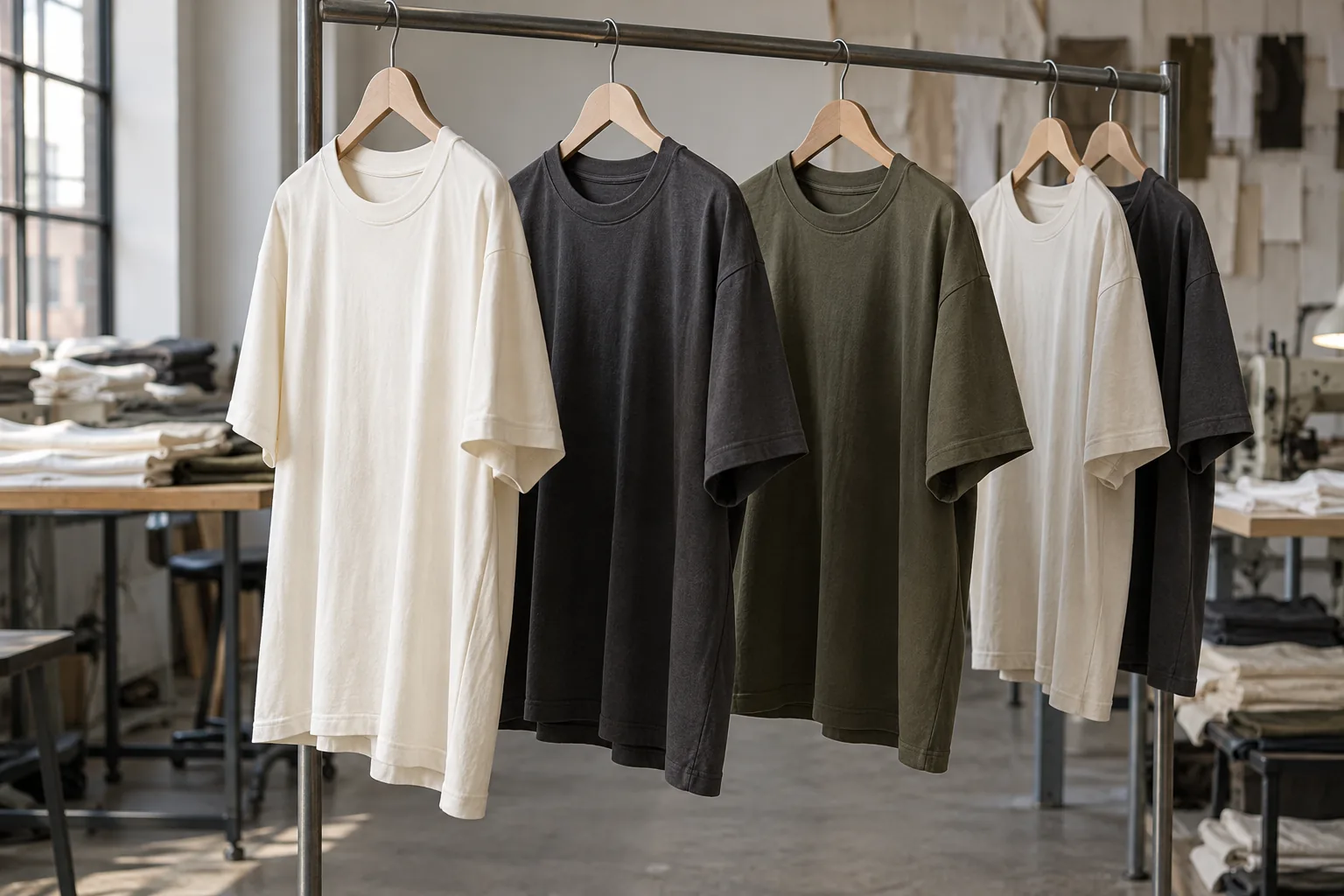
China T-Shirt Manufacturer for Premium Basics Brands
Understand china t-shirt manufacturer premium basics through fit, fabric, decoration, and production logic so streetwear and premium basics buyers can make cleaner.

Choosing a China T-shirt manufacturer for premium basics brands starts with a fabric decision that is easy to oversimplify: how heavy should the jersey be? A higher GSM can give a tee more body, but it cannot guarantee opacity, softness, a stable neckline, or a better fit after washing.
For buyers developing a core collection, the useful question is which weight delivers the intended wearing experience consistently. Set a GSM target alongside fabric construction, finishing, and wash performance, then use samples to eliminate unsuitable options before committing to bulk fabric. This approach makes supplier comparisons more meaningful and keeps a heavy sample from winning simply because it feels impressive on a table.
Choose the wearing job before choosing the weight
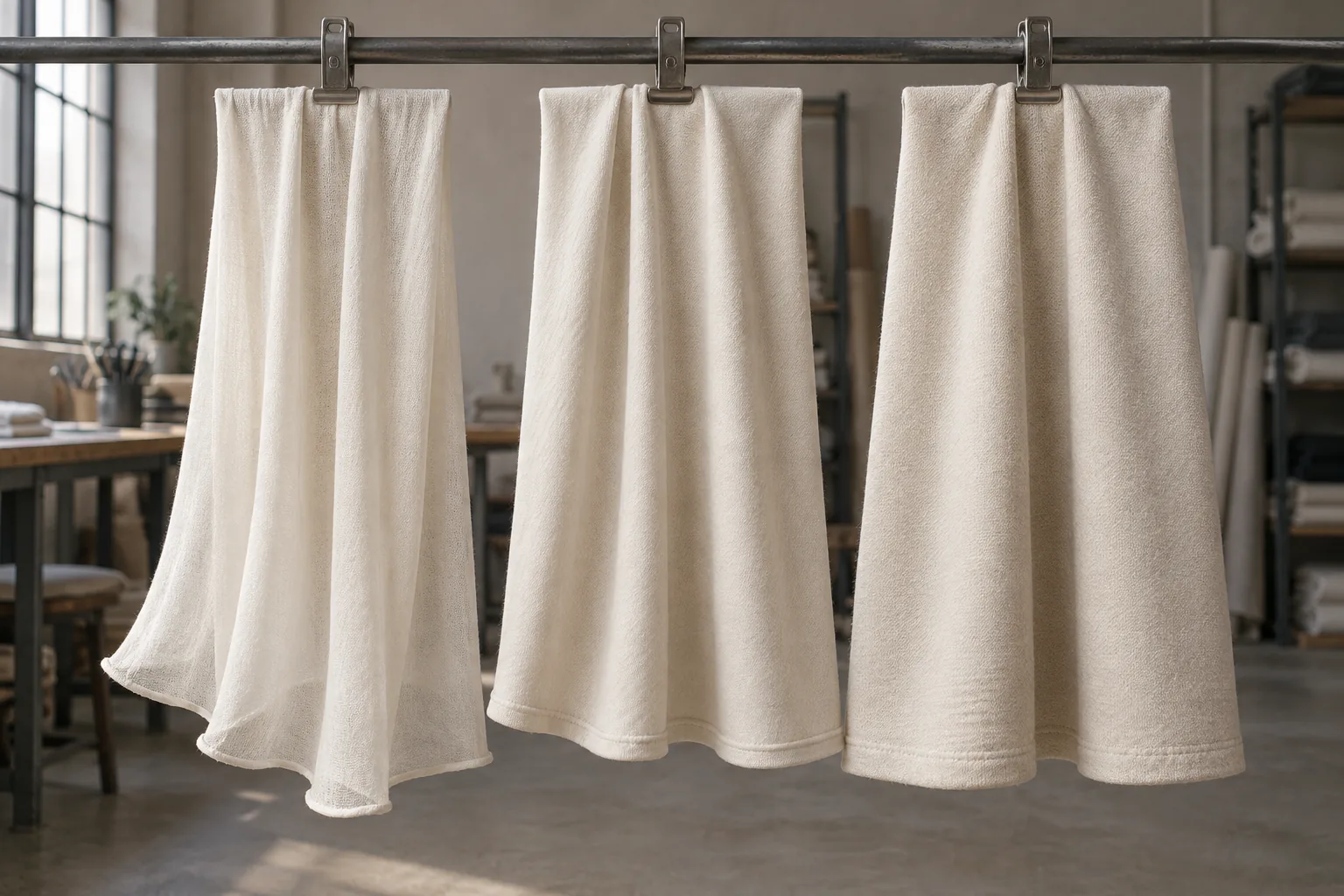
GSM means grams per square metre: the mass of a measured area of fabric. It does not describe a finished T-shirt’s total weight. A longer, wider garment uses more fabric, so two tees made from the same jersey can feel quite different when lifted.
Begin with the customer’s use case. A close-fitting tee worn beneath an overshirt needs to move without bunching. A standalone boxy tee needs enough body to hold its outline. A warm-weather white tee needs a balance of coverage and comfort. These briefs may lead to different weights even within one premium collection.
| Development direction | Indicative GSM starting range | First sample question |
|---|---|---|
| Light layering basic | 150–180 | Does it cling or show through under tension? |
| Everyday standalone tee | 180–220 | Does it retain coverage and drape after washing? |
| Structured relaxed silhouette | 220–260 | Do sleeves and side seams hang naturally? |
| Dense oversized statement tee | 260–300 | Is the garment comfortable at the intended volume? |
These are development ranges, not quality grades or StitchQuote stock specifications; confirm availability per project. Climate, knit density, fibre blend, and finishing can shift the right choice. Specify a preferred target within a range once sampling establishes what works.
Separate GSM from the fabric variables hiding behind it
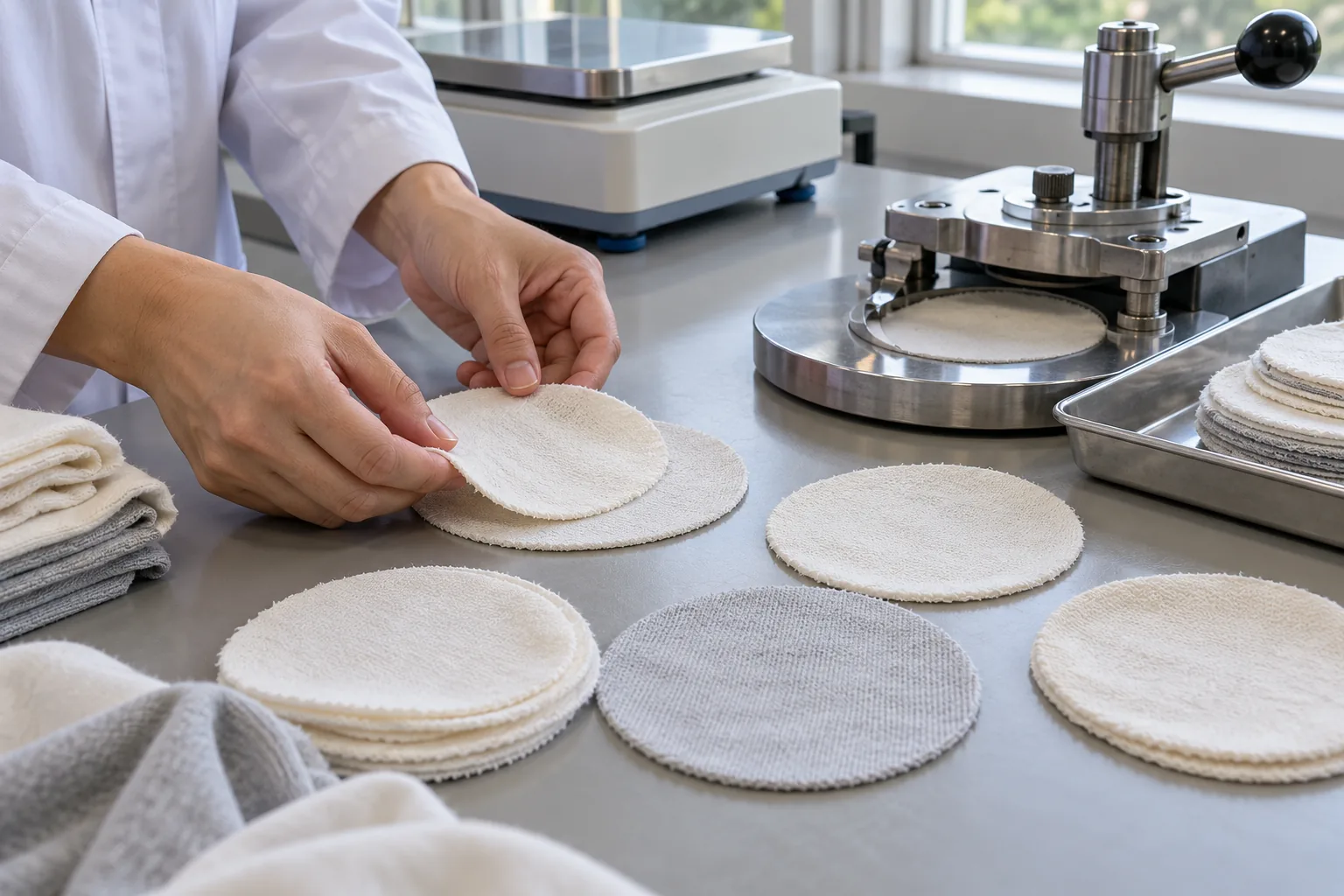
Two 210 GSM jerseys can behave differently. One may use a finer yarn in a tighter construction; another may gain mass from a bulkier yarn. Fibre composition, yarn twist, knit structure, and finishing all influence the surface and recovery. Record those variables wherever they are known instead of treating the GSM number as a complete fabric identity.
Ask whether the quoted weight refers to unfinished fabric or finished, conditioned fabric ready for cutting. Wet processing and compaction can change fabric dimensions and therefore mass per unit area. Comparing a supplier’s unfinished specification with another supplier’s finished result creates a false equivalence.
For measurement, agree on a conditioning procedure and calibrated equipment. A circular specimen with an area of 100 square centimetres represents one hundredth of a square metre; a mass of 2.10 grams therefore corresponds to 210 GSM. Check several representative locations, avoiding selvedges and obvious defects, rather than relying on one cutting.
Also review opacity in the actual colours. White, pale grey, and black do not provide interchangeable evidence. Assess the fabric relaxed and stretched over the intended fit, under consistent lighting. If a white sample reveals more than intended, investigate construction and fit as well as increasing weight.
Use a controlled sample comparison to find the right GSM
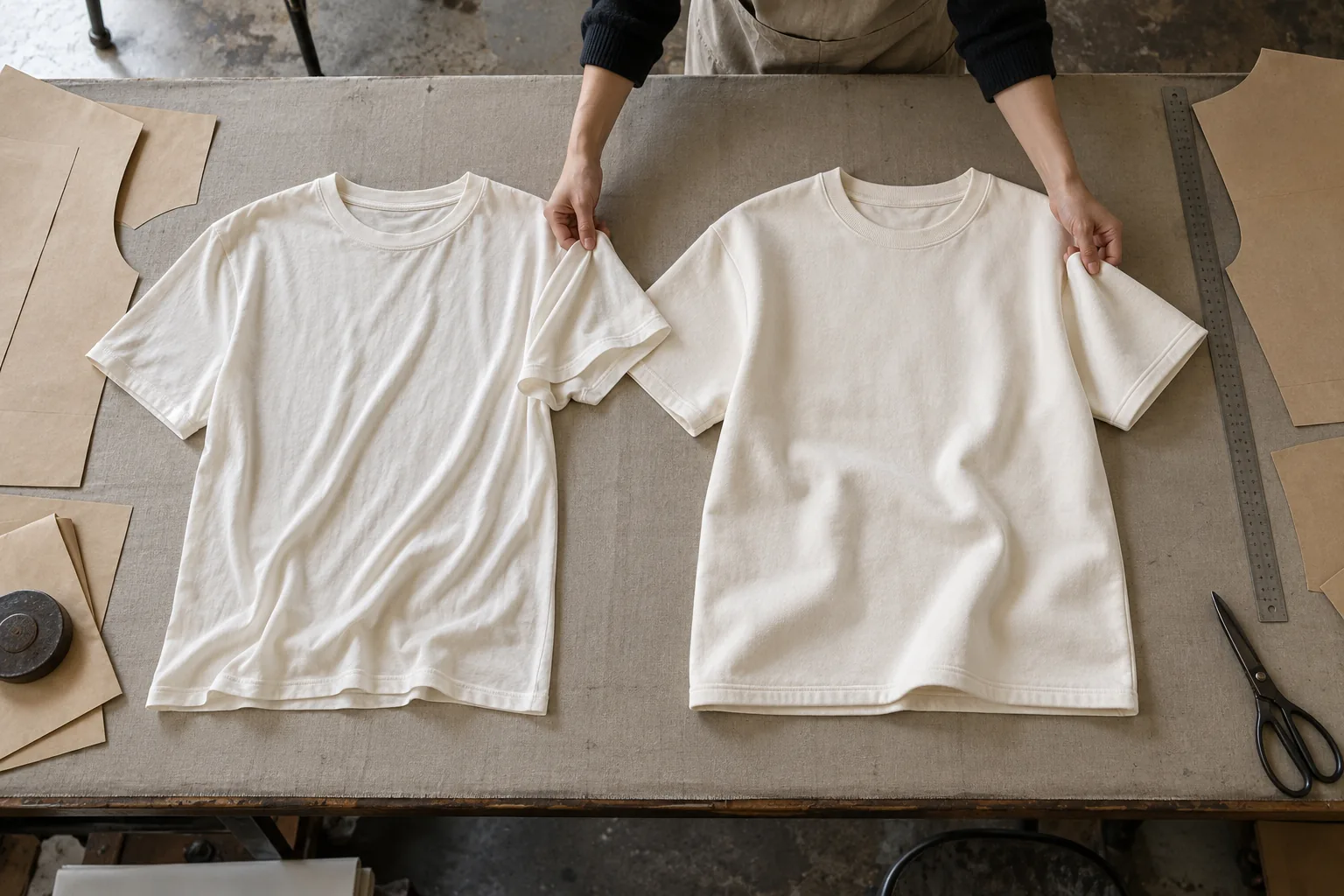
Request two candidates far enough apart to reveal a useful difference, such as 190 and 230 GSM, while keeping composition, colour, and finish as similar as sourcing allows. Make both in the same pattern with the same collar specification. If every variable changes, the fitting cannot tell you whether weight caused the improvement.
Assess the samples on a person as well as a hanger. Check shoulder collapse, sleeve opening shape, fabric pooling above the hem, and how the chest behaves when the wearer sits. A heavier jersey may suit a broad silhouette but feel restrictive in a narrow sleeve. Record specific observations instead of comments such as “make it more premium.”
Wash both garments using the intended care conditions and measure them before and after. For example, a body length that changes from 72 to 70 centimetres has shrunk approximately 2.8%. Agree on the number of cycles, drying method, and measurement recovery period so repeat assessments remain comparable.
StitchQuote offers sampling and fabric/trim sourcing. A 7-day sample is available for standard styles with confirmed specifications and available materials; complex styles, custom washes, and custom-developed fabric take longer. Confirm which fabric candidates are available before building the launch calendar around a comparison round.
Make collar, seams, and decoration work with the chosen jersey
Once the body fabric is selected, review the components it must support. A dense jersey paired with weak rib can leave the neckline looking stretched; a very firm collar on a light body may pull or distort the neck opening. Specify rib composition, dimensions, recovery expectations, and attachment details separately from body GSM.
Check seam appearance on the actual fabric. Needle selection, thread, stitch settings, and handling need to suit its thickness and stretch. Look for puckering, skipped stitches, and damaged yarns after laundering. A setting that works on the lighter trial should not automatically carry over to the heavier version.
Decoration also changes local behaviour. Large prints can make an otherwise fluid tee feel stiff across the chest, while dense embroidery can distort a lighter jersey. Sample the proposed artwork at its intended size and location. Inspect the reverse, assess skin contact, and repeat the wash check with the decoration included.
StitchQuote’s services include cut-and-sew, private label, and branding through woven labels, prints, and embroidery. Define the decoration when requesting the sample so the fabric decision reflects the finished product customers will wear.
Set a bulk acceptance checklist around the approved weight
An approved sample needs a written acceptance standard. “Heavy cotton” leaves too much room for interpretation. A development brief might propose 220 GSM with a ±5% tolerance, equivalent to 209–231 GSM. That is an illustrative negotiation point, not a universal standard or a stated StitchQuote tolerance; confirm the achievable limits and test method before ordering.
- Fabric identity: Record composition, construction, finish, colour reference, nominal finished GSM, and the approved swatch identifier.
- Weight consistency: Agree how rolls and dye lots will be sampled, which readings are reported, and how outlying results are handled.
- Wash performance: Define allowable length and width change, twisting, and appearance changes under the agreed care procedure.
- Garment measurements: Set separate tolerances for chest width, body length, sleeve length, and neck opening; do not substitute a GSM pass for a fit check.
- Visual and construction checks: Review shade variation, holes, seam damage, collar recovery, hem waviness, and decoration performance.
- Approval record: Retain the approved garment and swatch, with dated comments and a clear procedure for proposed fabric substitutions.
Require evidence from bulk fabric before cutting when the agreed inspection plan calls for it. Once fabric becomes garments, a weight or shrinkage mismatch is harder to correct. StitchQuote provides QC before packing; establish separately which fabric-stage checks and reports the project requires.
For repeat orders, keep the same measurement basis and compare against the retained reference. Similar hand feel alone cannot establish that a replacement fabric will reproduce the original fit after washing.
Questions buyers ask before locking the fabric order
Should every fit in a basics range use the same GSM?
Only if each fit passes wear and wash assessment. Sharing a fabric can simplify the range, but a fitted layering tee and a wide cropped tee may need different drape. Test the most demanding silhouette before standardising fabric across styles.
Does a low garment MOQ make a custom weight practical?
Not necessarily. StitchQuote’s MOQ for most categories starts from 50 pieces per style, but custom-developed fabric can involve separate sourcing constraints. Ask whether an available jersey meets the performance brief before requesting a new knit specification, and confirm fabric availability for repeat orders.
Can garment weight verify the supplier’s GSM claim?
It can flag a large change between identical garments, but it cannot isolate fabric GSM. Size, pattern area, rib, labels, and decoration contribute to total mass. Use measured fabric specimens for GSM and treat finished-garment weight as a supporting comparison only.
What should accompany a request for a heavier replacement sample?
Describe the failed performance: insufficient coverage, collapsed sleeves, or unwanted cling. Include the current fabric reference and washed measurements, then identify which variables should stay fixed. This gives the supplier a testable correction and avoids adding weight without solving the original problem.
Use these resources to turn the chosen fabric into a complete development brief:
- Prepare the tech pack and fabric specification
- Review sampling and MOQ considerations
- Explore custom T-shirt manufacturing
- Discuss your GSM targets with StitchQuote
Request a manufacturing quote
Share your product type, quantity range, and destination. We usually reply within one business day.