Custom Streetwear, Casualwear & Denim Manufacturer•MOQ 50 pcs•Denim MOQ 100 pcs•7-Day Sample Available

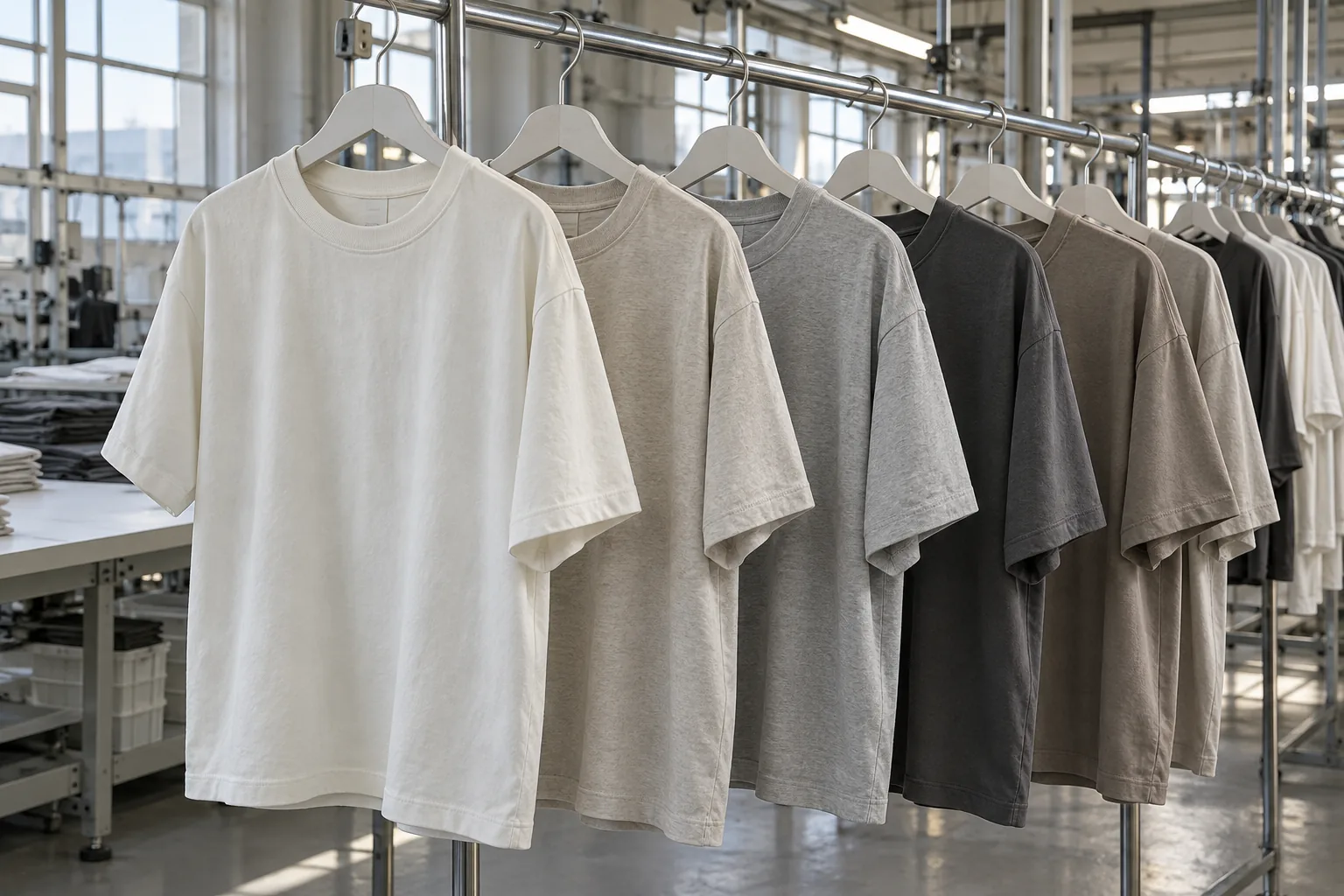
How to Build a Better Basic Tee Range for Private Label Brands
Use build basic tee range private label to compare private label decisions more clearly, protect brand consistency, and keep product, trims, and commercial scope.

A basic tee range earns repeat purchases when the fit customers choose survives their laundry routine. A medium that fits on delivery but becomes short and wide after washing creates a different product experience from the one your size chart promised. Before approving colors, graphics, or a reorder, establish what each silhouette must measure after care.
Use shrink testing as a range development gate. The purpose is to separate a pattern problem from a fabric or finishing problem, then approve a repeatable combination of material, construction, and care instructions. This approach is especially useful when several tees share one fit block but use different weights, colors, or neck ribs.
Define the fit customers should keep after laundry
Start with two measurement states: the garment as supplied and the garment after the agreed wash sequence. Identify which state your size chart describes. A factory can meet an unwashed specification while the washed garment misses your intended fit, so approving only the first state leaves an important gap.
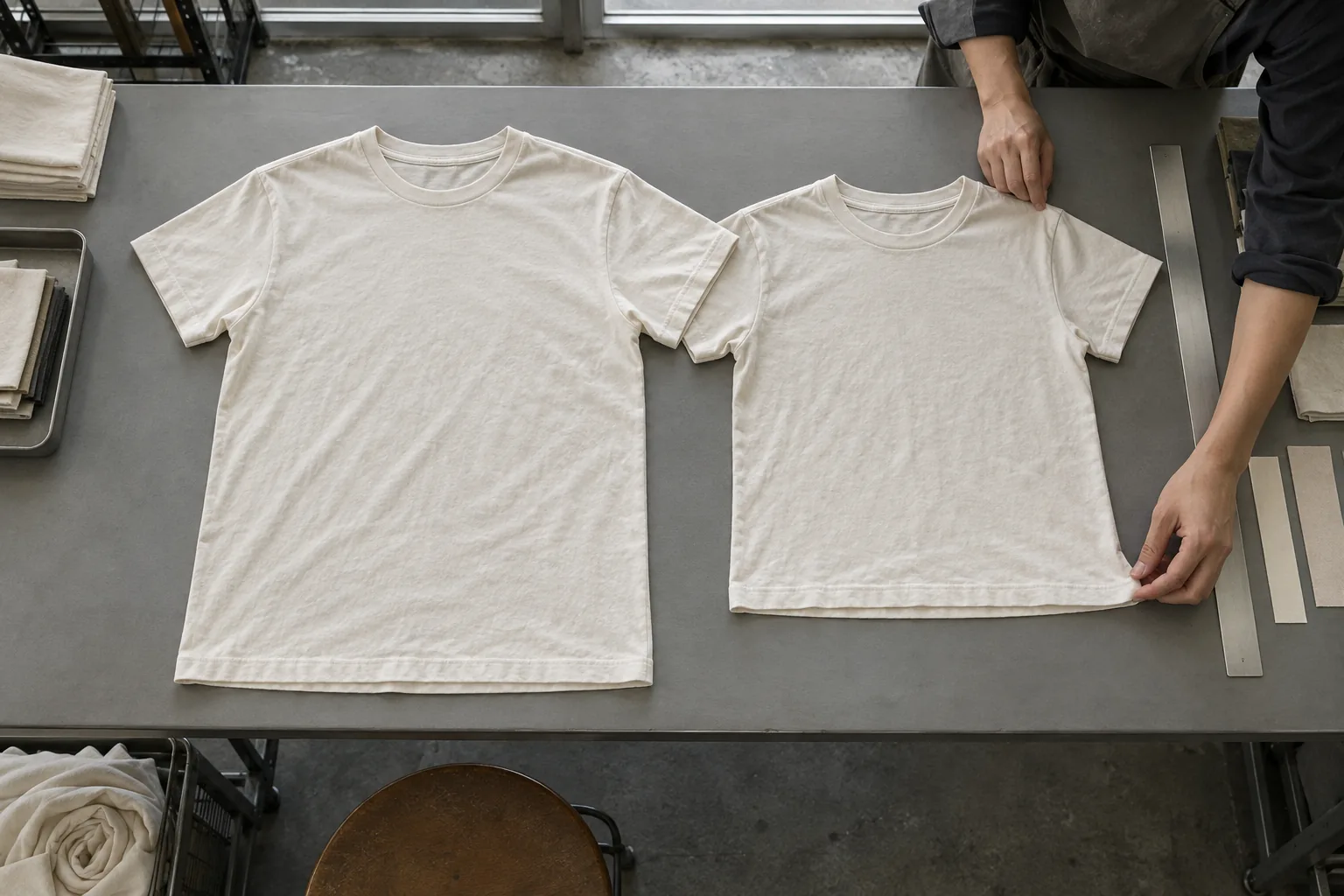
For an illustrative regular medium, you might target a 72 cm supplied body length and a 54 cm half chest. If the length becomes 69.8 cm after washing, the loss is about 3.1%. Decide whether that resulting length still delivers the intended fit before treating the percentage as acceptable. A cropped silhouette may have less room for length loss than a longline tee.
Choose critical points before sampling: body length from high shoulder point, half chest at a defined distance below the armhole, shoulder width, sleeve length, and neck opening. Agree exactly how to lay the garment flat and whether neck opening is measured straight across or along a seam. Different measuring methods can look like shrinkage.
Build a test matrix around material differences
Do not assume that one passing white tee clears the entire assortment. Yarn, knit structure, dyeing, finishing, and garment washing can change dimensional behavior. Group styles by shared fabric specification and processing route, then identify the combinations that need their own evidence. Color is a useful tracking field, but the processing difference is what makes separate testing necessary.
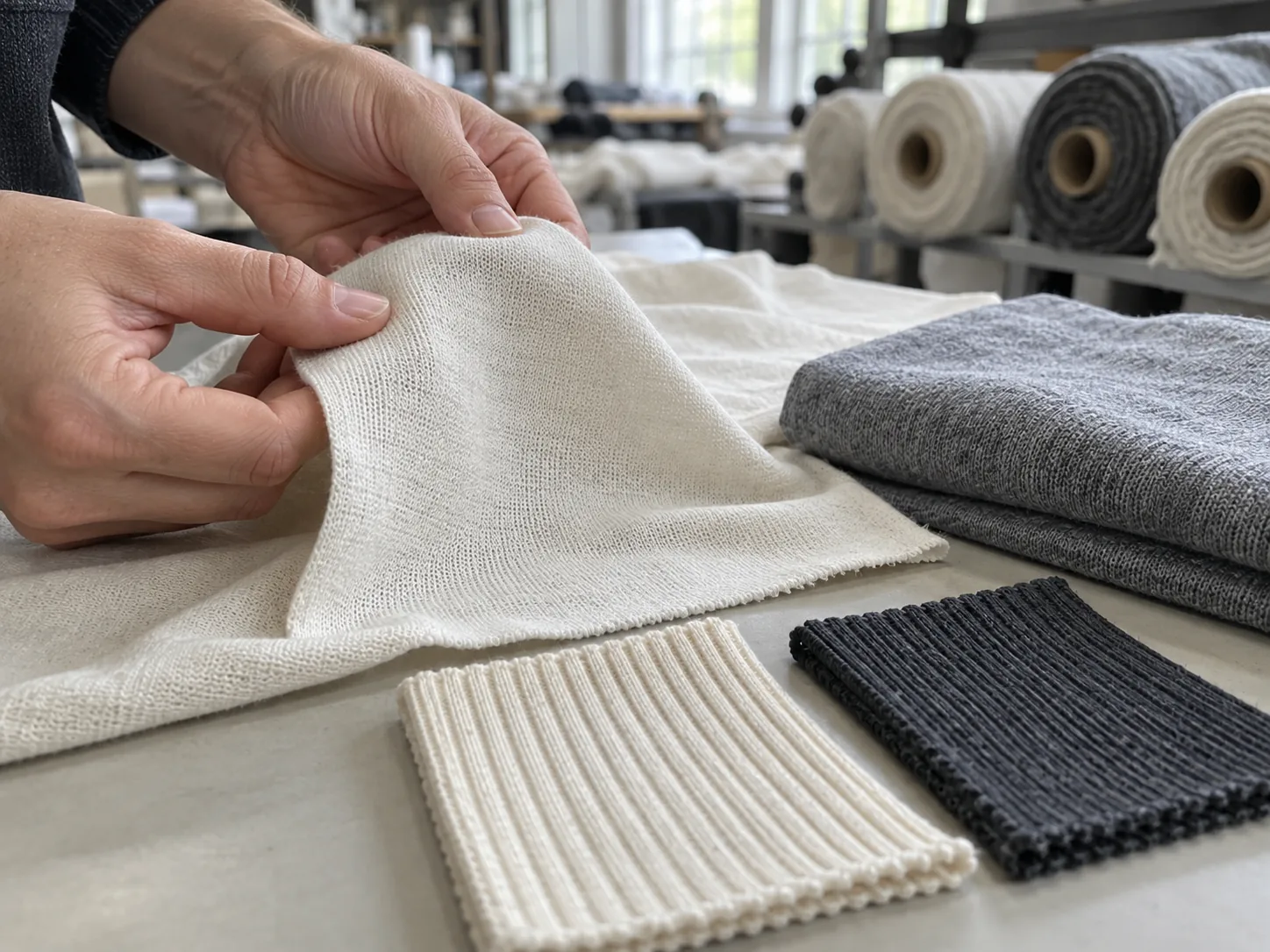
A practical pilot might compare a lightweight regular tee, a heavyweight boxy tee, and a garment-washed version. Record fiber composition, nominal fabric weight, knit construction, finish, color, and lot identification for each. Include the neck rib specification: a stable body paired with a contracting collar can produce puckering even when chest measurements pass.
| Range variable | Evidence to request | Release decision |
|---|---|---|
| Same jersey, different dye route | Washed measurements from each route | Share compensation only if results support it |
| Different body weight or knit | Separate finished garment trial | Approve its own fit outcome |
| New rib or decoration | Washed neckline and decorated panel review | Check appearance as well as dimensions |
For a development screen, two or three garments per selected combination can expose obvious inconsistency; this is an illustrative starting point, not a statistical acceptance plan. Include a smaller and larger size when proportions or grading are sensitive. Agree a separate bulk sampling plan based on order size and variation.
Make the wash sequence reproducible
A result described only as “washed once” is difficult to use. Write down the wash program, temperature, detergent type and dose, load conditions, drying method, and number of cycles. Match the intended care label. If tumble drying is permitted, a line-dried development sample cannot establish performance under that permitted treatment.
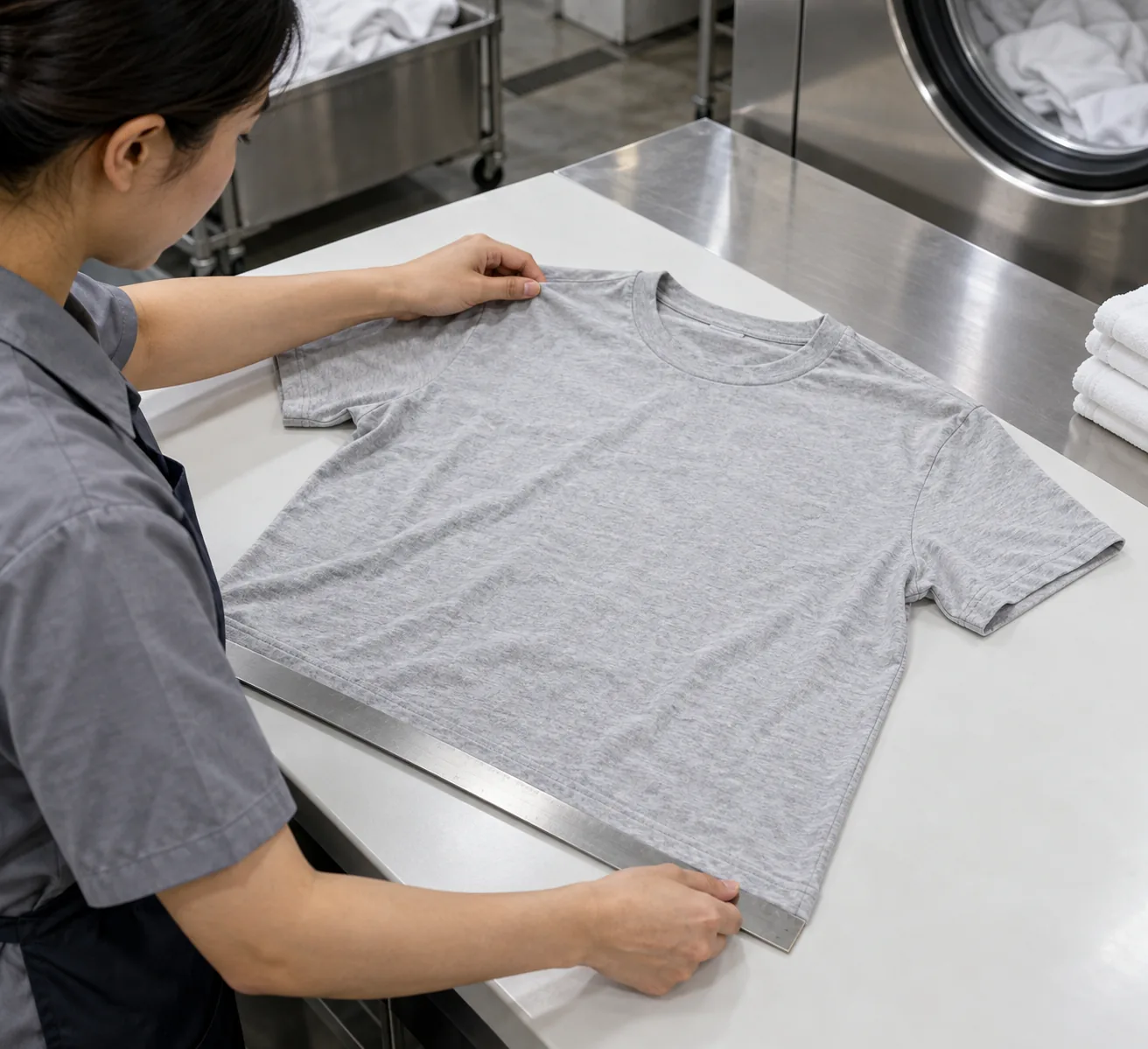
Let samples relax flat under the same agreed room conditions before baseline measurement and again after drying. Record the conditioning interval. Do not stretch, steam, or press a washed sample back into shape unless that treatment is explicitly part of the protocol. Measure with the same tools and preferably the same trained operator.
Calculate dimensional change as: (after measurement minus before measurement) divided by before measurement, multiplied by 100. Negative values indicate shrinkage; positive values indicate growth. Keep the sign in your report. A 54 cm half chest that finishes at 54.5 cm has grown about 0.9%, even if the body length has shortened.
Record results after the first cycle and after a later agreed checkpoint, such as the third cycle. This is a proposed development sequence, not a universal test standard. If a buyer requires a recognized laboratory method, specify its exact procedure and reporting requirements before testing rather than treating an informal factory trial as equivalent.
Use the result to choose the right correction
Read the pattern of change before changing the pattern. Consistent length loss across comparable samples may support controlled length compensation. Large differences between samples suggest a material or process issue that extra pattern length will not solve. Length loss combined with width growth also needs a different response from balanced shrinkage in both directions.
For stable 4% length shrinkage, a simplified calculation for a 70 cm washed target is 70 divided by 0.96, or about 72.9 cm before washing. That is a development estimate, not an instruction to lengthen every pattern piece by the same amount. Necklines, armholes, seam allowances, and rib attachments need construction-specific review.
Ask whether fabric relaxation, finishing, or an agreed garment wash can improve stability before relying entirely on compensation. Then resample the chosen solution using the intended material and construction. Changing the finishing route after fit approval can invalidate earlier results, even if the composition and nominal weight remain the same.
Keep grading separate from shrink allowance. If the smallest size passes and the largest becomes too short, inspect actual measurements and size-specific construction before adjusting the whole range. Approve the corrected garment both before and after care so that the first wearing experience also remains acceptable.
Set a QC gate for dimensions and appearance
Create written acceptance criteria before reviewing results. An illustrative starting point could limit body length and half-chest shrinkage to 3%, with a separate supplied measurement tolerance of ±1 cm at those points. Confirm both per project: they are different controls, and a garment can meet one while failing the other. Define growth limits separately.
- Measurement record: retain baseline, cycle results, percentage change, size, color, lot, and sample identity. Check both the approved dimensional limits and the resulting fit.
- Body balance: inspect side-seam rotation and hem skew with the tee laid naturally flat. Use an agreed reference photograph and measurement method for any rotation limit.
- Neck recovery: check puckering, rib waviness, seam distortion, and whether the opening returns after gentle handling. Compare against the approved washed sample.
- Decoration and seams: review print cracking, embroidery puckering, seam opening, and label discomfort after care. A dimensionally stable blank does not automatically clear a decorated version.
- Bulk traceability: confirm that tested garments represent the production fabric and finishing route. Investigate a failed combination before releasing the affected lot.
Keep an unwashed control alongside the approved washed reference. Photographs help, but physical samples make changes in hand feel, collar shape, and panel drape easier to judge. QC before packing should reference the agreed criteria; washing an agreed selection does not mean every packed garment has been wash-tested.
Questions buyers ask before releasing a tested range
Can fabric swatches replace finished tee testing?
Swatches help screen materials, but they cannot reveal the full interaction between jersey, rib, stitching, and decoration. Use them to narrow choices, then test finished garments before approving the range. A passing swatch is useful evidence, not final fit approval.
Should every color have a different pattern?
Only consider separate compensation when repeatable results justify it. First investigate processing differences and variation within each color. Several patterns can add complexity without fixing unstable fabric. Shared patterns work best when the approved material routes produce compatible washed dimensions.
Does a seven-day sample include shrink approval?
StitchQuote offers a 7-day sample for standard styles with confirmed specs and available materials. Complex styles, custom washes, and custom-developed fabric take longer. Agree the wash cycles, conditioning, review time, and any revision separately; sample availability alone does not establish a completed testing schedule.
What should accompany the production inquiry?
Send supplied and washed targets, your care protocol, material matrix, and acceptance criteria. StitchQuote provides cut-and-sew, private label, sampling, fabric and trim sourcing, branding, and QC before packing. MOQ for most categories starts from 50 pcs per style; confirm the proposed tee assortment and testing requirements for your project.
Related reading and project support:
- Document measurements and care requirements in your tech pack
- Plan sampling and minimum order quantities
- Explore custom T-shirt manufacturing
- Discuss your tee shrink-test brief with StitchQuote
Request a manufacturing quote
Share your product type, quantity range, and destination. We usually reply within one business day.