Custom Streetwear, Casualwear & Denim Manufacturer•MOQ 50 pcs•Denim MOQ 100 pcs•7-Day Sample Available

Trucker Jacket vs Workwear Jacket for Streetwear Collections
Understand trucker jacket vs workwear jacket streetwear through fit, fabric, decoration, and production logic so streetwear and premium basics buyers can make.

A jacket can give a small streetwear collection its identity, but it can also absorb the development attention needed by every other piece. Choosing between a trucker and a workwear jacket is therefore partly a question of exposure: which shape delivers the intended look with fewer unresolved decisions about fit, cloth, hardware, and finishing?
The useful comparison happens before adding custom washes, hidden pockets, or elaborate branding. Start with the simplest credible version of each silhouette, identify the details customers will notice, and spend development effort there. Reducing unnecessary features should protect the product idea, not produce a generic jacket with its defining details removed.
Choose the silhouette that needs less explanation
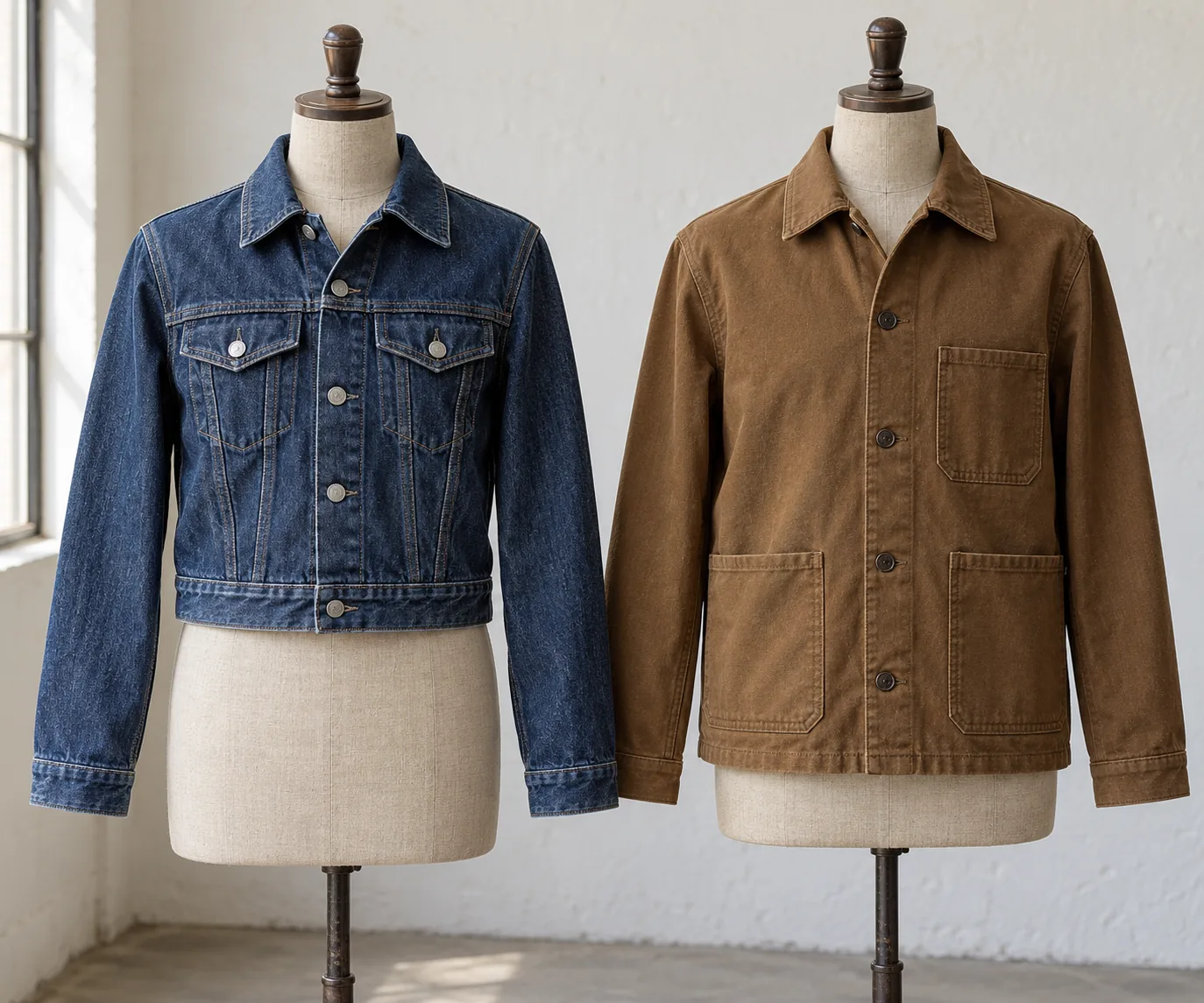
A conventional trucker communicates through a relatively short body, a defined waistband, chest pockets, and visible panel seams. A workwear-inspired jacket often communicates through a straighter body, accessible patch pockets, and room for movement. These are design conventions rather than fixed rules, but they give buyers a useful starting point.
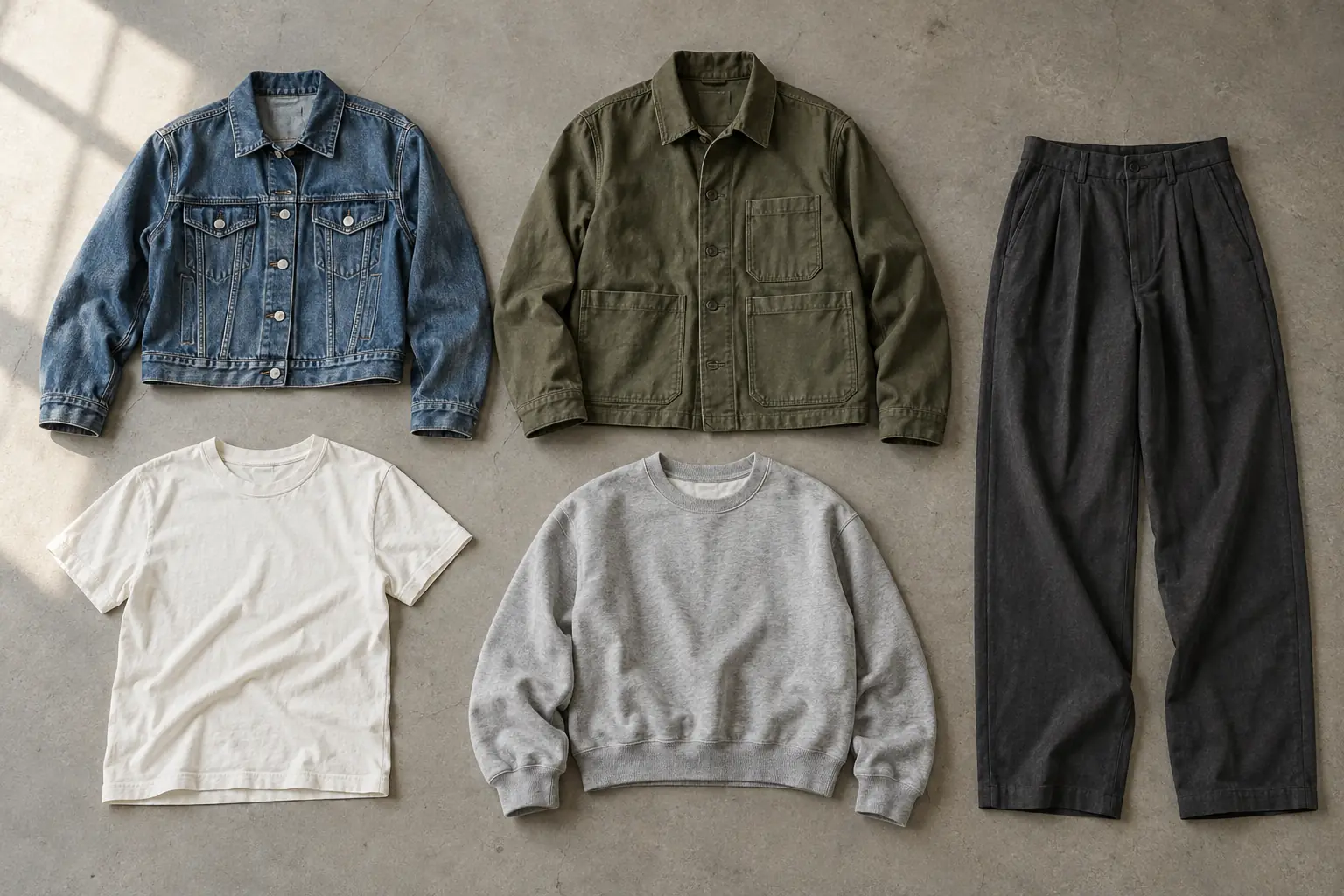
Consider a capsule built around high-rise trousers and compact tees. A trucker that finishes near the trouser waistband can complete that proportion without needing a special wash. For a collection centered on sweatshirts and relaxed pants, a hip-length chore-style jacket may provide the intended layering space with fewer pattern compromises.
Write one sentence describing the jacket’s job: “A short outer layer that leaves the trouser shape visible,” or “A roomy top layer with usable front pockets.” Reject additions that weaken that job. Workwear styling alone does not establish protective performance; avoid functional claims that have not been specified and verified.
Give the first sample one difficult problem to solve
Risk increases when several unfamiliar elements depend on each other. A new cropped block, rigid denim, a custom wash, and oversized embroidery are not four separate choices: each can change how the others behave. The first sample then becomes difficult to diagnose. A twisting front might come from the fabric, the pattern, or the finishing process.
Assign one development priority and keep supporting choices controlled. If an exaggerated trucker shape is the selling point, begin with an available fabric and a simple finish. If a distinctive canvas surface is essential, use a straightforward workwear shape while testing that material. This is a proposed development discipline, not a restriction on the final design.
| Essential design idea | Control initially | Evidence needed before adding more |
|---|---|---|
| Boxy, cropped trucker | Wash and decoration | Balanced hem and comfortable sleeve movement |
| Heavy canvas workwear layer | Pocket count and lining | Comfort at collar, elbow, and layered seams |
| Statement back embroidery | Fabric and back-panel construction | Stable embroidery trial without puckering |
Keep a separate list of deferred features. Deferring an inside pocket until fit approval is different from forgetting it: record its intended position and decide whether it needs another sample before production.
Test the cloth where the jacket becomes thick
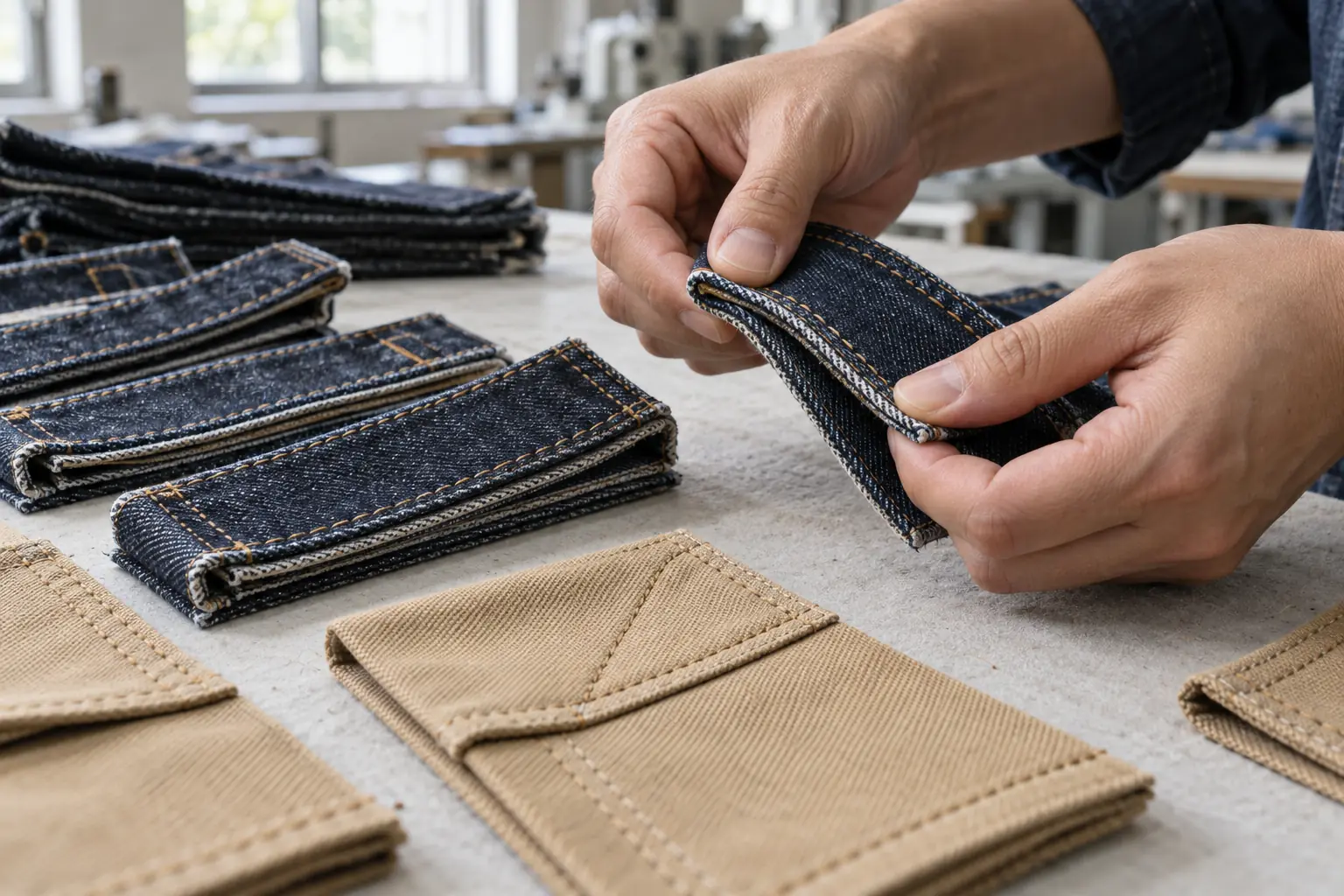
Fabric weight alone cannot tell you whether a jacket will work. As indicative development starting points, a buyer might explore 10–13 oz denim for a trucker or 250–350 gsm cotton canvas for a workwear layer. Confirm suitability per project: weave, yarn, finishing, and stiffness can make fabrics of similar weight behave very differently.
Request a sewn trial of the thickest intersection. On a trucker, this could be the waistband meeting a front placket and panel seam. On a workwear jacket, it might be a folded pocket corner or a cuff attached to a sleeve seam. Check whether the assembly bends comfortably, whether stitches remain balanced, and whether the chosen button or snap attaches securely through the actual layers.
Evaluate the fabric in its intended finished state. If the jacket will be washed after sewing, compare measurements and surface appearance before and after that process. A raw swatch cannot approve the final hand feel. Agree on shrinkage allowance through trials, rather than selecting a universal percentage from another product.
Also consider clothing worn underneath. Rub a finished dark fabric trial against light cloth under agreed dry and damp conditions and discuss appropriate colorfastness testing. Visible transfer onto a pale hoodie can undermine an otherwise successful fit.
Approve movement before adding utility details
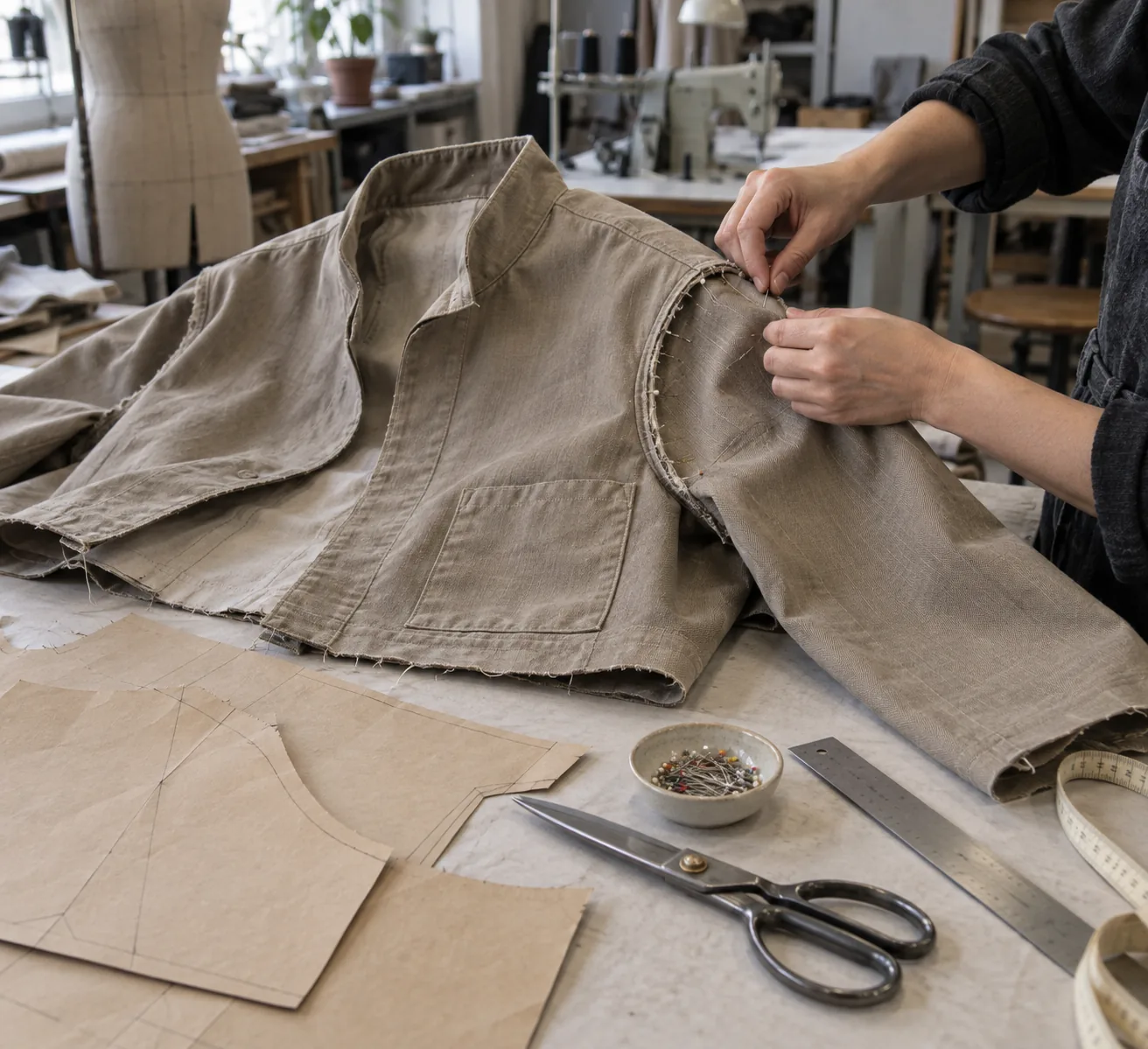
Measure the sample buttoned and laid flat, using documented points for chest width, shoulder width, body length, sleeve length, bicep, and hem opening. Define whether length starts at the high shoulder point or another reference. Consistent measurement methods matter more than adding dozens of dimensions that nobody can reproduce.
Then conduct a short wear check with the intended underlayer. Ask the wearer to reach forward, sit, raise both arms, and put hands into the pockets. A trucker may look correct while standing but pull sharply across the back when reaching. A loose workwear body can still restrict movement if its armhole or upper sleeve is poorly matched to the layer underneath.
Use observable comments: “Front hem lifts when arms reach forward” is more actionable than “Make it relaxed.” Discuss the cause with the pattern maker before widening everything. Increasing body width can change the silhouette without resolving sleeve restriction.
For pockets, specify the usable opening and depth, then test the intended object. A phone should fit without forcing the pocket mouth or dropping below a comfortable reach. Reinforcement belongs at actual stress points; decorative bartacks everywhere can create unnecessary stiffness and sewing operations.
Keep finish and branding changes inside an approval boundary
After the shape works, freeze the construction baseline before assessing decoration. Record the approved fabric reference, seam layout, closure type, and key measurements. If a later wash or embroidery trial changes the drape, return to those checkpoints rather than assuming the earlier fit approval still applies.
A small embroidered mark on a clean workwear pocket may be easier to control than a large design crossing multiple trucker seams. However, the smaller mark still needs placement dimensions, thread-color references, and a physical trial. Check that embroidery does not close usable pocket space or leave uncomfortable backing against the wearer.
For a first release, concentrate visual distinction in one or two places: the silhouette and one branding treatment, for example. Contrast stitching, custom metalwork, distressing, printed lining, and several label types each introduce another approval. Retain those that customers can recognize and that support the collection’s purpose.
StitchQuote offers cut-and-sew, private label, sampling, fabric and trim sourcing, branding through woven labels, prints and embroidery, and QC before packing. Use those services against a defined specification so that each requested operation has an approval reference.
Make the final checklist short enough to use
Quality control should distinguish a deliberate design characteristic from an avoidable defect. A washed surface can vary, but that does not make every shade difference acceptable. Establish a physical reference and, where necessary, agreed boundary samples for acceptable variation. Photographs support those references; lighting can make them unreliable as the sole color standard.
- Measurements: List critical finished dimensions and agreed tolerances. For discussion, a buyer might propose ±1 cm on half-chest and body length, with tighter control on paired pocket placement; validate these example limits for the material and process.
- Symmetry and balance: Check collar points, pocket heights, cuff lengths, and the front hem when fastened. Specify any intentional asymmetry.
- Seams and hardware: Inspect skipped stitches, puckering, bulky intersections, sharp hardware edges, and closure operation. Agree on appropriate attachment-strength checks.
- Finish and branding: Compare shade, wash effect, embroidery placement, and label orientation with approved references. Look for staining or damage around metal components.
- Size coverage: Confirm how fit and measurements will be reviewed beyond the base size, particularly sleeve room and pocket accessibility.
Define how defects will be recorded and resolved before packing. A checklist is useful only when buyer and supplier share the same acceptance criteria.
Questions buyers ask before committing to a run
Does a simpler workwear jacket automatically mean a lower minimum?
No. Construction simplicity and order minimums are different questions. StitchQuote’s MOQ for most categories starts from 50 pieces per style; denim starts from 100 pieces per style. Confirm how the chosen fabric, colors, and style variations affect the proposed order before dividing quantities across several versions.
Can a seven-day sample settle a custom washed trucker?
Do not assume it will. A seven-day sample is available for standard styles with confirmed specs and available materials. Complex styles, custom washes, and custom-developed fabric take longer. Ask which approvals the proposed sample covers and whether subsequent finishing trials remain outstanding.
Should lining be removed just to simplify development?
Only if the intended wearing experience still works. An unlined jacket needs an acceptable interior seam finish and comfortable contact with clothing or skin. If lining is essential for comfort or the intended season, specify it early because it affects ease, assembly, and the sample assessment.
When is the design ready for a production decision?
When the defining silhouette works, materials and finish have agreed references, and remaining changes do not hide unresolved fit or construction issues. Keep the approval record concise but explicit. A commercially focused jacket can be simple; it should never depend on assumptions that only become visible in bulk.
Related reading and next steps
- Prepare the jacket specification and approval references
- Review sampling and minimum order planning
- Discuss your jacket project with StitchQuote
Request a manufacturing quote
Share your product type, quantity range, and destination. We usually reply within one business day.