Custom Streetwear, Casualwear & Denim Manufacturer•MOQ 50 pcs•Denim MOQ 100 pcs•7-Day Sample Available

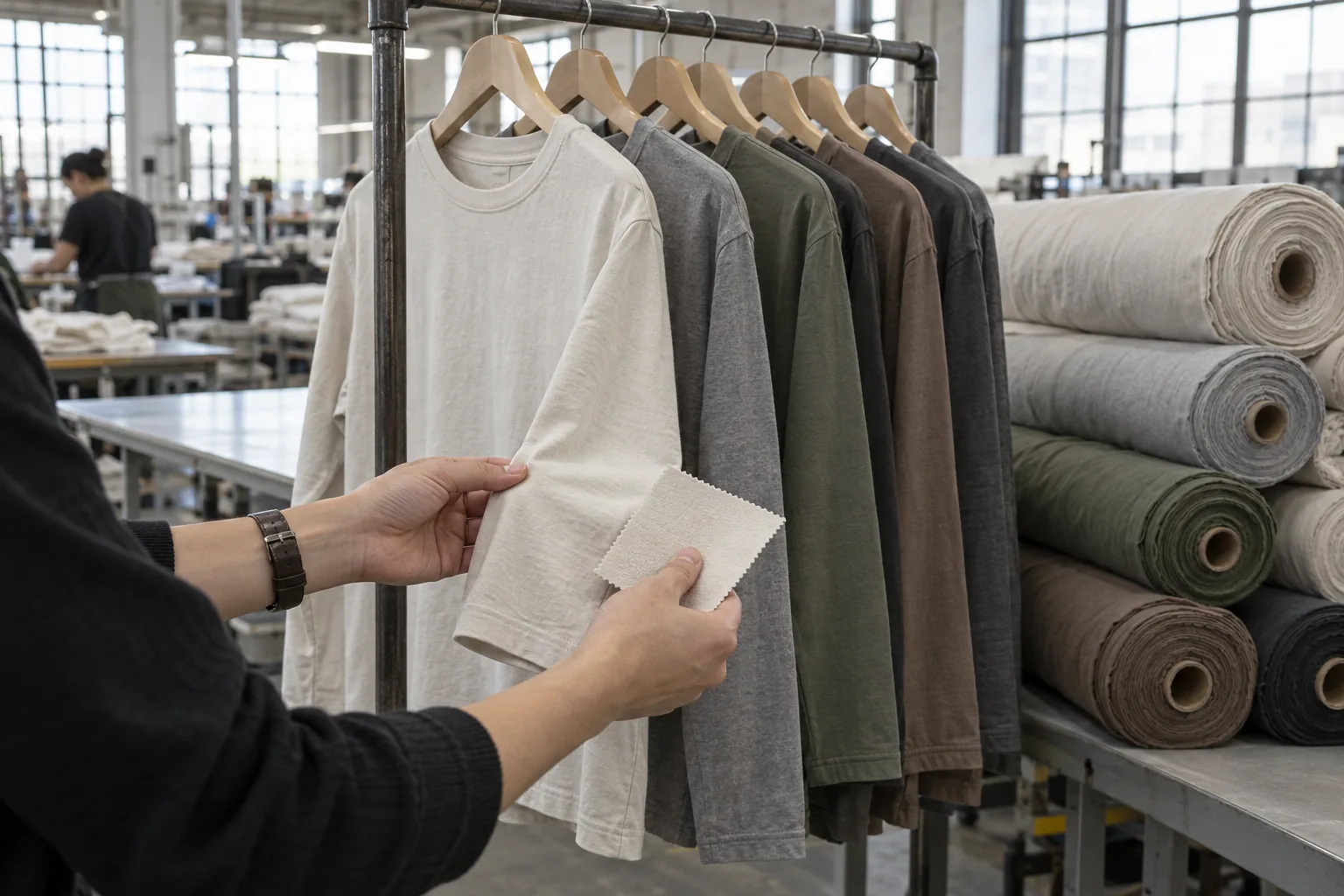
Why March 2026 Import Prices Fell for Apparel but Not for Textile Inputs
March 2026 import data shows softer apparel pricing but uneven textile-input pressure, giving buyers a better reason to separate garment quotes from material costs.

A fall in finished-apparel import prices can make an unchanged factory quote look out of step with the market. Yet the March 2026 divergence between apparel prices and textile-input costs does not establish that a particular sweatshirt, overshirt, or denim order became cheaper to manufacture. An aggregate price movement and a supplier’s offer answer different questions.
For buyers comparing quotes, the useful question is where any saving actually enters the proposed order. Is the supplier using a lower fabric booking price, accepting a smaller margin, changing construction, or quoting fewer services? Treat the March signal as a reason to request comparable evidence. The framework below helps turn that conversation into a purchase decision without assuming every cost component moved together.
Separate the market signal from the garment being quoted
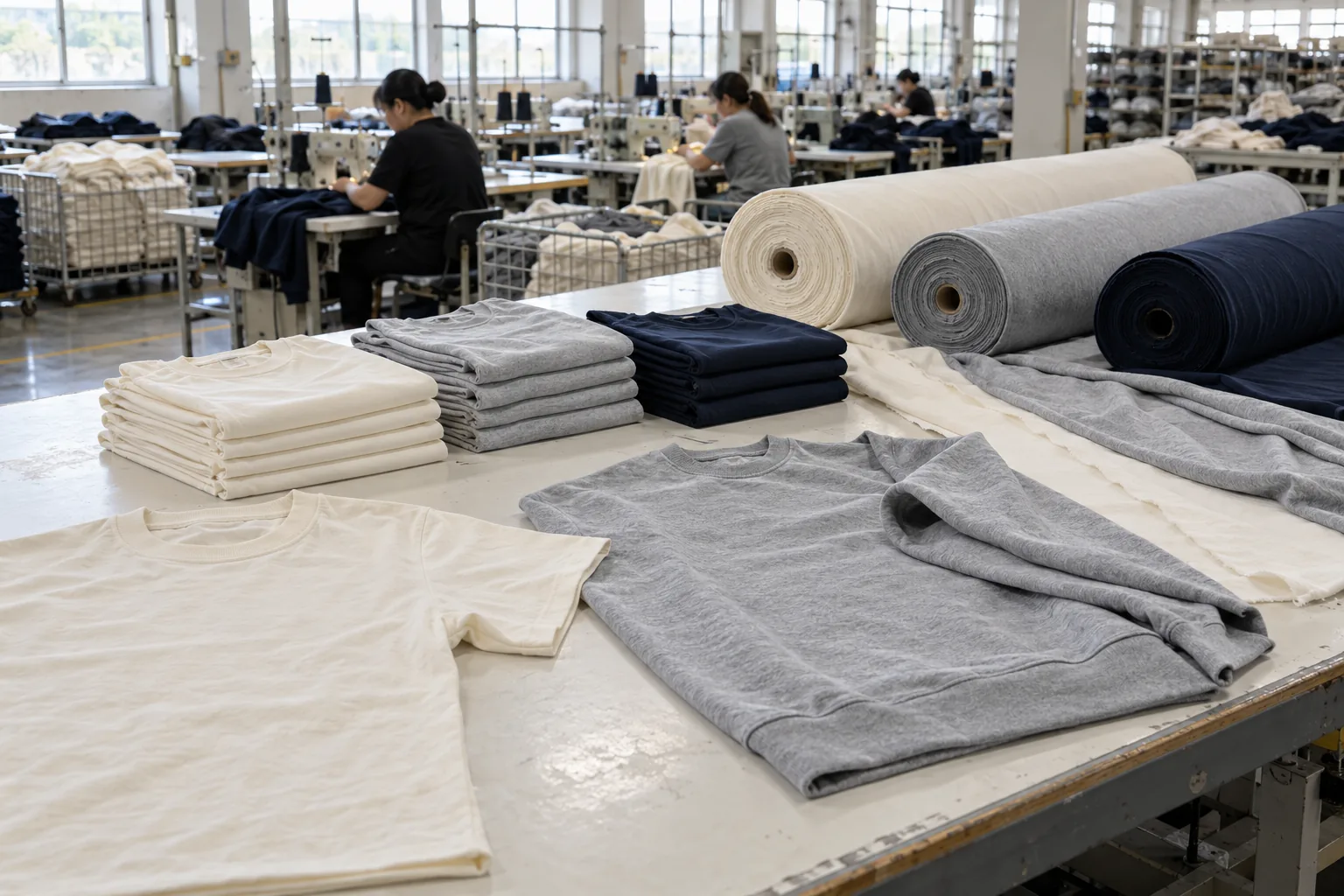
Finished-apparel import prices reflect transactions for garments entering a market. Textile-input prices concern materials earlier in production. Even where both measures cover the same month, they may represent different purchasing dates, product specifications, and commercial conditions. A domestic producer-price series also has a different scope from an import-price series; neither directly reveals a Chinese supplier’s fabric purchase cost.
Several mechanisms can explain the gap. Sellers may reduce margins to secure orders, buyers may negotiate more favorable contracts, or material purchases made earlier may work through production at different speeds. These are possible explanations, not proof of what drove every March transaction. The headline alone cannot identify which mechanism applies to a new private-label order.
Also distinguish a year-over-year decline from a month-over-month decline. A lower price than the previous March does not necessarily mean prices fell between February and March. When using a release in negotiations, record its comparison period and category. Then ask what changed in the supplier’s own offer since its previous version.
Freeze one reference order before requesting revised offers
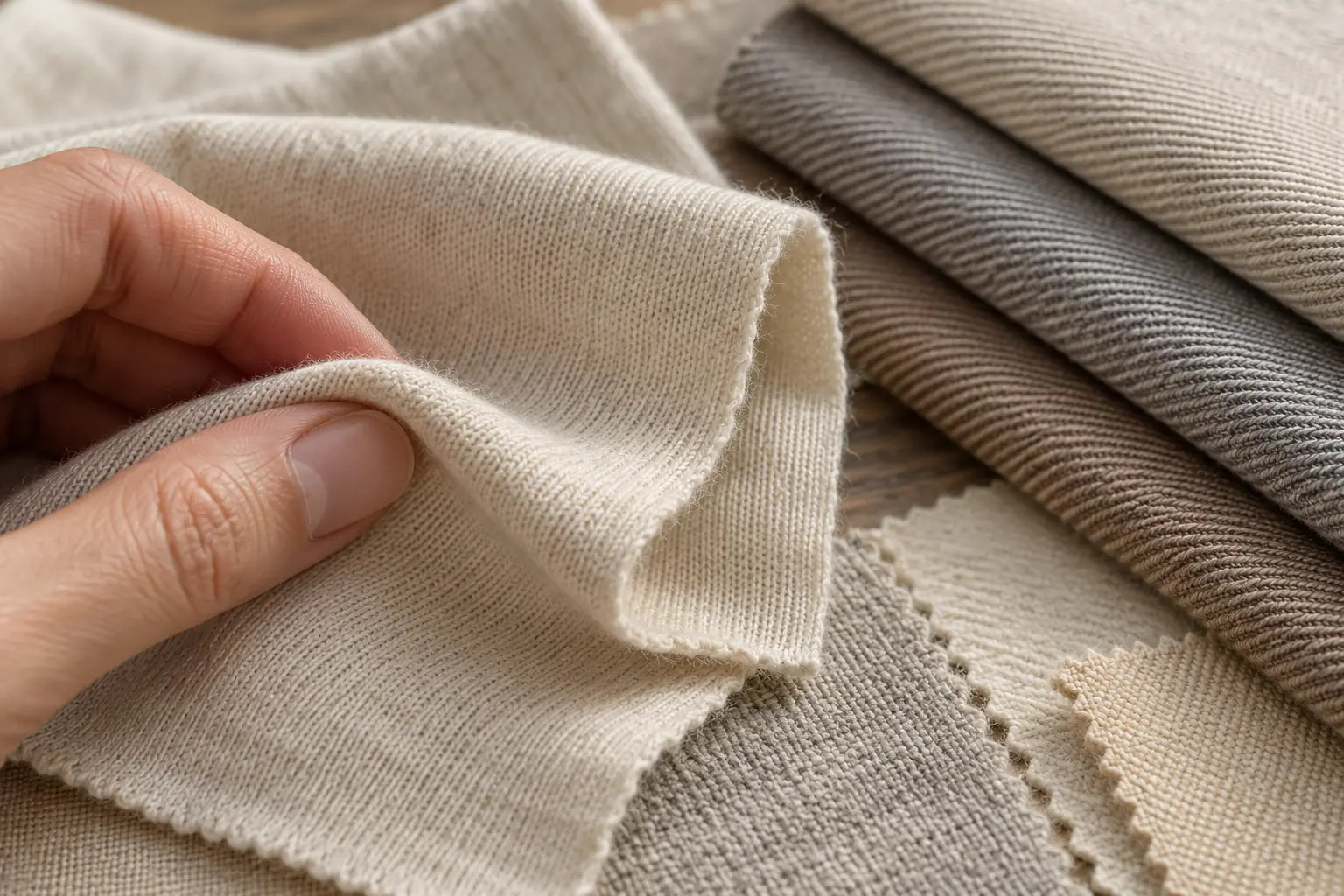
Build a single reference order that every supplier can price. For example, use an illustrative 200-piece cotton jersey long-sleeve tee in two colors, with a fixed size split, 240 gsm target fabric, one chest print, woven neck label, and individual packing. This is a comparison brief, not a claim about a standard product or guaranteed material availability.
Specify fiber composition, knit structure, finished fabric weight, finish, and intended hand feel. A quote for open-end jersey should not be treated as equivalent to one for combed ring-spun jersey merely because both say “cotton.” Similarly, a nominal fabric weight does not establish shrinkage performance, opacity, or usable cutting width.
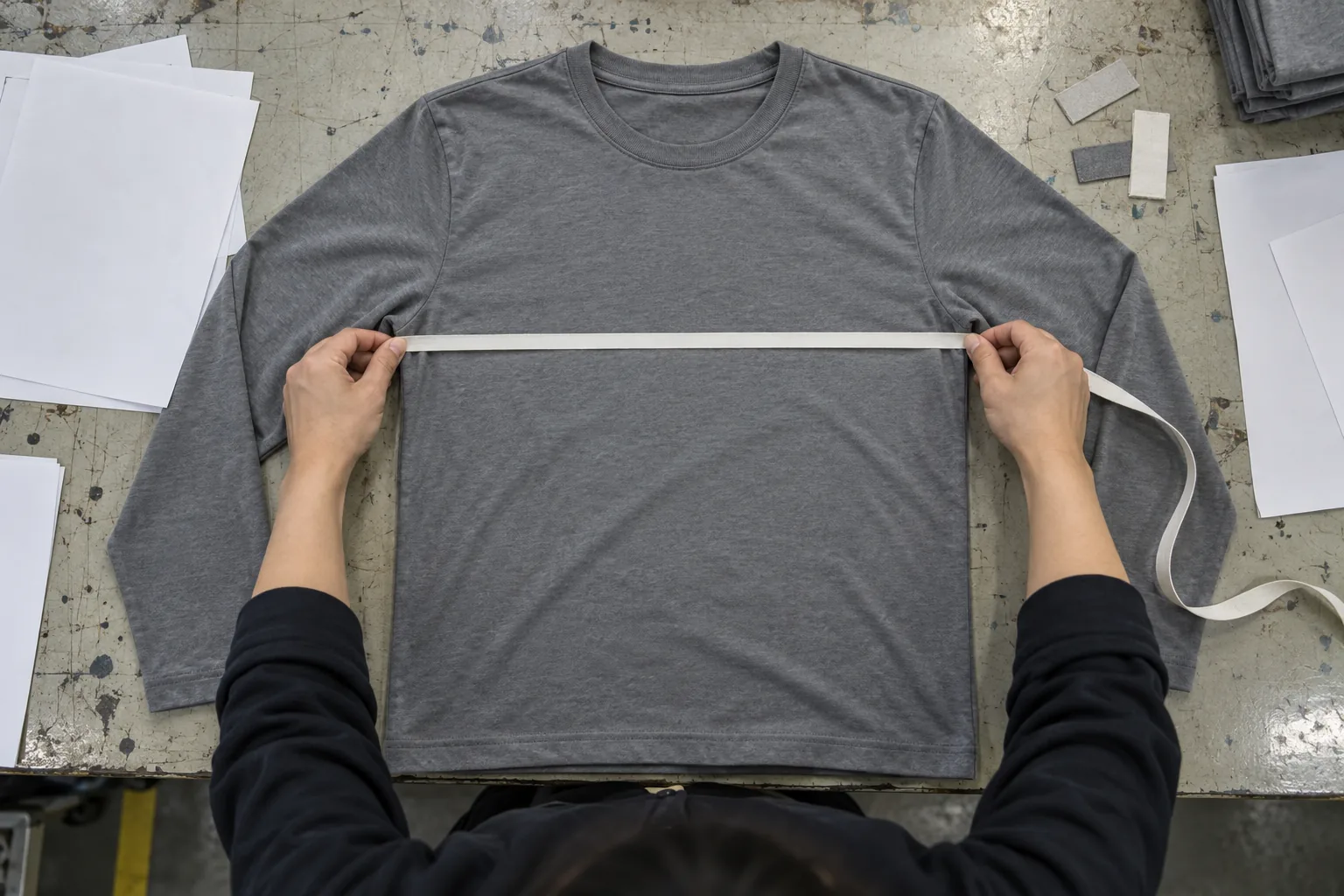
Attach a dated measurement chart and artwork dimensions. State whether measurements apply before or after washing, and identify the wash method used for assessment. If buyers permit an alternative fabric, request it as a separate option with its differences listed. Otherwise, a substitution can appear as a market-driven saving even though the product has changed.
Make each quote expose the same commercial assumptions
A supplier may reasonably decline to disclose its internal margin or every production calculation. Buyers can still require a clear included scope, a comparable delivery basis, and explicit exclusions. Use a compact comparison sheet rather than treating a single unit price as the whole offer.
| Comparison field | Record for every supplier | Difference to investigate |
|---|---|---|
| Order basis | Pieces, colors, sizes, specification revision | A lower rate assumes a larger run |
| Material basis | Fabric specification, stock or development status | Unavailable fabric is priced provisionally |
| Included work | Decoration, labels, packing, agreed checks | Setup or finishing appears separately |
| Delivery basis | Incoterm, named place, currency | Origin handling or transport differs |
| Time basis | Quote date, validity, approval dependencies | Material price can change before booking |
Compare recurring production costs separately from one-time development charges. A sample fee or print setup charge spread across 100 pieces has twice the per-piece effect it has across 200 pieces. Confirm which charges recur on repeat orders and whether any sample credit is conditional; do not assume a credit exists.
For landed-cost planning, add only charges excluded from the quoted delivery basis. Keep freight, insurance, duties, and destination handling as identifiable estimates where relevant, with their own dates and assumptions. A lower garment quote can coexist with a higher delivered total, and adding an included charge again can distort the comparison.
Ask for a cost-change explanation tied to the order
Instead of asking suppliers to match the percentage decline in an apparel index, ask them to identify which quote assumptions changed. Useful answers include a revised fabric offer, a different material reservation date, or a commercial discount valid for a defined order window. “Market prices are lower” is too broad to support an award decision.
Use a simple sensitivity check to test expectations. If fabric represents an illustrative 40% of the quoted garment cost, a 5% reduction in that component produces a 2% reduction in the total, assuming everything else stays constant. This arithmetic is not a factory cost benchmark. It shows why a change in one input should not automatically be applied to the entire garment price.
Ask suppliers to distinguish confirmed savings from options. A confirmed saving preserves the approved specification and scope. An option might change the print size, select available fabric, or consolidate colors. Both can be commercially useful, but the buyer needs to approve the product consequence before counting the saving in a margin forecast.
Test whether volume and approval timing explain the difference
Headline apparel pricing does not remove small-order setup costs. Cutting preparation, decoration setup, material allocation, and sampling still need to be covered. Compare the same quantity first, then request a second quantity as a separate scenario. Avoid selecting a lower unit rate that creates more unwanted inventory than the saving can justify.
StitchQuote’s MOQ for most categories starts from 50 pieces per style; denim starts from 100 pieces per style. Those starting points do not establish every fabric, color, trim, or wash minimum. Ask how the proposed size and color split affects the specific order and whether material sourcing creates an additional commitment.
Timing also changes the reliability of a quote. A 7-day sample is available for standard styles with confirmed specifications and available materials. Complex styles, custom washes, and custom-developed fabric take longer. When comparing offers, distinguish sample completion from bulk readiness: material booking, approval, production, and shipment have their own dependencies. A faster sample promise is not a complete delivery schedule.
Use a pre-award checklist to protect the apparent saving
Before choosing a supplier, check that the lower offer still buys the agreed garment. StitchQuote’s services include cut-and-sew, private label, sampling, fabric and trim sourcing, branding through woven labels, prints and embroidery, and QC before packing. Define the checks required for the order rather than assuming a service name specifies an acceptance standard.
- Measurements: Identify critical points and measurement methods. An illustrative buyer requirement might allow ±1 cm on half-chest width; agree tolerances by point, garment, and size rather than applying one limit everywhere.
- Wash behavior: Specify the washing and drying method, number of cycles, and dimensional-change limits. Compare results against the approved sample using the same procedure.
- Material and shade: Retain an approved swatch and clarify how bulk shade variation will be assessed. Check that replacement fabric requires buyer approval.
- Decoration: Confirm artwork size, placement reference points, print appearance, or embroidery details. Inspect distortion and puckering on the actual fabric.
- Packing and defects: Agree label content, size identification, packing quantities, inspection scope, and the process for correcting unacceptable goods before dispatch.
Keep the approved sample, specification revision, and final quote connected in the order record. If an acceptance requirement changes, request confirmation of any price or timing effect before approval. This prevents a low initial offer from becoming the basis for a different, more expensive production brief.
Questions buyers ask when March data meets a live quote
Should a supplier reduce its offer by the apparel index decline?
No automatic adjustment follows. The index covers a broader set of transactions than your order. Request a revised offer on unchanged specifications and ask which material or commercial assumptions support the revision. Evaluate the resulting total and obligations.
Can a quote stay flat even if its fabric becomes cheaper?
Yes. Other components may rise, or the original offer may have assumed a lower material price that was never booked. Ask for an explanation of the net change and the relevant dates. A flat quote deserves scrutiny, but it is not inherently inconsistent.
What if the cheapest offer uses an unapproved material?
Treat it as provisional. Request a swatch or sample, confirm performance requirements, and obtain the final price after approval. Keep an approved-material alternative in the comparison so the decision does not depend entirely on an unresolved substitution.
What should accompany a request for a comparable StitchQuote quote?
Send the dated specification, quantities by size and color, material requirements, decoration files, packing scope, and required delivery basis. Mark unresolved choices clearly. The goal is an offer whose assumptions can be checked alongside competing proposals.
Related reading and next steps:
- Prepare the specification package for comparable quotes
- Review sampling and minimum-order planning
- Explore hoodie manufacturing cost components
- Contact StitchQuote with your quotation brief
Request a manufacturing quote
Share your product type, quantity range, and destination. We usually reply within one business day.