Custom Streetwear, Casualwear & Denim Manufacturer•MOQ 50 pcs•Denim MOQ 100 pcs•7-Day Sample Available
Private Label Clothing Manufacturer in China Low MOQ: What Buyers Need to Clarify
Use this factory-side guide to compare private label clothing manufacturer in china low moq: what buyers need to clarify more clearly across supplier fit, quote.

On This Page
This guide is for buyers who have chosen a private-label direction and need to turn a low-MOQ apparel idea into quote-ready factory inputs. It focuses on quantity splits, fabrics, trims, sampling, QC, packaging, and delivery assumptions that must be clarified before two quotes can be compared.
A low-MOQ inquiry is not quote-ready just because it names a product and a total quantity. A supplier still has to understand what will be made, how the order is divided, which components need sourcing, what the sample must prove, and which quality checks define acceptance. Missing inputs do not disappear; they return as provisional prices, follow-up questions, substitutions, or revised timing.
Use this guide to turn a proposed low-MOQ private-label program into quote-ready buyer inputs. For the development, sourcing, branding, packaging, QC, and reorder support a private-label service may include, read what a low-MOQ private-label service should actually cover. That guide explains service scope and inclusions; this one focuses on the details a buyer gives a factory before quotes can be compared.
For the commercial route, see the private label clothing manufacturer hub. For the development sequence and quantity conversation, use sampling and MOQ.
Who this quote guide is for
Use this guide when a supplier has asked for “more details,” when two quotes contain different assumptions, or when a total order looks small but includes several styles, colors, labels, decorations, or packaging formats. The goal is not to create a perfect technical file in one pass. The goal is to separate confirmed requirements from open decisions so the factory can state what is fixed, what is estimated, and what still needs approval.
A useful clarification note answers five questions: What is the exact product? How is quantity split? Which materials and branded components are required? What must the sample confirm? What standard will be used to release bulk production? A garment tech pack can carry many of these answers, but a one-page quote input sheet is still useful because it exposes commercial assumptions that may sit outside the drawings.
Build a quote input sheet before asking for price

Put one row in the inquiry for every style that needs a separate pattern, fabric, wash, construction route, or decoration setup. A style name such as “premium hoodie” is not enough for comparable costing. State the garment type and fit reference, fabric target, construction details that change labor, artwork method and placement, trim set, packaging, quantity split, sample stage, destination, and requested timing.
| Input | What to write | Why the quote depends on it |
|---|---|---|
| Product and fit | Garment type, intended fit, size range, reference garment or tech-pack version | Separates pattern and construction assumptions |
| Fabric | Composition, knit or weave, target weight, color, finish, stretch or wash requirements | Affects sourcing, consumption, testing, and minimum purchase logic |
| Decoration | Method, artwork dimensions, placements, colors, file version | Identifies setup and sample requirements |
| Trims and packing | Labels, tags, hardware, closures, bags, cartons, barcode or sticker needs | Separates stock components from custom components |
| Commercial handoff | Quantity split, sample needs, destination, delivery term to quote, target date, buyer-supplied items | Makes exclusions and timing assumptions visible |
When an item is undecided, label it “open” and ask for named alternatives. Do not silently leave it blank. For example, “neck label: custom woven, artwork pending; quote setup separately” is easier to cost and revise than “custom branding included.”
Show the MOQ split, not only the order total
MOQ can attach to different constraints. Ask whether it applies per order, per style, per fabric, per color, per decoration, or per custom trim. Then show the planned units by style and color before asking whether the program fits. Size allocation also matters operationally, even when it does not create a separate MOQ, because it affects cutting and packing instructions.
Use a simple split table in the first inquiry:
| Style | Fabric/color | Sizes | Units | Separate setup? |
|---|---|---|---|---|
| Style A | Color 1 | S–XL | Buyer enters split | Confirm fabric, print, embroidery, or trim setup |
| Style A | Color 2 | S–XL | Buyer enters split | Confirm whether the same assumptions still apply |
If a supplier gives one minimum without explaining its unit, ask for the rule in writing. This does not mean every factory will offer the requested split. It means the buyer can see which part of the assortment creates a constraint and decide whether to consolidate, use stock options, change a custom component, or revise the program.
Define trims and packaging as sourcing decisions
List each branded or functional component separately: main label, size label, care label, hangtag, cord, zipper, snap, button, patch, badge, polybag, sticker, carton mark, and any insert. For each item, state whether it is stock, custom, buyer-supplied, supplier-sourced, or undecided. Add material, color, dimensions, placement, artwork version, and approval reference when known.
Custom trims can have their own development steps and supplier minimums. Stock trims can reduce setup but still need color, size, function, and placement approval. Ask the apparel supplier to identify component assumptions as separate quote lines or notes so a later trim change is not confused with a garment price change.
Connect the sampling plan to the quote
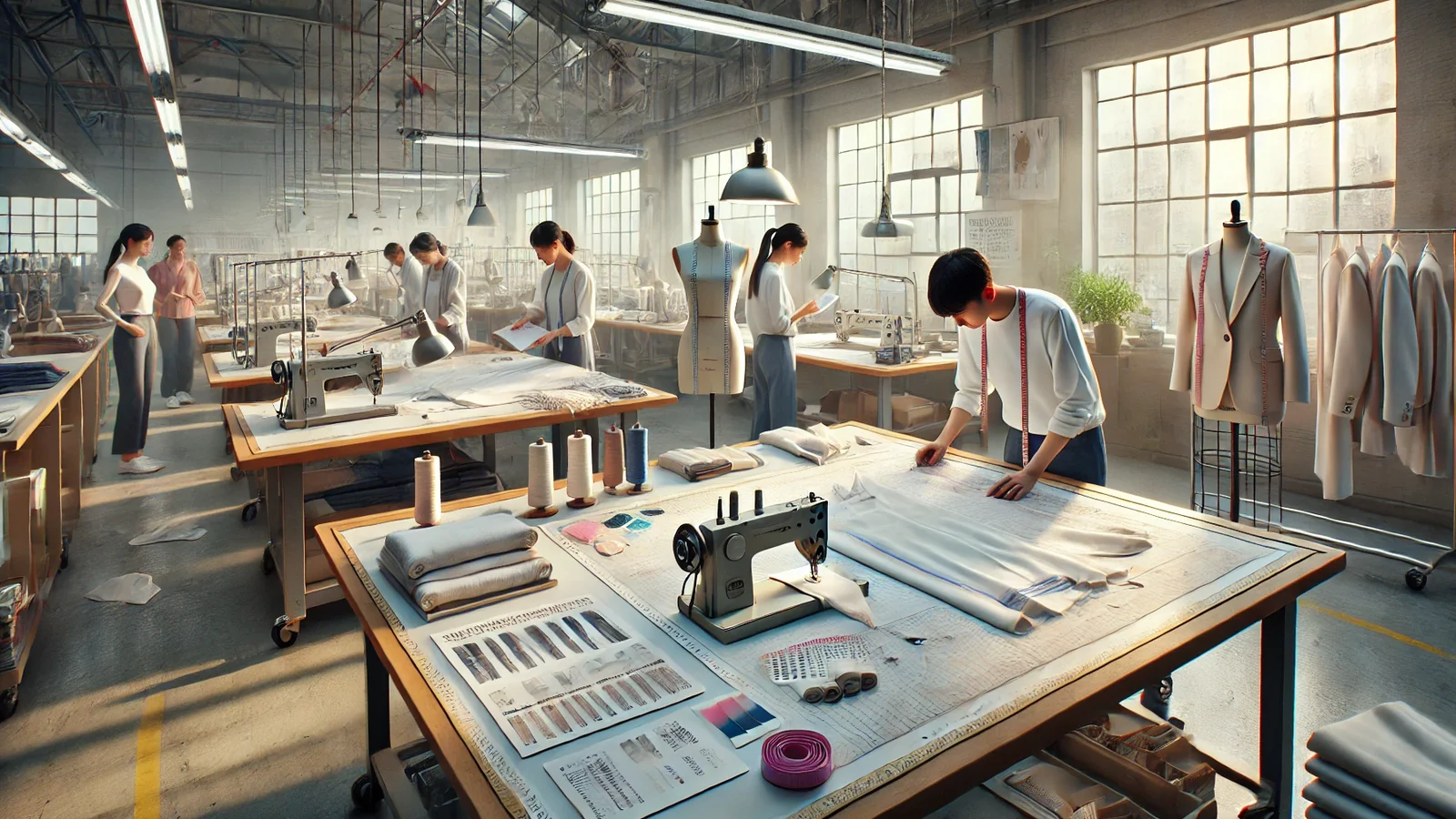
State which sample is needed and what it must answer. A fit sample, development sample, artwork strike-off, trim submission, size-set sample, or pre-production sample does not serve the same decision. The names may vary by supplier, so define the output instead of relying only on a label.
- Sample purpose: fit, construction, material, color, decoration, packaging, or full pre-production confirmation.
- Buyer inputs: tech-pack version, reference garment, artwork, color references, and buyer-supplied components.
- Approval owner: the person who consolidates comments and gives one decision.
- Revision rule: what is corrected in the next sample and what can be confirmed by photo, swatch, or written specification.
- Bulk gate: the named approvals that must be closed before material booking or cutting.
Ask the quote to separate sample charges, courier costs, and bulk terms where applicable. The point is not to assume a particular fee structure; it is to prevent sample work from being hidden inside a number that another supplier has structured differently. For sequence planning, see how long clothing sampling takes.
Write the QC standard before “quality” becomes a dispute
“Good quality” is not a pass-fail instruction. Attach or name the approved sample, measurement chart, measurement method, tolerances, workmanship points, appearance requirements, color reference, decoration standard, packaging check, and any product-relevant test requirement. Ask when checks occur and who records the result.
Keep product-specific checks tied to the actual risk. A washed knit may need dimensional-change and appearance review; a functional closure needs operation checks; decoration needs placement, appearance, and durability criteria appropriate to the method. Do not copy a testing list from another garment without confirming relevance with the supplier or an appropriate testing specialist.
Buyer clarification worksheet
Copy this worksheet into the inquiry. Complete the “buyer answer” column and ask the supplier to complete the last two columns. Open answers are allowed; hidden assumptions are not.
| Clarification | Buyer answer | Supplier assumption or option | Approval needed by |
|---|---|---|---|
| Style, fit, and tech-pack version | ___ | ___ | ___ |
| Fabric specification and approved alternative | ___ | ___ | ___ |
| Quantity by style, color, and size | ___ | MOQ rule: ___ | ___ |
| Decoration file, method, size, and placement | ___ | Setup/sample: ___ | ___ |
| Labels, trims, and packaging | ___ | Stock/custom/buyer-supplied: ___ | ___ |
| Sample sequence and comment owner | ___ | ___ | ___ |
| QC checks, tolerances, and bulk gate | ___ | ___ | ___ |
| Destination, delivery basis, and target date | ___ | Quote assumption: ___ | ___ |
Worked example: turning a vague request into quote inputs
Illustrative example only: a buyer writes, “We need 240 heavyweight T-shirts in two colors with private labels.” That total still hides the cost and MOQ structure. A clearer note might show one construction and fabric target, 120 units per color, and an illustrative size split of 30 small, 50 medium, and 40 large per color. It would also name the print method and dimensions, specify which labels are custom, state whether packaging is individual, identify the sample needed, and attach the measurement chart and artwork version.
The numbers above are not a StitchQuote MOQ, price, or recommendation. They simply show how arithmetic can expose the real order structure. The supplier can now answer whether fabric, color, print setup, or label sourcing creates a different minimum; which elements remain provisional; and what must be approved before the quote becomes firm.
Before sending the inquiry, confirm that the quantity table adds up, the same file versions appear in the email and tech pack, every custom component has an owner, and the quote request asks for inclusions, exclusions, assumptions, sample terms, and validity. When the packet is ready, send it through StitchQuote contact for a program-specific discussion.
Frequently Asked Questions
What information should a buyer send for a low-MOQ private-label quote?
Send the garment type, construction or reference, fabric target, quantity split by style and color, size range, decoration files, trim and packaging requirements, sample needs, QC expectations, delivery destination, and target timing. Mark undecided items instead of asking the supplier to guess.
How should MOQ be clarified before comparing quotes?
Ask whether the stated MOQ applies to the total order, each style, each color, each fabric, or a custom trim. Then show the exact proposed split. A total quantity alone does not reveal the setup burden created by multiple variants.
Do labels, hangtags, and packaging need to be final before the first quote?
They do not all need to be production-final, but the quote should state which items are stock, custom, supplied by the buyer, or still provisional. Artwork, materials, colors, placements, and packaging units should be confirmed before bulk approval.
What QC details belong in the inquiry stage?
Define the approved sample, measurement specification and tolerances, appearance and workmanship checks, fabric or trim tests relevant to the product, inspection timing, and who decides whether a result passes. The supplier can then identify which checks affect sampling, cost, or timing.
Request a manufacturing quote
Share your product type, quantity range, and destination. We usually reply within one business day.