Custom Streetwear, Casualwear & Denim Manufacturer•MOQ 50 pcs•Denim MOQ 100 pcs•7-Day Sample Available

Why Too Many Colors Can Break a Small First Order
Learn too many colors first clothing order through a clearer factory-side view that helps brands reduce rework, align sample goals, and move toward approval with.

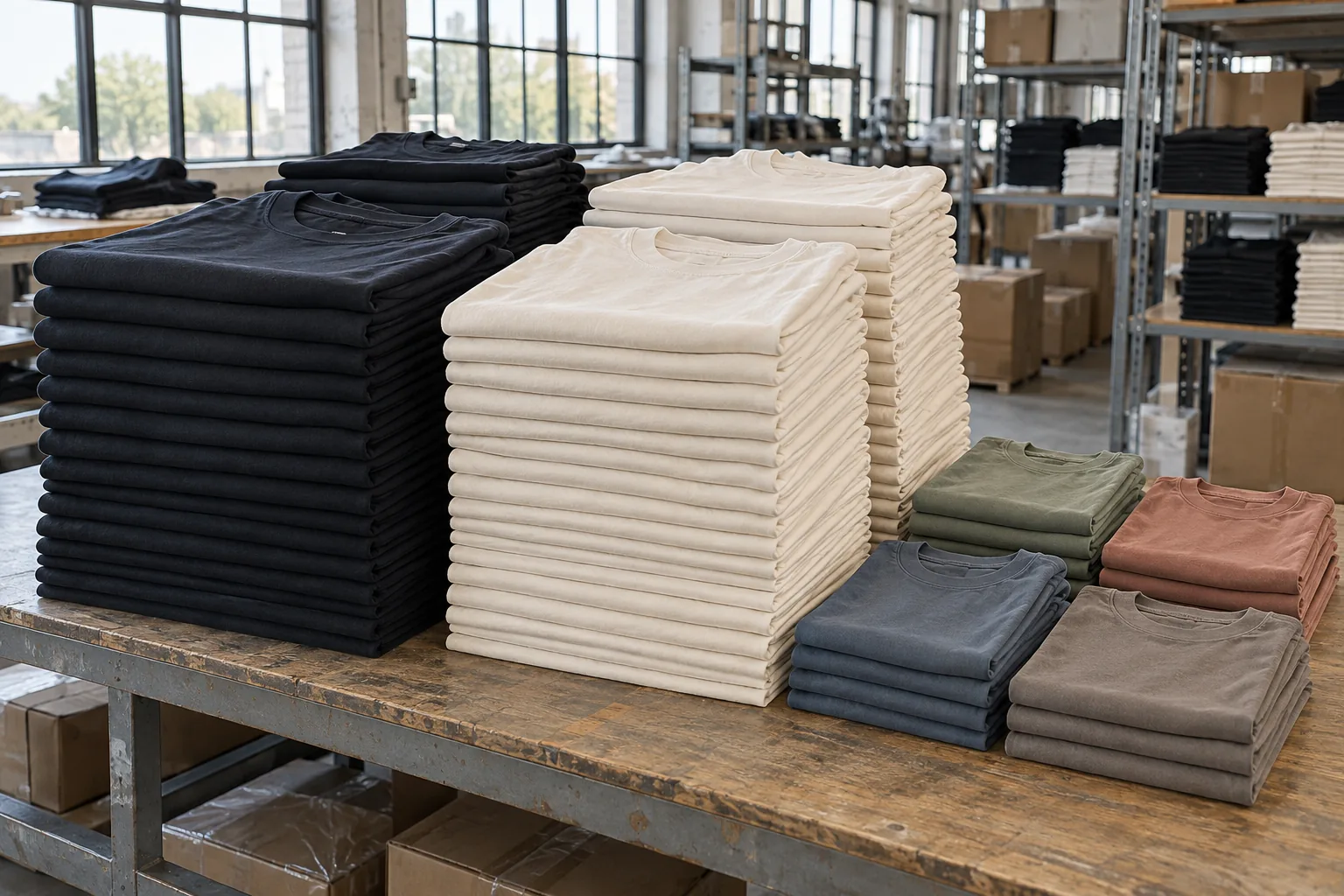
A broad palette can make a launch collection look complete while leaving almost nothing behind each product option. For a small first order, the problem is rarely color itself. It is dividing a limited quantity across shades and sizes before checking whether the fabric, trims, approvals, and inventory still work.
Use this buyer checklist before you approve a purchase order. The aim is to choose a palette you can manufacture consistently and sell in useful size runs, with clear evidence for every additional shade.
Check whether each shade earns its place at launch
Give every proposed color a specific job. One might be the everyday neutral that anchors the collection; another might support a campaign with demonstrated customer interest. “It looks good in the lineup” is weaker evidence when the launch budget must also cover enough units in the sizes customers need.
For example, a new heavyweight T-shirt could launch in ink and chalk while keeping clay as a later release. That decision preserves choice without committing to three separate color approvals. Review customer requests, comparable product sales, or preorder interest, while remembering that social-media votes do not guarantee purchases.
- Identify the shade with the strongest demand evidence.
- Explain which customer need each additional shade serves.
- Mark optional colors that can move to a later drop.
- Assign one person authority to lock the launch palette.
Count sellable size runs, not just total pieces
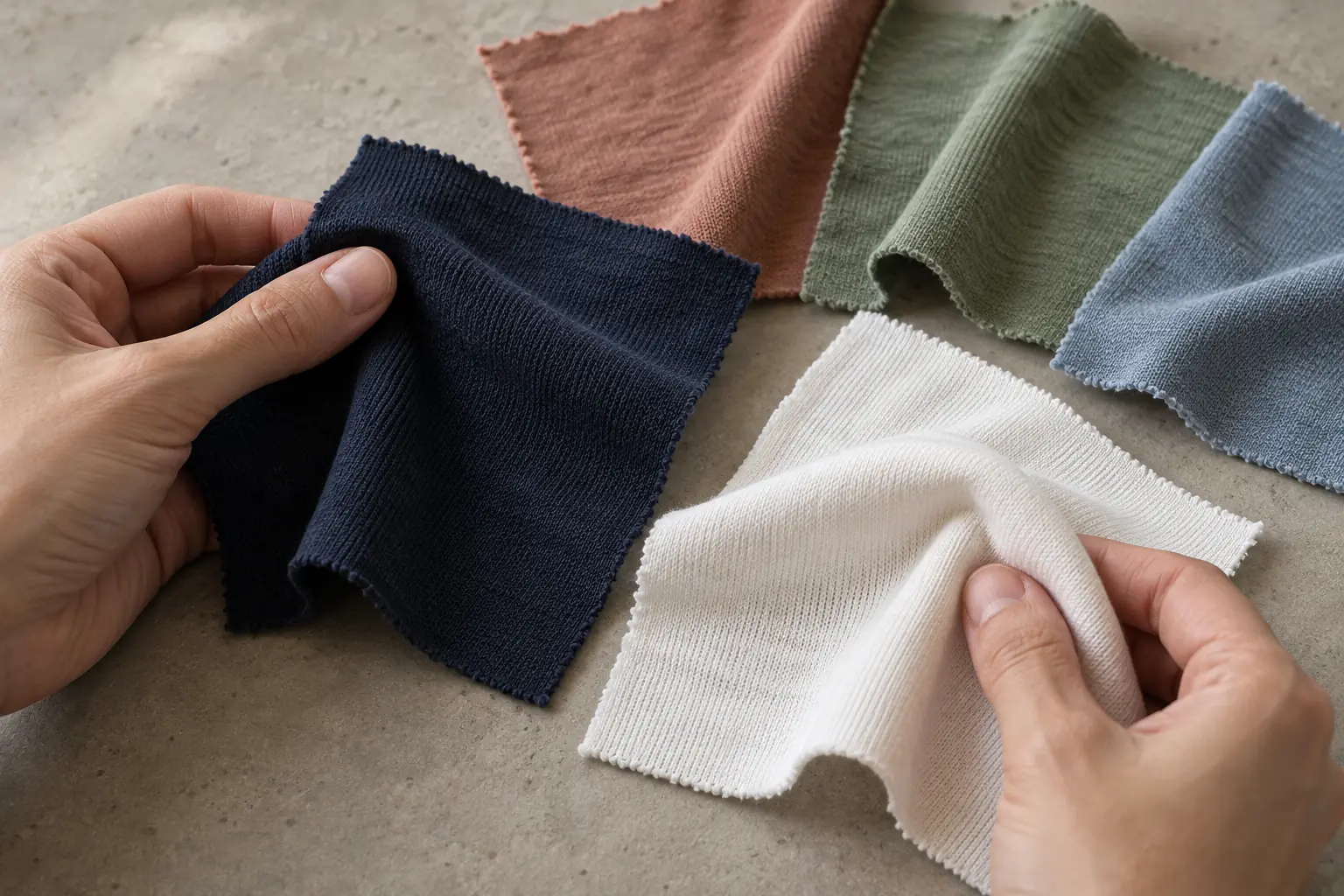
Write down units by color and size. A total quantity can look substantial until it is spread across several product variants. The example below uses an illustrative 120-piece order and five sizes; it is a planning comparison, not a supplier-approved allocation.
| Palette | Pieces per color if split evenly | Average pieces per color-size option |
|---|---|---|
| Two colors | 60 | 12 |
| Four colors | 30 | 6 |
| Six colors | 20 | 4 |
Actual size demand is rarely even. If medium and large account for most expected sales, allocating more units there leaves fewer pieces at the ends of the size range. Check whether your proposed split supports a usable assortment, especially if wholesale accounts also need complete size runs.
StitchQuote’s MOQ for most categories starts from 50 pieces per style; denim starts from 100 pieces per style. Those starting points do not establish that any number of colors can be combined within one minimum. Confirm the proposed color and size breakdown for the specific project before treating it as accepted.
Ask what changes behind every extra color
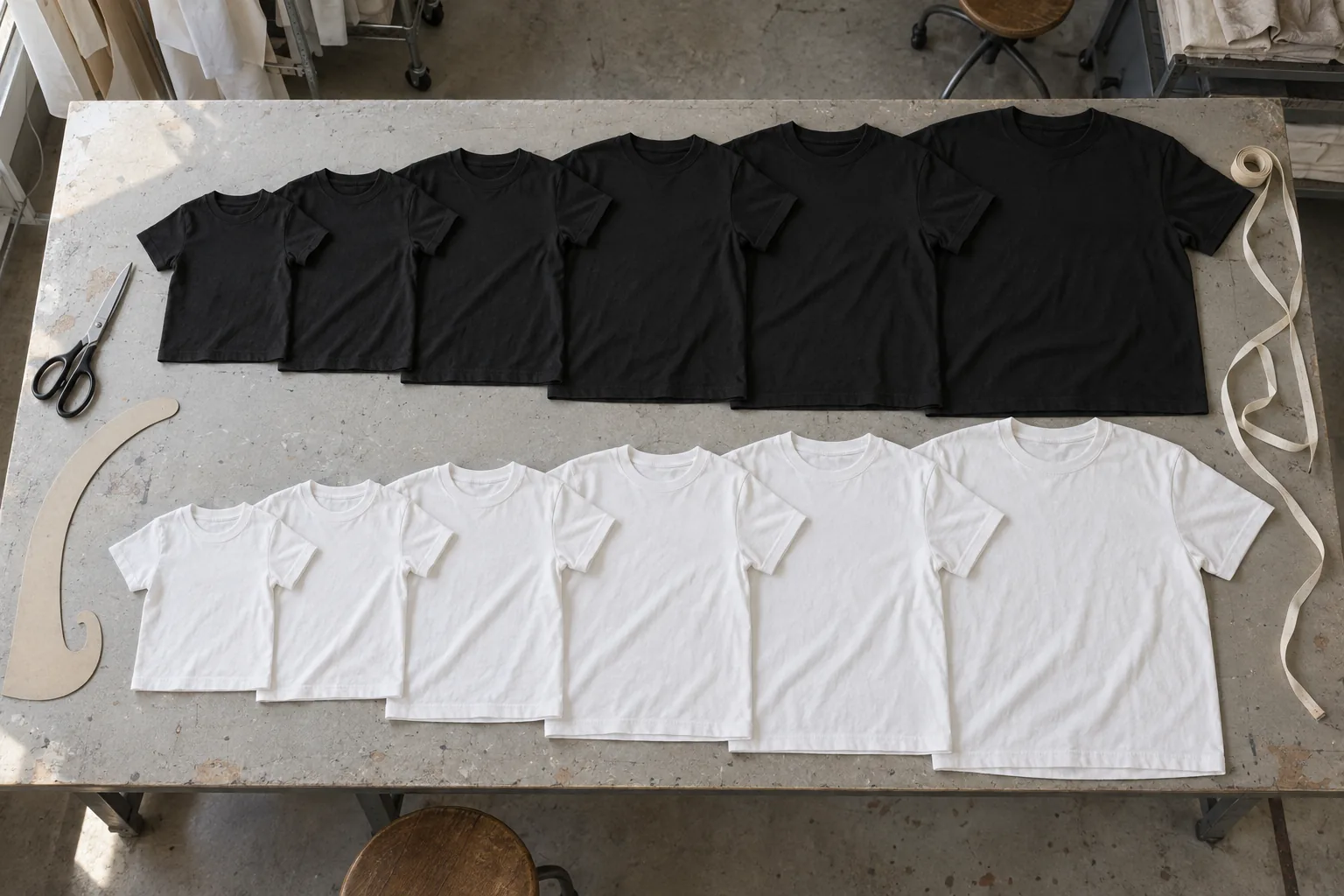
Two shades of the same garment may require different purchasing decisions. Available stock fabric can have different shade availability or remaining quantities. Custom dyeing can introduce a separate minimum at the material level. Ask whether the fabric needed for each color is available, reservable, or dependent on a new production batch.
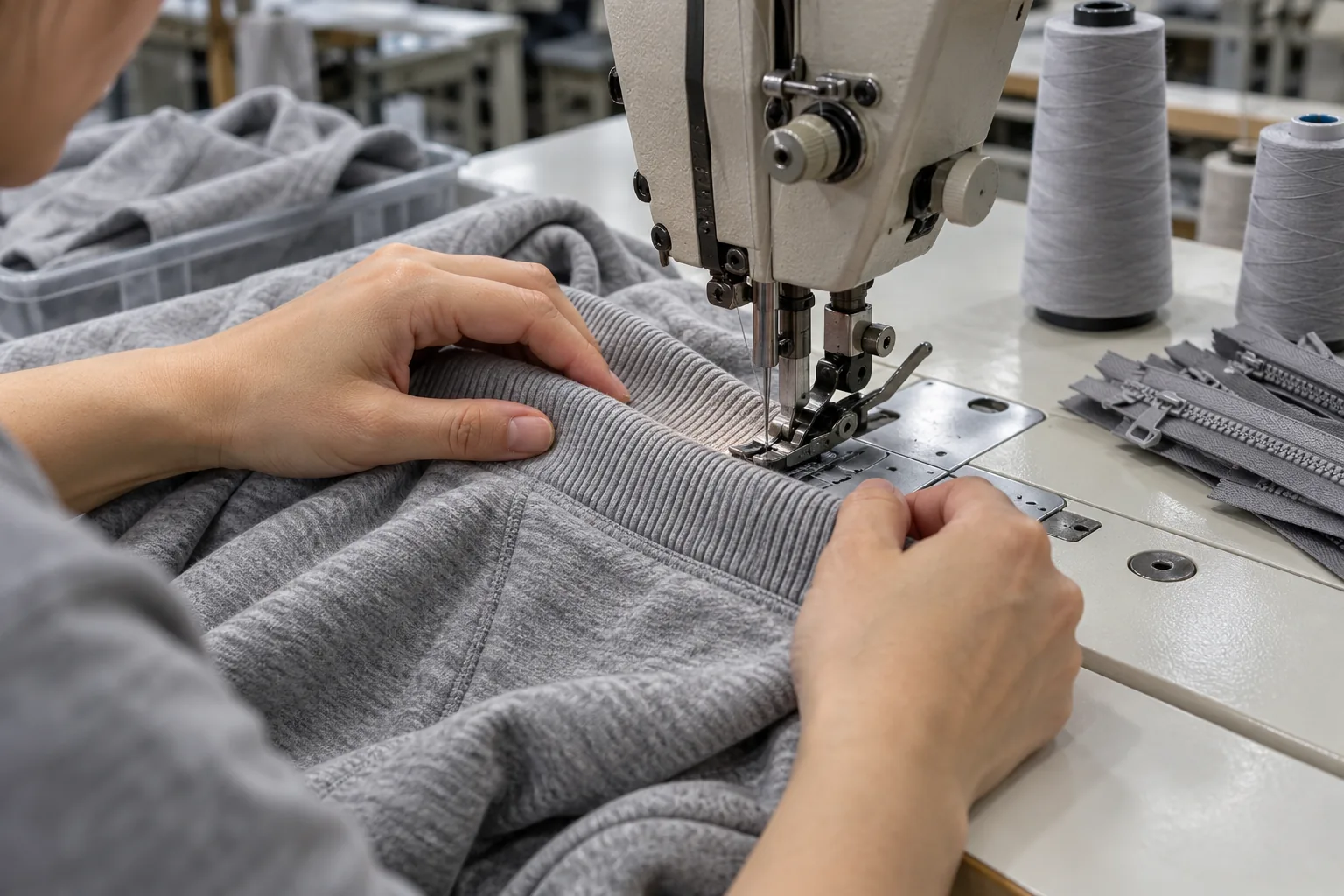
Then review components. A zip hoodie may need matching zipper tape, drawcords, ribbing, and sewing thread. A warm gray body with cool gray ribbing may be technically assembled correctly yet miss the intended appearance. Shared components can simplify sourcing, provided the contrast is deliberate and approved.
- Confirm the fabric route and required quantity for each shade.
- Identify color-specific trims and their purchasing constraints.
- Ask how any material surplus will be handled.
- List substitutions that need buyer approval before use.
For washed denim, review wash development separately. Two finishes on one pattern may need distinct trials and appearance standards; a shared silhouette does not make those finishes interchangeable.
Define the approval evidence for each selected shade
Separate fit approval from color approval. A fit sample in available fabric can help resolve measurements and construction, but it cannot automatically validate the final shade, opacity, or decoration appearance. Record exactly what each sample is intended to prove.
Request the appropriate color evidence for the material route: an actual stock cutting, a dye approval swatch, or a finished wash sample. View it under agreed lighting and retain a physical reference. Phone photographs can support communication, but screen settings make them unreliable as the only acceptance standard.
Check branding against each background. A cream print approved on charcoal may need another review on pale blue because its contrast and visibility change. StitchQuote offers sampling, fabric and trim sourcing, and branding including woven labels, prints, and embroidery. A 7-day sample is available for standard styles with confirmed specs and available materials; complex styles, custom washes, and custom-developed fabric take longer.
Build a color-by-color QC release checklist
Before bulk production, agree what inspectors should compare and what happens if a shade fails. StitchQuote includes QC before packing. Your approved references and written requirements should make that check specific to the order.
- Shade consistency: compare garments within each color against the approved reference under agreed lighting.
- Component harmony: check ribbing, thread, zippers, and drawcords against the intended matching or contrast standard.
- Decoration: inspect print coverage, embroidery appearance, and placement on every color background.
- Performance evidence: agree any required wash, rubbing, or color-transfer testing and how results will be assessed.
- Allocation accuracy: reconcile quantities by color and size with the purchase order before packing.
Do not let a strong result in one color stand in for the others. Document discrepancies with the affected shade, quantity, and proposed corrective action, then resolve them before release.
Questions to settle before locking the palette
Can I give one color most of the quantity?
Yes, an uneven allocation can reflect expected demand better than equal splits. Ask the supplier to confirm that the smaller color allocation works with fabric and trim requirements. Do not assume the larger shade absorbs every minimum.
Should I add a color just to use leftover fabric?
Only if it supports the assortment and its full production requirements are understood. Available fabric does not remove the need for trims, approvals, decoration checks, and enough units in useful sizes.
Can a postponed shade be an exact match on reorder?
A later fabric or dye batch may vary. Keep the approved physical reference and ask for fresh shade approval before a repeat order. Confirm material availability and reorder requirements when planning the later release.
Specify fabric weight and measurements across the palette
Keep the fabric specification consistent enough to make color comparisons meaningful. For a proposed heavyweight T-shirt, a buyer might request 240 GSM cotton single jersey, then ask whether every selected shade is available in that same composition, knit structure, and finish. This is an illustrative specification, not a StitchQuote stock-fabric claim. Record whether GSM is assessed before or after finishing, and agree an acceptable range in writing. A lighter substitute in one color can change drape, opacity, and the perceived value of the garment.
Define measurement points with diagrams rather than relying on size names. For a T-shirt, specify half-chest measured flat at a stated distance below the armhole, body length from the high shoulder point, shoulder width, and sleeve length. State whether measurements apply before washing or after an agreed wash-and-dry procedure. As a proposal for supplier review, a buyer could allow plus or minus 1 cm at half-chest and body length; narrower features such as neck rib width need their own tolerances. These are example acceptance limits, not universal standards or confirmed supplier tolerances.
Check representative garments from each color after the same care procedure. Record dimensional change, side-seam twisting, and any change in hand feel. Different dyeing or finishing routes can produce different results even when the starting fabric specification matches. Resolve a discrepancy before accepting one shared measurement sheet for the whole palette.
Turn a 120-piece plan into a purchasing decision
For an illustrative two-color order, assign 80 pieces to ink and 40 to chalk. Across XS, S, M, L, and XL, ink could use 8, 16, 24, 24, and 8 pieces; chalk could use 4, 8, 12, 12, and 4. The matrix totals 120 pieces while giving medium and large more depth. Supplier confirmation is still required for the smaller color allocation and its material requirements.
Request a quotation against that exact matrix, with fabric, decoration dimensions, label quantities, and packing requirements fixed. Ask which costs change if chalk is removed: separate dye development, print setup, matching trims, or unused material may matter more than sewing time. Separate one-time development charges from bulk unit costs and identify any minimum material purchase that exceeds the garment requirement. This makes a two-color versus one-color comparison useful without assuming that reducing the palette automatically reduces every charge.
Before issuing the purchase order, reconcile the approved quotation, color-size matrix, and sample comments under one revision date. Record who approves substitutions and whether they affect cost or delivery. That small document check prevents an optional shade or an outdated size allocation from becoming a production instruction.
Send a palette that is ready for review
Submit one current color-size matrix alongside the garment specifications, material preferences, component colors, decoration details, and approval references. Identify optional shades explicitly so they are not mistaken for committed quantities. A focused first order gives both buyer and manufacturer a clearer basis for confirming feasibility.
Related reading and project support:
- Prepare the tech pack behind your color decisions
- Review sampling and MOQ planning
- Contact StitchQuote to review your proposed assortment
Request a manufacturing quote
Share your product type, quantity range, and destination. We usually reply within one business day.