Custom Streetwear, Casualwear & Denim Manufacturer•MOQ 50 pcs•Denim MOQ 100 pcs•7-Day Sample Available

What to Check in a Denim PP Sample
Learn denim PP sample checklist through a clearer factory-side view that helps brands reduce rework, align sample goals, and move toward approval with better timing.

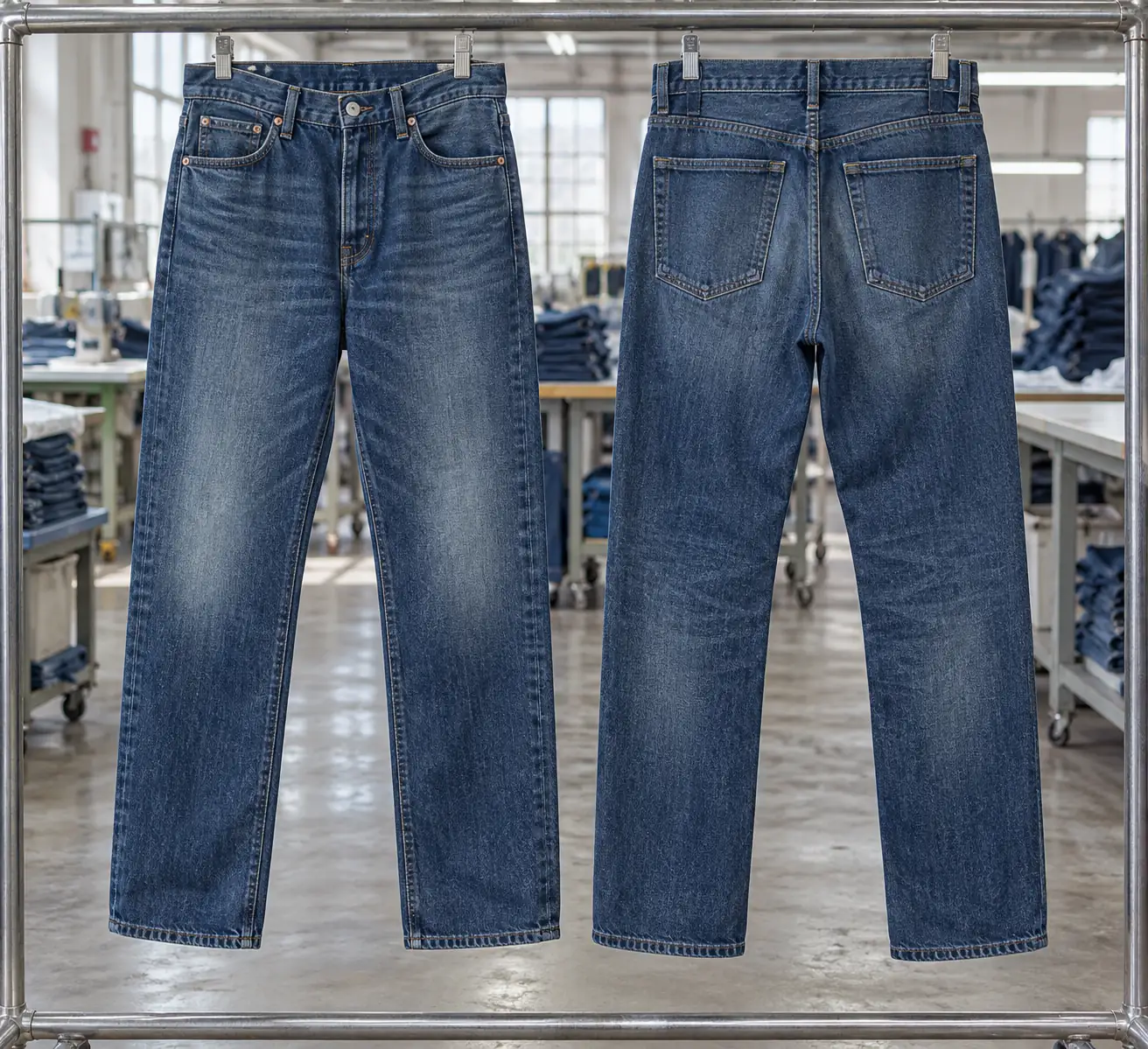
A denim PP sample can look right while carrying an unrepeatable wash. Pre-production approval therefore needs to answer a narrower question than whether the jeans are attractive: can the proposed wash recipe deliver the agreed shade, surface, handle, and dimensions on the specified garment? A photograph of a good result cannot establish that connection by itself.
For brand buyers approaching production release, the useful deliverable is a signed garment reference tied to a controlled recipe revision and measurable acceptance limits. This review should connect the laundry’s process to the cutting and sewing specification, identify unresolved variables, and state which changes require another approval. Start with the evidence behind the finish before signing off its appearance.
Make the approval belong to one recipe revision
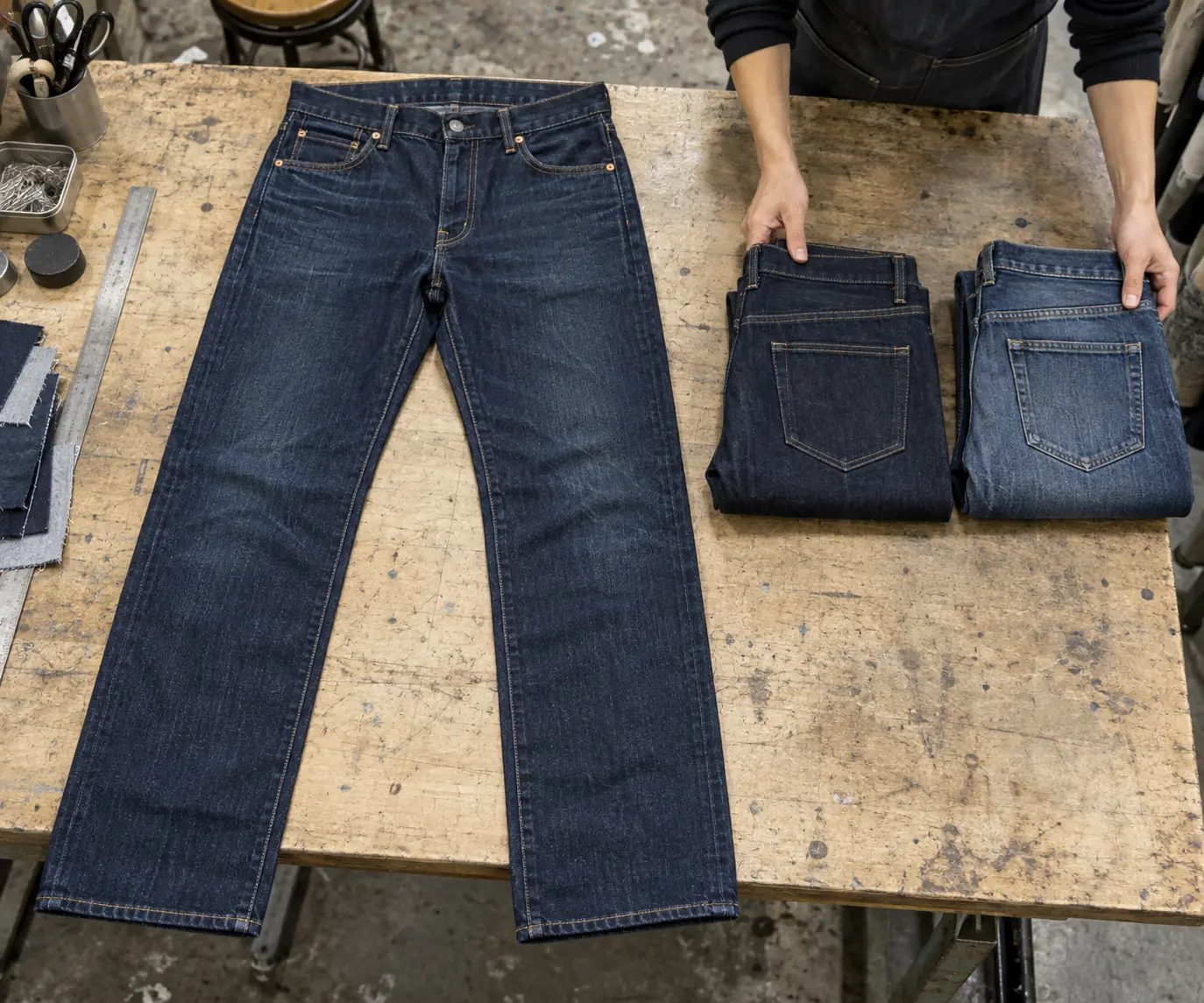
Ask the supplier to identify the fabric article, composition, weight, color, and lot used for the submission. Record the garment style, sample size, pattern revision, and wash recipe revision alongside them. An approved finish on one stretch denim does not automatically approve the same treatment on another fabric with a similar weight.
The laundry should retain a controlled process record covering the treatment sequence, machine type, load, liquor ratio where relevant, treatment time, temperature, chemical products and dosages, rinsing, extraction, and drying conditions. Buyers do not need to prescribe a chemical formula themselves. They need confirmation that the submitted result can be traced to a repeatable process and that substitutions will be reviewed.
Use a simple approval record such as “style D27, fabric article F04, pattern revision C, wash revision W03.” These are example identifiers, not a required coding system. Attach the physical reference identity and review date. Avoid signing an email that says only “wash approved” when several versions are circulating.
Separate the shade target from the distribution of wear
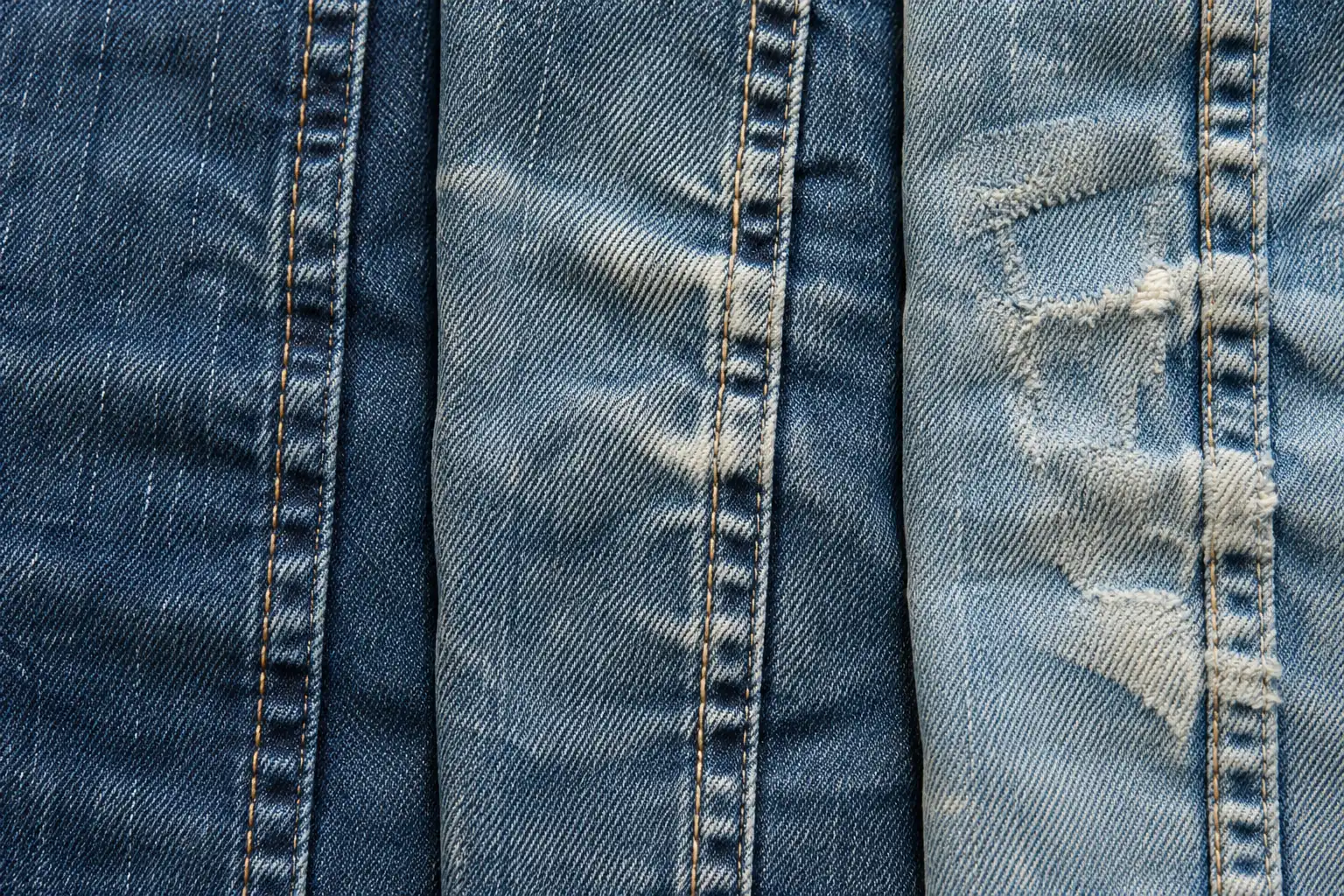
Compare dry, conditioned garments under agreed lighting, with the approved reference beside the submission. Use consistent positioning and inspect front, back, and inside surfaces. Phone images are useful for pointing out a defect, but automatic exposure and white balance make them unreliable as the sole basis for shade approval.
Divide comments into base shade, contrast, placement, and intensity. For example, “keep the current blue cast; reduce the pale area at the front thigh; retain the darker pocket-edge seams” gives the laundry a clearer target than “make it more vintage.” Describe whether the waistband, fly, seat seam, and hem should remain darker or approach the body shade.
If whiskers or abrasion are intentional, map their position against stable construction points. A mark can sit correctly on the approval size yet shift awkwardly on a larger thigh. Specify which effects should scale with garment size and which should retain their distance from a pocket or seam. Review representative sizes when placement materially affects the design.
Set an acceptable shade range using physical boundary references where possible. One attractive garment establishes a target, but it does not define how much lighter, darker, warmer, or cooler production may become. Treat unacceptable cast changes separately from acceptable lightness variation.
Read dimensional changes as evidence about the wash
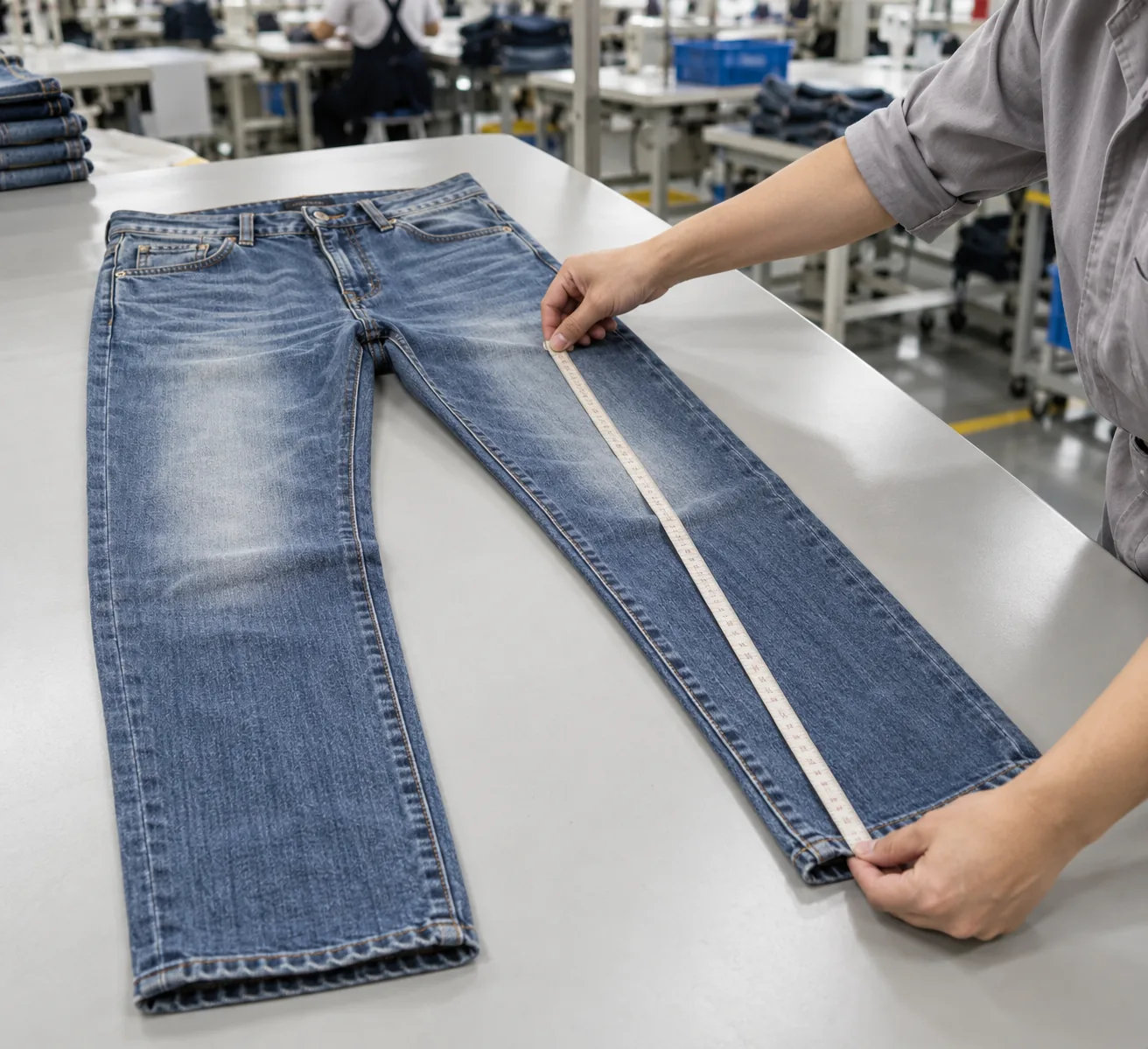
Request measurements before and after the wash on the same identified sample when available. Compare the final garment with the finished specification after an agreed conditioning period. Measuring warm jeans straight from drying can produce a misleading result, particularly when stretch and recovery affect the waistband.
Check waist, front and back rise, hip, thigh, inseam, and leg opening using the defined measurement method. Record leg twist and seam torque as separate observations. A correct inseam does not compensate for an outseam that rotates visibly toward the front. Lay the garment naturally without pulling it into a flattering shape.
| Observed change | Evidence to request | Approval decision |
|---|---|---|
| Inseam finishes short | Before/after lengths and drying record | Resolve wash shrinkage versus pattern allowance before release |
| Waist grows after handling | Agreed recovery check and conditioning conditions | Review stretch performance against the fit requirement |
| One leg twists | Seam alignment before and after treatment | Investigate fabric, cutting, sewing, and wash contributions |
Set tolerances by measurement point rather than applying one allowance everywhere. As an illustrative project proposal, a buyer might discuss a ±1 cm inseam tolerance and a tighter ±0.5 cm flat leg-opening tolerance; these are not universal standards. Confirm limits with the supplier against the fabric, construction, size range, and intended fit.
Challenge the recipe where construction is most vulnerable
A successful finish must leave the garment usable. Examine abrasion around belt-loop attachments, pocket corners, fly stitching, crotch intersections, and hems. Look for broken stitch chains, loosened bartacks, exposed seam allowances, and thinning beyond the intended surface effect. Inspect the reverse side, where damage may be easier to see.
Test hardware operation after washing. Open and close the zipper, check that the button and rivets remain secure, and inspect metal surfaces for unwanted discoloration or roughness. Review patches, pocketing, embroidery, prints, and labels in their finished state. A wash that produces the right denim shade may stain pale pocket bags or distort a patch.
Distinguish initial softness from performance. Ask for an agreed rub-fastness assessment and, where relevant, strength or stretch-recovery testing with specified methods and acceptance criteria. A hand rub with a white cloth can flag a concern during review, but it cannot replace a defined laboratory test. Record whether formal results are required before release.
Use a release checklist that exposes unresolved conditions
Write the decision around evidence, not enthusiasm. The checklist below links the appearance approval to the garment specification and identifies what remains open. Assign one owner to consolidate fit, design, and quality comments so the laundry receives a single instruction set.
- Identity: Confirm fabric and lot, sample size, pattern revision, trim set, and wash revision match the approval record.
- Appearance: Accept or reject base cast, shade range, contrast, abrasion placement, seam shading, and hand feel individually.
- Dimensions: Attach actual measurements, tolerances, conditioning conditions, and any twist or recovery observations.
- Integrity: Record seam, hardware, label, pocketing, and surface-damage checks, plus required test results.
- Disposition: State approved, revise and resubmit, or approved only for specifically named attributes. List every unresolved condition.
If the shade passes but the inseam fails, approve the shade attribute explicitly while withholding overall production release. Do not let a conditional comment become blanket permission. When a correction changes drying or another wash parameter, reassess both appearance and dimensions because improving one can alter the other.
Carry the signed finish into the first production load
Ask how the sample process will transfer to production equipment and loading. A small development load and a bulk load can behave differently even when their process names match. Agree whether a production-representative trial or first-load review is needed, who checks it, and what must pass before the remaining garments proceed.
Keep an approved reference with the buyer and an identified matching reference available to production. Establish how shade groups will be compared and kept separate if variation appears. Require notification before changes to fabric lot, chemical product, treatment sequence, equipment, or drying conditions that could affect the approved result; determine whether reapproval is needed before continuing.
For StitchQuote projects, denim starts from 100 pieces per style. A 7-day sample is available for standard styles with confirmed specifications and available materials; custom washes, complex styles, and custom-developed fabrics take longer. Plan approval rounds accordingly. QC before packing is included among StitchQuote’s services, but the wash acceptance criteria still need to be agreed before production.
Questions buyers ask before signing the wash reference
Can a fabric wash swatch replace the finished garment?
A swatch can establish a shade direction, but it cannot show how seams, layered pockets, hardware, or garment shape respond. Use it during development, then confirm the recipe on the intended construction before accepting the complete result.
Does approval cover a replacement fabric lot?
Do not assume it does. Ask the supplier to assess the new lot against the approved finish and dimensional behavior. The amount of verification depends on the change, but the reference and acceptance limits should remain visible throughout that decision.
Should a softer handle be treated as a minor correction?
Only after its consequences are understood. A finishing adjustment may affect shade, recovery, or the surface appearance. Request a revised submission when the change could disturb approved attributes, and identify the new recipe revision rather than overwriting the old record.
What should the final approval message contain?
Include the garment identity, recipe revision, reference date, accepted attributes, attached measurement results, outstanding conditions, and authorized production scope. Name the approver. This gives the factory a usable release instruction and leaves a clear record if later submissions differ.
Related reading and project support
- Prepare the specifications behind your wash submission
- Review sampling and minimum order planning
- Follow the denim wash approval process
- Discuss your denim approval requirements with StitchQuote
Request a manufacturing quote
Share your product type, quantity range, and destination. We usually reply within one business day.