Custom Streetwear, Casualwear & Denim Manufacturer•MOQ 50 pcs•Denim MOQ 100 pcs•7-Day Sample Available

Denim Jacket Manufacturer in China: What Buyers Should Compare
Compare denim jacket manufacturers in China more clearly across sampling discipline, wash capability, hardware control, MOQ logic, and bulk repeatability.

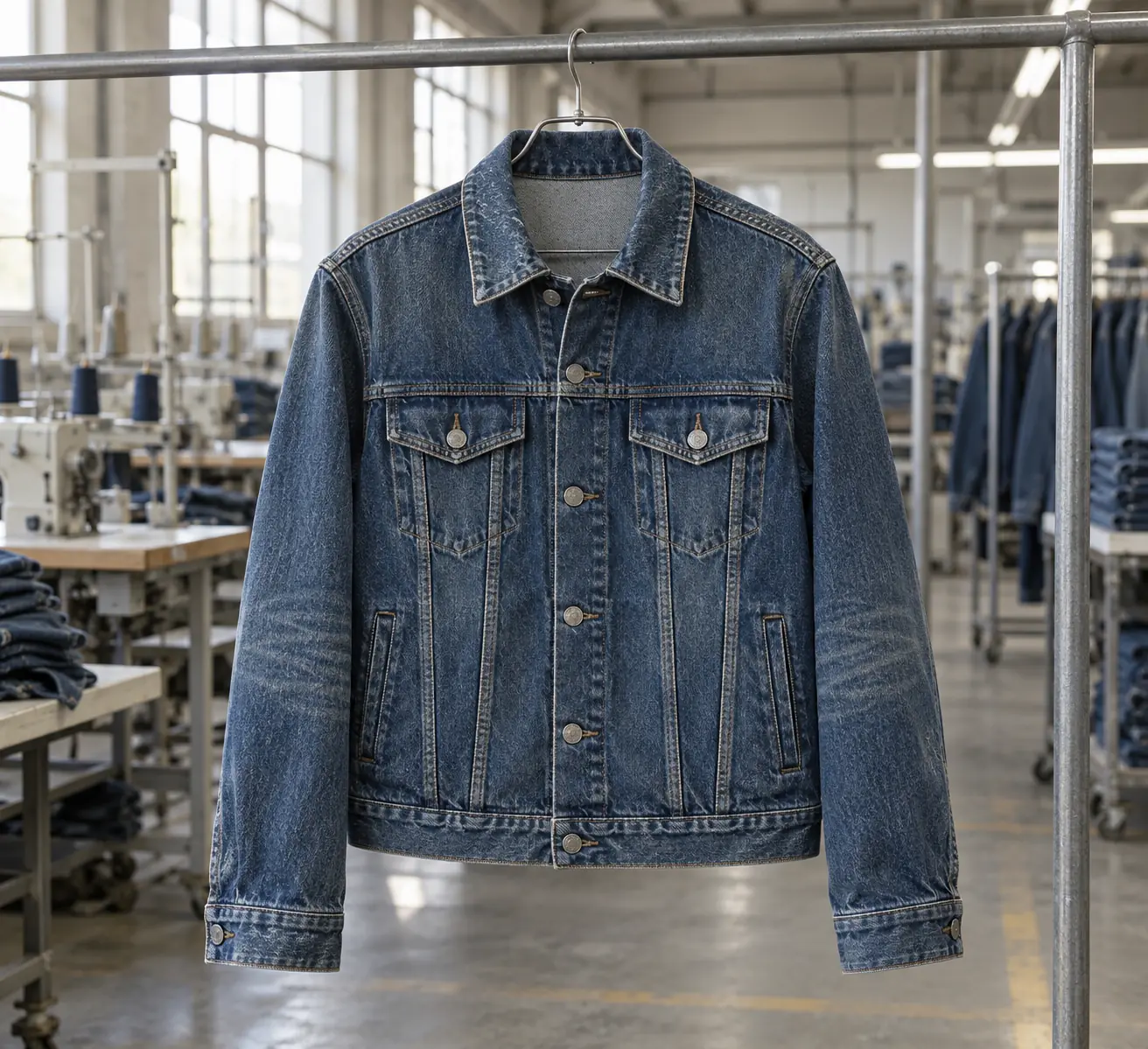
Two denim jackets can look equally convincing on a sampling rail and behave very differently in bulk. One may have an approved wash tied to a specific fabric lot and garment construction; the other may simply be the best-looking trial. When choosing a denim jacket manufacturer in China, compare how each supplier turns an attractive sample into a repeatable wash standard.
This comparison belongs before bulk wash release. A jacket combines overlapping layers, long sleeve seams, pocket flaps and metal hardware, so a recipe affects more than blue tone. It changes seam contrast, measurements, surface strength and trim appearance. Buyers need evidence that these effects have been evaluated together, with clear limits on what the production team may adjust.
Start the comparison with a wash brief every supplier can interpret
Send competing suppliers the same target: a physical reference where possible, photographs for placement, and a written description of the desired result. Separate base shade from local effects. For example, specify a muted indigo body, lighter sleeve seams, restrained collar-edge abrasion and no exposed white yarn across the chest. “Vintage blue” alone leaves too many decisions open.
Identify which features matter most. If the launch depends on a clean dark body with subtle seam highlights, say that body shade takes priority over dramatic contrast. Mark areas that must remain intact, including pocket corners, buttonholes and sleeve plackets. This prevents a supplier from achieving the right overall impression through unacceptable damage.
Ask each candidate to return an interpretation before washing a sample: proposed fabric, anticipated treatment stages, vulnerable construction details and approval deliverables. Compare the specificity of these responses. A supplier that identifies a likely problem at the waistband overlap gives you more useful evidence than one that promises an exact match without discussing the substrate.
Lock the fabric and jacket construction before judging a recipe
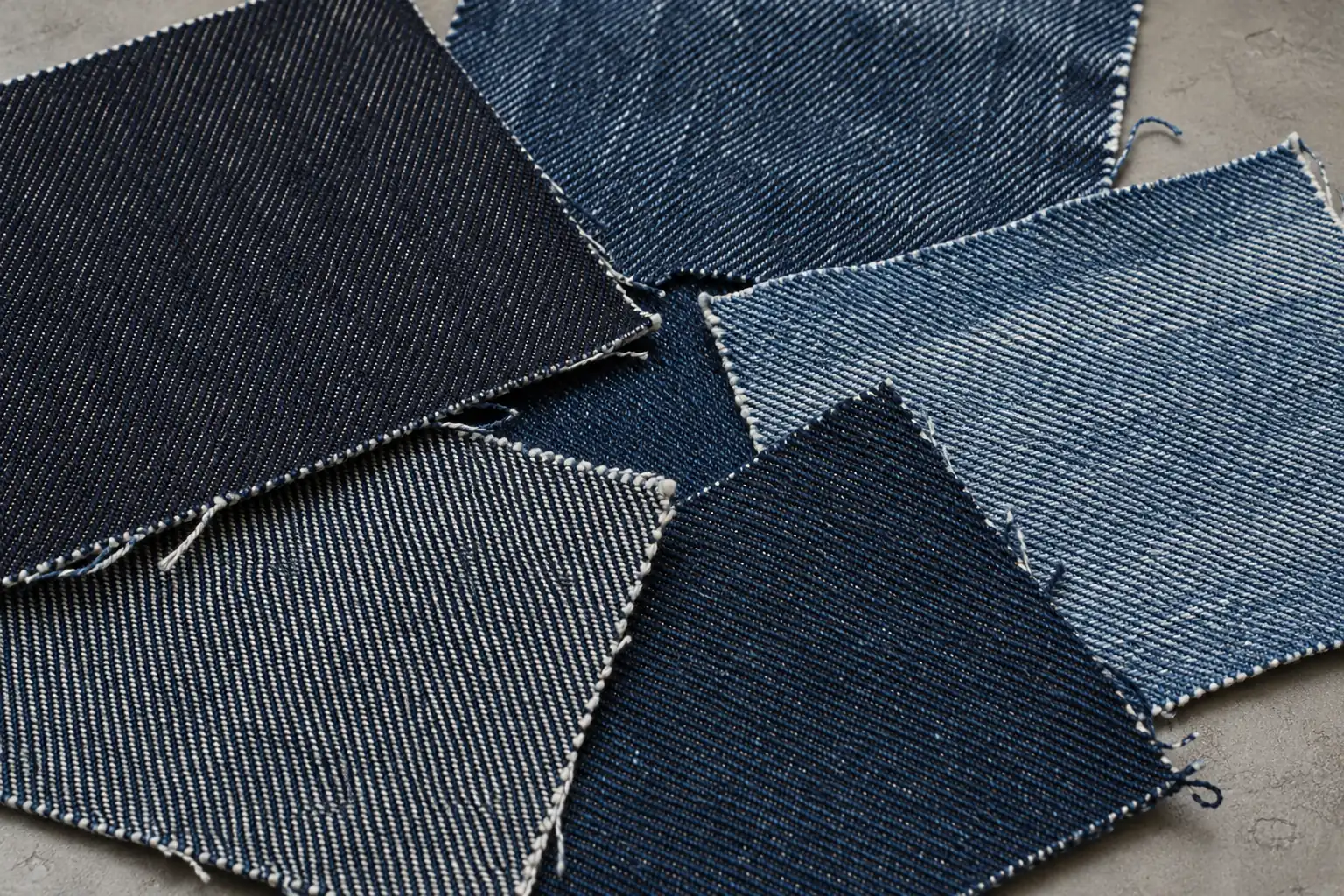
A wash recipe is meaningful only in relation to its inputs. Record fiber composition, nominal fabric weight, weave, stretch content if present, and fabric lot identification. Ask whether the trial uses the intended bulk fabric. A substitute may be useful for exploring an effect, but it cannot establish final shade or shrinkage approval.
Use a complete jacket for the decisive trial. Flat swatches help screen color direction, yet they cannot show how a double-layer yoke dries or how a thick hem develops abrasion. Compare seam construction, thread, interlining and pocketing with the intended production specification. Changes to these components can create puckering, staining or a different hand feel.
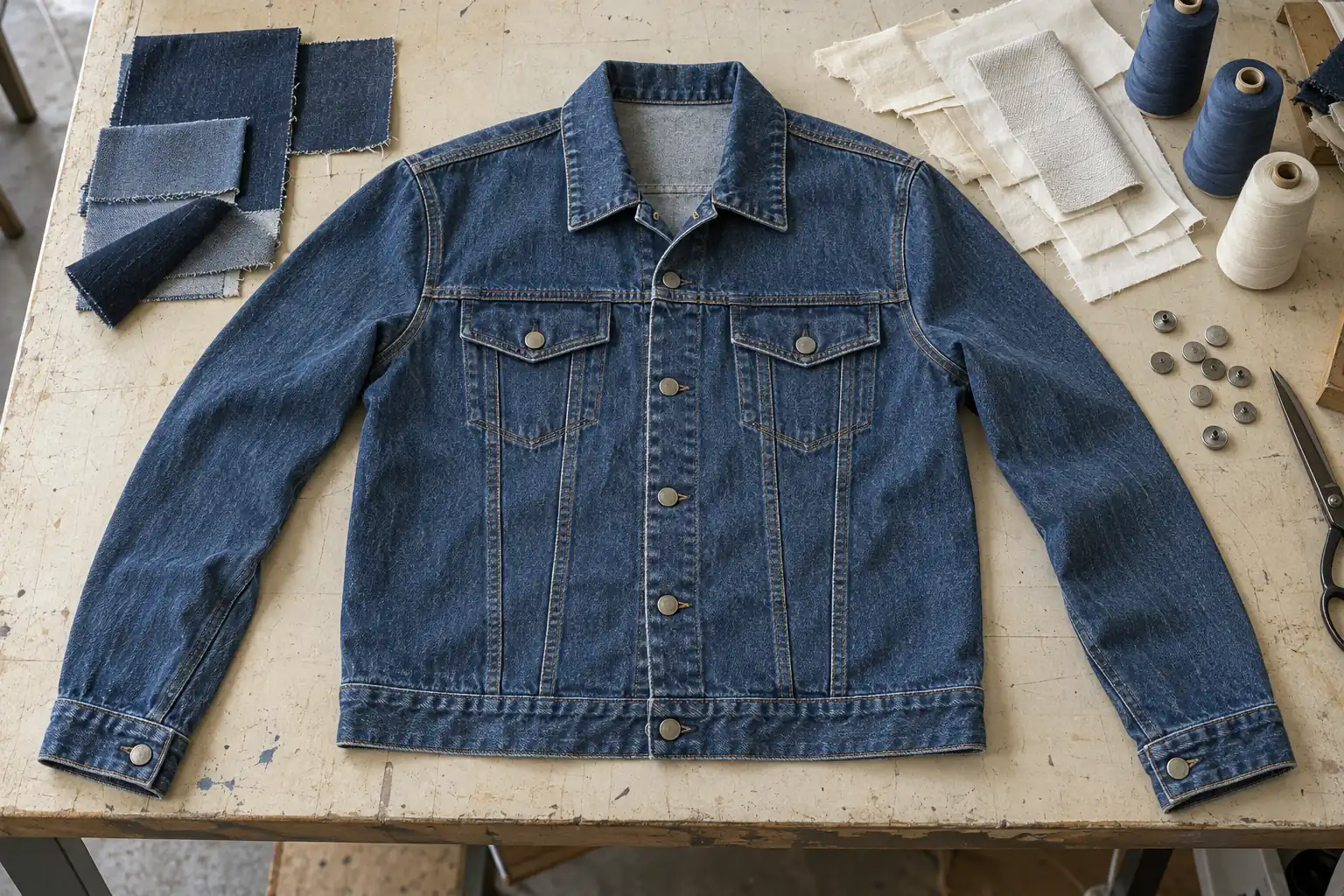
Agree when hardware and branding enter the process. Buttons fitted before washing may acquire the intended worn finish, but their coating must tolerate treatment. Labels added afterward avoid that exposure but require an additional operation. Keep the sequence consistent across approved samples and bulk; otherwise, apparent recipe repeatability can conceal a construction change.
Request a controlled trial record, not just a winning sample
Ask how the supplier identifies and retains each wash version. The buyer does not necessarily need proprietary chemical formulations, but the factory should maintain a controlled record covering treatment sequence, dosing basis, time, temperature, mechanical action and drying conditions. Clarify who owns this record if washing is subcontracted and who authorizes changes.
A useful comparison exercise is to request an initial trial and a documented revision. Suppose the sleeve seams are sufficiently pale but the body is too light. Ask what adjustment will preserve the seams while correcting the body, and what other effects need rechecking. The response reveals whether revisions are managed as linked production variables.
| Approval item | Evidence to request | Buyer decision |
|---|---|---|
| Base shade | Dried jacket beside the physical target | Accept tone or specify the remaining difference |
| Local abrasion | Close views and marked garment locations | Accept placement and maximum severity |
| Size change | Measurements before and after treatment | Accept finished dimensions or revise the pattern |
| Recipe version | Trial identifier linked to fabric and construction | Release that version or request another trial |
Keep rejected versions distinguishable from the approved sample. “Use the second blue, with the first collar” is incomplete until a combined version has been produced and reviewed. Approval should refer to one reproducible garment standard.
Set shade boundaries that survive the move to bulk
A single approved jacket establishes a target, but it does not explain acceptable variation. Where appropriate, agree physical light and dark boundary samples using the same fabric and wash direction. A jacket within the lightness range can still be unacceptable if its hue turns noticeably green or its abrasion pattern shifts.
Review fully dried garments under agreed lighting, laid in the same orientation. Use consistent viewing conditions for the reference and production pieces. Phone photographs are useful for discussion, but automatic exposure and white balance make them weak evidence for final shade approval. If instrumental color readings are used, agree the measurement method and acceptance criteria for this textured, uneven surface.
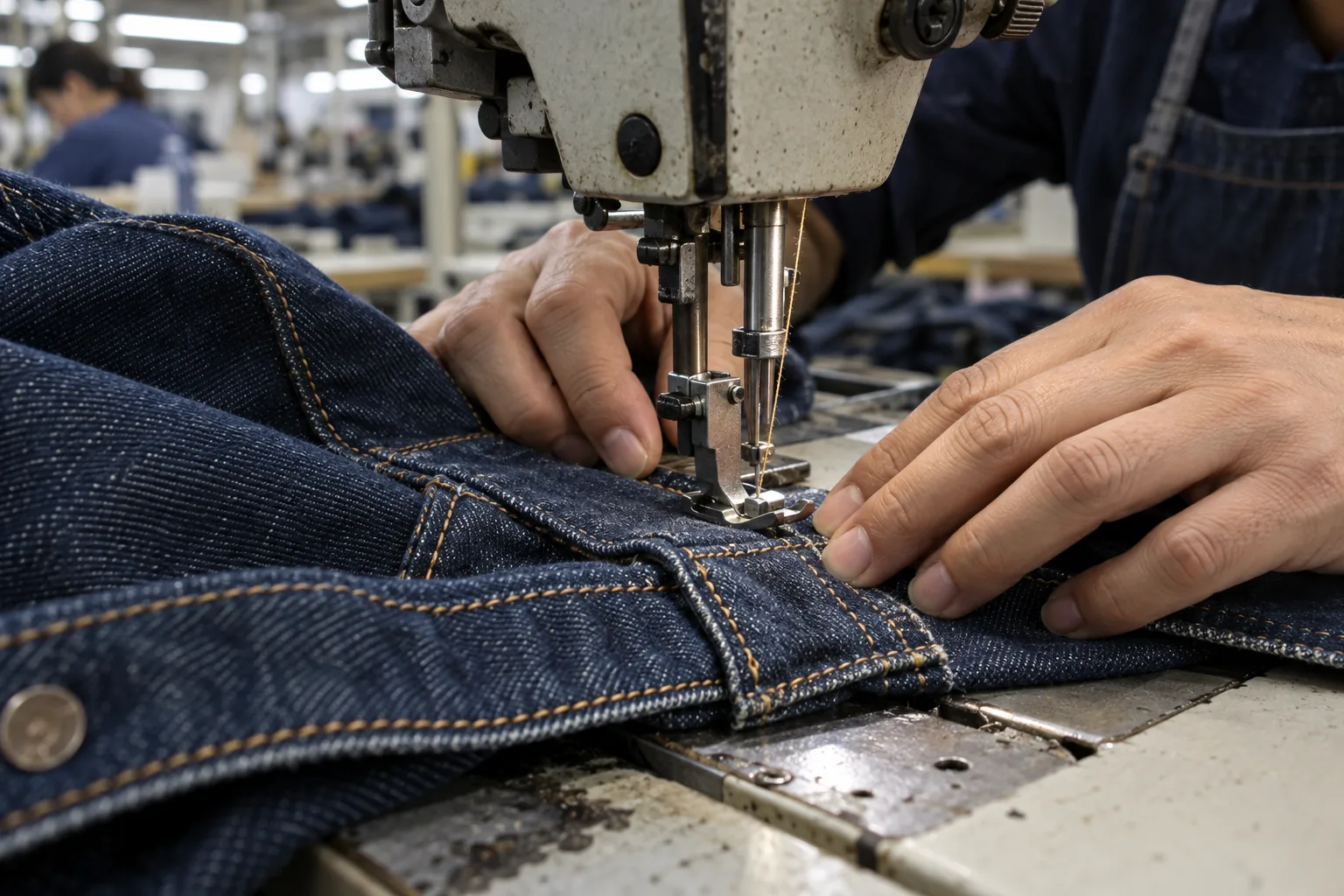
Ask how the supplier will validate the transition from sample equipment to production equipment. Load size, machine action and drying can change the result even when the recipe name stays the same. Require review of the first production wash load before releasing the remaining quantity, with traceability by wash batch. Keep a retained garment from approved batches so later comparisons have a physical basis.
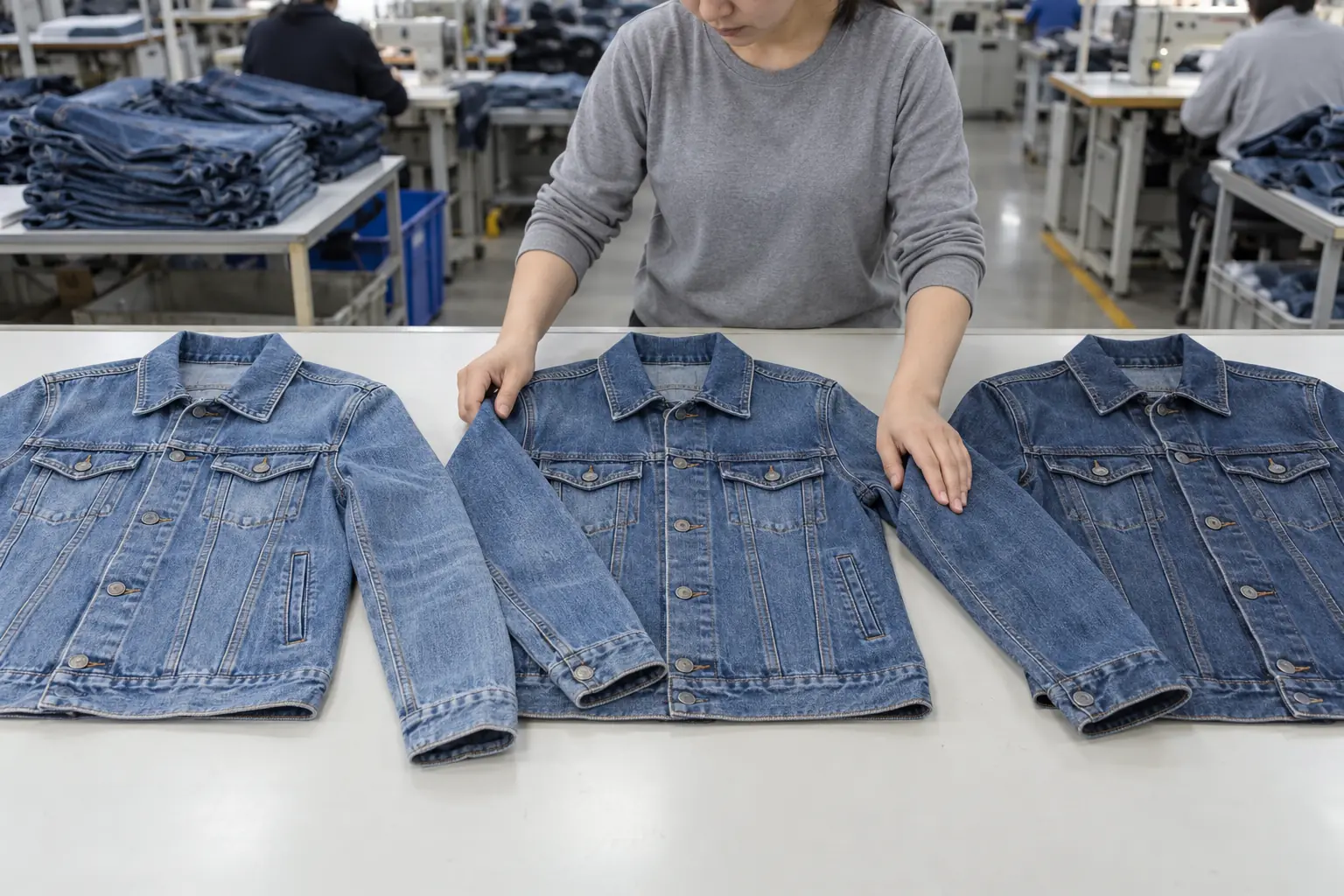
Make post-wash QC a release checklist
Evaluate the jacket after washing, drying and an agreed resting period. Pre-wash sewing inspection cannot confirm the final fit or fabric condition. Put measurement methods and acceptance limits in the specification, then require results against those limits rather than a general “QC passed” message.
- Finished dimensions: Check chest, body length, shoulder, sleeve length and cuff opening. As an illustrative starting point only, a buyer might propose ±1 cm for chest width and body length; confirm workable tolerances per project and measurement method.
- Uneven shrinkage: Compare left and right sleeves, front edges and side seams. Record twisting, a wavy front opening or a waistband that pulls the body inward.
- Fabric integrity: Inspect abrasion at pocket corners, collar folds and plackets. Intentional wear must have location and severity limits; it should not excuse unintended holes or weakened attachment points.
- Color transfer and staining: Agree suitable rubbing and laundering checks, especially for dark denim worn over pale clothing. Inspect pocket bags and labels for unwanted staining.
- Hardware and function: Check coating damage, corrosion, sharp edges and button operation. Open and close pockets and cuffs after treatment.
- Batch consistency: Sample across wash loads and sizes using an agreed inspection plan. Separate outliers for disposition before packing.
Define what happens after a failure. Rewashing may correct shade while further shrinking or weakening the garment. Any proposed recovery needs a trial and renewed approval of the affected properties, not an automatic second pass.
Compare quotations against the approval work they include
Ask suppliers to identify what their quotations cover: wash development, revision rounds, physical references, testing, first-load review and any separately charged treatments. A lower garment quote may exclude the work needed to establish the standard. Also confirm the consequence of rejecting a trial and who schedules the next decision.
StitchQuote provides cut-and-sew, private label, sampling, fabric and trim sourcing, branding including woven labels, prints and embroidery, and QC before packing. Denim starts from 100 pieces per style; most other categories start from 50. Confirm how proposed washes and fabric choices affect the specific order plan.
A 7-day sample is available for standard styles with confirmed specifications and available materials. Complex styles, custom washes and custom-developed fabric take longer. For a wash-led denim jacket, request a schedule that distinguishes initial sample preparation from wash revisions and final approval. Those are separate milestones, and a first sample date alone does not establish readiness for bulk.
Questions buyers ask before signing off the wash
Can one approved wash cover two denim fabric lots?
Do not assume it can. Dye response and shrinkage may differ. Request a verification trial on the additional lot and compare shade, dimensions and surface effects before applying the existing approval.
Should the recipe be approved if the fit still needs correction?
You can accept the visual direction provisionally, but keep bulk release open. Pattern or construction changes can alter wash behavior. Review the corrected jacket in the intended wash before approving the combined result.
What if the supplier will not disclose chemical quantities?
Ask for version control, retained references, traceability and evidence of repeat trials. Proprietary formulation details can remain internal, while the purchase specification still defines measurable outcomes and requires approval for changes affecting them.
Does a darker replacement batch need a new approval?
If it falls outside the agreed boundaries, yes. Identify the batch and hold its release pending disposition. Do not quietly redefine the reference to accommodate it; that undermines consistency for the remaining order and future repeats.
Related reading
- Denim wash approval process
- Prepare the garment specification in a tech pack
- Sampling and minimum order planning
- Discuss your jacket wash brief with StitchQuote
Request a manufacturing quote
Share your product type, quantity range, and destination. We usually reply within one business day.