Custom Streetwear, Casualwear & Denim Manufacturer•MOQ 50 pcs•Denim MOQ 100 pcs•7-Day Sample Available

Denim Wash Development vs Bulk Denim Repeatability
Understand denim wash development vs bulk repeatability with more practical factory-side context around material behavior, product feel, stability, and how the.

A washed denim sample can win a range review and still leave production with an incomplete instruction. Its faded seams, softened handle and pale thigh panels show what happened to one garment. They do not establish which inputs produced that result, which variables can move, or how much variation the buyer will accept across a delivery.
The practical distinction behind Denim Wash Development vs Bulk Denim Repeatability is the approval decision. Development searches for a desirable effect; repeatability requires evidence that a defined recipe can reproduce an agreed appearance on the nominated fabric and construction. For buyers approaching a bulk commitment, the useful deliverable is a controlled wash approval package, with a reference garment, process revision and release conditions that all describe the same product.
Give the recipe an approval identity before judging its look
Assign each wash trial a unique identifier tied to the style, fabric reference and recipe revision. A description such as “soft vintage blue” can remain in the merchandising brief, but it cannot distinguish a successful trial from an earlier version with excessive abrasion. Put the identifier on the sample record and retain it through production comments.
The laundry’s working recipe should record the process sequence, equipment reference, dry load weight, water quantity or liquor ratio, treatment concentrations, operating temperatures, stage times, rinsing and drying conditions. Record any manual work separately, including its location and intensity. Chemical choices and operating limits belong with qualified process personnel; the buyer’s role is to approve the outcome and ensure its production method is traceable.
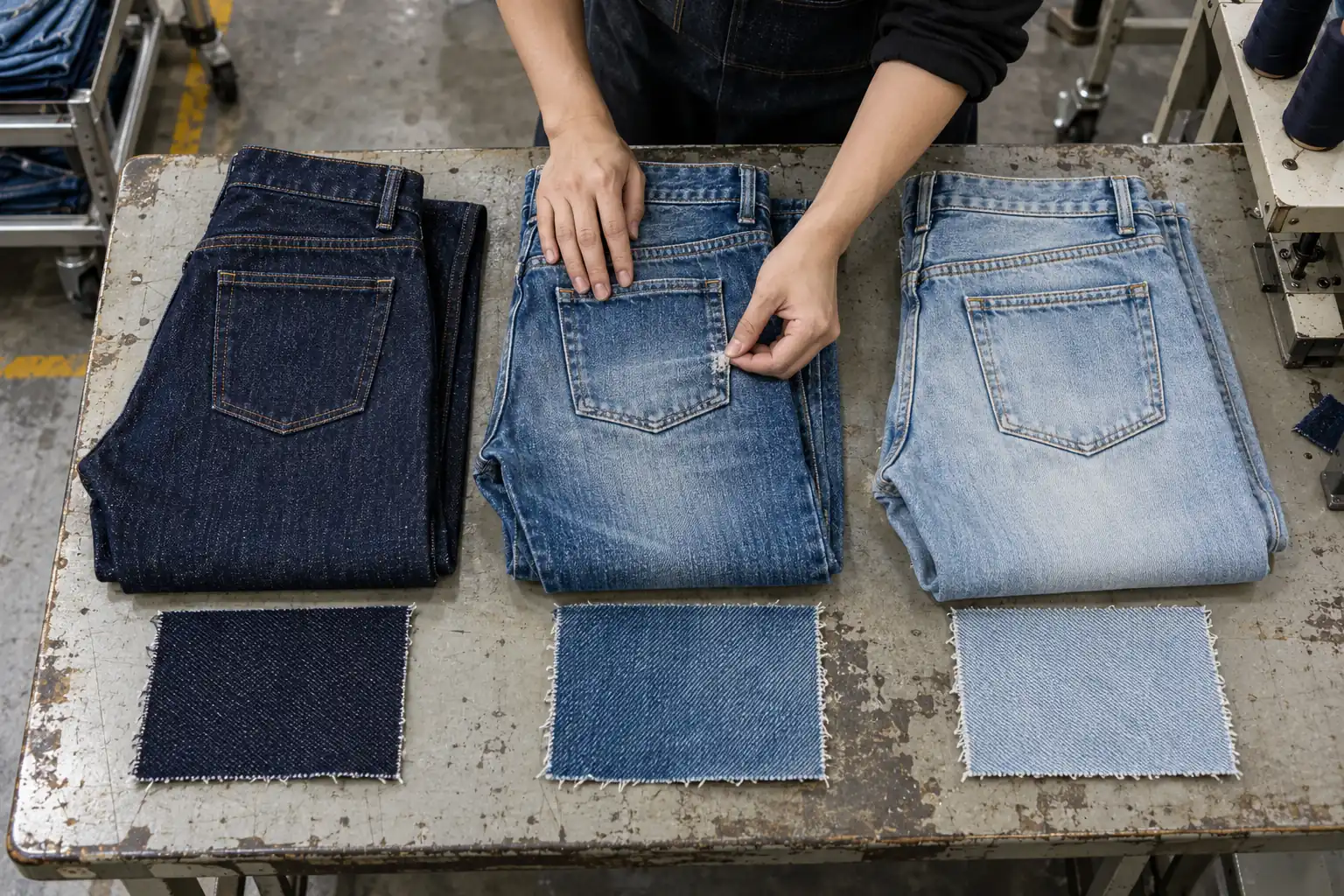
Approval should specify whether it covers appearance only, appearance plus fit, or permission to release bulk washing. These are different decisions. A buyer can accept a color direction while withholding bulk release until measurements and a representative pilot have passed.
Freeze the fabric and construction that the wash will act on
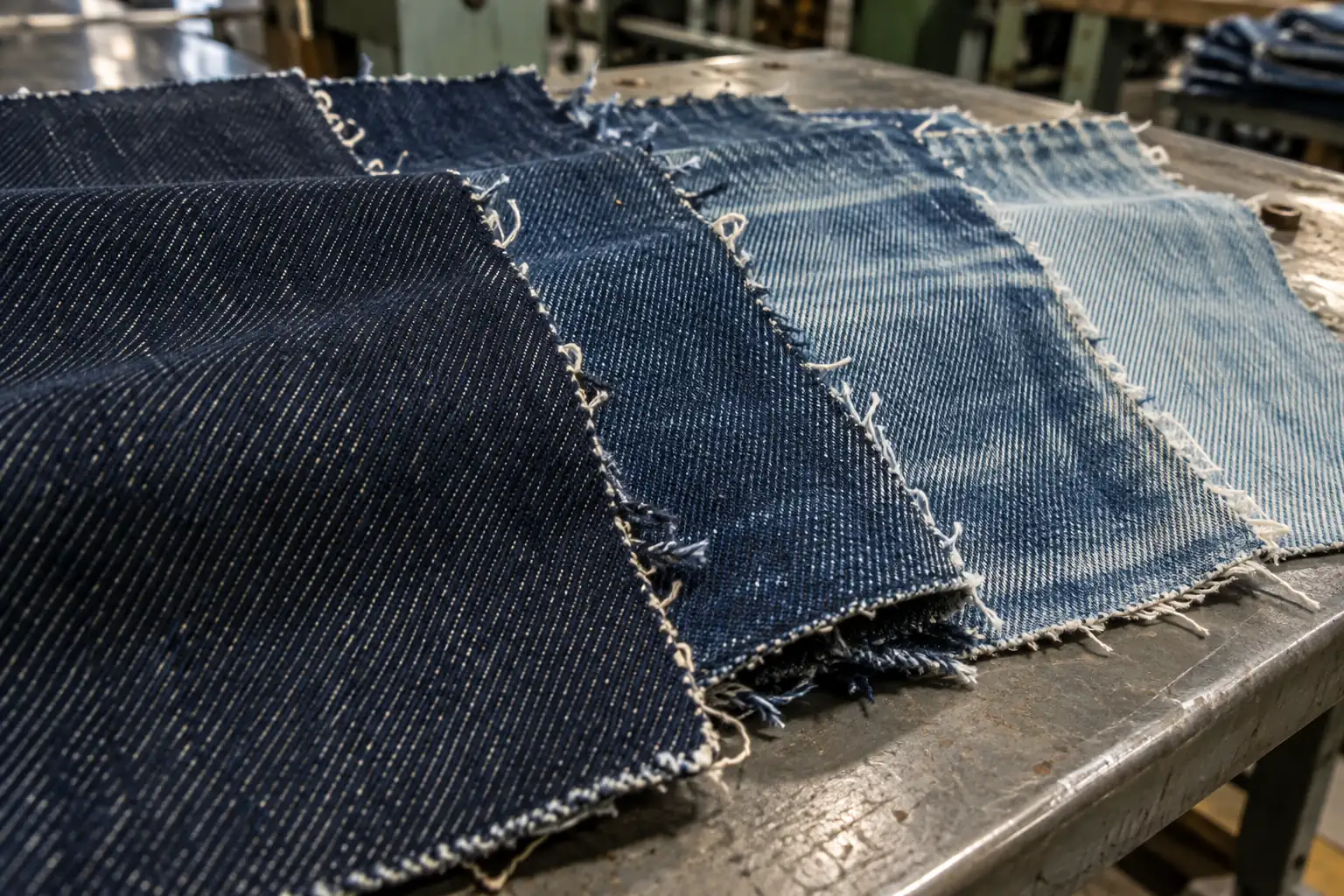
A recipe is conditional on its starting material. Two denims with similar unwashed color and nominal weight may fade differently because of yarn structure, dye penetration, finishing or fiber composition. Identify the nominated fabric article and dye lot, and record composition, weave, weight and any stretch component. A fabric substitution should trigger an assessment rather than inherit approval automatically.
Construction also contributes to the visible result. Folded seams, pocket corners and waistband edges receive treatment differently from flat panels. Develop the wash on garments with the intended seam construction, thread and pocketing. Include the planned patch, labels and metal trims when their exposure could change staining, corrosion or surface wear.
For example, a straight-leg jean may look balanced in a trial made without its final back-pocket reinforcement. Adding that reinforcement can change the local abrasion pattern. If a component must be attached after washing, state that sequence explicitly and judge its final appearance on a completed garment.
Approve a target and a boundary, not just a favorite sample
Choose a physical target garment that represents the intended commercial result. Then agree which differences remain acceptable. Denim effects naturally vary, but “variation expected” is too broad to guide sorting. Define the overall shade, cast, contrast, abrasion placement and hand feel separately so an acceptable shift in one attribute does not excuse a failure in another.
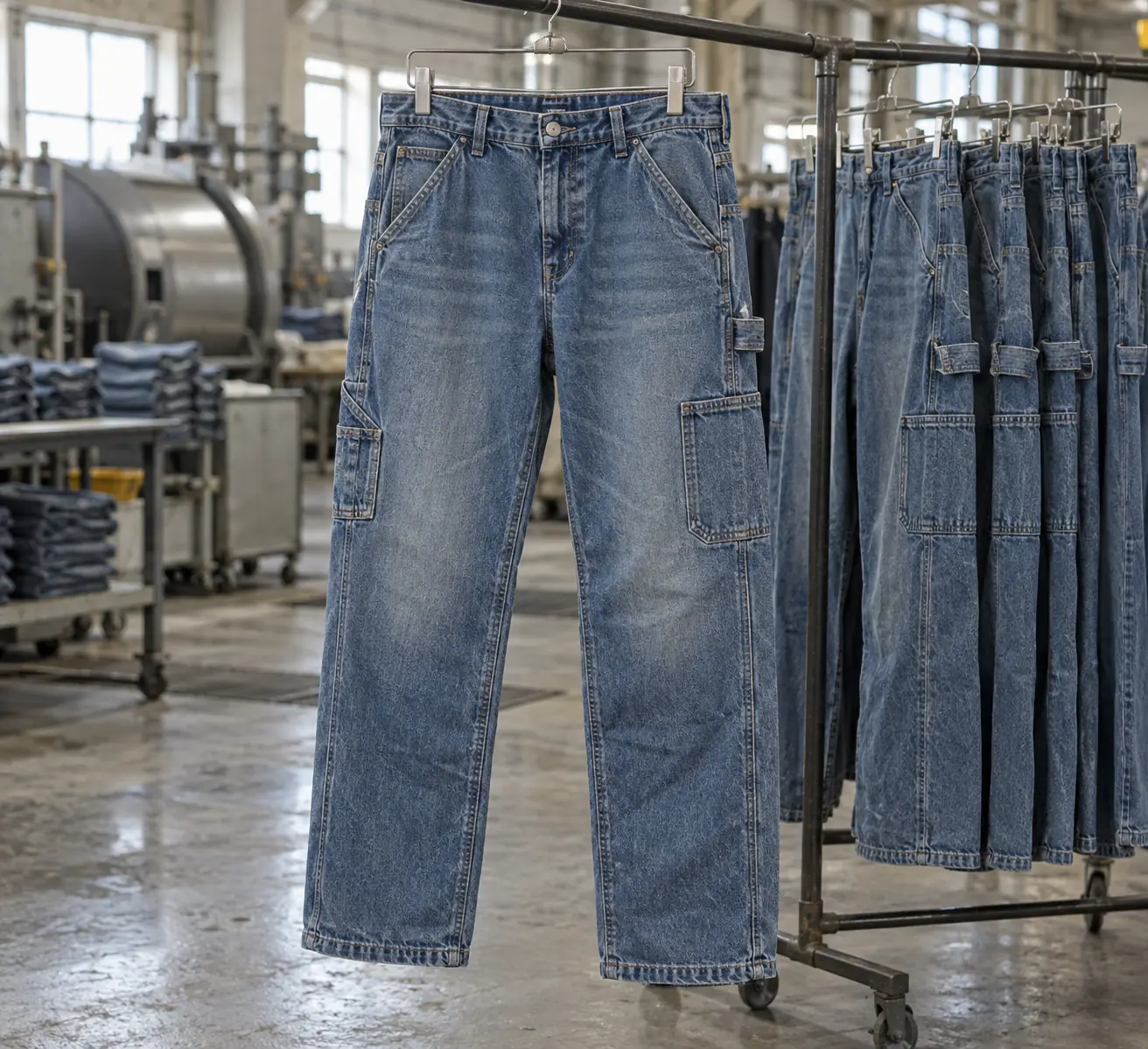
For a muted blue carpenter jean, the buyer might accept modest variation in seam highlights while rejecting a green cast or bright patches around the utility pocket. Use annotated reference photographs to locate effects, but retain physical garments for shade and handle judgments. Phone screens and automatic exposure can disguise differences that are obvious in person.
| Attribute | Approval evidence | Reason to hold |
|---|---|---|
| Body shade | Target plus accepted light and dark boundaries under agreed lighting | Garment falls outside the approved range |
| Local abrasion | Placement reference and acceptable intensity examples | Effect migrates into an excluded area |
| Finished dimensions | Post-wash measurement sheet with point-specific tolerances | Fit-critical measurement exceeds its limit |
| Surface condition | Agreed examples of intentional wear | Unapproved holes, weak seams or trim damage |
A numerical color threshold can supplement visual approval if the measurement method, instrument settings and measurement zones are agreed. It should not replace visual inspection of a deliberately uneven surface. Avoid adopting a generic tolerance that was established for a uniform dyed fabric.
Use a representative load to test the approved recipe
A development machine and a bulk machine can create different garment movement even when the written treatment sequence looks identical. Load size, drum geometry and extraction or drying conditions influence the result. Before release, ask the laundry to validate the transferred process on a representative load and document any adjustments as a new revision.
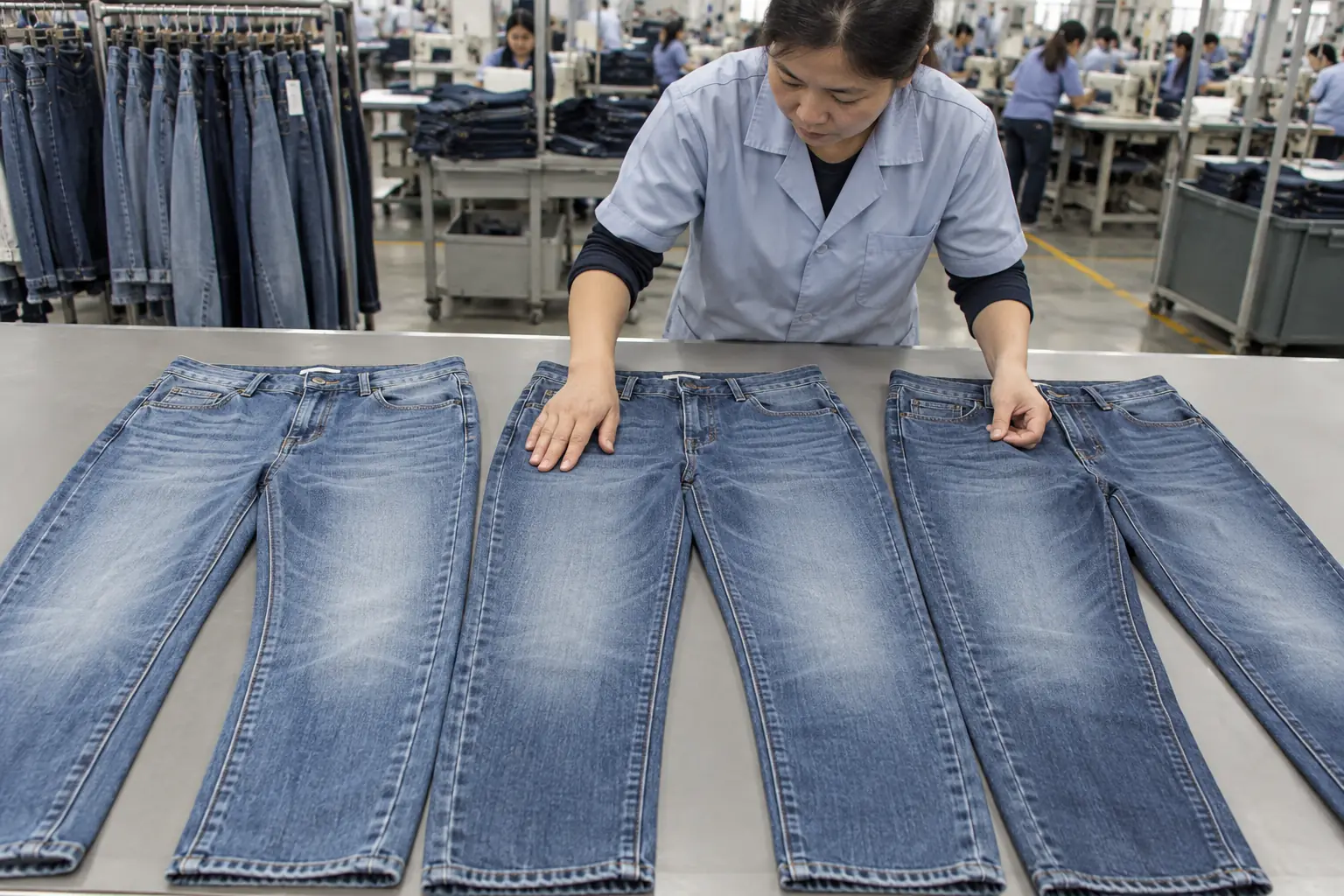
The pilot should use production-intended fabric and construction, with its load composition recorded. If the order contains several sizes, examine whether smaller and larger garments show comparable effects and dimensional stability. One middle-size sample cannot establish that every waistband and inseam will finish correctly.
Review the pilot against the approved target after the garments have dried and been conditioned consistently for inspection. Compare appearance, measurements and handle together. If longer treatment improves shade but pushes the inseam below tolerance, the trial has not passed. Changing the pattern allowance or wash cycle requires another coordinated review.
StitchQuote’s denim MOQ starts from 100 pieces per style. Confirm how trial quantities, retained references and any pilot losses fit the order plan. A minimum order quantity does not establish a laundry’s suitable operating load, so the production arrangement needs confirmation for the actual project.
Make the bulk release checklist specific enough to stop a batch
Release criteria should identify who can approve results and what evidence they receive. Keep a reference set accessible to the buyer, production team and inspector. Check the first bulk wash output before processing the remaining garments wherever the production plan allows; discovering a shade shift after every batch is complete removes useful correction options.
- Input match: Confirm fabric lot, garment construction, trims and recipe revision against the approved package.
- Appearance: Inspect overall shade and localized effects under the agreed lighting, including front-to-back differences and pocket areas.
- Dimensions: Measure defined points after consistent conditioning. As a project-specific example, a buyer might propose ±1 cm for a laid-flat waist width, subject to fit requirements and supplier agreement.
- Durability: Check seam openings, abrasion damage, hardware security and pocketing condition. Agree any strength, rubbing or laundering tests and pass criteria before release.
- Traceability: Retain batch identifiers and inspection results so a failed group can be isolated from accepted output.
Separate intentional distressing from accidental damage in the defect standard. A frayed pocket edge may be approved while broken waistband stitching is not. If a batch fails, hold it for a documented decision. Rewashing can alter dimensions and weaken already abraded areas, so any corrective treatment needs validation and inspection rather than automatic acceptance.
Treat every later adjustment as a controlled recipe decision
After approval, changes should have a named owner and a visible status. Switching the denim lot, changing a softening treatment or moving to different equipment can affect the result. Classify the change, identify the attributes it could influence and agree the evidence needed to release it. Some changes may need a focused comparison; others require a new representative trial.
Keep the superseded recipe and comments in the record, but mark the current approved version clearly. An instruction sent in a chat message should be incorporated into that record before production uses it. This prevents the buyer, laundry and final inspector from judging three different versions of the same wash.
For a reorder, retrieve the retained garment and original input specifications before confirming feasibility. StitchQuote provides sampling, fabric and trim sourcing, cut-and-sew, private label, branding and QC before packing. Its available seven-day sample applies to standard styles with confirmed specifications and available materials; custom washes and custom-developed fabrics take longer. Plan wash validation around the actual development requirements.
Questions buyers ask before signing wash approval
Can a photograph serve as the final shade standard?
Use it to communicate placement and broad direction, but approve a physical reference for final shade and handle. Record the viewing conditions and retain matching references where decisions will be made. Photographs alone cannot reliably resolve a disputed cast or tactile difference.
Does approving the recipe mean the finished fit is approved?
No. Tie recipe approval to a separate post-wash measurement review. The same appearance can accompany different shrinkage results. Bulk release should require both approvals when fit and wash are interdependent.
What happens if the repeat order uses a new fabric lot?
Compare the new lot’s wash response against the retained standard before releasing the repeat. Confirm shade, dimensional change and surface effects. If the response differs, revise and validate the recipe rather than assuming the earlier approval covers it.
Should every wash color share one approval record?
Give each distinct wash its own reference and revision history, even when several washes share a base style. Different treatment intensity can create different shrinkage and damage risks. A shared construction sheet is useful, but each wash needs an identifiable release decision.
Related reading and project planning:
- Prepare the garment specifications for wash trials
- Plan sampling quantities and minimum orders
- Review the denim wash approval process
- Discuss your wash development brief with StitchQuote
Request a manufacturing quote
Share your product type, quantity range, and destination. We usually reply within one business day.