Custom Streetwear, Casualwear & Denim Manufacturer•MOQ 50 pcs•Denim MOQ 100 pcs•7-Day Sample Available

Deposit Terms in Clothing Manufacturing: What Buyers Should Expect
Use this factory-side guide to compare deposit terms in clothing manufacturing: what buyers should expect more clearly across supplier fit, quote scope, approvals.

A production deposit commits cash before your clothing order is ready to sell. The percentage matters, but so do the purchasing authority it gives the supplier, the approvals still outstanding, and the conditions attached to the remaining payment. A low initial payment can still leave a buyer exposed if those details are missing.
Use this checklist to evaluate deposit terms in clothing manufacturing before approving a pro forma invoice. The aim is a payment agreement that matches a defined order: what can be purchased now, what must wait for approval, and what evidence you receive before releasing more money. Any payment structures below are negotiation examples, not published StitchQuote payment policies.
Match the payment request to one identifiable order
Start by reconciling the quotation, purchase order, and pro forma invoice. Each should identify the same style codes, quantities, currency, and revision date. If your order contains 180 heavyweight T-shirts and 120 fleece shorts, show separate lines rather than a single total for “summer collection.” A deposit against an ambiguous bundle makes later quantity changes difficult to price.
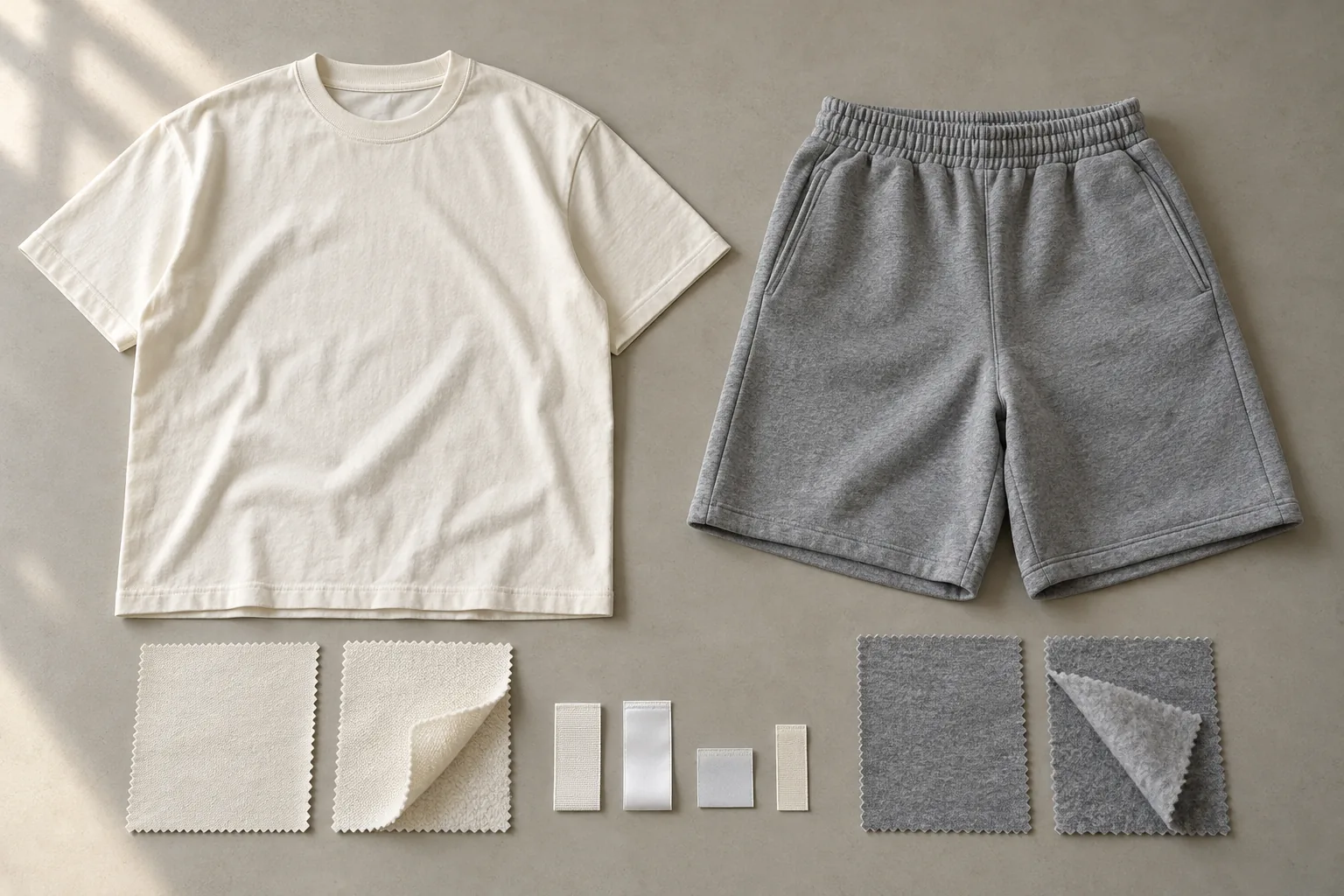
Check whether the quoted amount includes fabric, labels, decoration, packing, and any development charges. Identify freight, duties, testing, or inspection costs that remain separate. Confirm whether a sample fee is independent, credited against bulk, or refundable under a specific condition; none of those outcomes should be assumed.
Verify the legal seller and beneficiary details through an established contact channel. If the bank account changes, independently confirm the change using a previously verified contact method before transferring funds. Ask how bank charges and currency conversion will be handled so the credited amount satisfies the agreed deposit.
Define what your first payment authorizes
A deposit may fund material procurement, reserve production capacity, or cover several commitments together. Ask which activities begin when funds clear and which require a separate approval. Payment should not silently become permission to cut fabric when the fit sample is still under review.
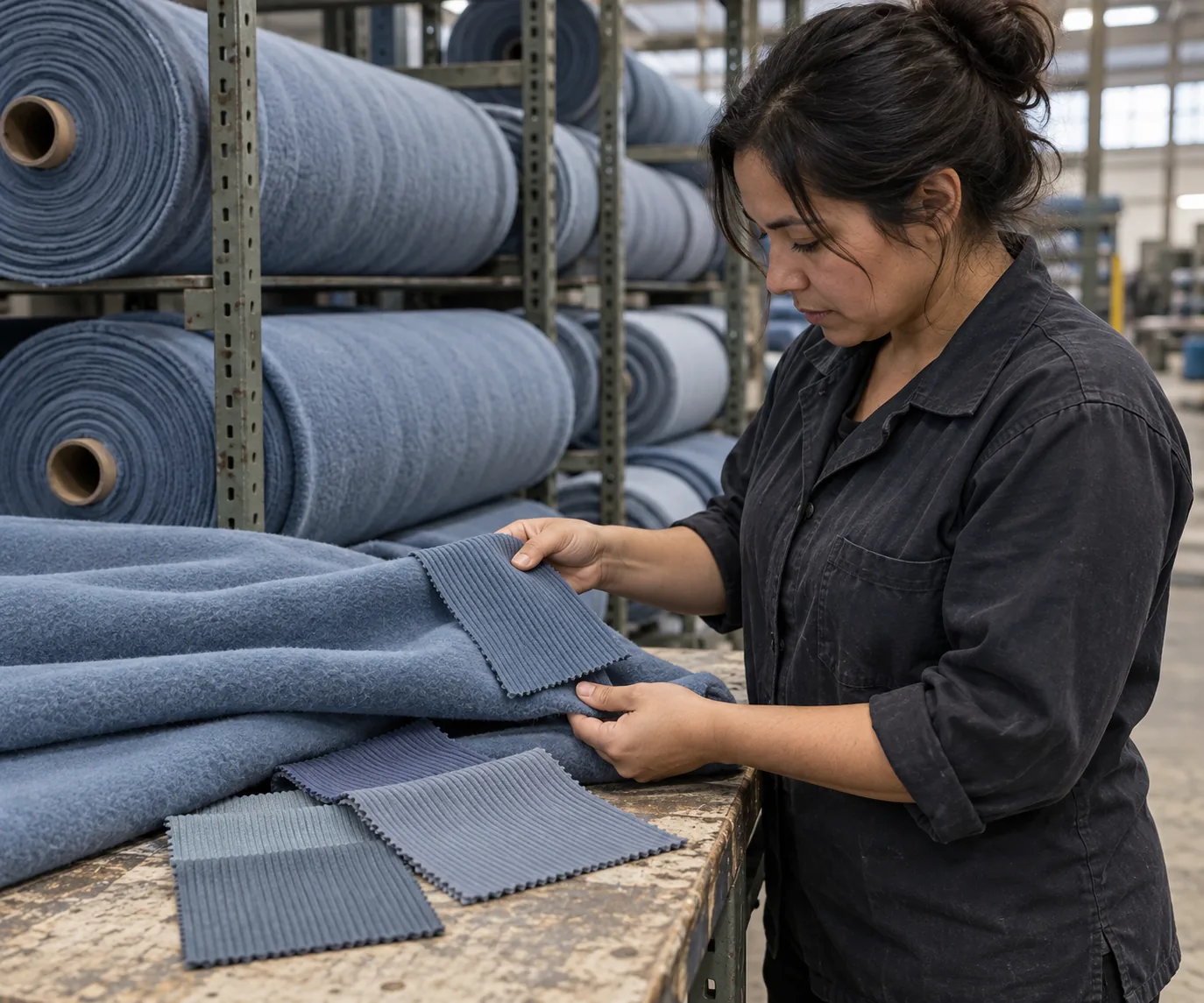
For example, a buyer developing a zip hoodie might approve purchasing stock fleece while withholding approval for a custom zipper pull and chest embroidery. Record that split explicitly. State the approved fleece composition, weight, color reference, and quantity basis, including any agreed allowance for cutting waste. Otherwise, a later adjustment can become a dispute about whether the purchased fabric was authorized.
Custom materials deserve particular attention. Ask whether the fabric mill or trim vendor requires a separate advance, whether unused goods belong to you, and how they would be stored or released. These details explain why two visually similar garments can carry different payment requests without either proposal being inherently unreasonable.
Attach each installment to a verifiable event
There is no universal deposit percentage that protects every apparel order. Evaluate the proposed split alongside the supplier’s commitments and your access to evidence. A smaller deposit followed by an early second installment may put more cash at risk before inspection than a larger deposit with a later balance.
| Checkpoint | Evidence to request | Question to settle |
|---|---|---|
| Initial deposit | Matched invoice and approved order scope | Which purchases and scheduling commitments begin? |
| Any interim payment | Agreed material or production status report | What measurable event makes this amount due? |
| Final balance | Agreed QC results and packing details | Must corrective work be verified first? |
A milestone such as “production started” is vague. Define whether it means fabric received, cutting completed, or sewing underway for a stated quantity. Photographs can support a progress report, but they do not establish the conformity of an entire lot. Specify any inspection access separately.
Also distinguish payment due dates from dispatch dates. If the balance is due before goods leave the factory, agree how long the buyer has to review the required documents and how cleared funds affect collection. Payment after delivery should never be assumed unless explicitly accepted.
Close specification gaps before the production clock starts
Attach a dated technical specification and approval record to the commercial agreement. For a relaxed jersey tee, that might include a 240 gsm target fabric, approved shrinkage expectations, a measurement chart, neck rib construction, print dimensions, and label placement. These are example specifications to agree per project, not universal manufacturing standards.
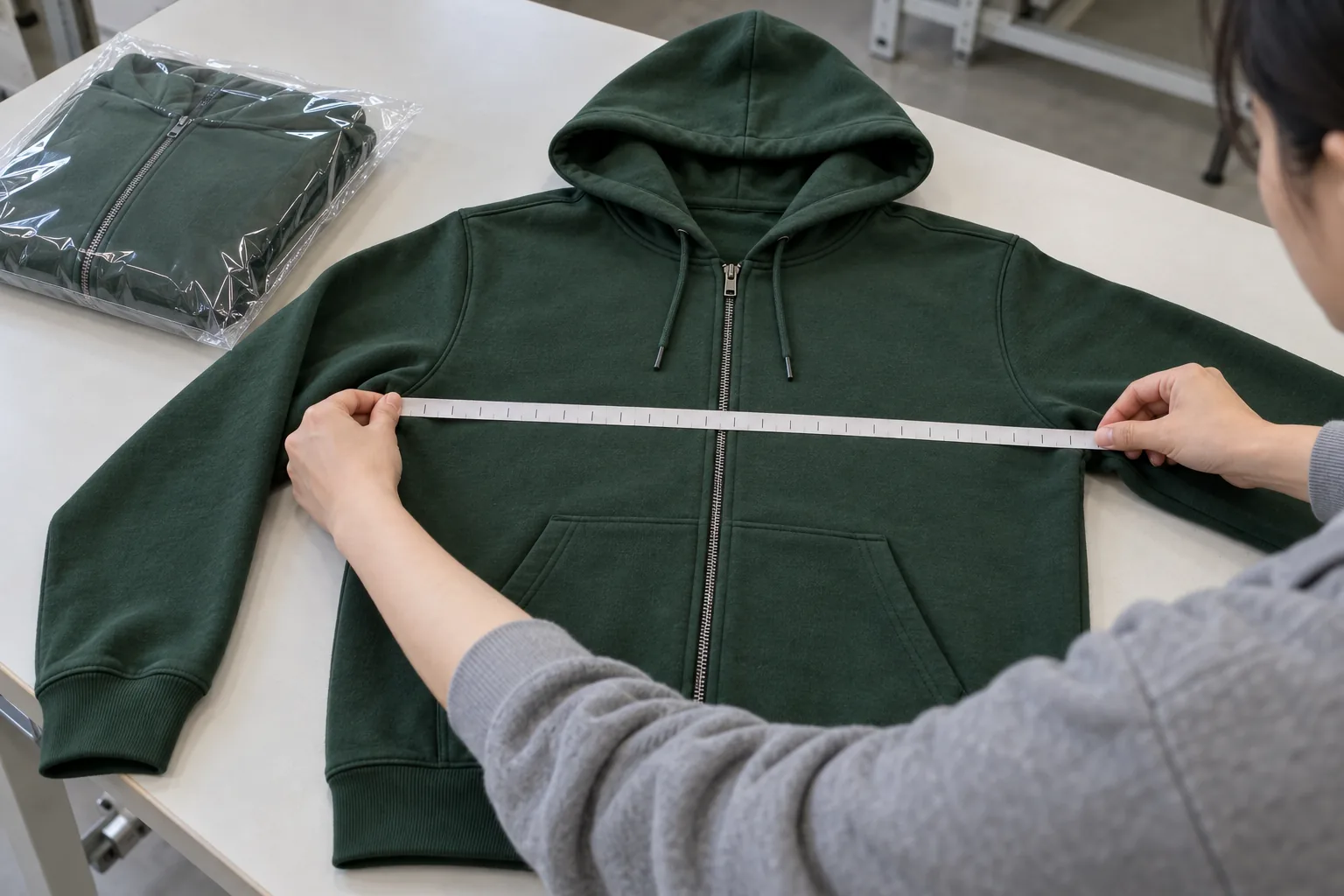
Define measurement methods as well as tolerances. An illustrative body-width tolerance of plus or minus 1 cm only helps if both parties measure the same points, with the garment laid flat in the same condition. Agree whether dimensions are assessed before or after washing and which wash procedure applies. Keep the signed sample or approved revision identifiable.
Ask what starts the lead-time calculation: deposit receipt, material availability, sample approval, or the last of several prerequisites. Include deadlines for your own feedback. A buyer who takes extra time to approve a print strike-off may need an updated production slot; the agreement should explain how that revised date is confirmed.
StitchQuote offers a seven-day sample for standard styles with confirmed specifications and available materials. Complex styles, custom washes, and custom-developed fabric take longer. This sampling option does not establish bulk delivery timing or a payment schedule. Confirm those separately against the actual order.
Agree on change, cancellation, and shortage calculations
Ask for written treatment of changes before any arise. A size redistribution requested before cutting may have different consequences from the same request after panels are cut. Specify who may approve a change, how the added or reduced cost is documented, and whether the delivery date needs to move.
For cancellation, distinguish money committed to identifiable materials or completed work from money not yet committed. Request an agreed calculation method and supporting records, including treatment of recoverable materials. Do not assume a deposit is automatically refundable or automatically forfeited; the signed terms and applicable law govern the outcome.
Quantity reconciliation matters just as much. Decide whether overproduction requires consent, how shortages affect the balance, and whether permitted quantity variation applies by style, color, or size. Ten missing units in a key size may damage a launch even if the total shortage seems small.
Record what happens to buyer-funded labels, spare trims, and remaining fabric when the order closes. For repeat styles, agree whether materials can be retained for another order and whether storage has a time limit. Avoid leaving ownership and disposal decisions to an informal conversation after shipment.
Run a documented QC check before releasing the balance
Build the final payment checklist when placing the order. This gives the supplier time to plan inspection and gives your finance team a consistent release rule. StitchQuote’s services include cut-and-sew, private label, sampling, fabric and trim sourcing, woven labels, prints, embroidery, and QC before packing. Agree the specific reporting and acceptance requirements for your project.
- Reference: Identify the approved sample, specification revision, and accepted color or wash standard used for inspection.
- Coverage: Agree inspection timing, lot definition, sampling method, and defect acceptance criteria. A few selected garment photos are not a sampling plan.
- Measurements: Request results against agreed points and tolerances, with sizes and inspected quantities identified.
- Construction and decoration: Check seam integrity, print placement, embroidery backing, closures, and any project-specific wash requirements.
- Packing: Reconcile style, color, size, labels, and carton quantities against the order and packing list.
- Corrections: Document failed checks, remedial work, and how completion will be verified before the relevant payment becomes due.
Agree the remedy for unresolved failures in advance, whether rework, replacement, an accepted adjustment, or another written solution. Do not invent a deduction after receiving an invoice. Equally, do not approve the balance simply because production is described as finished when the agreed acceptance evidence is still missing.
Questions to resolve before finance approves the transfer
Does meeting the minimum quantity determine the deposit?
No. MOQ concerns production quantity; payment terms concern commercial commitments. StitchQuote’s MOQ for most categories starts from 50 pieces per style, while denim starts from 100 pieces per style. Confirm the proposed payment schedule separately, including any effects of custom materials or decoration.
Can I pay for fabric while the fit is still changing?
You can propose a limited procurement authorization if the fabric choice is settled. Document the material, purchasing limit, and restrictions on cutting or other work. Recognize that a later design change may leave you responsible for approved materials that are no longer usable.
What if the invoice requests payment before the agreed QC report?
Refer to the written milestone and request the missing evidence or a corrected due date. Resolve discrepancies before transferring the installment. If the contract never linked payment to that report, negotiate an amendment rather than assuming a new condition applies.
How should a revised order affect a deposit already paid?
Request an updated invoice showing the revised total, the deposit received, any approved change charges, and the remaining balance. Cross-reference the change approval so finance can reconcile the documents without treating the revision as a second order.
Related reading and project support:
- Prepare the technical pack behind your purchase order
- Review sampling and minimum order quantities
- Contact StitchQuote to discuss your project terms
Request a manufacturing quote
Share your product type, quantity range, and destination. We usually reply within one business day.