Custom Streetwear, Casualwear & Denim Manufacturer•MOQ 50 pcs•Denim MOQ 100 pcs•7-Day Sample Available

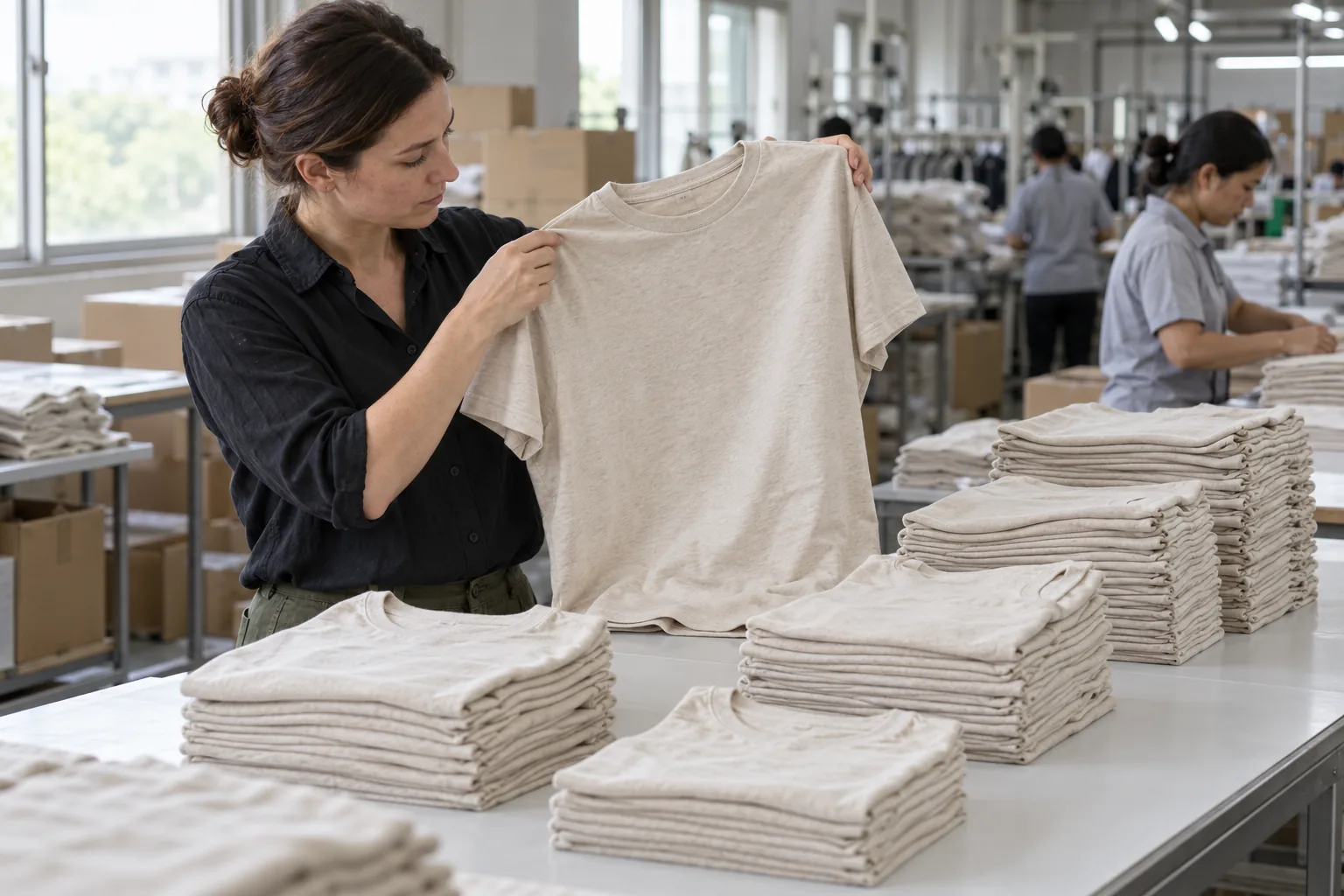
First Order vs Reorder: What Usually Gets Easier
Use this factory-side guide to compare first order vs reorder: what usually gets easier more clearly across supplier fit, quote scope, approvals, and timing before.

A successful first production run gives your next order a head start: an approved fit, a tested construction method, and a record of what customers actually received. Those assets only save time if the repeat order points to the correct versions. A familiar style name is not enough when fabric, artwork, or measurements changed during development.
Use this buyer checklist before releasing a repeat purchase order. It separates decisions you can carry forward from checks that still need fresh evidence, helping you avoid paying for unnecessary development while keeping control of the garment your customers expect.
Check whether you are repeating a product or revising it
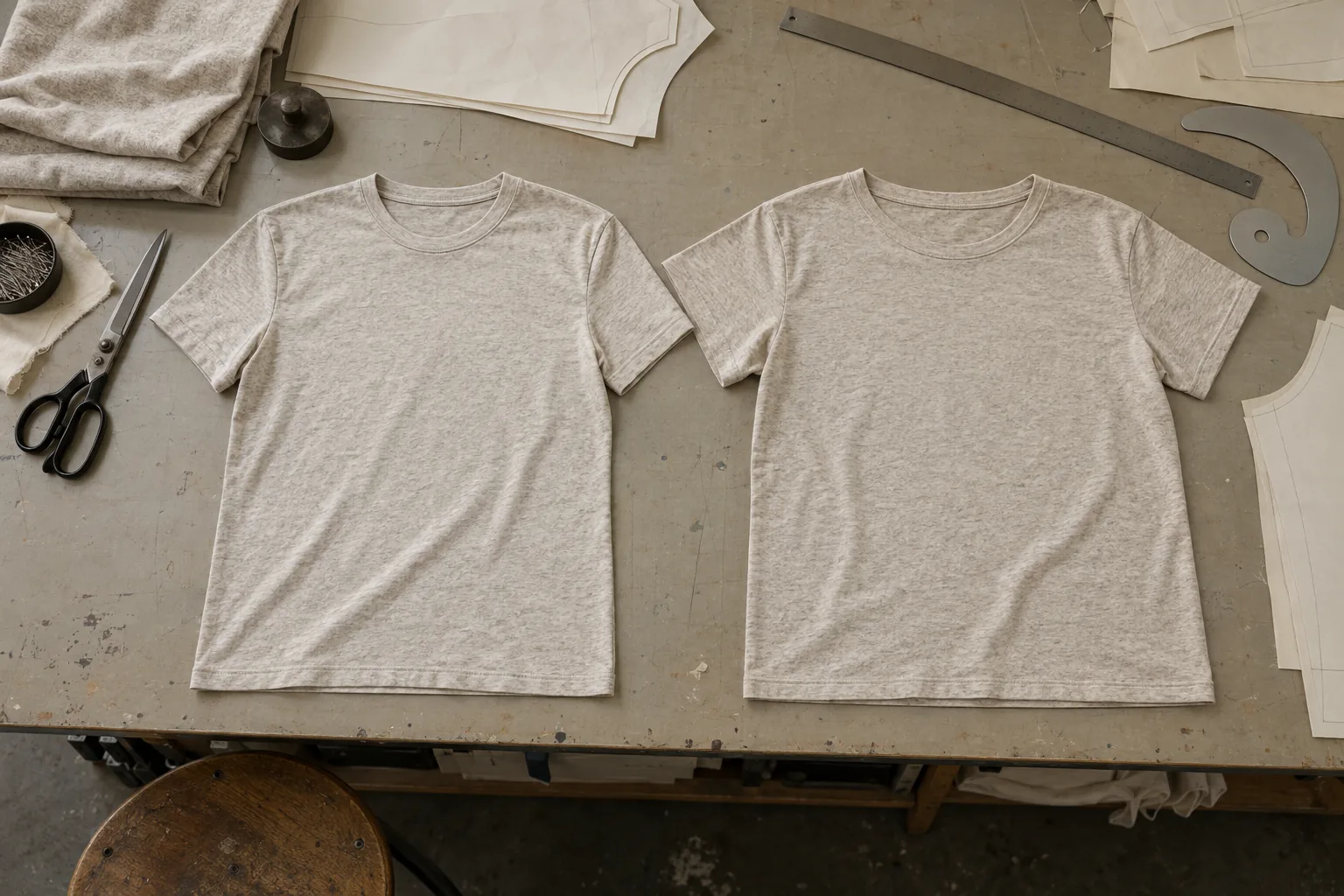
Start with a change list covering silhouette, measurements, fabric, color, finishing, decoration, trims, and packaging. Mark each item unchanged, changed, or unconfirmed. An unconfirmed item needs an answer; it should not default to the previous specification simply because the purchasing deadline is close.
For example, restocking an oatmeal jersey tee in the same fabric and size range may require little fit development. Adding a heavier jersey to the same pattern creates a different problem: drape, neckline recovery, and shrinkage may shift. Similarly, adding a zipper to a familiar pullover is a construction revision, even if the finished chest width stays identical.
Classify the order before asking what gets faster. A true repeat can reuse approved decisions. A color extension needs color approval and a check of material behavior. A fit or construction revision needs targeted development. This distinction gives the supplier a concrete basis for identifying which sample stages remain necessary.
Locate the evidence that makes the first run reusable
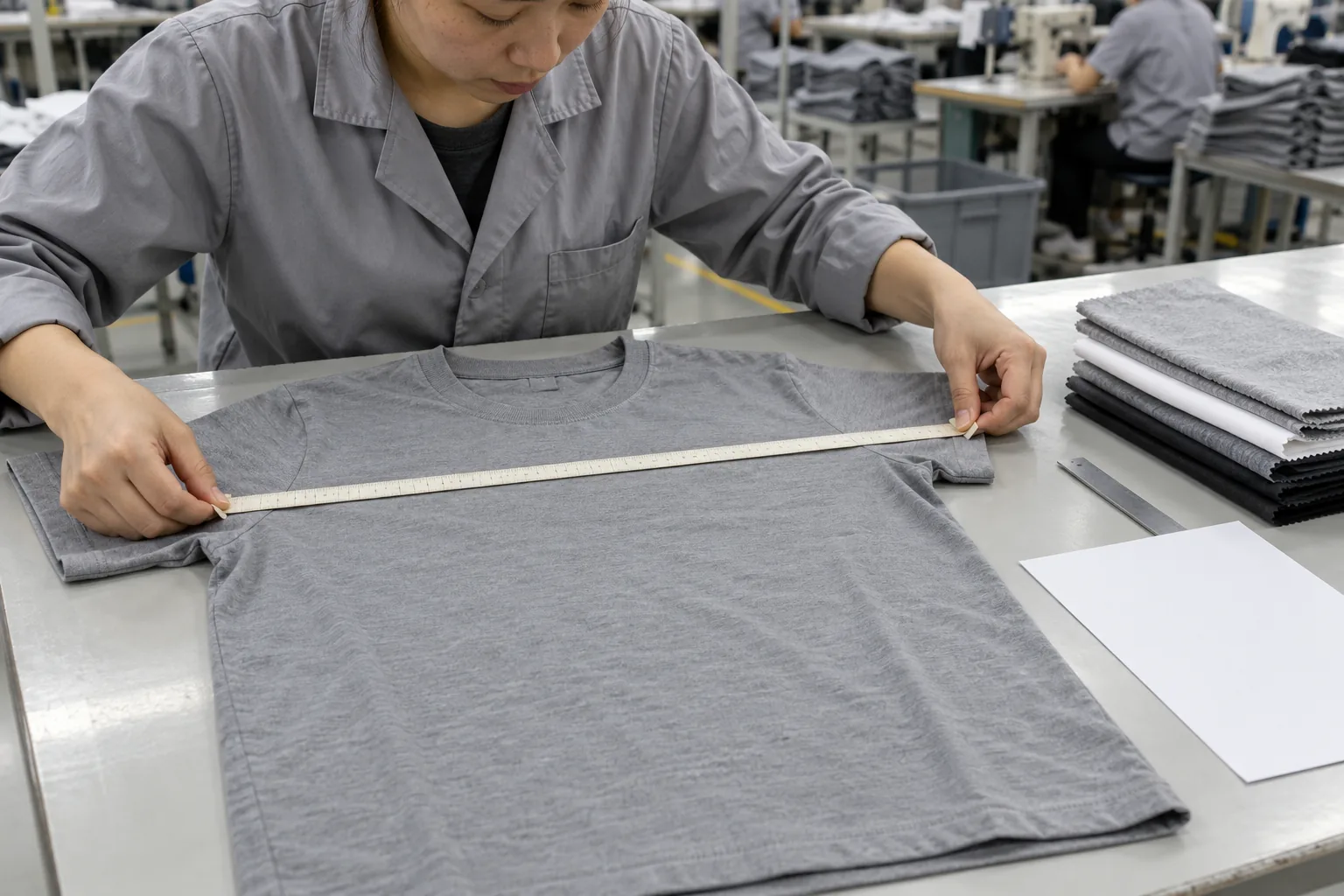
Assemble a repeat-order reference set: the final specification revision, approved sample, fabric and trim references, decoration files, inspection results, and a garment retained from the shipped batch. Record which sample governed production. An early development sample may have the right fabric but the wrong sleeve length; a photograph rarely reveals that distinction.
Check that the final measurement sheet includes approved changes made during sampling. Specify how each measurement is taken, such as chest width measured flat at an agreed distance below the armhole, without stretching the fabric. A number without a measurement method invites disagreement even when both parties are measuring carefully.
| Reference to retrieve | What it can save | What still needs checking |
|---|---|---|
| Final pattern and graded measurements | Repeated fit decisions | Compatibility with current fabric |
| Approved decoration file and placement | Artwork reconstruction | Application on the new material lot |
| Retained bulk garment | Arguments about the delivered finish | Any accepted exceptions in that batch |
| Final packing specification | Rebuilding folding and packing instructions | Current labels, quantities, and destinations |
Keep exceptions separate from the target standard. If you accepted a slightly short body length to rescue the previous launch, record that as a one-batch concession. Otherwise, the accepted defect can quietly become the reference for every future order.
Reconfirm the material behind the familiar handfeel
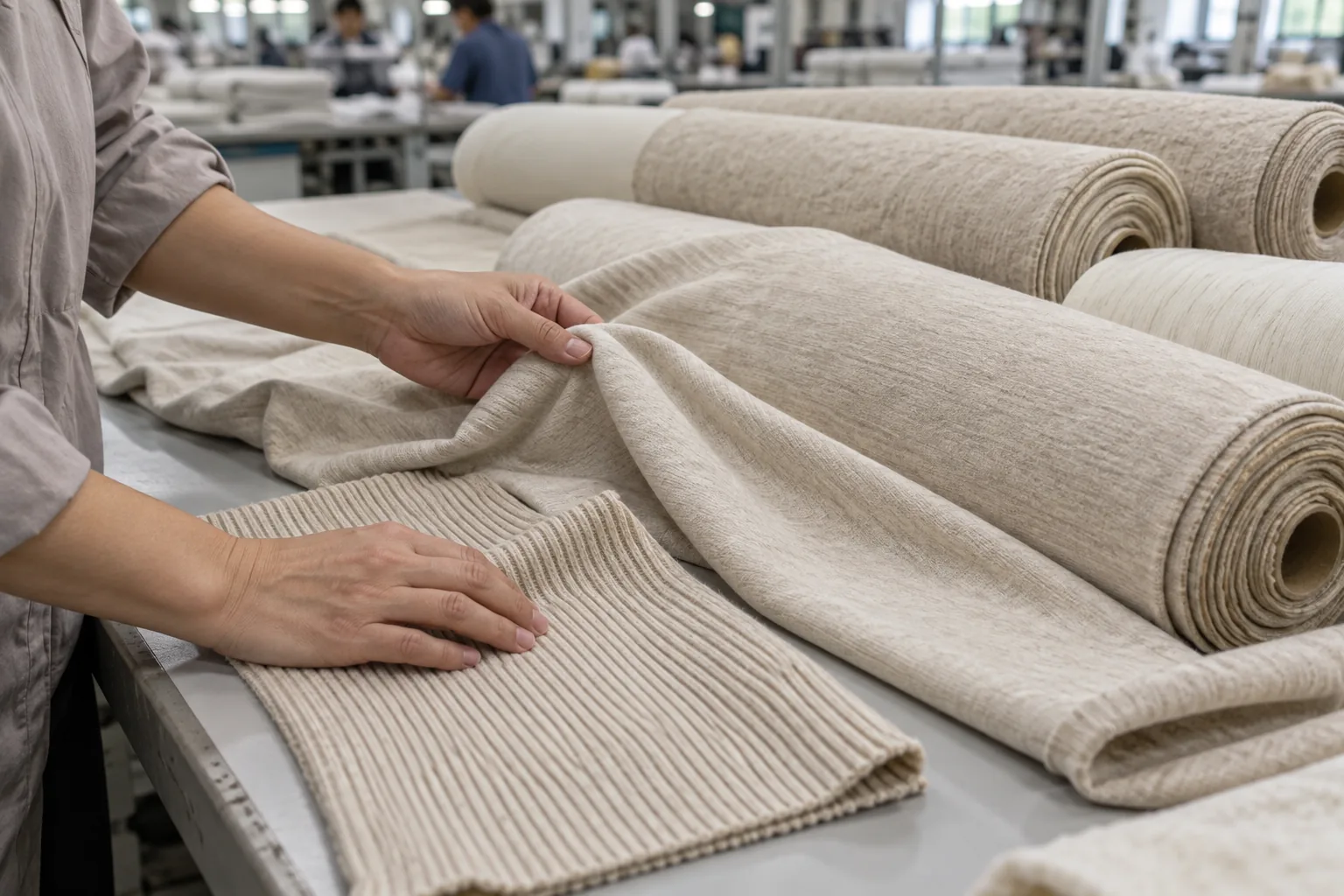
Ask whether the original fabric and trims are available, whether production will use a new lot, and whether any substitution is proposed. “Same cotton jersey” leaves too much open. Carry forward composition, knit construction, target weight, finish, color reference, and the agreed testing method. A 220 gsm target alone does not define softness, opacity, or stretch recovery.
For a new dye lot, compare a current swatch with the retained reference under agreed lighting. Check matching components together: rib against body fabric, pocketing against shell where visible, and zipper tape against garment color. A close match in one component does not guarantee a coordinated finished garment.
Where shrinkage affects fit, request a wash check using the agreed care procedure. Record dimensions before and after washing and compare the results with the previous standard. For washed denim, confirm the wash reference and evaluate the finished effect; repeating a process recipe does not by itself prove an identical shade or handfeel.
Use sales evidence to rebuild the quantity and quote
The first order often uses a provisional size curve. A reorder lets you replace that assumption with sell-through, returns, and stock records. Compare demand within each size against the quantity originally available. A size that sold few units because it stocked out early should not automatically receive a smaller allocation.
Keep fit feedback separate from inventory decisions. If customers consistently report a tight upper arm, decide whether to revise the sleeve or preserve the established fit. Do not bury a pattern change inside a revised size breakdown. It needs its own approval and an explicit decision about whether existing and new stock can share the same product description.
Request a fresh quote showing current quantities, material assumptions, decoration, branding, and packing requirements. Previous development work may reduce repeated effort, but it does not guarantee a lower unit price. Smaller quantities, changed materials, or a more fragmented assortment can offset savings. Ask which development or setup items carry forward and which charges recur.
At StitchQuote, MOQ for most categories starts from 50 pcs per style; denim starts from 100 pcs per style. Confirm the proposed color and size split for the actual project. A repeat purchase does not automatically remove material purchasing constraints or make every small variation feasible.
Approve a calendar built around the remaining decisions
List the decisions already closed, then ask for the sequence of remaining approvals and purchasing steps. Pattern development may disappear from an unchanged repeat, while fabric availability, color approval, or custom trim replenishment still determines the schedule. Request dates against those dependencies instead of assuming the whole previous lead time will shrink proportionally.
Agree which physical evidence is needed before bulk cutting. An unchanged style might use the retained fit reference plus confirmation of current materials and decoration. A changed fabric may justify a garment sample and wash evaluation. The buyer and supplier should explicitly agree the approval scope rather than silently skipping a stage.
StitchQuote offers a 7-day sample for standard styles with confirmed specifications and available materials. Complex styles, custom washes, and custom-developed fabrics take longer. That sample option is not a bulk production or delivery promise. Confirm the production schedule separately after identifying outstanding approvals and material needs.
Keep a repeat-order QC gate before packing
Familiarity helps inspectors know where to look, but each batch still needs inspection. Build the checklist around the approved standard and any problems found in the first run. Specify the inspection coverage with the supplier; checking one medium sample cannot establish that the entire size range is consistent.
- Measurements: Check agreed points across the size range. For example, a buyer might propose ±1 cm for flat chest width and ±0.5 cm for neck opening; these are illustrative tolerances to confirm for the garment, not universal standards.
- Construction: Review seam integrity, skipped stitches, puckering, and reinforcement at stress points. Include previously troublesome details such as pocket corners or split hems.
- Appearance: Compare shade, surface finish, print position, and embroidery appearance with approved references. Define placement from a stable garment landmark.
- After-care behavior: Where required by the agreed plan, check shrinkage, twisting, decoration durability, and component compatibility using the specified wash procedure.
- Order accuracy: Verify size labels, care information, unit counts, folding, and carton assortment against the current purchase order.
Record failures with measurements or clear photographs and agree correction before release. StitchQuote provides QC before packing alongside cut-and-sew, private label, sampling, fabric and trim sourcing, and branding services including woven labels, prints, and embroidery. Define the project’s acceptance criteria explicitly so inspection answers the buyer’s actual requirements.
Questions buyers ask before releasing a repeat purchase
Can we use the last shipment as our only specification?
A retained garment is valuable, but it cannot replace the complete size chart, material details, and packing instructions. Use it alongside written specifications. Document any conflict between the garment and the paperwork before asking the supplier to repeat production.
Does a new color need another fit sample?
Not automatically. First confirm whether the base fabric, finish, and shrinkage behavior remain comparable. Color approval is still needed. If processing changes the fabric’s behavior, request targeted garment or wash checks before relying on the existing pattern.
What if the original trim is unavailable?
Request the proposed replacement’s dimensions, material, appearance, and functional details. A different drawcord diameter may not pass through the existing eyelet; a new zipper may alter sewing allowance requirements. Approve the substitute against the garment application, not only a supplier photograph.
Should we fix every customer complaint in one reorder?
Group feedback by frequency and cause before making changes. Confirm whether complaints concern fit, inconsistent production, or customer expectations. Combining multiple untested revisions makes the next batch harder to evaluate. Give each approved revision a measurable target and preserve a clear version record.
Related reading and project support:
- Prepare a tech pack that preserves approved specifications
- Review sampling and MOQ considerations
- Contact StitchQuote about your repeat-order requirements
Request a manufacturing quote
Share your product type, quantity range, and destination. We usually reply within one business day.