Custom Streetwear, Casualwear & Denim Manufacturer•MOQ 50 pcs•Denim MOQ 100 pcs•7-Day Sample Available

Grade Rules vs Size Set Review: What Solves Which Problem?
Use this factory-side guide to compare grade rules vs size set review: what solves which problem more clearly across supplier fit, quote scope, approvals, and timing.

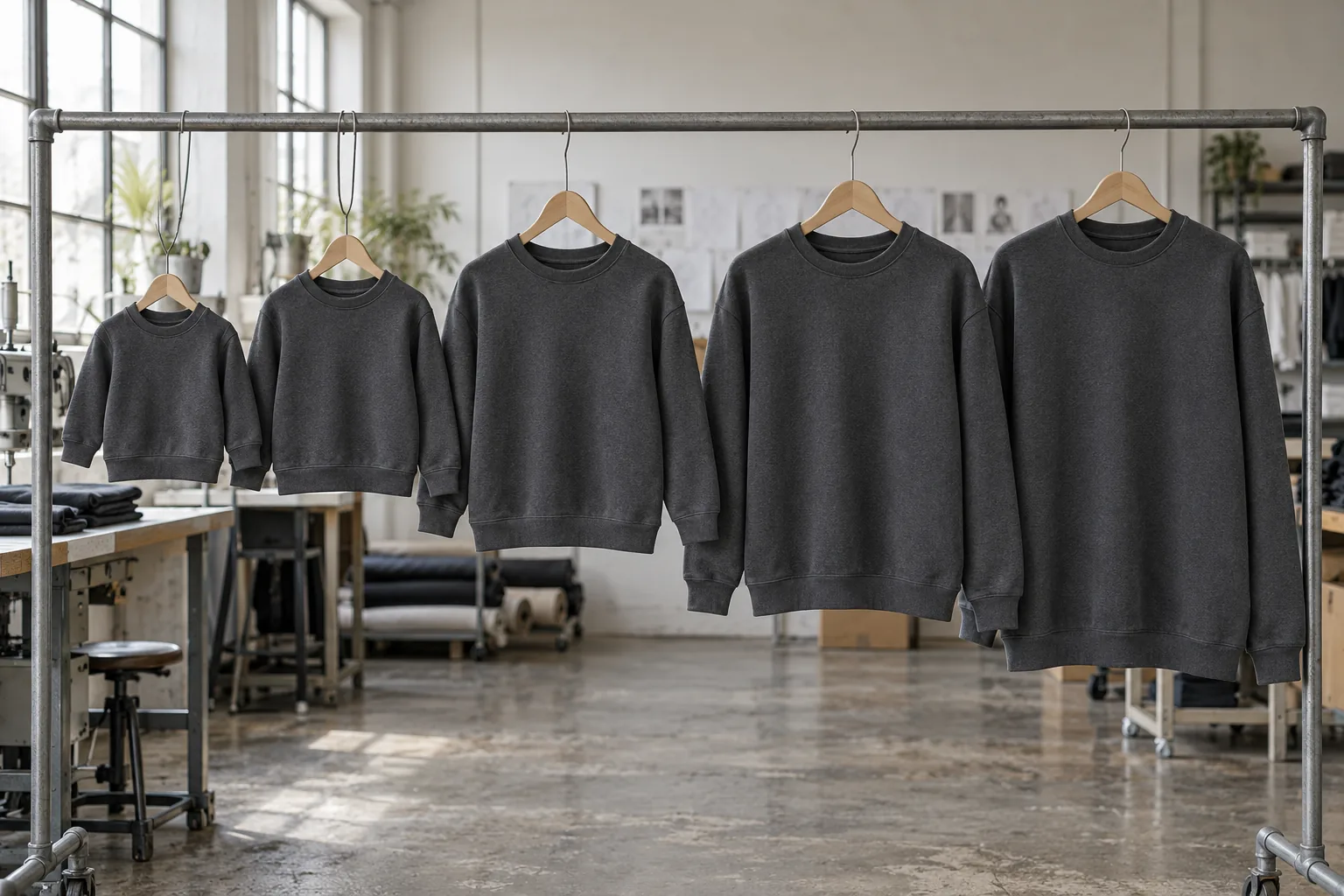
A size M sweatshirt can fit exactly as intended while the XS pulls across the upper back and the XXL sleeve hangs below the hand. Approving the middle size answers one development question: does the base pattern deliver the intended silhouette? It does not establish that every size will deliver a comparable wearing experience.
The distinction behind grade rules vs size set review is purpose. Grade rules specify how a pattern changes between sizes; a size set provides physical evidence that those changes work. For a brand buyer, the useful decision is which uncertainty the next sample round must resolve, what evidence to request, and what approval that evidence can support.
Give the base-fit sample one job before expanding the range
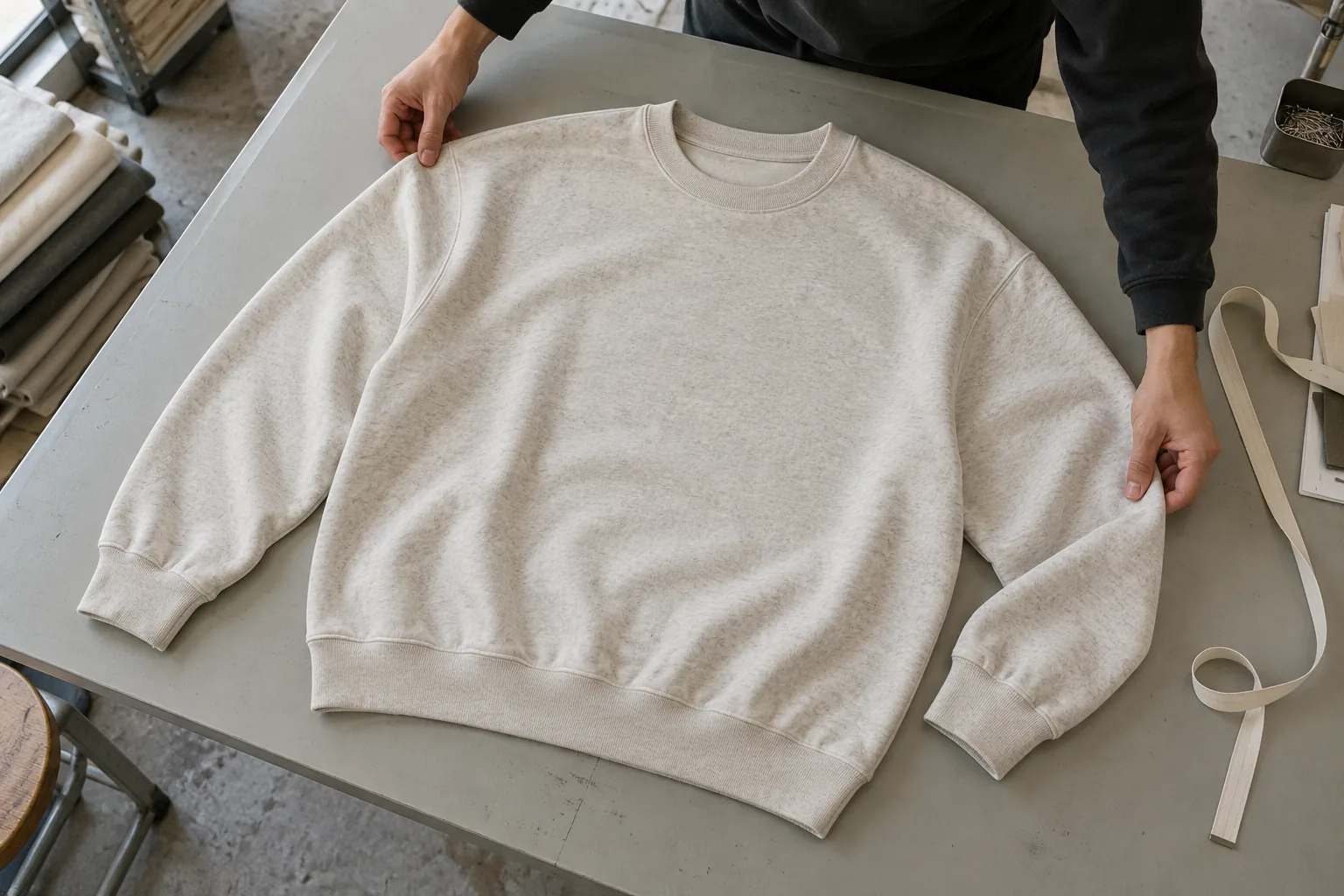
The base-fit sample tests shape, balance, ease, and construction in a reference size. Choose that size deliberately, using the intended customer and fit model rather than whichever sample happens to be available. Record the model’s relevant body measurements and the garment measurements separately. A garment chest measurement is not a customer body measurement.
For a relaxed sweatshirt, the base review might settle shoulder drop, chest ease, sleeve volume, cuff opening, and where the hem sits. If the buyer changes the body from boxy to elongated during this round, the reference pattern must change before its size progression can be meaningfully judged.
Close this stage with a dated measurement chart, approved fit comments, and an identifiable pattern revision. Record any unresolved material substitution. A sample made in a lighter knit may help establish seam positions, but its drape cannot conclusively approve the fit of a heavier production fabric. The next round should inherit an explicit baseline, not a photograph marked “looks good.”
Use the grading review to test the proposed size logic
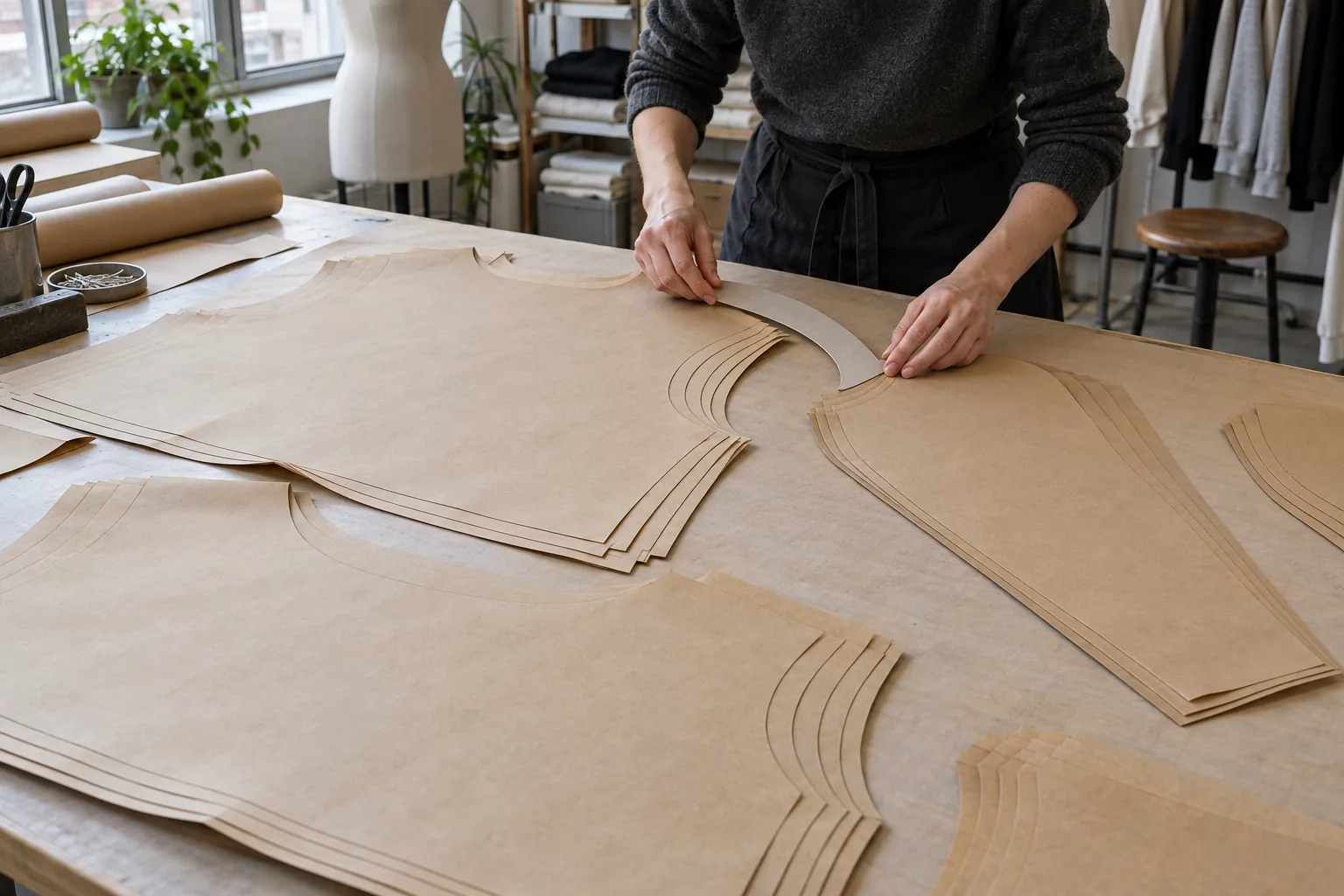
Grade rules describe changes at pattern points between sizes. The finished measurement chart describes the resulting garment targets. These documents should agree, but adding a number to a chart does not establish how the pattern maker distributes that increase around the garment.
For example, an illustrative sweatshirt chart could increase half-chest width by 2 cm per size, equivalent to 4 cm around the body. That does not mean shoulder width, sleeve length, armhole depth, and neckline should each grow by 2 cm. Each dimension serves a different fit function. All example increments here require confirmation for the intended customer and silhouette.
Ask the pattern maker to check connected areas: sleeve cap against armhole, waistband against body opening, and matching seam lengths between joining panels. A dropped shoulder also changes the sleeve’s starting position, so sleeve length measured from the shoulder seam alone can hide excessive total reach.
This review is especially valuable before cutting multiple samples. It can reveal a missing size, an accidental jump, or a chart that mixes full and half measurements. It cannot prove comfort during movement or the visual balance of a sewn garment.
Order a size set to challenge the assumptions on bodies
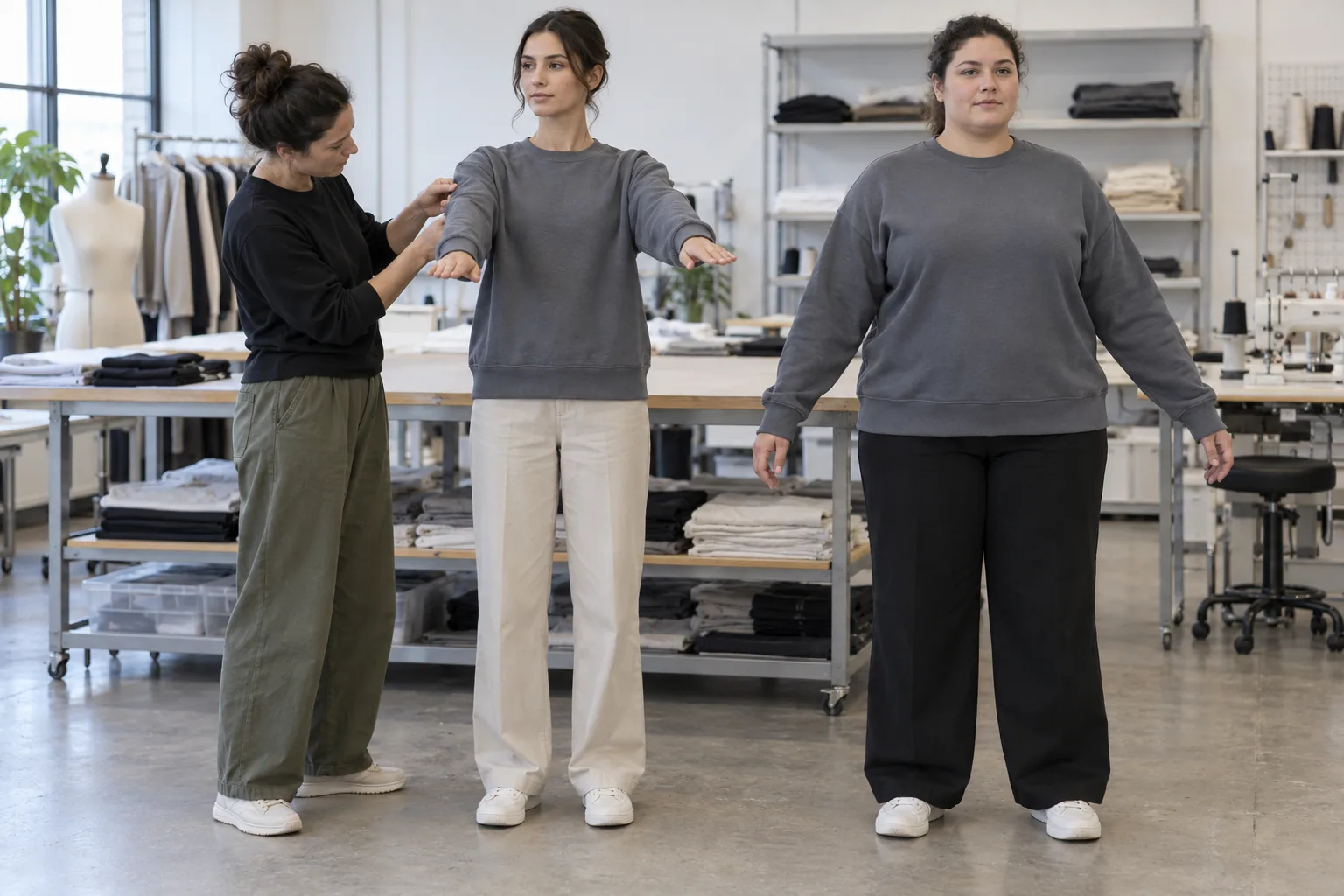
A size set tests whether the graded patterns produce acceptable garments across the agreed range. Specify exactly which sizes the order includes; the term alone does not guarantee every offered size. Identify fabric, finishing, construction, and measurement condition so the results remain comparable.
For a new XS–XXL block, reviewing every size gives more coverage than checking only M. When a buyer selects fewer sizes, the smallest, base, and largest can expose boundary problems, but untested intermediate sizes remain unverified. A size at which the grading increment changes deserves particular attention.
Measure each sample, then assess it on a wearer whose body measurements match the intended size profile. Use consistent front, side, and back views, followed by relevant movement: reaching forward in a sweatshirt or sitting and stepping up in trousers. Do not use one wearer to approve every size merely by judging how oversized it looks.
A garment can meet its chart and still fail this stage. An XXL sweatshirt may have enough chest room but insufficient bicep ease for reaching. That finding questions the pattern or size targets; it is not automatically a sewing defect.
Route each failed sample to the decision that can fix it
Before ordering another round, compare the actual measurement, the target measurement, and the wearing observation. Those three records distinguish a sample execution issue from a design issue. Otherwise, a team may change correct grading to compensate for one incorrectly sewn garment.
| Observed evidence | Likely next investigation | Purpose of the next check |
|---|---|---|
| Base size and endpoints all feel too short, while meeting targets | Base length and intended silhouette | Reconfirm the reference fit, then update affected sizes |
| Base fits; largest size meets targets but restricts upper-arm movement | Bicep and armhole progression | Validate revised grading in affected sizes |
| One sleeve measures below its approved target | Cutting, sewing, finishing, and measurement method | Establish whether the sample represents the pattern |
| All sizes change shape after laundering | Fabric behavior, finish, and care-test conditions | Recheck dimensions and fit after the agreed treatment |
Keep comments specific. Replace “large sizes feel wrong” with the size, measured result, body profile, movement restriction, and requested investigation. If a change affects adjacent sizes or joining seams, include those in the follow-up scope. Approving a corrected endpoint alone does not verify everything altered between it and the base size.
Make the size-set QC record usable for release
A useful QC record lets another person repeat the assessment. Define whether garments are measured relaxed, fastened, and before or after the agreed wash treatment. Allow them to settle after unpacking or finishing under an agreed method, especially when stretch and rib recovery influence dimensions.
- Match identity: check style code, sample size, pattern revision, fabric reference, and finish against the requested round.
- Standardize measurement: mark points of measure, such as half chest at a specified distance below the armhole, and use the same method for every size.
- Separate increments from tolerances: the grade sets different targets; the tolerance defines acceptable variation around each target.
- Log actual values: record target, actual, deviation, and pass or fail rather than recording only a tick.
- Check wearing function: document pulling, twisting, restricted movement, and unintended changes in hem or sleeve position.
- Close comments: assign each correction an owner, affected sizes, and the evidence required for approval.
As an illustrative project agreement, a half-chest tolerance might be ±1 cm, with a tighter limit for a small opening. These are not universal acceptance limits. If neighboring targets are only 2 cm apart, samples at opposite tolerance limits could measure identically. Reviewing the actual progression helps identify that concern even when individual measurements pass.
Keep size-set approval distinct from production control. It approves the reviewed size behavior under documented conditions; it does not establish bulk sewing consistency, final decoration quality, or packing accuracy.
Book the next sample around its unresolved question
Before requesting a revised sample, state whether it must prove a corrected base fit, revised grading, material behavior, or production readiness. Bundle comments into one controlled revision and identify the person authorized to approve it. Changing fabric weight while changing sleeve geometry makes the reason for any improvement harder to isolate.
StitchQuote provides sampling, cut-and-sew, private label, fabric and trim sourcing, branding through woven labels, prints and embroidery, and QC before packing. MOQ for most categories starts from 50 pcs per style; denim starts from 100 pcs per style. These production starting points do not define how many size-set samples a development plan requires.
A 7-day sample is available for standard styles with confirmed specs and available materials. Complex styles, custom washes, and custom-developed fabric take longer. Confirm the scope and schedule for the requested size set rather than treating that availability as a promise for every sampling round.
Questions buyers ask before signing off the size range
Can a size chart replace physical endpoint samples?
It can communicate intended dimensions and expose numerical errors. It cannot demonstrate movement, balance, or how fabric hangs on different bodies. If endpoints are not sampled, record that gap rather than treating the chart as physical fit approval.
Should a revised base sample restart the size-set review?
Review the change’s reach. Moving a decorative label may leave fit unaffected; changing the armhole or rise can affect several sizes and connected pattern pieces. Recheck the affected range against the new revision instead of carrying forward an approval tied to an obsolete pattern.
What if a washed trouser passes before washing but fails afterward?
Judge it in the condition specified for approval. For garments sold with a wash finish, evaluate that finished state; separately agree any care-cycle testing. Investigate dimensional change and pattern compensation before modifying grading simply to conceal inconsistent shrinkage.
Who should issue the final size-set approval?
Name one buyer-side decision owner who consolidates fit and technical feedback. Their release should identify the approved revision, reviewed sizes, measurement condition, and any remaining restrictions. That record gives the supplier a specific instruction for the next stage.
Related reading
- Prepare the measurement and revision records in your tech pack
- Review sampling and MOQ planning
- Understand clothing sampling timelines
- Discuss your next sample stage with StitchQuote
Request a manufacturing quote
Share your product type, quantity range, and destination. We usually reply within one business day.