Custom Streetwear, Casualwear & Denim Manufacturer•MOQ 50 pcs•Denim MOQ 100 pcs•7-Day Sample Available


How Quality Control Should Be Planned Before Bulk Starts
Use this factory-side guide to compare how quality control should be planned before bulk starts more clearly across supplier fit, quote scope, approvals, and timing.

A shipment inspection cannot settle an argument about a standard nobody approved. If a hoodie’s hood opening, a woven label’s position, or a carton’s size mix remains undefined until packing, the inspector has no dependable basis for accepting or rejecting it. The buyer then faces a commercial decision under deadline pressure instead of a documented release decision.
Plan the scope of your pre-shipment inspection (PSI) before authorizing bulk production. That scope should state which goods will be inspected, which references apply, what will be checked, and what happens after a failure. This article focuses on building that inspection brief, so the final review answers a specific question: does this shipment meet the requirements agreed for this order?
Define the shipment your inspection result will cover
Start with the inspection lot: the population of goods represented by the result. Record the purchase order, style codes, colors, sizes, quantities, and packing configuration. Decide whether distinct styles or materially different production groups require separate assessments. A report headed “sweatshirts” is insufficient if it combines a plain crewneck with a zip style whose closure introduces different failure risks.
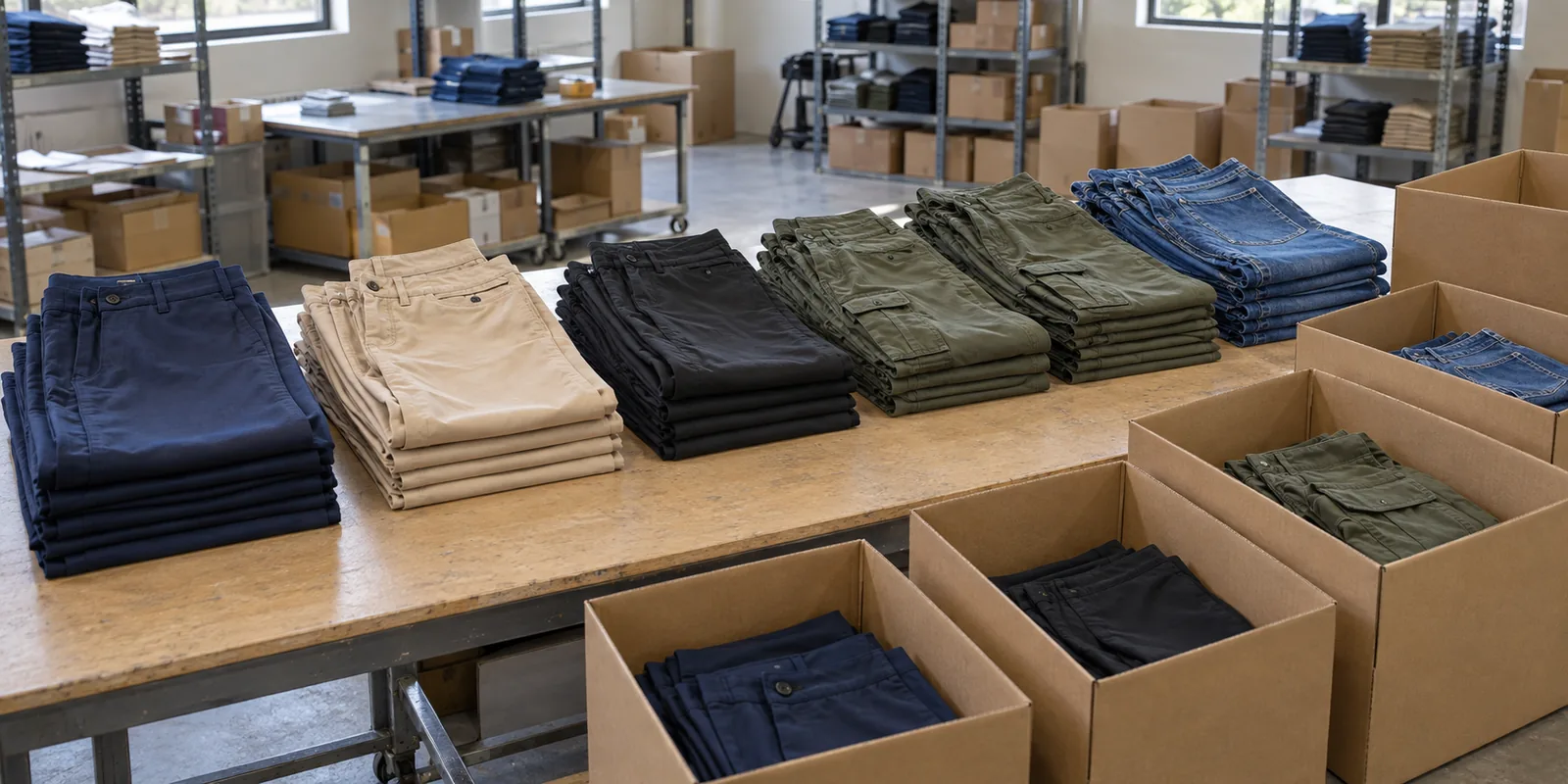
For example, a buyer ordering two trouser styles might define separate lots because one uses an elastic waistband and the other uses a button and zipper. Within each lot, specify how colors and sizes will be represented. Record any quantities that are unavailable, unfinished, or inaccessible; an inspected subset should not silently become approval for goods the inspector could not examine.
Agree the readiness condition and access arrangements in advance. State how much production and packing must be complete at the visit, whether cartons can be opened, and who restores the packaging. If only an early finished portion is available, describe the visit accordingly and establish whether another inspection is needed before shipment release.
Build a reference set that survives sample revisions
An inspector needs a controlled reference set, not a chat history. Identify the approved sample, measurement specification, artwork, trim approvals, packing instructions, and relevant test reports by revision or approval date. Include a rule for resolving conflicts. For instance, the latest signed measurement sheet may govern dimensions while the sealed sample governs approved construction and appearance.
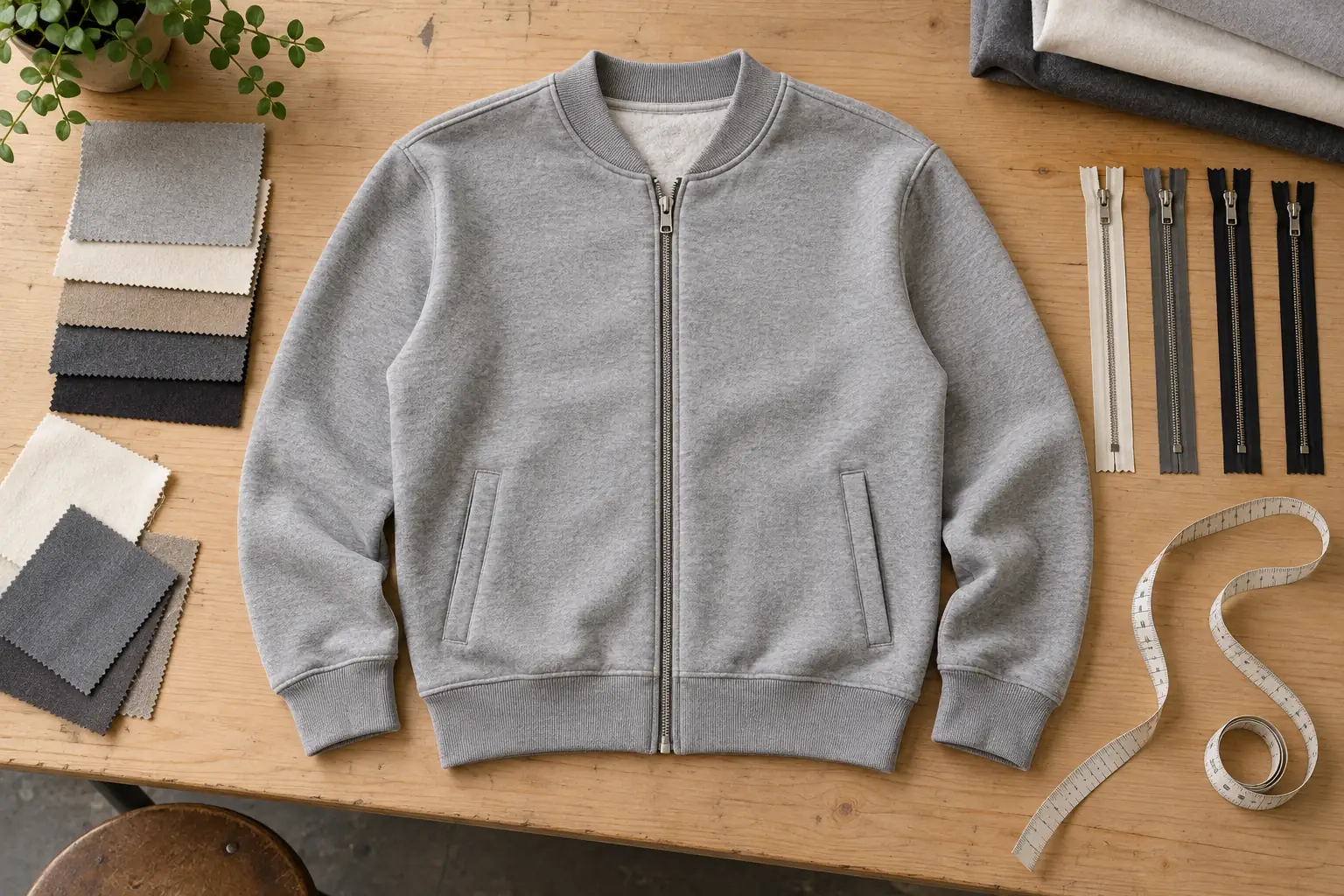
Separate intentional differences from unresolved comments. If the sample has a temporary zipper but bulk requires an approved replacement, attach the replacement reference and state which attributes must match. Otherwise, an inspector could reject the correct bulk zipper or accept the temporary one. Close comments such as “improve neckline” with an observable requirement before bulk starts.
Define measurement methods as well as tolerances. An illustrative specification could place a flat chest measurement 2.5 cm below the armhole, with the garment relaxed and the zipper closed. A proposed tolerance of ±1 cm must be confirmed for that garment and point of measure; it is not a universal apparel allowance. Record separate limits for fit-sensitive features such as collar openings or waistband extension.
Separate checks at the inspection table from tests needing preparation
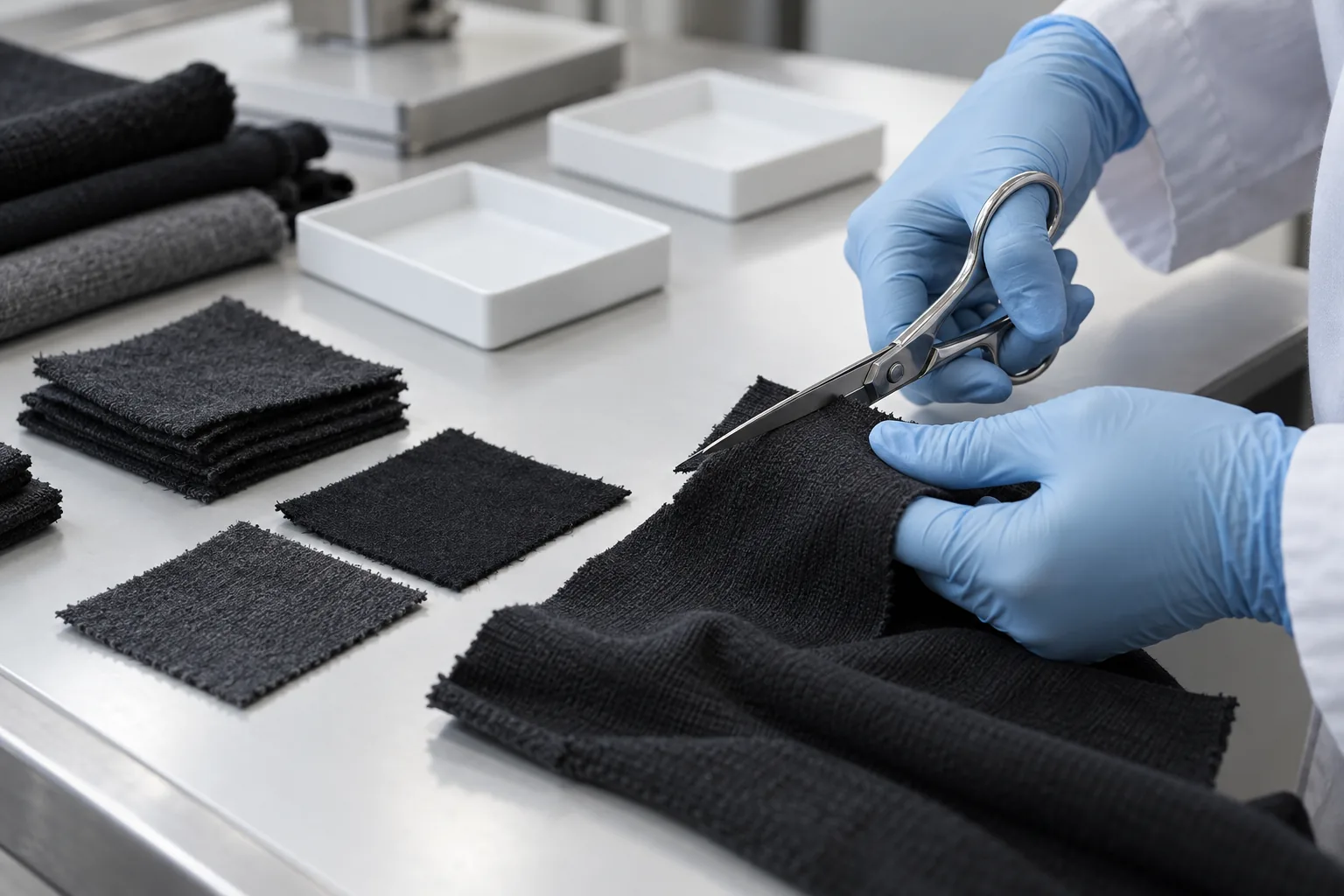
A PSI brief should distinguish visual examination, dimensional checks, functional checks, and testing that needs equipment or advance scheduling. The inspector can operate a zipper and examine its attachment, but that does not establish its long-term durability. Similarly, looking at a dark fabric does not verify colorfastness or predict staining after washing.
| Requirement | PSI activity | Separate evidence to arrange |
|---|---|---|
| Approved silhouette | Measure agreed points across specified sizes | Approved size specification and measurement method |
| Print appearance | Compare placement, edges, and visible surface condition | Wash or adhesion testing where required |
| Closure function | Operate closures using an agreed procedure | Strength or endurance testing if specified |
| Fabric performance | Check visible shade and surface inconsistencies | Applicable shrinkage and colorfastness reports |
State who supplies test specimens, which method applies, and when results must be available. If testing consumes or alters garments, agree the quantity and disposition beforehand. For a washed jersey style, dimensional stability should be investigated early enough to adjust the pattern or process; discovering unacceptable shrinkage at shipment leaves fewer practical remedies.
StitchQuote’s services include QC before packing. Buyers should confirm the order-specific scope rather than assume that this includes independent inspection, laboratory testing, or every market-specific requirement. Assign any additional work explicitly in the inspection brief.
Write defect rules around use, appearance, and order accuracy
Give the inspector examples that distinguish defect severity. A sharp object left in a garment raises a different concern from an untrimmed thread. A pocket opening sewn partly shut affects function; a missing size label affects identification. Agree classifications against the intended product and use instead of relying on a generic defect list.
Photographs help with appearance judgments. Show an acceptable seam and an unacceptable open seam, or define the permitted placement range for an embroidered emblem using a fixed reference point. Where shade variation matters, specify the viewing conditions and approved shade reference. Do not use an edited product photograph as the sole color standard.
If using acceptance sampling, name the standard, inspection level, sampling arrangement, acceptance quality limits by defect class, and applicable acceptance and rejection numbers. Confirm how defects and defective units are counted. An AQL value alone does not define a complete plan, nor does a passing sample prove that every garment is defect-free.
Keep shipment completeness separate from sampled workmanship results. A lot might pass its sewing assessment yet contain the wrong size assortment. State which findings automatically hold release, which require sorting or repair, and which may be accepted only through a documented buyer concession.
Use a scope checklist before cutting is authorized
Review the brief while changes are still practical. A useful checklist makes ownership visible: each requirement needs a reference, a checking method, and a person responsible for closing questions. Avoid approving a scope that repeatedly says “as usual” when the buyer and factory have no shared order history.
- Lot coverage: Identify styles, colors, sizes, quantities, and any production groups that need separate results.
- Reference control: List approved revisions and resolve differences between the sample, artwork, and written specifications.
- Measurement coverage: Specify points, methods, tolerances, and how many pieces and sizes will be measured.
- Workmanship and function: Provide defect examples and procedures for closures, pockets, seams, and decorations.
- Packing accuracy: Define checks for unit labels, assortment, folding, protection, carton quantities, and shipping marks.
- Release authority: Name the decision owner, evidence required, and procedure for failed or incomplete inspections.
Resolve practical access too. Specify who can open sealed cartons, supply approved references, and answer technical queries during the visit. Inspection time should allow the agreed work, including measurements and reporting, rather than being estimated solely from the number of cartons.
Reserve time for correction and a second decision
Build a correction window between inspection and the planned dispatch. A report should identify the affected lot, sampled quantities, measurements, defect counts, photographs, and limitations. “Passed after repair” needs supporting evidence showing what was repaired and how the corrected goods were checked.
For an uneven hem issue, the response might involve identifying affected units, sorting the relevant lot, repairing eligible garments, and arranging reinspection under an agreed plan. Correcting only the pieces initially sampled does not establish that the rest of the lot is acceptable. Record responsibility for sorting, repair, replacement, and any repeat visit before production begins.
Keep the inspector’s findings distinct from the buyer’s release authorization. If the buyer accepts a deviation, document the exact requirement waived, affected quantities, and limits of that concession. A one-order exception should not become the unstated standard for the next production run.
Questions buyers ask when fixing PSI scope
Can one inspection cover several colors of the same style?
It can, if the lot definition and sampling arrangement support that coverage. Require representation across colors and consider whether different fabrics, dye batches, or treatments create separate risks. Report what was actually sampled so the buyer can see the limits of the result.
Should every measurement point be checked on every sampled garment?
Not necessarily. Agree dimensional coverage separately from visual inspection coverage. Prioritize fit-sensitive points while preserving enough size representation to detect grading problems. State the quantities and points explicitly; do not let “measurement check” imply comprehensive coverage that was never scheduled.
What if packing is incomplete on the inspection date?
Record the completion status and which packing checks remain unavailable. Garment findings may still be useful, but they cannot establish the accuracy of cartons that do not yet exist. Decide whether a follow-up packing check or a rescheduled inspection is required.
Does approving the sample remove the need for a written scope?
No. A sample communicates many construction and appearance decisions, but cannot define lot coverage, sampling rules, reporting, or release authority. Use it alongside written requirements. For a StitchQuote order, raise the intended PSI scope during sampling so the references and inspection arrangements can be confirmed before bulk authorization.
Related reading
- Prepare the technical references for inspection
- Review sampling and order minimums
- Explore StitchQuote quality control
- Discuss your order’s inspection requirements
Request a manufacturing quote
Share your product type, quantity range, and destination. We usually reply within one business day.