Custom Streetwear, Casualwear & Denim Manufacturer•MOQ 50 pcs•Denim MOQ 100 pcs•7-Day Sample Available

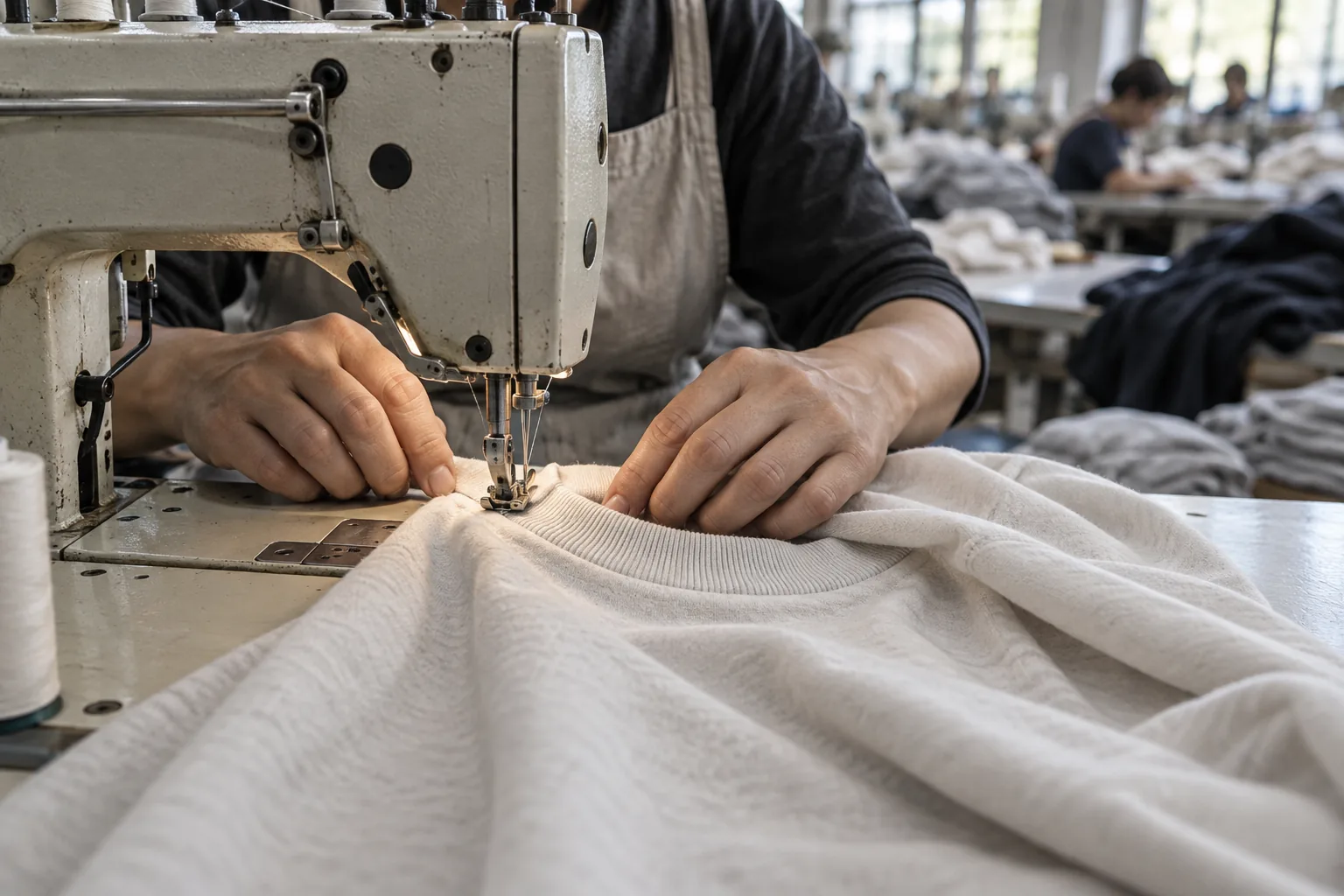
How Startup Brands Should Think About Margin Before Asking for Custom Production
Use this factory-side guide to compare how startup brands should think about margin before asking for custom production more clearly across supplier fit, quote.

A startup’s first production request should begin with a margin worksheet, before the supplier shortlist. The useful question is whether a specific garment can support your selling channel, likely discounts, fulfillment costs, and unsold stock while still delivering the fit and finish customers expect.
This buyer checklist turns that question into decisions you can make before requesting custom production. Use it for one launch style at a time. A heavyweight tee sold directly online and a washed denim overshirt sold through retailers need separate assumptions, even when they share the same brand label.
Check that your revenue assumption survives a real sale
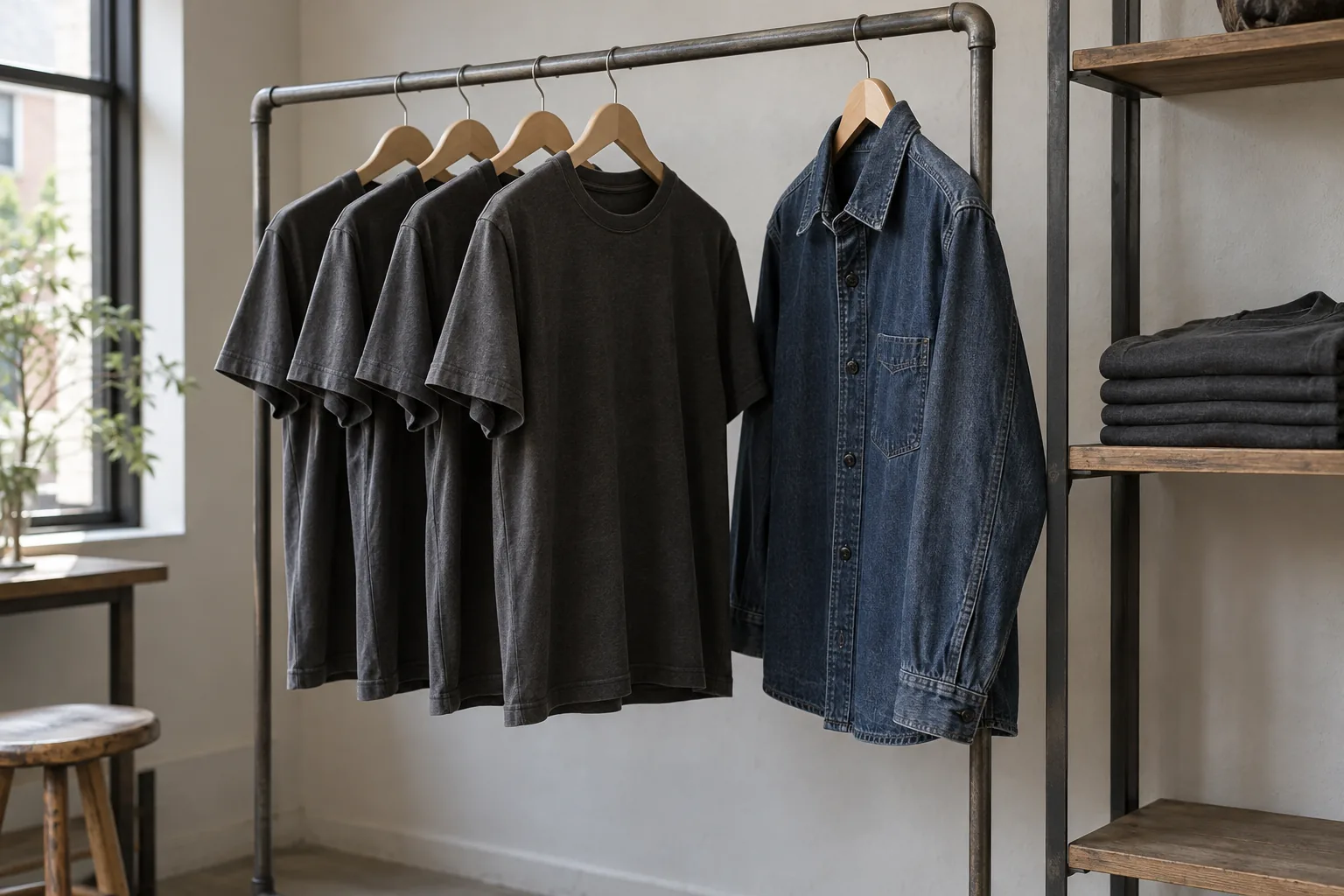
Start with expected net selling revenue per unit, excluding taxes collected for authorities and allowing for discounts and refunds. Do not automatically use the full retail ticket. If your launch depends on an introductory promotion, that promotion belongs in the base case.
Keep gross margin and contribution margin distinct. Gross margin measures revenue remaining after the cost of goods sold under your accounting policy. Contribution margin also deducts variable selling costs, such as payment processing, pick-and-pack, shipping subsidies, and attributable customer acquisition. A garment can pass the first calculation and fail the second.
For a currency-neutral illustration, assume expected net revenue is 100 units of value. If variable selling costs consume 22 and your required contribution is 28, the maximum landed garment cost is 50. These are hypothetical planning inputs, not recommended targets. Your allowable factory cost must be lower still if freight, duties, and other inbound expenses sit outside the quotation.
- Channel checked: calculate direct-to-consumer and wholesale orders separately.
- Discount checked: use a realistic promotional mix rather than assuming every sale is full price.
- Returns checked: model refunds and handling costs consistently; avoid subtracting the same refund twice.
Translate the cost ceiling into a quote boundary
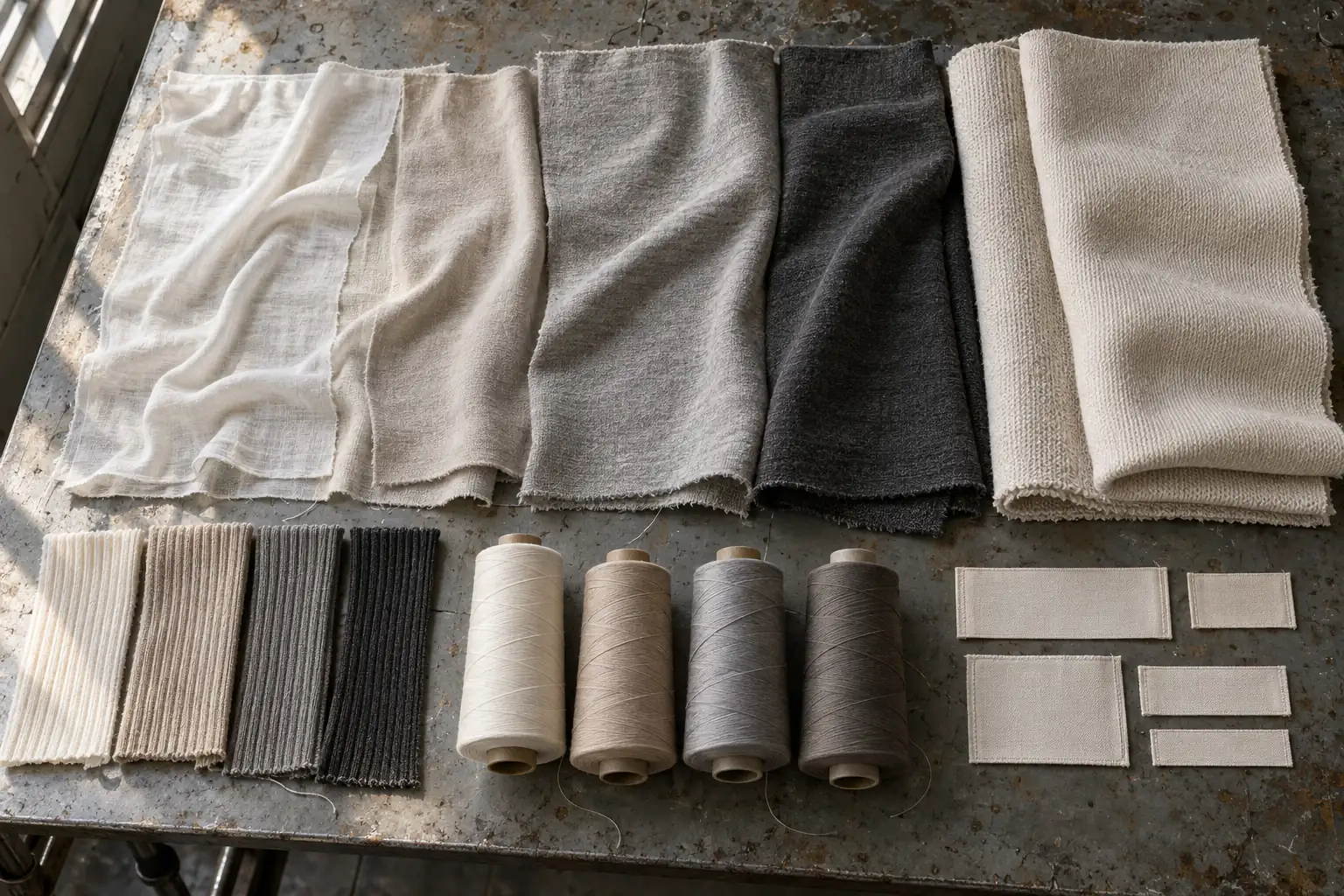
A factory unit quote is useful only when its inclusions are clear. Ask which fabric, trims, decoration, labels, packaging, and delivery terms it covers. Record the currency, quantity basis, quote validity, and whether any development charges are separate. Two identical-looking totals may represent different obligations.
Build the budget below before comparing suppliers. Allocate one-time costs across a conservative number of units expected to sell, while keeping their payment dates visible in a separate cash plan. Your accountant may classify expenses differently; the commercial worksheet should still expose every cost you must recover.
| Budget line | Buyer confirmation | Common omission |
|---|---|---|
| Garment production | Fabric, construction, decoration, labels, packing | Extra print placement or upgraded trim |
| Development | Samples, revisions, patterns, relevant setup | Spreading costs across unrealistic sales volume |
| Inbound delivery | Freight basis, duties, brokerage, destination | Treating a factory quote as landed cost |
| Sale and recovery | Fulfillment, returns, markdown assumptions | Counting returned stock as immediately resellable |
For international shipping, confirm the named Incoterm and location, then obtain estimates for your responsibilities. If the destination or packing dimensions remain uncertain, mark the freight allowance as provisional. Do not turn an estimate into a fixed margin promise.
Choose which product details deserve your budget
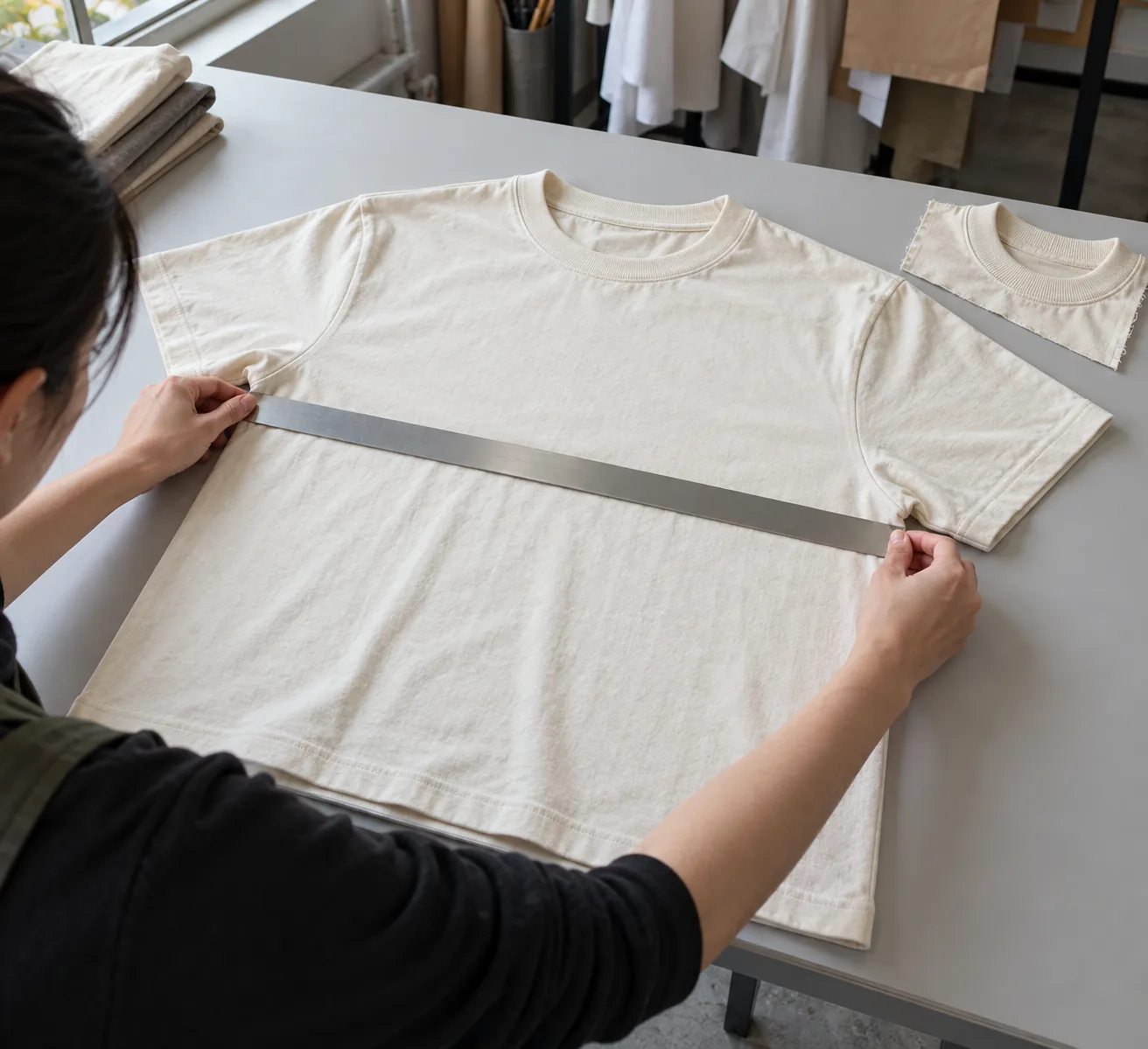
Divide the specification into customer-visible essentials and adjustable details. For a premium tee, the essentials might be neckline recovery, opacity, and a stable boxy fit. A second decorative label or elaborate individual packaging may be adjustable. Removing an essential to meet the target can create returns that erase the saving.
Describe the baseline precisely: fiber composition, knit structure, target fabric weight, finish, size chart, seam construction, and decoration dimensions. For example, “cotton jersey, target 240 gsm, compact surface, chest print 24 cm wide” gives a more comparable starting point than “luxury heavyweight.” Fabric weight alone does not establish quality; confirm hand feel, shrinkage, and appearance after washing.
Request one controlled alternative at a time. Compare an approved standard fabric with a custom-developed option while holding fit and decoration constant. Or compare one print placement with two using the same artwork scale. Changing fabric, fit, and branding together prevents you from identifying the source of a saving.
StitchQuote’s services include cut-and-sew, private label, sampling, fabric and trim sourcing, and branding through woven labels, prints, and embroidery. Use that scope to request specific alternatives, with separate prices and approval requirements, rather than asking for an undefined cheaper version.
Test quantity against sell-through and cash exposure
A lower unit cost can produce a worse launch outcome when it requires buying too much stock. Compare total committed cash, expected units sold, and likely residual inventory alongside the quoted unit rate. An additional color creates another demand forecast, even when the overall order looks small.
StitchQuote’s MOQ for most categories starts from 50 pieces per style; denim starts from 100 pieces per style. Confirm the applicable color split, size allocation, and material requirements for your project. A style-level starting MOQ does not establish that every requested color or custom trim is available in tiny quantities.
Run a downside case using a clearly labeled hypothetical sell-through assumption, such as 60% during the planned launch window. Keep the remaining inventory in the cash model rather than treating it as lost automatically or assuming it sells immediately. Estimate later markdowns, storage, and the time before that stock releases cash.
Also test whether development, production payments, and inbound charges leave enough cash for fulfillment and refunds. Ask suppliers to state payment milestones. An order can look profitable over its lifetime while creating a cash shortage before the first customer receives a garment.
Set a sample and QC checklist that protects the calculation
The margin model assumes customers receive a saleable product. Turn that assumption into an approval checklist before sampling, with an agreed measurement method and acceptance criteria. Do not use the sample merely to approve color in a photograph.
- Fit and measurements: list points such as half chest, body length, shoulder width, and sleeve opening. An illustrative proposal might allow ±1 cm on half chest and body length, with tighter limits on selected small details; agree tolerances by construction and size.
- Wash behavior: specify the wash and drying method, record measurements before and after, and agree acceptable dimensional change. Check twisting, puckering, and neckline distortion alongside shrinkage.
- Decoration: confirm artwork version, dimensions, placement reference points, color reference, and appearance after the agreed wash test.
- Workmanship: inspect seam security, skipped stitches, exposed raw edges where inappropriate, trim attachment, and visible staining.
- Packing accuracy: reconcile size labels, quantity breakdown, folding, and agreed protection against the purchase order.
These are buyer planning criteria, not universal factory tolerances. Keep the approved sample, dated measurement sheet, and written revision record together. If you change a fabric or decoration after approval, check whether the price and testing assumptions still hold.
StitchQuote provides QC before packing. Confirm the inspection scope, reporting, and how nonconforming goods will be handled before production. Inspection does not remove every defect risk, so include a reasonable project-specific allowance for potential recovery costs without assuming a guaranteed defect rate.
Clear the final decision gates before requesting production
Send a compact decision package: the baseline specification, size and color quantities, delivery destination, required timing, branding files, packaging requirements, and the alternatives you want priced. State whether your target covers factory production alone or the landed garment. This lets the supplier respond to a defined commercial constraint.
Separate a sample request from bulk authorization. StitchQuote offers a 7-day sample for standard styles with confirmed specifications and available materials; complex styles, custom washes, and custom-developed fabric take longer. That sample timing is not a bulk delivery promise. Leave time for review, revisions, and transport in the launch calendar.
Proceed when the baseline meets the cost ceiling under credible sales assumptions, the sample meets agreed requirements, and payment timing fits available cash. If it fails, revise one lever: specification, assortment, quantity, selling price, or launch scope. Record the decision so the next quote tests a clear hypothesis.
Questions founders should resolve before signing off
Should we disclose our target cost to the manufacturer?
Yes, when you define its scope and the features that must remain. A production-only target can guide material or construction options. A landed target also needs destination and logistics assumptions before it becomes actionable.
Can we justify the first run with better margins on a reorder?
Treat a reorder as a separate scenario. Future volume, fabric availability, and pricing are unconfirmed until quoted. Decide how much first-run development expense you can accept without requiring a successful second order to fund current obligations.
What if wholesale pricing breaks the model?
Recalculate using actual expected wholesale revenue and its selling costs. Consider a different assortment or specification for that channel. A retail ticket that supports direct sales does not prove that the same garment supports retailer economics.
When should we remove a launch color?
Remove or postpone it when demand evidence is weak and its required quantity strains cash or increases markdown exposure. Check whether consolidating colors changes material requirements and the quotation before assuming a saving.
Related reading and next steps:
- Prepare the specifications behind a comparable quote
- Review sampling and minimum-order planning
- Discuss your production brief with StitchQuote
Request a manufacturing quote
Share your product type, quantity range, and destination. We usually reply within one business day.