Custom Streetwear, Casualwear & Denim Manufacturer•MOQ 50 pcs•Denim MOQ 100 pcs•7-Day Sample Available

How to Brief a Factory on Fabric Expectations More Clearly
Understand fabric expectation brief factory with more practical factory-side context around material behavior, product feel, stability, and how the decision affects.

A fabric brief can be precise and still fail if it reaches a factory that cannot source, process, or verify the material your garment needs. Before developing a detailed specification, ask the supplier to demonstrate how it would turn your fabric expectation into a repeatable production decision. This early screen helps separate a workable material route from a reassuring but unsupported promise.
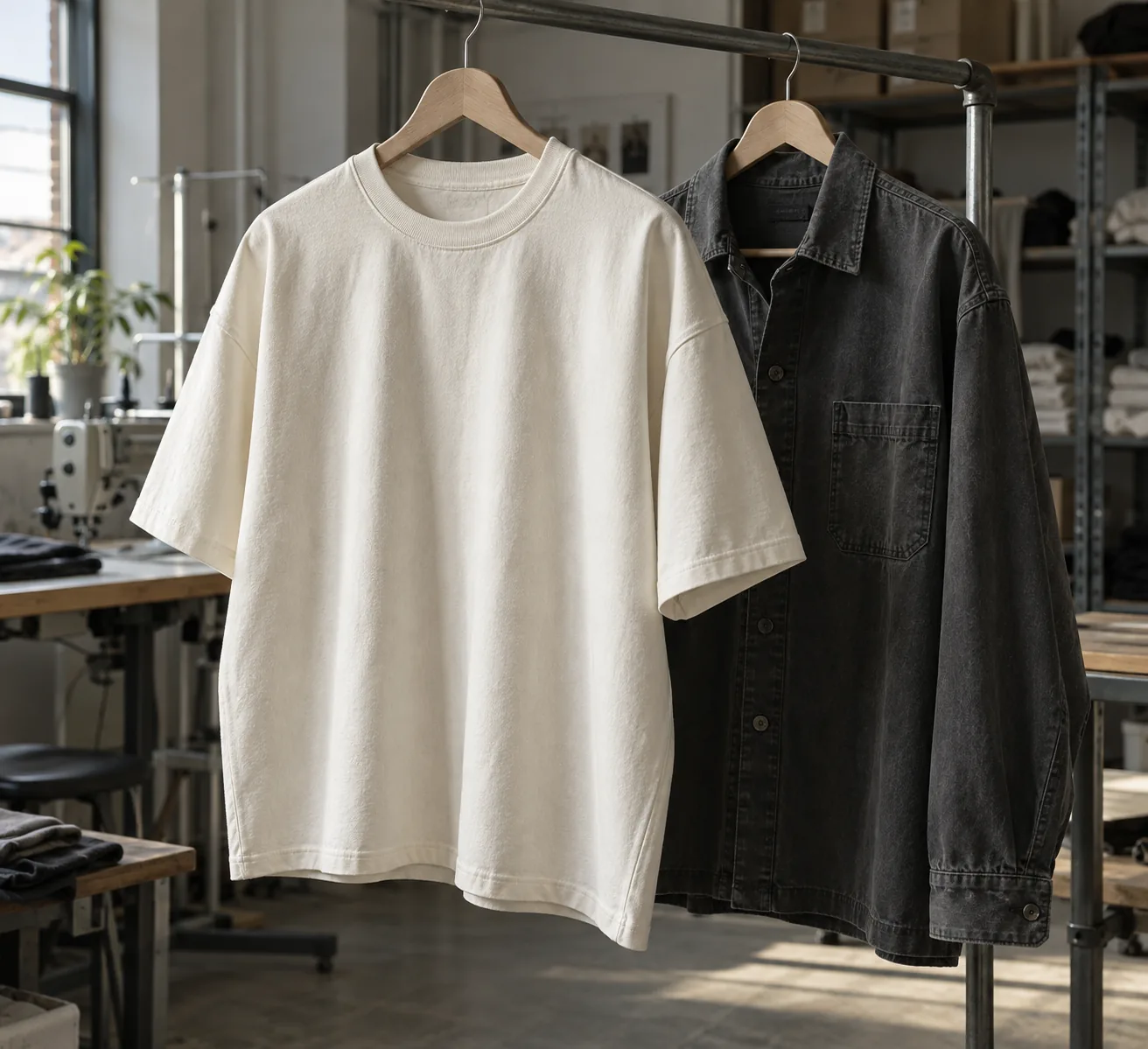
For a brand developing a structured jersey tee, brushed sweatshirt, or washed denim overshirt, the first exchange should reveal practical limits. Which fabric characteristics can the factory control? Which depend on an outside mill or finishing process? What evidence will support approval? Use those answers to decide who receives the full brief and what that brief must resolve.
Start with a screening card, before the complete specification
Prepare a short card describing the garment, intended use, likely order quantity, and three material priorities. For a boxy tee, these might be a neckline that stays flat, an opaque body, and enough stiffness to hold the silhouette. Add a reference swatch if available, but explain which qualities you like; a supplier should not have to guess whether it represents color, texture, weight, or all three.
Keep the first request narrow: ask the factory to propose a sourcing route and identify likely obstacles. A useful response distinguishes available stock fabric, an existing mill construction requiring dyeing, and a new fabric development. These routes have different minimums and approval steps. A generic answer that everything is possible does little to establish suitability.
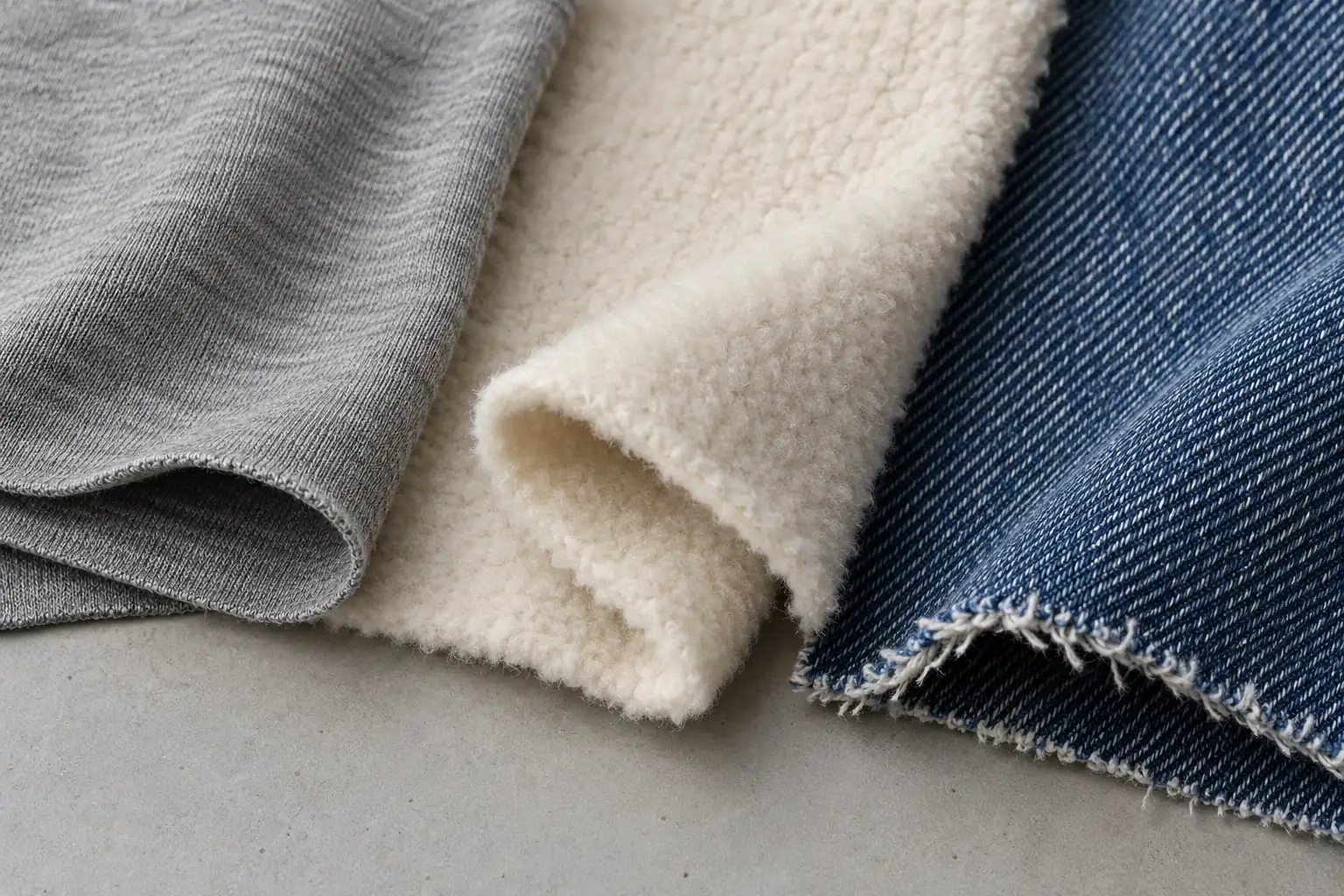
Describe the actual commercial situation. A first order split across several colors may be straightforward to sew but difficult to support with separate dye lots. Ask whether the proposed fabric is available in each shade at the intended quantity, and whether repeat orders would use the same construction or require a replacement.
Make the factory explain its route from swatch to garment
Ask the person handling development to describe one proposed material through sourcing, sampling, finishing, and inspection. You are checking whether responsibilities are clear. Who confirms fiber composition? Who measures shrinkage? Who approves a shade difference? The factory may use outside suppliers, but it should explain how those dependencies affect your approval and schedule.
| Screening question | Useful evidence | Gap to resolve |
|---|---|---|
| What exactly is this fabric? | A swatch tied to a supplier article code and stated construction | An attractive loose swatch with no traceable source |
| How will it change after care? | Before-and-after measurements with the care procedure recorded | A shrinkage claim without test conditions |
| Can we reorder it? | Availability status and a disclosed substitution process | An assurance that a similar fabric will always exist |
Do not require every test result before selecting a supplier. Separate evidence already available from checks that need paid development or external testing. A credible answer can be “unverified until sampled,” provided it names the check and the decision it will support. Unsupported certainty is less useful than a clearly bounded proposal.
Use a small sample exercise to expose material mismatches
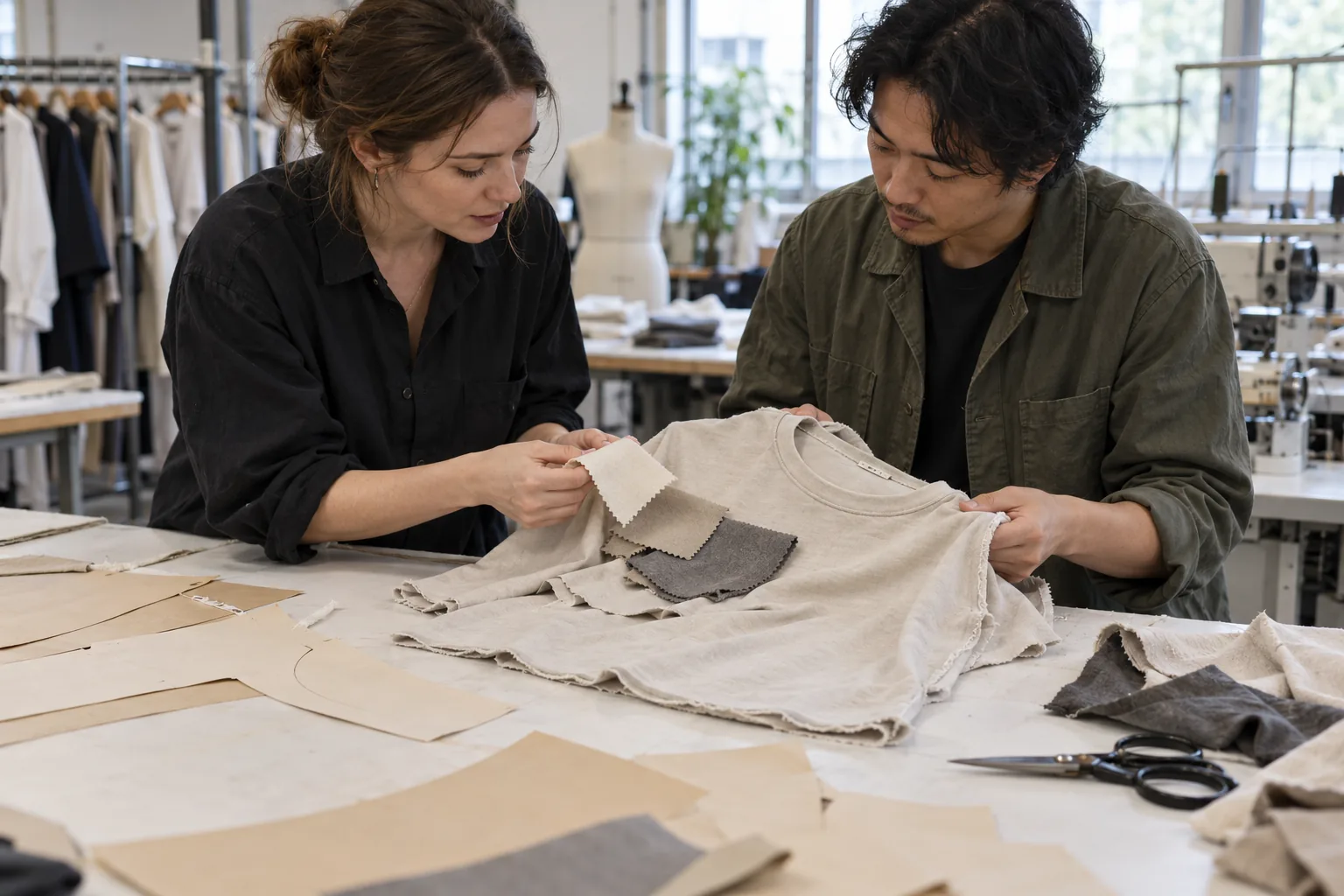
Shortlisted factories should receive a focused question to prove through a sample. For the boxy tee, ask whether the proposed jersey can hold the intended sleeve shape after laundering. Compare the garment before and after the agreed care cycle, rather than choosing solely from a fabric book. A compact jersey and a softer jersey can share a nominal weight while producing different silhouettes.
For a sweatshirt with a large embroidered chest design, request a decorated panel or partial assembly in the proposed fleece. Look for puckering, local stiffness, and distortion around the decoration. An undecorated swatch cannot establish how the finished area will hang. If a substitute material is used for an early fit sample, record that limitation and reserve fabric approval.
At StitchQuote, a 7-day sample is available for standard styles with confirmed specifications and available materials. Complex styles, custom washes, and custom-developed fabric take longer. Confirm which conditions apply before treating a sample date as a launch-planning commitment.
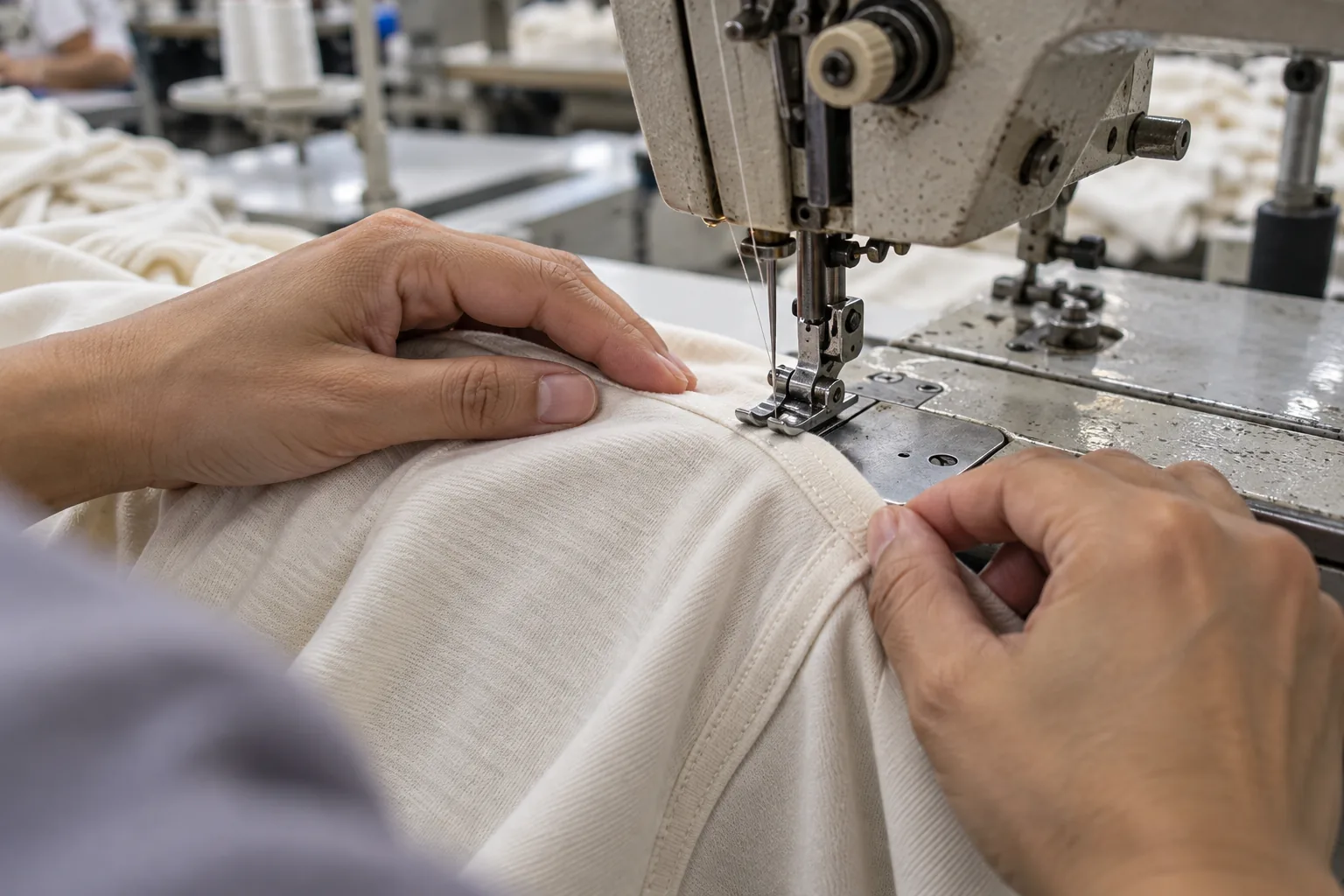
Decide in advance what the exercise will approve: material direction, finished hand feel, decoration compatibility, or garment measurements. One sample may answer several questions, but approval of fit should never silently become approval of an untested fabric.
Turn subjective preferences into ranked acceptance criteria
Once a factory passes the screen, expand the card into a controlled brief. Specify composition, knit or weave construction, nominal weight, surface finish, color reference, and intended care. Add the fabric article code and reference-swatch identifier. State whether each requirement applies to incoming fabric, a finished garment, or a garment after laundering.
Rank the requirements. A premium basic might prioritize opacity and dimensional stability while allowing a small weight adjustment. A fluid overshirt might prioritize drape over surface crispness. Explain which changes require permission and which alternatives the factory may propose. This gives sourcing a useful search boundary without pretending that every preference can be optimized simultaneously.
Make tolerances explicit and mutually agreed. As an illustrative starting point, a buyer could propose 240 GSM with a ±5% weight tolerance, checked on conditioned fabric using an agreed method. That is a project proposal, not a universal standard. State the measurement conditions and how borderline results will be handled; otherwise two measurements can appear contradictory while using different procedures.
Use the same discipline for shrinkage. Define washing temperature, drying method, cycle count, measurement points, and the calculation from the original dimensions. If you propose a maximum 3% change in length and width, confirm feasibility during sampling. Treat twisting, seam appearance, and hand feel as separate checks rather than assuming an acceptable shrinkage number covers them.
Set the substitution rule before approving fabric
Ask how the supplier will handle a fabric becoming unavailable between sampling and bulk purchase. Require a new submission when the source, construction, composition, or finishing route changes. A replacement with the same weight is still a replacement. Compare it against the approved reference and repeat the checks affected by the change before authorizing use.
Separate garment minimums from material minimums. StitchQuote’s MOQ for most categories starts from 50 pieces per style; denim starts from 100 pieces per style. Those starting quantities do not establish the minimum for every custom fabric, dye color, or wash. Confirm material availability and any additional minimums for the exact order breakdown.
Request a written approval record naming the selected fabric, color, finish, sample version, and outstanding conditions. Retain matching reference swatches with the buyer and factory. For washed products, identify whether the approved appearance comes from fabric finishing or garment processing, so the production team knows which stage must reproduce it.
Use a fabric release checklist before cutting
Screening has value only if its findings survive into production. Ask the factory to confirm how incoming material will be checked against the approved reference before cutting. QC before packing remains useful, but it cannot prevent all the waste caused by discovering unsuitable fabric after sewing.
- Identity: Match the received fabric code, stated composition, construction, and finish to the approval record. Resolve any substitutions.
- Shade: Compare rolls under agreed lighting and identify differences that could create mismatched panels within one garment.
- Dimensions and yield: Check usable width and weight against the agreed limits; flag changes that affect cutting or garment behavior.
- Care performance: Verify shrinkage and appearance using the documented procedure, with results linked to the material received.
- Surface and assembly: Check visible defects, bowing or skew where relevant, and seam behavior on a production-material trial.
- Release decision: Record acceptance, hold, or conditional approval, including who authorized any deviation and its scope.
Agree the inspection extent and reporting format per project. Keep unresolved results on hold until the buyer and factory decide whether to retest, replace material, or accept a documented deviation. StitchQuote’s services include cut-and-sew, private label, sampling, fabric and trim sourcing, branding, and QC before packing; confirm the specific fabric checks required for your order.
Questions buyers ask before sending the full brief
Can I screen a factory without a physical reference swatch?
Yes. Describe the garment function and rank the material priorities, then request identified swatches. Photos help communicate appearance but cannot establish stretch recovery or hand feel. Treat the first selection as provisional until you can assess physical material.
What if two factories suggest different fabric weights?
Ask each to explain how its construction supports your intended shape and care performance. Compare samples against the same acceptance criteria. Weight alone cannot tell you which proposal is better suited to the garment.
Should I reject a supplier that cannot meet my first tolerance?
Ask for the reason and supporting evidence first. The tolerance may conflict with the construction or finishing route. Evaluate the proposed alternative against your product priorities; reject it if it compromises a requirement you cannot change.
When is a factory ready for the complete tech pack?
When it has identified a plausible sourcing route, disclosed unresolved material risks, and agreed how sampling will prove suitability. You can then issue the complete specification with named approval stages and fewer assumptions.
Related reading and next steps
- Prepare the complete apparel tech pack
- Review sampling and MOQ considerations
- Assess a cut-and-sew streetwear manufacturer
- Discuss your fabric requirements with StitchQuote
Request a manufacturing quote
Share your product type, quantity range, and destination. We usually reply within one business day.