Custom Streetwear, Casualwear & Denim Manufacturer•MOQ 50 pcs•Denim MOQ 100 pcs•7-Day Sample Available

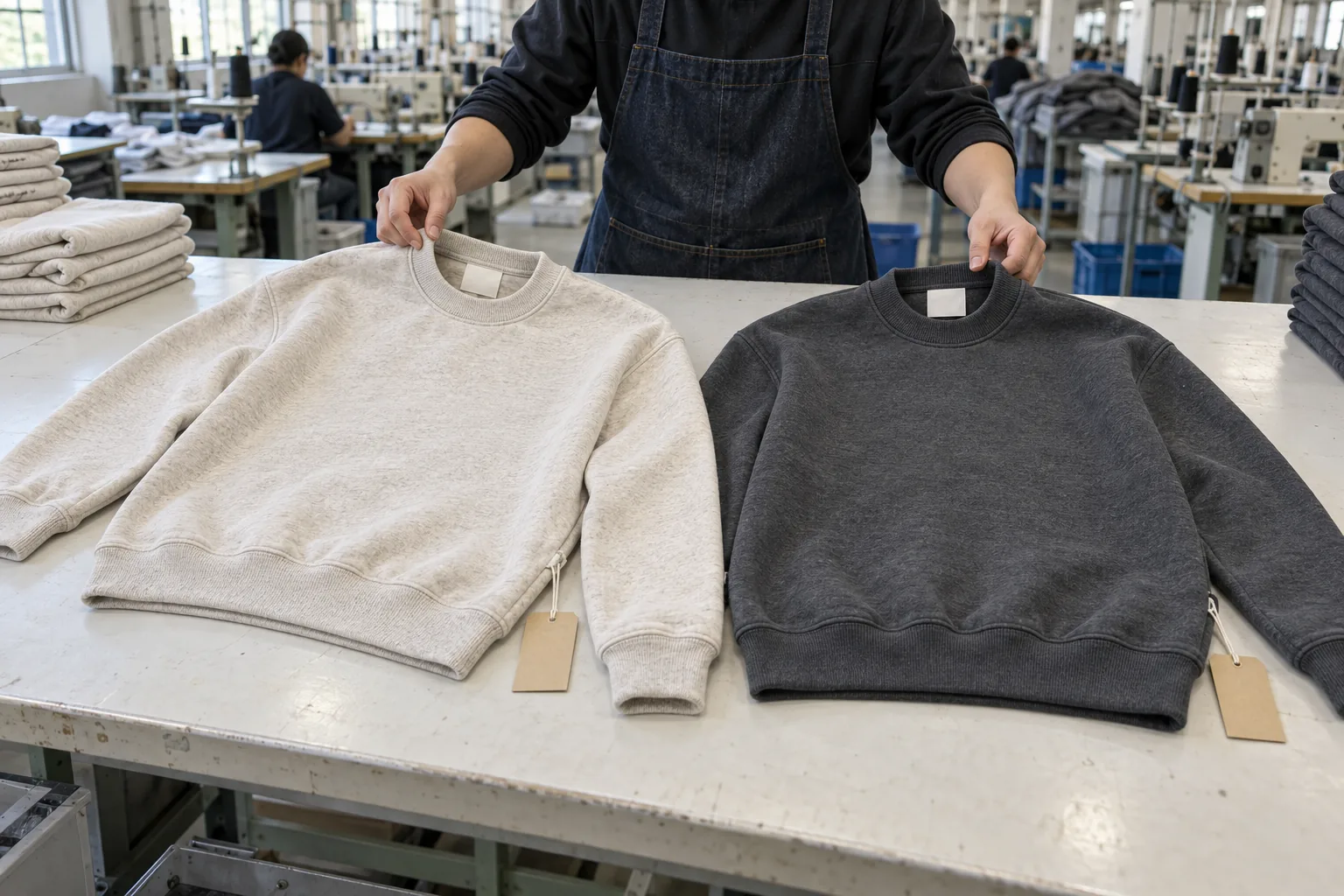
How to Compare Two Private Label Clothing Suppliers More Effectively
Use compare private label clothing suppliers to compare private label decisions more clearly, protect brand consistency, and keep product, trims, and commercial.

Two private label clothing suppliers can submit convincing garment samples yet offer very different levels of control over the details that identify your product. A neck label that irritates the wearer, a hangtag attached to the wrong size, or an obsolete care label can turn an otherwise acceptable delivery into a sorting job. Those details deserve a buying decision of their own.
Use a label and hangtag approval gate to compare your finalists before releasing bulk branding. Give both suppliers the same controlled brief, ask for equivalent evidence, and judge how each handles revisions and exceptions. This approach suits buyers who have already shortlisted production partners and now need to know which one can carry an approved product identity through cutting, sewing, finishing, and packing.
Make branding approval a separate buying decision
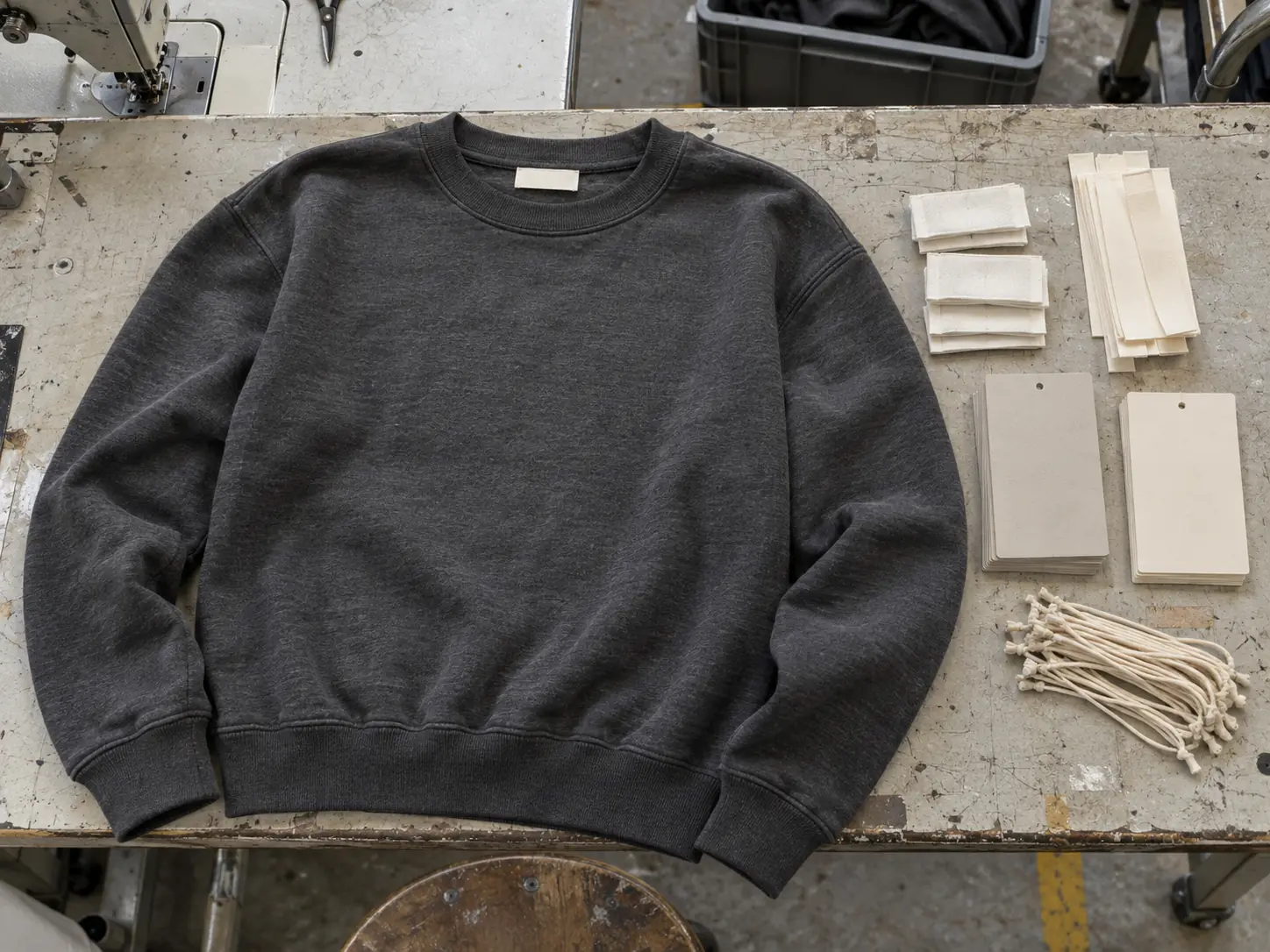
The gate is a documented stop before a supplier orders or applies bulk branding components. Passing it means the buyer has approved the component specification, the physical result, and its assignment to each garment variant. It does not mean that fit, fabric, or construction approval can be skipped.
For a heavyweight crewneck, separate three decisions: the folded neck label must sit comfortably, the care label must carry buyer-approved information for the intended market, and the hangtag must match the sellable size and color. Ask each supplier to identify who verifies those decisions and what happens when one remains unresolved.
A useful comparison begins with a narrow pilot: one style, two colors, and three sizes. That creates six combinations without making the exercise unwieldy. Require both finalists to work from the same revision. A supplier that flags an inconsistent size code before making samples gives you more meaningful evidence than one that simply promises accurate packing.
Give both finalists the same component map
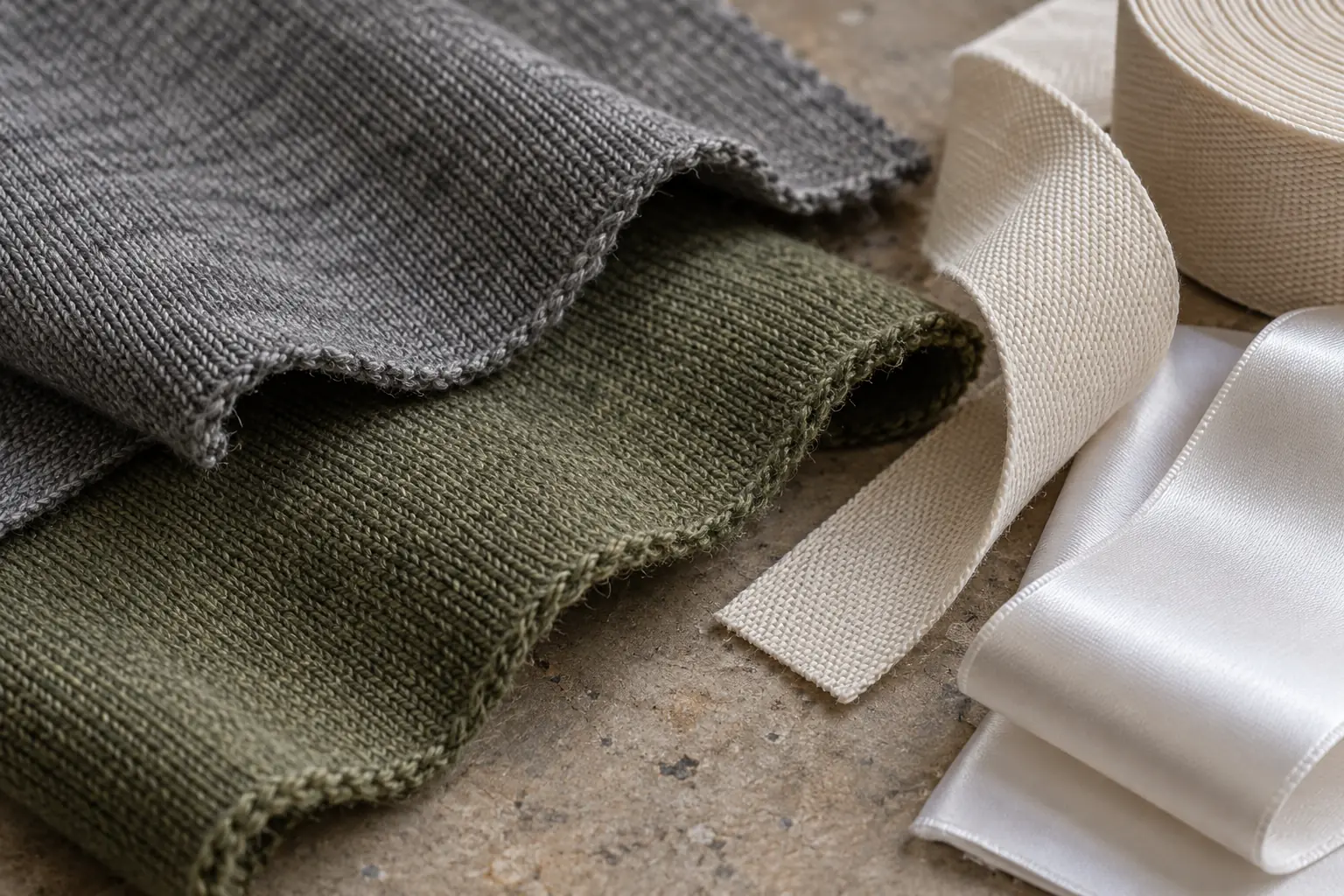
Create a component map connecting every label and tag to its location, material, artwork revision, and applicable variants. Avoid instructions such as “standard neck label” or “premium card.” They allow the suppliers to quote different products while appearing to answer the same request.
Specify whether dimensions describe the cut piece or the finished visible area. A center-fold woven label measuring 25 by 40 mm when visible needs additional material for the fold and sewing allowance. Define which edge is sewn into the neck seam and which face should be readable when the garment is laid flat.
| Component | Example buyer specification | Evidence to request |
|---|---|---|
| Neck label | Center fold; 25 by 40 mm visible face; soft edge finish | Loose piece and sewn sample showing both faces |
| Care label | Buyer-approved content; side-seam insertion; placement measured from hem | Readable proof and photograph of installed position |
| Hangtag | 50 by 90 mm; 350 gsm uncoated card; specified hole position | Physical card, attachment sample, and variant assignment |
| Size identifier | One agreed size system across sewn label and detachable tag | Completed six-variant matching sheet |
These are example specifications, not universal production standards. Agree feasible tolerances with each supplier before judging compliance. Also define which components are shared across colors and which vary by size; this affects purchasing quantities, sorting work, and the chance of mixing parts.
Test the installed result, not just the artwork
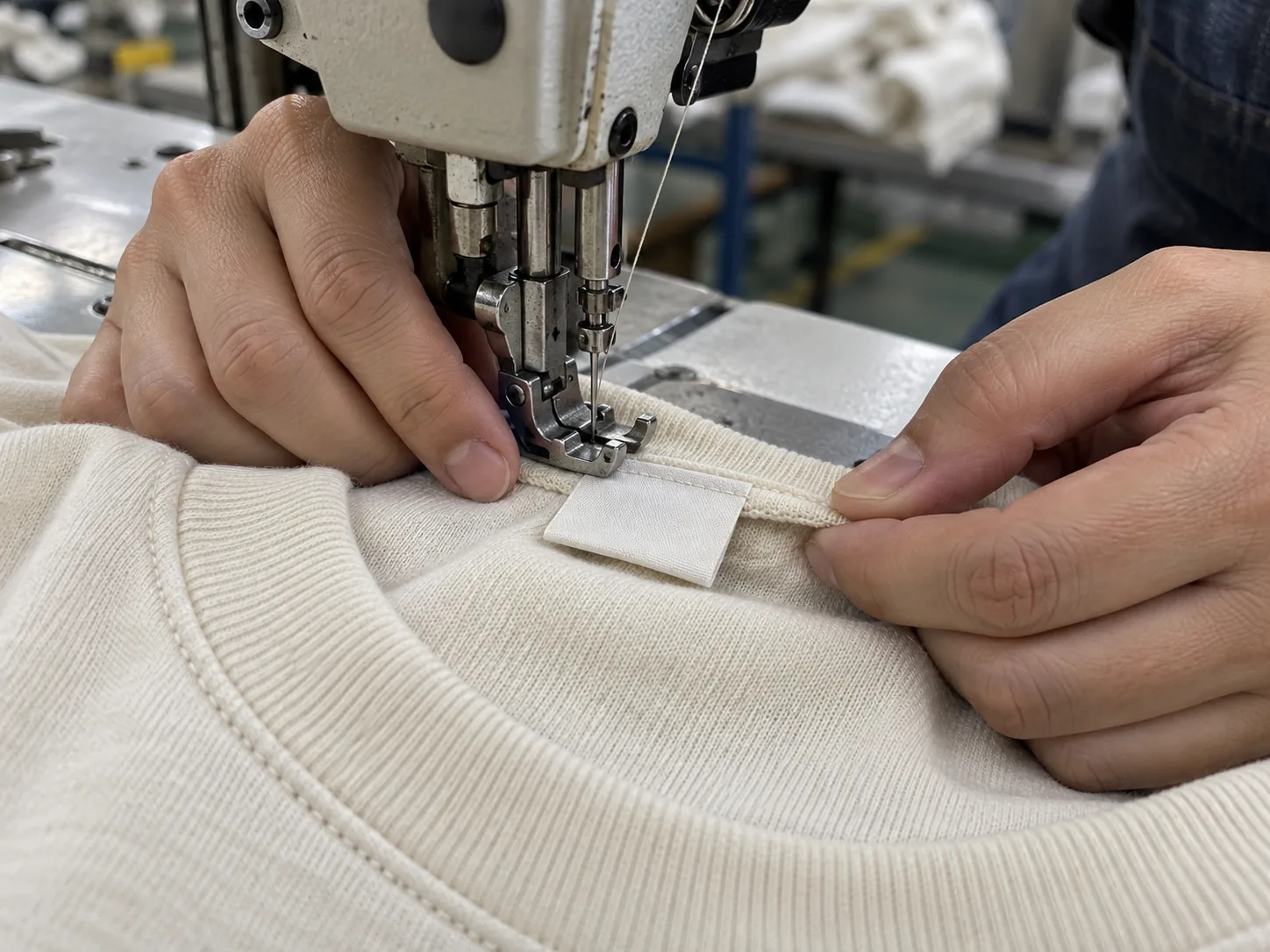
A digital proof checks layout but cannot prove softness, fold behavior, or attachment strength. Request the same evidence sequence from both suppliers: artwork proof, physical trim, then a garment with the trim installed. Record the revision and date at each stage so an attractive sample does not accidentally approve superseded content.
Examine the crewneck on a person or suitable form. A label can look centered on a flat table yet tilt when the neckline stretches. Check whether the fold exposes a rough edge, whether stitching traps the readable area, and whether the care label twists outward at the hem. Photograph the inside as carefully as the outside.
For measurable checks, you might propose a neck-label center offset of no more than 3 mm and a care-label insertion point within 5 mm of the agreed position. Treat these as project proposals requiring supplier agreement. State the measurement landmarks and garment condition; otherwise two inspectors can report different results on the same piece.
Wash a duplicate sample using the intended care instructions and compare label puckering, edge feel, print legibility, and color transfer. Remove the hangtag first. Keep an unwashed reference so that any change can be assessed against a physical control rather than memory.
Expose the purchasing dependencies behind each quote
Ask each finalist to separate garment quantity from trim purchasing quantity. A low garment minimum does not automatically mean a custom woven label or printed card can be ordered in exactly the same quantity. Request the trim minimum, responsibility for unused stock, storage arrangement, and treatment of obsolete artwork.
Compare quotations on the same approved component set. Confirm whether the offer includes label development, physical proofs, tag attachment, size matching, and replacement of incorrectly applied components. If one supplier quotes a generic tag while the other includes a custom card, normalize the scope before comparing totals.
Timing should identify dependencies rather than offer one unexplained completion date. Ask when artwork must be approved, when trims must arrive for sewing, and whether tags are attached before or after final inspection. A delayed neck label can interrupt construction; a delayed hangtag may hold finished garments at packing.
For context, StitchQuote’s MOQ for most categories starts from 50 pieces per style, while denim starts from 100. A 7-day sample is available for standard styles with confirmed specifications and available materials; complex styles, custom washes, and custom-developed fabric take longer. Confirm whether your requested branding components are available within the proposed sample schedule.
Run a mixed-variant QC challenge before release
Send both suppliers the same deliberately mixed list of the six pilot variants and ask them to demonstrate their checking method. The purpose is to reveal whether garment identity survives handling between finishing and packing. Agree the inspection sample size and escalation rule before the exercise; a small demonstration alone does not establish a bulk defect rate.
- Identity: Match the garment’s approved size and color to the sewn size identifier, hangtag, and packing instruction. Check every pilot combination.
- Content: Compare label and tag content against the approved revision, including fiber composition and care information supplied or verified by the buyer.
- Installation: Measure position, confirm orientation, and inspect stitches for puckering, skipped sections, or damage to the garment.
- Attachment: Confirm the agreed string or fastener and attachment point. Ensure the method does not puncture visible fabric or distort a seam.
- Disposition: Isolate mismatched units, record the affected variants, and document the correction and reinspection before packing resumes.
If a supplier finds one incorrect size tag, ask what population it would hold and recheck. The answer should connect the error to the potentially affected batch, rather than assume that replacing the single tag resolves the cause.
Retain one approved complete set with its revision record. StitchQuote’s services include cut-and-sew, private label, sampling, fabric and trim sourcing, branding through woven labels, prints and embroidery, and QC before packing. For any supplier, establish the specific label checks in writing instead of assuming that a general QC service includes your matching procedure.
Choose on approval discipline and correction evidence
Use a short comparison record with four headings: specification accuracy, installed quality, variant control, and revision handling. Under each heading, record evidence from both suppliers and any unresolved issue. Avoid allowing a polished sample to compensate for an unexplained substitution or missing content approval.
For example, Supplier A may produce the softer neck label but fail to identify which tag revision was attached. Supplier B may need one positioning correction yet return a revised sample with a clear change record. Decide whether either has met your mandatory requirements; do not force a winner while a critical identity mismatch remains open.
The release record should name the approved garment sample, component revisions, variant map, agreed tolerances, and person authorized to approve changes. Require renewed approval for changes to materials, content, dimensions, or attachment method. This turns the comparison into a usable production handover.
Questions buyers raise at the branding gate
Can we compare suppliers using blank hangtags?
Blank cards can compare thickness, finish, hole placement, and attachment. They cannot demonstrate artwork reproduction or size matching. Treat them as material trials and complete the printed-component check before approving bulk tags.
Who should approve the care-label wording?
The buyer should ensure the content meets the intended market’s requirements, obtaining qualified advice where needed. Ask the supplier to reproduce the approved content and flag inconsistencies. Manufacturing approval alone does not validate legal suitability.
Should unused labels stay with the selected supplier?
Only under an agreed inventory arrangement. Record quantities, ownership, revision status, and reorder use. Specify how obsolete stock is segregated and disposed of so a future order cannot receive an old care instruction or retired brand treatment.
Related reading
- Prepare the tech pack behind your component map
- Review sampling and MOQ considerations
- Explore private label manufacturing support
- Discuss your label and hangtag requirements
Request a manufacturing quote
Share your product type, quantity range, and destination. We usually reply within one business day.