Custom Streetwear, Casualwear & Denim Manufacturer•MOQ 50 pcs•Denim MOQ 100 pcs•7-Day Sample Available
How to Handle Buyer Team Disagreement During Fit Review
Learn fit review disagreement apparel team through a clearer factory-side view that helps brands reduce rework, align sample goals, and move toward approval with.

On This Page
- What good planning looks like when handle buyer team disagreement during fit review
- How factories evaluate the brief during development
- Where cost, timing, and revision pressure usually change the decision
- The mistake that usually creates avoidable rework
- What to confirm before you approve the next step
- A practical workflow to move the decision forward
How to Handle Buyer Team Disagreement During Fit Review gets much easier when the brand locks the non-negotiables first and then asks the factory to quote or sample around a stable target. The answer usually gets clearer when the team is explicit about the decision stage, the commercial target, and what the next sample, quote, or approval step is actually meant to prove. The buyer-side answer usually gets clearer once the project is broken into real production decisions instead of one abstract sourcing question. Buyers usually need a clean answer on sample purpose, revision control, and next-stage readiness before the project can move cleanly into the next quote, sample, or bulk step. If you are still mapping the support path, start with Custom T-Shirt MOQ Explained for Small Brands.
From a factory side, how to handle buyer team disagreement during fit review is rarely an isolated question. It usually affects sample purpose, revision control, MOQ logic, and approval ownership, which is why suppliers judge it through execution risk instead of one abstract preference or one line in a brief. On the supplier side, teams usually check what the round is meant to prove and whether comments can be executed without guesswork before they commit to timing, pricing, or shipment promises. Problems usually appear when one sample stage is being asked to answer fit, cost, branding, and production-readiness questions at the same time. Sampling becomes efficient when each round answers one main question and leaves the rest for the proper stage. A useful next reference is Project Inquiry.
What good planning looks like when handle buyer team disagreement during fit review
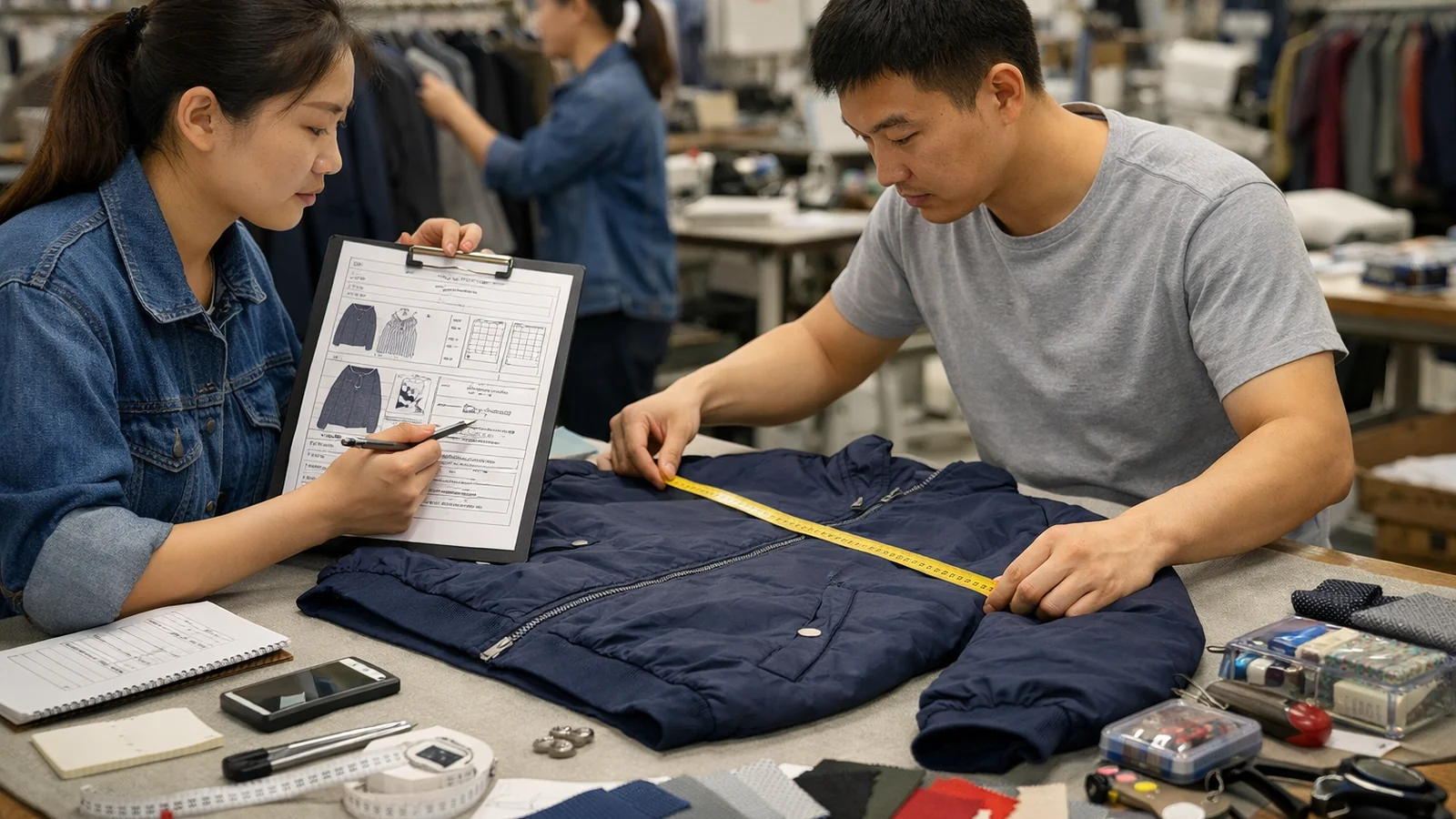
The cleanest decision usually comes when the brand defines one clear standard for handle buyer team disagreement during fit review before the next quote, sample, or bulk checkpoint is approved. For buyers, the real decision usually starts with whether sample purpose, revision control, and next-stage readiness are already clear enough to survive sampling, comments, and bulk repetition. With topics like handle buyer team disagreement during fit review, the fastest route is rarely the one with the fewest questions; it is the one where the important questions are answered in the right order. That is usually where the next approval either gets easier or starts to drift. How Long Does Clothing Sampling Take gives a useful benchmark.
In this kind of brief, the result usually improves when the team reads the issue through whether each round is proving one specific question instead of trying to solve the whole product at once rather than through one isolated request. The factory will normally push for one more document, one more approval, or one more clarification when it sees that sample purpose, revision control, MOQ logic, and approval ownership. That extra checkpoint is not always a delay; often it is the thing that prevents expensive ambiguity from reaching the sewing line or the shipment stage. Project Inquiry helps when the team still needs a cleaner decision path.
How factories evaluate the brief during development
From a factory side, how to handle buyer team disagreement during fit review is rarely an isolated question. It usually affects sample purpose, revision control, MOQ logic, and approval ownership, which is why suppliers judge it through execution risk instead of one abstract preference or one line in a brief. In day-to-day execution, the supplier is not only judging the idea. It is judging whether what the round is meant to prove and whether comments can be executed without guesswork have been expressed clearly enough that the merchandiser, the sample room, and the production floor will all read the same standard. That is why one factory may ask sharper follow-up questions than another before saying yes.
On better-managed programs, the buyer makes the pass-fail standard visible early: the target fit, the material behavior, the branding scope, the packaging level, or the logistics handover are all written down before the next commitment is made. Once that standard is visible, negotiations usually become more rational because everyone is solving the same problem. Custom T-Shirt MOQ Explained for Small Brands is relevant here.
Where cost, timing, and revision pressure usually change the decision
Problems usually appear when one sample stage is being asked to answer fit, cost, branding, and production-readiness questions at the same time. The pressure usually rises when one sample round is being asked to answer fit, cost, trim, artwork, and production-readiness questions at the same time, because a small unresolved point then starts affecting several departments at once. Something that looked like a minor comment can suddenly change costing, material booking, lead time, or inspection logic depending on where the project already sits.
That is also why buyers often feel a decision becomes harder late in the calendar. The technical answer may still be simple, but the commercial cost of changing direction is no longer small. Once the factory has started booking around one assumption, every reopened question creates more downstream work than it did in the first inquiry stage. What Makes a Manufacturer Easier to Work With During Sampling is worth checking before the next approval.
Sampling becomes efficient when each round answers one main question and leaves the rest for the proper stage. Buyers usually gain more control by freezing the right variable at the right time than by pushing every variable to stay flexible until the last minute.
The mistake that usually creates avoidable rework

The common mistake is treating handle buyer team disagreement during fit review as a simple yes-no decision and only discovering later that it changes cost, timing, revision pressure, or product clarity more than expected. In live projects, that often shows up as fragmented feedback, shifting cost expectations, or a mismatch between what the buyer thought was approved and what the factory is actually preparing to make. The result is not only rework. It is lost confidence in the operating standard.
A cleaner correction is to reset the next decision around one written standard that covers what the round is meant to prove and whether comments can be executed without guesswork. When the brand, the factory, and the QC or logistics side can all explain the same next step in plain language, avoidable rework usually drops fast. How to Use Measurement Tolerance More Realistically in Apparel Development is a good supporting read if the team still needs structure.
What to confirm before you approve the next step
The cleanest decision usually comes when the brand defines one clear standard for handle buyer team disagreement during fit review before the next quote, sample, or bulk checkpoint is approved. Before approval, the buyer should be able to explain what success looks like for sample purpose, revision control, and next-stage readiness in one short working note. If that note still changes every time a new person reads the project, then the standard is not ready yet.
In this kind of brief, the result usually improves when the team reads the issue through whether each round is proving one specific question instead of trying to solve the whole product at once rather than through one isolated request. The point of the next approval is not only to feel more confident. It is to make the next factory action measurable enough that it can be repeated without guesswork. That is usually the difference between a smooth bulk handoff and a project that stays trapped in revision mode. How to Prepare a Tech Pack for Apparel Manufacturing can help close the loop.
A practical workflow to move the decision forward
Before the next quote, sample, or bulk approval, use this short checklist to keep sample purpose, revision control, and next-stage readiness aligned with the factory reality instead of relying on assumptions or memory.
- Define the sample purpose before the factory starts.
- Consolidate comments and remove internal contradictions.
- Keep one approver responsible for the next move.
- Do not mix cost, fit, and bulk-readiness decisions unless the style is genuinely ready.
- Advance only when the current round has produced a clear answer.
Sampling becomes efficient when each round answers one main question and leaves the rest for the proper stage. That is usually what turns a content idea into a production-ready decision.
The cleanest decision usually comes when the brand defines one clear standard for handle buyer team disagreement during fit review before the next quote, sample, or bulk checkpoint is approved. If you want to turn that into a live project, review Products, Services, or send the brief through Contact.
Frequently Asked Questions
What should buyers clarify first about handle buyer team disagreement during fit review?
They should define the exact commercial goal, the current approval stage, and what the next sample, quote, or bulk step is supposed to confirm.
Why does handle buyer team disagreement during fit review often create rework?
It usually creates rework when the request stays too vague, several stakeholders are solving different problems at the same time, or the production standard is not written clearly enough.