Custom Streetwear, Casualwear & Denim Manufacturer•MOQ 50 pcs•Denim MOQ 100 pcs•7-Day Sample Available

How to Keep a First Apparel Project from Becoming Too Complex
Use this factory-side guide to compare keep a first apparel project from becoming too complex more clearly across supplier fit, quote scope, approvals, and timing.

A first apparel order can become difficult before anyone cuts fabric. A founder approves the silhouette, a designer adds a second decoration method, and a launch planner introduces another color. Each decision sounds manageable on its own. Together, they create a garment whose materials, fit, artwork and delivery assumptions no longer match the original brief.
Keep the project controlled with approval gates: specific points where the buyer accepts defined evidence and authorizes only the next activity. The purpose is to stop unresolved choices from traveling downstream. For a first launch, success means a repeatable garment with documented acceptance criteria, rather than a sample that happens to look good once.
Gate one: authorize a product boundary before requesting development
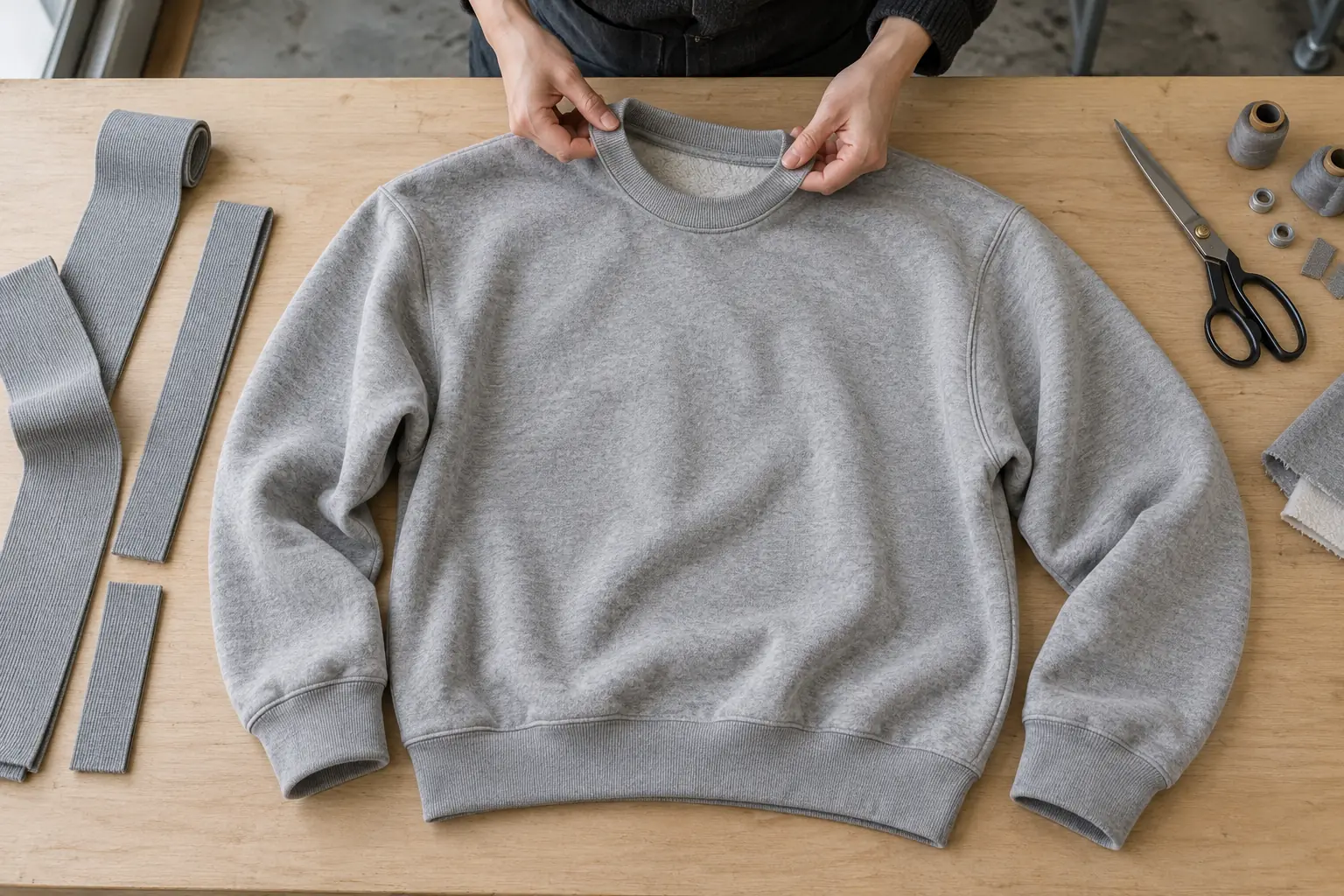
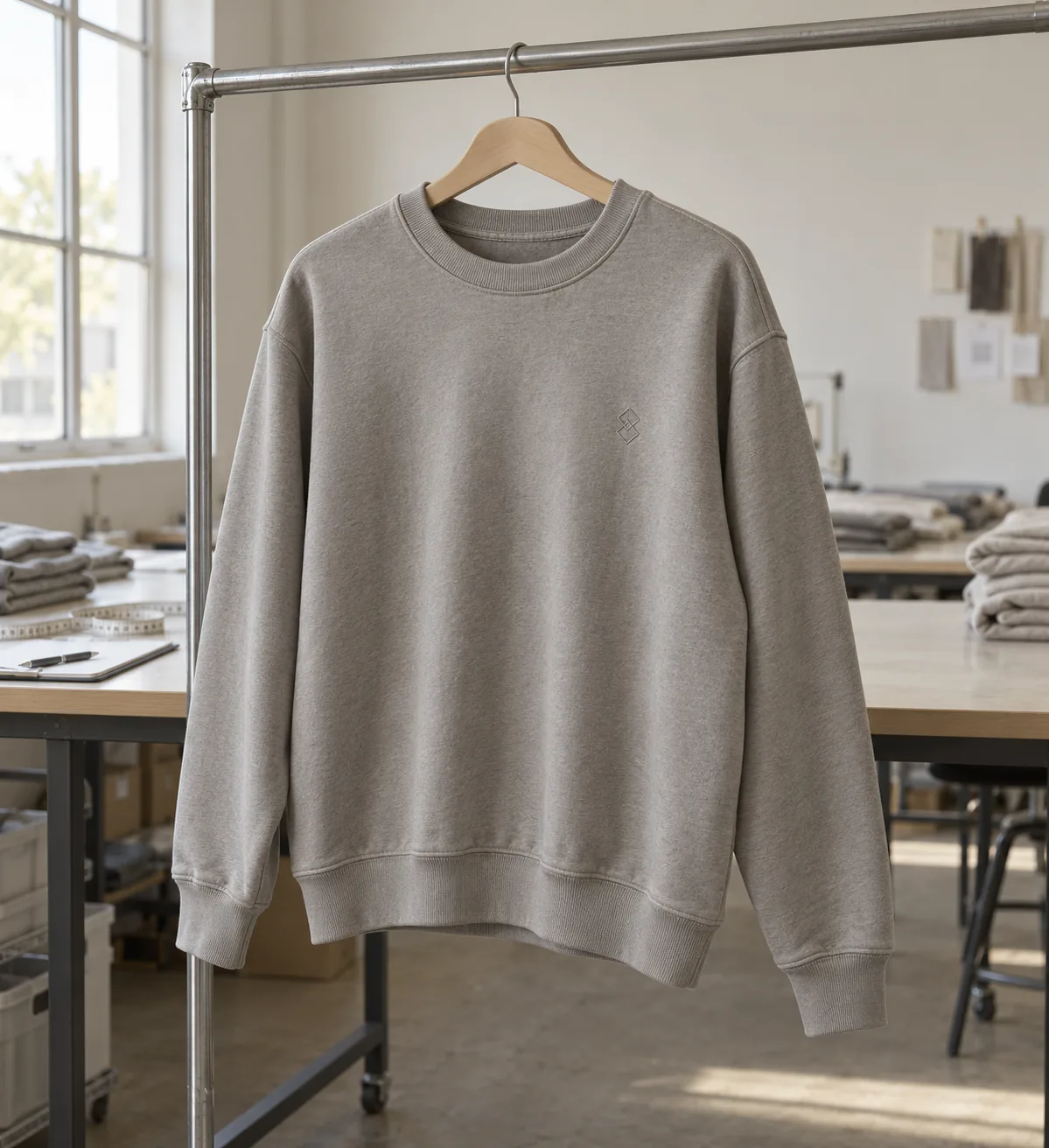
Write a one-page scope statement that identifies the product, wearer, intended fit and essential selling feature. For example: a relaxed crewneck sweatshirt with a stable neckline and one chest embroidery. Treat a garment-dyed finish, sleeve print and contrast stitching as proposed changes, not details the factory should automatically accommodate.
Classify requests as essential for launch, optional if already feasible, or reserved for a later release. A useful boundary is one new construction problem per first style. If the sleeve shape needs development, avoid simultaneously introducing an unfamiliar fabric treatment and a complicated pocket assembly. This is a planning recommendation, not a manufacturing limit.
The approval record should name one buyer-side decision owner. That person consolidates feedback from design, merchandising and operations before sending instructions. Conflicting messages such as “reduce the body width” and “keep the oversized look” must become one measurable instruction before the factory acts.
At StitchQuote, MOQ for most categories starts from 50 pieces per style; denim starts from 100 pieces per style. Confirm the proposed color and size allocation separately. A style-level minimum does not establish that every color, trim or custom material is available at that quantity.
Gate two: accept the material route before refining the silhouette
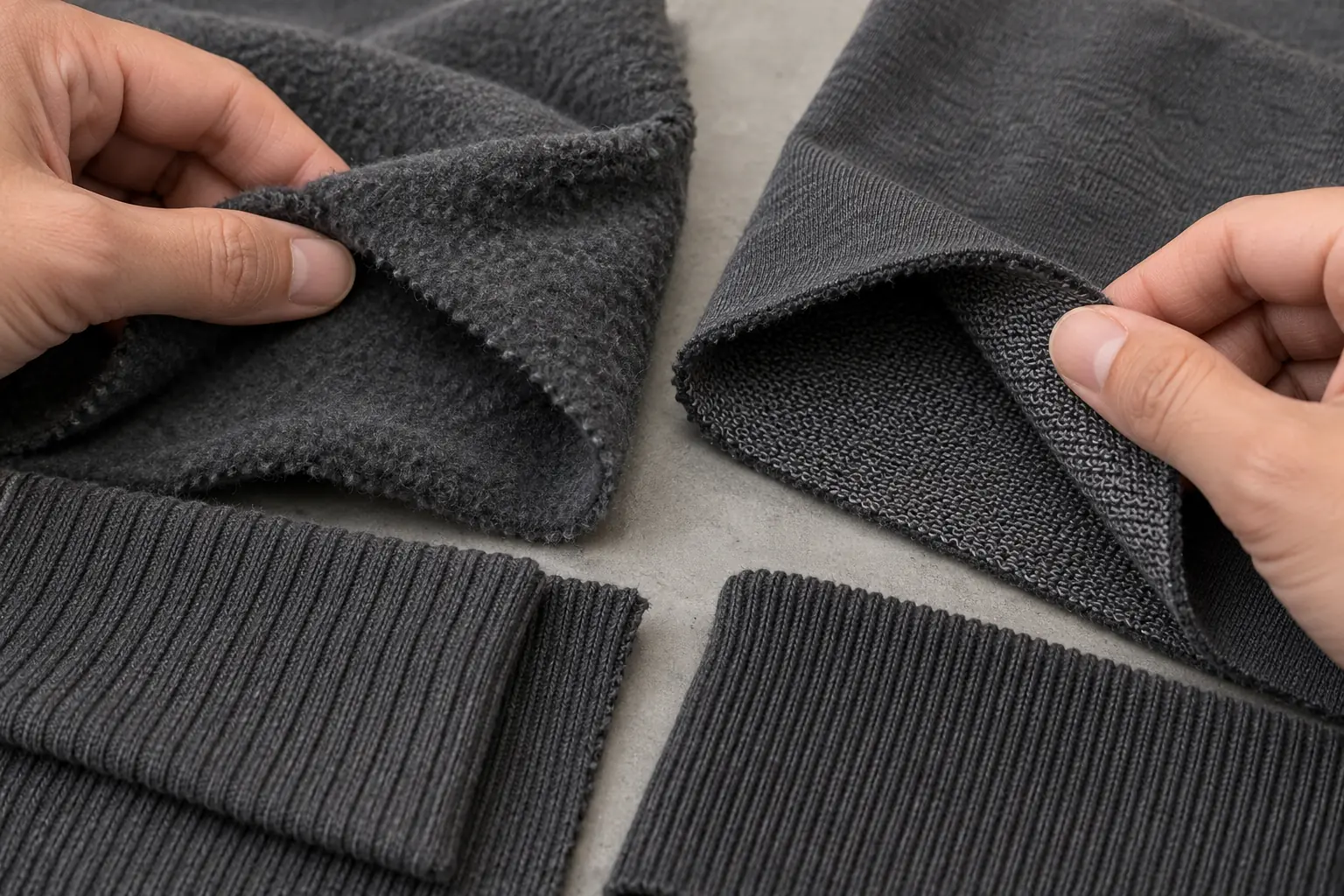
Fabric is part of the garment’s geometry. A sweatshirt fitted in a firm fleece may hang differently in a softer alternative even when its pattern stays identical. Before detailed fit approval, establish the intended composition, knit or weave, nominal weight, finish, color reference and availability. Record whether the sample uses the intended production material or a substitute.
For an illustrative sweatshirt brief, the buyer might request 320 g/m² fleece and a coordinating rib. That number alone is insufficient: loopback versus brushed backing, stretch recovery and finishing can affect the result. Ask the supplier to identify the actual proposed material and agree what variation is acceptable. Avoid specifying a tight weight tolerance without checking how the material is tested and supplied.
Approve a physical swatch under agreed lighting where possible. Phone photographs can help discuss texture but should not be the sole color standard. If a substitute is necessary for an early prototype, mark the approval as limited to construction exploration. The final fabric still needs evaluation before the fit becomes a production reference.
This gate passes when sourcing assumptions are visible and acceptable. It stays open when the launch depends on a finish, shade or trim whose availability remains unconfirmed.
Gate three: make each sample answer a defined question
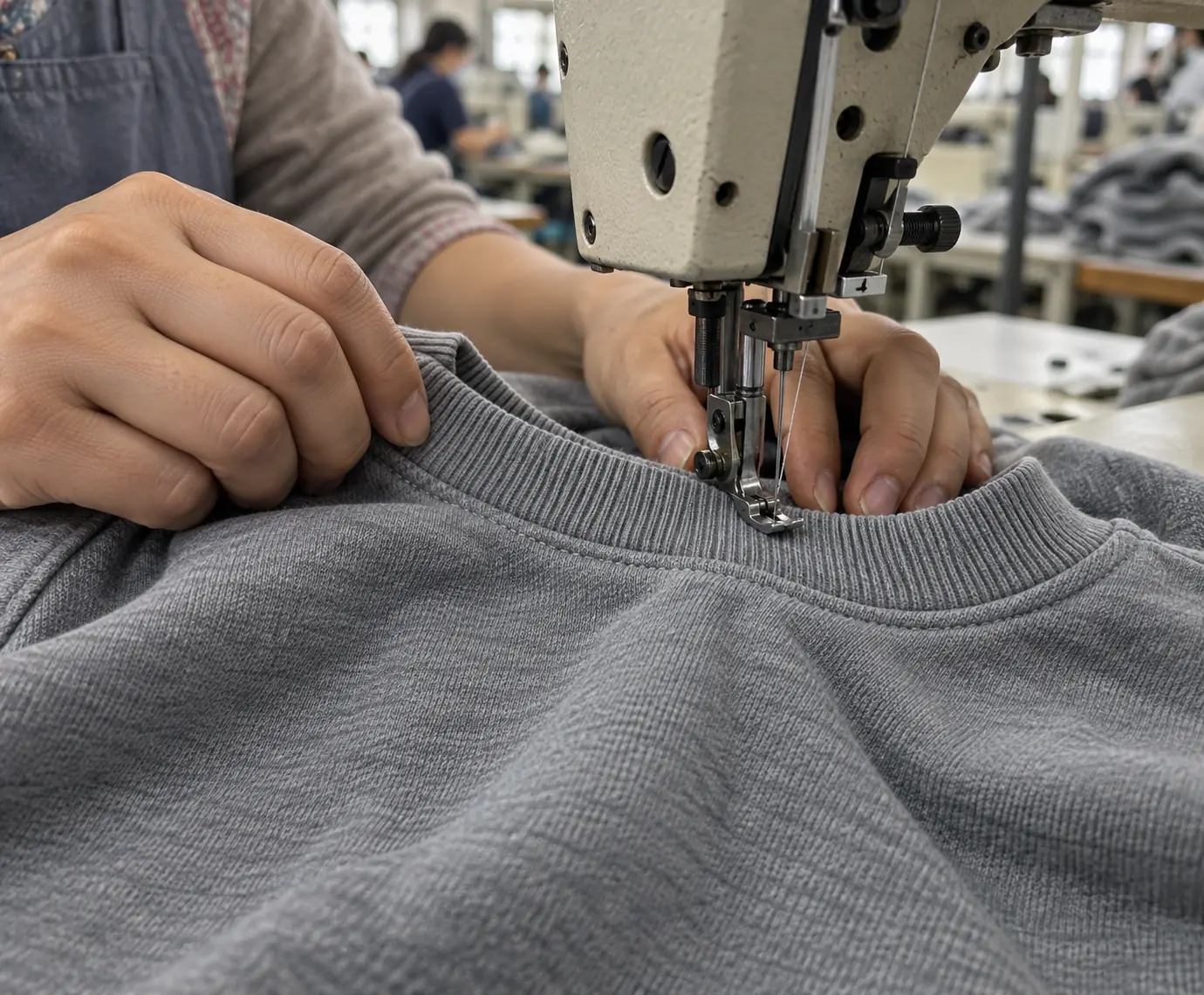
Order a sample against an explicit question: does the neckline recover after stretching, does the body balance correctly on the intended wearer, or does the embroidery distort the chest panel? Without a stated purpose, every sample review can expand into a fresh design session.
Provide measurement methods alongside target dimensions. For a relaxed crewneck, define chest width measured flat at a stated distance below the armhole, body length from high shoulder point, and sleeve length from a named seam. A note reading “shorten by 2 cm” is incomplete unless the measurement and affected sizes are identified.
StitchQuote offers a 7-day sample for standard styles with confirmed specifications and available materials. Complex styles, custom washes and custom-developed fabrics take longer. Treat this as a conditional sampling option; it does not establish a seven-day development cycle covering shipping, buyer reviews and revisions.
| Review question | Evidence to inspect | Approval scope |
|---|---|---|
| Does the base shape work? | Measured sample and fit photographs | Pattern direction only |
| Can the decoration be repeated? | Trial on intended fabric with backing | Artwork size, placement and method |
| Is the specification ready for bulk? | Final sample, materials and revision record | Defined production configuration |
Send one consolidated comment sheet per round. Separate required corrections from observations and future ideas. Photograph each issue with a reference point, state the desired outcome, and request confirmation that the instruction is understood.
Gate four: freeze the version that bulk will reproduce
A sample approval must identify what was accepted. Use a style code, sample date and specification revision. Record the approved fabric, color, measurements, construction, decoration and labels together. An attractive sample cannot settle details it does not contain, such as a care label that has never been reviewed.
Confirm the size range and grading rules before release. A successful medium does not prove that the smallest and largest sizes will fit as intended. Agree whether additional size samples or measurement checks are needed, particularly when the silhouette has an unusual shoulder, short body or restricted opening.
Define exceptions narrowly. “Fit approved; embroidery pending” authorizes no assumption about the final decorated garment. Embroidery can alter drape, so the eventual trial may require another check of the affected area. Where two decisions interact, close both before accepting their combined result.
After the freeze, handle every change through a short impact review. Replacing a sewn label with a larger one may require a new attachment position; moving chest artwork may affect placement references across sizes. Ask what materials, operations, approvals and timing must reopen. Then approve the revised scope explicitly or defer the change.
Gate five: release packing against a practical QC checklist
The final inspection should compare production with the accepted specification and reference sample. It should not introduce aesthetic preferences that were never communicated. StitchQuote includes QC before packing; buyers should agree the inspection scope, measurement methods and disposition of problems for their project.
- Measurements: List critical points and agreed tolerances by size. An illustrative buyer proposal could allow ±1 cm at flat chest width and ±0.5 cm at neck opening, but these are not universal standards. Confirm achievable limits for the construction and fabric.
- Appearance: Check shade consistency, seam puckering, skipped stitches, loose threads and whether paired features appear balanced.
- Decoration: Compare dimensions and placement against named garment reference points. Check embroidery for distortion and prints for the agreed appearance.
- Performance: Agree care-test conditions and acceptance criteria before testing dimensional change, color behavior or decoration durability. Record the method and result.
- Identity and packing: Verify size labels, approved care information, quantity by size and color, and the agreed folding and packing arrangement.
Define what happens when a check fails. A measurement outside tolerance may require segregation and assessment; incorrect labels may require replacement and reinspection. Record the corrective action and the evidence needed to close it. Packing release should refer to that closure rather than an informal assurance that the issue was handled.
Questions buyers ask when an approval gate stalls
Can we approve fit while the production fabric is still being sourced?
You can accept a preliminary pattern direction, provided the limitation is documented. Keep final fit approval open until the intended material is evaluated. Differences in stretch, bulk or finishing may require pattern changes even if the substitute looks similar.
What if two people disagree about the sample?
Return to the accepted product boundary and measurable criteria. If neither resolves the disagreement, the named decision owner should choose a direction and issue one instruction. Do not ask the factory to average incompatible preferences or interpret separate chat messages as approvals.
Should a small late change restart every approval?
Reopen the affected decisions and their dependencies. Changing label artwork may need an artwork and label check; changing fabric can affect fit, decoration and care results. Ask for an impact assessment before deciding the review scope. The size of the visual change is not a reliable measure of production impact.
Turn the accepted evidence into a release record
Keep a compact register showing each gate, its evidence, decision owner, approval date and unresolved items. Link the bulk instruction to the final revision and preserve earlier versions as history. When someone asks what the factory should make, there should be one current answer.
StitchQuote provides cut-and-sew, private label, sampling, fabric and trim sourcing, and branding through woven labels, prints and embroidery. Use those services against a controlled brief: submit the launch essentials, identify missing evidence, and request the next specific approval step.
- Prepare the technical specification behind each approval
- Review sampling and minimum-order planning
- Discuss your first project’s approval requirements with StitchQuote
Request a manufacturing quote
Share your product type, quantity range, and destination. We usually reply within one business day.