Custom Streetwear, Casualwear & Denim Manufacturer•MOQ 50 pcs•Denim MOQ 100 pcs•7-Day Sample Available

How to Keep Premium Basics from Looking Too Generic
Understand avoid generic premium basics through fit, fabric, decoration, and production logic so streetwear and premium basics buyers can make cleaner development.

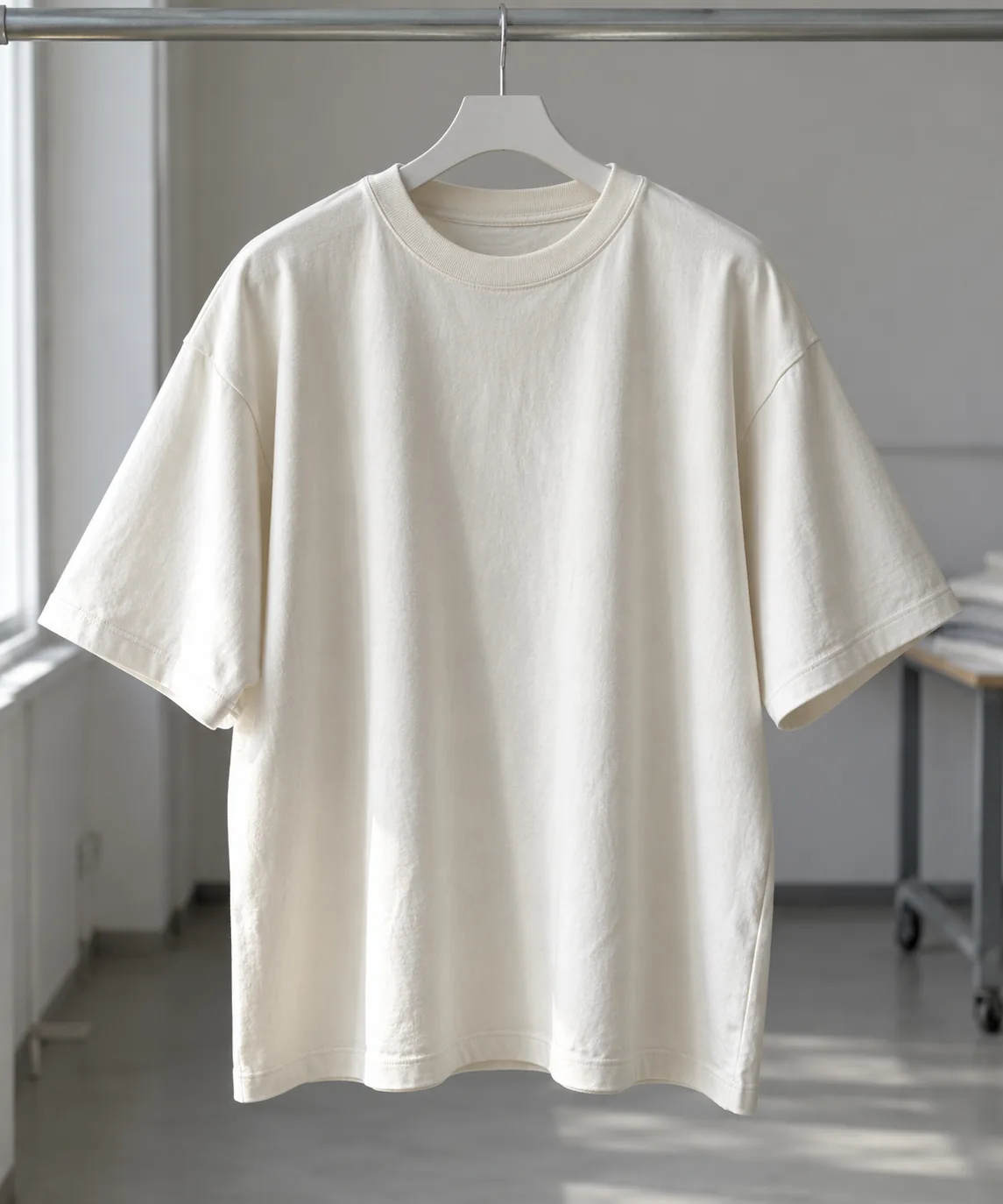
A plain T-shirt can have excellent stitching and still look interchangeable with everything beside it. For premium basics, distinction usually depends on a few relationships: where the shoulder ends, how the collar frames the neck, how the fabric falls, and whether those choices survive laundering. Adding a badge cannot rescue a silhouette that nobody deliberately approved.
Treat development as a series of approval gates. Each gate should release a specific decision and leave a clear record of what passed. The aim is to carry a recognizable design through sampling into repeatable production, without allowing substitutions or well-meant corrections to erase its character.
Gate 1: Define what must remain recognizable without branding
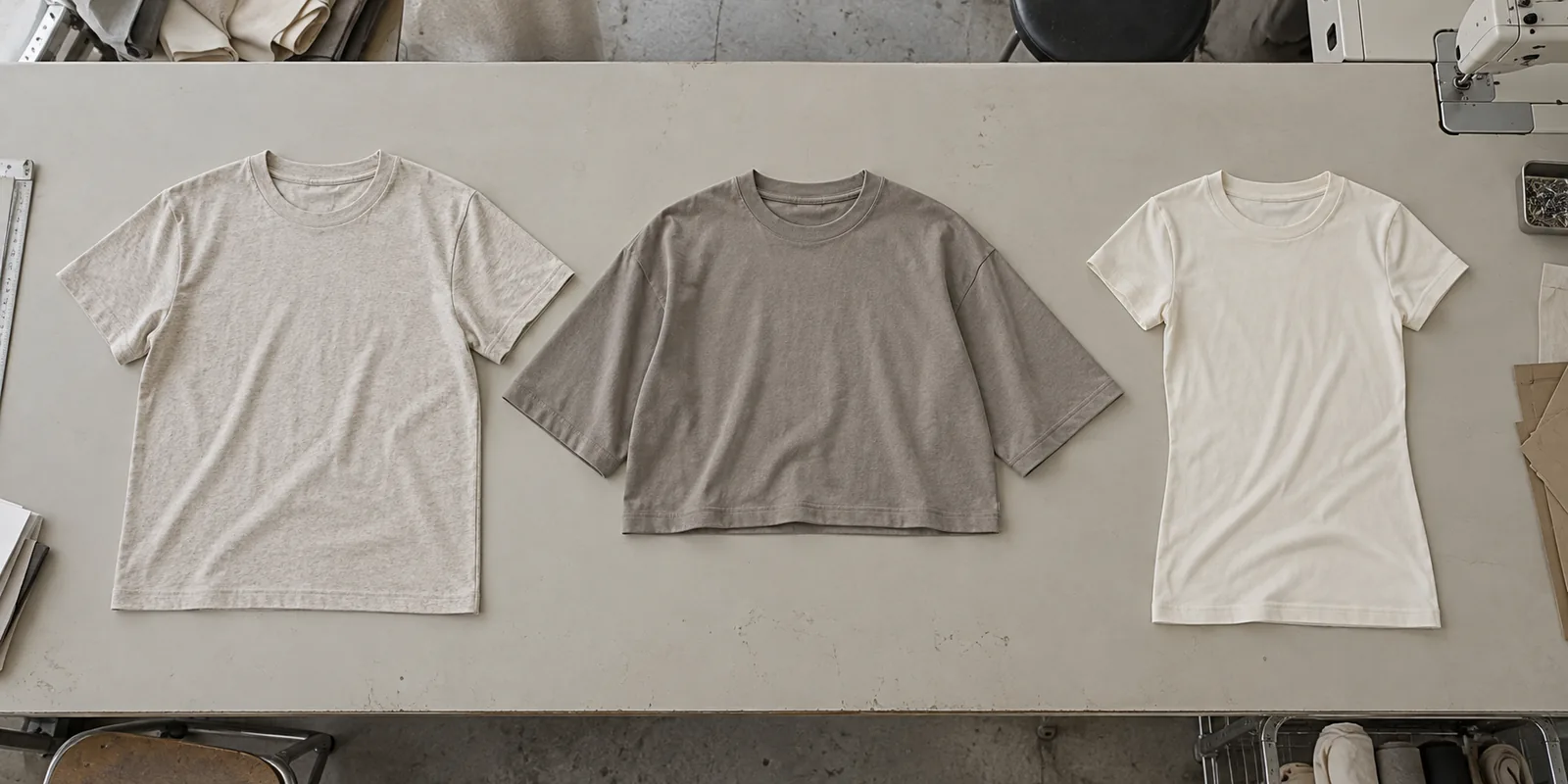
Start with one garment and one design sentence. For example: “A compact jersey tee with a close neckline, broad upper body, and sleeves that hold away from the arm.” This gives a pattern maker a direction to interpret. “Elevated everyday essential” does not establish a construction decision or a reason to reject a sample.
Choose two or three signature attributes and describe how they interact. A wide chest with a conventional narrow sleeve may lose the intended relaxed shape. A cropped body with a deep hem can look stiff if the jersey already has substantial body. Approve the combination, rather than treating each feature as an independent upgrade.
- Must retain: the neckline opening, shoulder position, and sleeve volume that define the garment.
- May adjust: an internal seam finish if appearance, comfort, and durability remain acceptable.
- Needs a separate decision: decoration, garment washing, or a new fabric that changes the original design direction.
This gate passes when the buyer and developer can identify the same attributes on an unbranded sample. Record front, side, and back views, plus the intended wearer and size. Avoid letting styling, model posture, or dramatic lighting become the only evidence that the product feels distinctive.
Gate 2: Release fabric only after testing its effect on shape
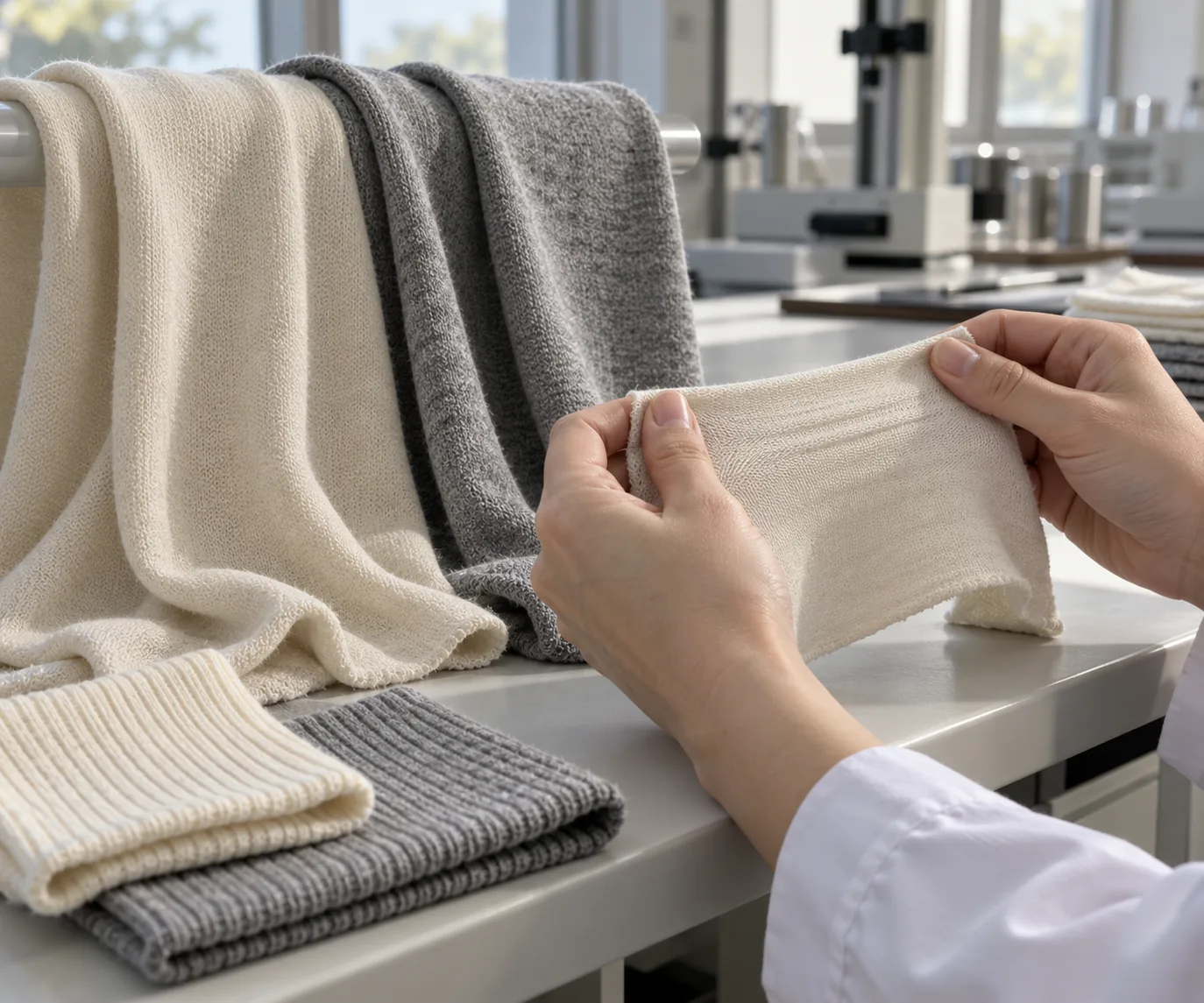
Weight is a useful specification, but it does not fully describe body, opacity, recovery, or surface character. Two jerseys at the same nominal weight can produce different shoulder lines. Request composition, knit structure, weight, finish, and usable width, then assess whether the proposed material supports the approved design sentence.
For a structured tee, compare a folded swatch with a hanging panel and a sewn neckline trial. Look for edge curl, surface fuzz, and whether the collar rib has enough recovery for the opening. A soft, fluid hand may be attractive by itself yet undermine a sleeve intended to stand away from the arm.
Keep identified unwashed and washed references. Agree the care procedure, drying method, and conditioning period before measuring. Calculate dimensional change separately for length and width; do not hide both inside one shrinkage figure. If a panel changes from 50 cm to 48.5 cm in one direction, that direction has shrunk 3%.
Release the fabric when its performance and appearance are acceptable together. Record whether approval covers a development swatch, a particular lot, or a bulk submission. A substitute with matching composition and weight still needs review if its drape or finish changes the silhouette.
Gate 3: Approve the fit relationships, then the measurements
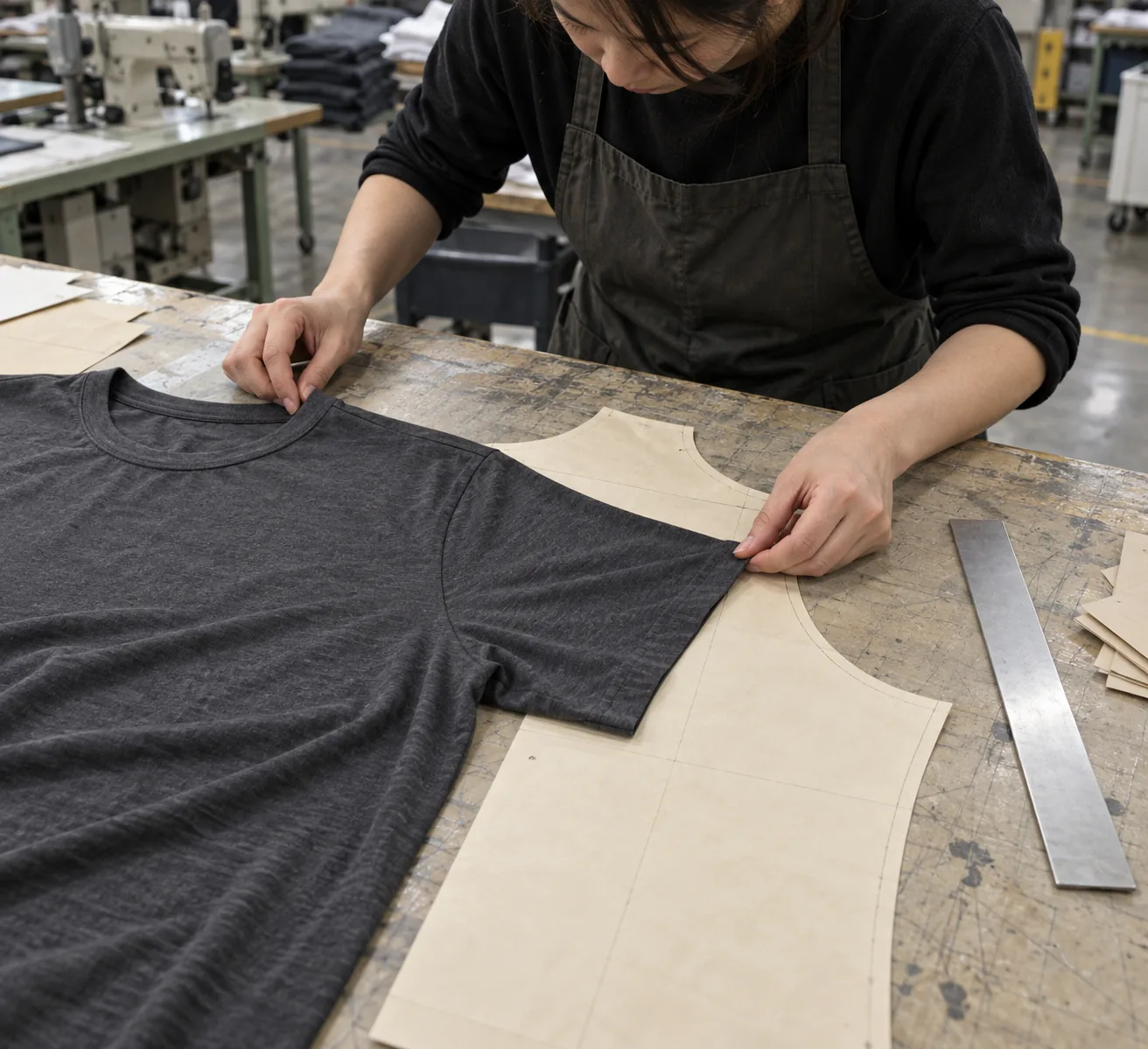
A measurement sheet can pass while the garment looks wrong. Begin the fitting with the wearer standing naturally, then check sitting, reaching, and arm movement. Inspect shoulder drop against sleeve length, neck width against collar height, and body length against hem behavior. Photograph each view using consistent positioning.
Next translate the successful fit into defined measurement points. State whether body length starts at the high shoulder point, how the neckline is laid flat, and whether measurements are taken relaxed. “Collar width” is ambiguous unless the document distinguishes the neck opening from the finished rib depth.
| Design attribute | Approval evidence | Reason to hold |
|---|---|---|
| Close, clean neckline | Relaxed opening measurement and worn front view | Rib ripples or presses uncomfortably |
| Broad upper silhouette | Chest, shoulder, and sleeve measurements together | Sleeve collapses despite correct chest width |
| Controlled body length | Before-and-after-wash measurements | Laundering changes the intended proportion |
Set tolerances according to visual sensitivity and production capability. As illustrative starting points to confirm per project, a team might discuss ±0.5 cm for a relaxed neckline opening and ±1 cm for half-chest. These are proposed limits, not universal standards. Check whether opposite ends of the allowed ranges still produce an acceptable garment.
Do not extend approval automatically across every size. Review how the signature proportions grade, particularly at the smallest and largest sizes. A sleeve that looks intentional in the base size can become disproportionately narrow if the grading rule only follows chest growth.
Gate 4: Freeze the construction details that carry the design
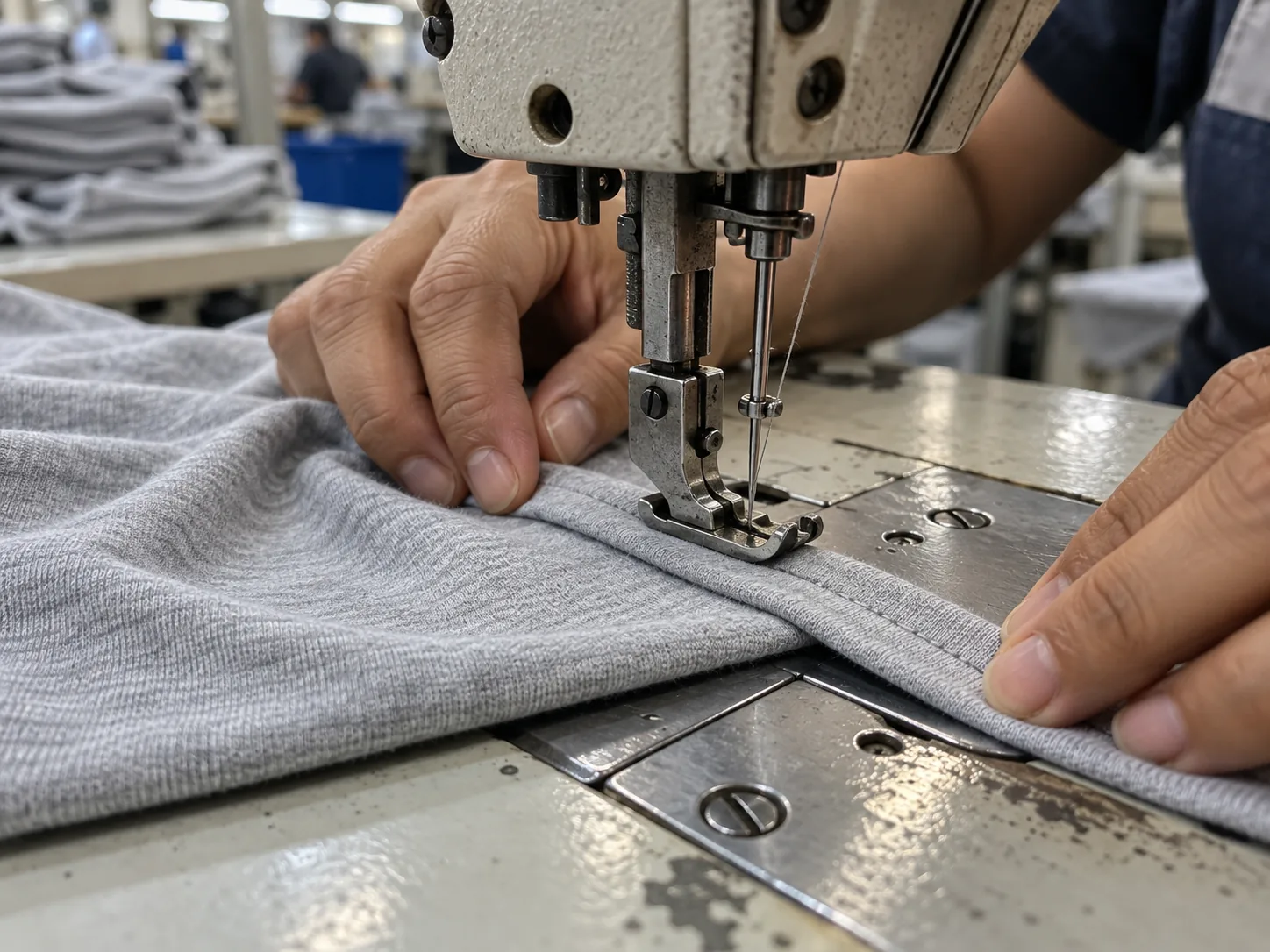
Construction should reinforce the silhouette. Specify finished hem depth, visible stitch placement, thread appearance, neck tape width, and label position where they affect the product. More stitching is not automatically better: a dense seam or heavy tape can create a ridge on a clean jersey surface.
Approve small sewn trials when a detail is uncertain. Compare two hem depths in the selected fabric, or test rib attachment before rebuilding a full garment. Assess seam stretch and recovery as well as appearance. Keep the accepted trial attached to the relevant comments so “cleaner finish” becomes a reproducible instruction.
If branding is included, review it on the garment at its actual size. Small embroidery can pucker light jersey; a print may change the hand of a chest panel. A discreet woven label can still distort a side seam. Reopen any earlier approval affected by that addition, rather than assuming decoration is independent of fit.
Gate 5: Use a production release checklist that protects identity
The production reference should combine the approved sample, current specifications, fabric and trim references, and a dated decision record. Identify which sample is authoritative. If its sleeve is approved but its neckline is still wrong, it is not an unconditional bulk reference.
- Version control: confirm that the pattern, measurement sheet, comments, and approved sample describe the same revision.
- Material match: compare production fabric and rib with approved references for shade, surface, body, and recovery.
- Wash check: inspect neckline distortion, seam twisting, hem rippling, and dimensional change under the agreed care method.
- Measurement check: cover the agreed sizes and critical points; document results against project tolerances.
- Visual check: review garments hanging and laid flat for balanced sleeves, consistent collar depth, and the intended proportions.
- Packing check: confirm folding does not conceal defects or create avoidable pressure marks on decoration.
Agree inspection coverage and defect decisions before production. An overall pass should not override a failed signature attribute. For example, a consistently stretched neck opening deserves a hold even when body measurements are acceptable. Record the correction and inspect the affected feature again before release.
StitchQuote provides cut-and-sew, private label, sampling, fabric and trim sourcing, branding through woven labels, prints and embroidery, and QC before packing. Buyers should make their distinctive design attributes explicit so the project’s approval criteria address those features.
Questions buyers face when an approval is incomplete
Can we approve the silhouette in a temporary fabric?
You can approve provisional pattern direction, but record the limitation. A temporary fabric may help assess approximate length or pocket placement. Final drape, neckline recovery, and wash behavior require the intended material. Schedule another review if those properties determine the design.
What if two people prefer different sample versions?
Return to the design sentence and compare both samples against its attributes. Assign one person authority to consolidate comments. Combining the collar from one version with the body from another creates a new configuration that needs review; it is not automatically an approved hybrid.
Does a seven-day sample mean the style is ready for bulk?
No. StitchQuote offers a seven-day sample for standard styles with confirmed specs and available materials. Complex styles, custom washes, and custom-developed fabrics take longer. Sample availability is a development milestone; fit, material, and production release decisions still need evidence.
How should a small first order affect approval depth?
Keep the same critical gates and reduce unnecessary variants. StitchQuote’s MOQ for most categories starts from 50 pieces per style; denim starts from 100. Confirm project requirements before planning quantities. Fewer fabric or decoration options can make decisions clearer, but a small run still needs an agreed production reference.
Related reading
- Document approved details in your tech pack
- Review sampling and MOQ planning
- Discuss your garment approval requirements
Request a manufacturing quote
Share your product type, quantity range, and destination. We usually reply within one business day.