Custom Streetwear, Casualwear & Denim Manufacturer•MOQ 50 pcs•Denim MOQ 100 pcs•7-Day Sample Available

Private Label Denim Manufacturer for Small-Batch Brands
See what small-batch brands should compare in a private label denim manufacturer, from wash control and hardware to MOQ structure and branding execution.

A washed jean can pass its shade review and still fail at the waistband: a button turns rough, a rivet leaves a dark halo, or a zipper becomes difficult to close. For small-batch brands, these defects are especially disruptive because replacing a trim may require reopening finished garments and repeating part of the approval work.
Choosing a private label denim manufacturer for small-batch brands therefore involves a specific production question: how will the hardware behave through the intended wash? Treat buttons, rivets, zippers, and their attachment sequence as part of the wash specification. The useful buying decision comes before bulk cutting, when trim compatibility and the finished appearance can still be tested together.
Define the metal appearance after washing
“Antique silver” describes a visual direction, but it does not define an acceptable finished button. Two trims with similar incoming color can have different base metals, coatings, and surface treatments. Ask the supplier to identify the proposed construction and finish, then judge an actual washed example. A loose trim card alone cannot show how the hardware will mark adjacent denim.
Separate deliberate aging from damage. Your reference might permit softer highlights on the button face while rejecting flaking plating, sharp edges, or orange staining on the waistband. Photograph the face, underside, and attachment area under consistent lighting. Keep an unwashed control beside the approved washed trim so later discussions distinguish intentional change from an unexpected reaction.
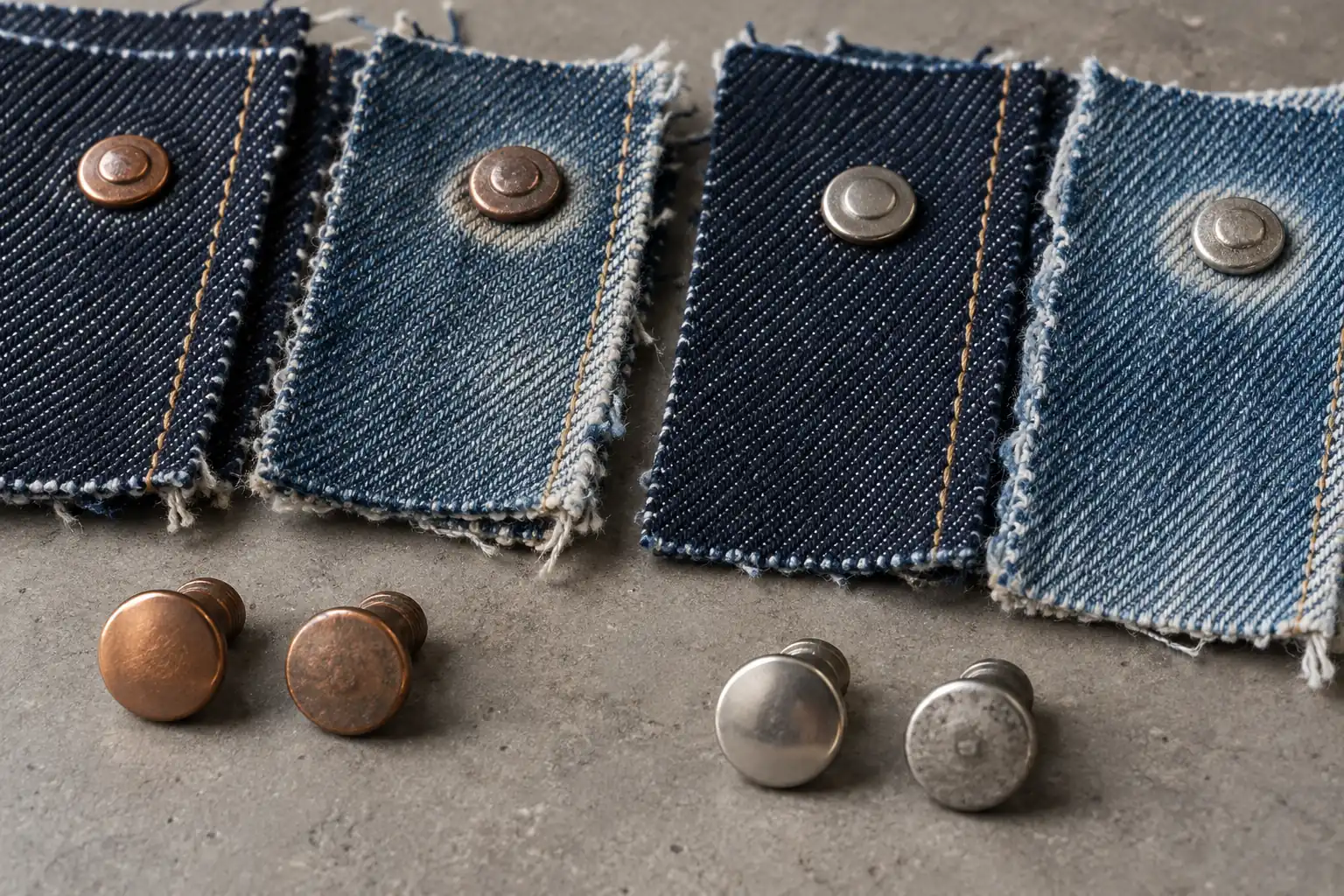
Specify the details that affect attachment: button diameter, shank construction, rivet cap and post pairing, zipper type, and intended fabric thickness at each location. A pocket corner with several folded layers needs its own trial. Do not assume the post that works on a flat swatch will also secure a bulky seam intersection.
Choose the attachment sequence before the first garment trial
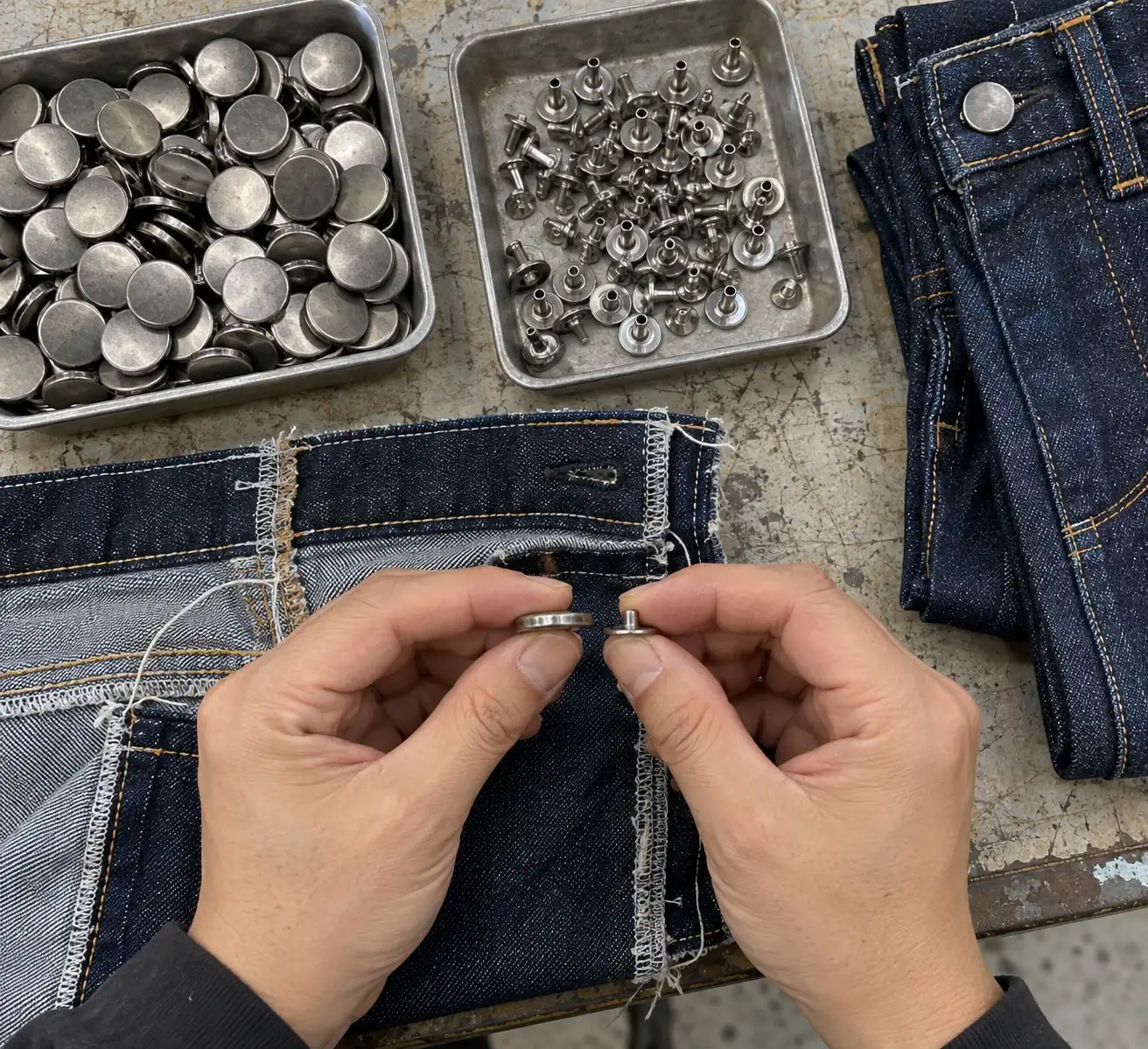
Hardware attached before washing experiences the treatment with the garment. That may help produce the intended aged appearance, but it also exposes the trim to chemicals, moisture, and mechanical action. Attaching selected trims afterward reduces that exposure while introducing different risks: pressing finished denim, aligning hardware on a shrunken waistband, and damaging an already approved surface.
| Component | Sequence decision | Evidence to request |
|---|---|---|
| Waist button | Attach before or after the production wash | Finished surface, secure setting, and buttonhole operation |
| Pocket rivets | Confirm whether wash wear is intentional | No unwanted halos, sharp backs, or damaged pocket corners |
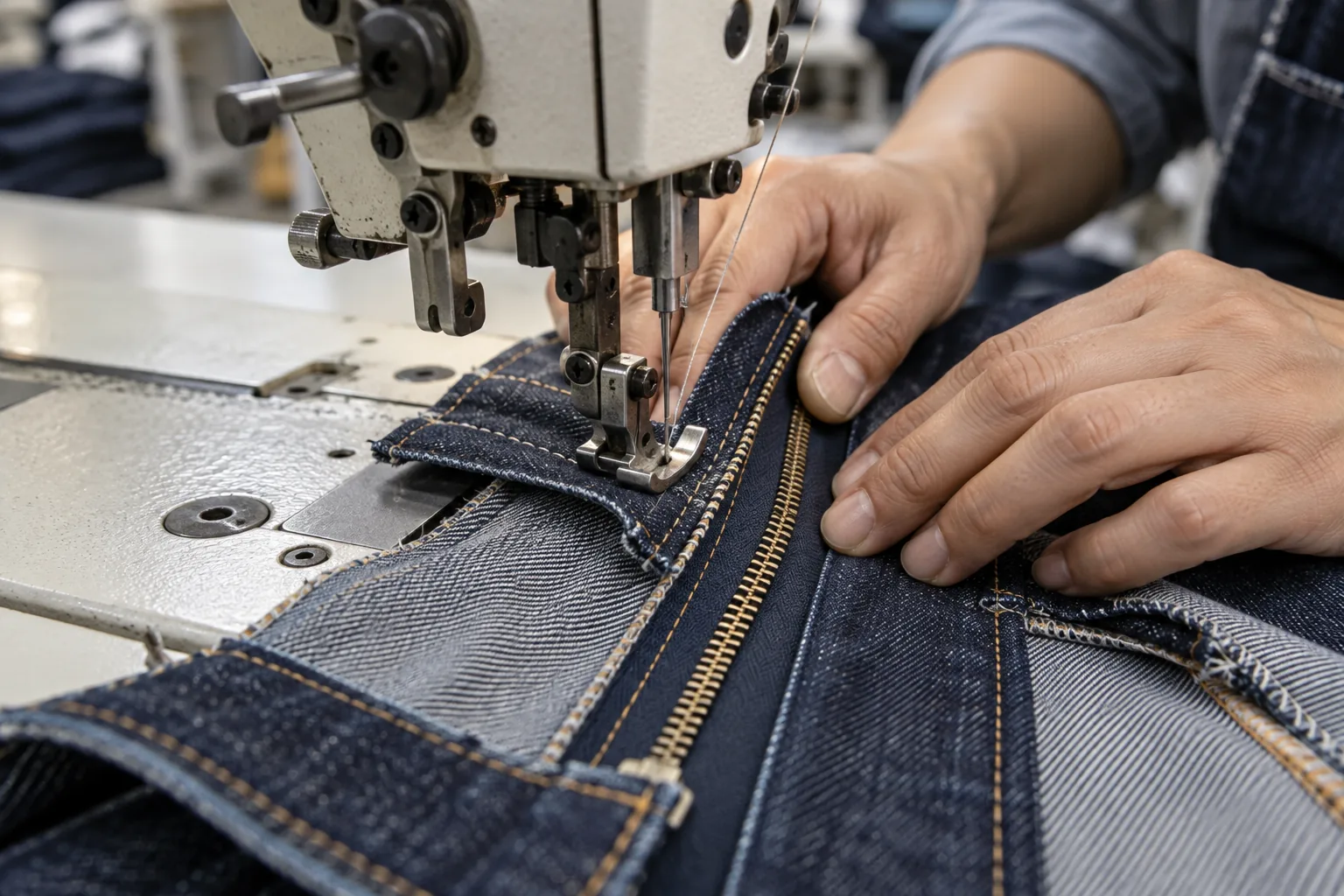
| Fly zipper | Usually sewn into the garment before washing | Smooth operation and acceptable tape appearance after drying |
There is no universal sequence for every wash recipe. A dark rinse and an aggressively aged finish present different conditions. Ask the sampling team to record the actual sequence used, including any temporary protection. If a sample passes only because its button was fitted afterward, bulk production must not silently switch to fitting that button before washing.
Post-wash attachment also changes the positioning reference. Locate a waistband button from finished garment features, such as the fly edge and waistband centerline, rather than relying only on a pre-wash pattern measurement. Agree where measurements are taken and check closure alignment on the worn shape as well as laid flat.
Test the wash and trim as one combination
Start with attached trims on the intended denim construction, then confirm the result on a complete garment. A swatch can expose discoloration quickly, but it cannot reproduce every collision, fold, or stress point inside a garment wash load. Include representative seam thicknesses and the actual backing components; substituting a convenient rivet post weakens the trial.
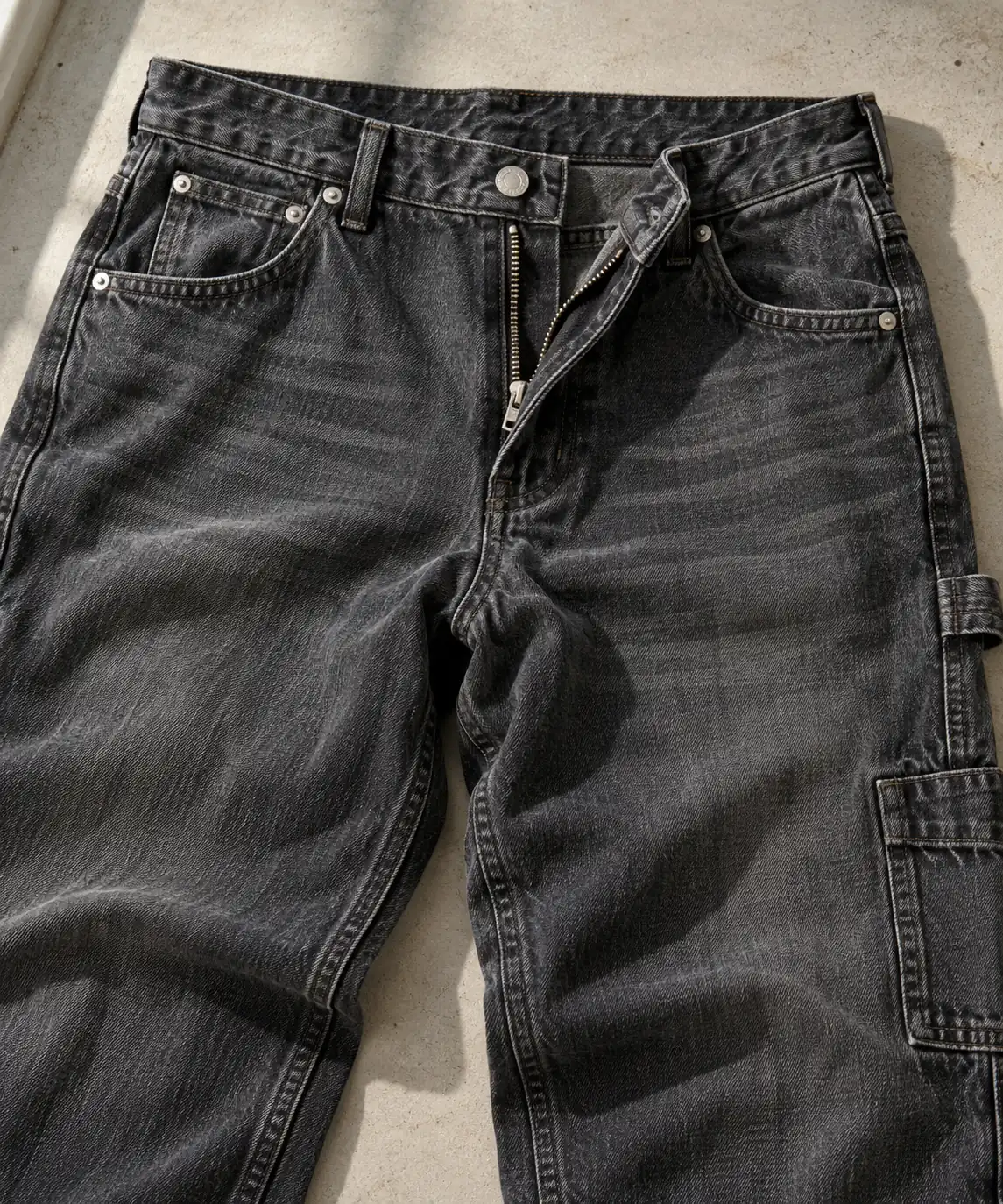
For example, consider a charcoal carpenter jean with silver-tone rivets and a matching zipper. Review whether the wash changes the rivet finish, whether the zipper tape remains visually compatible, and whether drying leaves the fly distorted. These are separate acceptance points even when the overall garment shade looks correct. Record each result against the same sample identifier.
Keep comparisons controlled. If a trial fails, change one relevant variable at a time where practical: trim finish, attachment sequence, or wash conditions. Changing all three may produce a better sample without revealing which choice solved the problem. Ask the factory to retain the successful combination as the production reference.
Inspect after the garment is fully dry, then revisit it after an agreed holding period to look for delayed staining or oxidation. A separate care-label laundering trial can assess customer-use behavior. Agree the method and acceptance criteria per project; an attractive production-wash sample does not establish long-term durability by itself.
Make a small denim order practical at the trim level
StitchQuote denim starts from 100 pieces per style; most other categories start from 50 pieces per style. That garment minimum does not establish the availability or minimum order for every custom metal component. Before selecting an engraved button or unusual finish, confirm trim quantities, development requirements, replenishment options, and any surplus components the order would generate.
A first release can use a common hardware construction across two wash proposals, then select the combination that passes development. This reduces the number of variables under review. However, approval on one wash does not transfer automatically to another. A pale, distressed version may expose the same finish to substantially different processing.
Request a quote that identifies whether trim sourcing, attachment trials, wash sampling, and replacement samples are included. StitchQuote services include cut-and-sew, private label, sampling, fabric and trim sourcing, branding through woven labels, prints and embroidery, and QC before packing. Put the relevant services into the project brief so the requested scope is explicit.
A seven-day sample is available for standard styles with confirmed specifications and available materials. Complex styles, custom washes, and custom-developed fabric take longer. For hardware development, confirm availability and trial needs before tying a launch date to that standard-style sampling option.
Release bulk only against a hardware inspection checklist
The signed sample should carry more than a wash approval. Attach a component list and photographs showing acceptable metal wear, placement, and surrounding fabric. Define cosmetic limits separately from functional failures. A buyer might accept gentle variation in an aged finish while rejecting any sharp edge or closure failure.
- Identity: Match button, rivet, backing, and zipper references to the approved component list. Check incoming finish against the retained control.
- Placement: Measure from agreed finished garment landmarks. An illustrative placement tolerance is ±2 mm where construction permits; confirm a suitable limit for each location before production.
- Security: Check for loose caps, rotating components where rotation is unacceptable, and exposed posts. Agree an attachment-strength test method and threshold appropriate to the component and intended use.
- Function: Operate the zipper and button closure on finished garments. Investigate binding, misalignment, snagging, or fabric caught in the slider.
- Appearance: Inspect for unintended corrosion, plating loss, denim staining, and abrasion around metal contact points under consistent light.
- Packing readiness: Confirm garments are fully dry and check that hardware contact during folding does not mark adjacent fabric.
Set the inspection coverage and escalation rule before bulk starts. If several sampled garments show the same rivet defect, hold the affected production group for investigation rather than approving it from a satisfactory overall shade. Record whether the issue follows a trim lot, attachment station, or wash batch; that distinction helps target corrective work.
Questions to settle before approving branded hardware
Can a stock button validate a later custom button?
It can support early fit and placement work, but it cannot fully validate a different final component. Changes in metal, plating, dimensions, or the underside can affect wash behavior and attachment. Run a confirmation trial with the actual custom button before approving that combination for bulk.
Should every rivet be attached after washing?
Only if that sequence suits the design and production method. Post-wash setting can preserve a cleaner finish, but the equipment must reach each position without damaging the garment. Ask for a sample made with the proposed sequence and inspect both the visible cap and the backing.
What if a replacement trim looks identical?
Treat it as a proposed substitution until its construction and wash performance are confirmed. A similar color is insufficient evidence. Record the replacement reference and approve the affected tests before use, especially when the base metal or coating information differs or is unavailable.
What belongs in the initial development brief?
Include the denim reference, intended wash, hardware drawings or component references, placement measurements, desired aging, and unacceptable defects. State which trims are expected to enter the wash. This gives the manufacturer a concrete basis for proposing trials, sourcing components, and estimating the development sequence.
Related reading and project support:
- Prepare the tech pack and component specifications
- Review sampling and minimum order requirements
- Understand denim wash approval checkpoints
- Discuss your denim hardware and wash brief with StitchQuote
Request a manufacturing quote
Share your product type, quantity range, and destination. We usually reply within one business day.