Custom Streetwear, Casualwear & Denim Manufacturer•MOQ 50 pcs•Denim MOQ 100 pcs•7-Day Sample Available

Private Label vs Fully Custom Trim Development
Use private label vs custom trim development to compare private label decisions more clearly, protect brand consistency, and keep product, trims, and commercial.

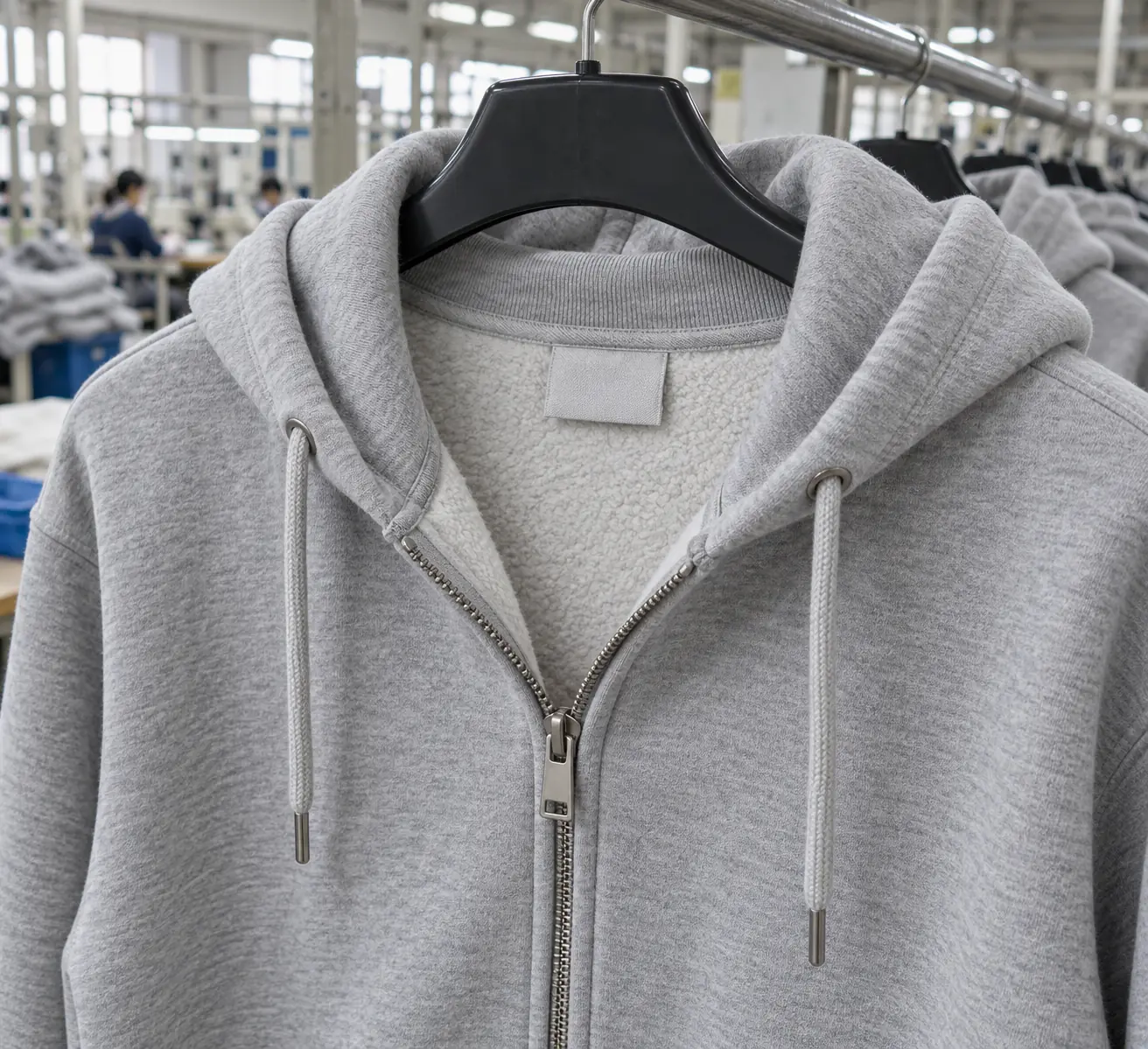
A hoodie brief that says “custom trims” can describe several different orders: a stock drawcord in a selected color, a standard metal tip with an engraved mark, or a new tip shape requiring tooling. These choices may look similar in a mood board, yet they create different purchasing obligations. The bill of materials, or BOM, should make those obligations visible before anyone compares quotations.
For buyers weighing private label vs fully custom trim development, the useful decision happens component by component. A garment can combine readily sourced labels and fasteners with one developed detail. This guide focuses on building a trim BOM that separates specifications, development work, approvals, and leftover inventory, so your team can authorize exactly what it intends to buy.
Make the component row your unit of decision
Private label describes how a garment carries your brand; it does not, by itself, specify how every component is made. A woven label can carry original artwork while using an established weave, fold, and size. Conversely, an apparently simple unbranded snap may require development if its geometry or attachment method is unusual. Ask what changes physically, rather than accepting “custom” as a complete specification.
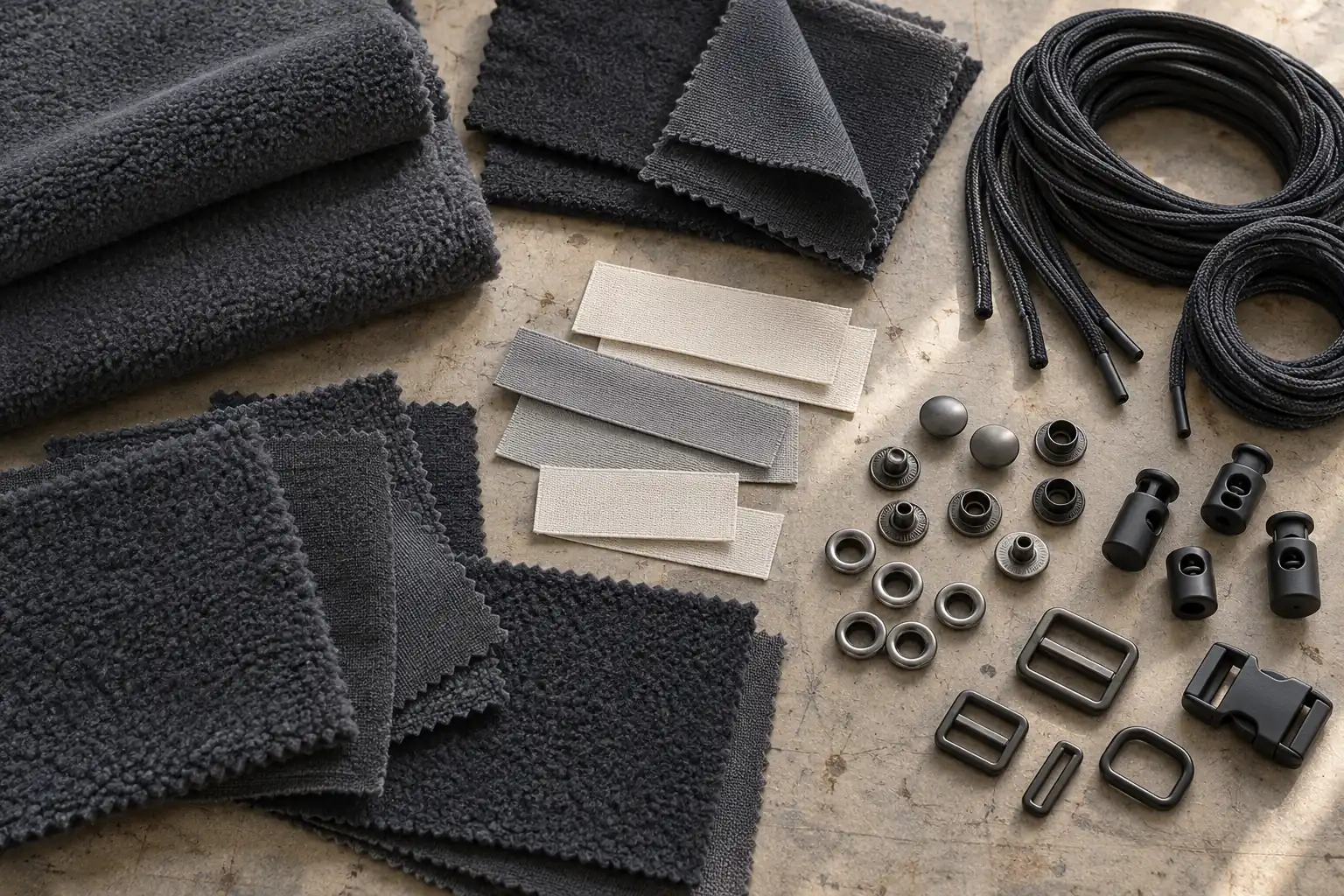
Give each trim a stable component ID and a sourcing route. Use “stock selection,” “existing base with modification,” or “new development” as working categories. These are purchasing descriptions, not quality rankings. A well-specified stock zipper can be a better functional choice than a new puller that has not been tested on the intended slider.
For a zip sweatshirt, list the zipper assembly, neck label, care label, drawcord, cord ends, and any reinforcing tape separately. Record whether the zipper price includes the puller. Otherwise, one quotation may include the complete assembly while another silently leaves a developed part outside the garment cost.
Write dimensions that a trim supplier can actually produce
Every row needs a component description, material or construction, dimensions, color reference, finish, placement, consumption, and approval reference. Keep the drawing revision and supplier reference alongside those fields. “Black metal hardware” leaves open the base material, surface treatment, sheen, and size; each can affect compatibility or appearance.
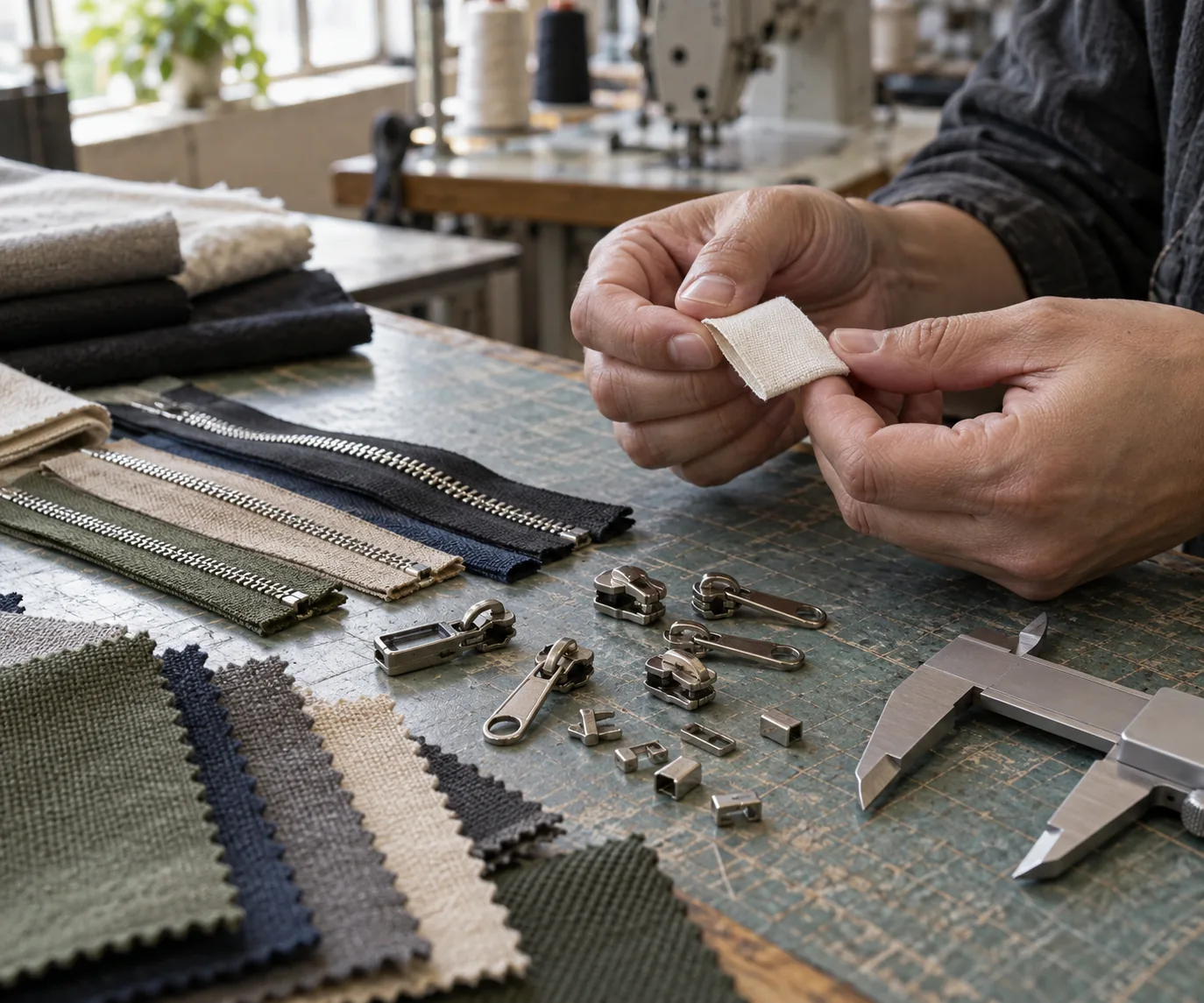
A label example might read: finished visible area 45 × 18 mm, center fold, 6 mm sewing allowance at each open end, soft woven construction, artwork revision C. Identify whether the dimensions describe the folded label or the unfolded piece. Supply a drawing where the wording could be interpreted two ways. These are example specifications, not universal requirements.
| Component | Ambiguity to remove | BOM detail to add |
|---|---|---|
| Drawcord | Length before or after tipping | Finished tip-to-tip length and cord diameter |
| Zipper | Tape length versus working length | Measurement endpoints, chain type, slider and end configuration |
| Metal badge | Decoration without attachment specification | Thickness, edge treatment, hole spacing and fixing method |
| Woven label | Overall size versus visible area | Fold drawing, seam allowance and artwork orientation |
Set tolerances with the supplier before approval. An example target of ±1 mm for a small label’s finished width may be practical for one construction and unsuitable for another. State the measuring method and conditioning state as well: a relaxed cord and a stretched cord will not yield the same length.
Keep development deliverables outside the garment quantity
A new molded cord end introduces deliverables that a stock cord end does not: a dimensional drawing, tooling proposal, trial pieces, and an approved production version. Put those items in a development register linked to the BOM component ID. The garment quantity should never be the only record of what the supplier has been asked to create.
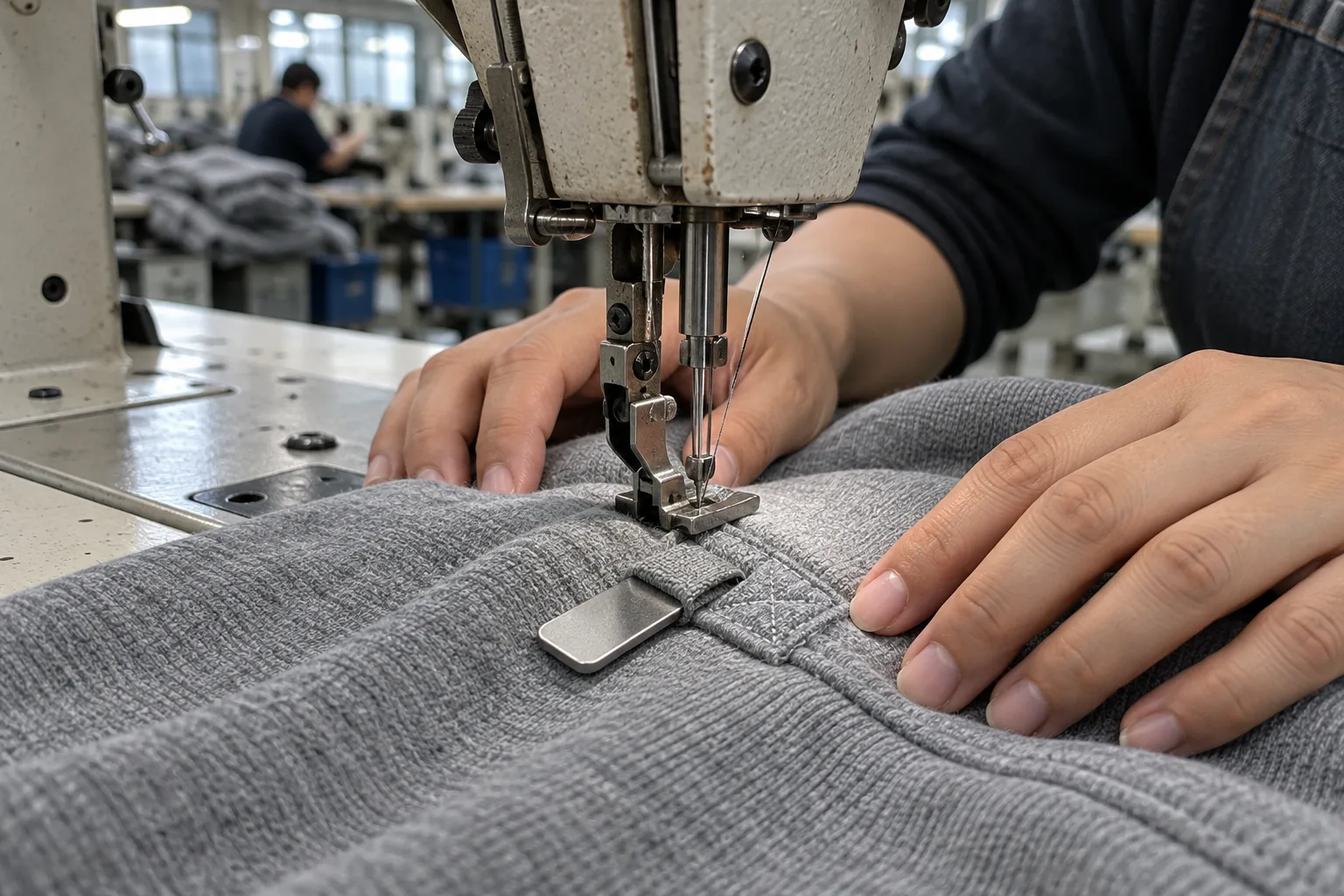
For tooling, confirm who pays, who owns it, where it is held, what maintenance arrangements apply, and whether another order can use it. Ask which changes require new tooling and which can be handled through a finish or artwork revision. Do not assume payment automatically includes unrestricted transfer rights; document the agreed terms.
For a hardware trial, request enough pieces to assess attachment and garment use, not only appearance on a tray. A badge might look correct loose but rotate on lightweight jersey. A puller might fit the slider yet catch on a storm flap. Link the approved assembly sample to the relevant BOM revision so these findings survive the move to production.
Reconcile pieces per garment with what you must purchase
Consumption and purchasing quantity answer different questions. A jacket with two cord ends uses two pieces per garment. For an illustrative order of 120 jackets, net consumption is 240 ends before any agreed allowance for sampling, testing, or production loss. Write those allowances separately rather than disguising them inside consumption.
A trim supplier may require a purchase quantity above garment demand, particularly for a developed shape or finish. Request its actual minimum and order increment. Ask whether minimums apply per design, color, finish, or size. Do not multiply a single minimum across every variant without confirming how the supplier groups production.
StitchQuote’s MOQ for most garment categories starts from 50 pieces per style; denim starts from 100 pieces per style. Those garment minimums do not establish the minimum for an independently developed trim. Show any excess component quantity, its ownership, storage arrangement, and planned disposition in the order documentation.
If leftover hardware is intended for a reorder, record its component revision and finish batch. An updated garment may need a different attachment, and a later batch can look different beside stored pieces. Ask for a quotation that distinguishes garment assembly, trim purchasing, development, and any agreed storage obligations so the comparison reflects the same scope.
Release each trim against a named approval
Use a release status for every component: specification pending, trial requested, submitted for approval, approved, or replaced. Include an approver and date. A garment sample approved for fit should not automatically release a substitute label or temporary zipper for bulk purchasing.
Mark temporary components explicitly in sample comments. For example: “Fit approved using available zipper; production zipper remains pending against component Z01 revision B.” That sentence separates two decisions and prevents a sample-room workaround from becoming the purchasing instruction.
A seven-day sample is available from StitchQuote for standard styles with confirmed specifications and available materials. Complex styles, custom washes, and custom-developed fabric take longer. A newly developed trim also needs its own confirmed schedule; do not treat the standard-style sample window as a promise for tooling and component approval.
Freeze the approved BOM before placing the relevant bulk trim order. If a change follows, record affected quantities, committed material, revised delivery expectations, and who accepts the consequence. StitchQuote’s services include cut-and-sew, private label, sampling, fabric and trim sourcing, branding through woven labels, prints and embroidery, and QC before packing. Define the required scope in your inquiry.
Check delivered trims against the BOM and the garment
QC needs both a component reference and an assembly reference. Keep an approved physical sample where possible, supported by drawings and photographs. Photos alone may conceal sheen, stiffness, edge sharpness, or a difference in cord hand feel. Agree inspection quantities and acceptance criteria for the project before bulk delivery.
- Identity: Match component ID, revision, finish and color to the approved purchase specification. Quarantine substitutions pending review.
- Dimensions: Measure the defined endpoints with an appropriate tool. Check attachment holes, sewing allowances and mating parts as well as visible size.
- Assembly: Confirm orientation, placement and secure attachment on the intended garment construction. Check for puckering, rotation, exposed edges and restricted zipper movement.
- Care performance: Evaluate representative assemblies under the intended care method for staining, corrosion, distortion or loosening. Agree the procedure and acceptance criteria rather than assuming a universal test.
- Reconciliation: Record accepted pieces, rejected pieces and retained stock. Keep finish batches identifiable when visual matching matters.
When a component fails, identify whether the defect belongs to the supplied part, the attachment operation, or the specification. Replacing a badge will not fix an unstable attachment layout. Close the corrective action against the BOM row and assembly instruction before approving the affected production.
Questions buyers ask before freezing the trim list
Can one developed trim be used across several styles?
Yes, if the same specification works on each garment. Check fabric thickness, attachment access, care requirements, and visual scale. Share a component ID only when the part is truly interchangeable; use separate consumption entries for each style.
What if the requested finish is only available on a different base material?
Treat that as a specification change. Review weight, attachment behavior, care performance and appearance before approval. Update the BOM and approved sample reference; a similar color does not establish equivalent performance.
Should a quotation include an unfinished trim decision?
It can include a clearly identified provisional option, with assumptions and exclusions stated. Ask what event makes the quotation firm, such as artwork approval or tooling review. Keep provisional components visibly unreleased for purchasing.
What should accompany the first trim inquiry?
Send the component list, drawings or artwork, garment quantities by variant, intended care method and requested approval dates. Flag which details are fixed and which allow supplier suggestions. That gives sourcing a usable brief and makes alternatives easier to compare.
Related reading
- Prepare the tech pack supporting your trim BOM
- Review sampling and garment MOQ considerations
- Explore private label manufacturing services
- Discuss your component specifications with StitchQuote
Request a manufacturing quote
Share your product type, quantity range, and destination. We usually reply within one business day.