Custom Streetwear, Casualwear & Denim Manufacturer•MOQ 50 pcs•Denim MOQ 100 pcs•7-Day Sample Available

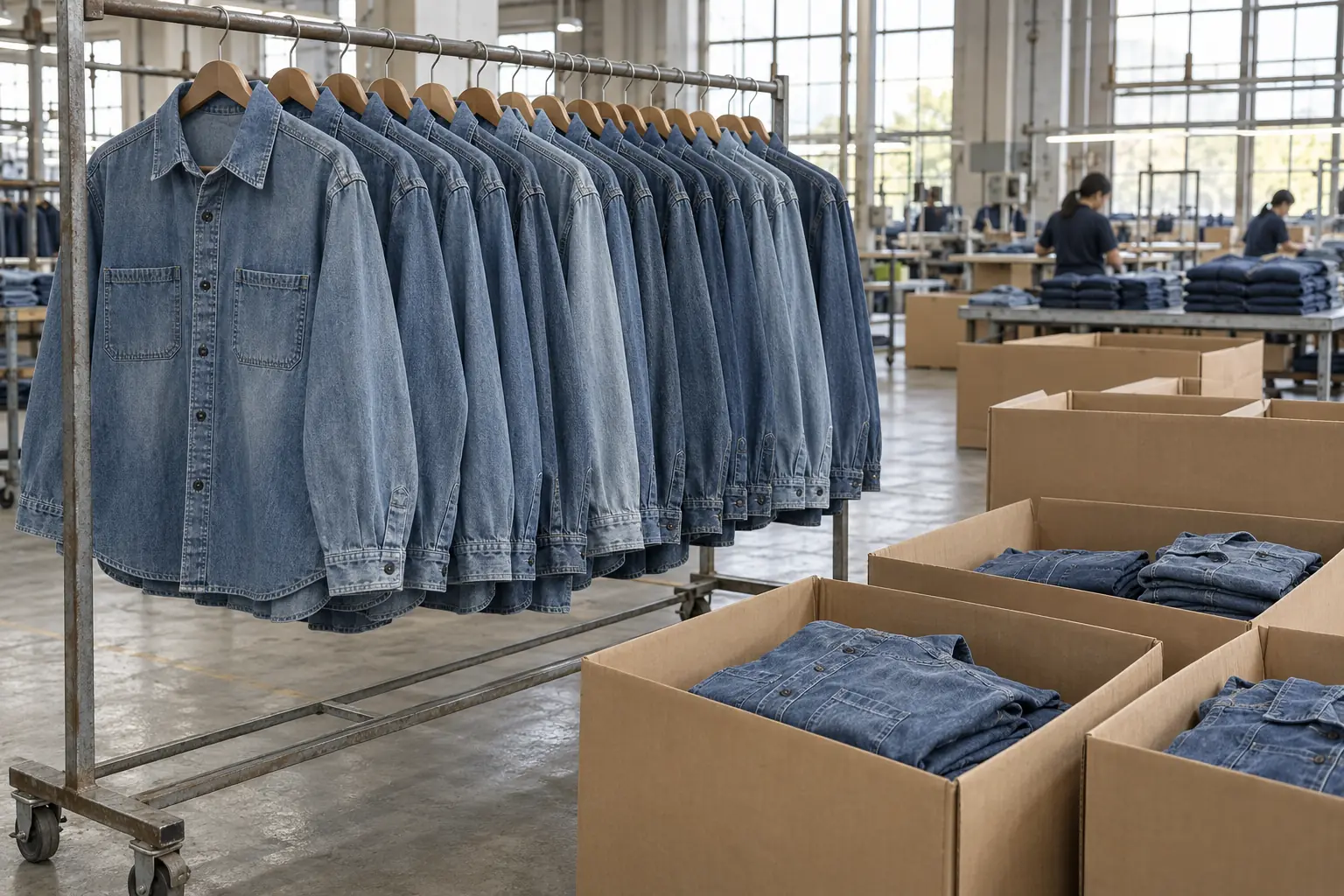
Production Lead Time vs Calendar Lead Time in Apparel Orders
Use this factory-side guide to compare production lead time vs calendar lead time in apparel orders more clearly across supplier fit, quote scope, approvals, and.

A launch date can slip even when a sewing line finishes on schedule. The gap often sits outside sewing: a fabric lot awaiting approval, a missing care label, a sample courier journey, or a freight booking made before cartons were ready. Buyers need to check what a quoted duration includes before using it to promise stock to a retailer or announce a release.
Production lead time describes a supplier-defined manufacturing window. Calendar lead time covers the elapsed journey between agreed starting and finishing events, including waiting days. Neither term has a universal boundary. This buyer checklist helps you turn a timing estimate into an order schedule with named owners, approval evidence, and a delivery endpoint that matches your business commitment.
Check the first and last event behind every quoted duration
Before comparing suppliers, ask each to complete the same sentence: “This duration begins when ___ and ends when ___.” One quotation may start after bulk materials arrive; another may start after the deposit and approved sample are received. Their numbers cannot be compared until those conditions match.
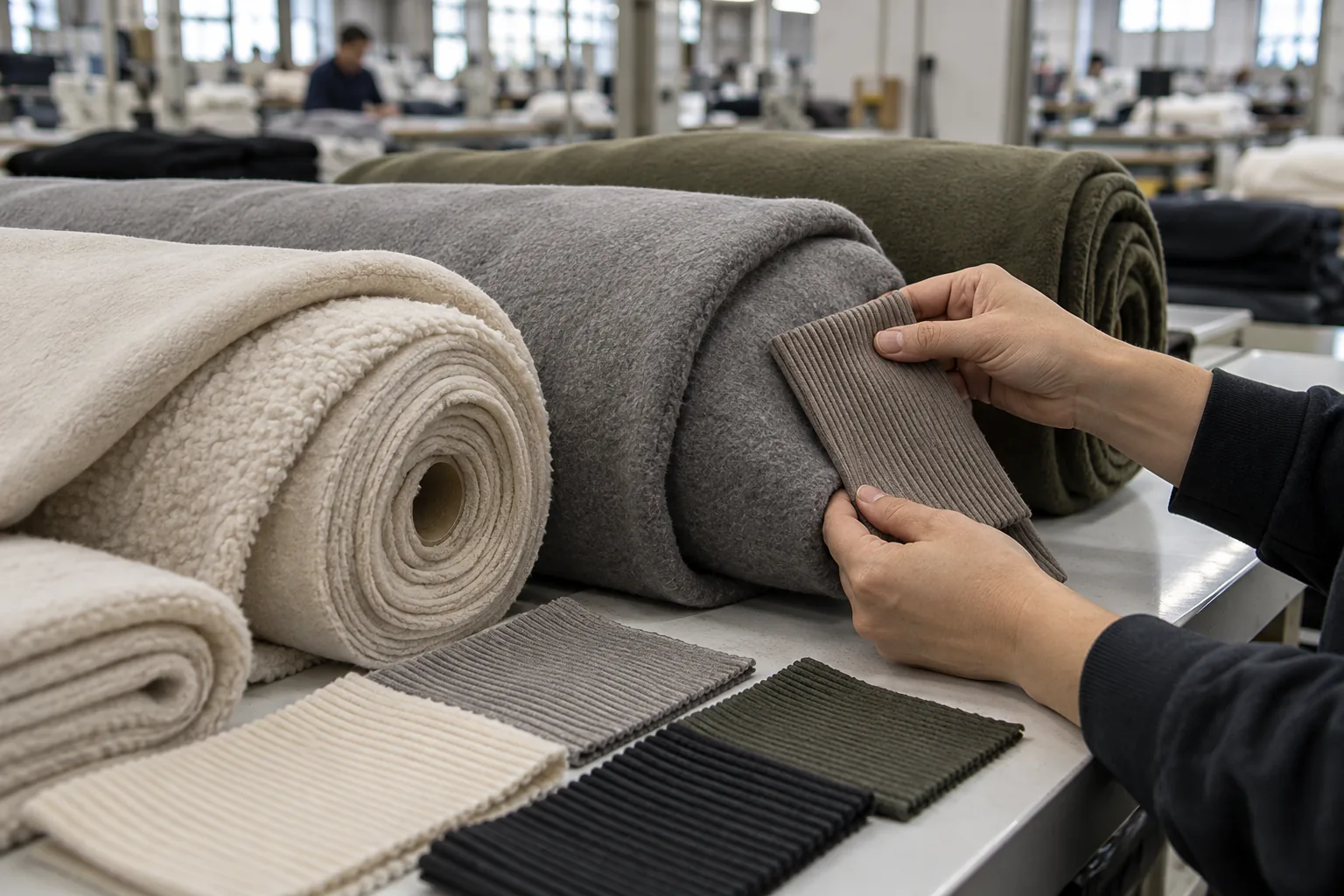
Specify whether days are working days or calendar days, and which holiday calendar applies. A hypothetical 20-working-day manufacturing window spans four weeks under a five-day working pattern, before closures or queues. Treat that as arithmetic for a planning example, not a supplier promise. Also establish whether the clock pauses when the buyer requests a change.
| Checkpoint | Buyer question | Evidence to request |
|---|---|---|
| Start | Which approvals and materials must be complete? | Written release conditions |
| Manufacturing finish | Does completion include decoration, finishing, and packing? | Operation list with owners |
| Handover | Are inspection and shipment release included? | Inspection and release milestones |
| Arrival | Is the endpoint a port, warehouse, or sellable stock? | Transport scope and receiving allowance |
Save these definitions beside the quotation. A duration without its boundaries is an estimate you cannot reliably use in a launch plan.
Audit the order inputs before accepting a start date
A purchase order is not proof that an order is ready for production. Check the style revision, quantity by size and color, fabric specification, decoration artwork, label content, and packing method. Each should have one approved version accessible to the people sourcing materials and making the garment.
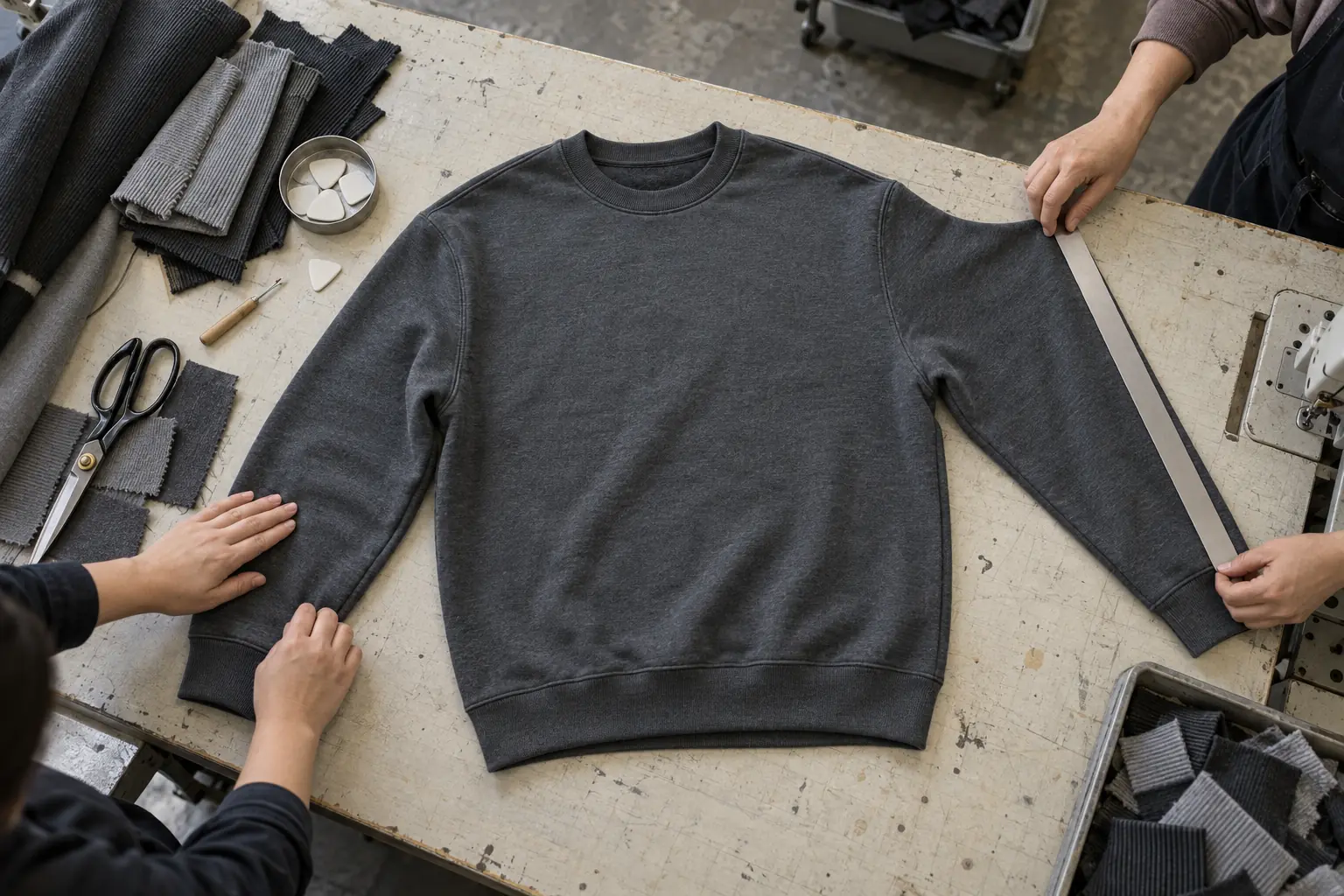
For a hypothetical 240-piece sweatshirt order, “heavy cotton fleece” leaves several decisions open. A usable brief could specify 400 gsm cotton fleece, brushed reverse, approved body color, matching rib construction, and an embroidery position measured from the neckline. These are example specifications, not a recommended standard for every sweatshirt. Confirm acceptable weight variation and measurement tolerances separately.
Check readiness at component level. Stock body fabric does not guarantee matching rib is available. An approved zipper appearance does not confirm the required lengths for every size. Request the expected arrival and approval status of each component that could prevent cutting, sewing, finishing, or packing.
StitchQuote offers cut-and-sew, private label, sampling, fabric and trim sourcing, branding through woven labels, prints and embroidery, and QC before packing. MOQ for most categories starts from 50 pieces per style; denim starts from 100 pieces per style. Confirm the proposed size and color split for the project instead of assuming every variation shares identical purchasing requirements.
Reserve buyer approval time as carefully as sewing time
Assign one decision owner for each approval and agree how consolidated comments will be returned. A designer approving fit on Monday and a merchandiser changing the fabric on Thursday can reopen the same sample round. Decide who resolves conflicting feedback before the sample arrives.
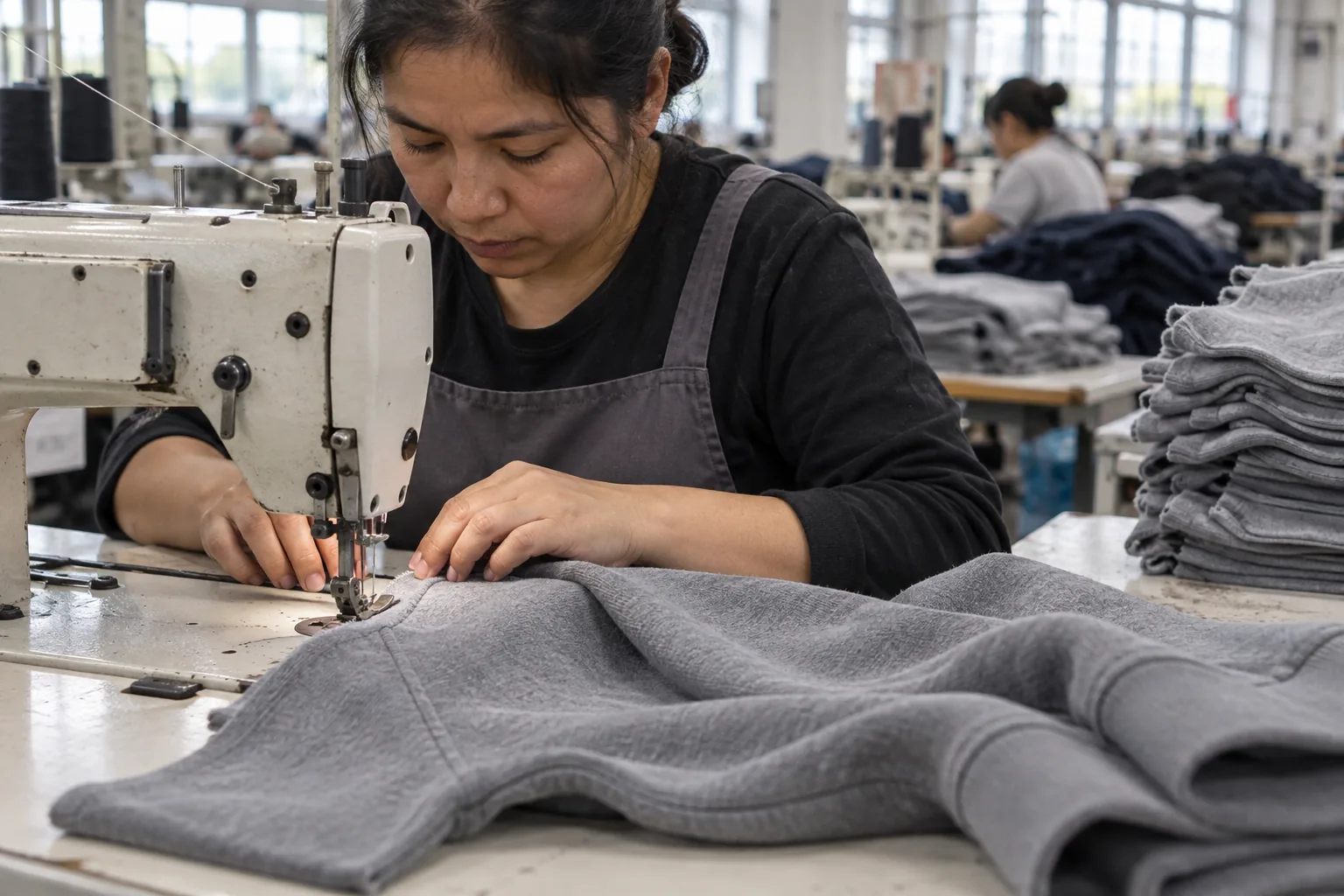
Separate sample making from sample delivery, review, and any revision. StitchQuote has a 7-day sample available for standard styles with confirmed specifications and available materials. Complex styles, custom washes, and custom-developed fabrics take longer. That sample-making availability does not establish the total time needed to receive, assess, revise, and approve a garment.
For example, a brand might allocate two working days for an internal fit review after receipt. This is a buyer planning choice, not an industry guarantee. Reserve the reviewer and fit model in advance, then confirm whether physical approval is necessary or whether photographs can close a specific cosmetic point.
Record comments against measurement points and revision numbers. “Increase sleeve length by 1 cm from the approved measurement method” is actionable; “make the fit more relaxed” invites interpretation. After a revision, request confirmation of which earlier approvals remain valid and whether the production slot still holds.
Find the dependency that actually controls release
Ask for a sequence showing which activities can overlap and which require a previous approval. Label sourcing may proceed alongside fit sampling when label content is fixed. Bulk cutting should not be scheduled as if it can proceed independently of the approvals required for fabric and fit. Parallel work saves time only when its inputs are stable.
Consider a washed denim overshirt with embroidery. If embroidery occurs before washing, approve how the thread color and stitch appearance behave after the wash. If it occurs afterward, confirm how placement will be controlled on the finished garment. The operation order changes the approval sequence and the point at which a defect can be corrected.
Identify the latest-ready required input, then follow its downstream work to shipment release. A delayed main label might be recoverable if insertion happens later; delayed pocketing can stop assembly earlier. Ask the supplier which operation each missing item blocks instead of treating all material delays as equivalent.
Check whether a line booking is provisional or confirmed, what conditions protect it, and when it expires. If an approval misses the booking deadline, request a revised completion date. Adding the missed approval days to the old date may overlook the wait for another available production slot.
Protect the inspection and correction window
Do not make the final inspection date identical to the carrier collection date without understanding the risk. A failed check needs time for sorting, repair, replacement where feasible, and reinspection. StitchQuote performs QC before packing; agree the project-specific inspection scope and how findings affect release.
- Measurements: List points of measure, measuring method, and agreed tolerances by size. An example body-length tolerance of ±1 cm is only a proposal until accepted for that garment and fabric.
- Appearance: Compare bulk color, embroidery placement, print alignment, seam appearance, and wash effect with the approved references under consistent viewing conditions.
- Function: Check zipper movement, snap attachment, pocket access, and other features that influence wear. Define any required performance testing before production.
- Quantity and identity: Reconcile size and color counts with the purchase order, including label content and carton assortment.
- Correction ownership: Name who approves repairs, who verifies corrected pieces, and what evidence closes the finding before shipment release.
For washed garments, specify whether measurements apply before or after washing and conditioning. Otherwise, two apparently conflicting inspection reports may reflect different garment states. Record the agreed method alongside the approved sample so the last week is spent checking production against a shared standard.
Work backward from stock that can actually be sold
Define the commercial deadline as a receiving event: for example, inventory counted and available at the fulfillment warehouse. Work backward through warehouse intake, transport, customs where relevant, collection, packing, inspection, and manufacturing. Confirm transport assumptions with the responsible logistics provider; a factory completion date alone cannot establish an arrival date.
Keep contingency visible as a separate allowance tied to a risk. An unapproved wash needs room for another development round; an established repeat style may need a different allowance. Do not hide contingency inside every operation, because the team then loses sight of where flexibility exists.
At each review, record the planned date, current forecast, blocker, owner, and next decision deadline. If a date moves, ask which downstream commitments change. A partial shipment may help only if it contains usable size runs and the additional handling is acceptable. Agree its assortment, inspection, and transport implications before treating it as a recovery plan.
Questions to close before you publish a release date
Can I use the sample completion date to predict bulk delivery?
No. Sample completion proves one development milestone. Bulk timing also depends on material quantities, approvals, production availability, finishing, inspection, and delivery arrangements. Request a bulk schedule after identifying which conditions are already satisfied.
Does a repeat order automatically keep the previous timeline?
No. Confirm fabric lot availability, trim stock, current capacity, and whether specifications have changed. Keep the approved reference, but check that a new material lot meets it before relying on the previous order’s timing.
What should I ask when a supplier says an order is ready?
Ask whether “ready” means sewing complete, inspection passed, packed, or released for collection. Request the remaining steps and their owners. Only the agreed handover condition should trigger the corresponding logistics commitment.
Use these resources to prepare the documents and questions needed for a schedule review:
- Prepare a tech pack with clear production inputs
- Review sampling and MOQ planning
- Contact StitchQuote to discuss your order schedule
Request a manufacturing quote
Share your product type, quantity range, and destination. We usually reply within one business day.