Custom Streetwear, Casualwear & Denim Manufacturer•MOQ 50 pcs•Denim MOQ 100 pcs•7-Day Sample Available

What a Good Private Label Inquiry Should Include
Use private label inquiry checklist apparel to compare private label decisions more clearly, protect brand consistency, and keep product, trims, and commercial scope.

Your first collection starts taking shape before the first sample arrives. The opening inquiry determines whether a manufacturer sees a coherent launch or a folder of unrelated ideas. A useful brief explains what belongs in the first release, how much you intend to order, and which decisions still need technical advice.
For a new streetwear or premium-basics brand, the aim is to make a small collection assessable. A heavyweight tee, a sweatshirt, and a denim trouser may share a visual identity, but each creates different material, sampling, and quantity commitments. Define those commitments clearly enough that the reply helps you decide what to develop first.
Draw a boundary around the launch assortment
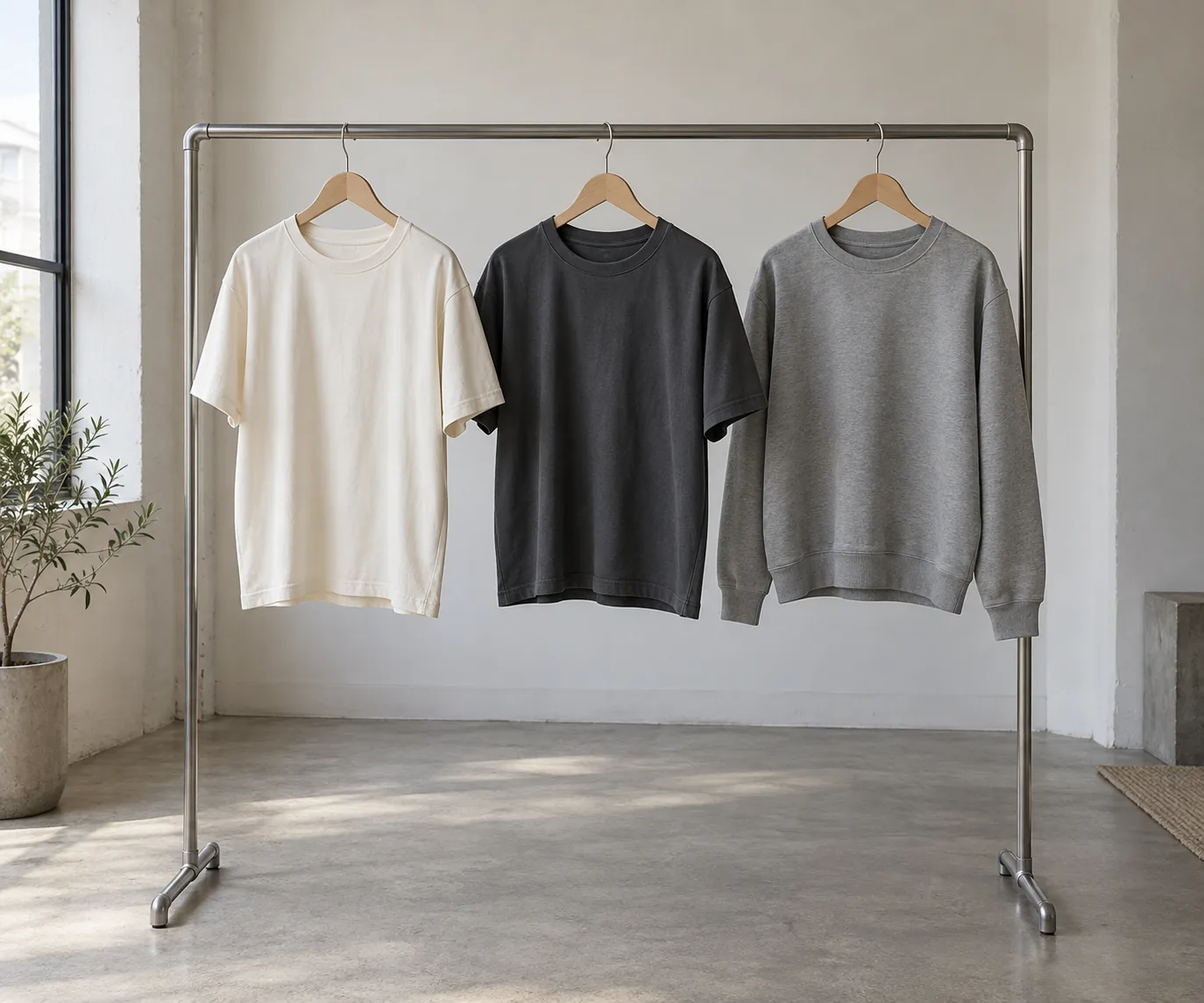
Begin with the collection’s purpose: who will wear it, where it will sell, and what buying occasion it serves. “An online debut of relaxed everyday separates for warm weather” gives more useful direction than “premium clothing.” Follow that sentence with a list of launch styles and a separate list of ideas reserved for later.
Give every proposed garment a stable identifier, such as T01 for a short-sleeve tee and S01 for a crewneck sweatshirt. Keep these identifiers consistent in filenames, reference photos, and quantity sheets. Otherwise, a revised neckline can easily be mistaken for an additional style.
Describe each style’s role. Is the tee the accessible entry product? Is the sweatshirt the visual centerpiece? This hierarchy helps you protect the features that make the collection recognizable while simplifying less important details. For example, a distinctive sleeve shape may matter more than developing an exclusive drawcord.
State the boundary explicitly: “Please assess T01 and S01 for launch; D01 is a later development option and should be quoted separately.” That instruction prevents an exploratory denim idea from becoming a dependency for the whole release.
Translate the assortment into quantities a supplier can assess
A collection total does not explain the production task. An inquiry for 200 pieces could mean two styles or ten, with very different setup requirements. Show quantities by style and proposed color, then identify whether the size split is firm or provisional.
StitchQuote’s MOQ for most categories starts from 50 pieces per style; denim starts from 100 pieces per style. These starting points do not establish an unrestricted color split or the minimum for every custom material. Ask how the proposed combinations affect feasibility before treating them as confirmed.
| Launch item | Proposed order | Decision needed |
|---|---|---|
| T01 relaxed tee | 100 pieces across two colors | Confirm whether 50 per color is workable |
| S01 crewneck | 50 pieces in one color | Assess available fleece options |
| D01 denim trouser | 100 pieces, later release | Quote wash development separately |
This is an illustrative planning sheet, not a confirmed production arrangement. Add the size range and an allocation for each color when available. If demand is untested, label the allocation “provisional for quotation” and ask when the final breakdown must be locked.
Also separate samples from bulk quantities. Requesting one fit sample in a base size is different from requesting samples of every color and size. Spell out the intended sample coverage so the manufacturer can explain what remains unverified.
Give each launch style a minimum technical identity
You can begin a conversation before every technical detail is complete, but each style needs enough information to distinguish it from a generic garment. Include front and back views, fabric direction, fit intent, base size, and the details that affect construction.
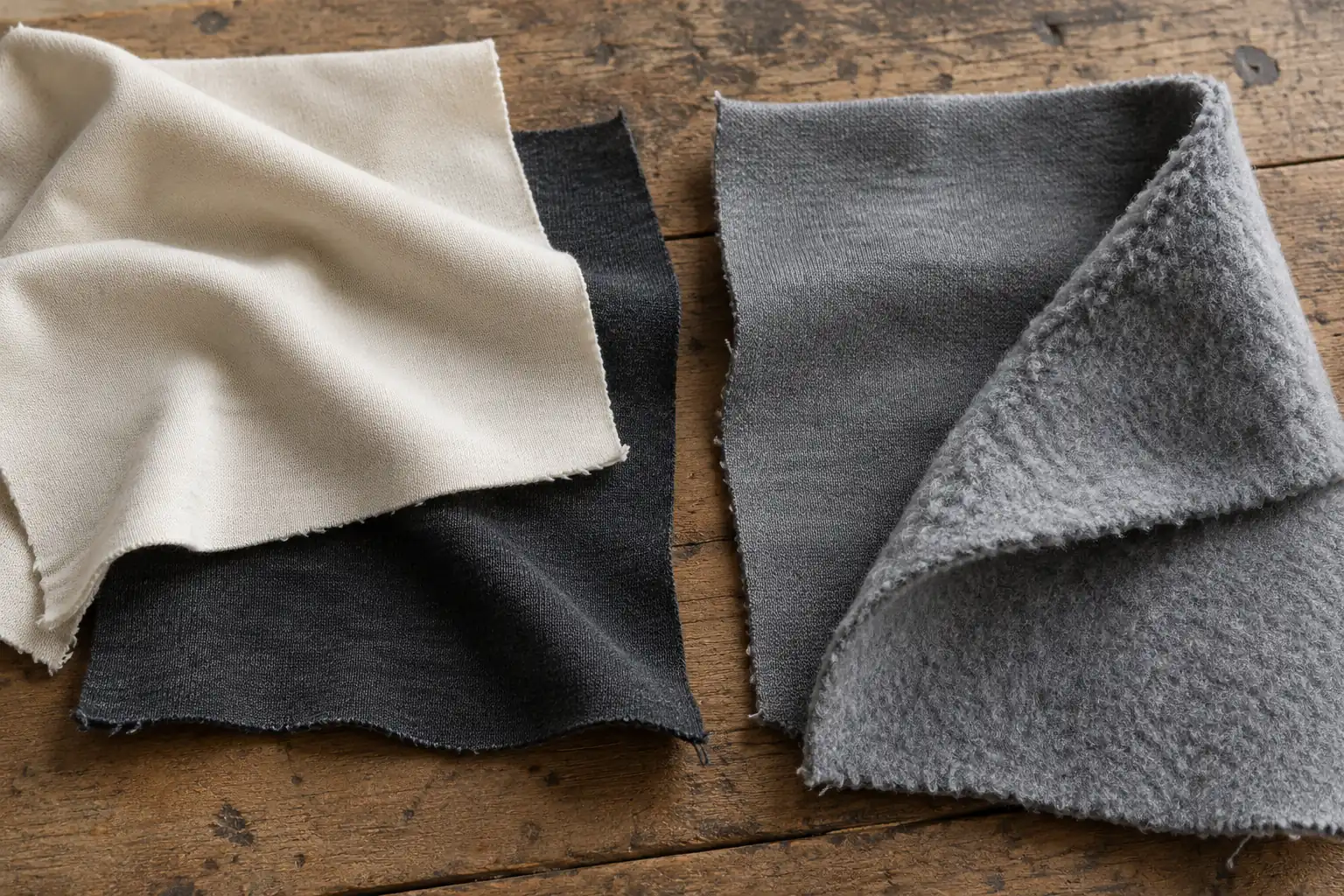
For T01, a useful starting description might be cotton jersey around 240 gsm, a relaxed body, dropped shoulders, and a rib crew neckline. Those are proposed specifications to assess, not evidence that a particular fabric is available. Add whether you prefer a dry, compact surface or a softer drape; equal fabric weights can feel very different.
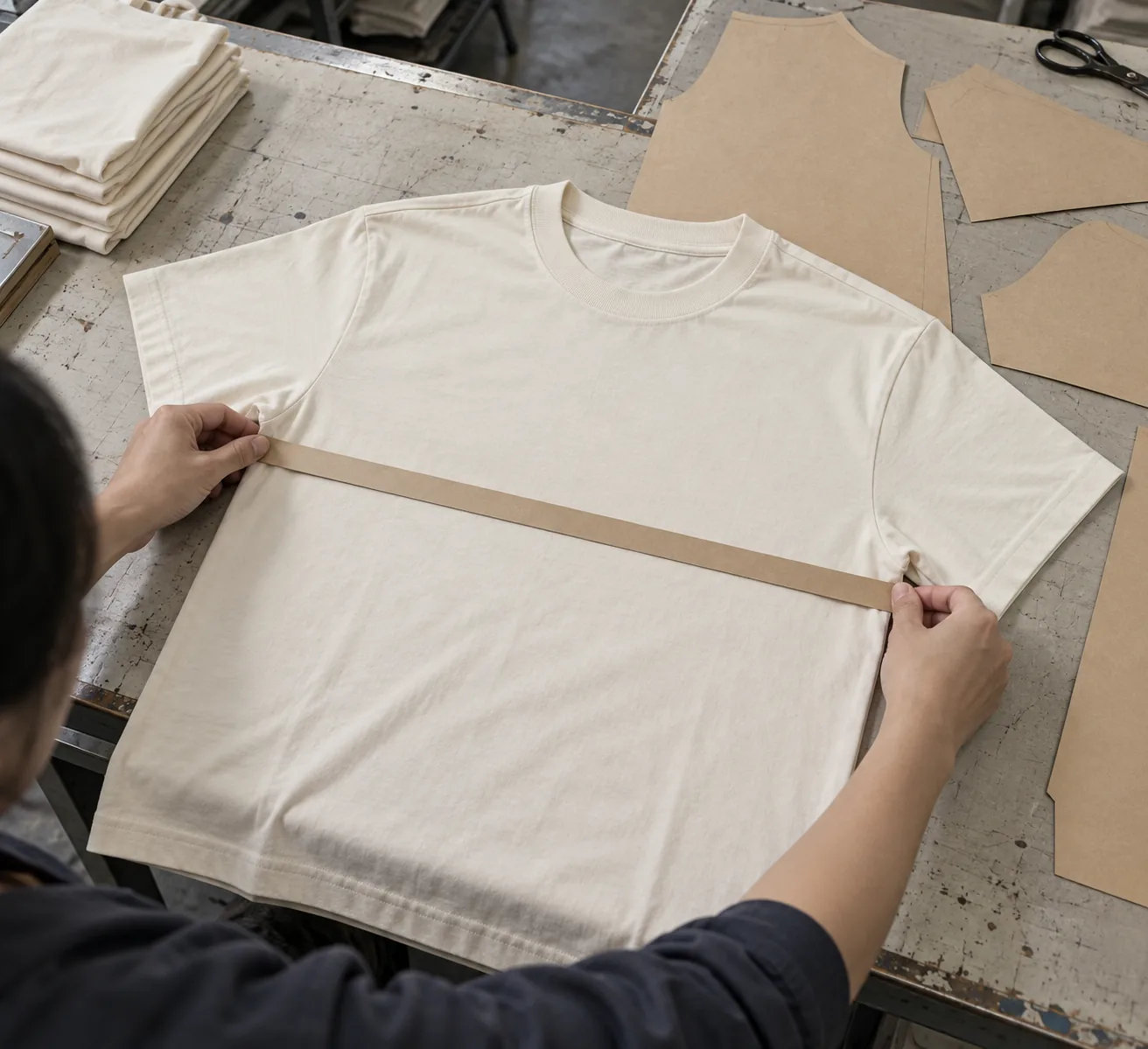
Include a few defining measurements with measurement methods. For example, specify chest width measured flat below the armhole, body length from the high shoulder point, and sleeve length from the shoulder seam. A reference garment can help, but identify exactly what to copy and what to change.
Keep unknowns visible. “Rib composition: supplier recommendation requested” is more useful than leaving the field empty. For a sweatshirt, ask about rib recovery and compatibility with the body fabric. For denim, identify the intended wash appearance and whether the supplied measurements describe the garment before or after washing.
Separate nonnegotiable features from preferences. A buyer might require the cropped body proportion while accepting an available fabric weight close to the initial target. That distinction gives the manufacturer room to suggest a workable route without silently changing the design.
Share collection details without assuming every material can be shared
A first release often benefits from repeated branding and a restrained palette. Tell the supplier which elements should remain consistent across styles: woven-label dimensions, artwork versions, thread appearance, or the placement logic for a small chest graphic.
Be precise about whether consistency means identical components or a similar visual result. A black jersey tee and black fleece sweatshirt may not look identical under daylight, even when both are described as black. Ask how color references will be reviewed across different fabric types, and identify whether a close visual relationship is acceptable.
Provide artwork at intended dimensions and explain placement from measurable garment landmarks. “Centered graphic, 80 mm wide, with the top edge 90 mm below the front neck seam” is a reviewable proposal. “Small logo near the collar” leaves scale and position open to interpretation. Final placement should be checked on the actual sample.
StitchQuote’s services include cut-and-sew, private label, sampling, fabric and trim sourcing, and branding through woven labels, prints, and embroidery. Specify which support you need for each style. If you already supply a trim, include its dimensions and attachment requirements so sourcing assumptions remain clear.
Request a reply that helps you choose the development sequence
End the commercial brief with the decisions you need from the response. Ask for feasibility by style, material alternatives, sample scope, quote assumptions, and the information still required. Request separate treatment of optional additions so you can see which choices increase complexity.
Describe your budget as a target and state its basis: garment only, branded and packed, or another clearly defined scope. Specify the delivery destination and ask what transport and other charges are included or excluded. A comparison is only useful when the quoted scopes match.
Give both the desired launch date and the date stock must reach you. Ask the manufacturer to distinguish material preparation, sample making, buyer review, bulk production, and shipping. Your own approval time belongs in that schedule.
A 7-day sample is available from StitchQuote for standard styles with confirmed specifications and available materials. Complex styles, custom washes, and custom-developed fabrics take longer. Ask whether your proposed style qualifies; do not build the entire launch calendar around that sample window.
Attach an acceptance checklist before approving development
An initial inquiry should identify how you intend to judge the samples and eventual order. StitchQuote includes QC before packing, but the project still needs agreed product requirements. The following checklist gives the discussion a concrete starting point.
- Fit and measurement: name the base size, measurement methods, and priority dimensions. A proposed tolerance such as ±1 cm on flat chest width must be reviewed for the specific garment; it is not a universal standard.
- Fabric behavior: request an agreed wash-and-measure procedure, including care conditions and which dimensions to compare. Set acceptable shrinkage with the supplier before approval.
- Branding: check artwork version, dimensions, placement, embroidery appearance, and the comfort of backing or labels against the skin.
- Construction: identify visible seam requirements and inspect neckline shape, hem consistency, seam puckering, and loose threads.
- Order accuracy: confirm style, color, size, label, and packing instructions against the final quantity sheet.
Record approved changes in one dated revision. If you shorten the body after reviewing the sample, update the measurement sheet as well as the comments. Ask whether the change requires another sample before bulk approval, especially when it alters proportions or construction.
Questions buyers ask when narrowing a first release
Can I send the inquiry before deciding between a tee and a sweatshirt?
Yes. Present them as alternatives, explain the same launch objective, and ask for separate feasibility feedback. Identify the factors driving your choice, such as season, intended fit, or available order volume. Do not imply that both are confirmed orders.
Should every first-collection style use the same fabric?
Only where the fabric suits the garment. A shared jersey may work for two tee shapes, while a structured crewneck needs a different assessment. Ask whether sharing materials simplifies sourcing without compromising the intended weight, recovery, or silhouette.
What if I have references but no finished technical pack?
Annotate each reference with the feature it illustrates and provide your own target measurements. List the missing decisions and request development support. A collage alone cannot establish whether you want its fit, fabric, construction, or decoration.
When should a difficult style leave the launch plan?
Review it when its unresolved wash, material, or fit development threatens the required stock-arrival date. Ask for a separate development schedule, then decide whether the remaining styles still form a credible collection. Keep that decision visible in the updated brief.
Related reading and next steps:
- Send your collection scope for review
- Prepare the supporting technical pack
- Review sampling and MOQ guidance
- Explore private-label manufacturing support
Request a manufacturing quote
Share your product type, quantity range, and destination. We usually reply within one business day.