Custom Streetwear, Casualwear & Denim Manufacturer•MOQ 50 pcs•Denim MOQ 100 pcs•7-Day Sample Available

What a Serious Clothing Manufacturer Should Ask You Back
Use this factory-side guide to compare what a serious clothing manufacturer should ask you back more clearly across supplier fit, quote scope, approvals, and timing.

Before you send a complete tech pack, a factory’s reply can tell you whether the relationship deserves that investment. A supplier that immediately offers a price may be working from assumptions you have not seen. A supplier that asks targeted questions gives you something more useful at this stage: evidence of how it identifies uncertainty.
This is a screening exercise for brand buyers with a product direction but an unfinished production brief. You are looking for questions that reveal category understanding, material constraints, and approval discipline. The goal is to choose whom to brief properly, using a small, consistent set of information rather than asking several factories to develop the collection for you.
Give every candidate the same small starting point
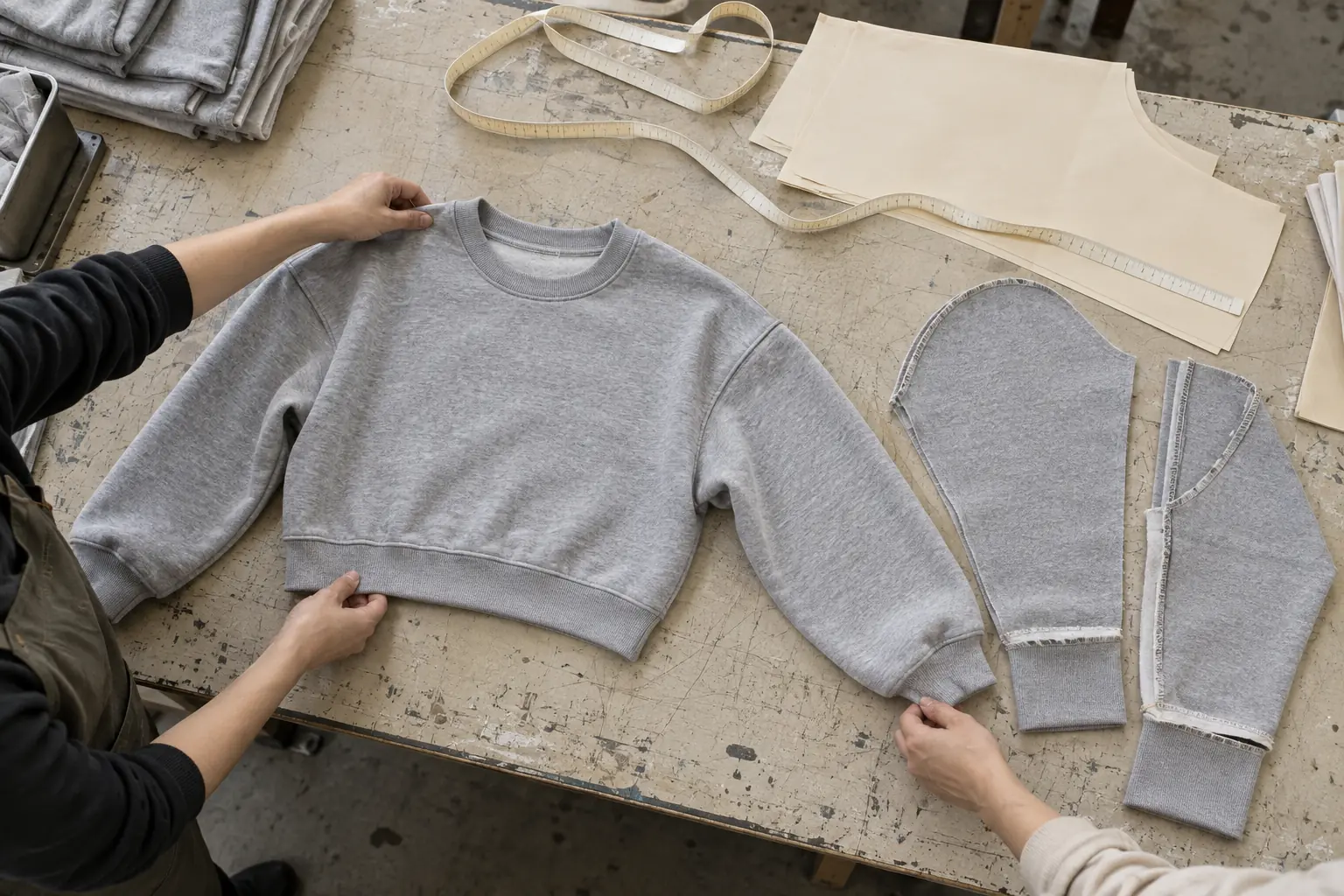
Send a one-page screening note containing the garment category, intended fit, approximate order quantity, likely color count, decoration method, and desired delivery window. Add one reference image with permission to use it, or a simple sketch. Mark unknown details as open decisions. Avoid presenting a visual reference as a complete manufacturing specification.
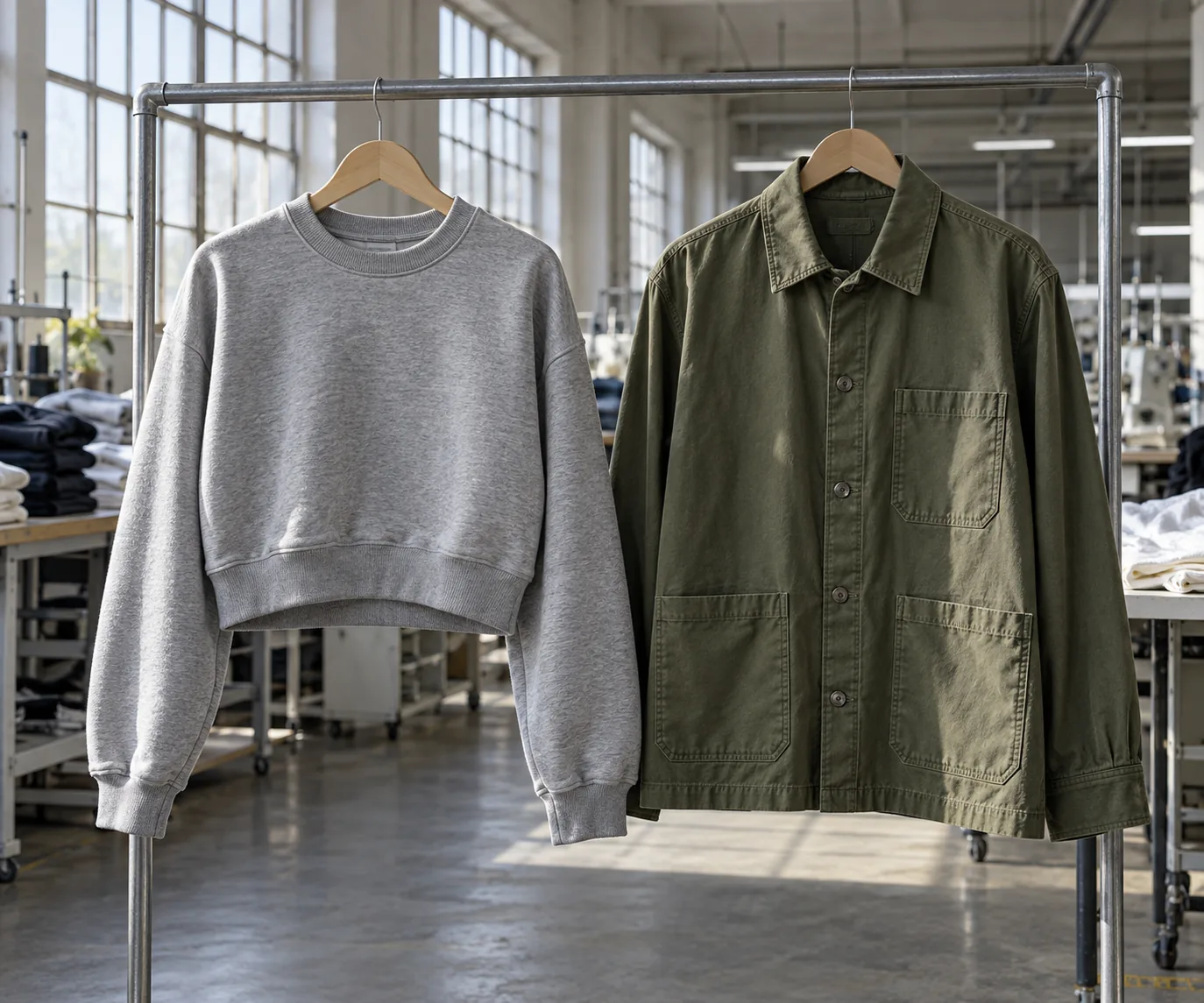
For example, describe a cropped sweatshirt with a wide body, firm rib hem, and a small chest embroidery. Say whether the fabric weight is a preference or a fixed requirement. If you have not selected fleece construction or fiber composition, leave those questions open instead of copying specifications from an unrelated product.
The useful response asks which features define the product and which can change. A question about hem recovery connects directly to the intended silhouette. A request for your entire brand story does less to establish feasibility. Compare the relevance of questions, not the length of the questionnaire.
Listen for questions that expose category-specific decisions
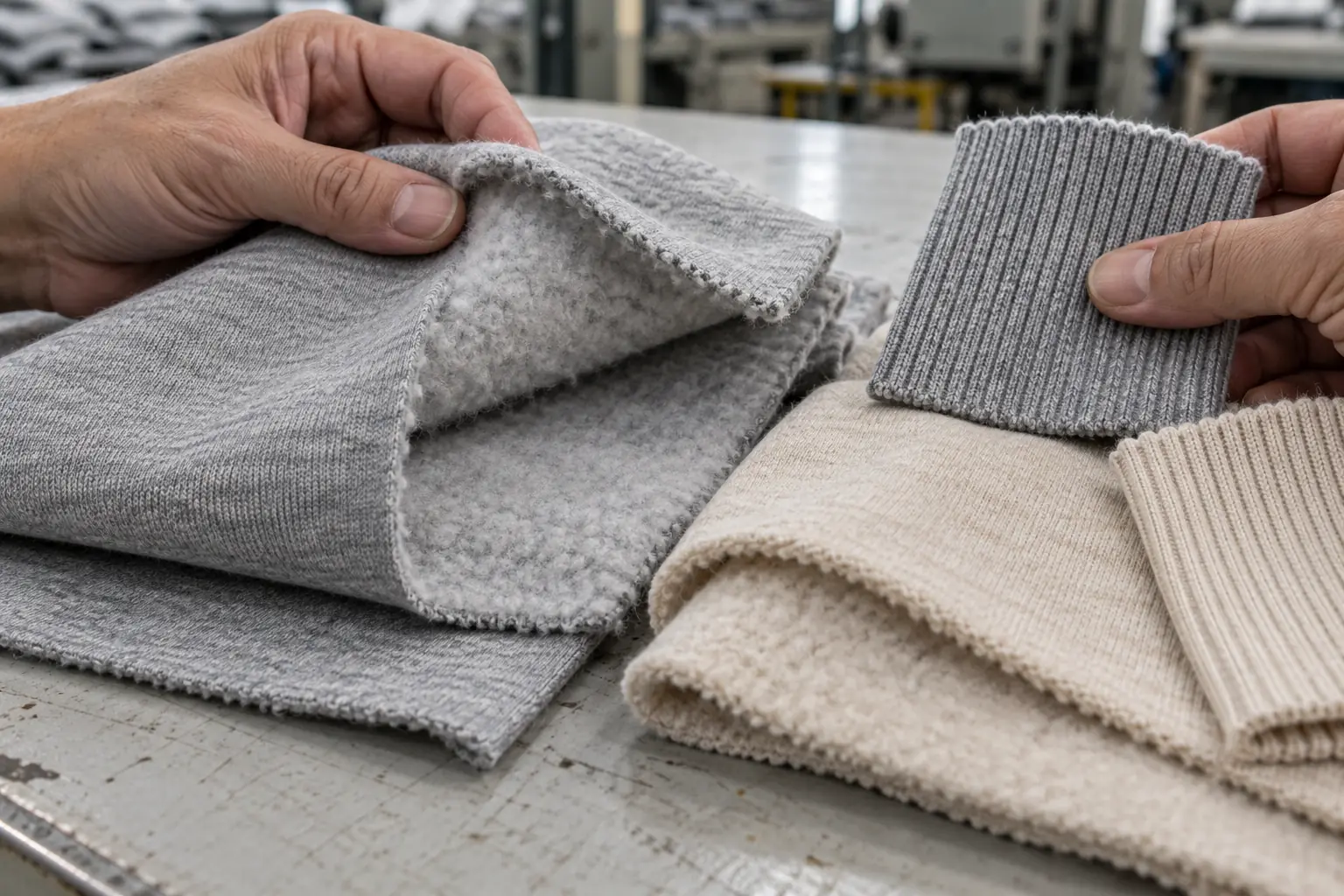
A useful first reply should contain something that could not be sent unchanged to every apparel buyer. For a heavyweight jersey tee, that might be a question about neck rib recovery, opacity, or the hand feel after laundering. For a woven overshirt, it might concern interfacing at the collar and whether the pockets must match a check pattern.
For denim, listen for questions about the intended wash, stretch content, and when measurements will be checked. A rinse and a heavily processed finish create different development needs. Asking whether your reference describes the unwashed garment or the finished appearance shows attention to a consequential distinction.
Follow up with “Which decision would you resolve first, and why?” A plausible answer identifies a dependency: select the fabric before judging drape, for example, or trial embroidery on the intended material before approving stitch density. Terminology alone is weak evidence; a clear explanation tied to your garment is stronger.
Separate garment quantity from the material buying problem
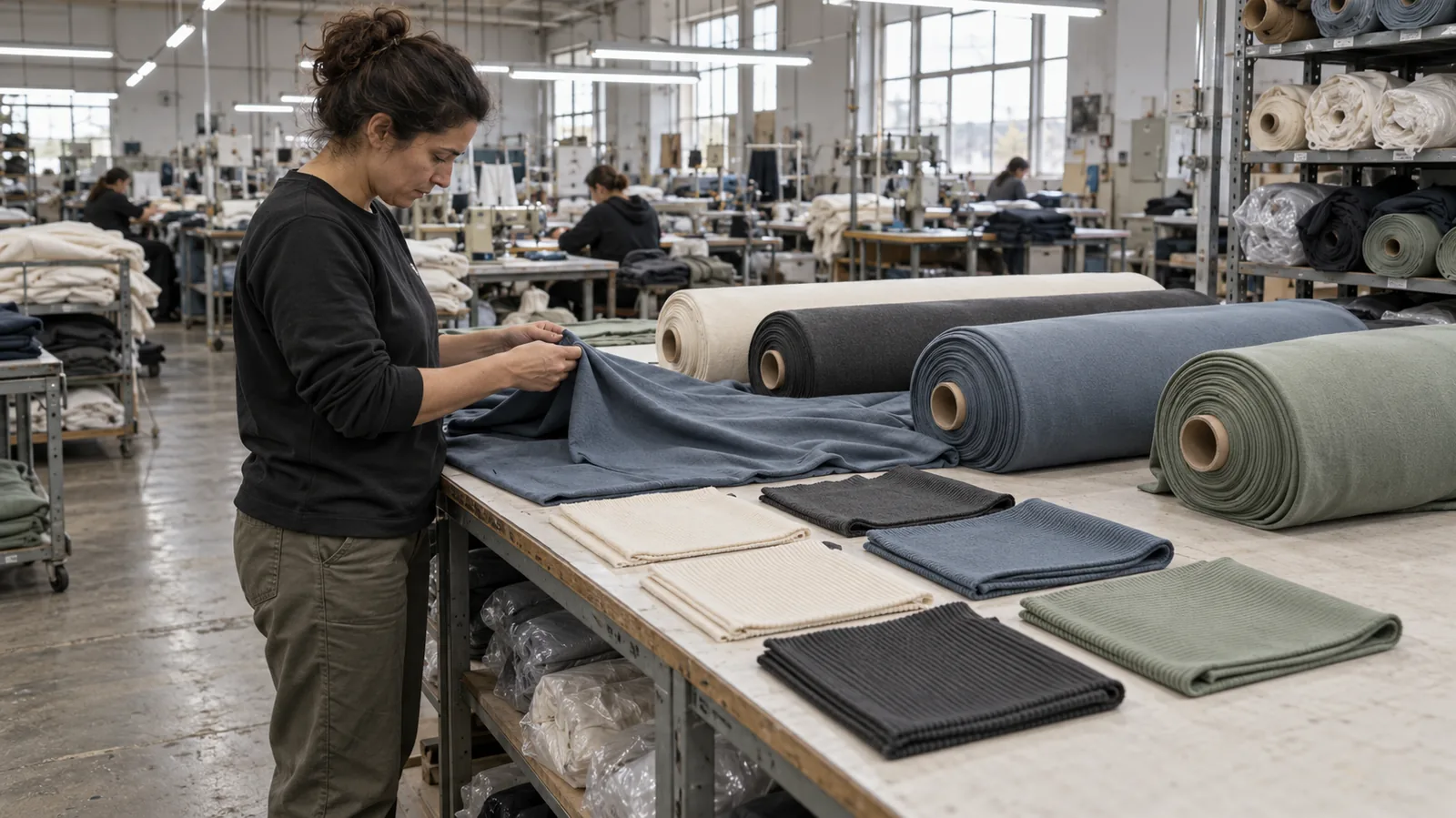
A factory should ask how your planned quantity divides across styles, colors, and sizes. “Two hundred units” does not establish whether you mean one style in two colors or five styles with separate fabrics. Those allocations affect cutting efficiency, material purchasing, and the number of approvals required.
Ask what happens if the proposed fabric or custom trim requires more material than your garments consume. A helpful response distinguishes available stock from custom development and identifies possible substitutions. It should also explain who approves a substitute and how any excess material would be handled before you commit.
StitchQuote’s MOQ for most categories starts from 50 pieces per style; denim starts from 100 pieces per style. These starting points do not establish every possible color split or material arrangement. During screening, request confirmation for your actual allocation, particularly if each color requires separately sourced rib, zipper tape, or decorative thread.
Use the second reply to test whether answers change the plan
The first message may follow a standard intake form. The second is where you can see whether the supplier uses your answers. Resolve one uncertainty and leave another explicitly open. Then check whether the suggested next step reflects that distinction.
| Your screening detail | Useful question back | What it reveals |
|---|---|---|
| Boxy tee with a close neckline | Is there a neck opening measurement or a reference sample? | Whether appearance is being translated into a checkable feature. |
| Small embroidered mark on lightweight jersey | What are the artwork dimensions and acceptable backing feel? | Whether decoration is considered with its supporting fabric. |
| Delivery needed for a fixed launch | When can fabric, fit, and artwork receive approval? | Whether the schedule includes buyer decisions. |
Suppose you confirm a 280 GSM cotton jersey preference but cannot yet specify the neck opening. A useful next step might be checking fabric availability while requesting a neckline reference. A firm sample promise that ignores the unresolved neckline leaves you unable to tell what will actually be made.
You do not need a finished pattern or free technical development to make this judgment. Ask for the proposed sequence, its assumptions, and the decision needed from you. That is enough to assess whether communication can support a more detailed brief.
Check how the supplier defines a sample and its clock
“Can you make a sample quickly?” invites an incomplete answer. A serious reply asks what the sample must prove. A fit sample in substitute fabric can help assess dimensions, but it cannot establish the final hand feel, wash result, or embroidery behavior on the production material.
Ask which inputs start the quoted development period: confirmed measurements, approved artwork, material availability, or receipt of a reference garment. Also establish what happens if a fabric choice changes after pattern work begins. These questions turn speed into a defined commitment you can evaluate.
StitchQuote offers a 7-day sample for standard styles with confirmed specifications and available materials. Complex styles, custom washes, and custom-developed fabric take longer. For screening purposes, the important follow-up is whether your proposed garment qualifies and which unresolved inputs prevent that determination.
A candidate should also ask who gives consolidated comments. If a founder approves fit while a designer later changes the silhouette, the sample cycle can restart. Identify one person to issue the final revision list, even when several people contribute feedback.
Ask what would make your garment fail inspection
Quality screening starts before a complete inspection plan exists. Describe one unacceptable result and ask how the factory would define and check it. For a premium basic, that might be a twisted body after washing. For an overshirt, it might be uneven pocket placement that becomes obvious when the front is buttoned.
The supplier should ask for measurable acceptance criteria or propose criteria for agreement. Use this short checklist to evaluate the conversation:
- Measurement method: Does the supplier ask where a measurement starts, whether the garment lies relaxed, and whether it is checked before or after washing?
- Tolerance: Can it discuss an illustrative limit, such as ±1 cm on laid-flat half-chest, while confirming that the actual limit must suit the fabric and style?
- Appearance: Does it request a reference for acceptable seam puckering, embroidery placement, or wash variation?
- Test conditions: For dimensional change, does it establish the care procedure and agreed wash cycles before comparing results?
- Failure handling: Does it explain how questionable units would be separated and how correction or acceptance would be agreed?
A generic “we inspect everything” does not answer these questions. StitchQuote’s services include QC before packing; a buyer should still agree on the checks and acceptance criteria for the specific order. Screening establishes whether that discussion is possible, while the later production brief records the requirements.
Questions buyers ask before sharing a complete brief
Should I reject a factory that asks for a tech pack immediately?
No. A tech pack may be necessary for a reliable quote. Ask whether the supplier can first assess basic category and quantity fit from your screening note. A response that clearly separates preliminary feasibility from information needed for pricing is reasonable.
How much detail should I share about an unfinished design?
Share enough to expose manufacturing constraints: construction type, fabric direction, decoration scale, and quantity. Mark provisional decisions clearly. You can postpone final artwork and detailed grading until a candidate has explained its fit for the project and you are ready to proceed.
What if two factories ask equally good questions?
Compare how they summarize the remaining unknowns and assign the next action. Prefer a clear written account of what you must decide, what the supplier will verify, and what cannot yet be promised. Then use a properly scoped sample to evaluate execution.
When is the screening stage complete?
Move forward when category fit, quantity assumptions, material direction, and the sample objective are clear enough to build the full brief. StitchQuote supports cut-and-sew, private label, sampling, fabric and trim sourcing, and branding through woven labels, prints, and embroidery. Confirm which services your project needs when handing over the brief.
Related reading and next steps
- Build a shortlist of streetwear manufacturers
- Prepare the technical brief after screening
- Review sampling and MOQ considerations
- Discuss your project with StitchQuote
Request a manufacturing quote
Share your product type, quantity range, and destination. We usually reply within one business day.