Custom Streetwear, Casualwear & Denim Manufacturer•MOQ 50 pcs•Denim MOQ 100 pcs•7-Day Sample Available

What Buyers Should Finalize Before Asking for a Sample Quote
Learn sample quote checklist apparel through a clearer factory-side view that helps brands reduce rework, align sample goals, and move toward approval with better.

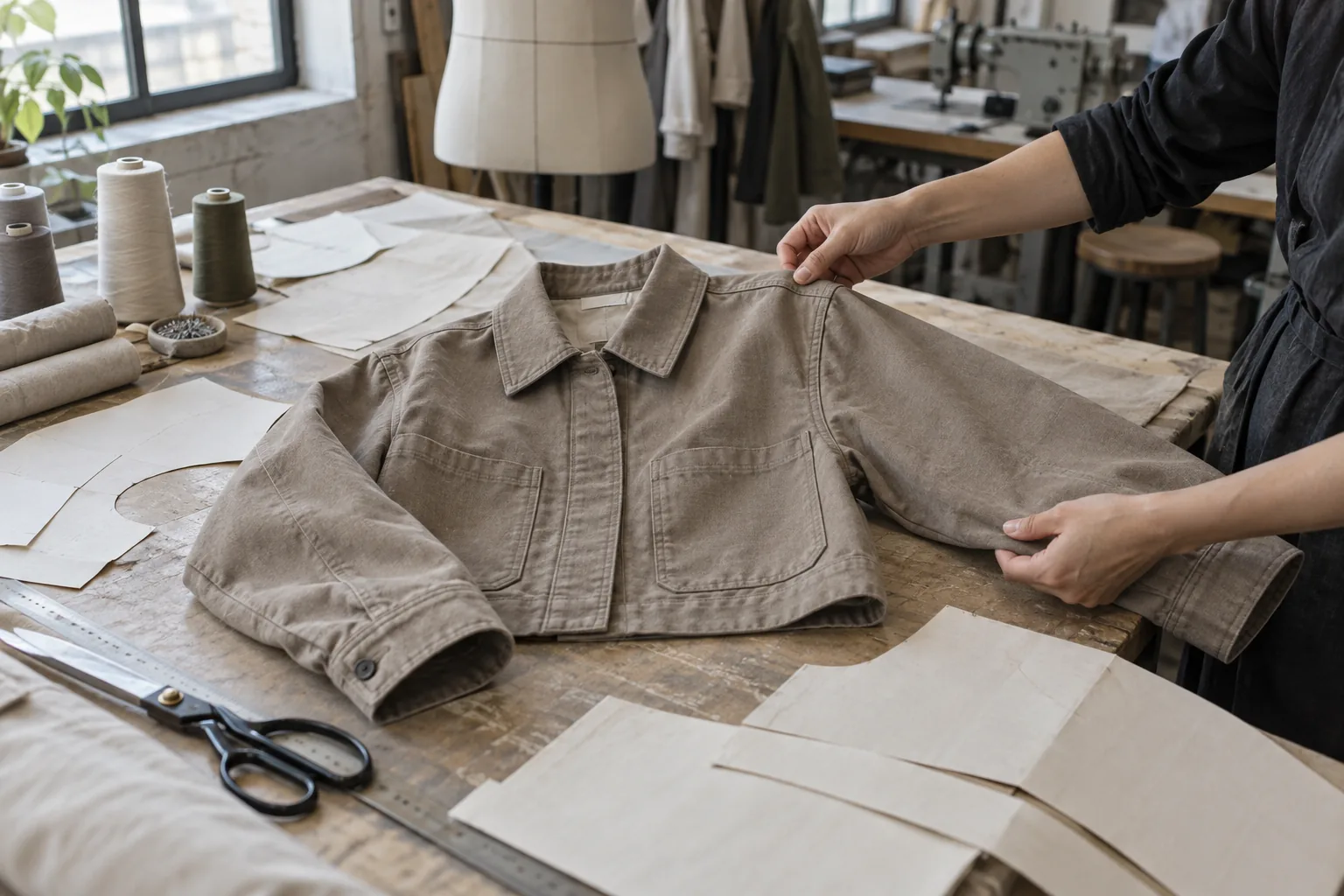
Before you ask a factory to price a sample, decide what receiving that garment will let you approve. A fitting-room prototype, a wash trial and a production reference may look like similar purchases, but they require different materials, operations and evidence. If their purposes are mixed together, two sample quotations can cover very different work even when both describe the same jacket.
What buyers should finalize before asking for a sample quote is therefore a set of decisions about the next approval. You need enough definition to make that approval meaningful, while clearly identifying anything the sample is supposed to help you resolve. Use the following approach to brief one round of development, compare its scope and judge the result.
1. Name the decision this garment must unlock
Write a single purpose statement at the top of your request. For example: “This sample will establish the body balance and sleeve mobility of our cropped work jacket in the intended fabric weight.” That statement gives the pattern maker a target and tells the buyer which observations deserve priority. It also prevents an unfinished label from being mistaken for the reason a fit prototype failed.
Sample-stage names vary between suppliers, so describe the deliverable instead of relying on a label such as “development sample.” Agree whether the work includes a new pattern, a revised existing pattern, a decoration test or an assembled garment. The following distinctions are useful when defining a quotation; they are planning categories, not a universal factory sequence.
| Purpose | Finalize before pricing | Decision after review |
|---|---|---|
| Shape and movement | Base size, key measurements, fabric behavior | Accept or revise the silhouette |
| Material or wash evaluation | Fabric reference, treatment target, comparison method | Select a material or finish route |
| Branding execution | Artwork dimensions, placement, application method | Approve appearance and garment interaction |
| Production reference | Approved construction, materials, trims and labels | Authorize the agreed production standard |
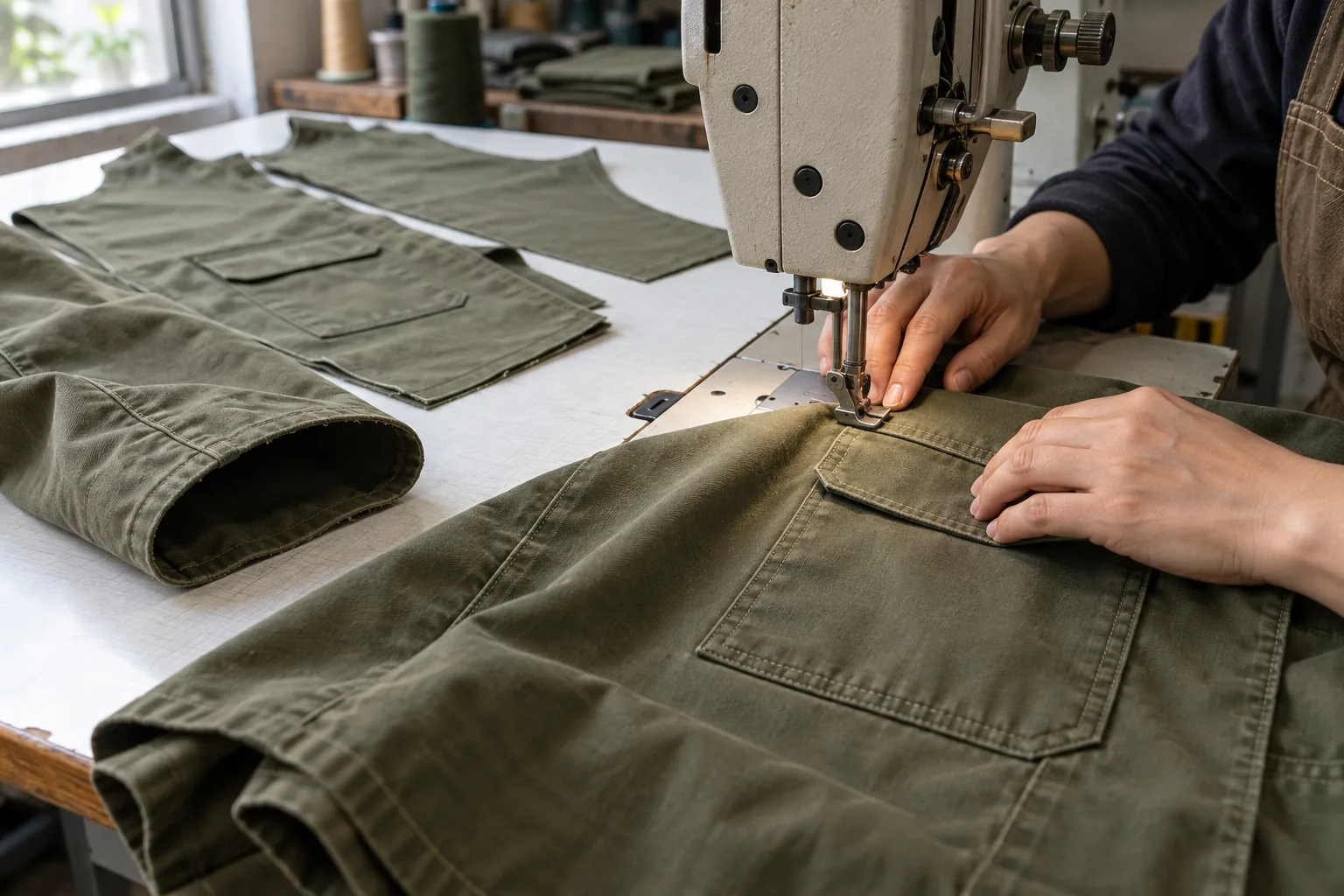
If you need two decisions, separate their acceptance criteria. A jacket might pass a pocket-construction review while failing sleeve mobility. Record both outcomes so the next quotation covers the unresolved work without reopening every approved detail.
2. Lock the inputs that make the test credible
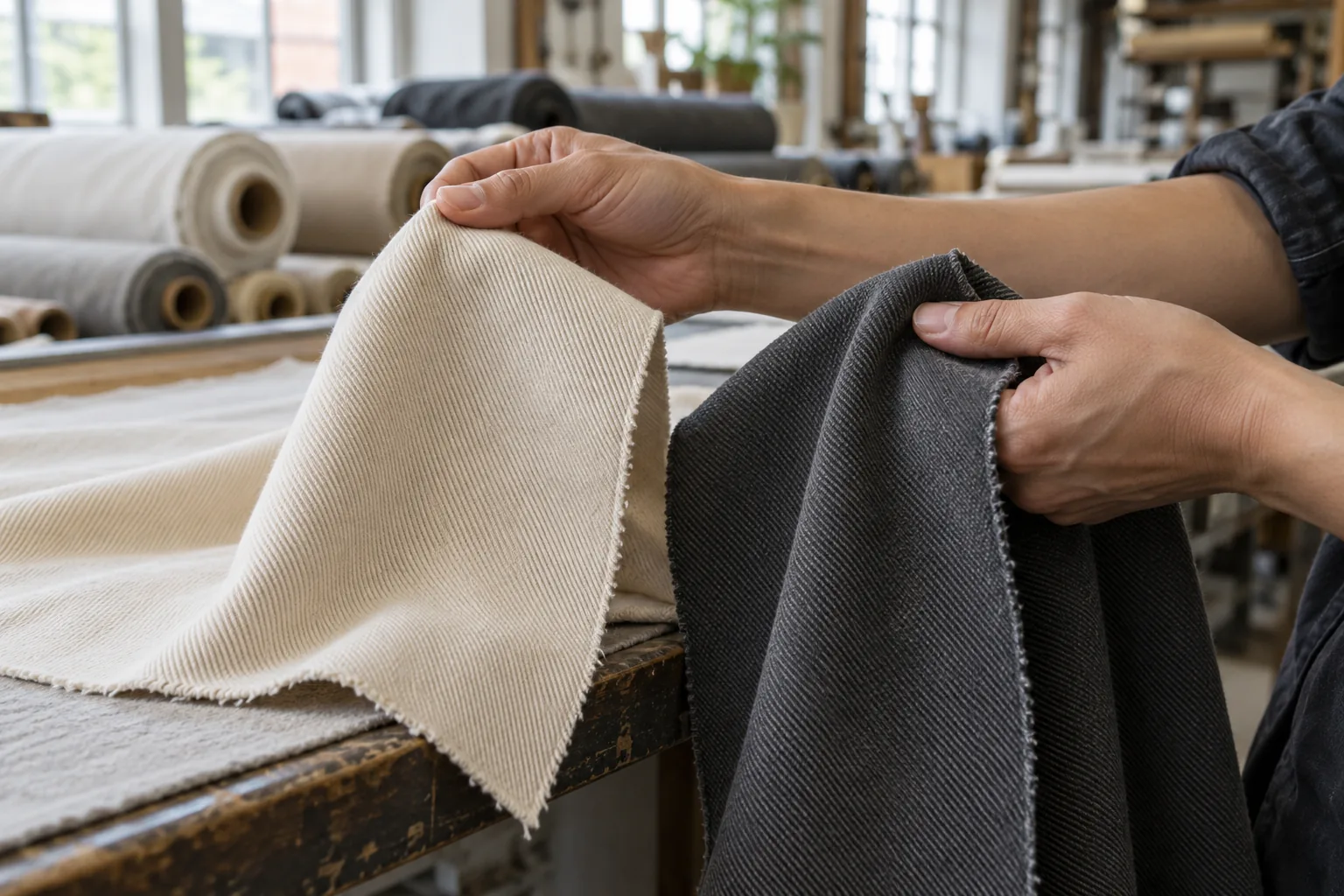
A sample cannot answer a fit question reliably if its material behaves differently from the intended garment. For a structured overshirt, specify whether you are evaluating rigid cotton twill or a stretch blend. Record the target weight, composition and finish, then ask the supplier to identify the actual material proposed for sampling. A visually similar substitute can produce a different shoulder line or hem flare.
For a fit round, fix the base size and measurement method. “Chest 60 cm” is incomplete without saying whether this means a flat half-chest measurement and where it is taken. Define body length from a named reference point, sleeve length from the shoulder seam or center back, and the garment condition during measurement. Keep one unit system throughout the brief.
You can leave decisions open when they do not undermine the purpose. A temporary stock zipper may be acceptable for checking jacket proportions if its length and stiffness are representative. It is unsuitable for approving the final zipper appearance. List every permitted substitution and the approval it prevents; do not leave the factory to infer that distinction from a mood board.
3. Specify the evidence you want back
Request more than a parcel when the decision requires supporting information. For a denim wash trial, ask for the fabric identity, treatment reference and measurements before and after the agreed treatment. For a pocket-placement trial, request straight-on photographs with the garment laid flat, plus a close view showing the pocket edge relative to a defined seam. Agree these records before the work is priced.
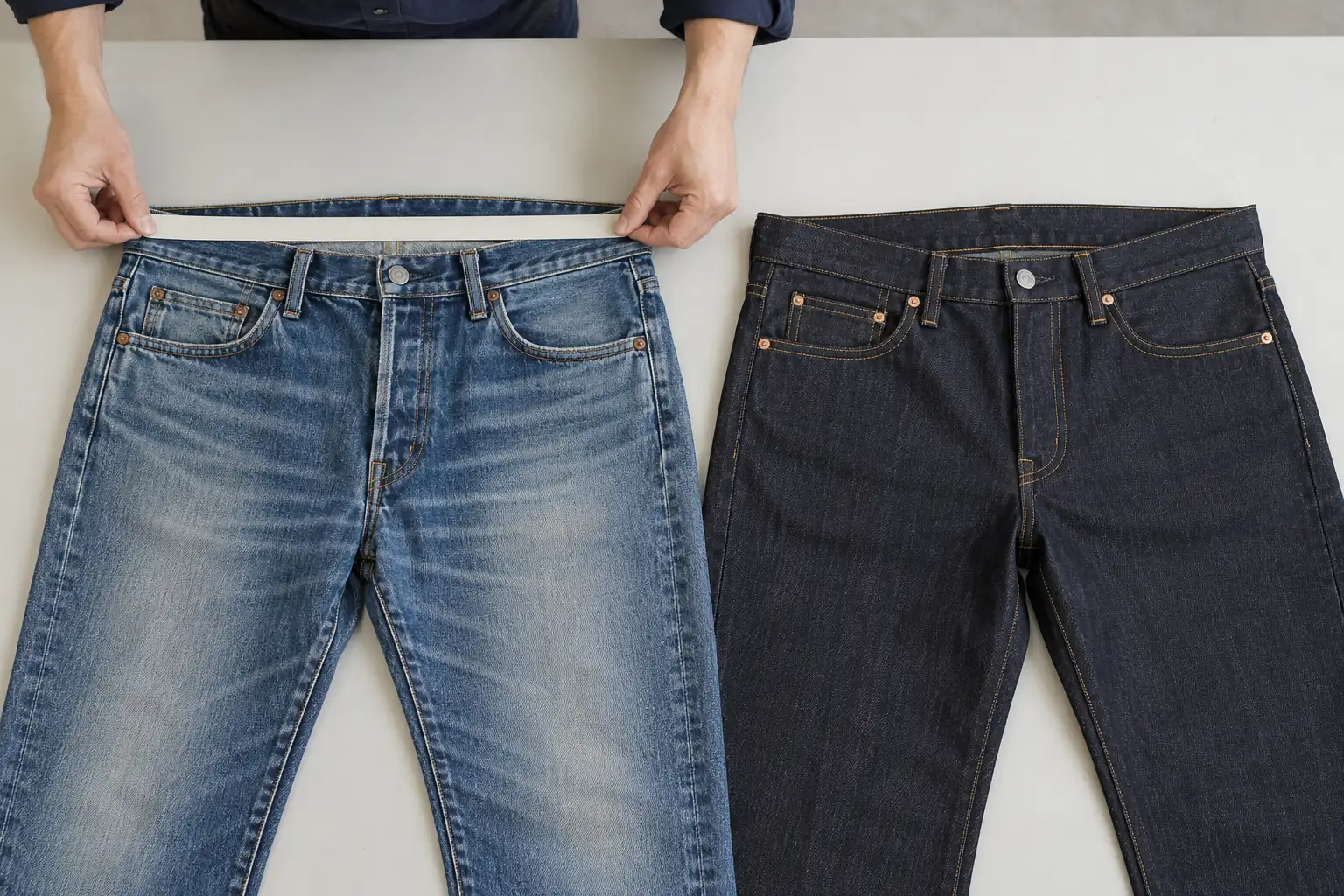
Choose tolerances around the decision being tested. As an illustrative buyer proposal, a fit brief could use ±1 cm for flat half-chest and ±0.5 cm for pocket placement from a fixed seam. These are not universal standards or StitchQuote commitments; confirm feasibility for the fabric, construction and measurement method. A broad tolerance on a critical crop length may hide the very problem you are trying to assess.
Define the wearer or form used for evaluation, too. Note relevant body measurements, the intended layering and the movements to check. An overshirt assessed over a thin tee may feel acceptable but restrict reaching when worn over its intended sweatshirt. Photographs alone will not establish comfort, so assign an actual wear review when mobility is the sample’s purpose.
4. Make the quotation cover a bounded round of work
State the number of physical garments, sizes and variants requested. One garment in a base size is a different deliverable from two sizes with separate embroidery placements. Distinguish an option you want priced from an option you want made. Otherwise, “try both pockets” may be interpreted as an extra prototype rather than a discussion point.
Ask the quotation to identify pattern work, sourcing, garment assembly, decoration trials, any agreed testing, and delivery arrangements. Request clarification on what happens after comments: whether a revision is included, what constitutes a new design direction, and how another round will be priced. Do not assume a sample fee includes unlimited changes or will automatically be credited against production.
Provide the intended production quantity because it affects whether the development route is commercially useful. StitchQuote’s MOQ for most categories starts from 50 pieces per style; denim starts from 100 pieces per style. Those starting points do not establish the availability of every custom fabric or trim. Ask whether the proposed material and branding choices suit the planned order before commissioning development around them.
Set timing against a defined starting event. StitchQuote offers a 7-day sample for standard styles with confirmed specifications and available materials; complex styles, custom washes and custom-developed fabric take longer. Confirm what the quoted schedule covers and allow separately for shipping, your review and any subsequent round. A required arrival date should be stated explicitly.
5. Run a readiness check before releasing the brief
Use this checklist to catch conflicting instructions before they become physical sample defects. One named buyer should resolve discrepancies between drawings, measurement sheets and written comments. Sending all three with different pocket heights gives the factory a choice that belongs to your team.
- Purpose: The request states one primary approval decision and identifies secondary observations.
- Version: Drawings, measurements and artwork carry matching revision references; superseded files are identified.
- Construction: Seam positions, closures and pocket openings are defined wherever they affect the test.
- Materials: The proposed sampling fabric is identified, and acceptable substitutions are recorded.
- Branding: Any included artwork has physical dimensions, placement references and an application method.
- QC evidence: Critical measurements, proposed tolerances, photographs and treatment records are agreed.
- Ownership: One person consolidates comments and signs off the outcome.
StitchQuote’s services include cut-and-sew, private label, sampling, fabric and trim sourcing, branding through woven labels, prints and embroidery, and QC before packing. Specify which of these you need in this development round. QC before packing does not replace the buyer’s decision about whether the sample achieves the intended fit or design.
6. Decide how approval will be recorded
Prepare the review sheet before the sample arrives. Give each critical feature a target, an observed result and an outcome: approved, revise or not evaluated. For revisions, describe a measurable change such as “lower the pocket opening by 1.5 cm from the current approved shoulder reference,” supported by a marked photograph. “Make it more premium” cannot reliably direct a pattern or sewing change.
Keep approvals limited to what was actually evaluated. If the garment uses substitute fabric, record any accepted shape as provisional where drape could change. If embroidery was omitted, mark branding as not evaluated. Carry those open items into the next brief so a successful fit review does not accidentally become authorization for every production detail.
7. Questions about choosing the right sample purpose
Can I request a quote while choosing between two silhouettes?
Yes, but describe two development options and ask for their scopes separately. If you want physical comparisons, specify two prototypes. If you only need help selecting a direction, clarify the preliminary review required before either garment is made.
Does approving a base-size fit prove the full size range?
No. It establishes a reference in the evaluated size. Other sizes require agreed grading rules and any additional size checks needed for the product. Decide whether this round ends at base-size approval or includes evidence from another size.
Should a photography sample also serve as the production reference?
Only if it contains the intended production materials and construction and passes the relevant review. A photography garment may conceal unfinished internals or use temporary trims. Document its limitations before treating its appearance as a manufacturing standard.
Related reading and project support
- Prepare the technical files supporting your sample brief
- Review sampling and MOQ considerations
- Understand the timing of clothing sampling
- Send StitchQuote your defined sample requirements
Request a manufacturing quote
Share your product type, quantity range, and destination. We usually reply within one business day.