Custom Streetwear, Casualwear & Denim Manufacturer•MOQ 50 pcs•Denim MOQ 100 pcs•7-Day Sample Available

What Buyers Usually Miss in Denim Wash Approval
Understand what buyers usually miss in denim wash approval, including shade tolerance, handfeel, shrinkage, and why a wash comment can still fail in bulk.

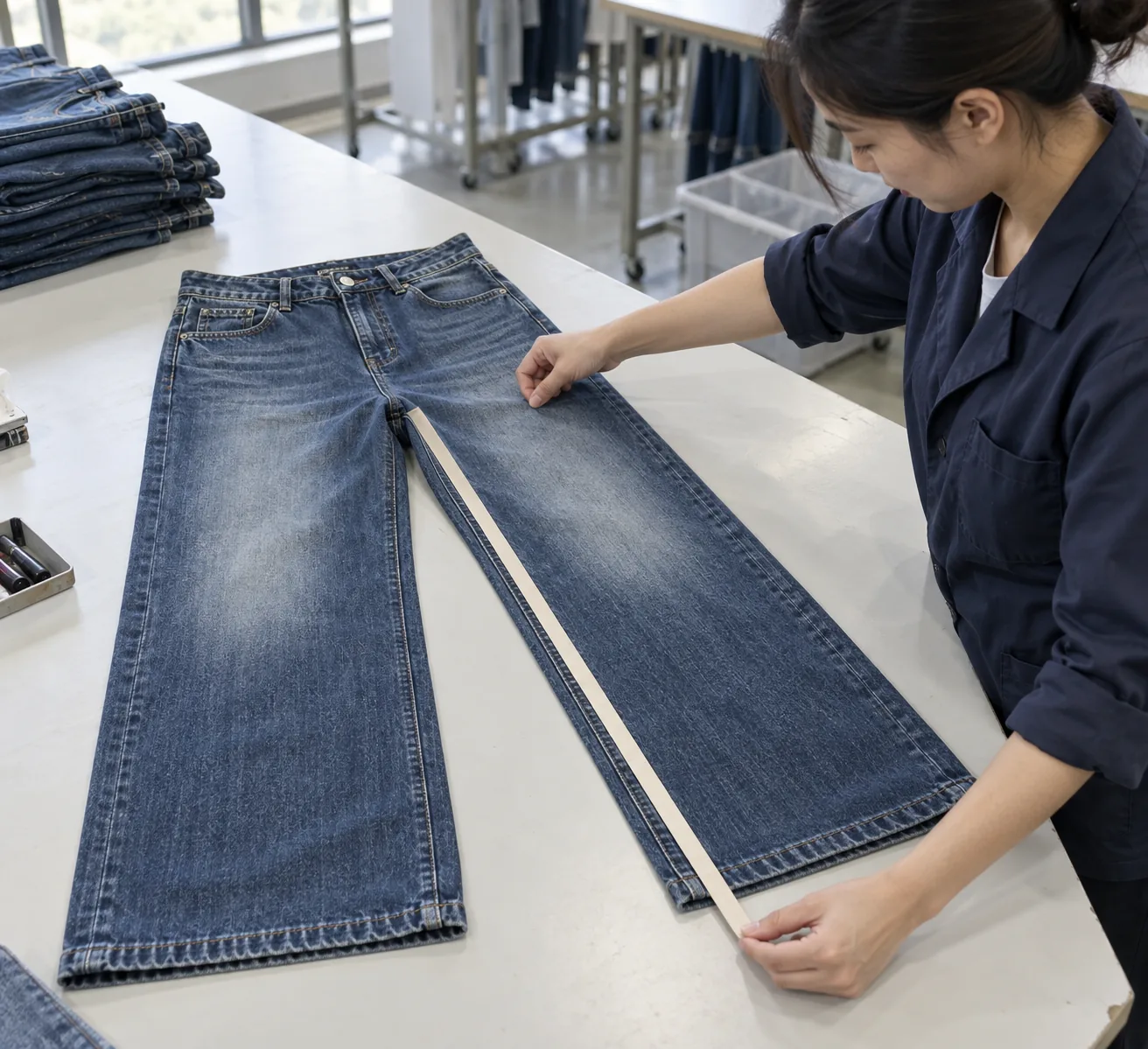
A wash sample can match the approved shade and still produce jeans that fit differently from the size chart. A narrower thigh, shorter rise or twisted leg changes how the garment wears, even when the finish looks right. For buyers approaching bulk release, the missing approval is often dimensional: what must this garment measure after its production wash?
Treat after-wash measurements as a separate acceptance gate alongside color and surface effects. The objective is to establish a finished specification that sampling, washing and final inspection can all use. That requires consistent measuring conditions, traceable garments and a clear decision when the finish passes but the fit does not.
Define the garment condition behind every number
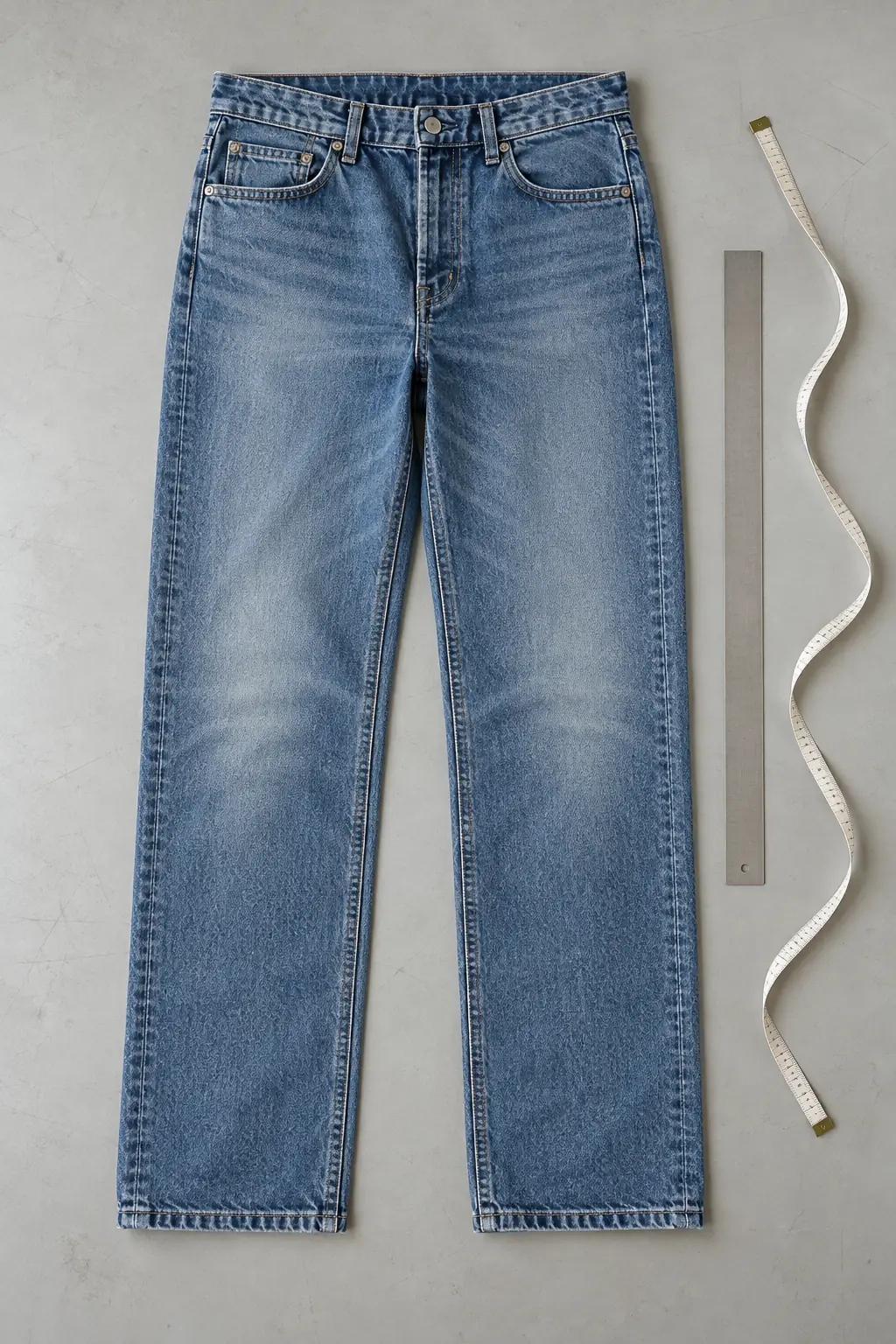
“Waist: 42 cm” is incomplete unless the specification states how and when to measure it. Is that a flat half-waist with the button fastened, the waistband aligned and no tension applied? Was the garment measured immediately after drying, after cooling or after an agreed relaxation period? Stretch denim can give different readings when operators pull it into position.
Label the measurement sheet explicitly: finished garment, after production wash and final finishing. Record whether pressing or steaming occurs before measurement. Agree a cooling and relaxation interval appropriate to the fabric, then apply it to both approval samples and inspection garments. Do not compare a warm, freshly finished sample against a garment that rested overnight.
Keep production-wash approval separate from consumer-laundering validation. The first establishes the delivered fit; the second checks changes after washing according to the proposed care instructions. If both are tested, maintain separate columns and identify each cycle. Calling both results “after wash” conceals which condition the buyer actually approved.
Choose measurement points that protect the intended silhouette
A wide-leg jean may retain its waist measurement while losing the intended volume through the thigh. A cropped straight leg can become visibly too short after a small inseam change. Select critical points from the fit intent, then define the landmarks with drawings or clear photographs. “Thigh” alone is not a reproducible instruction.
The table below illustrates a measurement brief for one sample size. These targets and tolerances are hypothetical buyer specifications, not StitchQuote standards or universal denim tolerances. Confirm achievable limits for the construction, fabric and wash before approving them.
| Point of measure | Method to define | Illustrative finished target |
|---|---|---|
| Half-waist | Button closed, waistband aligned, flat without stretching | 42.0 cm ± 0.7 cm |
| Front rise | Along front seam, crotch junction to top waistband edge | 29.0 cm ± 0.5 cm |
| Half-thigh | Across leg at a specified point 2.5 cm below crotch | 33.0 cm ± 0.7 cm |
| Inseam | Following inside seam, crotch junction to hem edge | 78.0 cm ± 1.0 cm |
State whether a tolerance applies to a flat half-measurement or a full circumference. A 0.7 cm allowance on a half-waist can represent roughly 1.4 cm around the body. Add hip, knee and hem opening where they control the silhouette, and measure both legs when asymmetry could affect acceptance.
Pair before-and-after readings on the same sample
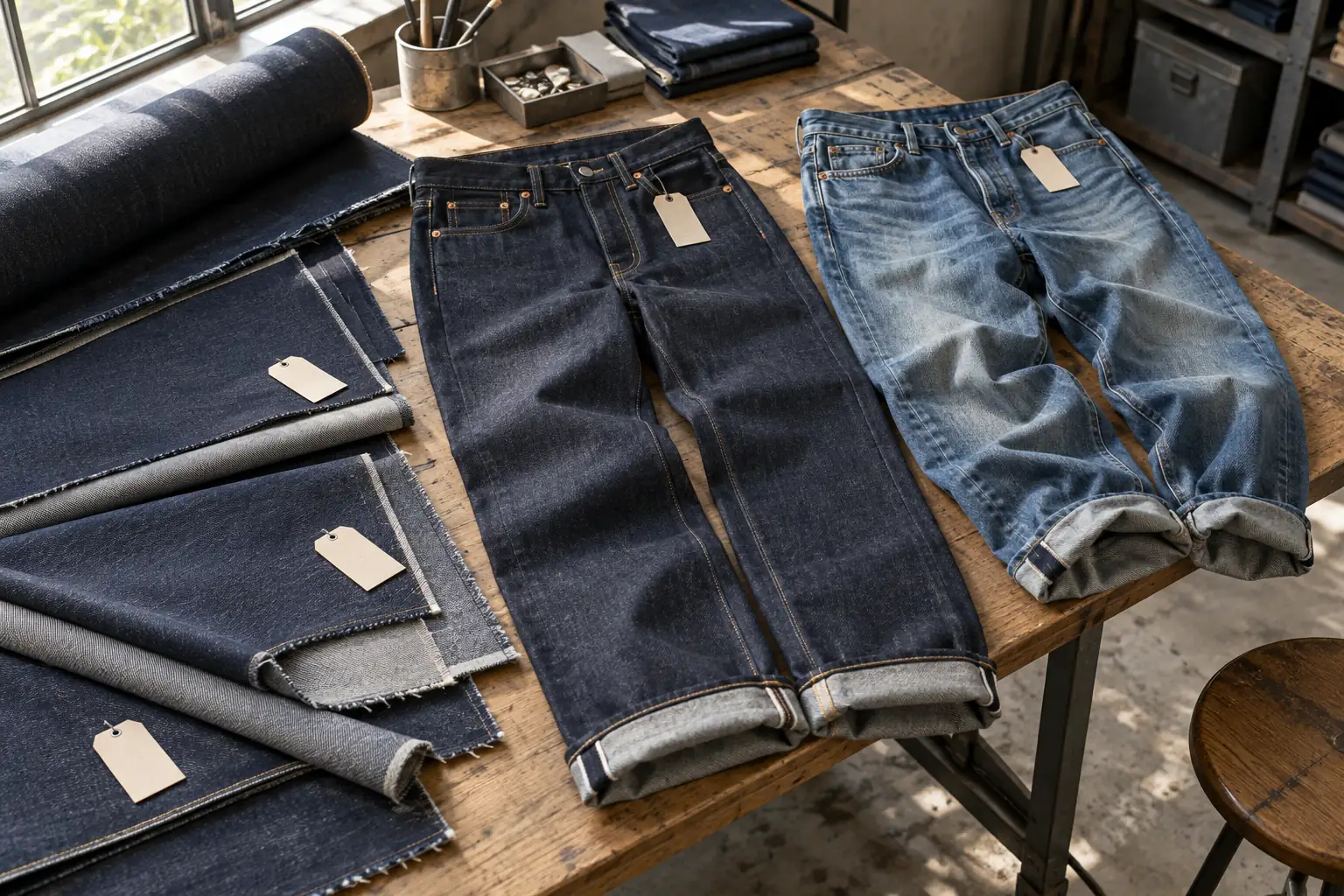
Give each development garment a durable sample identifier and measure it before washing. Measure that same garment again after the approved finishing and relaxation sequence. Comparing two different garments mixes sewing variation with wash movement and can send the pattern correction in the wrong direction.
Calculate dimensional reduction as: pre-wash measurement minus post-wash measurement, divided by pre-wash measurement, multiplied by 100. An inseam moving from 82.0 cm to 78.7 cm has reduced by approximately 4.0%. Keep the original centimeter readings as well as the percentage; the finished measurement determines whether the garment meets the size specification.
Do not apply that inseam percentage to the whole pattern. Waistbands, pocket assemblies and long leg seams can respond differently because of grain direction, reinforcement and construction. Record each critical point independently. A negative reduction indicates growth, which should be investigated rather than silently converted to a positive shrinkage figure.
Retain fabric-lot identification, sample size, wash revision and drying conditions with the paired results. A single sample is useful for diagnosis but cannot establish the spread expected in production. Repeat the check across agreed samples and relevant sizes before treating a compensation rule as reliable.
Separate pattern corrections from changes to the wash
When the finished inseam is consistently short but the shade and hand feel are approved, discuss a pattern allowance with the patternmaker and wash team. Do not simply request “less washing”: that may alter the appearance already selected. Conversely, a large spread between garments calls for investigating process consistency before adding length to every pattern.
As a starting calculation, a 78.0 cm finished target with a repeatable 4% reduction suggests a pre-wash measurement of 78.0 ÷ 0.96, or approximately 81.25 cm. This is an illustrative development calculation, not a cutting instruction. Construction allowances and interactions between panels still need a sewn, washed confirmation sample.
Inspect geometry as well as dimensions. A leg can meet its inseam target while the side seam rotates toward the front. Compare both legs laid naturally, without pulling them straight to hide distortion. Likewise, a waistband may measure correctly yet pucker against the body because its layers respond differently to finishing.
Document the selected correction and change only the necessary variables for the next trial. If fabric, pattern and drying settings all change together, a better result will not reveal which adjustment worked. Recheck affected dimensions and appearance before releasing the revised version.
Make dimensional release a documented QC gate
Use a signed measurement report alongside the retained wash sample. A photograph conveys color placement and abrasion, but it cannot prove a rise or waistband measurement. The report should identify the exact sample and revision that production must follow.
- Confirm identity: match style, size, fabric lot, pattern revision and wash revision to the approval record.
- Standardize handling: use the agreed finishing sequence, relaxation interval, flat surface and measuring method.
- Capture actual results: record each critical point, its target, tolerance and deviation rather than writing only “passed.”
- Check shape: inspect leg rotation, left-right differences, waistband puckering and pocket distortion without forcing the garment flat.
- Review coverage: include agreed sizes and samples from relevant wash loads; record the inspection scope and acceptance rule.
- Control exceptions: hold affected garments for review when measurements fail, and document any buyer-approved disposition.
At bulk stage, compare actual readings across inspected garments. A set clustered near one tolerance boundary deserves attention even if each reading passes: a modest process shift could create failures in the next load. An average within tolerance does not cancel individual failures. Agree who can authorize rework and require another measurement check after any corrective finishing.
Questions buyers ask before accepting the finished size set
Can we approve the color while measurements are still unresolved?
Yes, provided the record clearly limits approval to appearance and keeps dimensional release open. Identify the outstanding points and required confirmation sample. Avoid an unqualified “approved” message that could be interpreted as permission to proceed with bulk cutting or washing.
Does a larger size need the same shrinkage allowance?
Do not assume it does. Even when the percentage response is similar, the absolute change increases with length, and construction can affect local movement. Check an agreed size set, including sizes that test the grading, before adopting one allowance throughout the range.
What if stretch jeans pass flat measurements but feel too tight?
Flat dimensions do not describe stretch resistance or recovery. Review fit on the intended body measurements and agree a repeatable stretch-and-recovery assessment separately. Do not solve a comfort complaint by having inspectors pull harder on the waistband during measurement.
What should we send when requesting a corrected sample?
Send the sample identifier, measurement method, target-versus-actual readings, fit observations and the specific revision requested. StitchQuote offers sampling, cut-and-sew, sourcing, branding and QC before packing. Denim starts from 100 pieces per style. A 7-day sample is available for standard styles with confirmed specifications and available materials; custom washes, complex styles and custom-developed fabric take longer.
Use these references to prepare the measurement brief and agree the next approval step:
- Prepare the technical specification
- Review sampling and minimum quantities
- Understand the denim wash approval process
- Discuss your finished measurement requirements
Request a manufacturing quote
Share your product type, quantity range, and destination. We usually reply within one business day.