Custom Streetwear, Casualwear & Denim Manufacturer•MOQ 50 pcs•Denim MOQ 100 pcs•7-Day Sample Available

What Happens During PP Sample Approval
Understand what happens during PP sample approval, what factories and brands are checking, and why this step affects bulk quality, timing, and risk control.

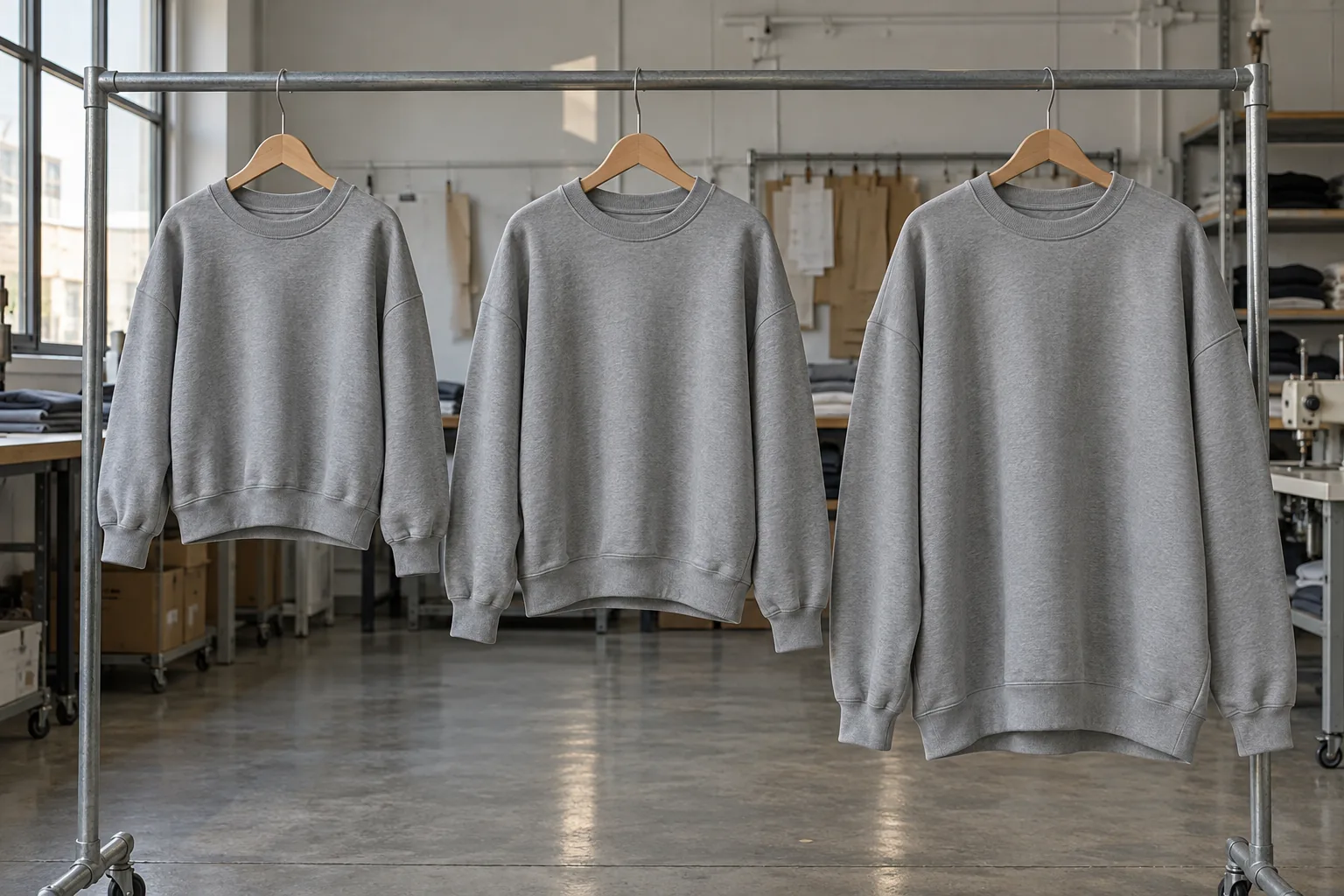
A pre-production (PP) sample can look ready while the size range still needs work. A medium sweatshirt may sit correctly on the body, yet its smallest size could have an awkward neckline and its largest size could restrict movement. The timing of the size set determines whether these problems surface before the production reference is signed off.
For buyers deciding what happens during PP sample approval, the useful question is whether the evidence covers the sizes being ordered. Treat the PP garment and size set as connected checks: one establishes the intended production standard, while the other tests how that standard carries across the range. Agree on their sequence before booking a release date.
Put size coverage on the approval calendar first
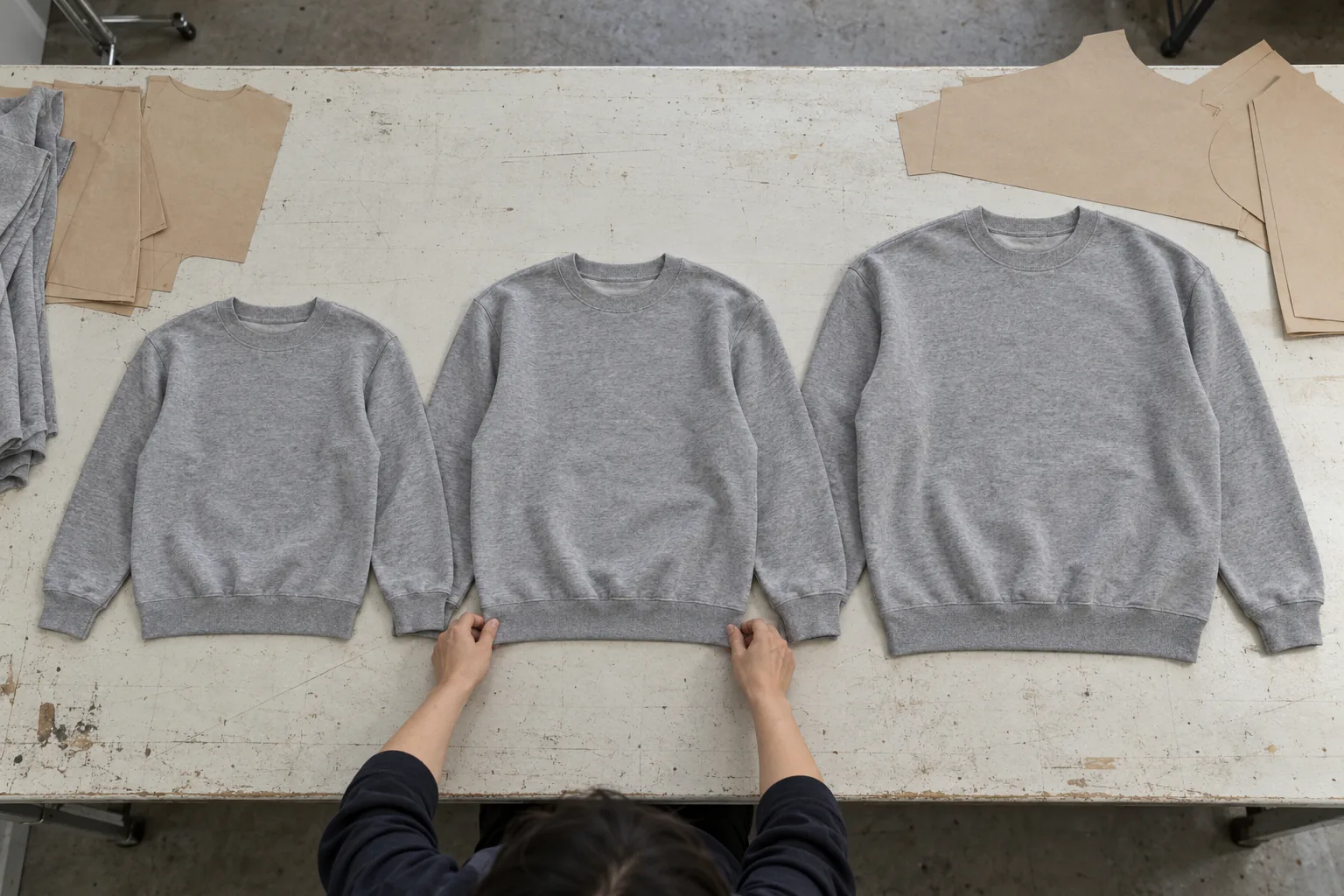
A size set consists of garments made in agreed sizes to check grading, proportions, and fit beyond the base sample size. Confirm its scope with the factory: a full set and a selection of representative sizes provide different levels of evidence. Do not assume that the phrase “size set” means every size in the order.
Work backward from the date when bulk cutting needs authorization. Allow space for sample arrival, measurement, wearer assessment, consolidated comments, and any necessary remake. A calendar that stops at sample dispatch leaves the actual approval work unplanned.
Assign one person to reconcile fit comments and one person to issue the final release, even if both roles belong to the same buyer. Conflicting instructions from merchandising and design can otherwise leave a corrected size set disconnected from the PP reference.
Choose the sequence according to what remains unproven
There is no single sequence suitable for every style. The key is to finish size-dependent decisions before releasing operations that rely on them. Use the following planning options as discussion points, with the actual sequence confirmed per project.
| Style situation | Suggested sequence | Decision to hold |
|---|---|---|
| New block or expanded size range | Review size set before final PP sign-off | Bulk cutting until grading is accepted |
| Stable block with a new trim | Review size set and PP garment in parallel if materials and patterns are stable | Release until both reviews agree |
| New wash or shrinkage-sensitive fabric | Assess sizes after the intended processing, then finalize the PP reference | Acceptance of finished measurements |
Parallel reviews can shorten calendar time, but a change in either review may invalidate the other. If a neck opening changes after the PP garment is sewn, decide whether that garment must be remade or supplemented with an explicitly approved correction sample.
Make the smallest and largest sizes earn their place
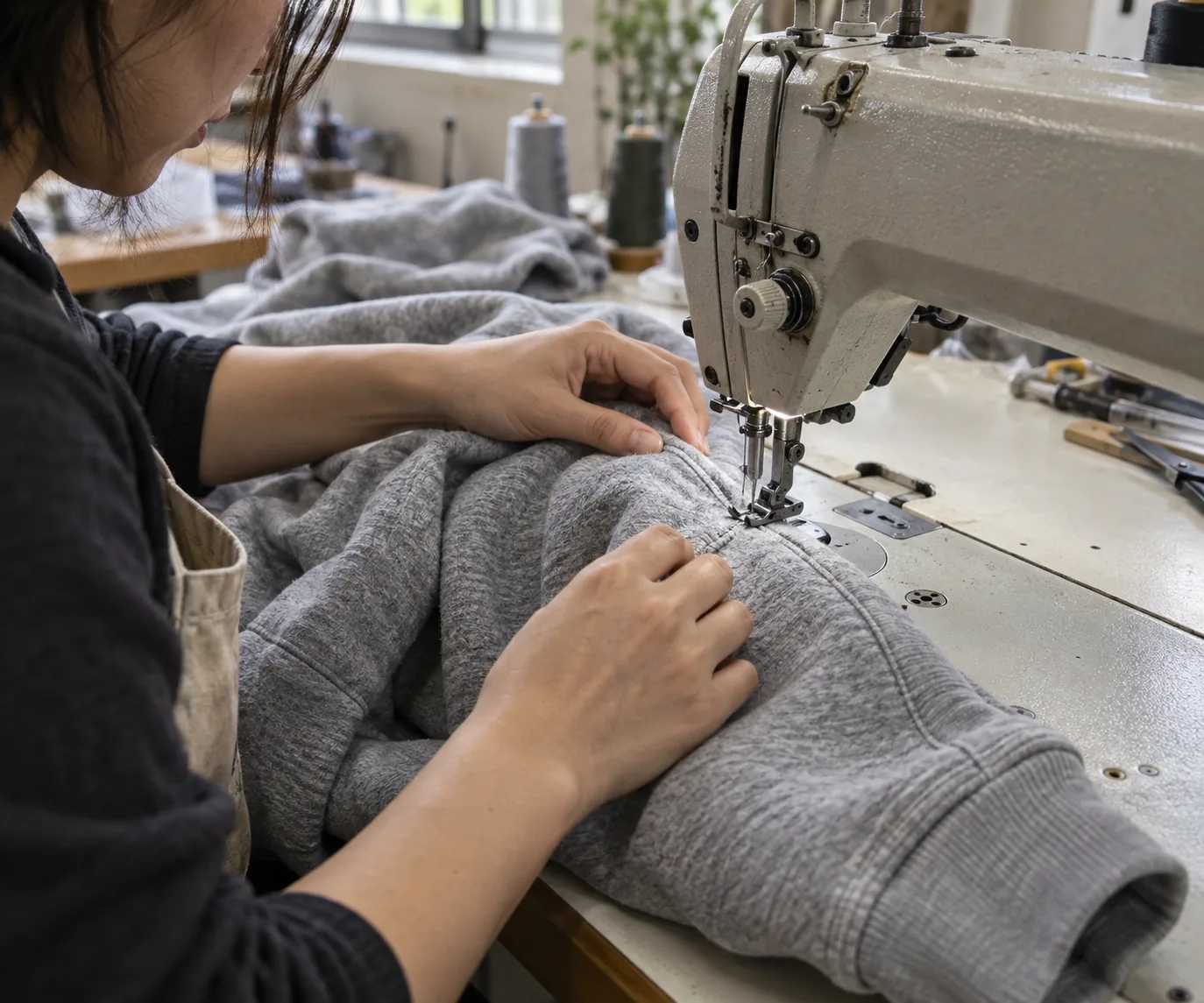
The base size is often the most familiar garment in development. The ends of the range can expose issues that repeated base-size fittings miss. For an oversized sweatshirt, check whether the smallest size retains a wearable sleeve length and whether the largest size preserves the intended shoulder shape.
For elastic-waist shorts, compare relaxed and extended waistband measurements using an agreed method. A graded waist can meet its specification while the opening remains difficult to pull over the hips. Assess function with suitable wearers where possible; flat measurements alone cannot establish comfort.
If the team reviews selected sizes, record what remains untested. Include any size where the grade rule changes, rather than choosing only convenient samples. Selection should reflect the pattern and fit risks, not simply the availability of a fit model.
Keep one revision trail between the size set and PP garment
Each sample should identify its size, pattern revision, measurement specification, fabric, and finishing treatment. Use a simple reference code on the sample record so photographs and comments point to the same physical garment. An approval email without a revision reference can accidentally authorize an outdated pattern.
When the size review changes a measurement, update the specification and confirm which pattern pieces are affected. A wider bicep may require checking the armhole and sleeve relationship; it is not always an isolated numerical edit. Ask for evidence of the correction in the affected sizes before closing the issue.
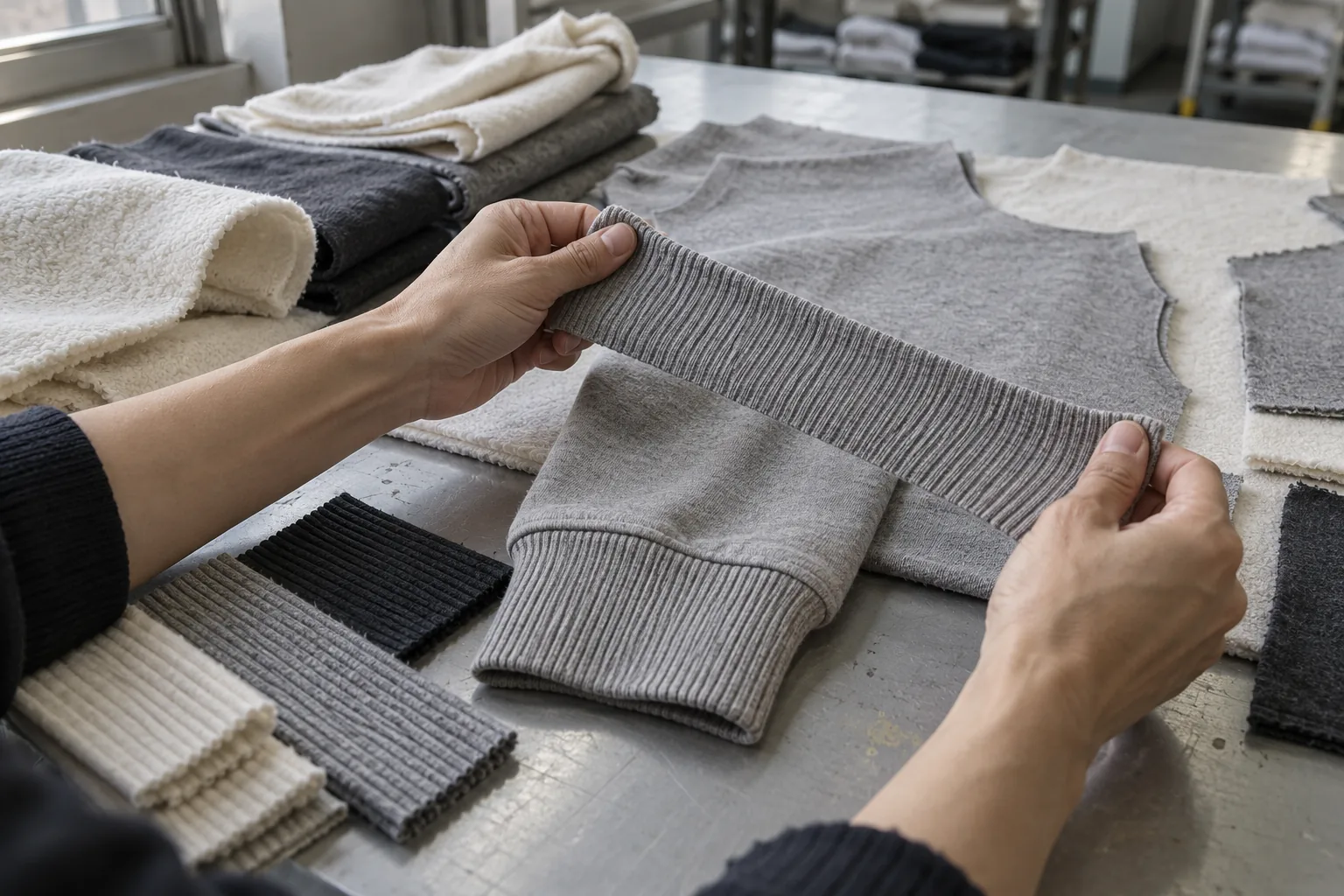
Document substitutions separately. If a sample uses temporary rib or a different elastic, identify which conclusions remain provisional. The sample may support a construction discussion, but it cannot fully prove the behavior of the intended production material.
Run a size-aware QC check before signing the release
Review garments under the same agreed conditions, particularly after washing or other finishing. Record actual measurements against the current specification and tolerances. Distinguish an isolated sewing defect from a systematic grading problem: they require different corrective actions.
- Identity: Match each garment to the approved specification revision and its correct size label.
- Dimensions: Check critical points using consistent measurement methods, including any dimensions changed in the last review.
- Balance: Compare front and back lengths, sleeve position, and side-seam alignment across the reviewed sizes.
- Function: Test openings, stretch recovery, closures, and movement relevant to the garment.
- Branding: Check whether print or embroidery placement still works as panel dimensions change.
- Closure: List unresolved points, the responsible reviewer, and the evidence needed to close each one.
Write the decision with its scope: approved, revision required, or pending a named check. If approval is conditional, specify which operations may proceed and which must wait. Keep the accepted PP reference and size records accessible for production checks; verbal agreement is difficult to audit later.
Define measurement points before debating tolerances
A useful measurement sheet explains where the tape starts, where it ends, and how the garment lies on the table. For a sweatshirt, define half chest at a stated distance below the armhole, body length from the high shoulder point beside the neck, and sleeve length from either the shoulder seam or center back. Those sleeve methods are not interchangeable, especially on a dropped-shoulder style. Add a sketch for curved or ambiguous points and measure garments flat without stretching them unless the method specifically requires tension.
Set a tolerance for each point rather than applying one allowance to the whole garment. As a proposed specification for discussion, a buyer might allow plus or minus 1 cm at half chest and body length but only plus or minus 0.5 cm at a small pocket placement. These are illustrative allowances, not StitchQuote standards; confirm what is appropriate for the fabric, construction, and intended fit. A measurement tolerance also differs from a grade increment: the former permits manufacturing variation, while the latter defines the intended difference between sizes. If neighboring sizes overlap within their allowances, assess whether the resulting fit distinction remains acceptable.
Record fabric composition, knit or weave structure, and target GSM alongside the measurement results. A hypothetical 320 GSM brushed fleece and a 320 GSM loopback fabric can behave differently despite sharing the same nominal weight. Check the actual bulk-intended fabric and rib together, including recovery at cuffs and neck openings. Where washing is part of the assessment, record the wash and drying conditions and compare the same measurement points before and after treatment. Calculate dimensional change as the change divided by the original measurement, multiplied by 100; keep length and width results separate.
Translate the review into a small-order release record
Consider an illustrative order of 100 sweatshirts in one style: 15 small, 35 medium, 30 large, and 20 extra-large. The buyer and factory could agree to review medium as the base fit and small and extra-large as range checks, while explicitly recording that large has no physical review sample. If a grade transition occurs at large, include that size too. The order split tells the reviewer which garments will be produced; it does not by itself establish adequate sample coverage.
Suppose the extra-large sample meets chest width but pulls across the upper sleeve when the wearer reaches forward. Record the movement problem, photograph the affected area, and review bicep width, armhole shape, and sleeve geometry together. After correction, request evidence for the affected sizes and reconcile the revised pattern with the PP reference. The release record should identify the accepted revision, approved material references, size quantities, remaining restrictions, and the person authorizing cutting.
Ask the quotation to distinguish development work from bulk manufacturing. Additional physical samples, pattern revisions, fabric sourcing changes, embroidery setup, and extra wash trials can change cost or timing. Consolidating comments into one approved revision reduces avoidable remake rounds. Before packing, use the agreed size breakdown to check quantities and label identity, and compare production measurements and branding placement with the approved records. A correct total garment count can still conceal a shortage in one size and an excess in another.
Reserve time for evidence, not just sample making
StitchQuote offers sampling, fabric and trim sourcing, cut-and-sew, private label, branding, and QC before packing. A 7-day sample is available for standard styles with confirmed specifications and available materials. Complex styles, custom washes, and custom-developed fabric take longer. Confirm the timing of a multi-size set separately rather than assuming that the standard sample window covers every requested size and review round.
MOQ for most categories starts from 50 pieces per style; denim starts from 100 pieces per style. Order quantity does not determine whether grading is ready. When requesting a schedule, provide the size range, size quantities, current specification, material status, and required review sizes so the sampling plan reflects the actual release decision.
Questions buyers ask when size checks affect release
Can we approve the PP garment while one size is being corrected?
You can record acceptance of unaffected details, but keep the size-dependent release open. State whether the correction affects only one pattern or the grading system, and require the appropriate evidence before authorizing affected bulk work.
Does a repeat style need another full size set?
Review what has changed. A stable pattern with unchanged materials may justify a narrower check, agreed with the factory. A new fabric, wash, size extension, or fit adjustment can make earlier size evidence insufficient.
What if the PP sample and size set have different measurements?
Check their revisions, materials, processing, and measurement methods before choosing a reference. Resolve the discrepancy and document the controlling specification. Do not average the results or assume the more recent delivery is automatically correct.
Related reading and project support
- Prepare the specifications for your size review
- Review sampling and MOQ details
- Understand clothing sampling timelines
- Discuss your size-set schedule with StitchQuote
Request a manufacturing quote
Share your product type, quantity range, and destination. We usually reply within one business day.