Custom Streetwear, Casualwear & Denim Manufacturer•MOQ 50 pcs•Denim MOQ 100 pcs•7-Day Sample Available

What Is CMT in Garment Manufacturing
Understand what CMT means in garment manufacturing, what the factory handles, what the brand must supply, and when CMT is better or riskier than full package.

On This Page
CMT in garment manufacturing usually means cut, make, and trim. In a CMT arrangement, the factory is mainly responsible for garment assembly, while the brand, sourcing office, or buying team usually takes more responsibility for fabric, trims, and some upstream approvals. On paper that sounds simple, but in real projects the exact scope can change a lot from one supplier to another. If you are comparing support models for a live project, it helps to look at your manufacturing services options first.
From a factory-side perspective, CMT only works well when both sides define responsibilities clearly before the first sample or bulk order begins. Problems usually start when a buyer assumes CMT includes more than labor, or compares a CMT quote against a full-package quote without aligning who is paying for fabric, trims, testing, shipping coordination, and approval risk. That is why CMT makes more sense when it is reviewed together with your sampling and MOQ plan, not as a stand-alone price shortcut.
What CMT usually includes on a real factory quote
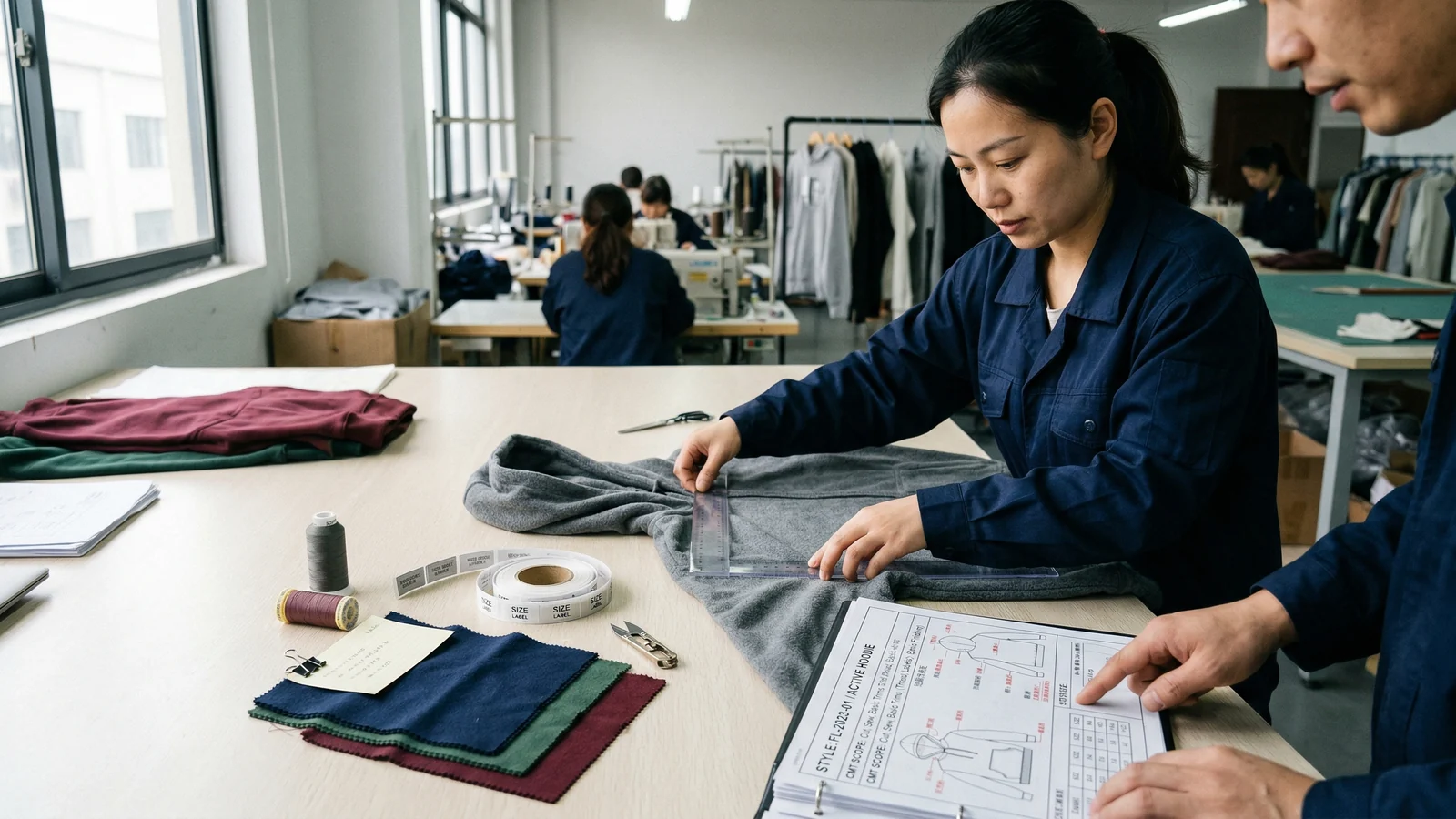
In most apparel programs, CMT means the factory cuts the fabric provided or approved for the order, sews the garment, attaches the required trims, and handles the finishing work that belongs to the agreed sewing scope. That may include thread, basic sewing labor, pressing, and packing in a limited form, but it does not automatically mean the factory is taking full ownership of material sourcing or development control.
This is where buyers often get confused. Two factories may both say they offer CMT, but one may expect the brand to send ready bulk fabric and trims, while another may help arrange part of the material workflow for a service fee. If you are still structuring the file, our article on how to prepare a tech pack for apparel manufacturing is useful because CMT only works cleanly when the handoff standard is already clear.
What the brand usually has to manage outside CMT
Under a CMT model, the brand or sourcing team usually carries more responsibility for fabric sourcing, trim booking, testing requirements, artwork readiness, and approval timing. That does not always mean the factory gives no support, but it does mean the commercial responsibility line is different from a full-package program. If the buyer is not ready to manage those moving parts, CMT can feel cheaper at quote stage and become harder during execution.
From the factory side, the biggest risk is not sewing difficulty. It is coordination failure. If fabric arrives late, labels are not confirmed, or packaging details are still changing, the sewing line may be ready while the project is not. This is one reason many startup brands first compare CMT against a broader support model instead of assuming lower scope automatically means lower total risk. Our guide on how to choose the right clothing manufacturer for a startup brand helps frame that decision.
When CMT is a good fit for an apparel project
CMT usually works best when the buyer already has stronger control of fabric and trim sourcing, understands the product clearly, and can manage approvals without much confusion. It can also work well when a brand has its own sourcing office, a stable material supply chain, or a repeat style where the development risk is already low. In that kind of setup, a focused CMT factory can be a very efficient production partner.
It is usually a weaker fit when the style is still changing, the fabric direction is not settled, or the brand expects the factory to solve every upstream problem while still pricing only labor. In those cases, the commercial structure and the operating expectation stop matching. If your timeline still depends on several approvals, our article on how long clothing sampling takes is worth reviewing before you assume a CMT route will move faster.
Why CMT can create cost, timing, and quality problems
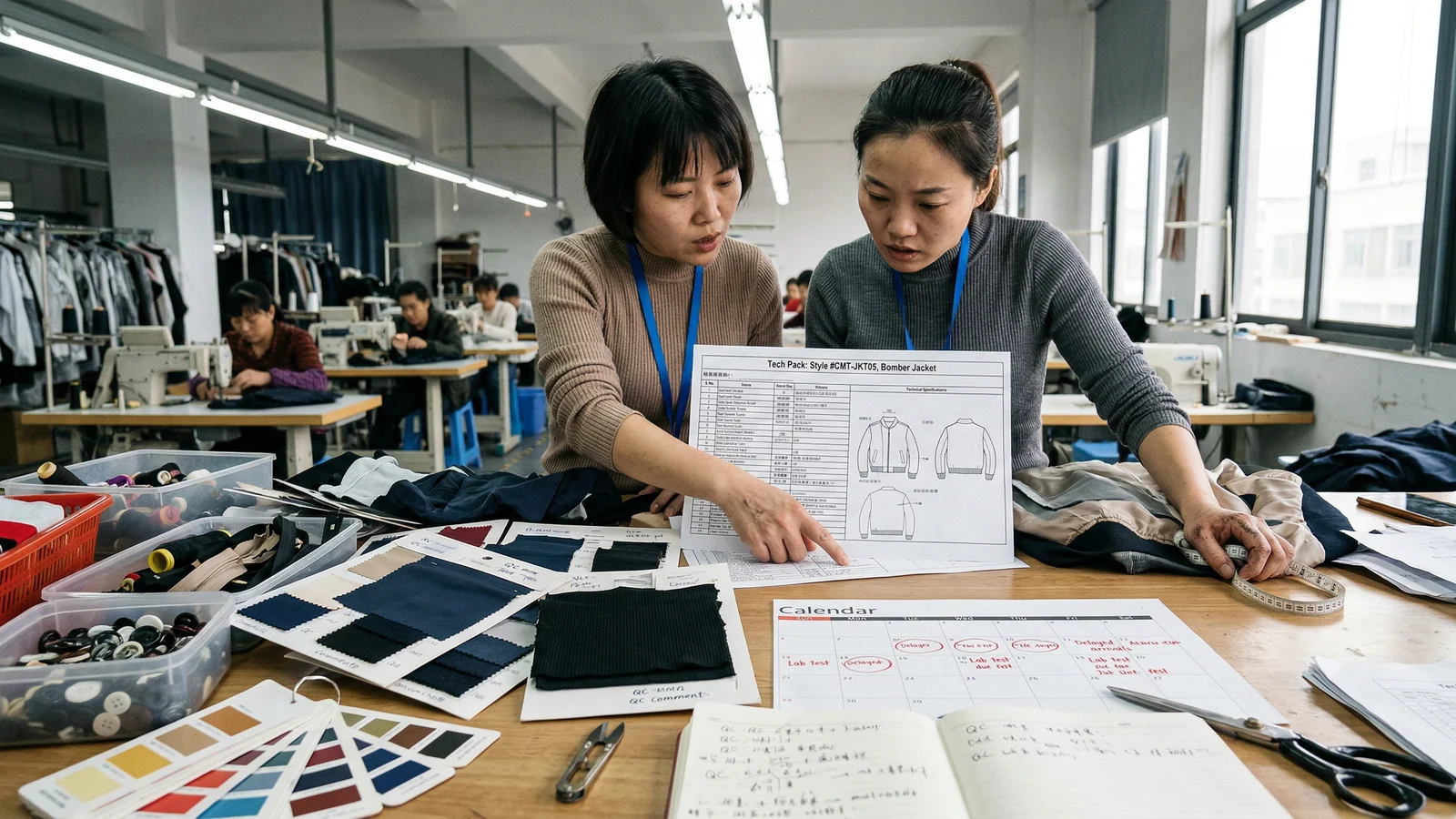
CMT is often misunderstood as the cheapest route, but that is only true if the buyer controls the rest of the process well. If materials arrive inconsistently, trims are missing, lab testing is delayed, or approvals are still moving after line planning starts, the project can become slower and more expensive than expected. The sewing price alone does not tell you how efficient the whole program will be.
Quality risk can also increase if the responsibility split is vague. When shrinkage, shade variation, trim quality, or labeling mistakes appear, the first question becomes who owned that part of the scope. If the answer was never written clearly, then even a simple production issue becomes a commercial dispute. This is also why CMT discussions should be separated from trade-term conversations. If you are comparing shipping responsibility at the same time, review FOB vs EXW in apparel manufacturing so the quote basis stays clear.
Questions to ask before comparing a CMT quote
Before you compare CMT suppliers, ask what is actually included in the sewing price, who is responsible for fabric loss, who arranges trims, who manages testing if needed, what packing standard is assumed, and what happens if material or approval delays interrupt the line plan. Those questions usually matter more than the headline labor number.
The buyer should also ask how sample handling works under a CMT model. Some suppliers are happy to produce from a stable file but do not want a long revision cycle if the development scope is still open. Others can support sample rounds, but only if the brand accepts that the quote or schedule may move as inputs change. If you want cleaner factory communication, align those points before the first sample, not after it.
CMT vs full-package: a practical checklist
- Choose CMT when you already control fabric, trims, and approvals well.
- Be cautious with CMT when your product is still in active development or your sourcing chain is not stable.
- Compare scope, not just price, because one cheap CMT quote may exclude work another supplier is already covering.
- Write responsibilities line by line so delays and defects can be traced to the correct part of the workflow.
- Confirm the next handoff clearly before cutting starts: materials, approvals, trims, packaging, and timing should all be locked.
CMT can be a good manufacturing model, but only when the brand and factory are using the same definition of scope. If you want to compare support routes for your next apparel program, review the relevant options in Products, see how our Services are structured, or send your brief through the Contact page.
Frequently Asked Questions
Does CMT usually include fabric and trims?
Usually no. In most CMT programs, the brand or sourcing side is still responsible for fabric, trims, or at least for confirming how those materials are being supplied.
Is CMT always cheaper than full-package manufacturing?
Not automatically. The sewing quote may be lower, but the brand usually takes on more sourcing, coordination, timing, and quality-control responsibility.