Custom Streetwear, Casualwear & Denim Manufacturer•MOQ 50 pcs•Denim MOQ 100 pcs•7-Day Sample Available
What Is Rib Weight and Why It Matters in Hoodies
Learn what rib weight means in hoodies, how cuff and hem rib affect shape retention, and why mismatched rib can weaken a premium hoodie program. for clearer production.

On This Page
- How Rib Weight and Why It Matters in Hoodies is used on the factory side
- Why Rib Weight and Why It Matters in Hoodies changes quality, cost, or timing
- Where brand and factory need the same definition
- The shortcut that usually creates confusion
- What to confirm before you approve the standard
- A quick buyer checklist before you use this standard in production
What Is Rib Weight and Why It Matters in Hoodies matters because buyers and factories often use the same term while assuming different responsibility, quality, or approval standards behind it. Rib weight matters in hoodies because the cuff and hem rib help control recovery, silhouette, durability, and how premium the garment feels after repeated wear. Most sourcing teams get better results when they treat the topic as an operating decision, not just a content definition or trend term. Buyers usually need a clean answer on hand feel, weight, shrinkage, wash response, and compatibility with trims or decoration before the project can move cleanly into the next quote, sample, or bulk step. If you are still mapping the support path, start with What Does 500 GSM Mean in Hoodie Manufacturing.
Factories usually judge rib not just by appearance but by recovery, compatibility with the body fabric, and whether the rib tension supports the intended fit. On the supplier side, teams usually check how the real fabric behaves after dyeing, washing, printing, rib attachment, and garment construction before they commit to timing, pricing, or shipment promises. A body fabric can look strong on paper and still produce a weak hoodie if the rib is too light, too loose, or visually disconnected from the garment weight. Strong fabric decisions come from checking how the actual material behaves on the actual garment, not from relying on one roll, one swatch, or one marketing phrase. A useful next reference is Products Overview.
How Rib Weight and Why It Matters in Hoodies is used on the factory side
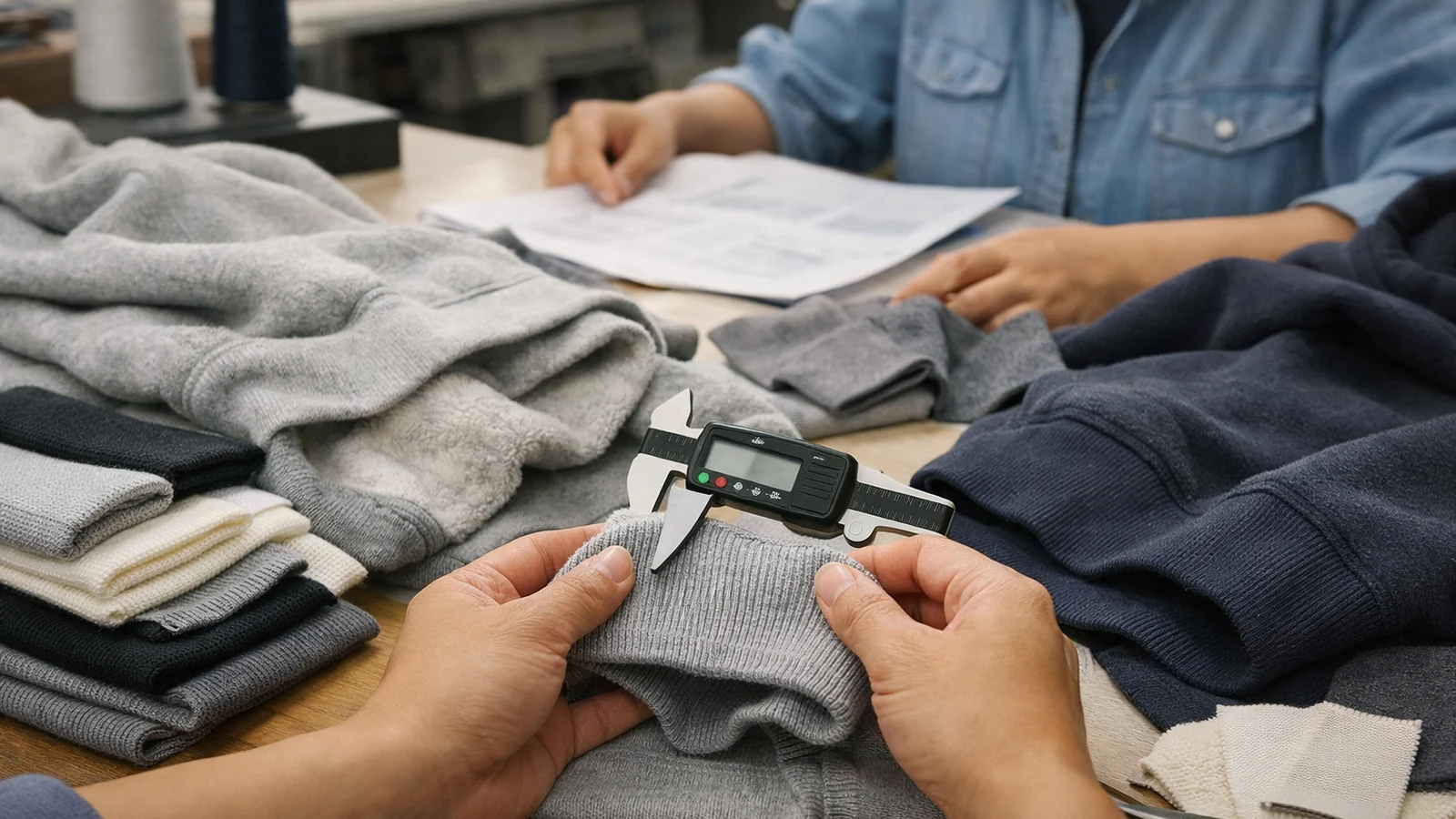
Match rib weight and recovery to the body fabric and fit intent so the hem and cuff support the silhouette instead of fighting it. For buyers, the real decision usually starts with whether hand feel, weight, shrinkage, wash response, and compatibility with trims or decoration are already clear enough to survive sampling, comments, and bulk repetition. With topics like rib weight and why it matters in hoodies, the fastest route is rarely the one with the fewest questions; it is the one where the important questions are answered in the right order. This is also the point where many brands realize the first quote or sample did not answer the full question. Casualwear Products gives a useful benchmark.
A hoodie can look impressive in a first sample and still feel wrong in bulk if the rib, wash, or fit standard stays vague. The factory will normally push for one more document, one more approval, or one more clarification when it sees that fabric weight, rib recovery, hood shape, and post-wash silhouette all influence the final call. That extra checkpoint is not always a delay; often it is the thing that prevents expensive ambiguity from reaching the sewing line or the shipment stage. What Does 500 GSM Mean in Hoodie Manufacturing helps when the team still needs a cleaner decision path.
Why Rib Weight and Why It Matters in Hoodies changes quality, cost, or timing
Factories usually judge rib not just by appearance but by recovery, compatibility with the body fabric, and whether the rib tension supports the intended fit. In day-to-day execution, the supplier is not only judging the idea. It is judging whether how the real fabric behaves after dyeing, washing, printing, rib attachment, and garment construction have been expressed clearly enough that the merchandiser, the sample room, and the production floor will all read the same standard. That is why one factory may ask sharper follow-up questions than another before saying yes.
On better-managed programs, the buyer makes the pass-fail standard visible early: the target fit, the material behavior, the branding scope, the packaging level, or the logistics handover are all written down before the next commitment is made. Once that standard is visible, negotiations usually become more rational because everyone is solving the same problem. French Terry vs Fleece: Which Is Better for Premium Hoodies is relevant here.
Where brand and factory need the same definition
A body fabric can look strong on paper and still produce a weak hoodie if the rib is too light, too loose, or visually disconnected from the garment weight. The pressure usually rises when fabric, rib, decoration, and fit comments are all moving at the same time, because a small unresolved point then starts affecting several departments at once. Something that looked like a minor comment can suddenly change costing, material booking, lead time, or inspection logic depending on where the project already sits.
That is also why buyers often feel a decision becomes harder late in the calendar. The technical answer may still be simple, but the commercial cost of changing direction is no longer small. Once the factory has started booking around one assumption, every reopened question creates more downstream work than it did in the first inquiry stage. Enzyme Wash vs Garment Wash is worth checking before the next approval.
Strong fabric decisions come from checking how the actual material behaves on the actual garment, not from relying on one roll, one swatch, or one marketing phrase. Buyers usually gain more control by freezing the right variable at the right time than by pushing every variable to stay flexible until the last minute.
The shortcut that usually creates confusion
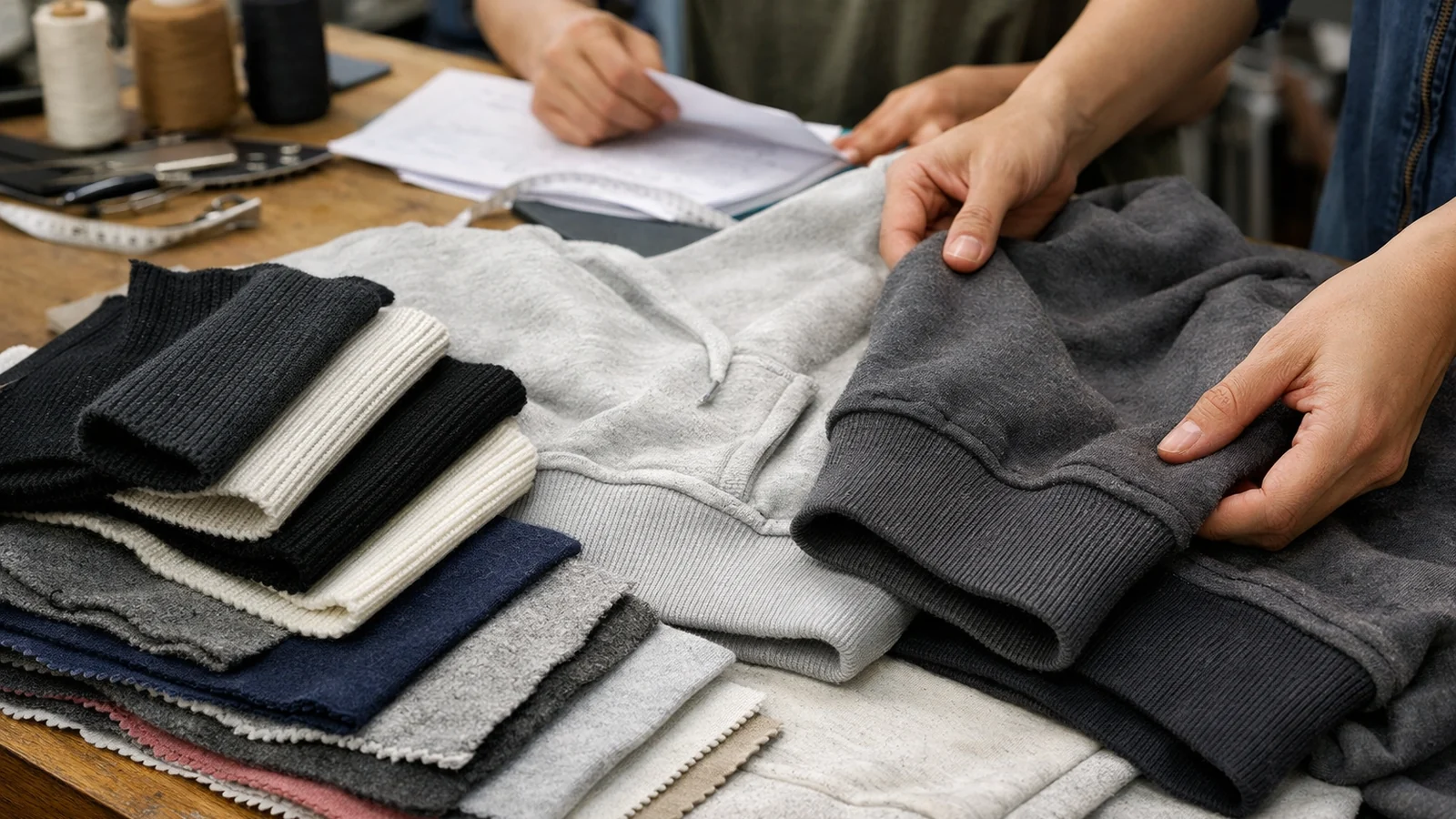
The common mistake is spending time on body fabric GSM and ignoring the rib, even though poor rib choice is often what makes a hoodie feel less finished in real use. In live projects, that often shows up as fragmented feedback, shifting cost expectations, or a mismatch between what the buyer thought was approved and what the factory is actually preparing to make. The result is not only rework. It is lost confidence in the operating standard.
A cleaner correction is to reset the next decision around one written standard that covers how the real fabric behaves after dyeing, washing, printing, rib attachment, and garment construction. When the brand, the factory, and the QC or logistics side can all explain the same next step in plain language, avoidable rework usually drops fast. Products Overview is a good supporting read if the team still needs structure.
What to confirm before you approve the standard
Match rib weight and recovery to the body fabric and fit intent so the hem and cuff support the silhouette instead of fighting it. Before approval, the buyer should be able to explain what success looks like for hand feel, weight, shrinkage, wash response, and compatibility with trims or decoration in one short working note. If that note still changes every time a new person reads the project, then the standard is not ready yet.
A hoodie can look impressive in a first sample and still feel wrong in bulk if the rib, wash, or fit standard stays vague. The point of the next approval is not only to feel more confident. It is to make the next factory action measurable enough that it can be repeated without guesswork. That is usually the difference between a smooth bulk handoff and a project that stays trapped in revision mode. Streetwear Products can help close the loop.
A quick buyer checklist before you use this standard in production
Before the next quote, sample, or bulk approval, use this short checklist to keep hand feel, weight, shrinkage, wash response, and compatibility with trims or decoration aligned with the factory reality instead of relying on assumptions or memory.
- Judge the fabric on the finished garment, not only as a flat swatch.
- Check shrinkage, rebound, hand feel, and surface appearance after the intended wash or finish.
- Review how rib, print, embroidery, or labels behave with the chosen base fabric.
- Confirm whether the sample fabric and the bulk fabric will truly be the same construction and finish.
- Lock the material only when comfort, appearance, and production stability all support the same product goal.
Strong fabric decisions come from checking how the actual material behaves on the actual garment, not from relying on one roll, one swatch, or one marketing phrase. That is usually what turns a content idea into a production-ready decision.
Match rib weight and recovery to the body fabric and fit intent so the hem and cuff support the silhouette instead of fighting it. If you want to turn that into a live project, review Products, Services, or send the brief through Contact.
Frequently Asked Questions
Why does rib weight matter on a hoodie?
Because rib controls recovery and silhouette at the cuff and hem, which strongly affects how premium the hoodie feels over time.
Can the wrong rib ruin a heavyweight hoodie?
Yes. If the rib is too weak or mismatched, the hoodie can lose shape even when the body fabric is strong.