Custom Streetwear, Casualwear & Denim Manufacturer•MOQ 50 pcs•Denim MOQ 100 pcs•7-Day Sample Available

What Makes Denim Hardware Feel Cheap or Premium
Use this factory-side guide to compare denim hardware feel cheap or premium more clearly across supplier fit, quote scope, approvals, and timing before you commit to.

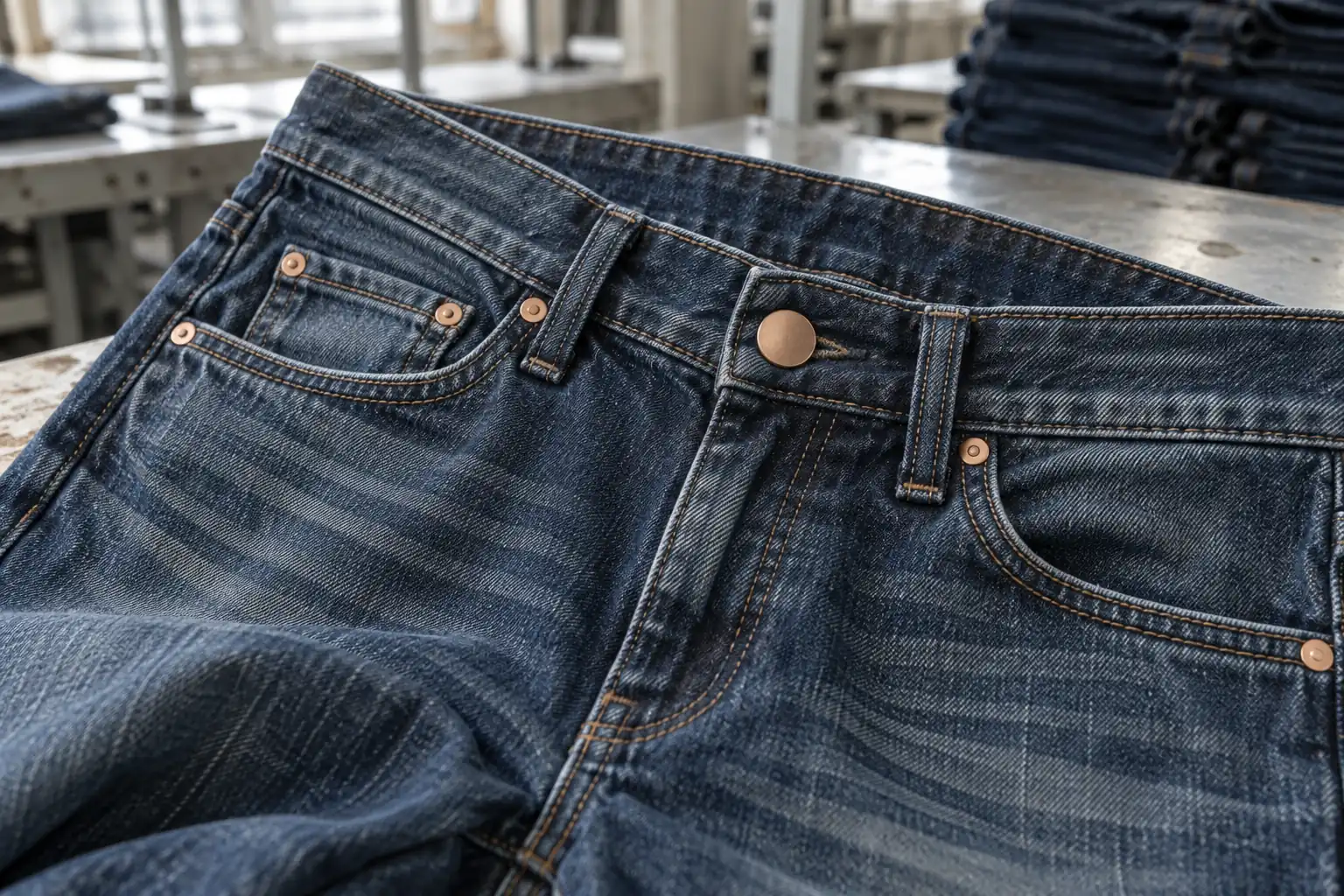
A denim button can feel solid in your hand and still make a finished jean look cheap. Put a bright yellow brass cap against a cool, smoky indigo wash, then mix it with reddish rivets from another plating batch: the individual parts may work, but the garment looks assembled without a shared standard. Premium perception depends on the relationship between metal finish, fabric shade and the consistency of that relationship across a delivery.
For buyers deciding what makes denim hardware feel cheap or premium, shade lot control offers a practical approval method. Treat the washed denim lot and the hardware finish lot as a matched combination. This shifts the buying decision from choosing an attractive trim sample to defining which combinations can enter production, how they will be checked and what happens when a replacement batch arrives.
Approve a metal-and-denim pairing, not a loose button
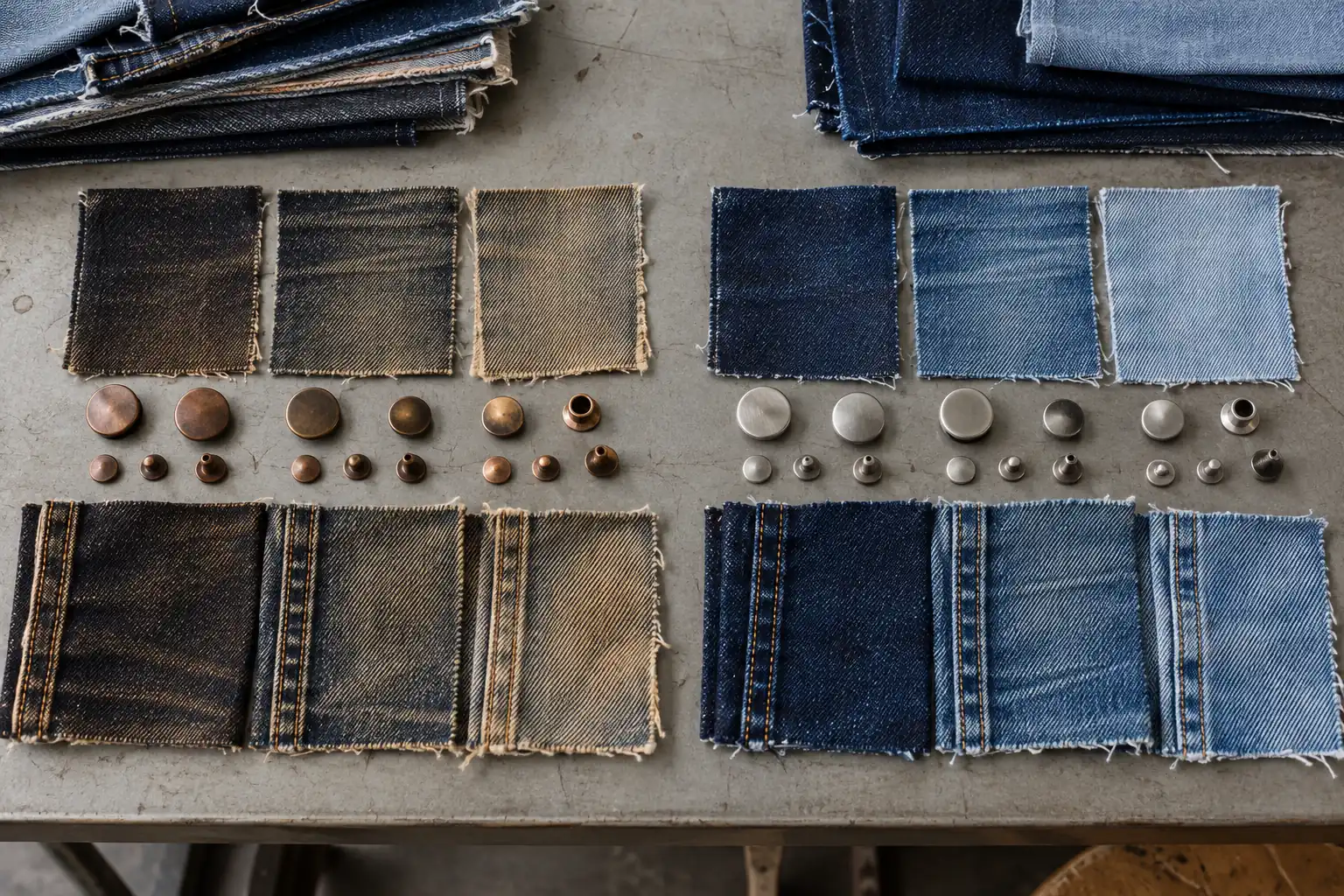
Indigo changes the way metal reads. A satin nickel button may look crisp on a dark rinse but harsh on a warm, faded blue. Antique copper can complement brown-tinted denim while appearing overly red against a cleaner blue wash. These are design judgments, not universal quality rankings. The risk begins when a buyer approves hardware on white paper and approves the wash separately.
Build a reference panel using denim that has completed the intended wash and drying route. Attach the actual button, rivet and zipper components in their intended positions, or mount them immediately beside the corresponding fabric areas. Include zipper tape: exposed tape can introduce another shade mismatch even when the slider finish is correct.
Record the fabric reference, wash trial identifier and hardware batch identifiers together. Keep one protected master and working copies for production checks. A phone photograph helps identify the reference, but automatic exposure and white balance make it unsuitable as the sole color standard.
Separate plating variation from changes caused by washing
Two sources of variation can produce the same complaint: “the buttons look different.” Incoming hardware may already vary between plating lots, or the garment process may change an initially consistent finish. Distinguishing these causes determines whether to hold the trim shipment or investigate the wash trial.
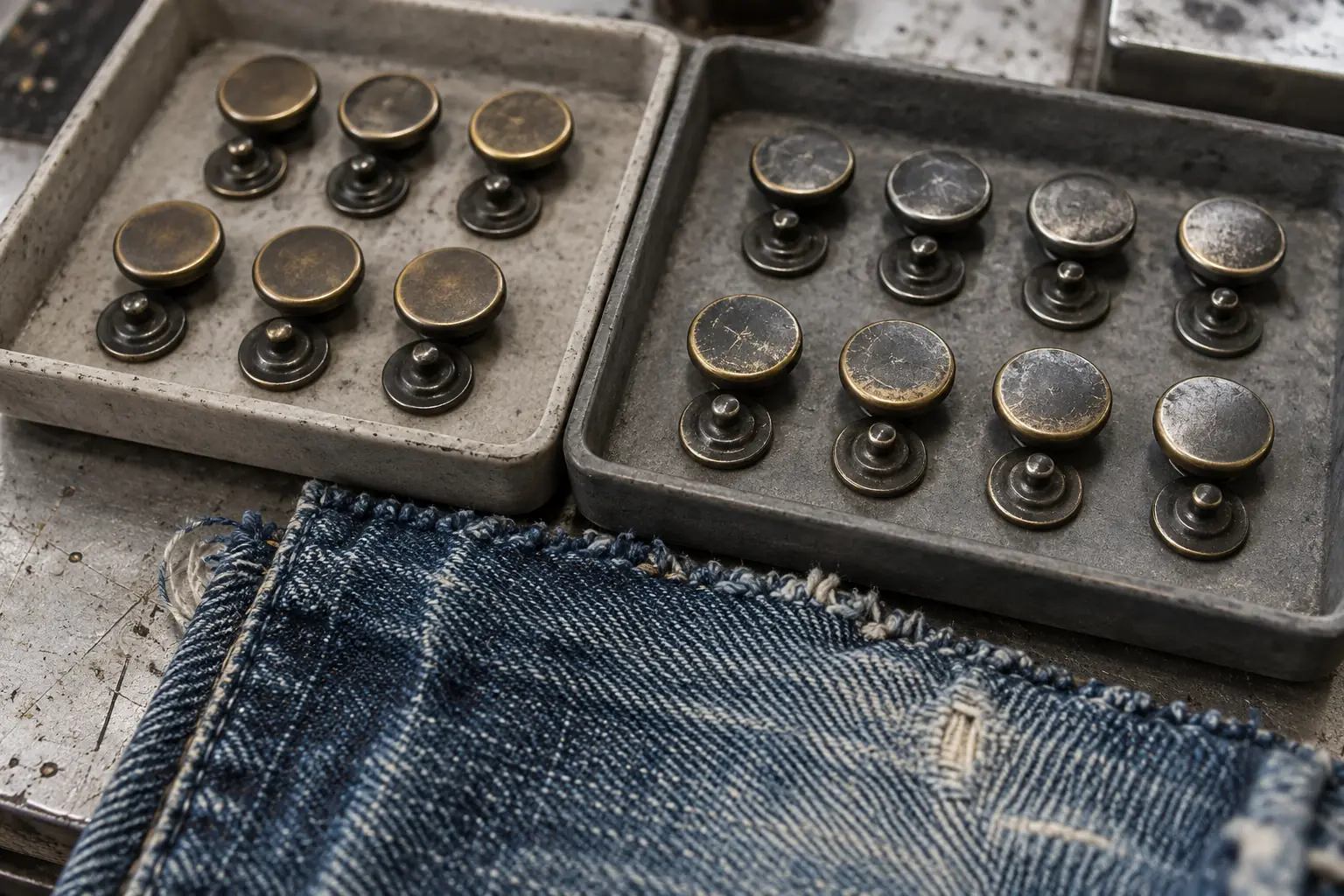
Ask for the intended base material, finish description, surface texture and protective coating specification, where applicable. “Antique silver” alone does not define brightness, dark recesses or how much underlying metal may show. Specify the visible face and edge separately if the design uses intentionally distressed plating.
Retain an unwashed component from each trial batch. Compare it with a component exposed to the proposed garment process, using the actual assembly sequence. Hardware fitted before washing encounters different conditions from hardware attached afterward. Chemistry, abrasion, drying and contact with other components can affect appearance; performance should be demonstrated for the proposed route rather than assumed from a finish name.
For example, if rivets retain their dark recesses while the waistband button becomes uniformly bright, the set may lose its intended character. Record that difference as an outcome to resolve, even if both parts remain mechanically sound.
Build a lot map before trims reach the sewing line
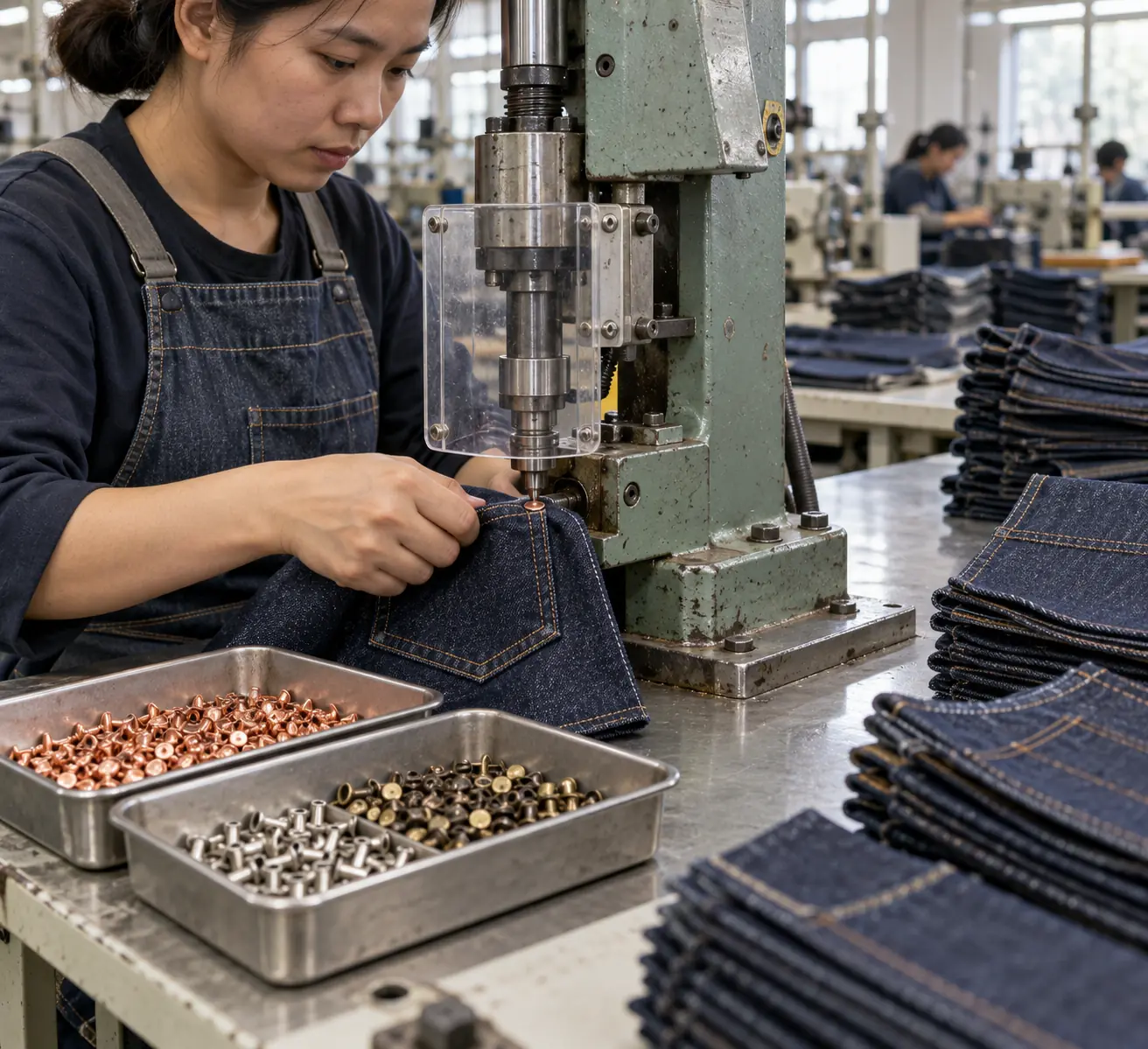
A shade lot is only useful when someone can trace it. Give incoming hardware batches distinct internal identifiers and preserve any supplier batch references. Do the same for denim and garment wash batches. Avoid topping up a nearly empty rivet bin from a new delivery without recording the change; that small convenience can erase the information needed to isolate a mismatch.
Use a simple pairing register to authorize combinations. The entries below illustrate a control format, not predetermined acceptance decisions. Each pairing still needs a physical comparison with the approved reference.
| Production combination | Evidence needed | Release condition |
|---|---|---|
| Wash batch A with button lot 01 and rivet lot 01 | Finished pairing beside the master | Appearance and function accepted |
| Wash batch A with replacement button lot 02 | New button compared with retained rivets | Replacement pairing approved |
| Wash batch B with original hardware lots | Hardware viewed against the new denim shade | Fabric-to-metal relationship accepted |
Issue components to sewing in identified containers and keep bundle records connected to those identifiers. If attaching hardware after washing, segregate washed garment batches before setting. If attaching it before washing, preserve the trim lot record through laundry handling. Either route needs traceability that survives movement between departments.
Set visual boundaries that account for reflective surfaces
Metal is directional: rotate a cap and it can move from dark gray to nearly white under the same light. Compare parts at matching orientations under consistent diffuse lighting, then tilt them together. Check under a second agreed light source representative of the selling environment. Do not reject one component because it catches a reflection that the reference does not.
Define acceptable limits with physical examples wherever possible. A center standard plus approved lighter and darker limits is more usable than “slight variation allowed.” For antiqued finishes, include acceptable variation in recess darkness and edge exposure. If no boundary samples exist, require buyer review of deviations instead of letting each inspector invent a tolerance.
A numerical color tolerance can help only when the measurement method suits the finish and is agreed in advance. A single reading does not fully describe gloss, texture or directional reflection. Pair any instrumental rule with visual approval, and specify whether variation is acceptable within one garment, within one carton or only between separately identified deliveries.
For a five-pocket jean, inspect the button and front pocket rivets together first. They sit close enough for inconsistent undertones to be obvious. Then inspect the zipper pull and any back-pocket hardware against the same standard.
Check shade consistency alongside the physical feel
A coordinated finish cannot compensate for a rough puller or a poorly set rivet. At the pre-packing checkpoint, use a combined appearance and function checklist. Select garments across relevant wash and trim lots, including units made after a component refill or setting adjustment. Agree inspection quantities and test methods for the project rather than relying on one attractive sample.
- Pairing identity: confirm that the garment’s wash batch and hardware lots match an authorized combination.
- Visible finish: compare undertone, gloss, dark recesses and unintended bare patches against the master and approved limits.
- Touch points: check cap edges, rivet backs and pullers for burrs or roughness that could snag fabric or irritate skin.
- Setting quality: inspect for spinning caps, tilted posts, crushed fabric and sharp projections; use agreed retention testing where specified.
- Zipper movement: operate the zipper on the finished garment and check for catching, uneven travel or interference from the fly construction.
- Post-wash condition: examine adjacent fabric for staining and metal surfaces for corrosion, flaking or unintended abrasion.
Record a finish mismatch separately from a functional failure. Both may require a hold, but their remedies differ. If replacing hardware, first trial removal and resetting on representative garments: puncture damage or setting marks can make a visually simple correction unsuitable for bulk rework.
Reserve repeatable components when placing the order
Ask the supplier whether the planned quantity can use a consistent hardware finish lot and what happens if losses require replenishment. Where practical, agree an allowance of matching spare components before bulk starts. The allowance should reflect the setting process and replacement needs; it is not a reason to accept unexplained waste.
For reorders, retain both finished garments and unused trims. A repeat finish name does not guarantee an identical result, and a new denim shade may change the appearance of previously accepted hardware. Make the reorder approval a fresh pairing check.
StitchQuote’s denim MOQ starts from 100 pieces per style. Its services include sampling, fabric and trim sourcing, cut-and-sew, private label, branding and QC before packing. A seven-day sample is available for standard styles with confirmed specifications and available materials; complex styles, custom washes and custom-developed fabric take longer. Include the shade reference and intended assembly route when requesting a schedule.
Questions buyers ask about matching hardware lots
Must the button and rivets come from the same plating batch?
Different components may require separate production batches. The goal is an approved visual match, supported by traceable lot references. Compare the complete set after the intended wash instead of treating a shared finish description as proof.
Can a darker denim batch use the already approved hardware?
Possibly, but review the pairing again. The metal may be unchanged while the contrast becomes stronger. If the combination is accepted, record that decision against the new wash batch so production has a clear release instruction.
Should all metal parts have identical brightness?
Only if that is the design intent. A recessed zipper pull can intentionally differ from exposed rivets. Define the relationship in the reference set so a deliberate contrast is distinguishable from an accidental mixed lot.
What evidence should accompany a shade complaint?
Provide affected garment quantities, wash and trim lot identifiers, consistent comparison photographs and representative physical samples. Include an accepted garment for comparison. This lets the investigation distinguish a localized component change from a wider wash-related shift.
Related reading and project support:
- Prepare a tech pack with usable trim specifications
- Plan sampling and minimum order quantities
- Understand denim wash approval
- Discuss your denim hardware and shade references
Request a manufacturing quote
Share your product type, quantity range, and destination. We usually reply within one business day.