Custom Streetwear, Casualwear & Denim Manufacturer•MOQ 50 pcs•Denim MOQ 100 pcs•7-Day Sample Available

What Packaging Details Should Wait Until Reorders
Use packaging details wait until reorders to compare private label decisions more clearly, protect brand consistency, and keep product, trims, and commercial scope.

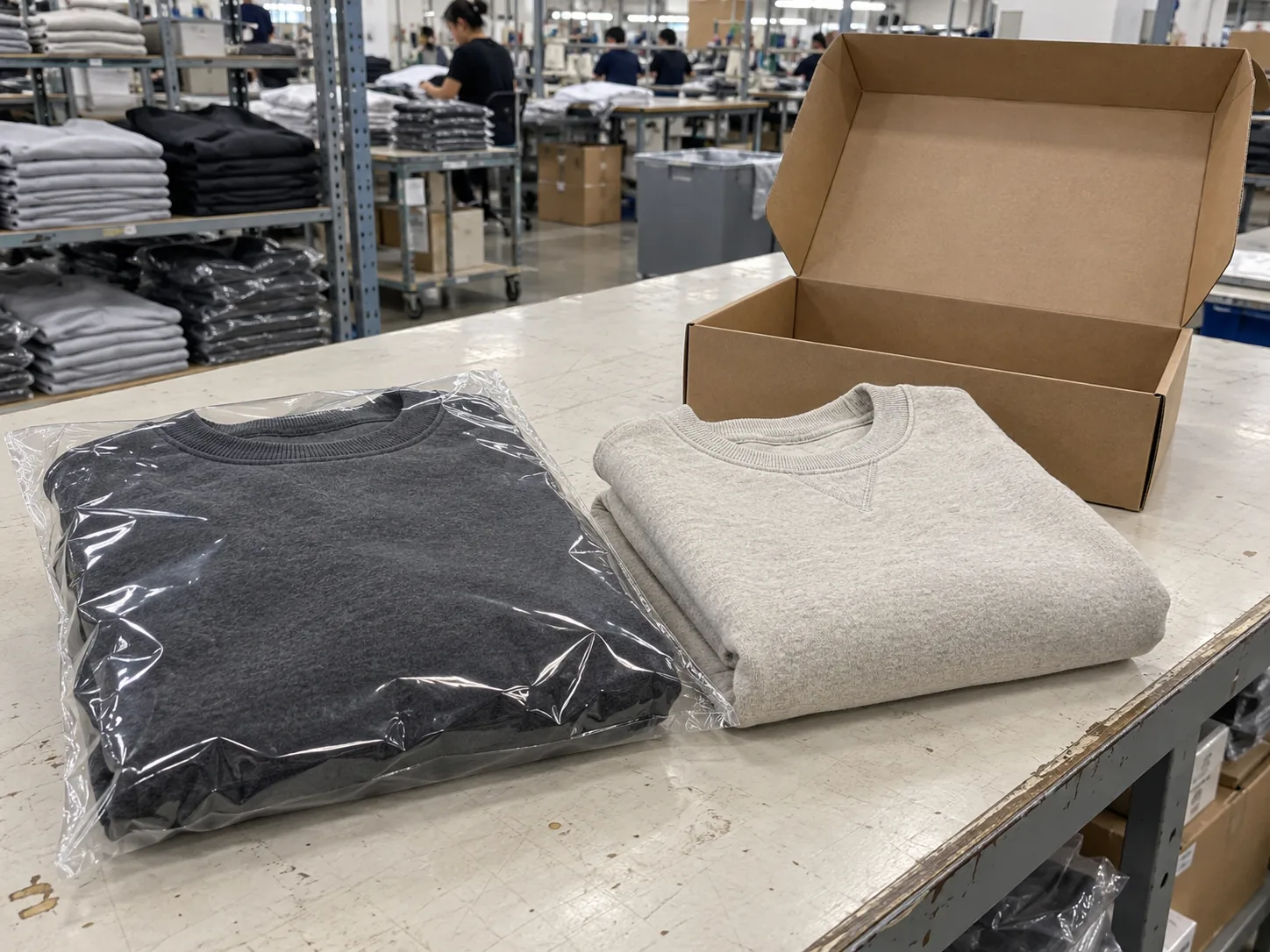
A first production run should prove that customers want the garment and that the approved product can be repeated. Elaborate packaging can obscure that test: a rigid box may look convincing while the fit, fabric weight, or size mix is still changing. For a new streetwear label, the useful question is which packaging decisions protect the launch and which become sensible only after sales and fulfillment reveal what actually works.
Keep protection, product identification, and required information in the first order. Delay presentation features whose dimensions, quantities, or artwork depend on an unproven assortment. Reorder packaging should be built around a stable garment and a known delivery route, with clear evidence for every added component.
Freeze the garment before designing its container
Packaging dimensions depend on the finished product, not just its pattern measurements. A brushed fleece hoodie occupies a different folded volume from a jersey hoodie with the same chest width. A denim wash can change both handle and how readily a pair of jeans stays folded. Measure the approved sample after finishing, with its intended labels and trims attached.
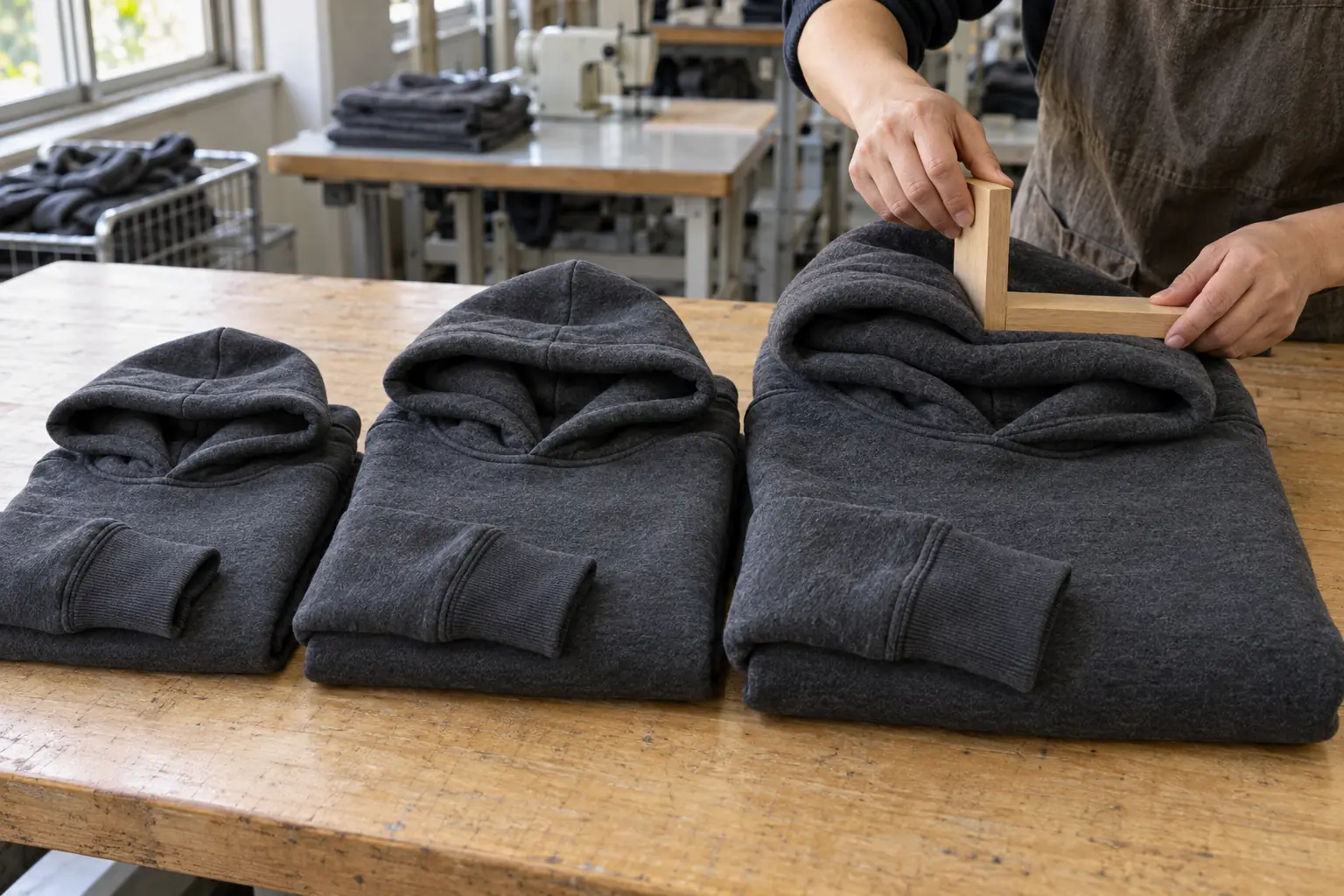
Record the fold sequence, folded width, folded height, and maximum thickness without forcibly compressing the garment. Include the hood, drawcord ends, or belt loops in the assessment. If the largest size needs an extra fold, document it rather than assuming every size will occupy the same space.
For example, a label might revise its heavyweight tee from a narrow fold to a wider fold to avoid creasing the chest print. Any custom sleeve ordered around the earlier fold could then be unusable. Approve product construction and decoration first; validate the packaging around that approved version.
Make the launch pack complete but easy to revise
A restrained first pack still needs a written specification. Define the protective enclosure, closure method, placement of product identification, and carton arrangement. Include any destination, retailer, or fulfillment requirements that apply. Mandatory warnings and garment labeling cannot be postponed simply because the brand intends to upgrade its presentation later.
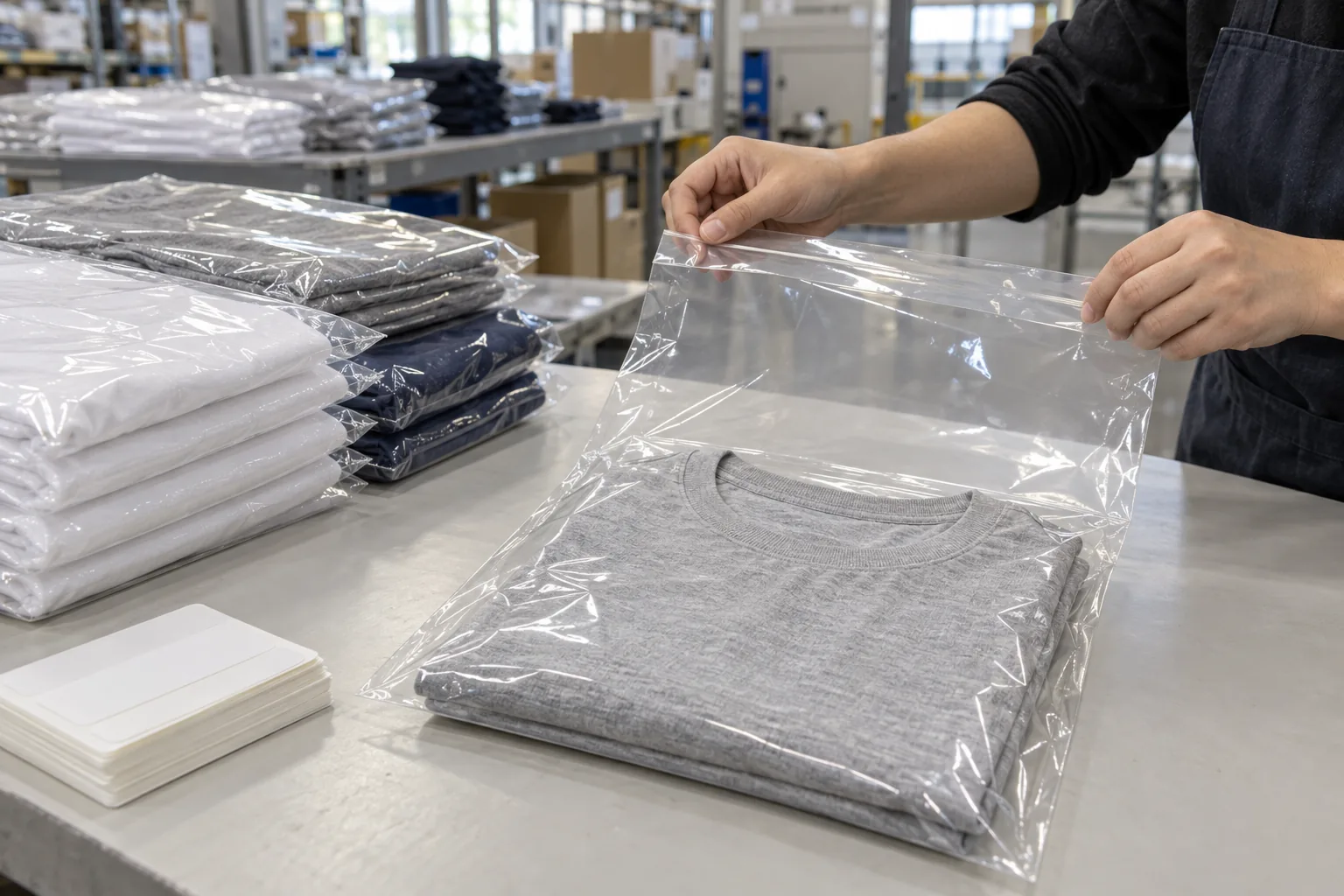
Where suitable for the shipment, an unprinted protective bag with a replaceable identification label is easier to revise than a fully printed bag. Specify usable internal dimensions and closure clearance. A nominal bag measurement alone does not establish whether a thick folded sweatshirt fits beneath the adhesive flap.
Keep the product identifier readable without opening the individual pack. Ask the receiving warehouse which barcode format, placement, and scan orientation it expects. Test the actual label on the selected material: glare, wrinkles, and a seam underneath the barcode can interfere with reading. This operational information belongs in the launch specification, even when decorative graphics wait.
Also establish who supplies each component and who approves substitutions. An otherwise minor change in adhesive or closure position can affect garment removal, so replacement materials should be reviewed before packing begins.
Reserve custom presentation for decisions backed by evidence
The strongest candidates for delay are components that become obsolete when a product, assortment, or sales channel changes. These are not necessarily poor investments; their value depends on having stable inputs. Use the first run to gather those inputs rather than guessing at them.
| Detail to consider later | Evidence needed before approval |
|---|---|
| Rigid presentation box | Stable folded volume and a tested delivery configuration |
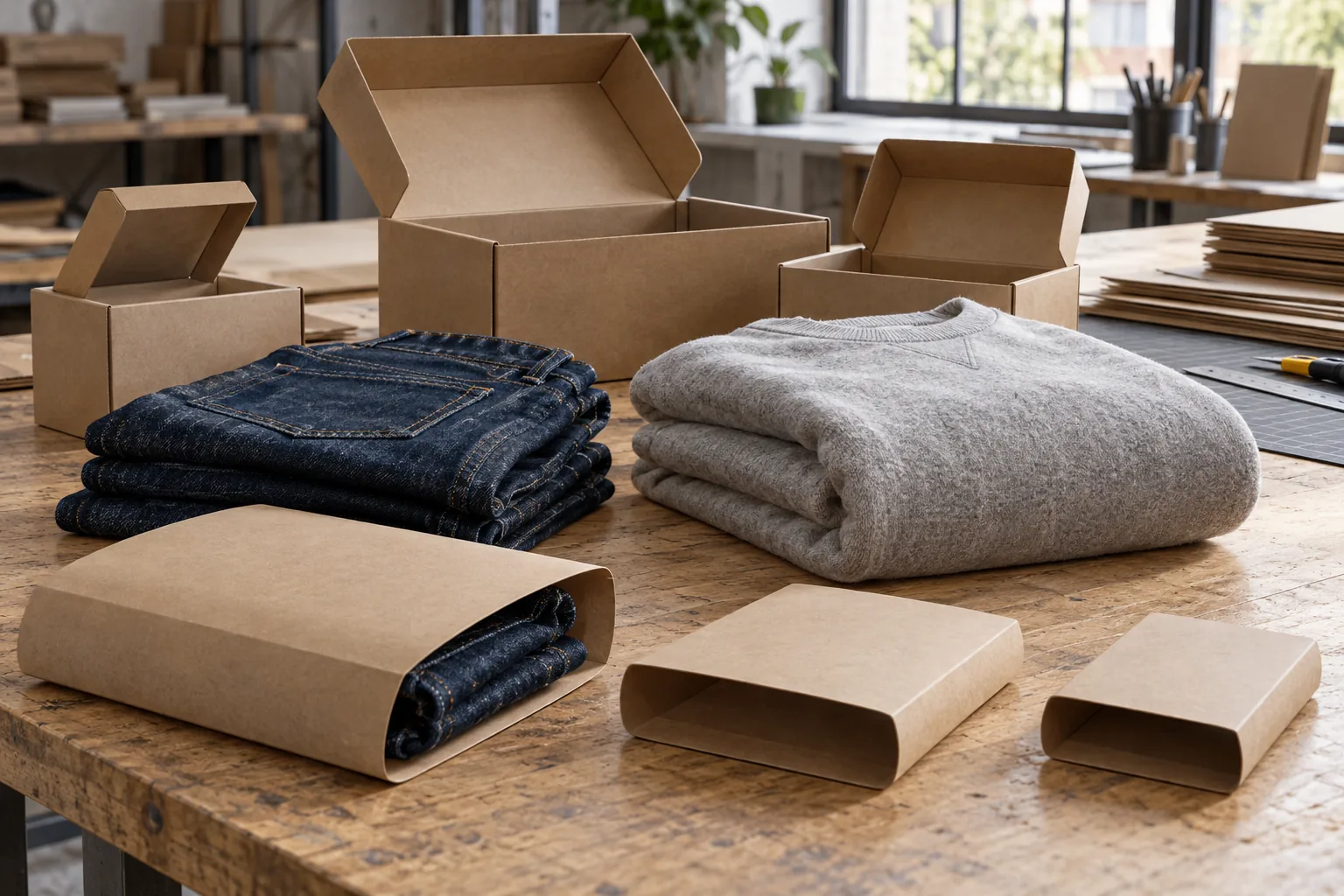
| Printed paper sleeve | Consistent fold dimensions across the intended size range |
| Collection-specific tissue or inserts | Confirmed collection lifespan and realistic repeat quantities |
| Separate packaging for each color | Reliable color-level demand and a workable stock-control method |
A limited seasonal graphic on a box ties leftover packaging to that collection. A permanent brand treatment may remain usable, but it still needs the right dimensions. Evaluate artwork lifespan and physical fit separately; evergreen artwork cannot rescue a box that no longer accommodates the garment.
Ask for packaging quantities independently of garment quantities. StitchQuote’s MOQ for most categories starts from 50 pieces per style, while denim starts from 100 pieces per style. Those garment minimums do not establish a minimum for custom packaging. Confirm component quantities, surplus ownership, and storage arrangements per project before approving an upgrade.
Turn first-order feedback into a reorder packaging brief
Collect observations from receiving, picking, delivery, and customer returns. Separate garment problems from packaging problems: a customer returning jeans because the rise is wrong does not justify a premium box. A warehouse repeatedly opening bags to identify sizes does justify revising identification placement.
Record the affected style, size, packaging version, and failure type. Useful categories include split closures, displaced labels, snagging during unpacking, crushed presentation components, and excessive empty space. Count incidents against units handled so that a busy size does not appear worse merely because it sells more.
Before a reorder, compare a proposed packaging change with the launch pack using finished samples. Keep the garment and handling conditions consistent. If testing a paper sleeve, check the smallest and largest sizes and repeat removal and reinsertion. If testing a box, evaluate the complete outbound parcel, including any outer shipper used by the fulfillment team.
Set acceptance criteria before reviewing appearance. A sensible brief might require closure without garment compression, scanning without repositioning the label, and unpacking without adhesive touching the fabric. These are proposed project requirements, not universal standards. Agree the actual criteria with the people who will pack and receive the goods.
Inspect the garment and pack as one finished unit
A packaging approval should include a physical reference and a checklist that distinguishes garment defects from packing errors. StitchQuote provides QC before packing. For a project-specific packed-unit inspection, confirm the scope and sampling plan explicitly rather than assuming every requested check is included.
- Condition before enclosure: Check for loose threads, surface marks, and signs of moisture. Confirm garments are ready to pack after finishing; packaging is not a remedy for incomplete drying.
- Fold and fit: Compare the folded garment with the approved reference. Check that zippers, rivets, and drawcord tips do not create pressure points against decorated surfaces.
- Dimensions: Define measurement points and agreed tolerances. For example, a proposed folded-width tolerance of plus or minus 10 mm may suit one sleeve design but fail another; verify it with physical trials.
- Identity: Match the garment’s style, color, and size to the individual label and carton breakdown. Test barcode readability on the closed pack.
- Closure and removal: Check that the closure stays secure during agreed handling trials and opens without catching the garment or leaving adhesive on it.
- Carton consistency: Verify count, assortment, and orientation against the packing instruction. Recheck carton fit whenever the individual pack changes.
Photograph both an accepted unit and representative failures. A photograph of a crushed hood or a sleeve riding over the size label often communicates more clearly than an instruction such as “pack neatly.” Keep the physical approved sample available for comparison.
Release upgrades with a separate approval record
Give the garment specification and packaging specification separate revision identifiers. Link them in the purchase documentation so the packing team knows which combination is approved. A packaging-only update should still state whether it changes folding, carton quantities, or warehouse receiving instructions.
Assign one person to approve artwork and another, if needed, to confirm physical fit and warehouse usability. Release production only after both are resolved. Include a rule for remaining launch-pack stock: use it on a designated order, retain it for an agreed purpose, or stop using it. Avoid mixing versions without an explicit instruction.
StitchQuote offers cut-and-sew, private label, sampling, fabric and trim sourcing, and branding through woven labels, prints, and embroidery. A 7-day sample is available for standard styles with confirmed specifications and available materials; complex styles, custom washes, and custom-developed fabrics take longer. Confirm packaging development timing separately when coordinating a reorder schedule.
Questions buyers ask when upgrading reorder packs
Does a second order automatically justify custom boxes?
No. A reorder can still contain revised fit, new fabric, or an unfamiliar size split. Approve custom boxes when the product dimensions and delivery requirements are stable enough to support them. The order number alone is not evidence.
Can one sleeve cover every size of a sweatshirt?
Possibly, but test the size extremes using finished garments. A sleeve that grips a small sweatshirt may distort a larger one. Decide whether an adjustable format or separate sleeve dimensions better fits the actual assortment.
Should packaging change when sales move into retail?
Review the retailer’s requirements before accepting the order. Hanging presentation, ticket placement, scanning, or carton assortment may differ from direct-to-consumer fulfillment. Necessary channel requirements take priority over the plan to defer cosmetic upgrades.
What should the factory receive with the upgrade request?
Send the approved garment reference, fold measurements, proposed component drawings, artwork, identification rules, quantity breakdown, and acceptance criteria. Include the first-order problem the change should solve. This lets the discussion focus on a measurable improvement.
Related reading
- Prepare the garment tech pack before fixing packaging dimensions
- Review sampling and MOQ planning
- Explore private-label garment production
- Discuss your reorder specifications with StitchQuote
Request a manufacturing quote
Share your product type, quantity range, and destination. We usually reply within one business day.