Custom Streetwear, Casualwear & Denim Manufacturer•MOQ 50 pcs•Denim MOQ 100 pcs•7-Day Sample Available

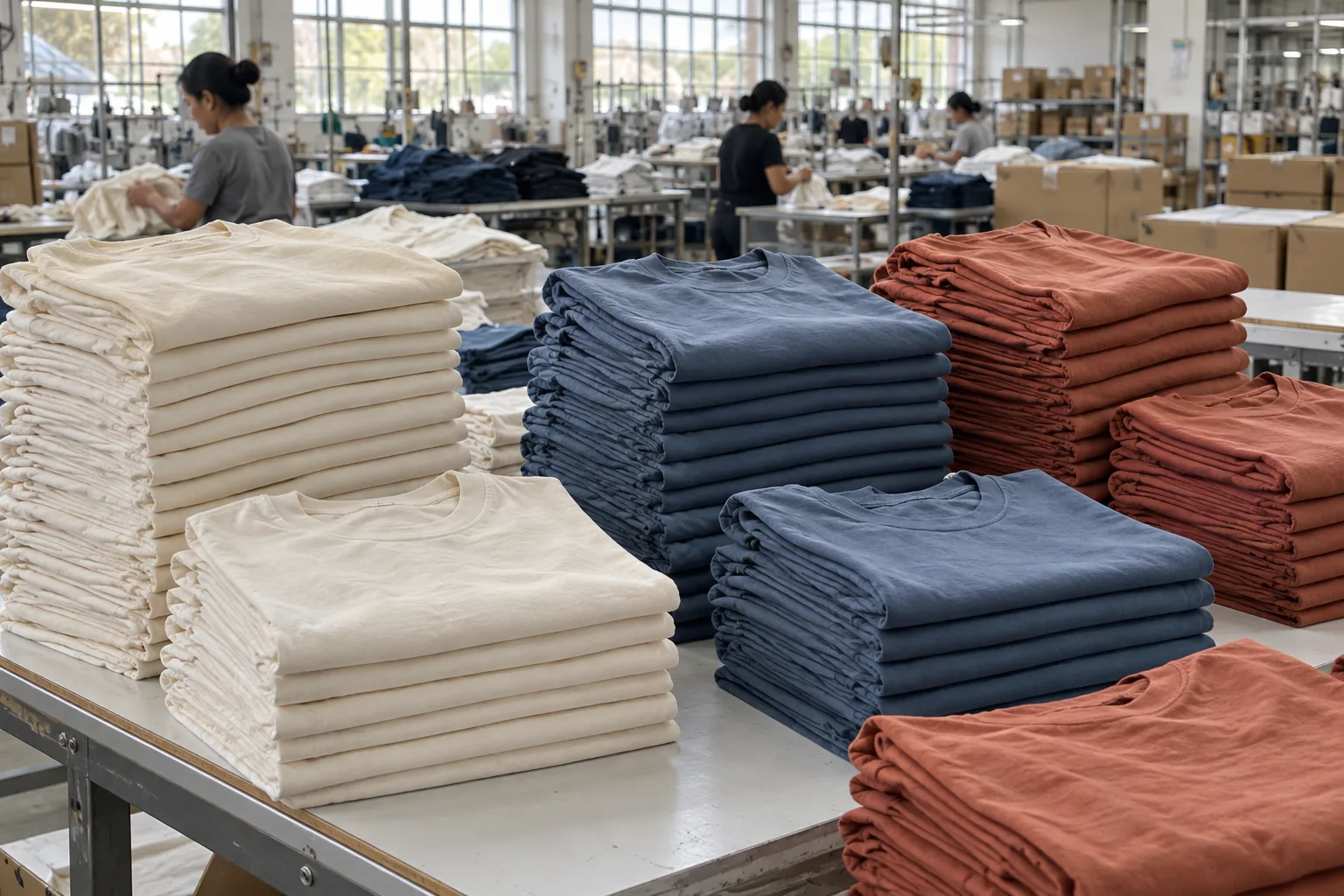
What the April 2026 Cotton Outlook Means for Apparel Cost Planning
USDA's April 2026 cotton outlook points to firmer farm prices, higher planted acreage, and shifting mill demand that buyers should factor into cotton planning now.

The April 2026 cotton outlook belongs in your sourcing budget, but it cannot tell you whether adding a fourth sweatshirt color is affordable. Raw cotton is only one input into finished fabric. Dye-lot size, fabric availability, matching rib, and approval work can change the cost of an assortment even when its total garment quantity stays fixed.
For buyers planning cotton tees, fleece, and casualwear, the useful response is to compare color allocations before committing to a purchase order. Treat the outlook as a reason to refresh material quotes, then examine where each color creates a separate purchasing or production obligation. That approach keeps a market headline from becoming an unsupported surcharge across every garment.
Translate the April outlook into a dated material assumption
A cotton-market forecast and a garment quotation describe different things. The first concerns agricultural supply, demand, and pricing expectations; the second includes a particular yarn, knit construction, dye route, finishing process, and delivery window. A forecast movement should therefore trigger a supplier conversation, not an automatic percentage adjustment to your entire apparel budget.
For an April-based planning sheet, record the date of the fabric offer, its validity period, and whether it covers stock fabric or a new production lot. Ask what event fixes the material price: purchase confirmation, deposit, yarn booking, or another agreed milestone. Also identify what remains provisional, including color-dependent finishing or additional testing.
Keep one unchanged reference specification while requesting updates. For example, compare the same 100% cotton, 240 GSM single jersey, usable width, finish, and color allocation on both quotes. If the revised offer uses a lighter fabric or a different yarn specification, it is a product change as well as a price change. Separate those decisions before approving either.
Price the split between colors before expanding the palette
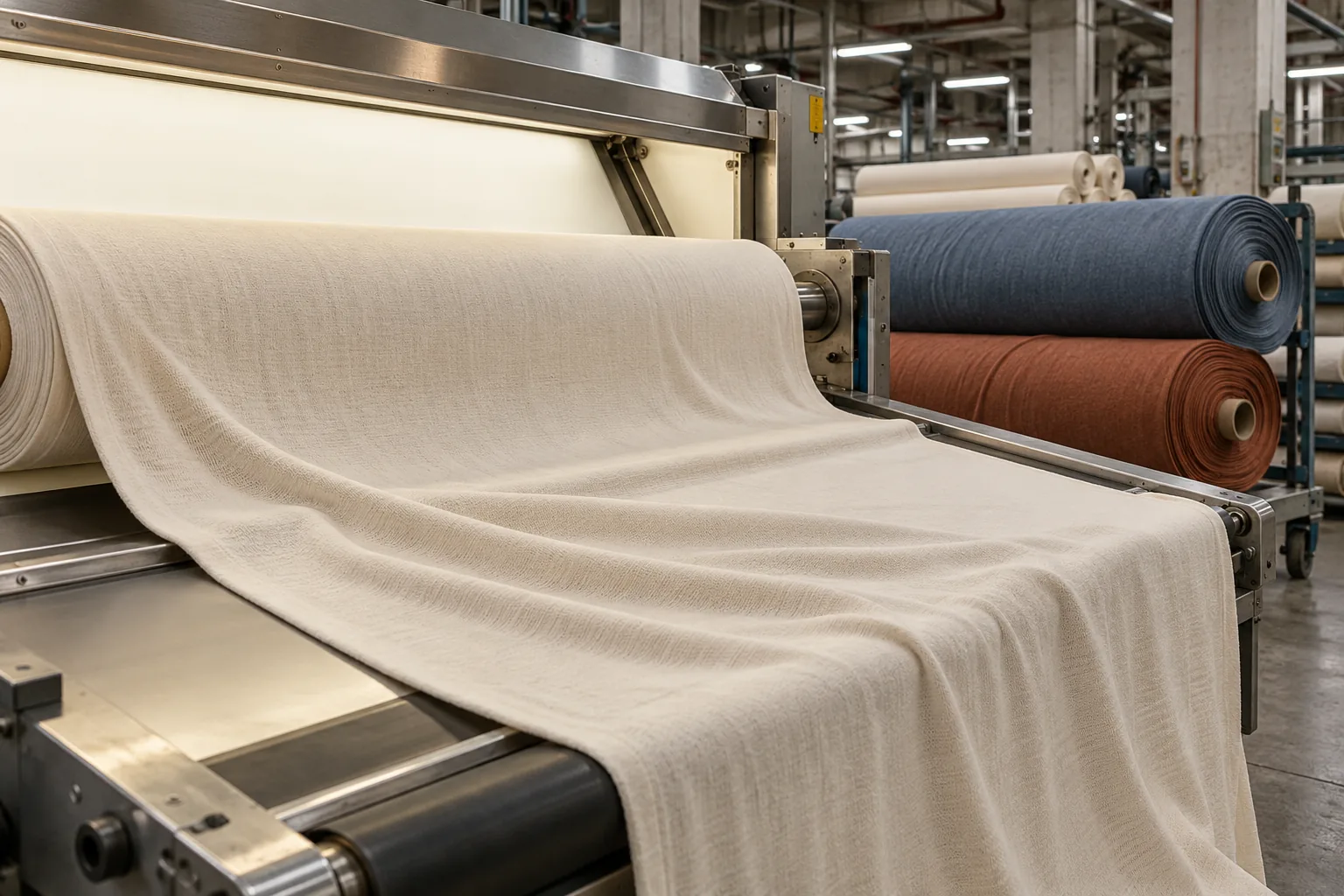
A minimum order per style does not necessarily establish the minimum for every color. StitchQuote’s MOQ for most categories starts from 50 pieces per style; denim starts from 100 pieces per style. Confirm the proposed size and color split separately, because the fabric source or dye process may impose additional constraints.
Consider an illustrative order of 300 tees. One color concentrates all demand into one fabric requirement. Three colors at 100 pieces each create three shade requirements. A five-color launch with uneven allocations can leave the smallest shade needing more fabric than its garments consume. The cost question is whether that excess is purchased, charged as a minimum, or avoided through available stock.
| Illustrative allocation | Cost question to resolve | Evidence to request |
|---|---|---|
| 300 pieces in one color | Does one lot cover the complete size run? | Available quantity and lot identity |
| 100 pieces in each of three colors | Does each shade meet the material minimum? | Fabric requirement and minimum by shade |
| 180 core-color pieces plus four colors at 30 each | Who pays for unused material in small shades? | Excess quantity, ownership, and storage terms |
These are planning examples, not confirmed production options. Request a total order cost and a cost by color for each feasible allocation. An averaged unit quote can hide a disproportionately expensive accent color that contributes little to expected sales.
Count fabric commitments, including the material left over
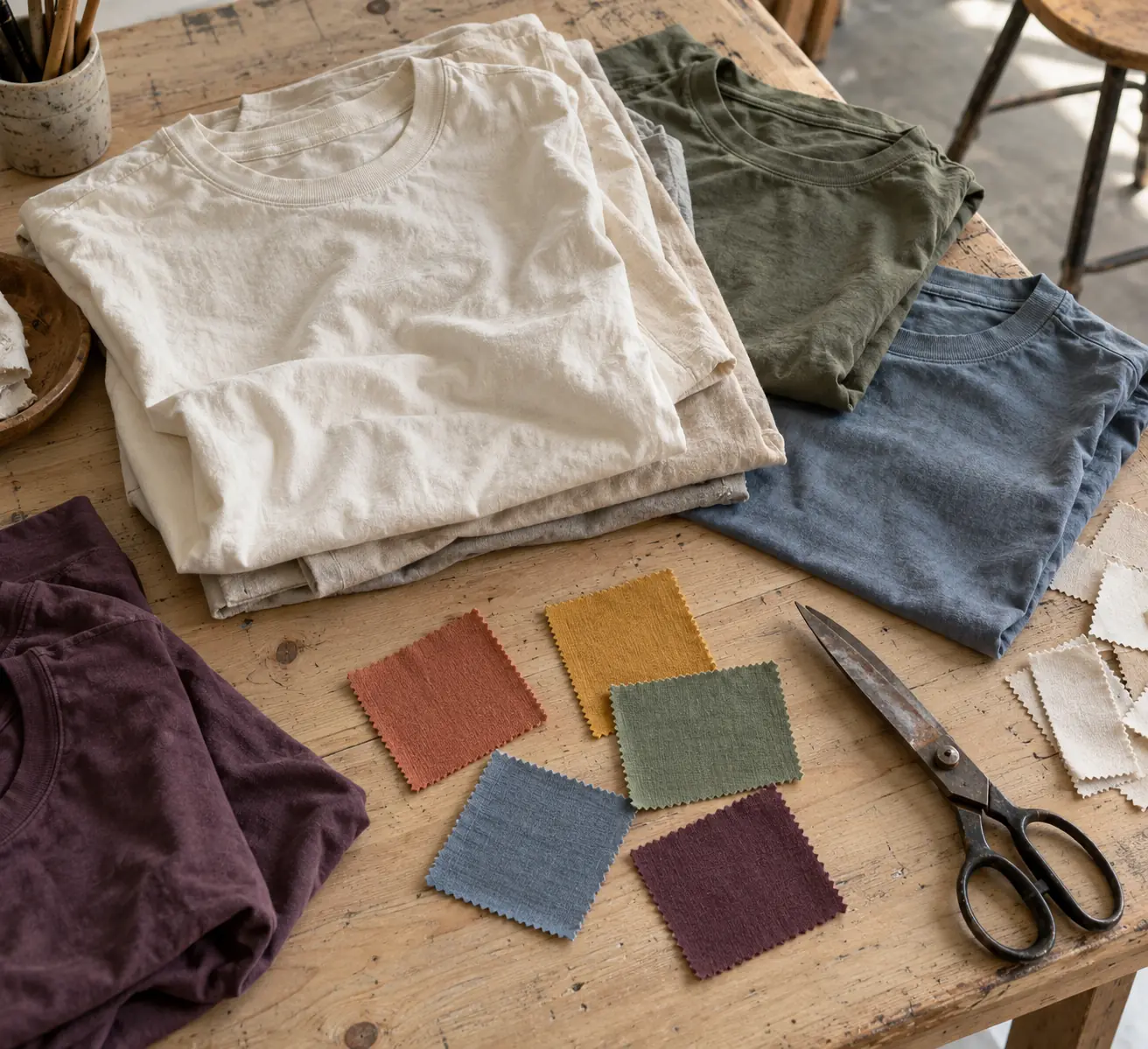
Garment count alone is a weak measure of a color’s purchasing requirement. Ask the supplier to calculate consumption using the intended size ratio, pattern, usable fabric width, and allowances for the selected material. A run weighted toward larger sizes may require more fabric than a balanced size run at the same piece count.
As an illustrative calculation, suppose estimated consumption is 0.32 kg per tee, including the agreed cutting and processing allowances. A 60-piece color needs 19.2 kg. If the material supplier requires a 25 kg purchase for that shade, 5.8 kg remains outside the estimated garment requirement. These figures are hypothetical; actual consumption and minimums must be confirmed per project.
Make that remainder visible. State whether it becomes buyer-owned fabric, whether it can support a later order, and who bears storage or deterioration risk. Do not count it as future savings unless a likely reorder can use the same construction and shade. A leftover batch may be insufficient for a complete repeat order.
Stock colors can reduce a new dyeing commitment, but availability must be checked against the full requirement. Ask whether rolls come from one lot and whether replacement material can be matched. A readily available shade is useful only if its quantity and appearance support the intended product.
Give every color a complete bill of materials
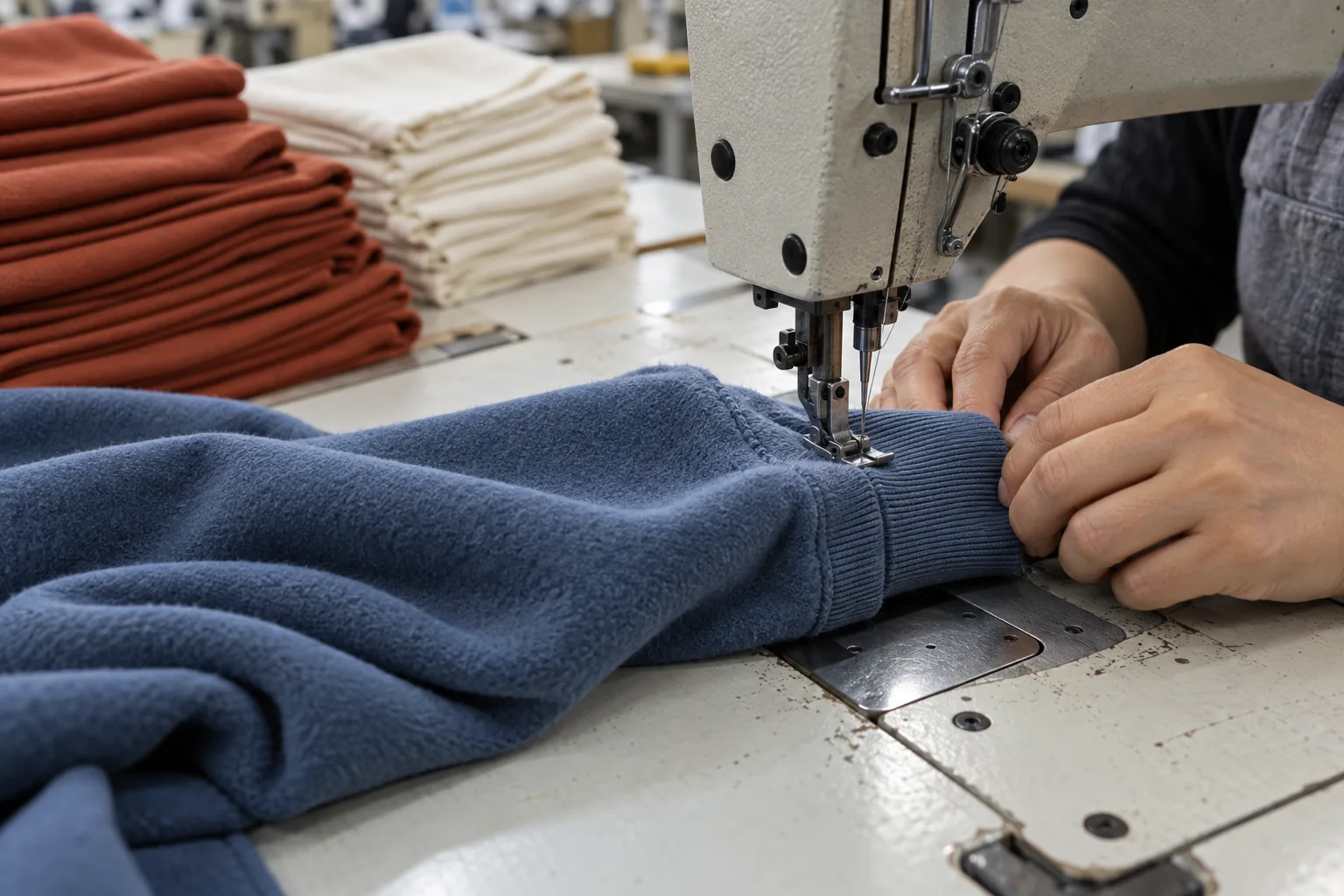
A fleece body color can require matching neck tape, rib cuffs, waistband rib, drawcord, and thread. Those components may have separate sourcing minimums or different dye behavior. Approving the body fabric alone leaves both appearance and cost unresolved, particularly when rib has a different fiber composition from the main fabric.
Build a color matrix with one row per component. For each shade, identify the material reference, approved color standard, sourcing route, and whether the component is shared across the range. A deliberate common drawcord color may simplify purchasing. A supposedly matching stock cord may instead create another approval cycle if it looks visibly wrong against the body.
Decorations also deserve separate assumptions. Ask whether an identical graphic uses the same printing process on pale and dark garments; a dark ground may require a different ink build or underbase. Compare embroidery thread choices against each ground color. Keep these variations visible so a decoration change does not get attributed to cotton-market conditions.
Approve shade and performance before releasing bulk cutting
Color approvals need measurable expectations and a physical reference. Screen images are useful for discussion but unreliable as the sole shade standard. Agree on the reference sample, viewing conditions, and acceptance method before bulk material arrives. If instrumental color measurement is required, specify the method and acceptance limit with the supplier instead of borrowing an unexplained number.
- Shade continuity: Compare rolls from each lot and check variation across the usable width. Identify suspect rolls before laying fabric, and keep lot identity through cutting.
- Component matching: Review body fabric, rib, thread, and trims together under agreed lighting. Approve intentional contrasts explicitly.
- Finished fabric weight: Record a target and tolerance. A proposed 240 GSM target with a ±5% tolerance means 228–252 GSM; this is an example requiring project agreement.
- Wash performance: Use the agreed care method to assess dimensional change, twisting, staining, and shade change. Set acceptance criteria before testing and review each color where dye or finish differs.
- Assembly and packing: Check for mixed shades within garments, verify color and size quantities, and record how rejected units affect the delivery allocation.
StitchQuote provides QC before packing. For a color-sensitive order, also agree on earlier material-release checkpoints; final inspection cannot recover fabric already cut into incompatible shade groups. Specify who approves deviations and retain the approved references so a late decision is traceable.
Commit the core colors, then make additions conditional
Separate colors with established demand from experimental shades. Quote the core allocation first, then request an incremental total for each addition. Include extra material commitments, sample work, component changes, and any effect on delivery. This makes the decision about the added color’s contribution rather than a misleading change in average unit cost.
StitchQuote offers cut-and-sew, private label, sampling, fabric and trim sourcing, and branding through woven labels, prints, and embroidery. A standard-style sample can be available in seven days when specifications are confirmed and materials are available. Complex styles, custom washes, and custom-developed fabric take longer. Do not use that standard sample window as the assumed approval schedule for a custom palette.
Before placing the order, freeze the color quantities, size ratios, material specifications, approved references, and treatment of surplus fabric. Record the quotation expiry and what happens if a color is added later. A short approval sheet connecting those decisions gives the buyer a usable budget even as material offers change.
Questions buyers ask when budgeting an extra shade
Should a softer cotton forecast make every color cheaper?
No. Existing fabric inventory, processing, small-lot commitments, and trims can keep the finished colorway cost unchanged. Ask which material line changed and when the revised offer becomes available.
Can one sample approve all colors in the assortment?
It may establish fit and construction, but it does not establish every shade’s appearance or performance. Agree which colors need swatches, component assemblies, decorated samples, or wash checks before bulk release.
Is leftover fabric a reliable way to fund the next drop?
Only if its quantity, condition, ownership, and shade remain suitable. Record the balance and check it against the next size allocation before treating it as a purchasing credit.
Related reading and project support:
- Prepare a tech pack with clear material and color specifications
- Review sampling and MOQ planning
- Understand the cost to manufacture a hoodie
- Contact StitchQuote to review your color allocation
Request a manufacturing quote
Share your product type, quantity range, and destination. We usually reply within one business day.