Custom Streetwear, Casualwear & Denim Manufacturer•MOQ 50 pcs•Denim MOQ 100 pcs•7-Day Sample Available

What the UK Packaging PRO Appointment Means for Apparel Brands Selling in Britain
Understand what the UK Packaging PRO appointment means for apparel brands selling in Britain, including producer fees, packaging data, and sourcing decisions.

PackUK announced on March 23, 2026 that UK Packaging PRO has been appointed as the Producer Responsibility Organisation for the UK’s packaging Extended Producer Responsibility scheme, with the formal appointment commencing on April 1, 2026. For apparel brands selling in Britain, that is a meaningful signal that packaging compliance is moving deeper into implementation rather than sitting in a planning phase. If your business sells finished garments into the UK, packaging decisions now deserve more operational attention than they did a year ago.
This matters because apparel packaging is not only about presentation. It touches reporting, packaging data quality, recyclability assumptions, and future cost exposure. Brands that sell through e-commerce, wholesale, or retail in the UK often use a mix of polybags, mailers, cartons, barcode labels, inserts, and branded packaging. Once a compliance framework matures, the risk is not just paying more. The real risk is running a packaging setup you do not understand well enough to manage. That is why UK-facing packaging should sit closer to your private label process, your manufacturing plan, and your cost review instead of being left as a downstream admin task.
What happened
On March 23, 2026, PackUK said UK Packaging PRO had been appointed to help deliver the UK packaging EPR scheme. PackUK’s announcement says the PRO is producer-led, brings together more than 100 major brands, retailers, and trade bodies, and will begin taking on responsibilities gradually from April 1, 2026. The same announcement also makes clear that final decisions on local authority payments and producer fees will remain with PackUK.
That detail matters because the appointment itself does not suddenly rewrite every packaging fee. But it does show the scheme is getting more structured, with clearer governance and a stronger operating body around industry delivery. PackUK’s 2026 to 2027 operational plan reinforces that direction by listing fee collection with eco-modulation, recyclability assessment methodology, and the PRO appointment among its year-two priorities.
Why it matters to apparel buyers
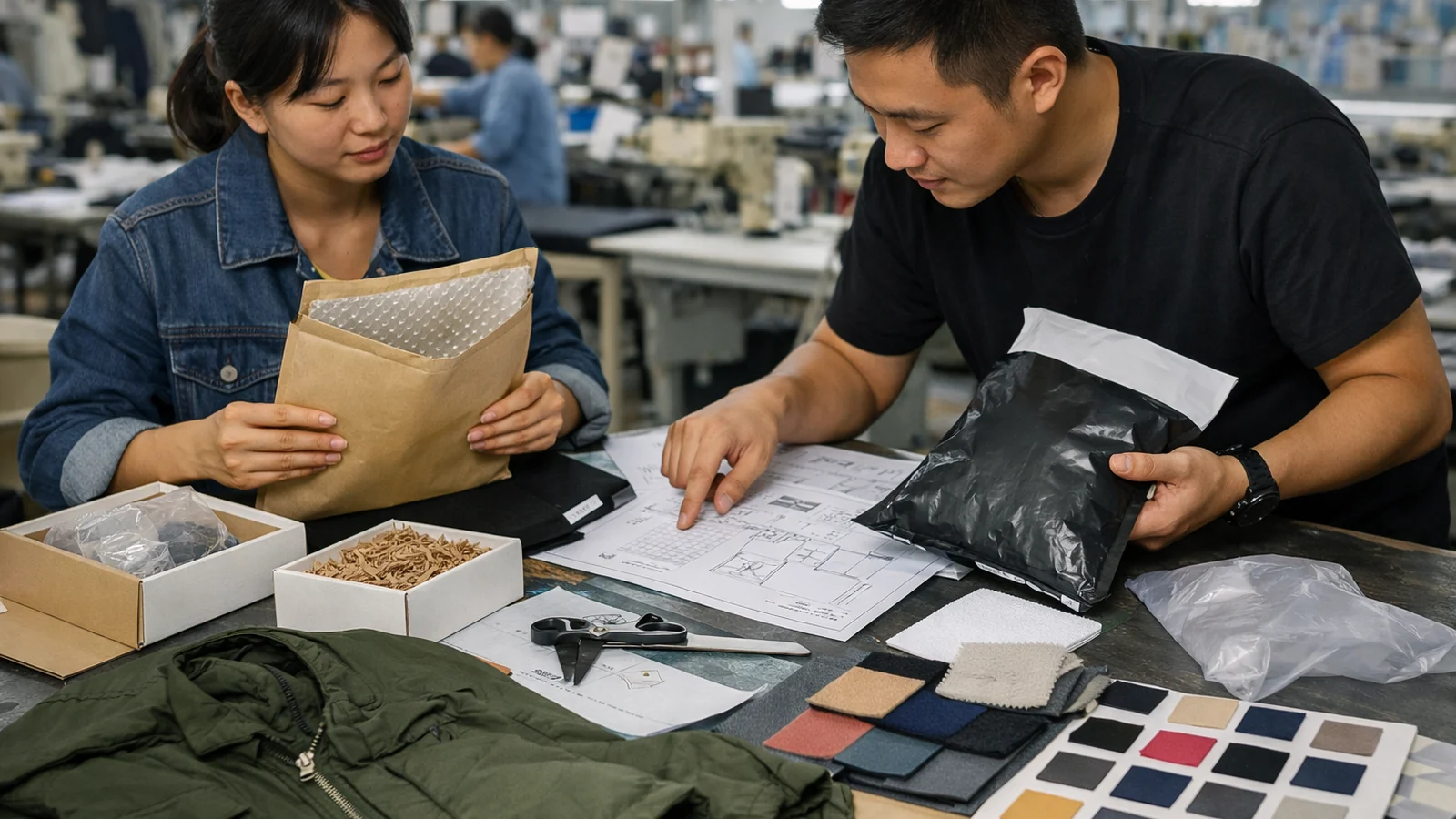
For apparel brands, the buyer-side implication is that packaging can no longer be treated as a generic afterthought. If your UK orders use different mailers, extra branded packaging, mixed-material inserts, or retail-ready packaging that has never been documented cleanly, that weak visibility can become a real operational problem. It can affect reporting quality, internal ownership, supplier communication, and how confidently you can forecast compliance-related costs.
This is especially relevant for growing brands because packaging choices often expand faster than process control. A team might add premium mailers, custom inserts, or upgraded folding and labeling to improve perceived value without ever creating a proper packaging data record. That can work for a while, but it becomes harder to manage when the compliance environment gets more formal. The same discipline that helps on MOQ and packaging cost, branded packaging choices, and sample approval flow also helps here.
There is also a sourcing angle. If UK-facing packaging specs are unclear, the factory or packaging vendor may fill the gap with whatever is already standard. That can create mismatch between what the brand thinks it is ordering and what is actually being delivered or reported. In a tighter compliance environment, the better route is to make packaging specifications explicit early, just as you would with trims, labels, or measurement tolerances.
What brands should do next
The right next step is not to assume the new PRO changes everything overnight. It is to tighten control over the packaging information you already should have. UK-facing brands should assign one owner for packaging data, confirm which packaging components sit inside scope, and ask suppliers for consistent material and weight information where records are weak. That gives the commercial team a better base for both compliance and cost planning.
- Assign one owner internally for UK packaging data and reporting readiness.
- Document all packaging components used on UK-bound apparel orders, including mailers and inserts.
- Ask suppliers for clearer material and weight data before the next production cycle.
- Review whether premium packaging choices still justify their cost and complexity.
- Keep packaging decisions inside the same planning sheet as sourcing, pricing, and launch timing.
For apparel brands selling in Britain, the practical message is simple: packaging needs a clearer operating owner now. If you want a cleaner packaging and sourcing path for UK-facing apparel programs, start with our services, compare current decisions against our packaging cost guide, or send the project through the contact page.
Frequently Asked Questions
Does the UK Packaging PRO appointment mean apparel brands will see new fees immediately?
Not automatically. PackUK said final decisions on producer fees remain with PackUK, but the appointment shows the packaging EPR system is becoming more operational and that brands need better packaging data and internal ownership.
What is the best first move for a UK-facing apparel brand after this update?
Usually it is to clean up packaging records. Document every packaging component used on UK orders, confirm materials and weights with suppliers, and make sure one person internally owns the packaging compliance workflow.