Custom Streetwear, Casualwear & Denim Manufacturer•MOQ 50 pcs•Denim MOQ 100 pcs•7-Day Sample Available

Why Early Sample Comments Matter More Than Faster Sample Turnaround
Learn sample comments apparel through a clearer factory-side view that helps brands reduce rework, align sample goals, and move toward approval with better timing.

A sample arriving sooner only helps if the brand can make a useful decision when it lands. For a collection approaching size-set development, the important deadline is often the day fit comments become clear enough to guide grading. An unresolved sleeve pitch or waistband position can travel from one sample into every size before anyone notices.
Early sample comments matter because they determine when a size set is worth making. This is the buyer’s opportunity to separate changes to the base fit from questions about how that fit should grow across the range. The objective is to book the next sampling step around evidence, with a named reviewer and an explicit release decision.
Put the size-set release on the calendar first
A size set checks whether the intended fit carries across the requested sizes. It should not become the first occasion on which the team decides what the garment is supposed to look like. Before requesting it, agree which sizes will be sampled, which materials will be used, and what the review must prove.
Work backward from the point when graded patterns need approval. Reserve time for sample inspection, fitting, consolidated comments, and any necessary correction. Then ask the supplier when a stable base specification is needed to support that schedule. A dispatch date alone does not show whether the buyer’s review window fits.
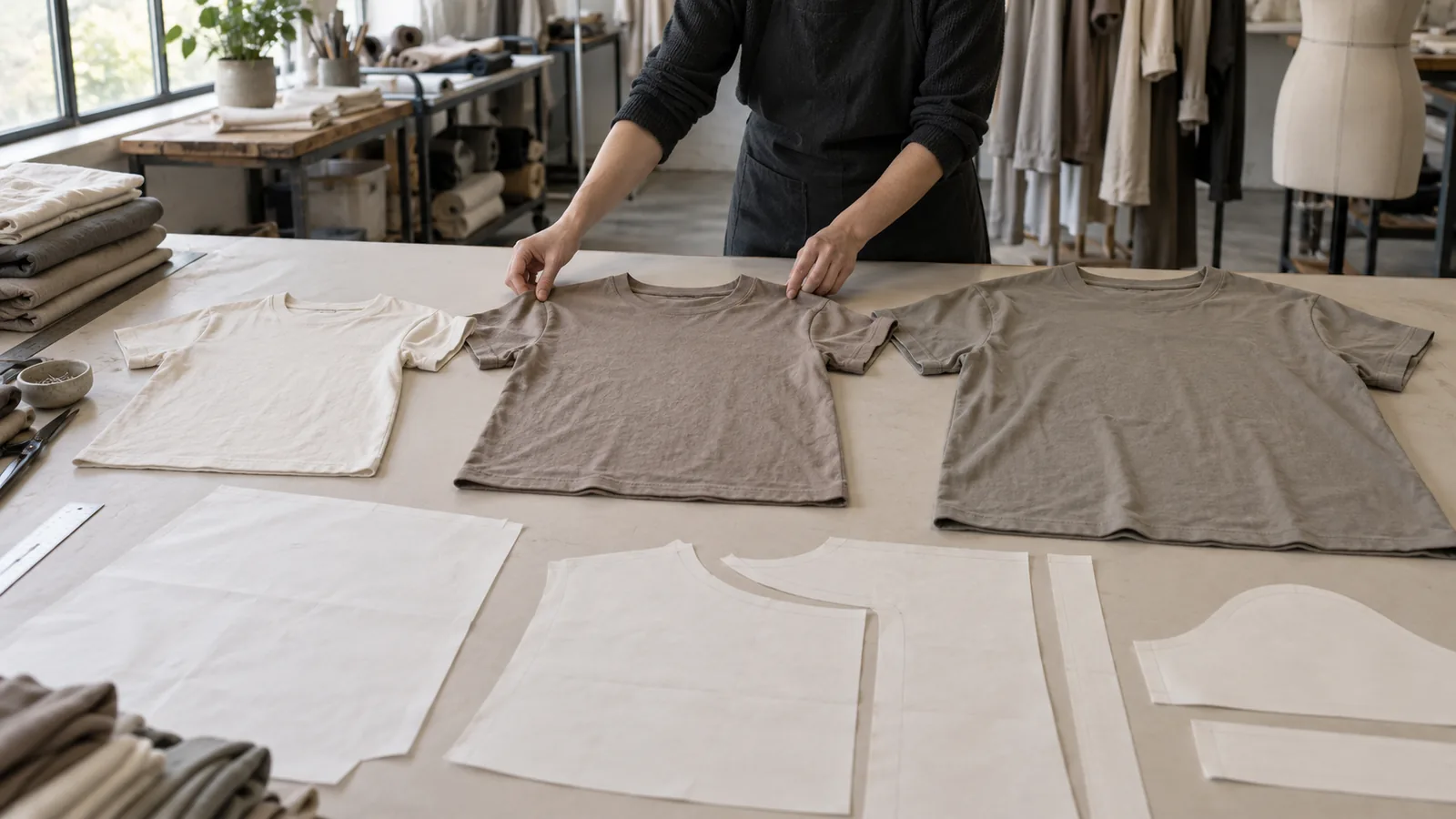
For example, a relaxed jersey tee may need the shoulder position settled before the team evaluates sleeve proportions in the smallest and largest sizes. Ordering those samples while shoulder width remains open creates evidence that may soon be obsolete.
Close base-fit decisions before multiplying patterns
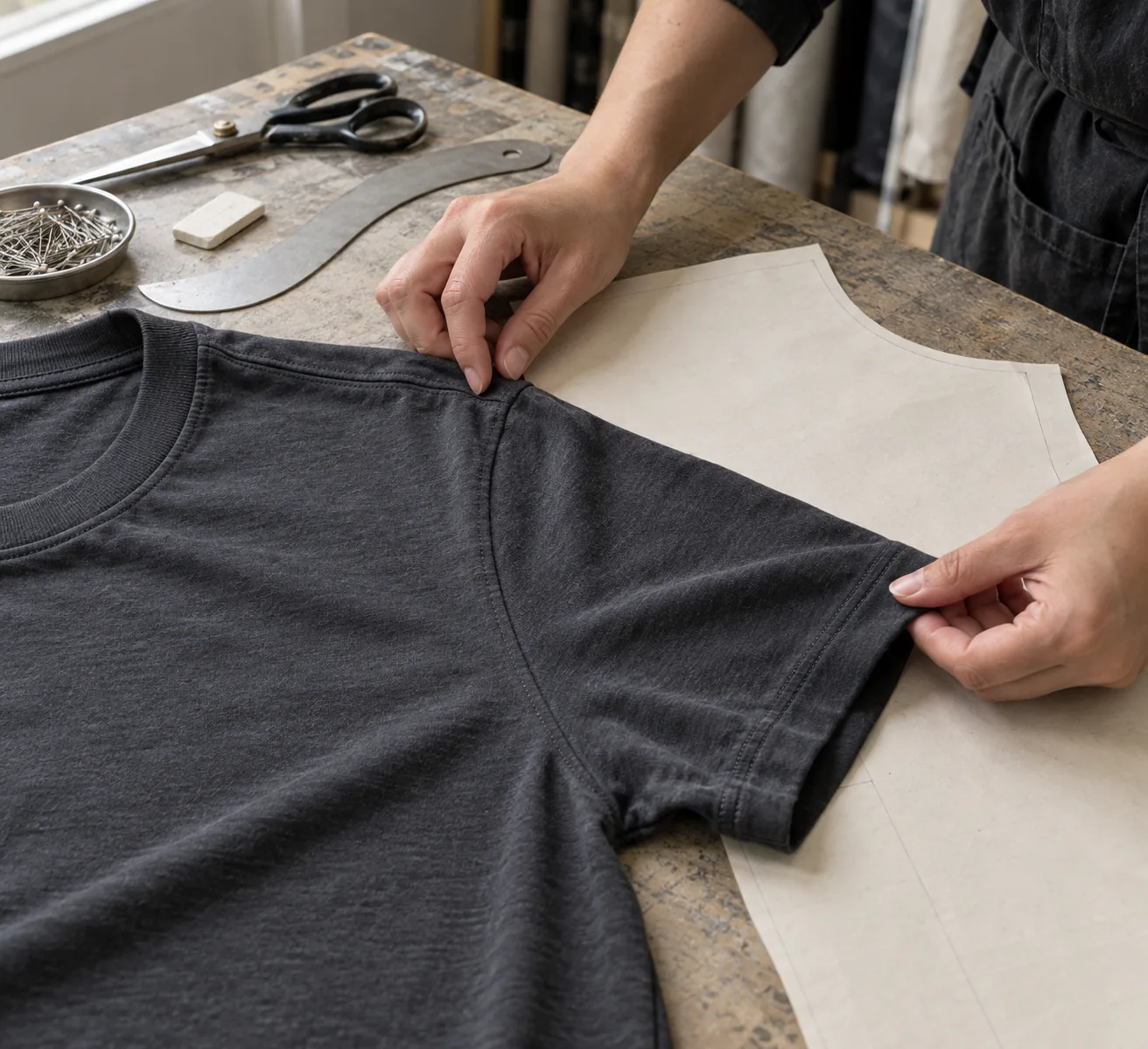
Choose a reference size and identify the approved sample or specification version. Comments on that size should distinguish fit direction from measurable corrections. “Make it less boxy” leaves several interpretations; “retain chest width and reduce the approved body length by the stated amount” identifies a controlled change, provided the actual measurement is recorded.
Review connected areas together. Lowering an armhole can change sleeve movement and the impression of chest volume. Moving a trouser waistband affects where rise and hip measurements sit on the wearer. A correction in one area may require another fitting before grading is released.
Classify each comment as a base-pattern correction, a grading question, or a finishing issue. Hold size-set release for unresolved changes that affect the pattern or garment dimensions. A label placement question may proceed separately if it has no fit impact and its approval deadline is recorded.
Send comments that distinguish fit from grading
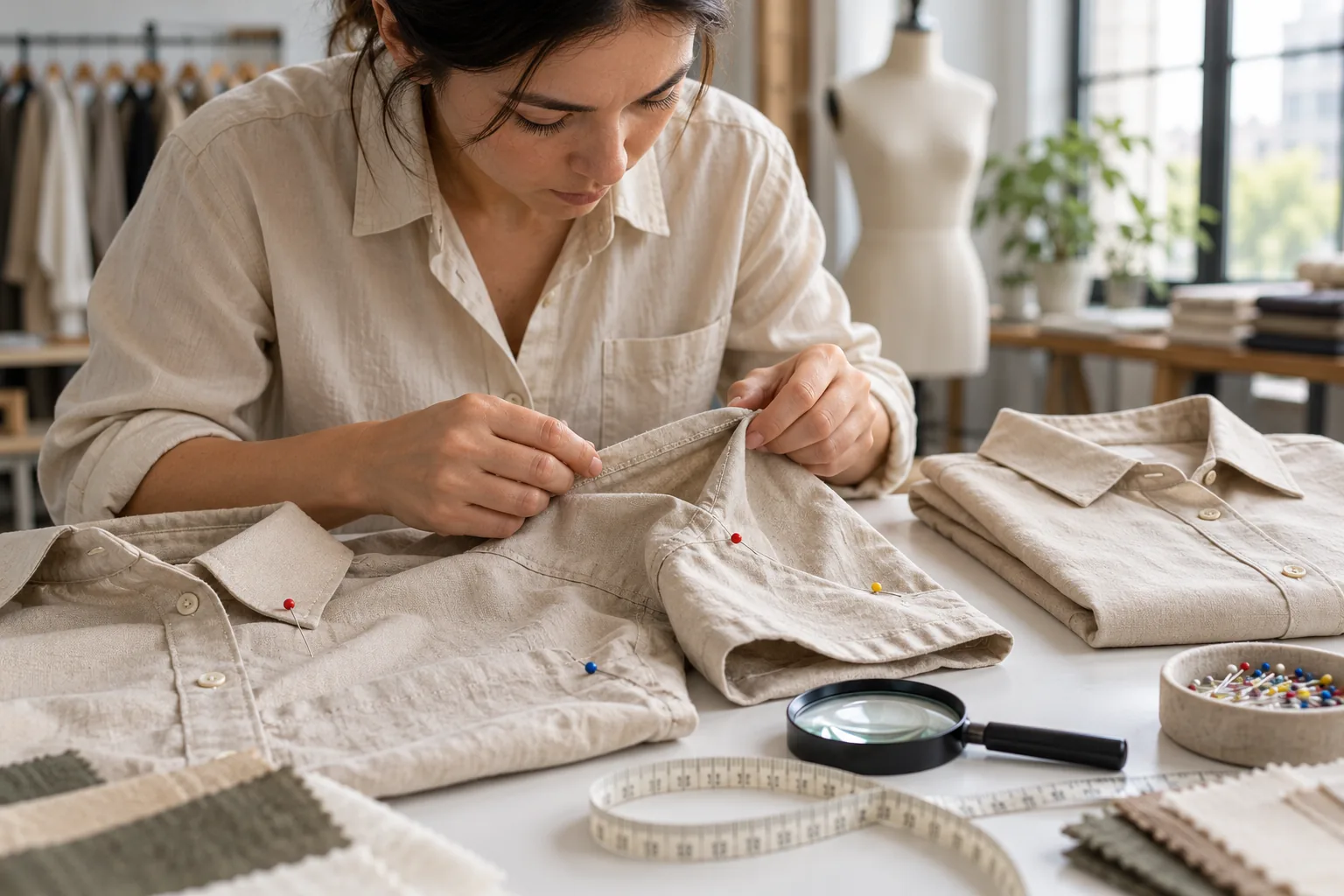
One short comment sheet is easier to act on than scattered messages from merchandising, design, and sourcing. Give every issue a sample identifier, location, observation, requested action, and approval owner. Add annotated photographs where useful, but keep the written measurement instruction authoritative.
| Observation | Decision needed | Timing consequence |
|---|---|---|
| Reference-size trouser rise feels short | Confirm waistband position and base rise | Resolve before grading that area |
| Largest tee has excessive sleeve opening | Review the sleeve-opening grade increment | Check affected sizes after correction |
| Washed sample loses body length | Confirm treatment and dimensional allowance | Validate before accepting size measurements |
State what should remain unchanged as well as what should change. If chest ease is approved but sleeve length is not, preserve that distinction. Ask the supplier to flag interactions or unclear instructions before making the next set; silence should not be treated as confirmation that every comment is workable.
Choose size coverage around the fit risk
Agree whether the review requires every offered size or selected sizes. Checking the reference size plus range extremes can expose some grading problems efficiently, but it does not prove that every intermediate size is correct. The appropriate coverage depends on the silhouette, range breadth, pattern history, and consequences of a poor fit.
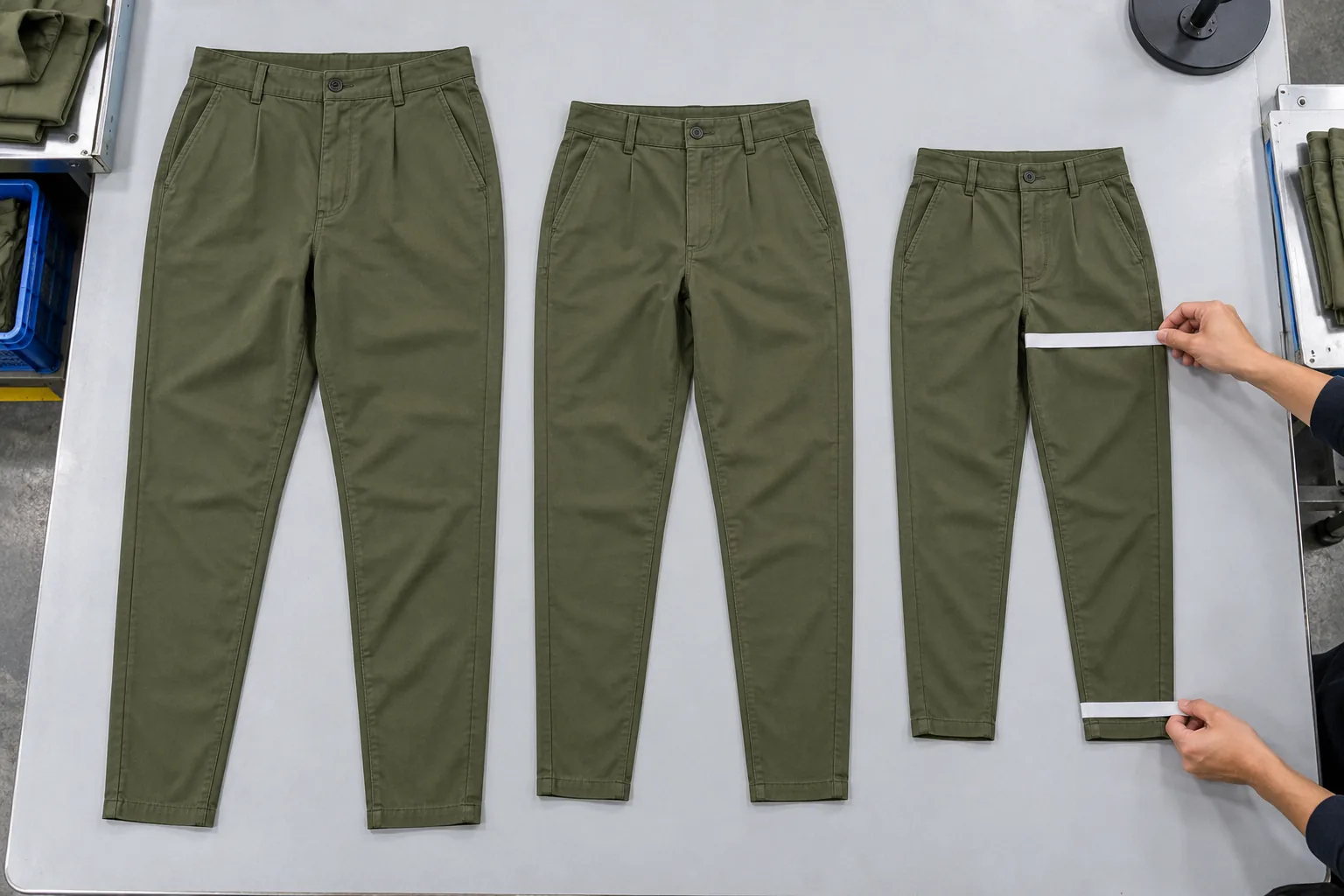
For tapered trousers, pay attention to thigh, knee, and hem relationships across sizes. For a cropped sweatshirt, assess how body length and chest width grow together. Do not assume that equal increments at every measurement preserve the intended appearance.
Material readiness also controls what the set can establish. A substitute fabric may help assess construction, yet its stretch, recovery, or shrinkage can limit fit conclusions. Record those limitations. If the intended fabric or wash changes garment dimensions, schedule a relevant confirmation before closing the size-set decision.
Define measurement points before comparing results
A measurement chart needs a repeatable method as well as a target number. For a jersey tee, specify whether body length runs from the high shoulder point beside the neckline to the finished hem, and measure half chest flat at a stated distance below the armhole. Record shoulder width between the shoulder seams, sleeve length from the agreed seam point, and sleeve opening as a flat width. Smooth the garment without stretching it and use the same method for every size. A photograph showing the tape position can resolve ambiguity before samples are cut.
Set tolerances by measurement point instead of applying one allowance to the entire garment. As an illustrative proposal for supplier discussion, a buyer might request half chest within plus or minus 1 cm and a narrow neck opening within plus or minus 0.5 cm. These are example acceptance limits, not StitchQuote standards; suitability depends on the construction, fabric, and fit requirement. Keep tolerance separate from grading: tolerance describes permitted variation around a target, while a grade increment deliberately changes that target between sizes. Do not accept an incorrect grade simply because neighboring sizes have overlapping tolerance bands.
Identify the fabric used for each review sample by composition, knit or weave, weight in GSM, and finish. A proposed 180 GSM cotton single jersey and a 240 GSM cotton single jersey can produce different drape and seam behavior, even when cut from the same pattern. GSM alone does not establish stretch or recovery. Record whether measurements were taken before or after the agreed wash, and repeat the same laundering and drying procedure for comparisons. For example, a body length changing from 70 cm to 68 cm represents approximately 2.9 percent length shrinkage; report that result separately from the original sewing measurement.
Turn a small order into a controlled approval sequence
Consider a hypothetical 60-piece tee order in one style, allocated as 10 small, 20 medium, 20 large, and 10 extra-large pieces. This is above the stated starting MOQ of 50 pieces per style, but the buyer should still confirm the proposed allocation and material requirements. First submit the reference-size chart, construction details, fabric specification, and branding placement. Review the reference sample and consolidate corrections into one dated revision. Once the base fit is approved, request the agreed size coverage and record any measurements or movement checks that remain open.
Budget discussions should identify what creates additional work: extra sample sizes, another pattern revision, fabric substitution, wash trials, and changes to print or embroidery placement. Ask which development steps are included in the quotation and which need separate costing, without assuming that the standard-style sample timeline covers every revision. If branding changes after fitting, check whether its backing, stitching, or coverage affects stretch in the relevant area. Before bulk authorization, reconcile the approved size chart, fabric reference, branding artwork, and order breakdown so production and QC use the same final documents.
Use a release checklist at the inspection table
Measure garments using the agreed method and condition, including any specified relaxation or laundering. Combine measurement checks with fitting and movement observations: a garment can meet its flat dimensions while still restricting the wearer. Keep the reference sample nearby so reviewers compare against the same approved intent.
- Version: Each sample matches the identified specification and pattern revision.
- Coverage: Every requested size is present, correctly identified, and recorded.
- Dimensions: Critical measurements and tolerances are checked, with deviations listed individually.
- Proportion: Necklines, pockets, sleeve openings, and hems remain appropriate across the reviewed sizes.
- Movement: Relevant sitting, reaching, or bending checks reveal no unresolved fit restriction.
- Disposition: The reviewer records approval, conditional approval with defined limits, or a required remake.
Keep size-set approval distinct from permission to start bulk production. Other approvals may still be outstanding. StitchQuote provides QC before packing, but that later inspection does not replace resolving the intended fit and size specifications during development.
Build the request around decisions, then discuss speed
When contacting StitchQuote, include the reference-size specification, outstanding fit comments, intended size range, material status, and target review date. Ask for a sequence that identifies which decisions must close before the size set is made. StitchQuote’s services include sampling, cut-and-sew, private label, fabric and trim sourcing, and branding through woven labels, prints, and embroidery.
A 7-day sample is available for standard styles with confirmed specifications and available materials. Complex styles, custom washes, and custom-developed fabric take longer. Treat this availability separately from the schedule for multiple sizes, buyer review, and revisions. MOQ for most categories starts from 50 pieces per style; denim starts from 100 pieces per style. Confirm the proposed size breakdown and sampling scope for the project.
Questions buyers ask before releasing a size set
Can we reserve sampling time while comments are still open?
Discuss a provisional slot and the information deadline with the supplier. Distinguish reserving capacity from authorizing cutting. If a pattern-affecting decision misses that deadline, reassess the schedule before work begins.
What if only the largest size fails the fitting?
Check the measured garment against its specification, then review the relevant grade relationships. Avoid changing the approved reference fit automatically. Agree which affected sizes need another sample to confirm the correction.
Should late aesthetic feedback reopen size approval?
Assess its dimensional impact. Changing pocket placement may require a targeted check; changing body shape can invalidate the fit decision. Record the change and its consequences before requesting execution.
Related reading and project support
- Prepare specifications for a clear sample review
- Review sampling and MOQ considerations
- Understand clothing sampling timelines
- Discuss your size-set plan with StitchQuote
Request a manufacturing quote
Share your product type, quantity range, and destination. We usually reply within one business day.