Custom Streetwear, Casualwear & Denim Manufacturer•MOQ 50 pcs•Denim MOQ 100 pcs•7-Day Sample Available

Why Private Label Projects Fail When Core Garment Decisions Stay Vague
See why private label projects fail when fit, fabric, trims, and approval scope stay vague, and what buyers should lock before sampling or bulk pricing.

A garment brief can look finished while leaving the factory to choose the product. “Heavy cotton,” “matching rib,” and “premium zip” sound descriptive, but each phrase allows several materially different purchases. When those choices remain open, a quotation describes assumptions, a sample demonstrates one interpretation, and the production order may authorize something else.
A bill of materials, or BOM, closes that gap by identifying every component needed for one garment and connecting it to an approval. For a brand preparing its first production order, the immediate task is to distinguish what is fixed, what needs development, and what cannot be substituted. That distinction makes the product repeatable before labels and packaging make it recognizable.
Turn the product concept into purchasable components
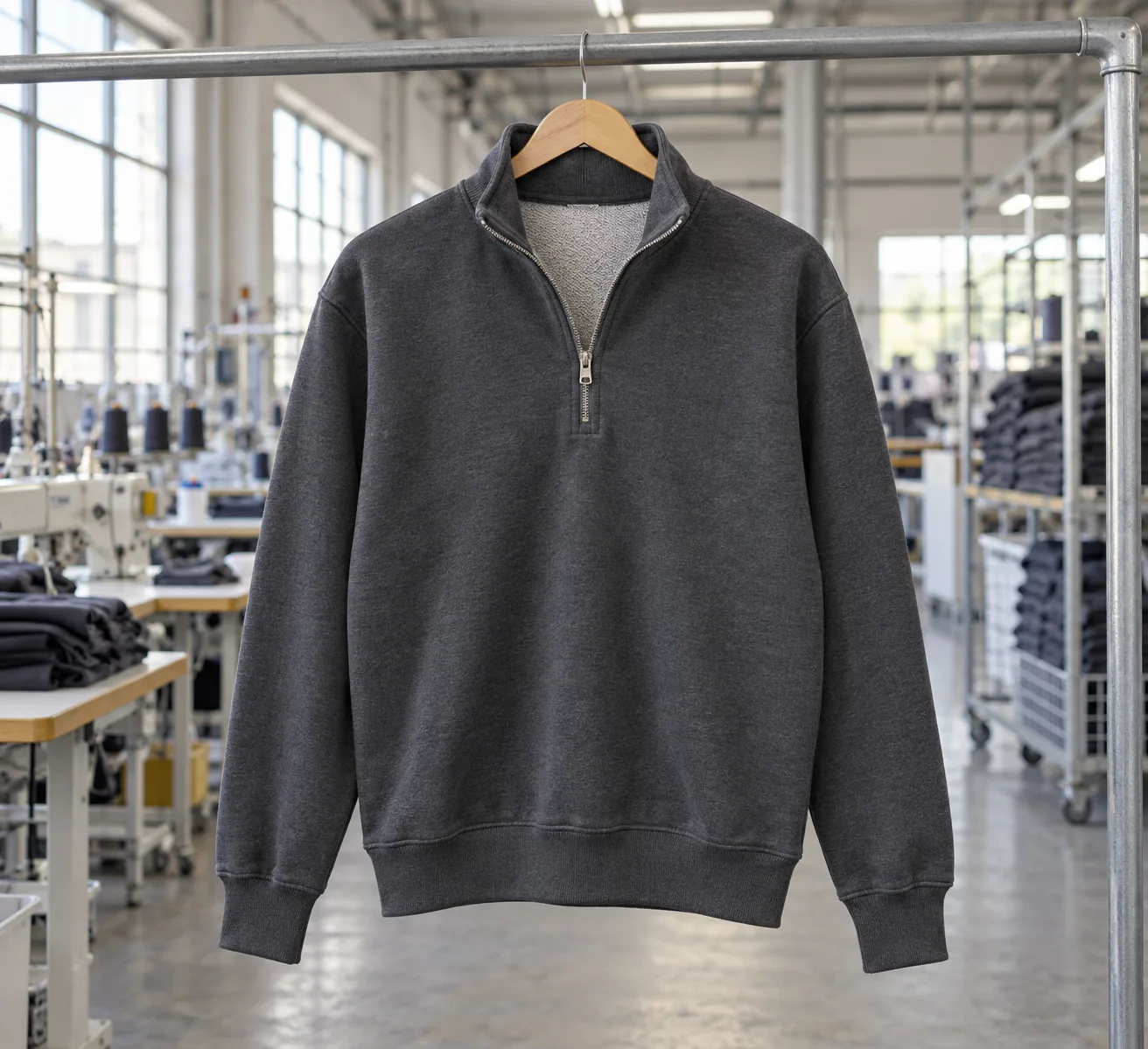
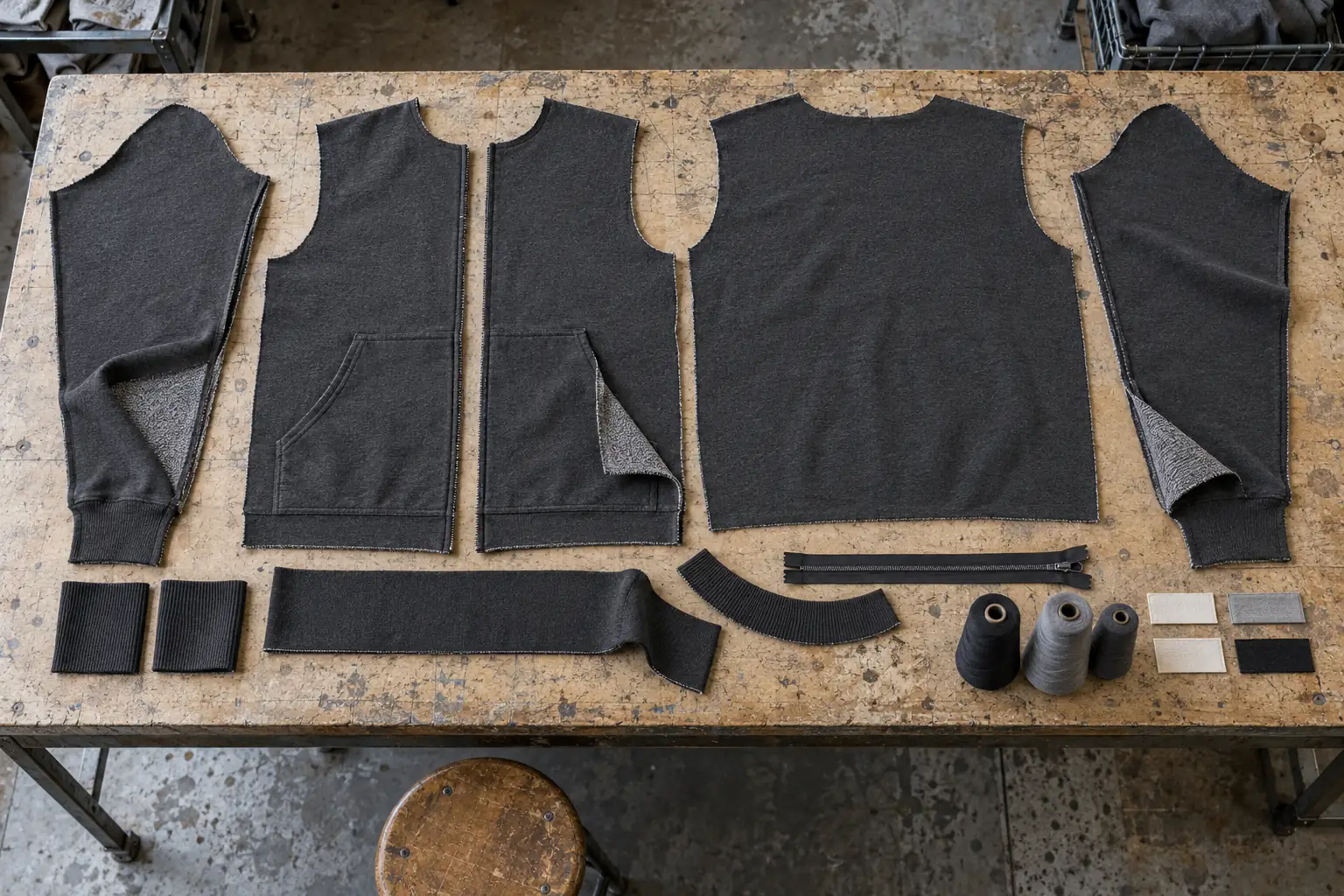
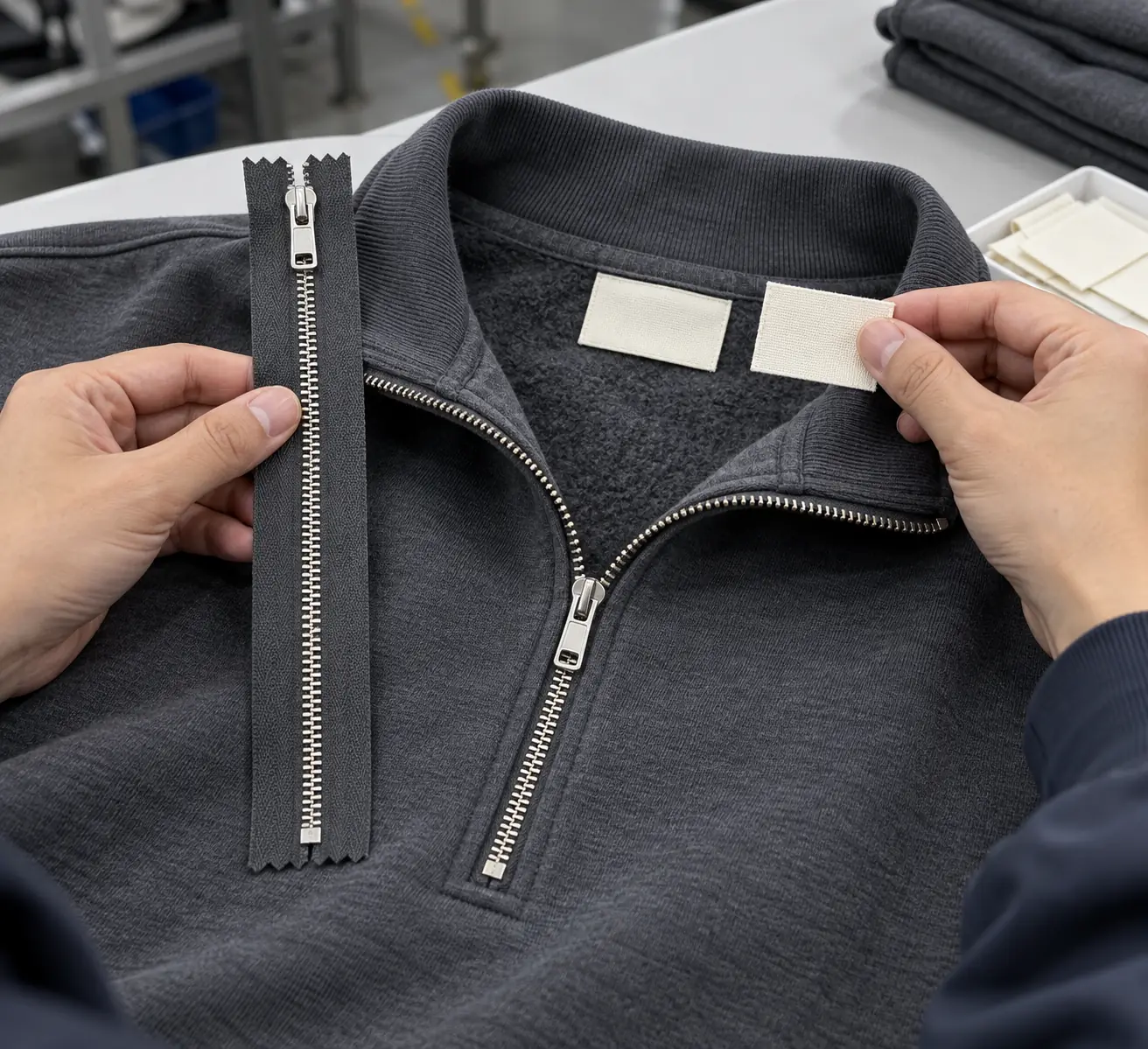
Start with one style and list everything physically present in the finished unit. For a quarter-zip sweatshirt, that means body fabric, collar fabric, cuff and hem rib, zipper, stabilizing tape, sewing thread, neck label, care label, and any packaging included in the order. “Trims included” is not an adequate replacement for those rows.
Give each component a stable reference code. The code should stay the same when a supplier submits a new option; the option and revision should change separately. Otherwise, a rejected zipper can reappear under a renamed file without anyone recognizing it.
Use the BOM to identify components, while keeping construction drawings and measurement specifications in the tech pack. Link them through the style number and revision. For example, a zipper row can reference detail drawing D03 for installation rather than trying to describe the entire placket inside a materials cell.
Make every row answer a buying question
A useful row tells sourcing what to request and tells the buyer what still needs a decision. Include component identity, placement, specification, color reference, quantity or consumption basis, approval status, and substitution rule. Supplier article numbers help, but retain the physical specification: an article number alone does not explain what matters if that item becomes unavailable.
| Component | Example specification | Approval evidence |
|---|---|---|
| Body fabric | Cotton loopback, target 360 GSM, approved finish and shade | Retained swatch plus agreed wash assessment |
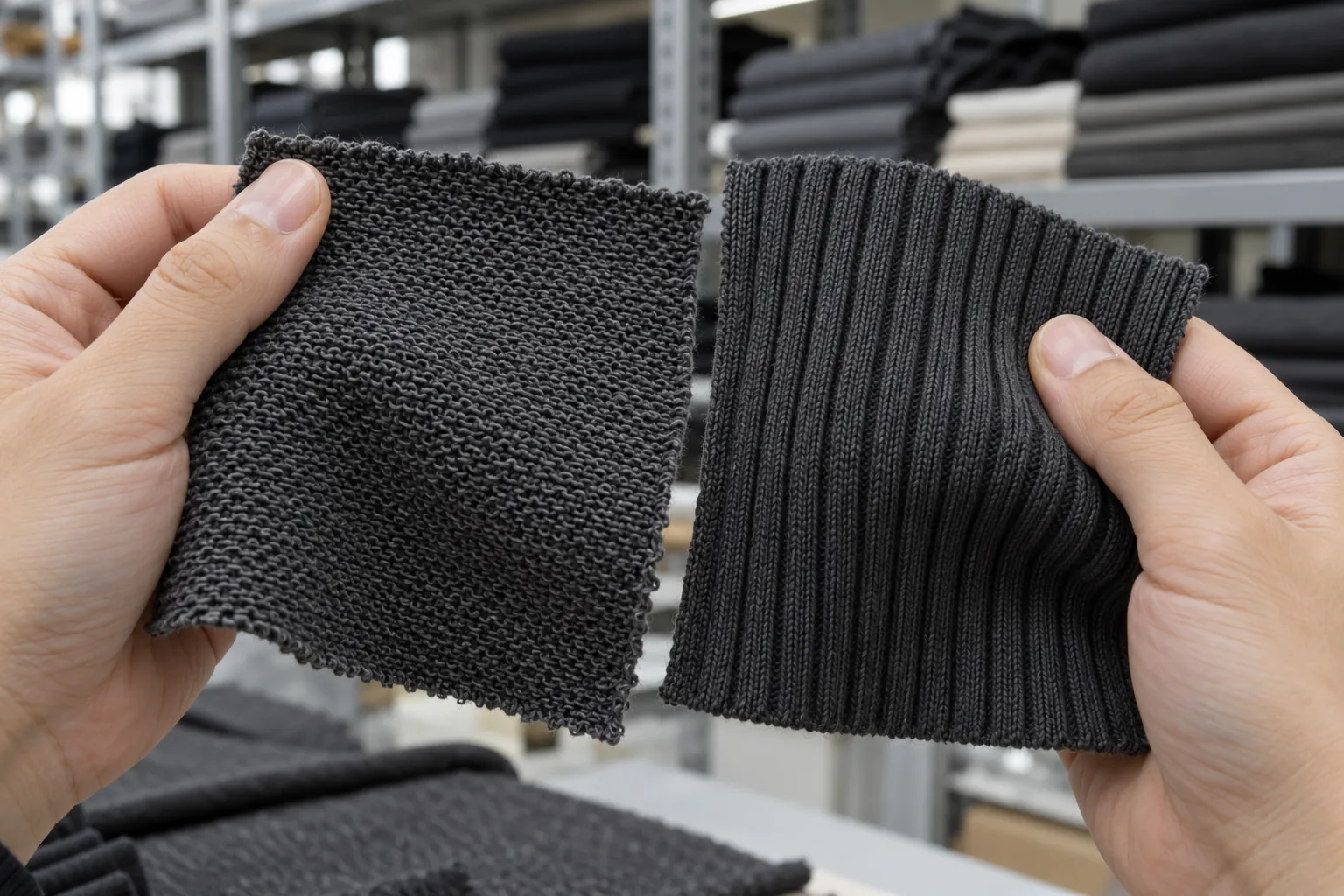
| Cuff rib | 2 × 2 rib, fiber blend declared, finished width linked to pattern | Sewn cuff assessed for stretch recovery |
| Front zipper | Closed-end, size 5 coil, length by garment size, approved puller | Physical trim sample and installed sample |
| Neck label | Woven, finished dimensions, fold type, artwork revision | Approved label sample at actual size |
These entries are examples, not universal production standards. Agree acceptable variation for each relevant property. A proposed fabric weight tolerance of ±5%, for instance, needs confirmation against the material and test method; it should not silently become a blanket tolerance for dimensions, shrinkage, or color.
Separate net garment consumption from purchasing allowances. Rib length used in one cuff is different from the quantity ordered after cutting waste and minimum supplier quantities. Ask the factory to confirm consumption using the approved pattern and size mix instead of treating an early estimate as a final purchasing instruction.
Resolve the interfaces that isolated swatches cannot prove
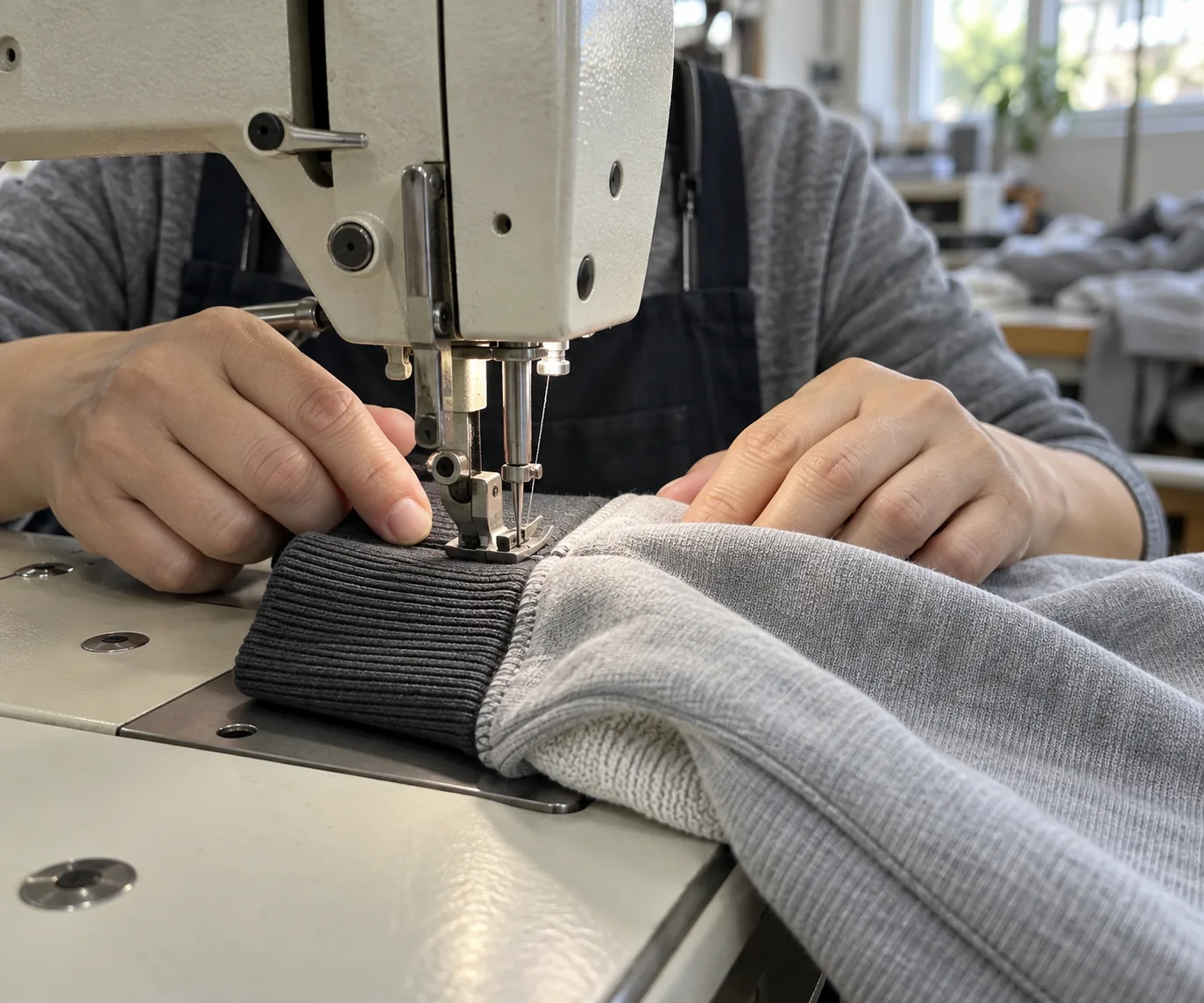
Many failures happen where two approved components meet. A soft body fabric and a firm rib can each look acceptable on a table yet produce a cuff that grips too tightly or a hem that draws inward. Request a sewn junction sample when the relationship affects shape. Record the approved rib application ratio in the construction specification and reference it from the BOM.
Color needs similar coordination. “Black throughout” does not ensure that cotton fleece, polyester zipper tape, and woven labels share the same undertone. Identify which visible components must match the body and which may use an approved contrast. Review them together under agreed lighting, especially if the product relies on a restrained, tonal appearance.
Processing creates another interface. If a garment will be washed after sewing, check whether zipper tape, label edges, thread, and body fabric behave acceptably through that process. Approving unwashed components independently leaves unanswered whether the assembled garment puckers, twists, or changes shade. Put the required processing state beside the approval reference.
Keep development options visible until the quote is comparable
An unresolved component does not need a guessed specification. Mark it as open and give the sourcing team a bounded request. For example: submit two available rib options compatible with the selected body fabric, with composition, weight, recovery observations, and color availability. Assign a decision owner and a date needed for the next purchasing step.
For quotations, separate a base specification from optional upgrades. A standard zipper puller and a custom-developed puller should appear as distinct options, including any effect on minimum quantities and timing. Otherwise, two quotations can look comparable while referring to different products. Ask each quotation to identify the BOM revision it covers and list exclusions.
Garment minimums do not automatically establish component minimums. StitchQuote’s MOQ for most categories starts from 50 pieces per style; denim starts from 100 pieces per style. Confirm whether selected fabric, custom labels, or special trims create additional purchasing constraints for the proposed order. Record who owns any remaining material and whether it can support a repeat order.
Release a revision that purchasing and QC can both use
A sample approval should not authorize unspecified replacements. Before releasing bulk, issue a dated BOM revision with a clear status for every row: approved, approved with a recorded condition, or blocked. A condition must describe the remaining action and who can close it. “Looks fine” is not evidence that a replacement material has been accepted.
Keep a short change log whenever a component changes after sampling. Record the old reference, new reference, reason, affected sizes or colors, and required rechecking. Changing label dimensions may require only a placement review; changing body fabric can require fit and wash reassessment. Make that judgment explicitly rather than assuming all substitutions have equal impact.
Use the following release checklist to connect paperwork with inspection:
- Identity: Match delivered fabric and trims to approved component references and retained samples.
- Dimensions: Check zipper lengths by size, finished label dimensions, and rib widths against agreed requirements.
- Compatibility: Inspect assembled junctions for puckering, distortion, uncomfortable bulk, and inconsistent visible shades.
- Processing: Confirm that wash or finishing assessments used the intended materials and process.
- Traceability: Record material lot references where available and keep replacement approvals with the production documents.
- Packing release: Verify that the finished garment contains the approved branding and specified packing components.
Agree inspection methods and sampling coverage with the factory; the checklist does not itself establish an acceptance plan. StitchQuote provides QC before packing, but the BOM and approved samples still need to define what the inspector should compare.
Questions buyers ask when a BOM is nearly ready
Can sampling start with a fabric row still open?
It can support a limited question, such as pocket positioning, if everyone records the substitute used and the limits of that sample. Do not treat it as final evidence of drape, shrinkage, or fit in the intended fabric. StitchQuote offers a 7-day sample for standard styles with confirmed specifications and available materials; complex styles, custom washes, and custom-developed fabrics take longer.
Does every colorway need a separate materials sheet?
A shared BOM with a colorway matrix can work when construction and component types stay consistent. Give each color-dependent item its own reference in that matrix. If one colorway needs a different fabric finish or zipper construction, identify the exception explicitly instead of hiding it inside a general color note.
What should happen if an approved trim sells out?
Request a replacement submission against the original requirements, with differences highlighted. Review its effect on appearance, installation, function, and timing before authorizing purchase. Keep the original approval history and issue a new revision. Availability alone does not establish equivalence.
Who owns the BOM when the factory sources materials?
Assign one document owner, even if several people supply information. The factory can propose article references and consumption; the brand must identify who approves visible and functional changes. StitchQuote’s services include cut-and-sew, private label, sampling, fabric and trim sourcing, and branding through woven labels, prints, and embroidery. Agree how those contributions enter the controlled document.
Bring the unresolved rows to the next sourcing conversation
Send the current BOM with the style drawing, intended size mix, and a short list of open decisions. Ask for confirmation of sourcing feasibility and dependencies before treating a sample date as fixed. A productive inquiry identifies the garment clearly enough that the next reply can resolve specific components instead of reopening the entire concept.
- Prepare the tech pack that supports your materials list
- Review sampling and MOQ considerations
- Explore private label manufacturing services
- Discuss your BOM and open sourcing decisions
Request a manufacturing quote
Share your product type, quantity range, and destination. We usually reply within one business day.