Custom Streetwear, Casualwear & Denim Manufacturer•MOQ 50 pcs•Denim MOQ 100 pcs•7-Day Sample Available
Why Small Brands Should Keep Early Branding Decisions Focused
Use early branding decisions small clothing brand to compare private label decisions more clearly, protect brand consistency, and keep product, trims, and commercial.

A first collection can lose its identity through too many branding decisions. A chest graphic, contrast neck tape, embroidered sleeve, custom zipper pull and elaborate hangtag may each look appealing on a mood board. Together, they can compete for attention while creating separate specifications and approvals for a small buying team.
Keeping early branding decisions focused means choosing which details deserve to represent the brand at launch. Use this buyer checklist before commissioning samples: define what customers should notice, select the few details that support it, and make those details precise enough to reproduce. Save the remaining ideas for a later release with a clear reason to introduce them.
Choose the customer impression before the decoration
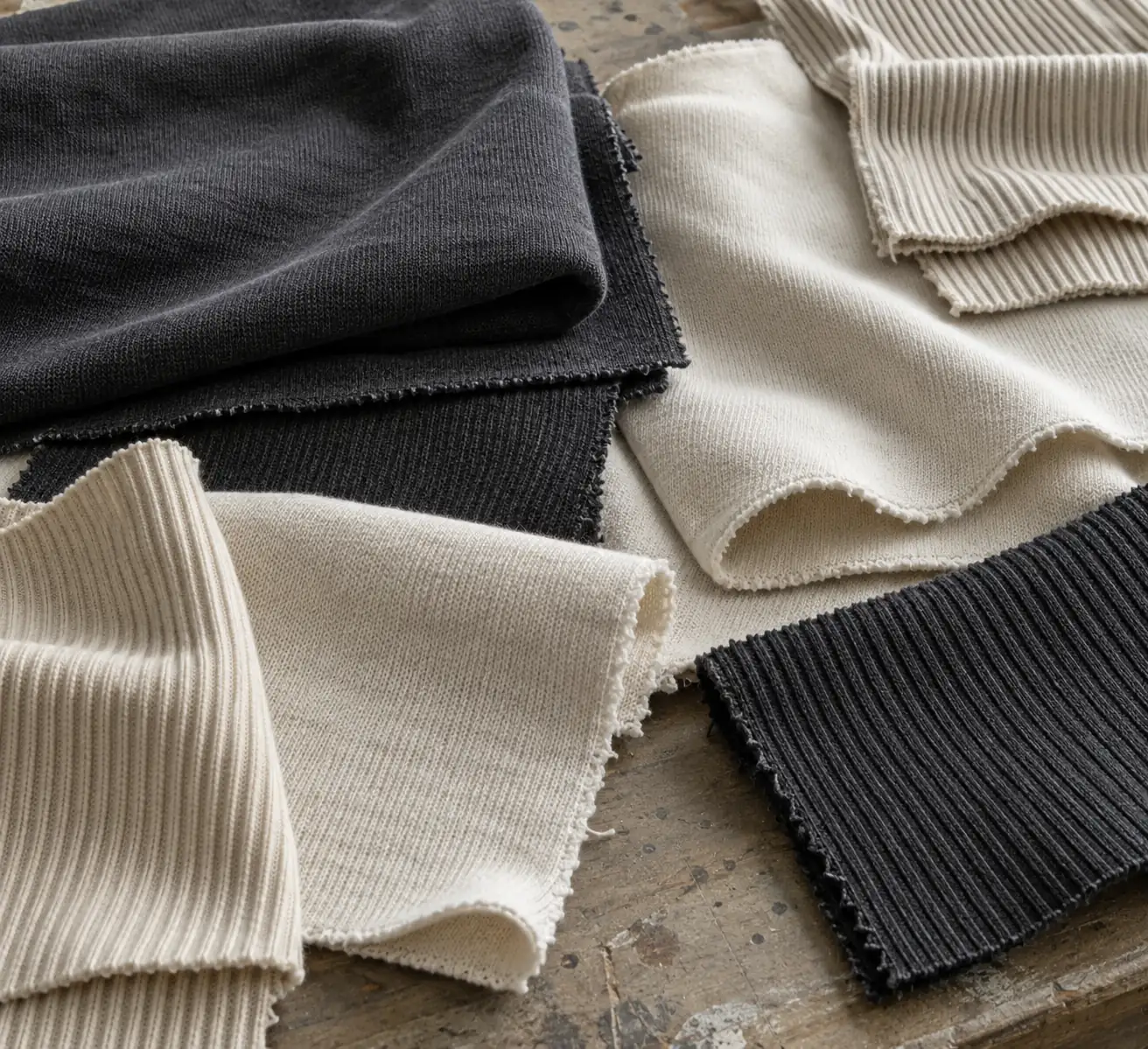
Write one sentence describing what the wearer should recognize. For a relaxed everyday basics range, that might be “substantial fabric, a clean neckline and a quiet finish.” For a skate-inspired capsule, it could be “a roomy silhouette with one graphic that reads clearly from a distance.” These directions lead to different buying choices without requiring a long list of branded components.
Then test every proposed detail against that sentence. Does it reinforce the impression, compete with another feature, or disappear during normal wear? A heavy embroidered badge may work against the soft drape that makes a lightweight tee appealing. In that case, reducing decoration protects the product idea.
- Customer cue: identify the first thing a shopper should notice.
- Product evidence: name the fit, fabric or construction feature that delivers it.
- Branding role: decide whether decoration should lead or support that feature.
Sort proposed details into launch, trial and later
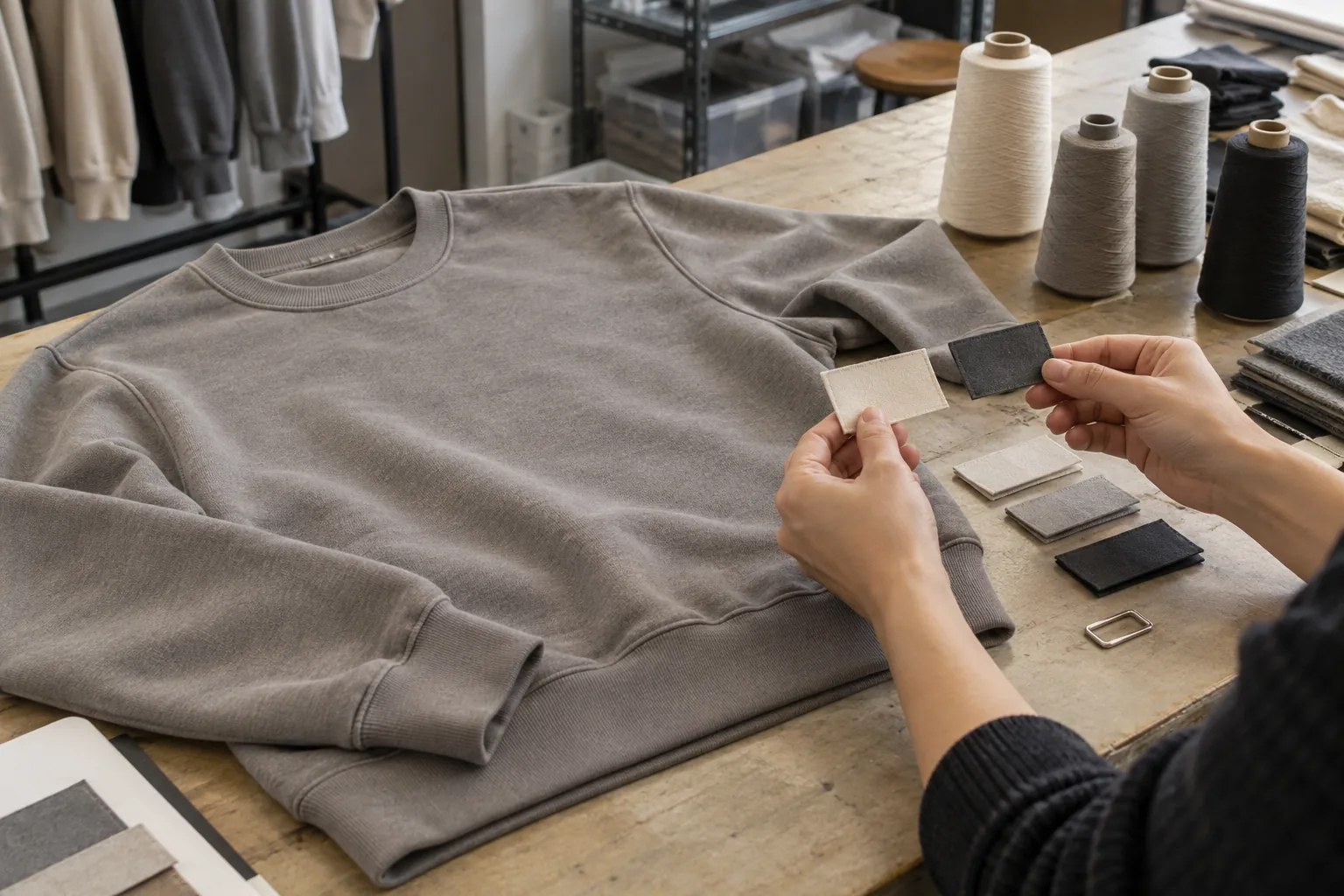
Give each idea a status before sending the brief. “Launch” means it is necessary to deliver the collection concept. “Trial” means its appearance or performance needs checking before commitment. “Later” means it can wait without making the first release feel incomplete.
This distinction prevents an exploratory request from becoming an assumed bulk requirement. Ask for optional components to be identified separately in the quotation, including any setup work, sourcing constraints or minimum quantities that apply.
| Proposed detail | Buyer test | Possible decision |
|---|---|---|
| Small woven neck label | Does it provide the intended identification comfortably? | Launch, after reviewing construction and placement |
| Dense sleeve embroidery | Does the fabric support it without distortion? | Trial on the actual material |
| Decorative metal badge | Does it add enough visible value to justify another component? | Later, if its purpose remains unclear |
These statuses apply to optional branding. Required labeling for the intended selling market still needs a separate review; it should not be removed simply to achieve a quieter appearance.
Check whether the idea survives across the whole capsule
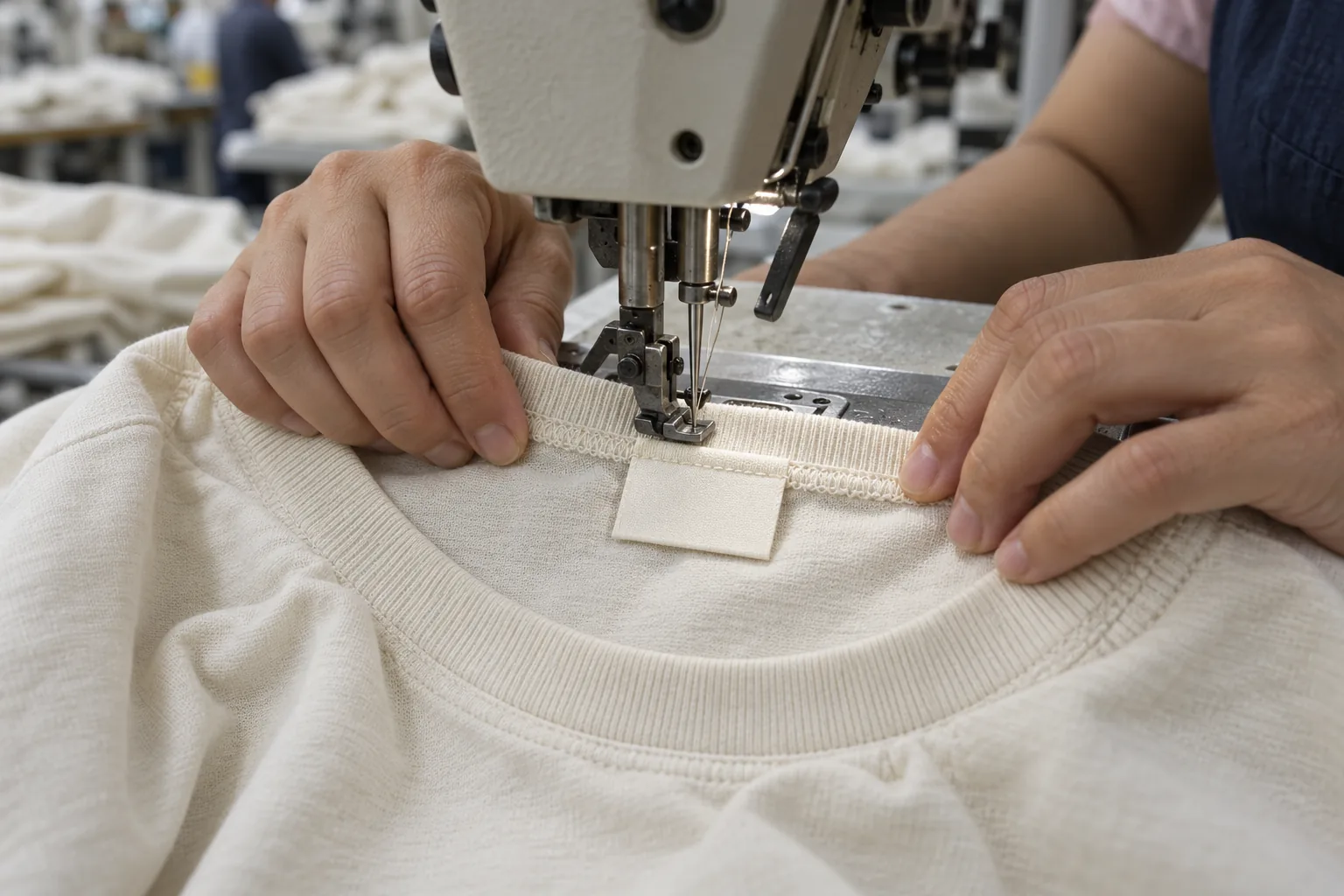
A detail that works on a fleece pullover may behave differently on a jersey tank. Review the proposed branding across fabrics, garment colors and sizes before calling it a collection standard. Shared visual direction does not require identical dimensions or application methods everywhere.
For example, a tonal stitch treatment can become almost invisible on one colorway and highly contrasting on another. A placement that looks balanced on a wide adult chest may sit awkwardly near the armhole on a smaller size. Ask which versions need physical evaluation and document any approved differences.
Also check quantity assumptions. StitchQuote’s MOQ for most categories starts from 50 pieces per style; denim starts from 100 pieces per style. Confirm the actual style, color and size breakdown for the project. A garment minimum does not establish the minimum order for every custom trim, so ask about those components separately before adopting them across the range.
Make each retained detail a complete buying instruction
Once the shortlist is settled, turn taste-based language into specifications. “Discreet,” “premium” and “slightly oversized” are useful creative cues, but they do not tell a sample maker exactly what to produce. Each retained detail needs an artwork reference, dimensions, color reference, application method and placement measured from a defined garment point.
For an internal woven label, specify its finished dimensions, fold arrangement, attachment location and which edges are sewn. For a print, specify the artwork version and its intended finished size. Ask the manufacturer to flag feasibility concerns, such as fine lines that may lose definition on textured fabric, before making the sample.
Assign one person to issue consolidated comments. Keep a dated approval record so an older graphic does not return when someone forwards an earlier file. StitchQuote provides cut-and-sew, private label, sampling, fabric and trim sourcing, and branding through woven labels, prints and embroidery. A focused brief helps identify which of these services the release actually requires.
Use the sample to approve restraint as well as execution
A sample review should answer two questions: was the detail made as specified, and does it still improve the garment? View the full outfit at normal distance before inspecting decoration closely. A technically clean result can still feel too prominent or redundant when seen alongside the rest of the capsule.
Use this QC checklist for the selected details, with acceptance criteria agreed for the project:
- Compare artwork version, dimensions and placement against the current specification.
- Inspect fabric around prints, embroidery and attachments for puckering or distortion.
- Check label edges and backing against the skin-contact area for comfort.
- Review visibility and contrast on each relevant garment color.
- Evaluate appearance after agreed care testing, including any lifting, fraying or color change.
- Record the approved reference and resolve open comments before bulk authorization.
StitchQuote offers QC before packing. Agree which branding checks should be included and which reference governs acceptance. If a detail is removed after sampling, update the specification and quote so the approved scope remains clear.
Set measurement points before judging a small branding detail
A quiet graphic still needs a measurable position. For a proposed chest print, lay the garment flat without stretching it and define the vertical distance from the high shoulder point, where the shoulder seam meets the neckline, to the top of the artwork. Define the horizontal position from the garment center front to the artwork center. State whether these measurements apply to the finished, unwashed garment or after a specified wash procedure; mixing the two makes sample comments difficult to interpret.
As an illustrative brief, a buyer could request an 80 mm wide graphic with its top edge 180 mm below the high shoulder point. A proposed placement tolerance of plus or minus 5 mm should be discussed with the supplier before approval, rather than treated as a universal production allowance. Record artwork width and placement tolerances separately. Check the smallest and largest ordered sizes to decide whether the position stays fixed or changes with the size grade.
Connect that placement review to the fabric specification. A proposed 180 GSM cotton single jersey and a proposed 240 GSM cotton single jersey can produce different drape and decoration results even with identical artwork. GSM describes mass per unit area, not quality by itself. Specify fiber composition, knit structure, target weight, finish and the acceptable weight variation agreed for the order. Evaluate decoration on the intended fabric after the agreed care test, measuring garment shrinkage as well as checking whether the graphic has distorted or the label seam has puckered.
Cost a focused trial before committing the first order
Consider a hypothetical first order of 100 jersey tees in one style, split between two colors and four sizes. Provide a quantity matrix showing every color and size combination, then ask the supplier to confirm the breakdown is workable. The total is above StitchQuote’s starting MOQ of 50 pieces per style for most categories, but this does not independently confirm fabric availability or custom-component minimums.
Build the base quotation around the garment, one approved print and one woven label. Request sleeve embroidery as a separate option, identifying any artwork preparation, stitch-count implications, backing, application labor and sample work. For the woven label, ask whether the purchased quantity exceeds the number required for this order and how any balance will be handled. For fabric, clarify whether the selected color uses available material or requires a separate dyeing commitment. These details expose cost drivers without assuming that removing one decoration reduces every part of the quotation.
Approve the sequence in writing: confirm the specification and materials, review the sample, consolidate corrections, approve the final reference, and authorize bulk production. Before packing, ask QC to compare the color-size count, label version, print position and visible workmanship with the approved documents. Agree how failures will be recorded and resolved. This gives a small buying team a practical release decision based on the garment and its specifications.
Questions buyers ask when narrowing the first release
Can a collection feel recognizable without a large external logo?
Yes. A consistent silhouette, fabric character and color direction can establish recognition. Choose a modest identifying detail if it supports that approach, then judge the garments together rather than evaluating each branding element in isolation.
Should every style use the same label size?
Only if it works across the actual garments. Narrow straps, shallow necklines or lightweight materials may require a different solution. Preserve visual consistency while documenting any construction-specific variation.
Will fewer branding options guarantee a seven-day sample?
No. A 7-day sample is available at StitchQuote for standard styles with confirmed specifications and available materials. Complex styles, custom washes and custom-developed fabric take longer. Confirm eligibility for the selected garment and details before planning around that timing.
When should a postponed detail return to the brief?
Revisit it when you can identify the customer benefit it adds and the approval work it needs. A later release can test that change deliberately instead of adding it to an already unsettled first collection.
Bring a short decision list to the supplier conversation
Prepare the launch details, unresolved trials and postponed ideas as distinct lists. Alongside them, provide garment specifications and intended quantities. That gives the supplier a concrete basis for discussing feasibility and sampling, while keeping your team accountable for the decisions that define the product.
- Prepare a tech pack for your selected details
- Review sampling and MOQ considerations
- Discuss your collection brief with StitchQuote
Request a manufacturing quote
Share your product type, quantity range, and destination. We usually reply within one business day.