Custom Streetwear, Casualwear & Denim Manufacturer•MOQ 50 pcs•Denim MOQ 100 pcs•7-Day Sample Available

Why Small Quantity Orders Sometimes Need Simpler Product Decisions
Learn small quantity orders simpler product decisions through a clearer factory-side view that helps brands reduce rework, align sample goals, and move toward.

A first clothing run should answer a commercial question: will customers buy this silhouette, at this positioning, with this level of finish? When a small order also tests several fabrics, multiple decoration methods and unfamiliar construction details, the result becomes harder to interpret. A weak launch may reflect the product concept, but it may also reflect compromises introduced by too many moving parts.
Small quantity orders sometimes need simpler product decisions because each added variable creates another purchasing, approval or production dependency. The aim is to preserve what customers will notice while reducing commitments that offer little useful evidence. For a brand buyer preparing an initial order, simplicity works best as a deliberate allocation of risk.
Decide what this run must prove
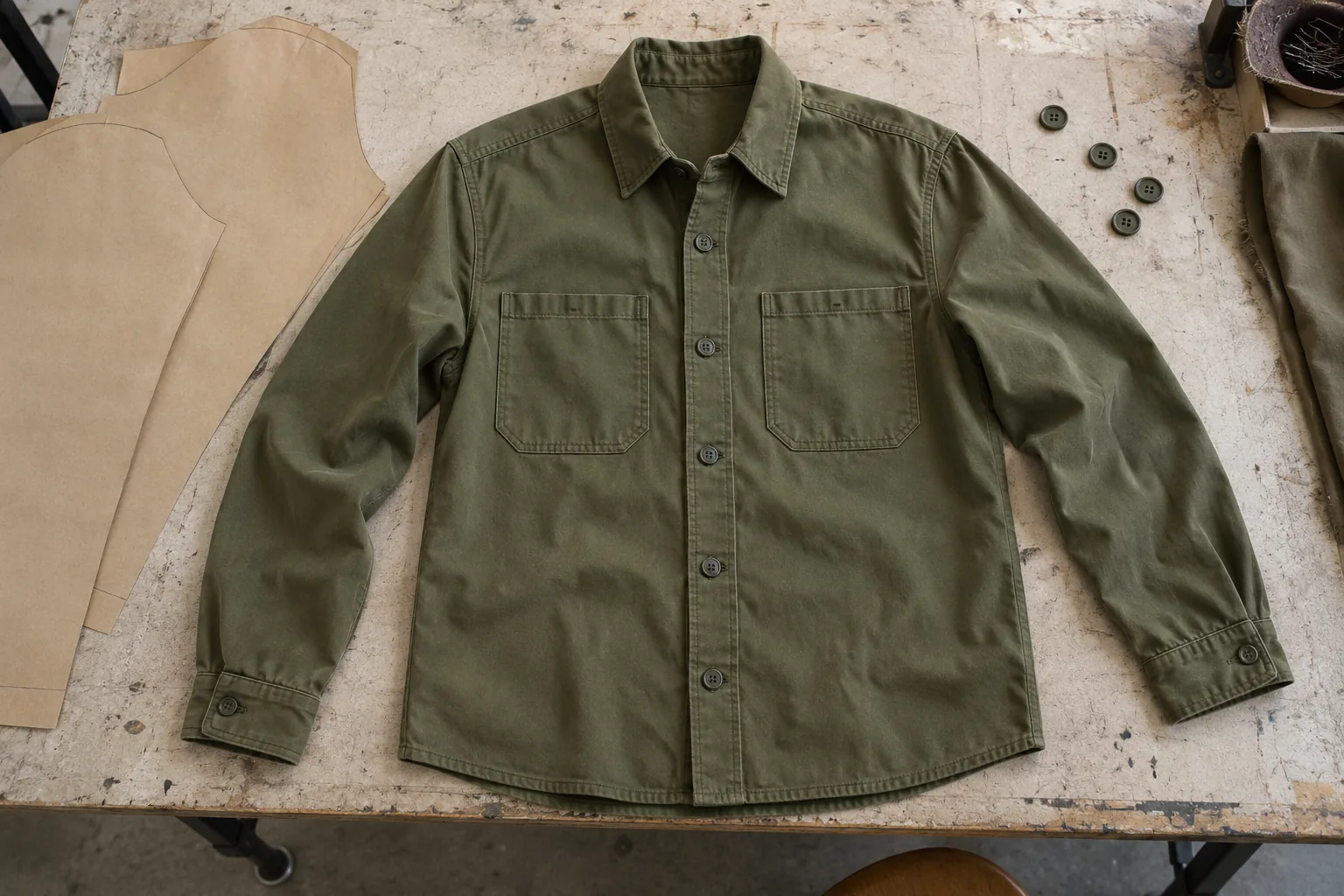
Start with one primary buying hypothesis. An overshirt launch might test whether customers want a roomy layer with substantial handfeel. In that case, fit, fabric weight and pocket placement deserve attention. A custom zipper pull, contrast internal binding and a second pocket configuration may add work without helping answer that question.
Write a short hierarchy: the signature feature, the essential performance requirements and the optional details. Keep the signature feature intact when simplifying. If the defining idea is a shaped sleeve, replacing it with a generic straight sleeve could make production easier while removing the reason to launch the garment.
This hierarchy also gives the buyer a useful approval rule. Accept a change only if it protects the intended customer experience or removes a meaningful execution risk. Avoid adding features merely because a sample revision creates an opportunity to do so.
Look for dependencies hiding inside one style
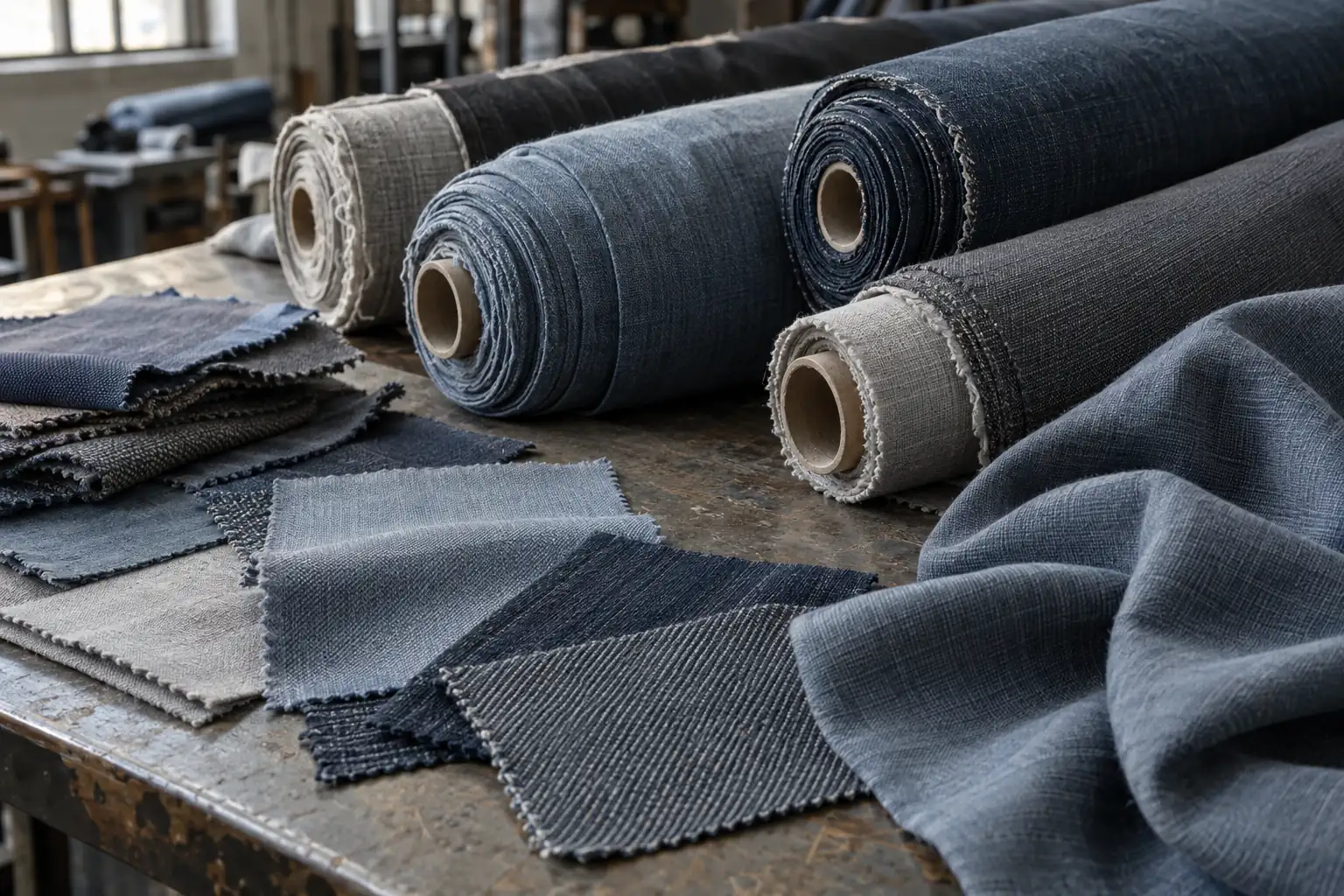
A style total does not describe all the work behind it. Two colors may need separate fabric purchases; a different lining can require another compatibility check; embroidery on a pocket can affect when that pocket is assembled. The useful question is how many distinct inputs must arrive and pass approval for the order to proceed.
At StitchQuote, MOQ for most categories starts from 50 pieces per style, while denim starts from 100 pieces per style. These starting points do not establish the feasibility of every material, color or decoration split. Confirm the proposed combination before treating the total quantity as a complete purchasing plan.
| Proposed detail | Dependency to clarify | Possible simplification |
|---|---|---|
| Exclusive fabric color | Dyeing quantity and color approval | Evaluate a suitable available shade |
| Decorative metal hardware | Component supply and attachment testing | Use an available compatible component |
| Two decoration techniques | Separate setups and placement approvals | Keep the technique central to the design |
These are options to evaluate, not automatic substitutions. An available component still needs approval for appearance, dimensions and function.
Simplify commitments that are difficult to reverse
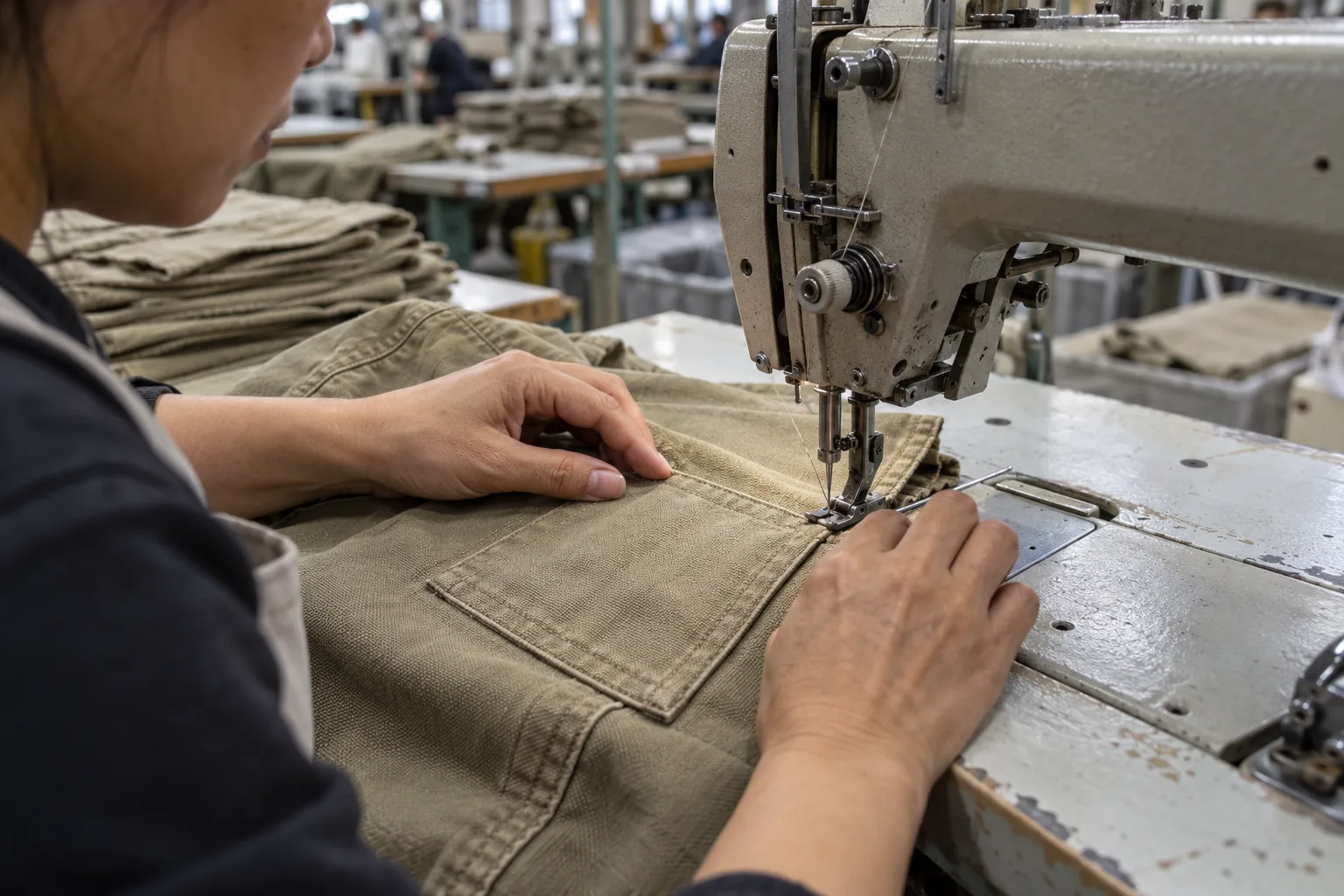
Some decisions can wait until the next order. Others commit cash and constrain the current one as soon as materials are purchased. Custom-developed fabric, dedicated hardware and special washes deserve scrutiny because changing direction after approval may leave unusable inputs or require new development.
Consider a small denim capsule built around a distinctive wide-leg fit. One approved wash may provide a clearer launch test than several experimental finishes. The buyer can still protect the rise, leg shape, seam strength and required shrinkage performance. Simplifying the finish assortment does not justify weakening those requirements.
Ask what happens if each optional detail is removed. If removal barely changes the intended customer benefit but eliminates a separate sourcing or approval step, it is a strong candidate for postponement. Record postponed ideas for a later run so they do not repeatedly return during sample comments.
Give the sample a narrow decision to resolve
A sample is more useful when its acceptance criteria are known before it arrives. For the overshirt example, the buyer might prioritize sleeve mobility, layering ease and pocket access. Confirm the evaluation sizes and measurements, then identify which appearance details must match the eventual production version.
Separate unresolved material questions from fit comments. If a sample uses substitute fabric, ask which conclusions remain reliable and which need confirmation in the intended material. A satisfactory silhouette in a softer substitute does not establish the drape of a heavier final fabric.
StitchQuote offers a 7-day sample for standard styles with confirmed specifications and available materials. Complex styles, custom washes and custom-developed fabric take longer. Choose the development route around the question the sample must answer, and confirm timing against the actual specification.
Use one consolidated revision record with a named approval owner. Each comment should state the required change and how acceptance will be judged. Conflicting feedback from several reviewers can undermine an otherwise straightforward product.
Keep quality controls specific even when the design is simple
Fewer features should make inspection more focused. Before bulk approval, define the checks that protect the garment’s fit, function and appearance, including any project-specific testing that needs agreement. StitchQuote provides QC before packing; buyers should clarify the applicable criteria and reporting expectations.
- Measurements: Confirm key points of measure, size grading and agreed tolerances.
- Materials: Identify the approved fabric and trims, including the reference used for shade and handfeel.
- Construction: Check stress points, seam appearance and functional openings against the approved sample.
- Branding: Approve placement, dimensions and application quality for labels, prints or embroidery.
- Care performance: Agree whether wash, shrinkage or decoration durability checks are needed and how results will be assessed.
- Packing: Match size identification and packed quantities to the confirmed order breakdown.
Keep these requirements in the controlled specification. Instructions buried in a message thread are difficult to use consistently during production or inspection.
Turn fit and fabric preferences into measurable approvals
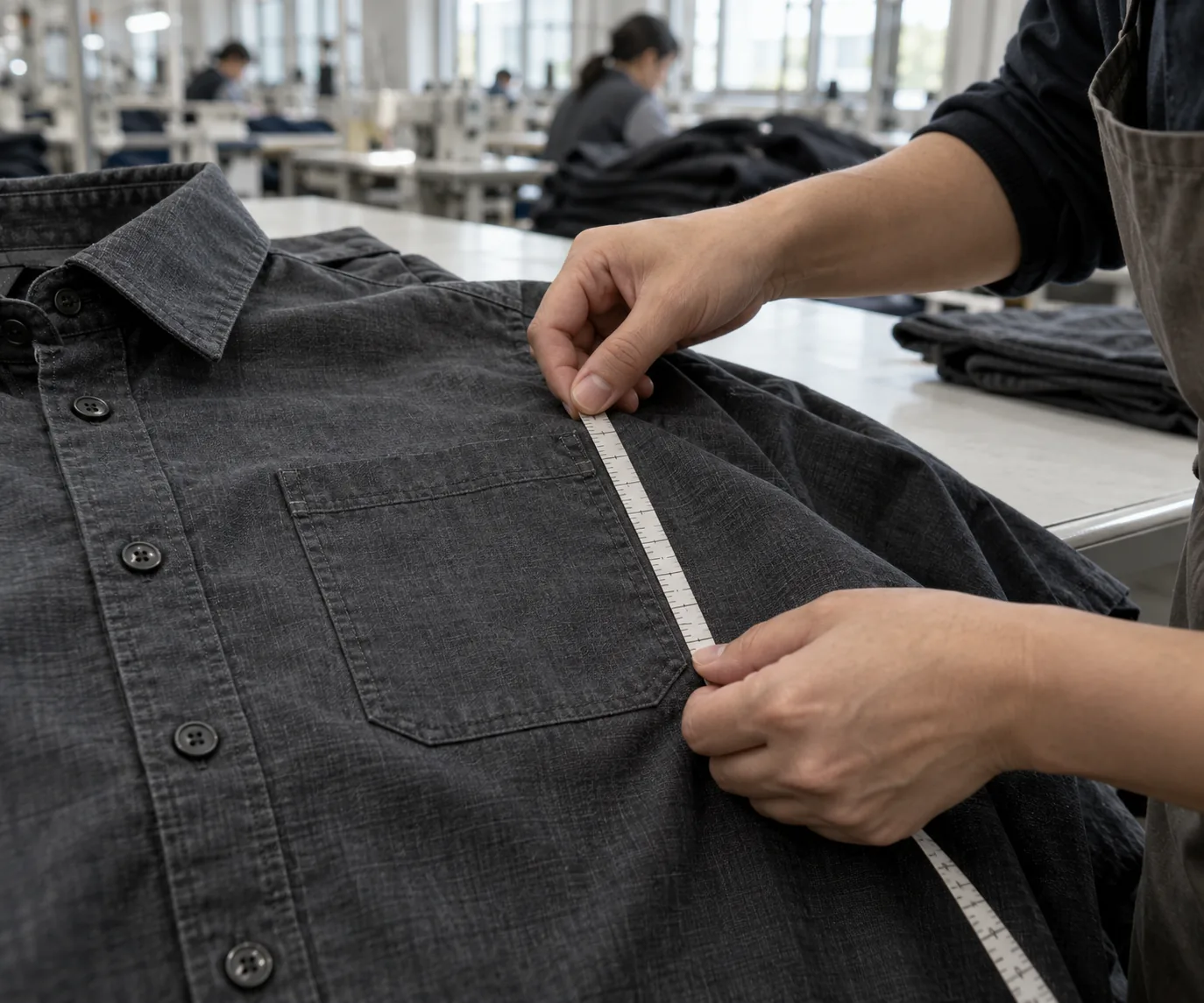
For an overshirt, specify how each measurement is taken before discussing tolerance. Measure half-chest with the garment buttoned and laid flat at a stated distance below the armhole. Define body length from the high shoulder point to the hem, shoulder width between the shoulder seams, and sleeve length from the shoulder seam to the cuff edge. Add a drawing for a dropped shoulder or curved hem so two reviewers can reproduce the same measurement. Record the sample size and the increment between sizes rather than assuming that every dimension grows equally.
As an illustrative starting point for discussion, a buyer might propose a tolerance of plus or minus 1 cm for half-chest and body length, with plus or minus 0.5 cm for pocket placement. These are proposed criteria, not universal standards or StitchQuote guarantees. Agree achievable limits for the actual fabric and construction. Include a visual alignment check: two pockets can each meet their placement tolerance yet look uneven together.
Specify fabric composition, weave or knit structure, finish and weight in grams per square metre (GSM). A hypothetical 240 GSM cotton twill and a 240 GSM brushed knit can behave differently despite sharing a weight. Approve texture and drape against a physical swatch, and clarify whether the specified weight applies before or after finishing. For wash assessment, measure the same marked points before and after an agreed care cycle. Record dimensional change in both length and width, using the original measurement as the denominator when calculating percentage change. Set acceptance limits before testing.
Work through the quantities before committing to production
Consider a hypothetical order of 50 non-denim overshirts in one fabric and one color, subject to confirmation of material availability and the size split. A proposed breakdown could be 10 small, 20 medium, 15 large and 5 extra-large pieces. Use preorders or audience data to assess that size curve. Keep buttons, pocket construction and the label package consistent across sizes, while documenting any necessary changes in placement or proportions.
Request a quote against that exact configuration. Ask which costs relate to development or setup and which scale with garment quantity. Pattern work, sample revisions, decoration setup, fabric consumption, trim purchasing and packing requirements can affect the economics differently. A wider sleeve or longer body can increase material consumption even when the garment looks simple. Compare alternatives using the same quantities and material requirements so the reason for a cost difference remains visible.
Before cutting, close the fit comments, approve the production material and confirm size quantities in one revision of the order documents. Agree how many garments and which sizes will be inspected, how defects will be recorded, and how corrections will be checked. Alongside measurements, inspect pocket symmetry, button operation and agreement between garment size and label. Finally, reconcile packed quantities by size: an accurate overall total can still hide a shortage in the size customers ordered most.
Questions buyers ask before narrowing the first order
Should a small launch always use only one color?
No. A second color may be central to the buying hypothesis. Keep it when the commercial reason is clear and its material availability, quantity split and approval needs are workable. Remove it when it adds complexity without producing useful launch evidence.
Can available trims still support a distinctive product?
Yes, if their proportions and finish suit the design. Distinction can come from silhouette, fabric choice or placement. Review available trims against those priorities instead of assuming a custom component is necessary.
What should remain detailed in a simplified brief?
Measurements, construction requirements, material identification and acceptance criteria still need precision. A shorter feature list should reduce the number of decisions, not leave the remaining decisions open to interpretation.
When should postponed features return?
Revisit them when sales, returns or customer feedback support a specific improvement. Add a feature with a clear purpose and assess its development needs before committing to the next order.
Related reading and project support:
- Prepare a tech pack with clear approval criteria
- Review sampling and MOQ considerations
- Discuss your proposed order with StitchQuote
Request a manufacturing quote
Share your product type, quantity range, and destination. We usually reply within one business day.