Custom Streetwear, Casualwear & Denim Manufacturer•MOQ 50 pcs•Denim MOQ 100 pcs•7-Day Sample Available

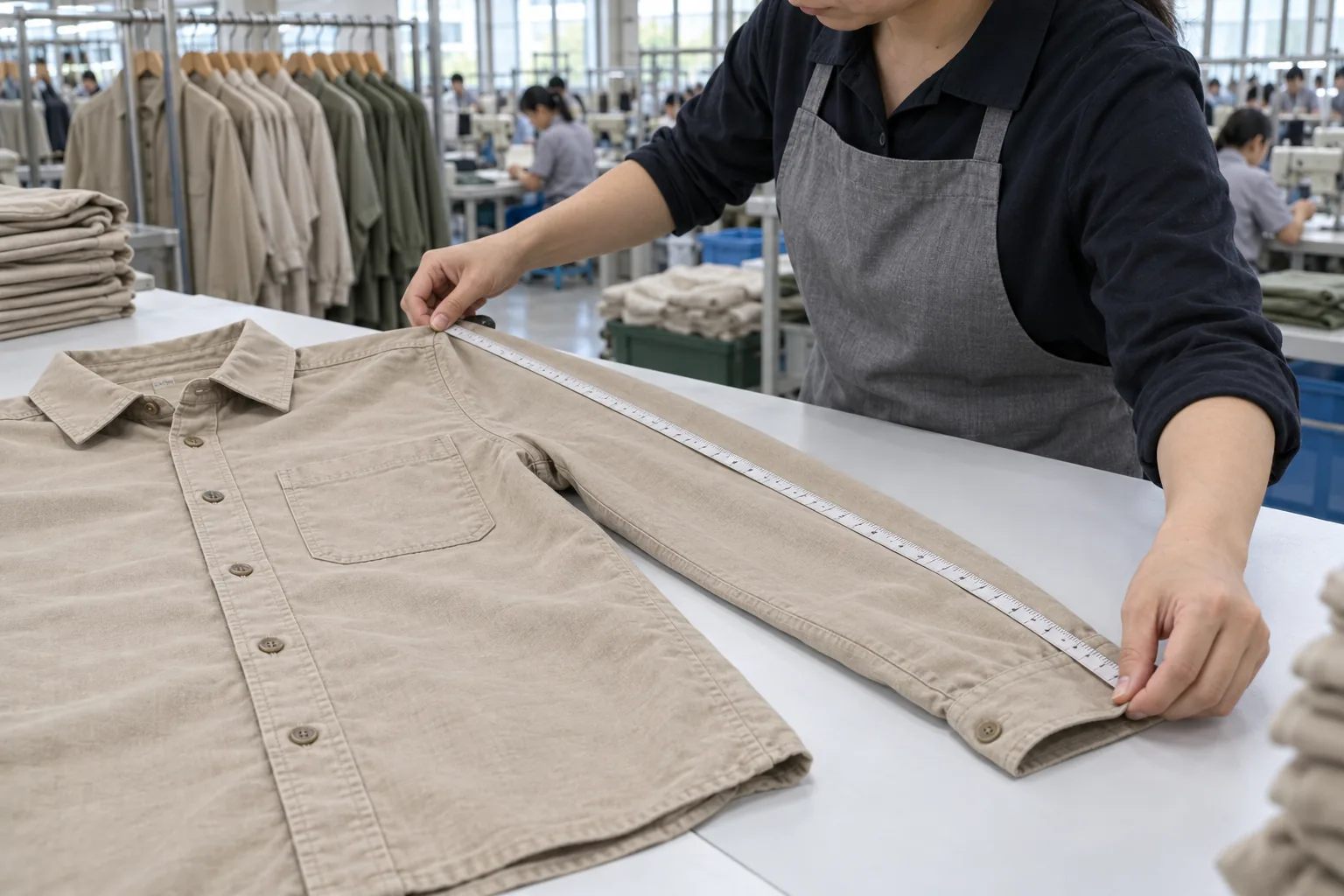
How Apparel Production Lead Times Really Work
Learn how apparel production lead times really work, what causes delays between approval steps, and how brands should build a more realistic launch calendar.

A launch calendar can look comfortable until the supplier’s “completion date” turns out to mean sewing finished, while your team expected stock at the warehouse. Understanding how apparel production lead times really work starts with checking what each date includes and what must happen before the clock starts.
Use this buyer checklist when reviewing a proposed schedule, before committing a collection to a campaign or retail delivery window. The aim is to turn a promising estimate into a sequence of verifiable commitments, with an owner and a consequence for every unresolved decision.
Check that the promised date matches your destination
Write your required outcome in plain language: “accepted stock available for warehouse intake,” for example. Then ask the supplier to identify its own endpoint. Sewing completion, inspection readiness, packed goods, carrier collection, and delivery are separate milestones. A date covering one does not automatically cover the others.

Work backward from the destination date with your logistics provider. Allow for the agreed transport method, clearance requirements, and warehouse receiving arrangements. Keep these allowances separate from factory work so a transport assumption does not become an accidental production promise.
- Which exact event ends the supplier’s quoted schedule?
- Are dates expressed in calendar days or working days?
- Who confirms collection availability and the warehouse appointment?
Request evidence that the starting conditions are satisfied
“Materials available” needs a specific meaning. Fabric shown on a swatch card may still need allocation, dyeing, or delivery. Ask which materials are physically ready for your order and which depend on another supplier. Record the outstanding action and expected confirmation date beside each item.
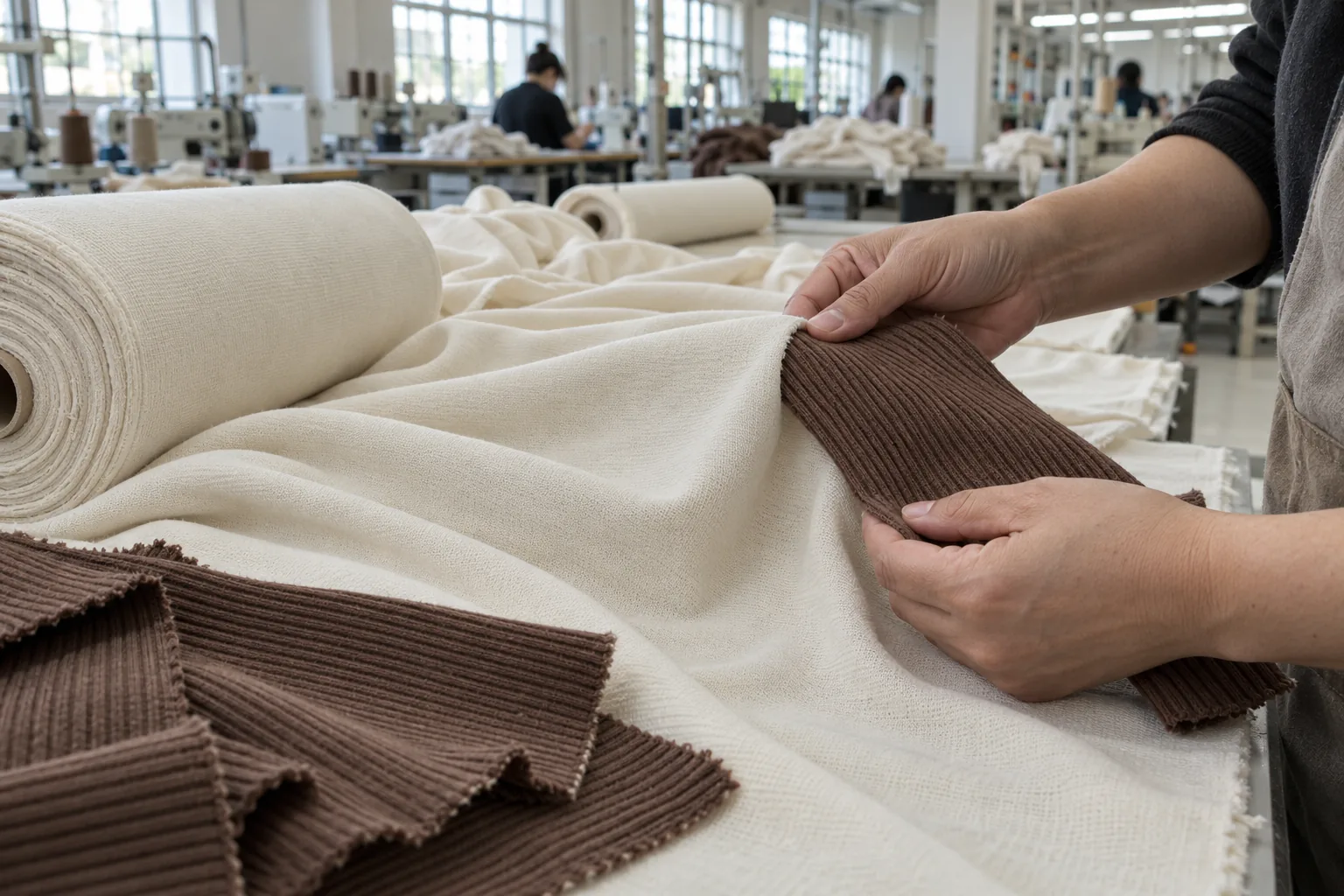
For a jersey top with contrast rib, the body fabric alone cannot establish readiness. A late rib delivery can hold the garment even when the main rolls are on site. Include labels, thread, closures, decoration materials, and packaging in the same review.
Ask for a written start trigger rather than assuming that accepting a quotation starts production. Depending on the agreed project terms, that trigger may require final specifications, material readiness, sample approval, and commercial requirements to be satisfied together.
Assign one decision owner to every approval
A supplier cannot resolve contradictory comments from merchandising, design, and marketing. Name one person to consolidate feedback, with a backup for absences. Agree when comments are due and what evidence is needed to approve each stage. Silence should not count as approval unless that arrangement is explicitly agreed.
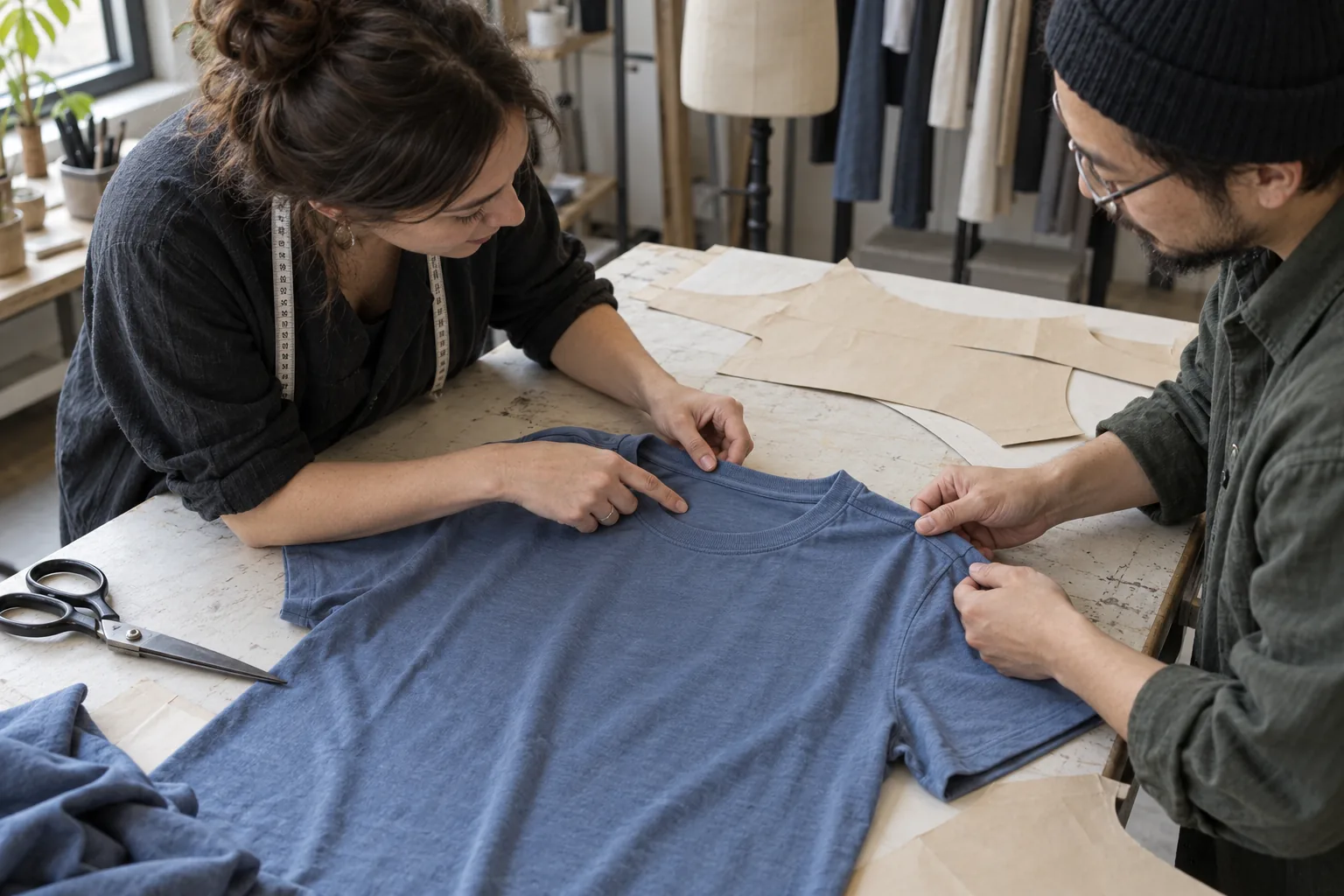
Use a short approval register. Keep specifications versioned so everyone knows which measurements, artwork, and construction details govern the order.
| Decision | Buyer checks | Schedule question |
|---|---|---|
| Fit approval | Measurements and movement on the intended fit model | Is another physical sample required? |
| Decoration approval | Placement, scale, color, and application on the chosen material | When must approval arrive to retain the proposed slot? |
| Packing approval | Size identification, folding, and carton assortment | Can packing proceed without further buyer input? |
Build internal review time into the calendar. A sample arriving on Friday does not guarantee useful feedback before Monday, especially when several people must handle it.
Separate sample availability from bulk capacity
A quick sample demonstrates a development step, not the duration of the full order. Bulk cutting, sewing, decoration, finishing, and packing need their own capacity checks. Ask whether the proposed production window is provisional or confirmed, what protects it, and what happens if an approval misses its deadline.
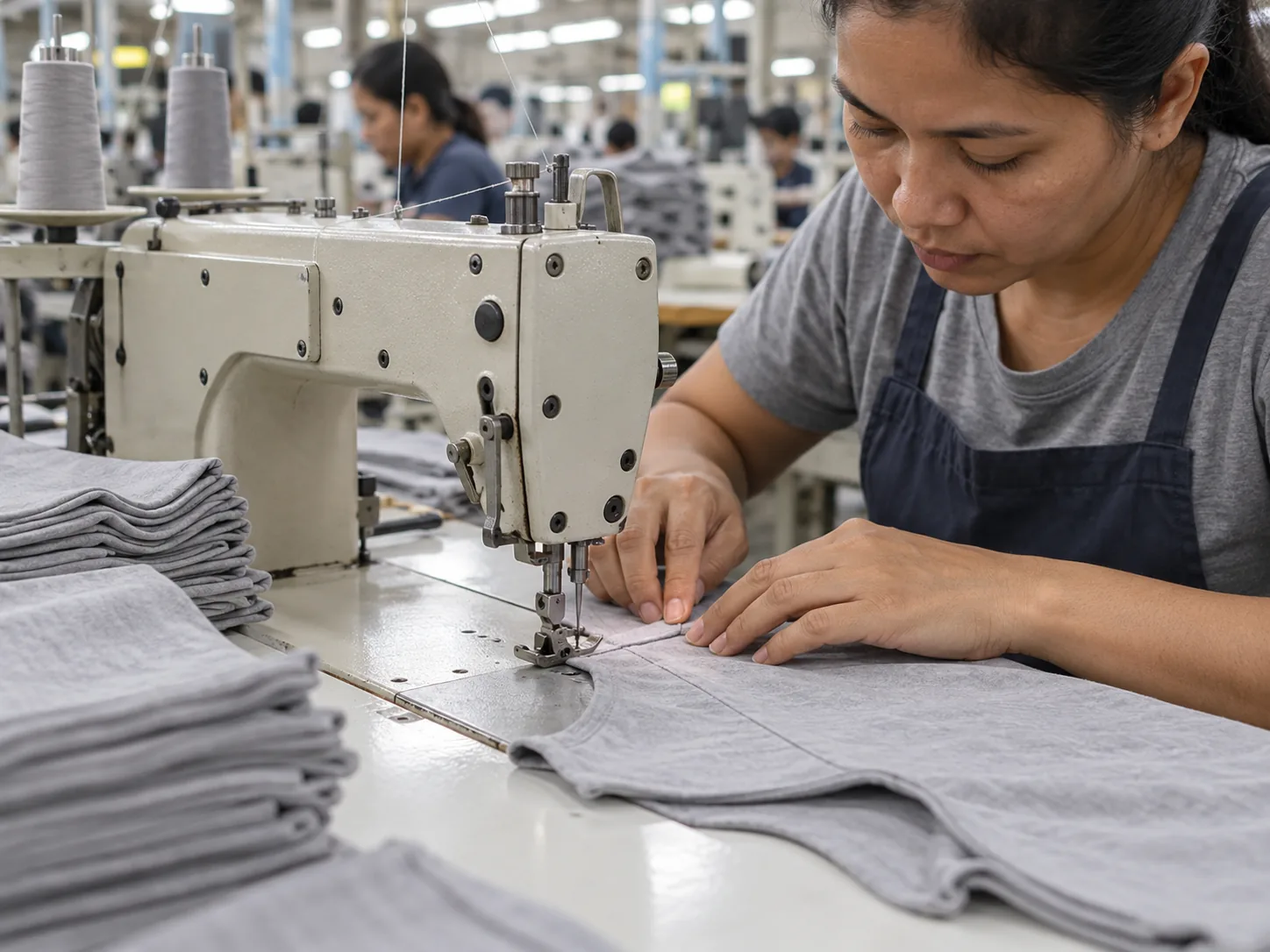
StitchQuote offers a 7-day sample for standard styles with confirmed specs and available materials. Complex styles, custom washes, and custom-developed fabric take longer. Treat that sample option as conditional, and request a separate schedule for bulk production.
Confirm quantity by style and the planned size and color breakdown. StitchQuote’s MOQ for most categories starts from 50 pieces per style; denim starts from 100 pieces per style. Meeting an MOQ does not establish a completion date. A small order can still require a specialized operation with limited availability.
Decide what can change after the schedule is agreed
Set a specification freeze date and a simple change procedure. Any later request should identify the affected materials, work already completed, new approval requirements, and revised delivery implications. Obtain that assessment before authorizing the change.
Consider a casual overshirt whose buyer replaces buttons with snaps after the sample is approved. The change may require different sourcing, attachment equipment, and testing on the actual fabric. Calling it a trim swap does not make its schedule impact small.
Keep contingency visible instead of burying it inside every stage. Ask which unresolved item could move the completion date most, and when that uncertainty will be resolved. If timing becomes tight, discuss a concrete scope reduction or shipment split, including its practical consequences, before promising either to customers.
Protect time for inspection, corrections, and release
A calendar that ends at the last seam leaves no room to establish whether the goods meet the approved requirements. Agree the inspection scope and reporting method in advance, then reserve time for correction and reinspection where needed. StitchQuote’s services include QC before packing; confirm the project’s specific checks and release arrangements.
- Reference: Identify the approved sample and current specification version used for comparison.
- Measurements: Define critical points and tolerances across the ordered sizes.
- Appearance: Review seams, shade consistency, decoration placement, and visible damage.
- Function: Check closures and any agreed garment performance requirements.
- Order accuracy: Reconcile quantities, labels, size assortments, and packing instructions.
- Release: Identify who reviews findings, authorizes corrective work, and confirms readiness for collection.
Ask when inspection findings will reach your decision owner. A completed report sitting unread can delay collection just as effectively as unfinished sewing.
Turn fabric and measurement requirements into approval gates
A fabric description such as “heavy cotton jersey” leaves purchasing and inspection open to interpretation. Specify fiber composition, knit structure, target grams per square meter (GSM), finish, and intended wash care. For example, a buyer could request 220 GSM cotton single jersey for a structured tee; this is an illustrative specification, not a StitchQuote stock-fabric claim. Ask the supplier to propose an achievable GSM tolerance and explain how it will be checked before approving the material. Compare bulk fabric with the approved reference for weight, handle, shade, and stretch.
Define measurement methods as carefully as the numbers. For a tee, state whether body length runs from the high shoulder point to the hem, whether half-chest is measured flat below the armhole, and where sleeve length begins. Add a diagram for each ambiguous point. An illustrative starting tolerance might be plus or minus 1 cm for body length and half-chest, with a tighter agreed limit for neckline dimensions. These are proposed buyer requirements, not universal tolerances or guaranteed factory capabilities; settle them against the construction and fabric before sampling.
Keep finished-garment measurements separate from wash-test results. Record the wash and drying method, measure the same marked points before and after, and calculate dimensional change as the difference divided by the original measurement. A body length changing from 70 cm to 68 cm has shortened by about 2.9 percent. Agree an acceptable limit and whether a pattern adjustment or fabric treatment requires another sample. Discovering this after bulk cutting can create substantially more rework than resolving it during development.
Work through one order before committing the launch budget
Consider a hypothetical order of 100 tees in one style and one color, divided into 20 small, 30 medium, 30 large, and 20 extra-large pieces. The total exceeds StitchQuote’s starting MOQ of 50 pieces per style, but the buyer should still confirm the requested size allocation and material availability. Submit the size chart, fabric specification, label artwork, decoration placement, and packing instructions together so the schedule covers a defined garment.
Make the sequence explicit: confirm fabric and trim sourcing, review the standard-style sample, consolidate fit and branding comments, approve the final specification, and obtain the bulk production schedule. Before cutting, resolve any remaining fabric or shade questions. During sewing, request an early measurement and construction check so a repeated error can be corrected before the entire order is assembled. Before release, reconcile inspected quantities against the four size totals and check that garment labels match carton records.
Use the same example to question cost drivers without assuming a unit price. Ask which charges arise from pattern development, sampling, fabric minimums, printing setup, custom labels, and packing. A second print position introduces another operation; adding a color may change sourcing or decoration setup requirements. Request the cost and timing effect of each option together. If a change creates another approval step, assign that step a deadline before accepting the revised order.
Questions to settle before accepting the calendar
Should we publish a launch date from the first quotation?
Treat an early estimate as a planning input until its assumptions are confirmed. Before publishing a firm date, reconcile the production endpoint, outstanding approvals, material status, transport allowance, and receiving requirements with your launch commitment.
Can two styles in one order have different completion dates?
Yes. A plain tee and a washed denim garment follow different operations. Request a schedule by style, then decide whether collection waits for everything or whether separate shipments are practical under the agreed terms.
What should a useful weekly update contain?
Request the current stage, evidence of completed milestones, outstanding decisions, and any change to the forecast. Every issue should have an owner and a next action date. A percentage complete alone rarely explains whether delivery remains achievable.
Use these resources to prepare the documents and questions for your schedule review:
- Prepare a tech pack for a clear production brief
- Review sampling and MOQ considerations
- Discuss your project schedule with StitchQuote
Request a manufacturing quote
Share your product type, quantity range, and destination. We usually reply within one business day.