Custom Streetwear, Casualwear & Denim Manufacturer•MOQ 50 pcs•Denim MOQ 100 pcs•7-Day Sample Available

Why Bulk Fabric Approval Matters Before Production
See why bulk fabric approval matters before production, how it protects garment consistency, and where brands risk bulk problems when fabric standards stay vague.

A fabric swatch can look right while the production rolls deliver fewer garments than your order requires. Narrow usable width, scattered defects, shrinkage, and shade separation all reduce what a cutting room can turn into saleable pieces. For a brand buyer, bulk fabric approval matters before production because the material decision also determines whether the planned quantity is achievable.
This is a yield decision: how much approved fabric becomes conforming garments in the required size and color mix. At the point of authorizing cutting, the useful question is no longer just whether the fabric matches development. It is whether the actual lots support the consumption estimate, and what happens if they do not.
Translate purchased meters into garments you can ship
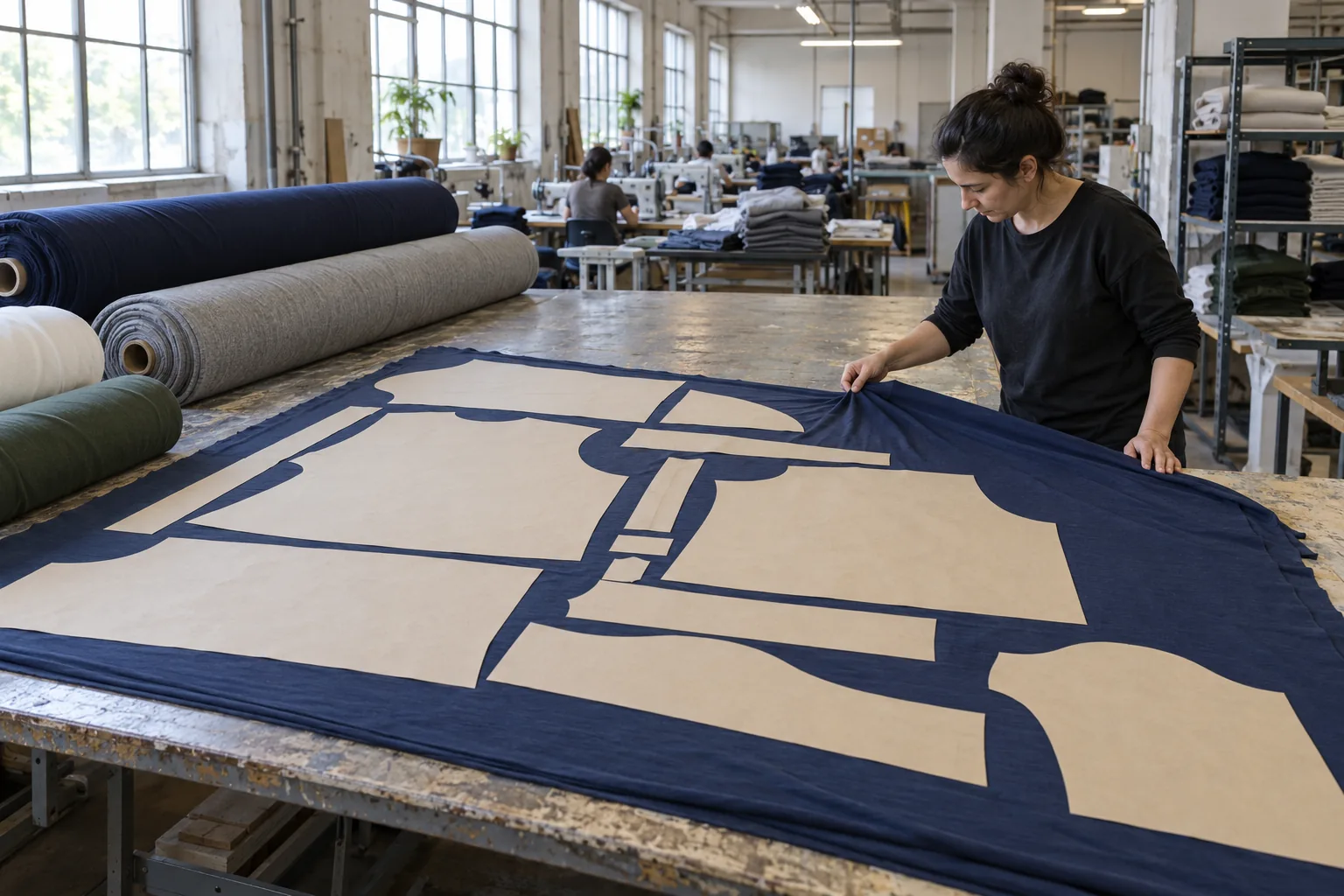
Fabric yield has several layers. A marker measures how efficiently pattern pieces fit inside a usable width. Roll inspection identifies material that cannot enter those layouts. Shrinkage compensation changes the pattern area required. Cutting and garment QC can remove additional pieces. A strong marker efficiency figure alone does not prove that the order has enough material.
Consider an illustrative order of 400 jersey tops with an initial consumption estimate of 1.40 meters each. That suggests 560 meters before any separately agreed allowances. If a revised marker using the actual width and shrinkage allowance requires 1.47 meters, the base requirement becomes 588 meters. Those extra 28 meters arise before defect losses or recutting are considered. These figures are an example, not a production benchmark.
Ask the supplier to state what its consumption figure already includes. Otherwise, buyers can accidentally count waste twice or omit it entirely. Compare estimates on the same basis: identical size ratio, fabric condition, usable width, and cutting restrictions.
Make usable width the basis of the cutting decision
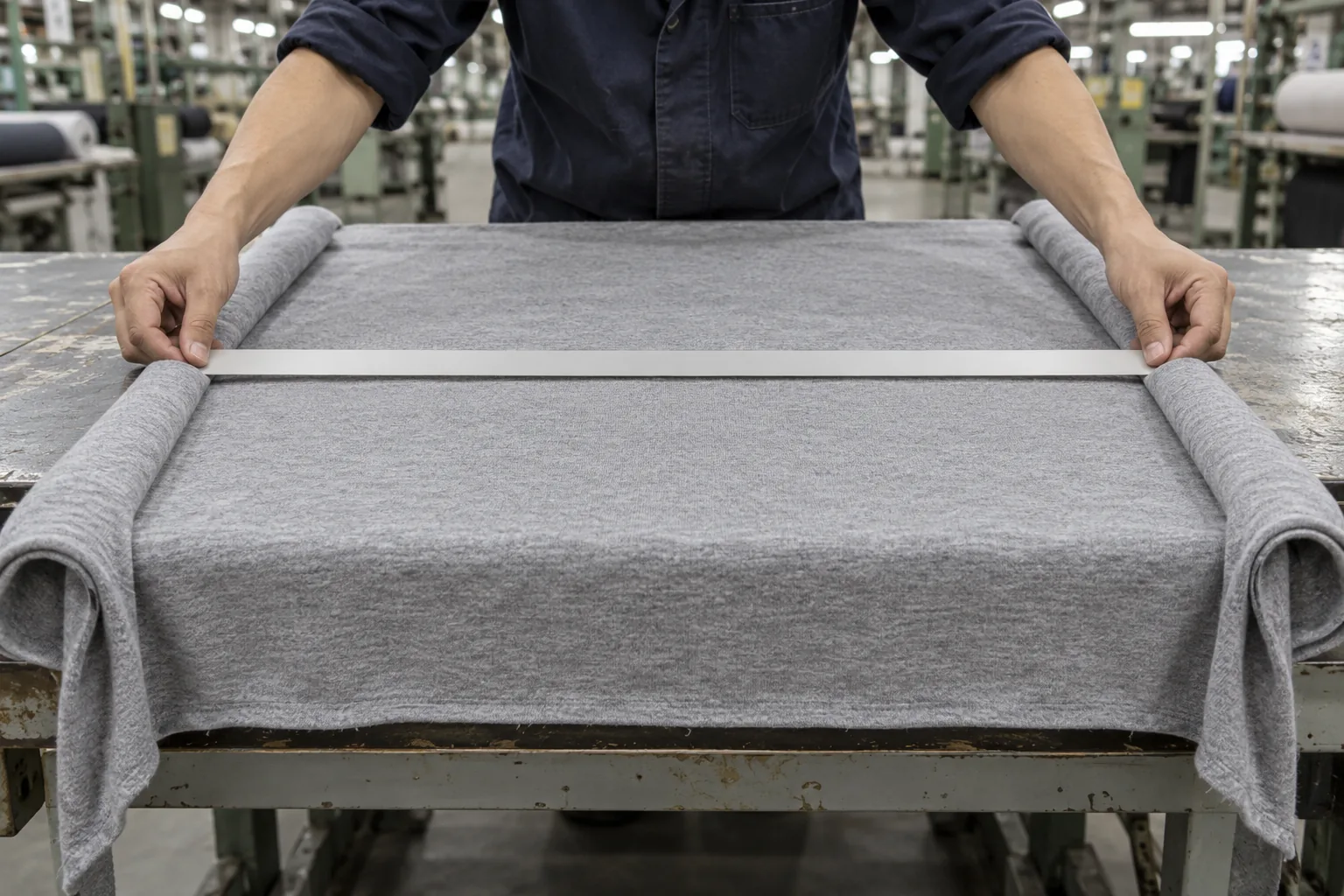
Nominal width is not necessarily cutting width. Damaged edges, curled knit margins, finishing marks, or unstable selvages can reduce the working area. Width may also vary along a roll. A measurement from one convenient section cannot establish that every lay will accommodate the approved marker.
Wide streetwear pieces make this especially visible. An oversized sweatshirt front may fit beside a sleeve at the assumed width, then require a different arrangement when usable width falls. Consumption can increase unevenly; it does not always move in simple proportion to the lost centimeters.
Before release, request a width summary by roll or lot and confirmation that the marker uses a defensible working width. If narrower rolls remain acceptable, assign them to a separate layout and calculate their contribution separately. Do not let a blended average hide rolls that cannot support the intended cutting plan.
Test the finishing route before fixing consumption
Fabric can meet the requested weight and still shrink or distort differently from the development material. GSM describes mass per area; it does not establish dimensional stability. For washed garments, approval should reflect the intended finishing route as well as relevant care testing, with test conditions recorded.
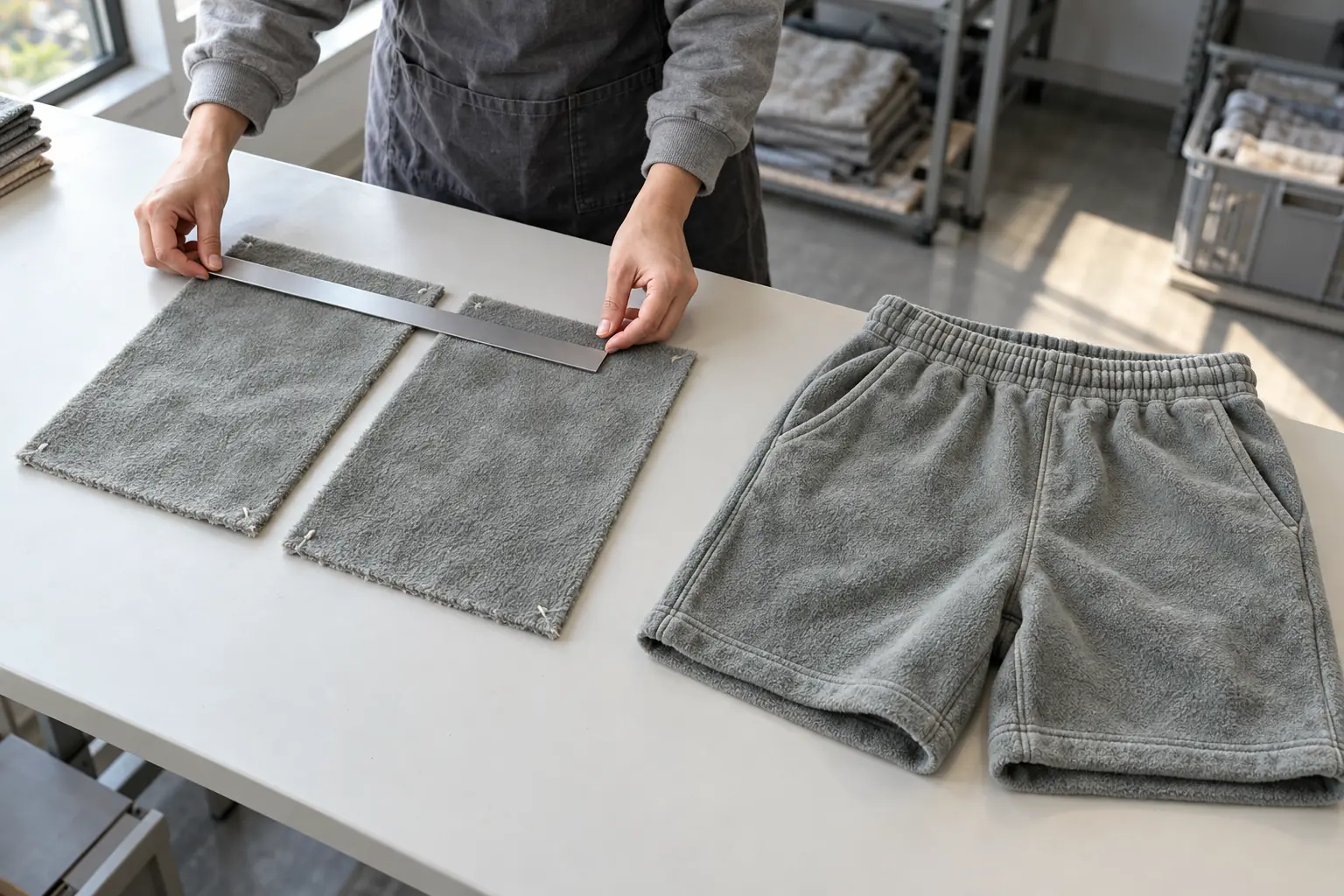
A fleece short with different lengthwise and crosswise shrinkage may need different compensation in each direction. That changes both fit and marker consumption. Twisting or skew can also make a piece unsuitable even when its final dimensions appear acceptable. The buyer needs results from representative production material, not an assumption carried over from a sample swatch.
Agree how fabric will be conditioned or relaxed before measurement and cutting. Where garment washing affects the result, confirm it on representative sewn pieces. Update the pattern and marker together when compensation changes; increasing a pattern without revising the material requirement leaves the order exposed.
Keep shade groups from becoming stranded inventory
Two rolls can pass an individual color assessment yet look different when assembled into the same garment. Matching a body, sleeves, and pocket may require keeping components within an approved shade group. This restriction reduces the freedom to combine leftover lengths across rolls.
For example, a smaller shade group may support medium and large units efficiently but leave too little continuous fabric for another oversized front. The remaining meters exist in inventory, but they cannot necessarily complete the missing size. Yield must therefore be checked against the required size mix, not only the total garment count.
Request a shade grouping plan with roll identities and estimated output by group. Any proposed reallocation of sizes or acceptance of visible shade differences needs buyer review. A supplier should not solve a fabric shortage by silently changing the assortment that your sales plan depends on.
Use a release checklist that exposes quantity risk
Approval evidence should connect the physical material to the planned output. A signed swatch establishes a reference, but it does not identify which inspected rolls may be cut or quantify how much usable fabric remains.
- Traceability: Record lot and roll identifiers, measured lengths, and the approved reference associated with them.
- Cutting conditions: Confirm usable width, fabric relaxation requirements, nap or print direction, and any placement restrictions.
- Performance: Record dimensional change and distortion under agreed test conditions, with acceptance limits defined for the garment.
- Defect handling: Identify excluded areas and explain how defects affect layouts rather than applying an unexplained blanket allowance.
- Quantity reconciliation: Compare revised consumption and usable inventory with the size breakdown, including an agreed recut provision.
- Release scope: Identify approved, held, and rejected material so cutting authorization cannot be mistaken for acceptance of every delivered roll.
If the reconciliation shows a gap, resolve it before cutting. Options include replacing unsuitable rolls, sourcing additional matching material, or agreeing a revised quantity. Recheck affected assumptions when replacement fabric arrives. A concession on appearance does not automatically resolve width, shrinkage, or quantity concerns.
Separate material release from the sample calendar
- Confirm the development specification and intended garment finishing route.
- Assess production lots and revise consumption using the actual usable material.
- Authorize identified rolls for cutting only after reconciling achievable output with the order.
StitchQuote provides cut-and-sew, private label, sampling, fabric and trim sourcing, branding, and QC before packing. Buyers can make a project discussion more useful by supplying the target quantity, size ratio, fabric requirements, and planned washing or decoration route together.
MOQ for most categories starts from 50 pieces per style; denim starts from 100 pieces per style. These starting quantities do not establish fabric yield. A 7-day sample is available for standard styles with confirmed specifications and available materials; complex styles, custom washes, and custom-developed fabrics take longer. Sample availability also does not prove that production rolls have passed material approval.
Questions buyers ask when the fabric allowance changes
Can a heavier fabric mean fewer garments from the same purchase?
If fabric is purchased by weight, higher GSM can mean less area for the same kilograms. Width and finishing also matter. Convert the purchase quantity into the same units and fabric condition used for consumption before comparing output.
Should every roll use the same waste allowance?
Not automatically. Defect distribution and usable width can differ. Several isolated defects may disrupt layouts differently from one continuous rejected segment. Ask how the inspected condition supports the allowance and cutting plan.
Can cutting begin while one shade group remains on hold?
A partial release can be practical if approved rolls are clearly separated and their output is reconciled with the order. Document the authorized rolls and quantities, and confirm that cutting them will not prevent completion of the remaining size mix.
Related reading and project support
- Prepare the specifications behind a cutting estimate
- Review sampling and minimum order requirements
- Understand hoodie GSM and fabric weight
- Discuss your fabric approval requirements with StitchQuote
Request a manufacturing quote
Share your product type, quantity range, and destination. We usually reply within one business day.