Custom Streetwear, Casualwear & Denim Manufacturer•MOQ 50 pcs•Denim MOQ 100 pcs•7-Day Sample Available

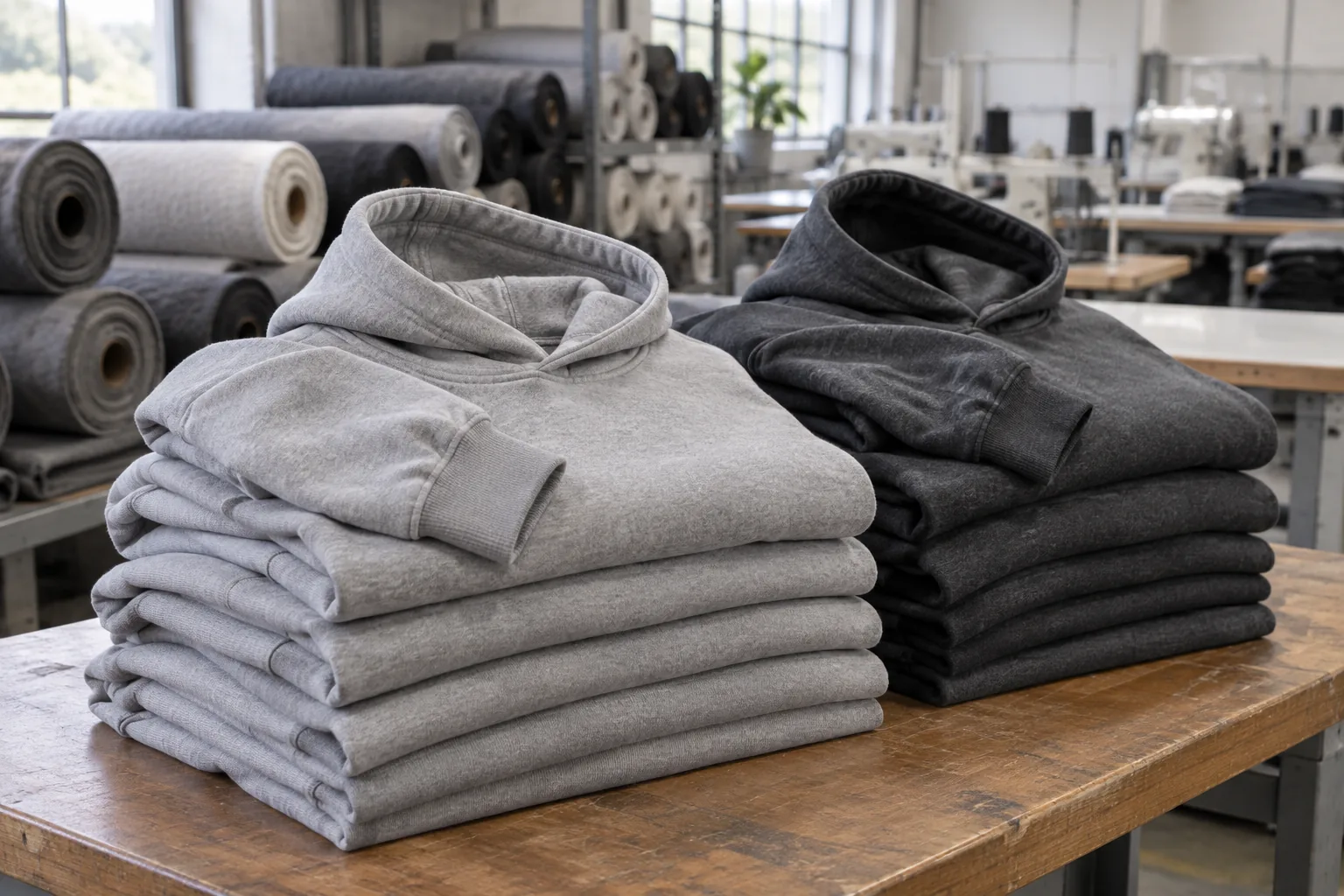
Hoodie Fabric Weight / GSM Guide for Streetwear Brands

When founders ask for a “heavy hoodie,” factories hear a measurement problem. Weight is not a vibe. It is usually stated as GSM (grams per square meter) for knitted fleece and French terry used in cut-and-sew hoodies. Getting fabric weight right shapes handfeel, drape, print behavior, shipping cost, and how the sample feels next to a reference garment.
This hoodie fabric weight guide explains typical GSM ranges for streetwear, the difference between French terry and fleece, and what to write in a tech pack before you request a quote from a hoodie manufacturer.
What GSM Means on a Hoodie
GSM measures fabric mass per area. A higher number usually means a denser or thicker knit for the same fiber type, but it does not automatically mean “better.” A 420 GSM fleece can feel stiff or boardy if the yarn and finish are wrong. A well-finished 320 GSM French terry can feel premium and clean for spring drops.
Factories also talk in ounces per square yard in some denim and US blank contexts. For China cut-and-sew jersey and fleece programs, ask for GSM first so everyone quotes the same unit.
- Ask for GSM on the body fabric, not only on rib or lining.
- Ask whether the quote includes brushed fleece or loop-side terry—construction changes feel more than a 20 GSM gap.
- Keep one reference hoodie (or a measured swatch) so “heavy” has a physical baseline.
Typical Streetwear GSM Ranges
Ranges vary by mill and season. Use these as planning bands for men’s streetwear hoodies, then confirm with swatches:
- ~260–300 GSM: lighter French terry or thin fleece; easier for warm climates and layered looks; can feel cheap if yarn quality is weak.
- ~300–350 GSM: common midweight band for clean French terry and lighter fleece; good for boxy silhouettes that should not collapse.
- ~350–400 GSM: mid-to-heavy fleece territory for colder seasons and “substantial” blanks; watch bulk at underarms and side seams.
- ~400–450+ GSM: heavy fleece programs; premium handfeel when yarn and brushing are controlled; higher fabric cost and shipping weight.
For a fuller product path after you pick a weight, see our notes on fleece hoodie manufacturing and French terry hoodie manufacturing.
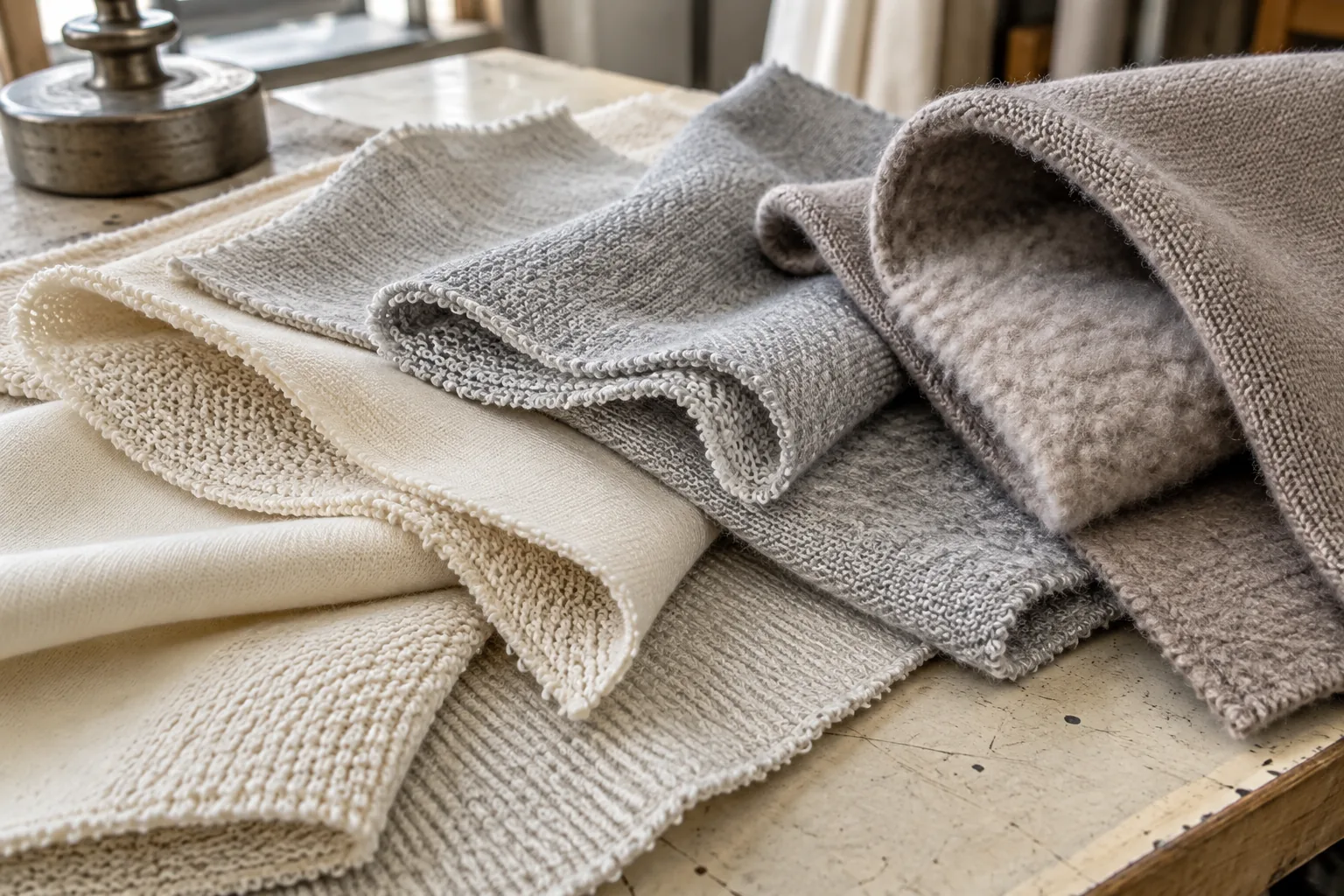
French Terry vs Fleece: Same GSM, Different Hand
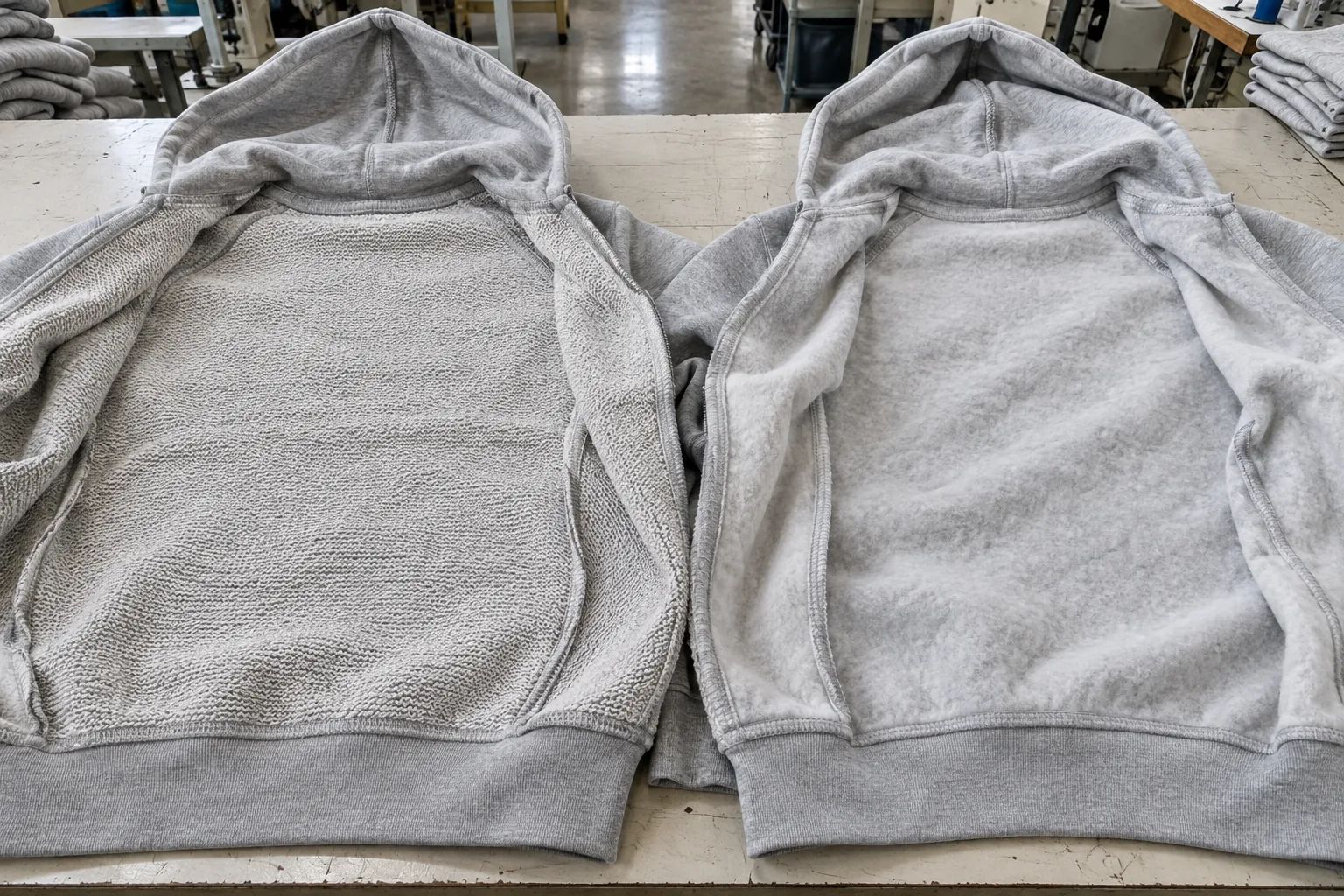
French terry usually shows loops on the inside and a smoother face. Fleece is typically brushed on the inside for loft and warmth. Two fabrics at 350 GSM can feel unrelated.
French terry
Often preferred for cleaner spring/summer or transitional drops, lighter layering, and silhouettes where you want structure without a fuzzy interior. Loop definition and face smoothness matter as much as weight.
Fleece
Brushed backs give insulation and that classic sweatshirt hand. Over-brushing can shed or pill; under-brushing can feel harsh. Ask how the mill finishes the fleece and whether anti-pilling is available.
If you are still choosing construction, pair this guide with fit decisions in the men’s hoodie fit guide—weight and silhouette interact. A heavy fleece on a very oversized shell can look draped; the same fabric on a short boxy body can look dense and structured.
How Fabric Weight Affects Production Decisions
Handfeel and drape
Heavier knits resist cling and can hold a boxy line. Lighter knits move more and can show body contour. Neither is wrong; match weight to the look you sell in photos.
Decoration
Puff print, screen print, embroidery, and patches sit differently on terry vs fleece. Dense embroidery on very soft fleece can crater; thick puff on light terry can stiffen the panel. Share decoration plans when you RFQ so the factory can flag fabric risks early. Related: puff print hoodie manufacturing.
Shrinkage and wash
Heavier cotton-rich knits still shrink if not properly finished. Ask for expected shrinkage after wash and whether the mill pre-shrinks. Approve measurements on a washed sample when the brand sells washed looks.
Cost and MOQ
Fabric is often the largest unit-cost swing. Custom-dyed heavy fleece may carry mill minimums even when sewing MOQ is low. StitchQuote’s sewing MOQ for many styles starts around 50 pieces per style (denim programs differ). Confirm fabric and trim minimums separately on the sampling and MOQ page and in your quote.
What to Put in the Tech Pack (Fabric Section)
Clear specs reduce sample rounds. Include:
- Target GSM (a band is fine, e.g. 340–360) and fiber content (e.g. 100% cotton or cotton/poly).
- Construction: French terry or brushed fleece; face/back description.
- Color standard (lab dip / Pantone / physical swatch).
- Rib / cuff / waistband: composition and whether matching GSM is required.
- Reference garment or measured swatch with notes (“match handfeel, OK if 10–15 GSM lighter”).
- Wash expectation and decoration methods planned for bulk.
Budget context helps founders plan: see cost to manufacture a hoodie for cost drivers beyond fabric.

Sampling Checklist for Fabric Weight
- Approve a fabric swatch or hangers before cutting a full sample when the mill is new to you.
- Weigh or request mill GSM confirmation on the actual lot used for the sample.
- Compare sample handfeel next to your reference hoodie in the same lighting.
- Check rib recovery, pocket bag, and hood lining—they often differ from body fabric.
- Only lock bulk GSM after the sample that matches your approved feel.
For factory process beyond fabric, use the founder checklist in how to find a cut-and-sew streetwear manufacturer.
GSM vs Oz/yd² Quick Conversion Notes
Some US blank brands list fleece in ounces. A rough conversion is GSM ≈ oz/yd² × 33.9. Treat this as orientation, not a lab certificate—knitting structure and finish still dominate handfeel. When a China mill quotes GSM and your reference blank lists ounces, convert once, then verify with a physical swatch rather than arguing over marketing labels.
If your team spans US and EU partners, put both the target GSM and the approximate oz/yd² in the tech pack to reduce email loops.
Common Mistakes When Specifying Hoodie Weight
Founders often lock a GSM number from a competitor blank without checking construction. A brushed 400 GSM fleece and an unbrushed 400 GSM terry are not interchangeable. Another frequent miss is specifying body GSM while leaving cuff and waistband rib open—mismatched rib can make a midweight body feel unfinished.
Also avoid copying “450 GSM” marketing language from retail listings unless you can measure or mill-confirm it. Retail claims are not lab reports. Treat your approved sample lot’s confirmed GSM as the production target.
FAQ
Is higher GSM always better for streetwear hoodies?
No. Higher GSM adds substance and often warmth, but yarn quality, knitting density, and finish matter more than chasing the largest number. Pick the band that matches your silhouette and season.
Should French terry and fleece use the same GSM?
Not necessarily. Choose GSM for the handfeel you want in each construction. A 320 GSM terry and a 380 GSM fleece can both be “correct” for different SKUs.
Can a China OEM match a US blank’s weight?
Often within a band, yes—if you provide a physical reference or measured GSM and accept mill availability. Exact mill-for-mill matches are not always available at low MOQ.
What should I send with an RFQ?
Target GSM band, terry vs fleece, fiber content, color direction, size run, quantity, decoration method, and reference images. Start from the hoodie manufacturer page or contact / RFQ.
Next Step
If you already know your weight band, request a fabric direction and sample plan with StitchQuote—a China cut-and-sew OEM focused on streetwear and low-MOQ programs. Share your reference hoodie photos and GSM target via contact, or review capabilities on our custom streetwear manufacturer page.
Request a manufacturing quote
Share your product type, quantity range, and destination. We usually reply within one business day.